Todor Kableshkov House-Museum Visitor Guide
The Todor Kableshkov House-Museum stands as a symbol of Bulgarian courage and architectural beauty in central Koprivshtitsa. This historic site offers a close look at the life of a revolutionary leader who sparked a national movement.
Visitors often feel moved by the preserved atmosphere of this 19th-century home while exploring the scenic cobblestone streets. This guide covers what's changed for 2026 visitors, plus a few details most travel sites still skip.
This video walk-through shows the house's main rooms and Neo-Baroque architecture:
Historical Significance: Todor Kableshkov and the 1876 Uprising
Todor Kableshkov was born in this house in 1851 and grew up to chair Koprivshtitsa's secret revolutionary committee, the local cell plotting an armed uprising against Ottoman rule. His leadership during the April 1876 Uprising made him one of the defining figures of the Bulgarian National Revival, a role this house-museum in Koprivshtitsa Attractions now preserves in detail.
The family's wealth mattered as much as Todor's convictions. Built on his grandfather's trading fortune, the household bankrolled the committee's weapons purchases and hosted the secret meetings that planned the revolt — the same money that paid for Gencho Mladenov's Neo-Baroque commission in 1845 also kept the resistance armed three decades later.
When word reached Koprivshtitsa on 20 April 1876 that Ottoman authorities were closing in, Kableshkov proclaimed the uprising immediately rather than wait for the planned date, forcing neighboring towns to rise early and in isolation — a factor historians cite when explaining why the revolt was crushed within weeks. He died a prisoner before the year was out; the museum today treats the house less as a shrine and more as a record of how one family's resources and one split-second call shaped a national movement.
Architectural Masterpiece: The Neo-Baroque Design
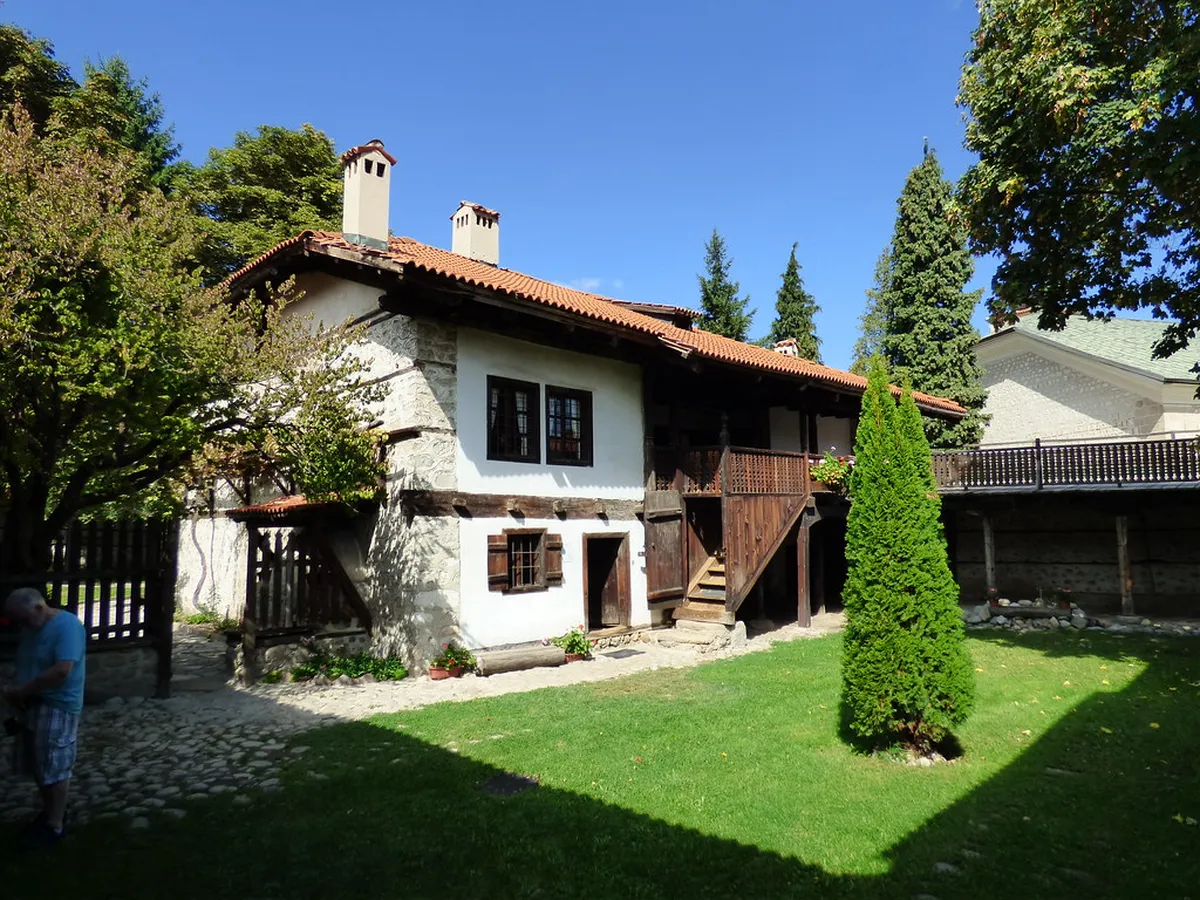
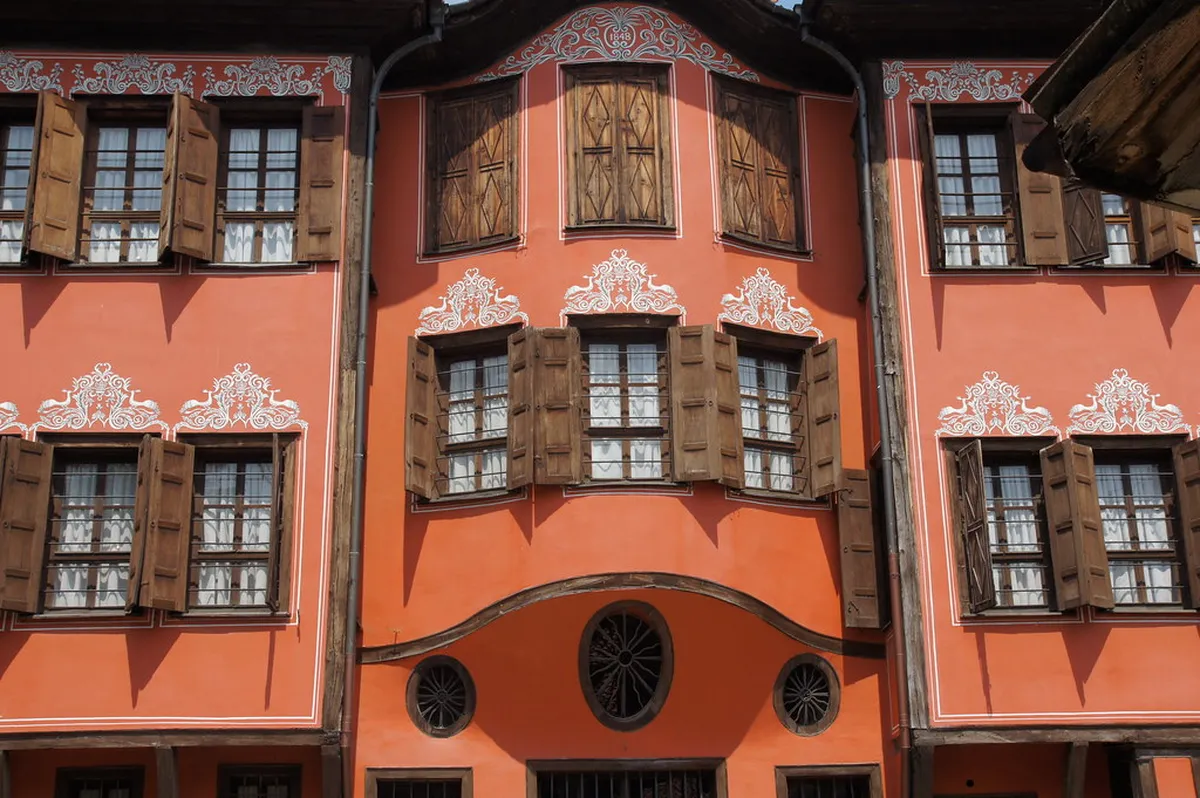
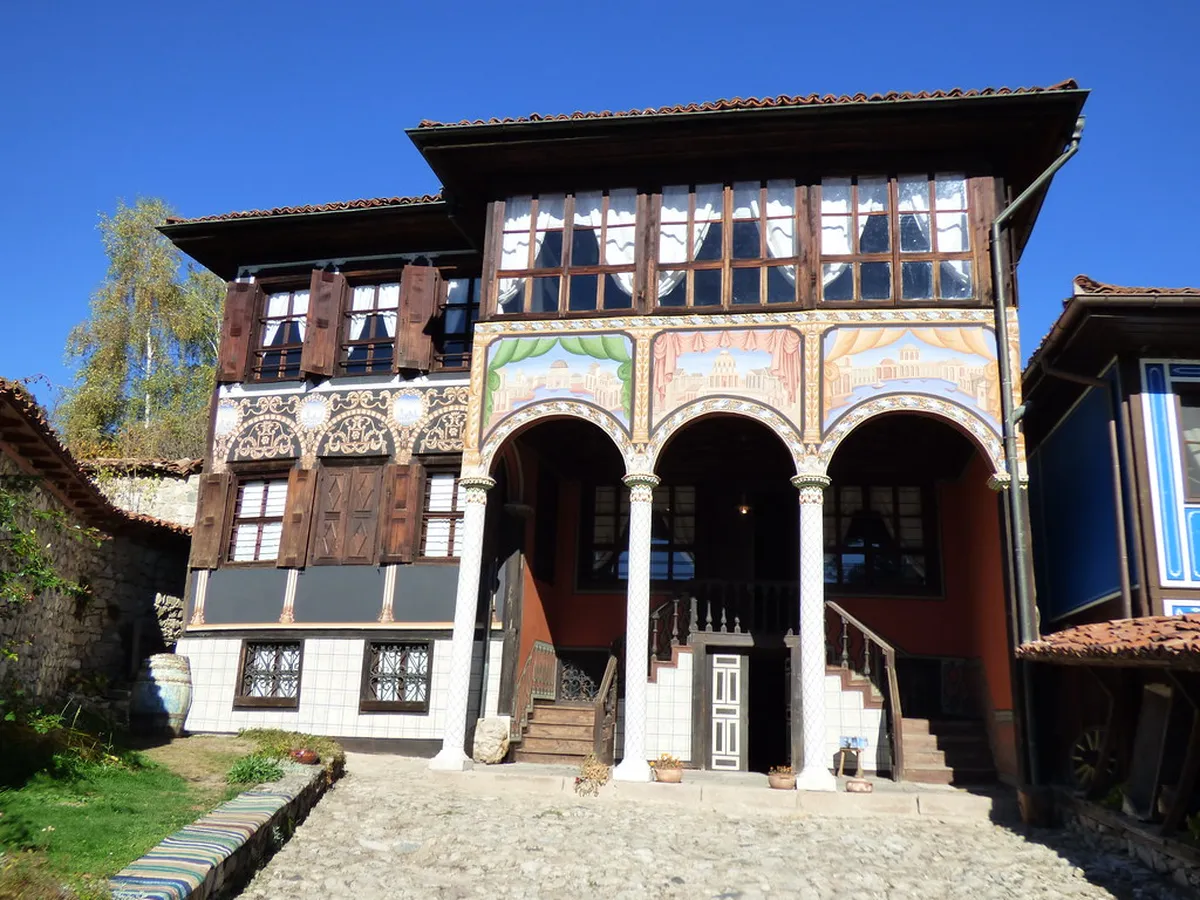
Master builder Gencho Mladenov completed the house in 1845 for the Kableshkov family, and architectural historians rank it among the purest examples of Neo-Baroque design from the Bulgarian National Revival. The building reads as a small two-story palace, built around a rigid symmetrical plan with curved walls and staircases rather than the straight lines used elsewhere in town.
A columned entrance portico leads to a double-flight stone staircase, opening into a ground-floor salon with an oval wooden staircase that curves up to the private rooms above. Upstairs, six bedrooms surround a grand oval salon capped by a wooden pseudo-dome, carved with sunburst patterns by craftsmen from the Tryavna woodcarving school.
The house's kyoshk — a fully glazed loggia with built-in benches — overlooks the Middle Neighborhood and is one of the most photographed corners of the museum. Original furniture inside, some shipped by carriage from Vienna, shows how far the family's wealth reached beyond Koprivshtitsa. Large windows flood the rooms with light, and the curved facade with its oversized portico still reads as a deliberate display of status.
Inside the Museum: The Blood Letter and Artifacts
The single most important object in the house is the Bloody Letter, written by Kableshkov on 20 April 1876 to announce that the uprising had begun. Rather than sign it in ink, he used the blood of a killed Ottoman official — a deliberate signal to committees in neighboring towns that the moment for half-measures had passed.
The letter was rushed by courier roughly 30 km south to Panagyurishte, where local leaders read it as proof the fighting had already started and rose in support, even though Koprivshtitsa's own uprising had actually been declared ahead of schedule. That gap between what the letter implied and what was happening on the ground is a detail historians still discuss, and one the museum's exhibit notes make room for rather than smoothing over.
Alongside the letter, display cases hold the rifles and sabers issued to the local militia, plus clothing Kableshkov and his fellow committee members wore during their secret organizing. When Ottoman irregulars sacked Koprivshtitsa after the revolt was crushed in May 1876, this house was a deliberate target — windows smashed, furniture looted, the garden dug up, a retaliation the museum documents alongside personal items like books and correspondence that round out the collection. Seeing the letter, the weapons, and the vandalism evidence together explains the stakes of 1876 better than any single artifact could alone.
Visitor Logistics: Hours, Tickets, and Location
The house is managed by the Koprivshtitsa Directorate of Museums, which sets identical hours across the town's six house-museums. Confirm the current schedule on the Official Museum Information site before you travel, since hours shift with the season and the museum is closed one day a week.
- Opening hours
- Summer (1 April to 1 November): 09:30-17:30
- Winter (1 November to 1 April): 09:00-17:00
- Closed: Mondays
- No lunch break
- Ticket prices
- Single museum, adults: 5.00 EUR (9.78 BGN)
- Students and pensioners: discounted rate
- Combined ticket, all six house-museums, adults: 10.00 EUR (19.56 BGN)
- Combined ticket, students and pensioners: 5.00 EUR (9.78 BGN)
- Payment: carry cash — card readers aren't reliable at every ticket desk in town
If you're working through Bulgaria's "100 National Tourist Sites" program, this house counts as one of the stops. Buy the stamp booklet from the tourist information office on the main square, then ask the ticket desk to stamp it; complete all 100 sites and you can mail the booklet in for a certificate and medal, a detail regional visitors chase but most English-language guides skip.
One thing worth knowing before you buy a ticket: the house has no elevator, and the upper floor is reached only by the original 1845 oval staircase, narrow, steep, and unrailed on one side. Visitors with mobility limitations, wheelchairs, or strollers should expect to see just the ground-floor salon; staff are used to the question and will describe the upper rooms if you can't climb the stairs.
Travel Guide: Reaching Koprivshtitsa from Sofia and Plovdiv
Trains are the classic way in, but they come with one well-known catch: Koprivshtitsa's train station sits about 9 km outside town, on the valley floor below the hill the old town occupies. A shuttle van meets scheduled arrivals and drives passengers up into the Koprivshtitsa architectural reserve for a small fare; check the timetable posted at the station, since a train arriving outside the shuttle's hours leaves you needing a taxi.
Direct buses from Sofia's Central Bus Station skip that transfer entirely and drop passengers inside the old town. Driving from Plovdiv takes about 90 minutes on mountain roads through the Sredna Gora range, and from Sofia it's roughly the same via the A1/Trakia motorway plus the final climb into the hills.
Once you're in town, the historic core is pedestrian-first: cars are restricted inside the reserve, so park at the marked lots near the town entrance and walk in. Use the Google Maps location for the house itself once you're on the narrow streets, since old-town numbering isn't always intuitive.
Seasonal Advice: When to Visit the Architectural Reserve
Koprivshtitsa sits at roughly 1,060 meters, while Plovdiv sits at around 160 meters — a gap large enough that Koprivshtitsa runs noticeably colder, often 5-8°C below whatever Plovdiv is reporting the same day. Pack a real jacket even for a summer day trip in 2026; mornings and evenings in the hills stay cool long after Plovdiv has warmed up.
Spring brings blooming gardens and thinner crowds, a strong pick if you want the house without other visitors in every shot. Summer is busiest, pairing manageable hill weather with the region's peak travel months.
Winter is quiet and atmospheric, but check hours first, since several smaller sites shorten their days or close for maintenance between November and April. Snow and ice make the stone-paved lanes genuinely slippery, so grippy shoes matter more here than in most Bulgarian towns.
Beyond the House: Other Must-See Museums
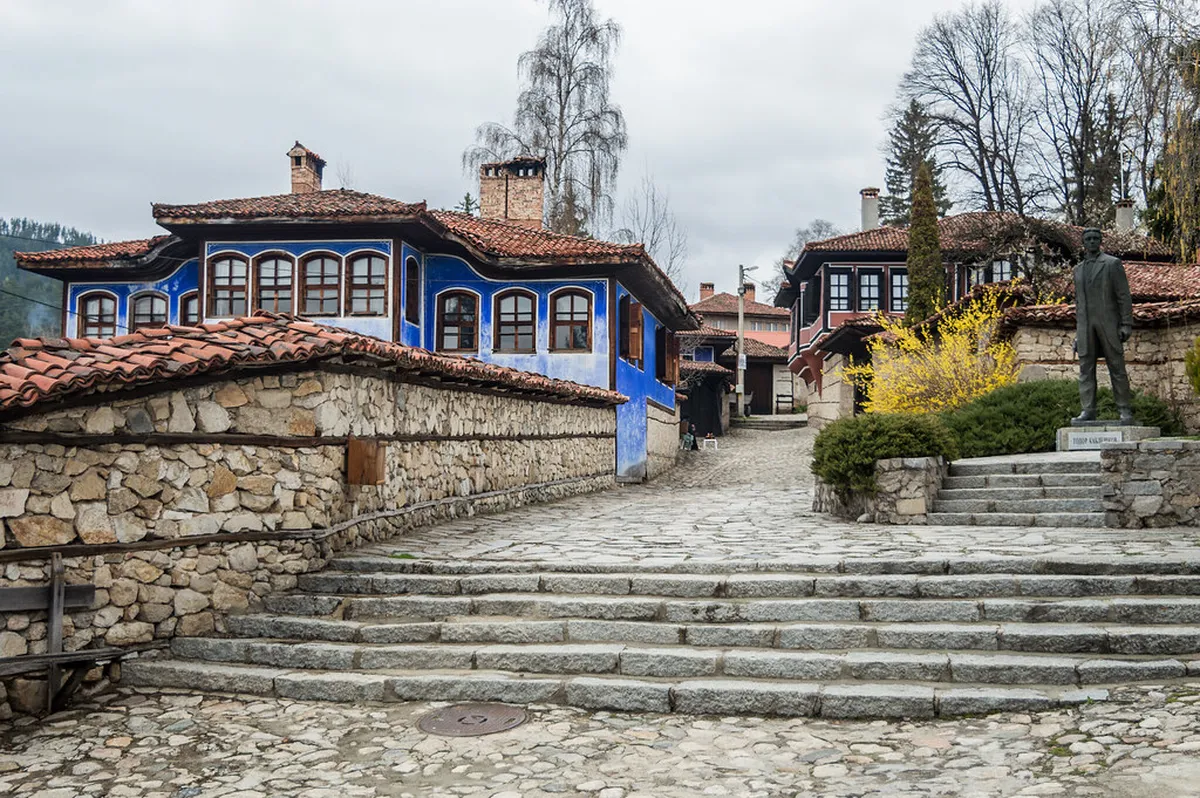
The Kableshkov house sits inside the Middle Neighborhood (Средна махала), and the town's best walking route links it to four more house-museums without much backtracking. From the Kableshkov gate, it's a short walk to the Oslekov House Visitor Guide, known for even more elaborate murals, then on to the Dimcho Debelyanov House-museum Visitor Guide, birthplace of the poet, and the Georgi Benkovski House-Museum Visitor Guide, honoring another uprising leader.
Continue toward the river and you'll reach the Lyutov House (Lutova House) Visitor Guide and, just beyond it, the First Shot Bridge (Kalachev Bridge) Visitor Guide, where the uprising's opening shot was fired in 1876. Walking the full loop — all five houses plus the bridge — takes about two hours unhurried and covers most of what makes Koprivshtitsa a National Revival landmark rather than just a scenic old town.
Stone walls and heavy wooden gates line the route, and most house-museums keep the same Directorate of Museums hours, so one combined ticket covers all of them. Starting early avoids both the midday tour-bus crowds and running out of hours before the last house closes.
Photography Tips: Capturing the Symmetrical Facade
Mid-morning light hits the columned portico straight-on, the easiest time to capture the facade's full symmetry without harsh shadows. Stand back near the garden gate rather than close to the steps — the portico's scale only reads properly from a few meters away.
Interior photography usually needs a small permit or fee at the ticket desk, and flash is banned throughout to protect the woodcarving, textiles, and the Bloody Letter itself. A wide-angle lens helps with the oval staircase and pseudo-dome ceiling, both hard to frame with a standard lens in the tight upper rooms.
Outside, the garden gives a few angles that put the Sredna Gora hills behind the house, worth the extra minutes if you're also photographing the town's other Neo-Baroque facades on the same walk.
Looking for day-by-day itineraries from Plovdiv?
A day trip from Plovdiv is the most common way to see Koprivshtitsa without booking a hotel. Leave early enough to reach town by 10:00 for a full day among the house-museums before the light fades.
Lunch at one of the taverns near the river, then work through the Kableshkov, Oslekov, and Benkovski houses if time is limited. Six hours in town is enough to see the highlights without rushing the last house before closing.
Taking the train back, build in extra time for the shuttle — missing the connection means a late taxi ride for the 9 km back to the platform. Buses run a tighter, more predictable schedule if you'd rather not track shuttle timing.
Continue planning: Use Koprivshtitsa Attractions: 6 House-Museums & Things to Do to connect this guide with the rest of your Bulgaria itinerary.
Frequently Asked Questions
Who was Todor Kableshkov and what is the 'Bloody Letter'?
Todor Kableshkov (1851-1876) was a Bulgarian revolutionary and chairman of Koprivshtitsa's secret revolutionary committee. On 20 April 1876 he wrote the famous 'Bloody Letter', reportedly signed in the blood of a killed Ottoman official, announcing that the April Uprising had begun and calling other districts to revolt; he died the same year after the uprising was crushed.
Is this where the April Uprising started?
Yes. Koprivshtitsa is where the first shot of the April Uprising was fired in 1876, and Kableshkov, born in this very house, issued the Bloody Letter that launched it. Visiting the house alongside the town's Kalachev Bridge (where the first shot rang out) and the April 20 Memorial Ossuary tells the full story of the revolt.
Is the Kableshkov house covered by the combined museum ticket?
Yes. It is one of the six Koprivshtitsa house-museums included in the combined ticket, which costs 10.00 EUR (19.56 BGN) for adults and 5.00 EUR (9.78 BGN) for students and pensioners. A single-museum ticket to see only this house is 5.00 EUR (9.78 BGN) for adults, so the combined ticket pays off quickly if you visit several houses.
What are the opening hours and closing day?
The house is open 09:30-17:30 in summer (1 April to 1 November) and 09:00-17:00 in winter (1 November to 1 April), with no lunch break, and it is closed on Mondays. Because a few houses close different midweek days, confirm the day's line-up at the ticket office on the central square.
How do I get to Koprivshtitsa from Sofia or Plovdiv?
Koprivshtitsa is about 110 km east of Sofia on the Sredna Gora rail line between Sofia and Plovdiv. Direct trains from Sofia take around two hours to Koprivshtitsa station, where a shuttle van meets each train for the 9 km ride up to the town; there are also about three daily buses from Sofia (roughly 3 hours), and driving takes about 1.5 hours via the A1 motorway.
How much time should I allow?
Plan on two to three hours to see the Kableshkov house together with a couple of the other nearby museums, or a full day to combine all six house-museums with the town's April Uprising landmarks. All the houses cluster within easy walking distance in the compact old town.
Is there free admission?
Yes, the Directorate of Museums offers free entry on the last Monday of each month and for visitors with disabilities. Note that the Kableshkov house is normally closed on Mondays, so check with the ticket office whether a given free Monday applies to this particular house.
The Todor Kableshkov House-Museum works on two levels: a showcase of Bulgaria's finest Neo-Baroque architecture, and the spot where one family's wealth and one urgent decision helped set the April Uprising in motion. A visit in 2026 costs little, takes under an hour alone, and pairs naturally with the rest of the Middle Neighborhood's house-museums.
Check the season's hours before you travel, carry cash, and budget extra time for the train shuttle if arriving by rail. Between the architecture, the Bloody Letter, and the walking route to the neighboring houses, this stop rewards slowing down rather than rushing through.
For more Koprivshtitsa planning, read our 12 Best Things To Do in Koprivshtitsa (2026) and The Six Koprivshtitsa House-Museums: Combined Ticket Guide (2026) guides.
For official details, visit the Todor Kableshkov House-Museum on Wikipedia, Todor Kableshkov House-Museum on Wikipedia, Todor Kableshkov House-Museum official site, Todor Kableshkov House-Museum official site and Todor Kableshkov House-Museum official site.