7 Things to Know: Alyosha Monument Visitor Guide
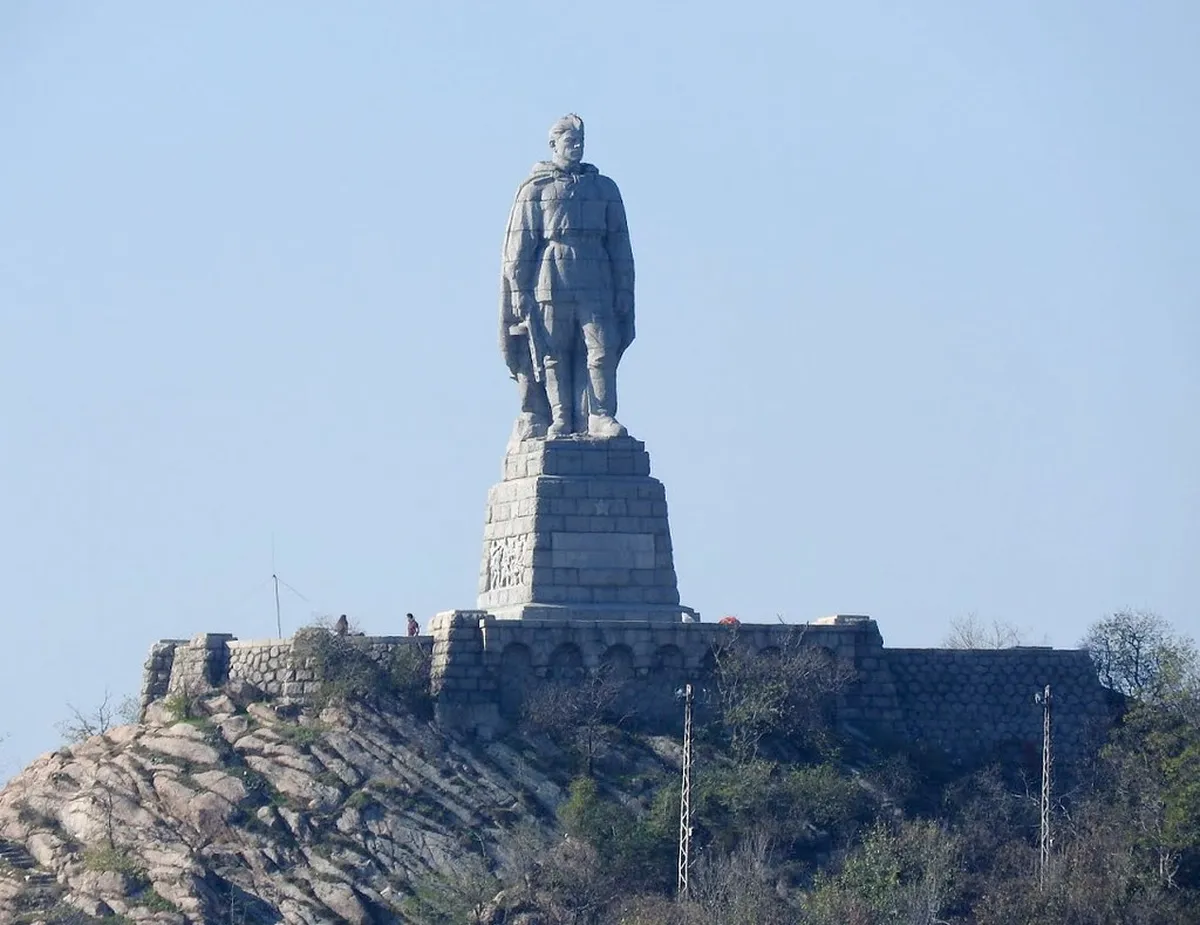
Standing tall on Bunardzhik Hill, the Alyosha Monument is one of the most recognizable landmarks on the Plovdiv skyline. The 11-metre statue of a Soviet soldier honors Soviet Army casualties from World War II and marks one of the best viewpoints in the city. Visiting combines a short uphill walk with a genuinely complicated slice of 20th-century history.
For a sense of the climb and the views from the summit platform, here's a recent visitor's walk-through:
Many travelers include this landmark when exploring the diverse attractions of Plovdiv and its seven hills. Bunardzhik itself functions as a public park as much as a memorial, with paved trails climbing away from the traffic below. Locals use it for morning runs and evening strolls just as often as visitors use it for the view.
Planning a visit in 2026 mostly comes down to timing rather than logistics, since the hill is free, unguarded, and open around the clock. The monument still sits at the center of a live local debate about what to do with Soviet-era memorials, which adds real texture to a visit beyond the view itself. The sections below cover getting there, when to go, and where visitors commonly get this site mixed up with somewhere else entirely.
What is the Alyosha Monument?
The Alyosha Monument is an 11-metre statue on a 6-metre pedestal, for a combined height of roughly 17 metres above the summit of Bunardzhik Hill. Construction began in 1954 and the monument formally opened in 1957, meaning it has now stood over Plovdiv for nearly seven decades. The soldier is shown holding a Shpagin submachine gun pointed toward the ground, a pose meant to read as the end of fighting rather than a threat. The city's official tourism portal lists it as the Monument of the Unknown Soviet Soldier, commemorating Soviet Army casualties from World War II.
The nickname "Alyosha" is where the story gets murkier. Local tradition often credits the face to Alexey Skurlatov, a Soviet soldier from Russia's Altai region who was stationed in Plovdiv and later revisited the city decades after the war. That account sits alongside the monument's official designation as an unknown soldier, and sources don't fully agree on which came first, the statue or the legend. Either way, "Alyosha" - a common nickname for Alexey - stuck, helped along by a well-known 1966 Soviet song of the same name.
Since 1989, there have been at least two organized local campaigns to remove or relocate the statue. Supporters of removal see it as a monument to occupation rather than liberation, given Bulgaria's postwar decades under a Soviet-aligned government. Supporters of keeping it point to its protected heritage status and its place as a significant piece of Cold War-era public art. Both campaigns failed, and as of 2026 the monument remains in place with no formal removal proposal on the table.
On the ground, the split feels less dramatic than the politics suggest. The platform around the statue functions as an ordinary city park, with students on the steps, dog walkers on the paths, and tourists photographing the view more often than the statue itself. Seeing it in person makes the history feel like a layer of the city rather than a museum piece behind glass.
How to Get to the Alyosha Monument in Plovdiv
Most visitors reach the summit on foot, starting from the corner of Ruski Boulevard and Gladston Street at the base of the hill. Paved paths climb through trees that shade most of the route, which helps considerably in the Plovdiv summer heat. The gradient is steady rather than steep, and the walkways are wide enough that you are never squeezed onto a narrow track. For more detail on the route itself, this guide to visiting Alyosha is a useful supplement.
Budget 10 to 15 minutes for the climb at a normal pace, longer if you stop for photos. It's worth knowing that Bunardzhik Hill is a separate site from Nebet Tepe Visitor Guide, the ancient fortress hill above the Old Town - first-time visitors sometimes assume the two are the same climb because both get described as "the hill with the view," and end up planning too little time to see both in one afternoon. The two hills sit on opposite sides of central Plovdiv and aren't connected by a direct path, so treat them as separate outings.
Driving covers most of the ascent on a narrow road, with a small parking area near the top that fills up quickly on weekends. From that lot, it's roughly a five-to-seven minute walk to the base of the statue, which makes driving the more realistic option for visitors with limited mobility or a tight schedule. Public buses stop within walking distance of the main park entrance, and taxis are inexpensive enough in Plovdiv to justify a drop-off at the upper lot if you'd rather skip the climb.
- Walking from the base takes about 10 to 15 minutes up a shaded, moderately graded path and costs nothing.
- Driving handles most of the climb, leaving a 5 to 7 minute walk from the summit parking area - the better choice for reduced mobility or a short visit window.
- Buses reach the base of the hill and taxis can drop off at the upper lot, both reasonable if you'd rather not walk the whole way.
Best Time to Visit for Panoramic Views
Golden hour is still the best-known time to visit, and for good reason. As the sun drops, the warm light plays well against the statue and gives the whole hilltop a softer look than it has at midday. Photographers get a wide range of angles here, from close-up shots of the soldier's face to wide shots that take in the entire city below.
From the summit you can pick out the Plovdiv Old Town Visitor Guide spread across its own cluster of hills, with the Balkan Mountains visible to the north on a clear day and the Rhodope foothills to the south. Bunardzhik is the second-highest of Plovdiv's seven hills, which is exactly why the 360-degree view works as well as it does.
Because Plovdiv's sunset time shifts by nearly four hours across the year, a fixed "arrive at X o'clock" rule doesn't really work - plan against local sunset time instead of the clock. In June and July, sunset falls close to 20:45 under Bulgaria's summer time (EEST, UTC+3), so starting the walk up by around 20:00 leaves enough buffer for the last light. Around the equinoxes, sunset moves back to roughly 19:15 and 18:15, so shift your start earlier by about an hour to keep the same buffer. By December, sunset can fall as early as 17:00 under winter time (EET, UTC+2), earlier than most visitors expect.
Early mornings work well for a quieter visit, with cooler air and a good chance of having the platform to yourself. Sunrise lights the eastern face of the monument rather than the western view over the city, so it's a genuinely different photo than the sunset shot.
Other Things to Do on Bunardzhik Hill
Bunardzhik Hill holds more than the Soviet soldier statue. Lower on the slope there's an older, smaller memorial tied to Bulgaria's 1878 liberation from Ottoman rule, part of why the hill carries the name "Liberators' Hill" in the first place - a name that predates the Alyosha statue by decades. Seeing both eras represented on the same hill is a compact way to trace how Plovdiv has commemorated its various "liberators" over the last century and a half.
The park also includes working fountains, active mainly in the warmer months, plus stone staircases and garden paths that make the hill feel more like an urban park than a monument site. It's easy to spend an extra hour wandering the side paths away from the main platform. Many visitors pair the climb with a stop at the nearby Tsar Simeon Garden Visitor Guide on the way back down, since it's a flatter, shadier way to cool off after the walk.
The hill supports a fair amount of birdlife and plant diversity for a spot inside city limits, and the exposed rock is part of the same volcanic formations that shape several of Plovdiv's hills. Occasional interpretive signs along the paths explain the local geology and vegetation, though don't expect a formal nature center. It's a reasonable stop for a light walk even if you have no interest in the statue at all.
Families tend to gravitate toward the small playgrounds near the base and the open grassy areas that work well for a picnic. Bringing a blanket and some food turns what could be a 20-minute photo stop into a genuinely relaxing afternoon. Locals sometimes call the hill one of Plovdiv's "green lungs," and spending unhurried time here makes it obvious why.
Practical Tips for Visiting Alyosha
Wear shoes with real grip rather than sandals or slick soles - some of the stone steps near the summit are worn smooth and can be slippery even when dry. The paved sections are generally fine, but a few uneven patches near the top deserve attention, especially with a camera bag or a stroller. This Alyosha monument guide rounds up more visitor-sourced tips if you want a second opinion.
There's no shop or cafe directly at the summit, so carry water, particularly in summer when the shaded lower path gives way to open sun near the top. A small ice cream stand near the base is the closest thing to a food stop before or after the climb - useful for cooling off once you're back down rather than something to rely on partway up.
If you stay for sunset, plan the walk down with a phone flashlight ready, since lighting along the main paths is limited and it gets dark quickly once the sun is gone. Stick to the primary paved route rather than side trails; the area is generally safe, but extra visibility on stone steps is worth the habit.
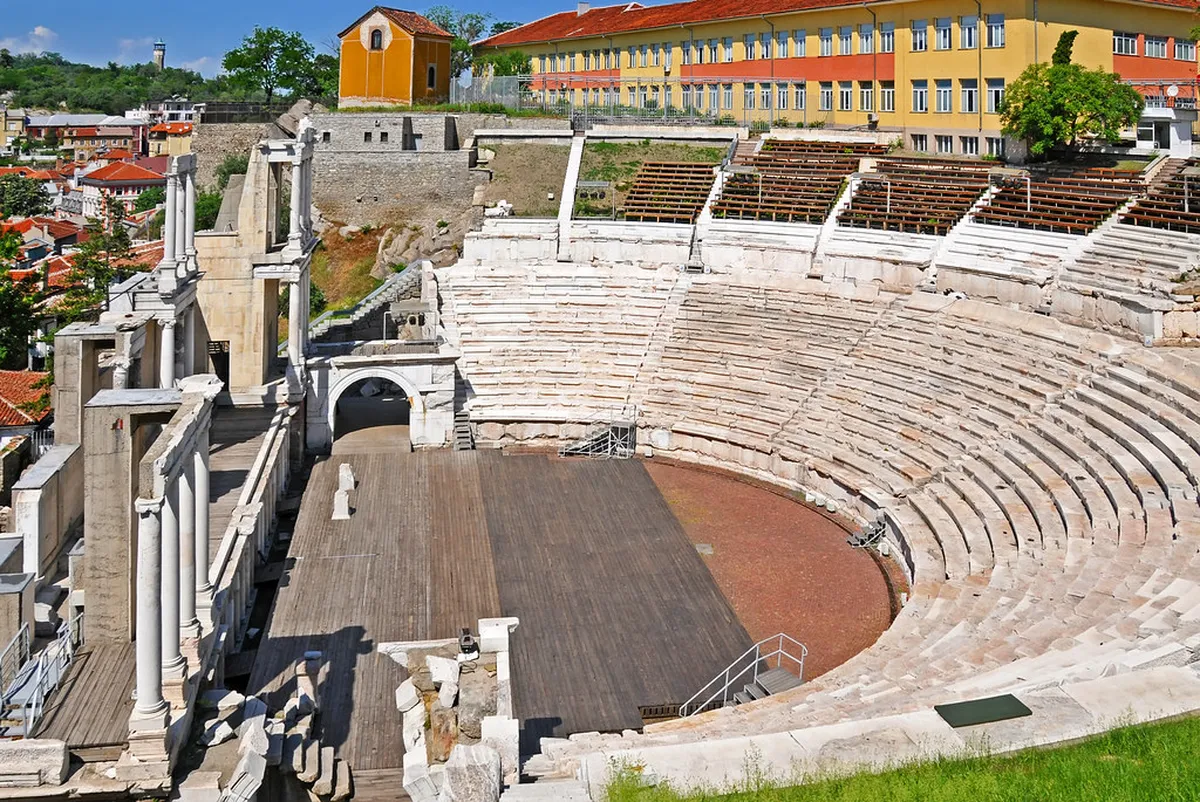
Who gets the most out of this stop varies more than most guides suggest. History-minded visitors should budget extra time to actually read into the monument's postwar and post-1989 story rather than just photographing it, since context is most of the value here. Photographers should prioritize a clear-sky evening over a crowded weekend one, since haze cuts into the long-distance views more than crowds do. Travelers with limited mobility or young children are usually better served by driving to the upper lot, and anyone combining this with the Ancient Theatre of Plovdiv Visitor Guide the same day should treat the two as separate hill-climbs rather than one route.
Plovdiv's Alyosha and Other Soviet-Era Monuments
Plovdiv's statue isn't the only Soviet-era memorial that goes by "Alyosha," and it's worth knowing that before comparing photos or reviews found online. The far larger and better-known namesake stands in Murmansk, Russia - a roughly 35-metre concrete soldier officially called the Monument to the Defenders of the Soviet Arctic, completed in 1974, nearly two decades after Plovdiv's version. The two share a nickname and a general silhouette, but they sit in different countries, were built almost 20 years apart, and commemorate different campaigns of the same war. If a search result describes a monument that size or mentions the Arctic Circle, it's almost certainly the Murmansk statue rather than Plovdiv's.
Within Bulgaria itself, Sofia has its own Soviet Army Monument, built in 1954 in a park near the National Palace of Culture - a different design in a different city, and not one locals call "Alyosha." It has periodically become a canvas for political street art over the years, most notably repainted as Western pop-culture figures and, more recently, in Ukrainian national colors. Plovdiv's version has stayed largely untouched by that kind of intervention, partly because its hilltop setting makes it harder to reach unnoticed.
None of this changes anything about visiting Plovdiv's Alyosha - it's still free, still on Bunardzhik Hill, and still open around the clock. But if the details you're reading don't line up with what's on this page - a height in the tens of metres, an Arctic setting, or a different city entirely - you're probably reading about the wrong monument. Plovdiv's hilltop version remains the most visited of Bulgaria's Soviet-era memorials simply because of the view that comes with the climb.
Continue planning: Use Plovdiv Attractions: 12 Top Sights, Tickets & Tips to connect this guide with the rest of your Bulgaria itinerary.
Frequently Asked Questions
Is the Alyosha Monument in Plovdiv being removed?
There have been several local proposals to remove or relocate the statue since 1989. However, it remains in place due to its status as a historical monument and the high cost of removal. It continues to be a subject of debate among residents and politicians today.
How long does it take to walk to the top of Bunardzhik Hill?
Most visitors can reach the summit in 10 to 15 minutes from the base. The paths are well-paved but involve a steady uphill incline. If you are also visiting Nebet Tepe Visitor Guide, allow extra time for the walk between these different hills.
Are there any entrance fees for the Alyosha Monument?
No, visiting the monument and the surrounding park is completely free of charge. The site is open 24 hours a day, allowing for sunrise and sunset visits. It is one of the most budget-friendly ways to see the entire city of Plovdiv from above.
Can I see the Shipka Monument from the Alyosha statue?
While you cannot see the Shipka Monument directly, you can see the mountain ranges where it is located. On a very clear day, the distant peaks of the Central Balkan Mountains are visible to the north. Shipka is a separate, significant site located about two hours away by car.
The Alyosha Monument is a complex but essential stop for any visitor to Plovdiv. It offers a rare combination of historical intrigue and breathtaking natural beauty. Whether you go for the history or the views, the experience is sure to be memorable. The climb to the top is a small price to pay for the perspective you gain.
As you stand beneath the giant stone soldier, take a moment to look at the city below. You can see the ancient and modern worlds blending together in a single frame. This landmark serves as a bridge between Bulgaria's past and its vibrant present. It remains one of the most powerful places to reflect on the passage of time.
We hope this alyosha monument visitor guide has provided the clarity you need for your trip. Remember to bring your camera and a sense of curiosity when you visit. The hills of Plovdiv are waiting to share their stories with you in 2026. Enjoy your journey to the summit of Bunardzhik Hill.
For the latest official information, see the Alyosha Monument official site and Alyosha Monument on Wikipedia.
For more Plovdiv planning, read our Ancient Theatre Plovdiv 2026: Tickets, Events & History guide.