Nikola Vaptsarov House Museum Visitor Guide: 7 Essential Insights
Bansko is best known worldwide for its ski slopes and mountain trails, but its cobblestone Old Town holds one of Bulgaria's most visited literary landmarks. The Nikola Vaptsarov House Museum, on the town's central square, preserves the birthplace of poet Nikola Vaptsarov and was the first museum established in the Pirin region. It is a compact, easy stop for anyone splitting a 2026 trip between the slopes and the town's history.
The house does not feel like a typical roped-off exhibit. Its 1992 redesign uses light, sound and archival film to walk visitors through Vaptsarov's short, dramatic life, from his childhood in this very house to his execution in 1942. Many travelers pair the visit with a walk through the wider Bansko Old Town.
This guide covers the history worth knowing before you arrive, what's actually inside, current 2026 hours and ticket prices, and a handful of practical details — including one about access and one about tickets — that most visitor write-ups skip entirely.
For a preview of the museum's layout and key exhibits before your visit, this walkthrough captures the house and its displays:
The History and Legacy of Nikola Vaptsarov
Nikola Vaptsarov was born in this house in 1909, in the years before the Balkan Wars reshaped the Pirin region. His family name traces to an old local trade: the house once operated as a paint shop, or "vaptsarnitsa," and neighbors began calling its residents the Vaptsarovi. He trained at the Marine Engineering School in Varna before returning to a life of factory work and underground political organizing.
By the late 1930s Vaptsarov had become a central figure in Bulgaria's anti-fascist resistance. He was arrested in 1942 and executed that same year under the wartime State Protection Act — he was 32. His only lifetime poetry collection, Motor Songs, still anchors 20th-century Bulgarian literature curricula today.
The house-museum opened in 1952, making it the first museum established in the Pirin region and the starting point for organized museum work in Bansko. It was later declared a monument of culture of national importance and sits among Bulgaria's 100 National Tourist Sites. In 1952 Vaptsarov was posthumously awarded the World Peace Council prize, cementing his reputation well beyond Bulgaria's borders.
The museum keeps the poet's childhood and his adult political life in two distinct registers: family rooms restored at his mother's request sit alongside a documentary wing tracing his radicalization and death. That split is worth knowing before you walk in, since it explains why the ground floor feels domestic and the upper floor feels far more sober.
What to See Inside the House-Museum
Film director Velo Radev led the team that redesigned the exhibition in 1992, and it shows. Rather than static display cases, the museum uses staged lighting and sound cues to move you between rooms — the reason so many visitors describe the layout as cinematic rather than academic. Roughly 3,000 artifacts are spread across two floors.
The most personal room belongs to his mother, Elena Vaptsarova, whose study and the family's original living room and guest room were reconstructed at her request after the poet's death. The World Peace Council medal awarded to Vaptsarov posthumously in 1952 is displayed here too, alongside his handwritten notebooks and the first published pages of what became the poetry of Vaptsarov (Slovo.bg).
The documentary wing holds a more eclectic set of pieces: the Bansko copy of the Slavo-Bulgarian History, the personal seal of poet Peyo Yavorov — a family friend who shaped Vaptsarov's early style — and a video room, split across two small halls, playing archival footage in English, German, Russian and French.
Set aside time for the video program even if you're moving quickly through everything else. It's the clearest way to understand the man behind the exhibits, and it's one of the few parts of the museum that doesn't require reading dense Bulgarian text panels.
Essential Visitor Information: Hours and Fees
Hours differ between weekdays and weekends, and both schedules include a midday break — plan around it rather than arriving right at 13:00. The museum is open year-round, making it a solid rainy-day or ski-break option when the slopes fog in or you just want a low-key morning between runs; confirm any holiday exceptions on the Official Bansko Museum Site.
- Opening hours
- Weekdays: 09:00–13:00 and 14:00–17:30
- Weekends and holidays: 09:00–13:00 and 14:00–17:00
- Open year-round, no weekly closing day
- Admission
- Adults: €3 (5.87 BGN)
- Students, retirees: €2
- Visitors with disabilities: €1
- Family ticket: €5
- Guided tour: +€5 on top of entry
- Visit duration
- Typical visit: 15–20 minutes
- Watching the full video program: closer to 30 minutes
- Best window: weekday mornings, before tour groups arrive
The family ticket is worth asking about even if your group doesn't look like a textbook nuclear family. At €5 flat, it undercuts two full adult tickets (€6) as soon as you're traveling with even one child, so it's rarely worth buying individual admissions once your group is three or more. Reception applies it at the desk — you don't need to book it in advance.
How to Get to the Museum in Bansko
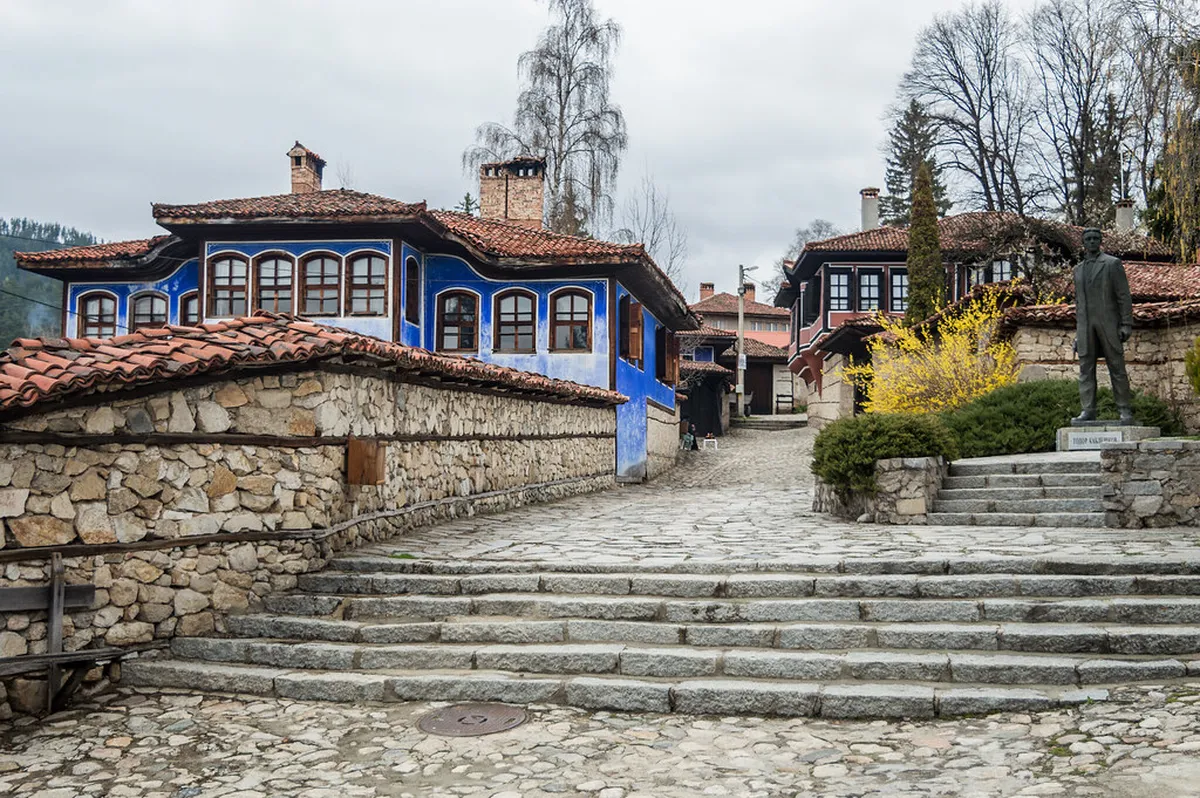
The museum sits at 3 Nikola Vaptsarov Square (2770 Bansko), directly on the pedestrianized central square next to the municipality building. You'll pass through the historic Bansko Old Town Visitor Guide to reach it, and the poet's statue in the square makes the building easy to spot even without signage.
Most visitors staying in the lower town walk over — it's roughly fifteen to twenty minutes from the main gondola station through streets lined with shops and mehanas. Use Google Maps Location to navigate the older, less signposted alleys if you're coming from a side street rather than the main pedestrian route.
There's no dedicated museum parking, and the streets right around the square are narrow and mostly pedestrian. Park in one of the lots near the square instead and walk the last two minutes; it's faster than circling for street parking and it's the same route most locals take.
The Holy Trinity Church bell tower is visible from the museum's courtyard, and the two sit close enough to visit back to back — useful if you're trying to fit both into one morning before lunch.
Insider Tips for a Meaningful Visit
Most of the text panels are in Bulgarian only. Ask for the English translation at reception before you start — it's free, and without it you'll miss the context behind half the documentary wing. Staff can also point you to which video program language track to select.
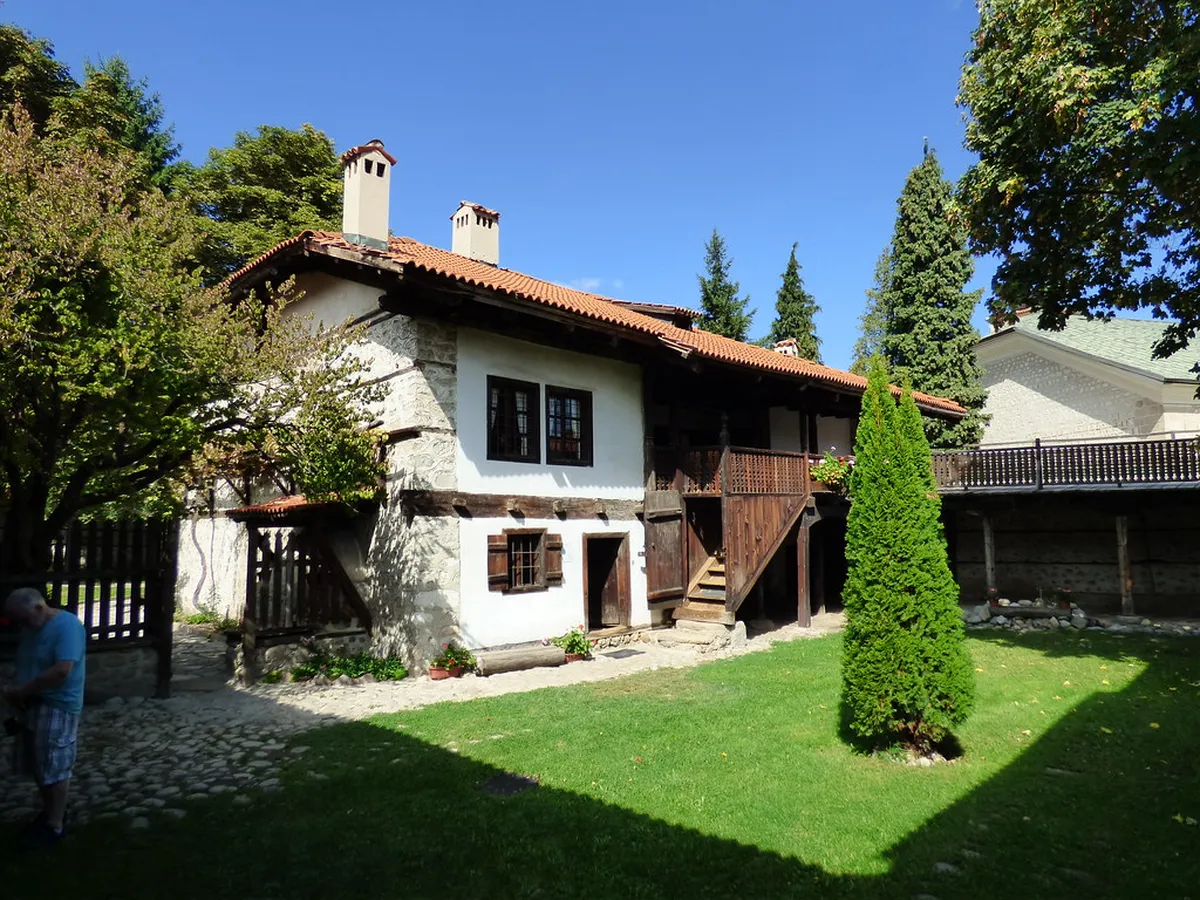
This is one of Bansko's older house-museums, restored inside an early-20th-century stone-and-wood building, and it was never fitted with an elevator or ramps between floors. If you're visiting with a wheelchair, a stroller, or limited mobility, expect the upper floor to be difficult or impossible to reach; call ahead so reception can tell you what's viewable from the ground floor before you arrive.
Photography is generally allowed without flash, since flash can damage the older manuscripts and fabric on display — ask a staff member to confirm before you start shooting. The dim, deliberately theatrical lighting in some rooms also just doesn't photograph well with flash on.
Because the full visit rarely runs past 20 minutes, it pairs naturally with the Neofit Rilski House-Museum a short walk away. Doing both back to back makes for a focused cultural morning of roughly an hour without feeling rushed or repetitive.
Exploring Bansko’s Cultural Context
The Vaptsarov museum is one piece of a wider network of Bansko house-museums. Neofit Rilski House-Museum honors another giant of the Bulgarian National Revival born in the same town, and visiting both back to back shows how differently the town preserves its literary and religious heritage. Radonova House, Bansko's third major historic home, rounds out the picture with 19th-century National Revival domestic architecture, minus the political weight of the other two.
Holy Trinity Church is close enough to reach on foot from the museum courtyard and worth the short detour for its bell tower and interior craftsmanship alone.
For architecture rather than biography, Velyanova House Visitor Guide is the better stop — its wall paintings and wood carvings represent the Bansko school of art at its peak, distinct from the more austere, documentary feel of the Vaptsarov museum.
None of this requires a full day. Bansko's museum quarter clusters within a few minutes' walk of the central square, which makes it realistic to fit two or three stops into a single morning before the town's restaurants fill up for lunch.
Continue planning: Use Bansko Attractions: Top 8 Things to Do in Bansko to connect this guide with the rest of your Bulgaria itinerary.
Frequently Asked Questions
What is the Nikola Vaptsarov House Museum?
It is the preserved family home and birthplace of Bulgarian poet Nikola Vaptsarov (1909-1942) on Bansko's central square. Opened in 1952, it was the first museum in the Pirin region and marked the start of museum activity in the town.
Who was Nikola Vaptsarov?
Nikola Vaptsarov was an anti-fascist poet ranked among the most popular Bulgarian poets of the 20th century. A graduate of the Marine Engineering School in Varna, he published a single collection in his lifetime, Motor Songs, before his execution in 1942.
How much are tickets to the Vaptsarov museum?
Adults pay €3 (5.87 BGN), students under 18, university students and retirees €2, and visitors with disabilities €1. A family ticket is €5, and a guided tour costs €5 extra.
What are the museum's opening hours?
On weekdays it is open 9:00-13:00 and 14:00-17:30; on weekends and holidays 9:00-13:00 and 14:00-17:00.
What can I see inside the museum?
The exhibition reconstructs the house of the poet's childhood — including his mother Elena Vaptsarova's study, the living room and guest room — alongside a documentary display with the Bansko copy of the Slavo-Bulgarian History, poet Peyo Yavorov's personal seal, Vaptsarov's notebooks, his Motor Songs collection and the World Peace Council award.
Where exactly is the museum located?
At 3 Nikola Vaptsarov Square, 2770 Bansko — on the town's pedestrianized central square next to the municipality building, surrounded by hotels, restaurants and the Tourist Information Centre.
Are guided tours available?
Yes, guided tours are offered for €5 (9.78 BGN) in addition to the entrance ticket; the museum is open year-round.
The Nikola Vaptsarov House Museum rewards a short visit with an outsized sense of Bansko's history. Between the cinematic redesign, the family rooms, and the documentary wing, twenty minutes here says more about the town's 20th-century identity than most single stops in the region.
Slot it into a 2026 trip as the counterweight to a day on the slopes or the trails. Ask for the English translation, factor in the family ticket if it applies, and pair it with a walk through the wider Bansko attractions nearby to round out the morning.
For authoritative information, refer to the Nikola Vaptsarov House Museum on Wikipedia and Nikola Vaptsarov House Museum official site.
For more Bansko planning, read our Bansko Itinerary: 10 Essential Sections for Your Trip guide.