Trains In Bulgaria: Your Ultimate Travel Guide
Bulgaria's rail network is slow, cheap, and genuinely scenic. For travelers in 2026 who want to move between cities without a car or overpriced bus seat, the national operator BDZ (Български държавни железници) connects Sofia to Plovdiv, Varna, Burgas, Veliko Tarnovo, and a dozen smaller towns. International trains depart from Sofia Central to Istanbul, Bucharest, and beyond. This guide covers the routes, fares, booking tricks, and practical details that actually matter.
To see the scenery firsthand, here's a complete train journey across Bulgaria:
Why Travel by Train in Bulgaria?
The strongest argument for the train is cost. Domestic fares on BDZ are among the cheapest in Europe — Sofia to Plovdiv costs around 7–10 BGN (€3.50–5) in second class. The Sofia to Varna overnight sleeper runs under 40 BGN including a couchette. At those prices, minor delays and older rolling stock feel much easier to accept.
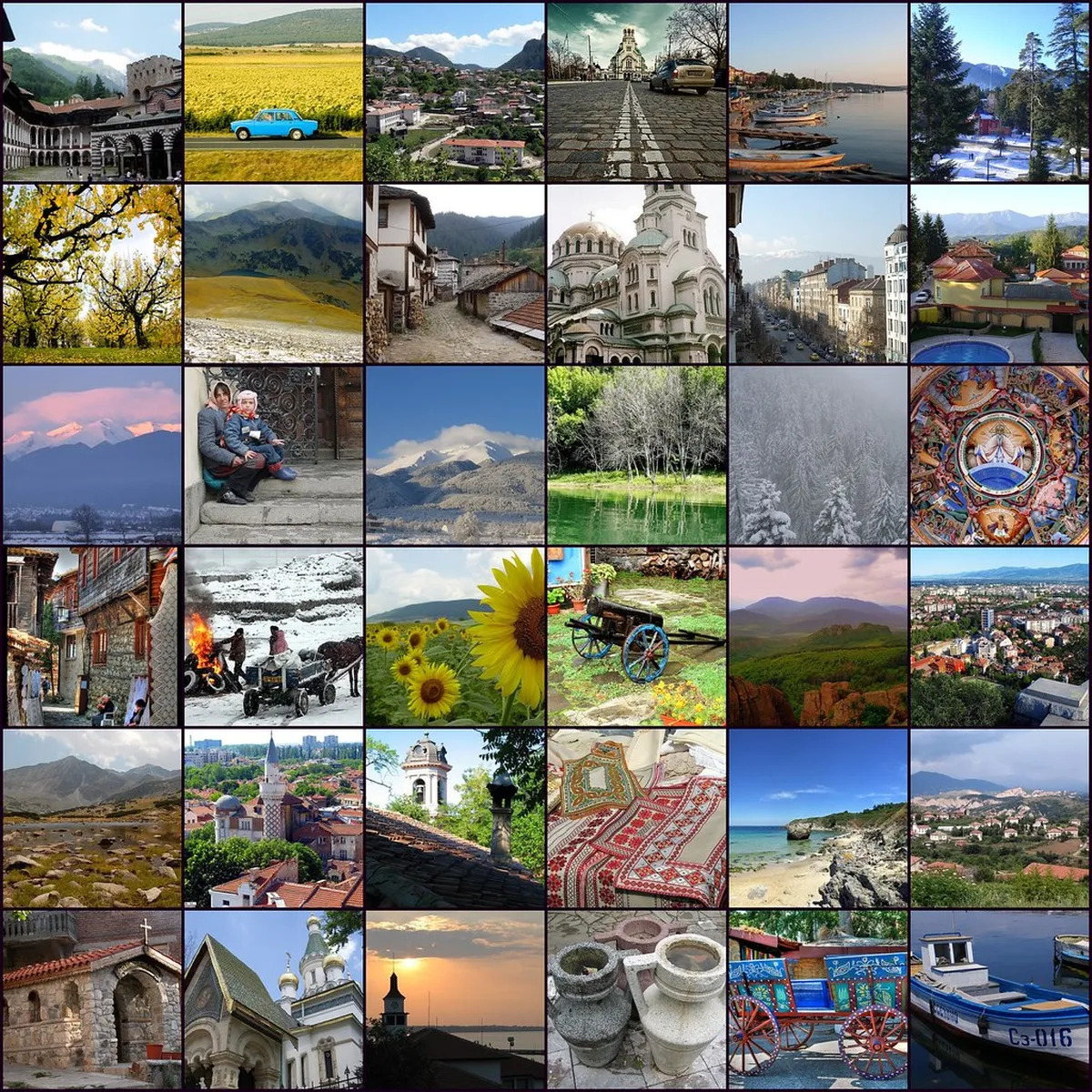
The second argument is scenery. Road and bus routes hug highways. Trains cut through the Balkan Mountains, follow river gorges, and pass through villages untouched by mass tourism. The Sofia–Plovdiv line traverses the Thracian Plain with the Rhodope massif visible to the south. The Sofia–Varna line climbs into the Balkan range before descending to the Black Sea coast.
Train travel also involves less stress than driving. Bulgarian roads outside Sofia can be poorly lit, poorly signed, and shared with slow agricultural vehicles. Letting BDZ handle navigation while you read or watch the countryside pass is often the better trade-off, even when the journey takes an extra hour.
Bulgaria's Railway Network: An Overview
BDZ operates Bulgaria's national rail network. Sofia Central station is the main hub. All long-distance trains to the coast, the mountains, and the north originate there — or at Sofia Sever (see the booking note below). The network reaches Plovdiv, Varna, Burgas, Stara Zagora, Plovdiv, Ruse, and Pleven among others. You can check live timetables and buy domestic tickets at bdz.bg (click English, then click TICKETS).
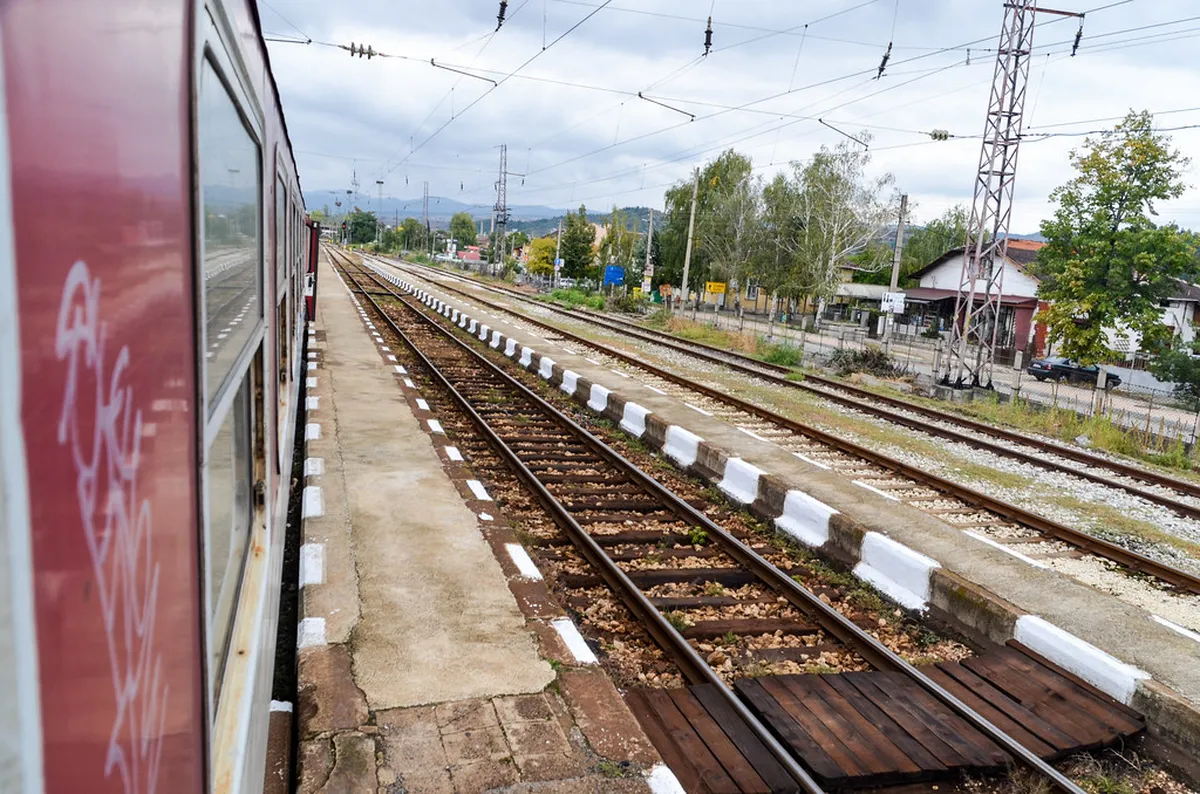
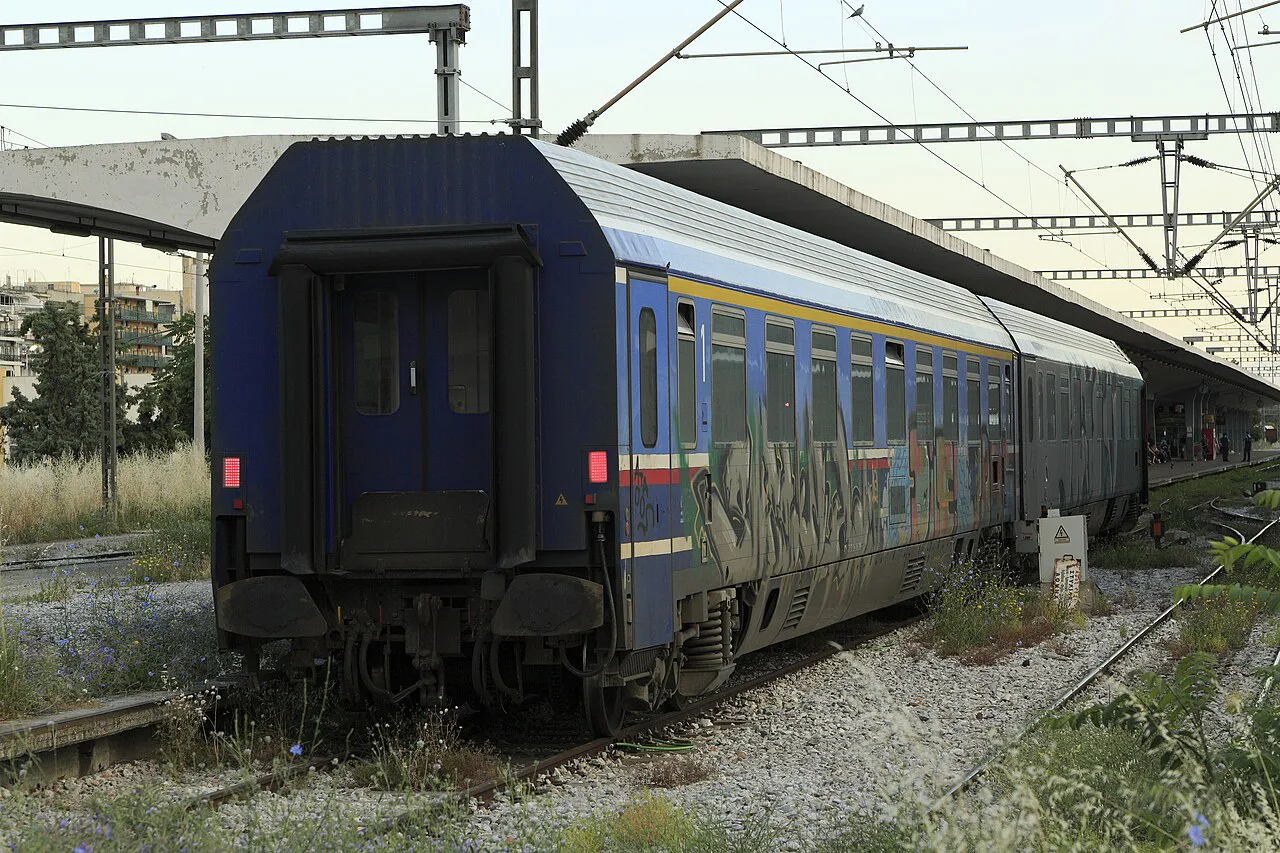
Speed is the honest limitation. Bulgaria operates mostly single-track lines, so trains yield to each other at passing loops. Express trains (бърз влак) are faster than locals (пътнически влак) but the difference on longer routes is 30–60 minutes, not hours. Carriages on older routes date from the Soviet era — six-seat compartments with side corridors. On the Sofia–Plovdiv corridor and some Sofia–Varna departures you will find newer open-plan coaches with air conditioning. Assume older stock unless the BDZ booking page shows otherwise.
For international journeys, Sofia Central is also the departure point, though track-upgrade work since May 2024 has temporarily shifted some trains to Sofia Sever (Sofia North), 2.7 km from the main station. More on that in the international section below.
Popular Domestic Train Routes & Destinations
Sofia to Plovdiv is the busiest domestic corridor. Trains run roughly every two hours; the fastest express takes about 2 hours, slower locals around 3 hours. The fare is around 9 BGN (€4.50) in second class. Plovdiv is easy as a day trip from Sofia, and the train drops you close to the Old Town. You can find more route details in our guide to getting from Sofia to Plovdiv.
Sofia to Varna is the most popular longer route. Journey time is 6–8 hours depending on the service. An overnight sleeper departs Sofia in the evening and arrives in Varna in the morning, letting you avoid a hotel night. Day trains are also available. Fares start around 18 BGN (€9) in second class. For full options including buses, see our Sofia to Varna transport guide.
Sofia to Burgas serves Bulgaria's other major Black Sea city. Travel time is similar to Varna — around 7 hours. The scenery through the central mountains is excellent. The train to Burgas is a reasonable choice if you want a relaxed arrival rather than the highway grind.
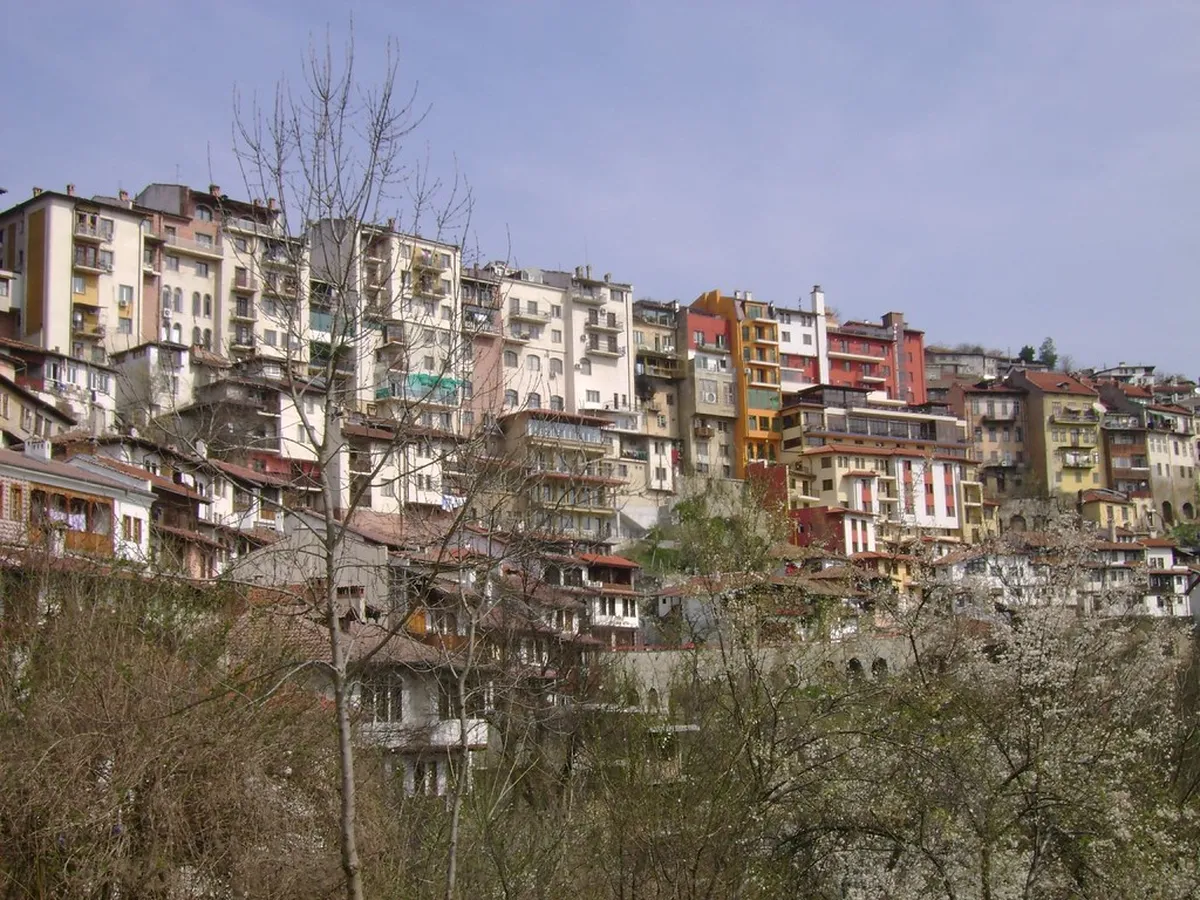
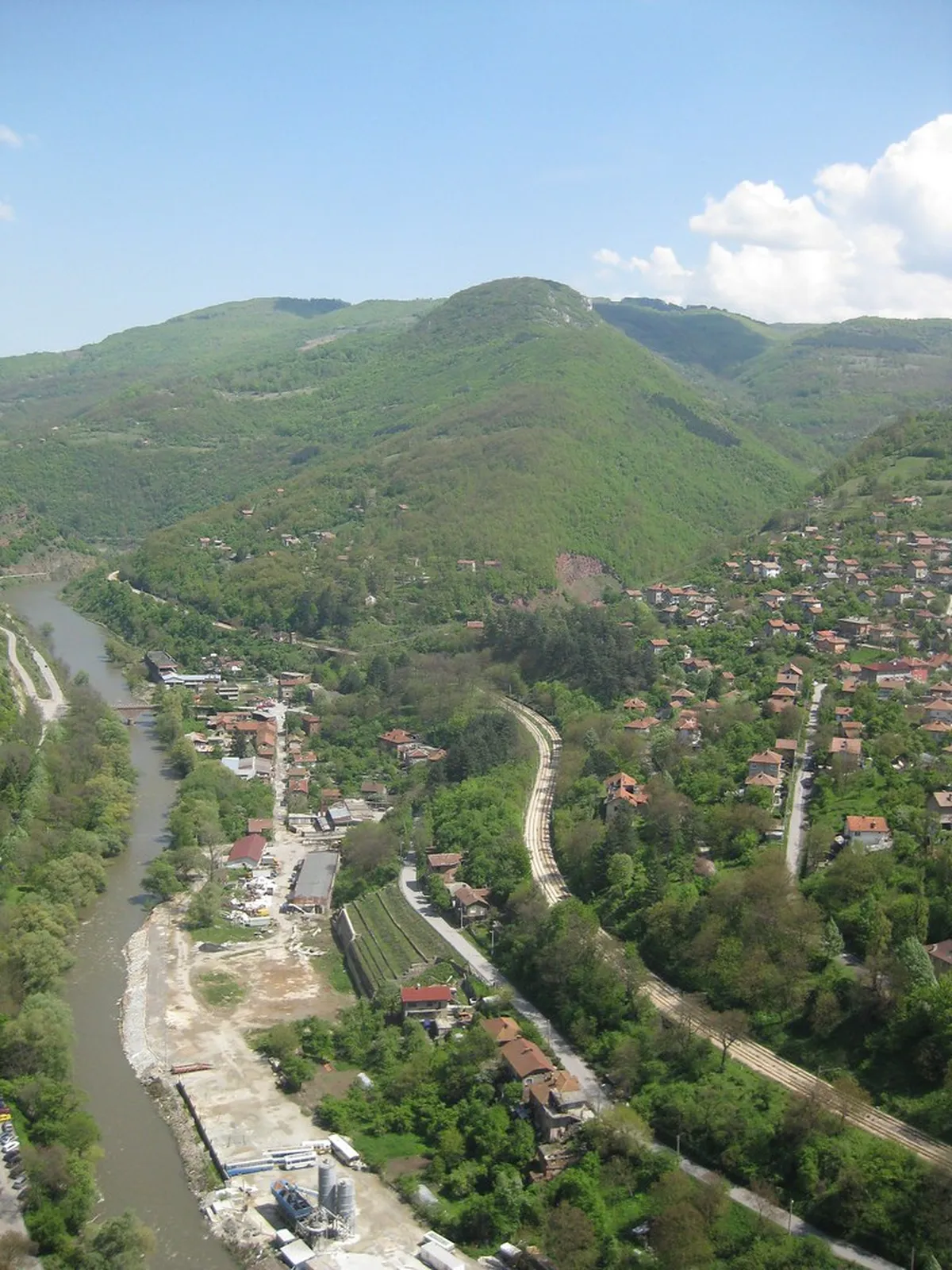
Sofia to Veliko Tarnovo is a standout route for scenery. The line follows the Yantra River gorge through narrow canyons before the track winds up to Bulgaria's medieval capital. Journey time is around 4–5 hours to Gorna Oryahovitsa (the nearest main station, 10 km from Veliko Tarnovo). Fares are around 14 BGN (€7). Details on continuing to Veliko Tarnovo are in our dedicated guide. For connections onward to remote northern destinations like Belogradchik, or mountain resort access, read about reaching Bansko by rail and road.
Two less-traveled routes deserve mention. The Septemvri–Dobrinishte narrow-gauge line through the western Rhodopes is one of the most scenic railways in the Balkans — slow, cheap (around 10 BGN end-to-end), and almost entirely overlooked by foreign visitors. The Mezdra–Vidin line along the Iskar gorge north of Sofia is similarly spectacular. Neither route is on any tourist map but both are genuinely rewarding.
| Route | Express Journey Time | Approx Fare (BGN, 2nd class) |
|---|---|---|
| Sofia–Plovdiv | ~2 hours | 9 BGN (~€4.50) |
| Sofia–Varna (day train) | 6–8 hours | 18 BGN (~€9) |
| Sofia–Burgas | ~7 hours | ~18 BGN |
| Sofia–Veliko Tarnovo | 4–5 hours | 14 BGN (~€7) |
| Septemvri–Dobrinishte (narrow-gauge) | Full day | 10 BGN |
International Train Connections from Sofia
Sofia connects to Istanbul, Bucharest, and indirectly to Budapest, Vienna, Athens, and Belgrade. Schedules and practicalities vary considerably by destination. Full route-by-route detail is available on Seat61.com, which keeps 2026 timetables and booking steps current. Here are the essentials.
Sofia to Istanbul. A daily air-conditioned sleeper train links Sofia and Istanbul. This is one of the most comfortable and practical international rail journeys in the Balkans. Book via bdz.bg or at the international ticket window at Sofia Central. The overnight schedule means you depart in the evening and arrive in Istanbul in the morning.
Sofia to Bucharest. A daily train departs Sofia around 07:00 (in 2026, verify the current departure point — track works since May 2024 have shifted some departures to Sofia Sever at 07:15 rather than Sofia Central; see the booking note in the next section). The train arrives Bucharest Gara de Nord around 17:00. From mid-June to early October a direct through-carriage runs to Bucharest; at other times you change trains at Ruse (border town, arrive ~13:30, depart ~14:15). The fare is around €36 including seat reservation.
Sofia to Budapest and Vienna. There is no direct train. The practical route in 2026 is Sofia–Bucharest by day train, then an overnight sleeper from Bucharest to Budapest (the Muntenia or Dacia services, fares from €39 with a couchette, booking at the Romanian Railways international site). From Budapest a fast EuroCity reaches Vienna in around 2h40. Expect two nights of travel in total.
Sofia to Athens and Thessaloniki. Direct trains no longer run south of the Bulgarian border into Greece. The current option is a bus from Sofia to Thessaloniki (around 5 hours, Flixbus operates this), then train onward to Athens (4–5 hours, around €45 in second class on Hellenic Train). A more interesting alternative: take a BDZ train from Sofia to Blagoevgrad (around 2h30, fare ~€5), then cross by bus to the Greek border. Either way, expect a full travel day.
Sofia to Belgrade. The direct Sofia–Belgrade train has been suspended for several years. As of 2026, the route requires a bus or a combination of bus and train. Check current options at the time of travel.
Buying Train Tickets & Rail Passes in Bulgaria
For domestic tickets, the BDZ online booking system at bileti.bdz.bg works reliably. Click English in the top-right corner, register (takes under two minutes), and search by route. You can select seats from a seat map on many routes and receive a PDF e-ticket. Print it or show it on your phone. One critical quirk: BDZ opens bookings between 5 and 30 days ahead of departure — not the 60–90 days you might expect from Western European railways. Do not try to book a Bulgarian domestic train two months out; the dates simply will not appear yet.
BDZ opens bookings only 5 to 30 days ahead. Plan your journey within this window and book as soon as you know your travel dates to secure seats on popular routes like Sofia–Varna.
At the station, domestic tickets are available at any ticket counter (каса). Arrive at least 30 minutes before departure on popular routes. Staff at smaller stations may have limited English, so having the destination written in Cyrillic helps: Пловдив (Plovdiv), Варна (Varna), Бургас (Burgas), Велико Търново (Veliko Tarnovo). For the Sofia to Bucharest international train, you can buy tickets at the international windows at Sofia Central, but the process is easier online. If the train is currently departing from Sofia Sever due to track works, book from "Sofia Sever" (not plain "Sofia") on the Romanian Railways international site bileteinternationale.cfrcalatori.ro to receive a PDF e-ticket — booking from plain "Sofia" will only offer hard-copy collection from a Romanian station.
Eurail and Interrail pass holders can travel on BDZ trains within Bulgaria. Most domestic services do not require a reservation; you show the pass and board. International trains usually do require a reservation, which is a separate low-cost booking on top of the pass. Check your pass provider's reservation requirements for each specific route before travel.
The Sofia Sever Departure: What Most Travelers Miss
Since May 2024, track-upgrade works between Sofia Central and Sofia Sever (Sofia North) have rerouted some international departures. The Sofia–Bucharest train now starts at Sofia Sever at 07:15 rather than Sofia Central at 07:00. Sofia Sever is about 2.7 km from the main station. You can reach it by taking the 07:00 suburban train from Sofia Central to Sofia Sever, or by taxi from your hotel.
This matters most when booking online. If you search "Sofia to Bucharest" on the Romanian Railways international site (bileteinternationale.cfrcalatori.ro) and enter plain "Sofia" as your departure point, the system issues a hard-copy ticket that can only be collected at Bucharest Nord — useless if you are starting in Bulgaria. Instead, enter "Sofia Sever" as the departure station to receive a PDF e-ticket you can print or show on your phone.
Track works were originally estimated at 18 months from May 2024, so the situation may have reverted to normal by the time you travel in 2026. Always verify the current departure station on bdz.bg or at the Sofia Central information desk before your journey. No competitor guide for Bulgaria trains covers this step-by-step.
Essential Tips for a Smooth Train Journey
Most BDZ carriages are older Soviet-era stock without air conditioning. On warm-season routes like Sofia–Varna, assume no AC unless the booking page explicitly shows newer rolling stock (EMU or modern diesel units).
Bring food and water for any journey over two hours. Long-distance trains sometimes have a buffet car or trolley service, but supply is inconsistent and quality is basic. A packed lunch and a bottle of water from a Sofia supermarket costs almost nothing and removes any dependency on on-board catering. The Sofia to Bucharest route explicitly has no catering — this is worth taking seriously.
Luggage fits in overhead racks and at the ends of carriages. There is no luggage registration or check-in. Keep valuables on your person rather than in the overhead rack. Petty theft is uncommon on Bulgarian trains but not unknown, especially on overnight services. In compartment-style carriages, closing the compartment door and being aware of who enters is standard practice among regular travelers.
Departure boards at Sofia Central are in Cyrillic. Train numbers are consistent across languages. If you know your train number from bdz.bg, you can match it on the board regardless of the Cyrillic destination. The announcement system at Sofia Central does not reliably broadcast in English. Platform assignment can change in the final 10 minutes before departure — watch the main board rather than assuming your platform from the printed timetable.
Bulgarian trains are not always on time. Build at least 30 minutes of buffer for domestic connections and at least 60 minutes for international connections. The single-track network means a late train on one section can ripple across multiple subsequent stops. Planning with flexibility prevents real stress when delays occur. General advice on our Bulgaria transport guide covers when alternatives make sense.
Train vs. Bus: Choosing Your Bulgarian Transport
Buses generally win on speed and frequency between major Bulgarian cities. Sofia to Plovdiv by express bus takes around 1h45 — roughly an hour less than the train. Sofia to Varna buses depart more frequently and take around 5–6 hours versus 6–8 by train. If time is the priority, buses are usually the faster option.
Trains win on comfort and scenery. Bus seats on longer routes can be cramped, and highway travel offers little of interest visually. The train lets you stand up, walk to the buffet car, and watch the landscape change. On the Sofia–Plovdiv route particularly, the train versus bus decision often comes down to whether you want the extra hour back or want to arrive more relaxed.
Cost is roughly comparable. Train fares are marginally cheaper on most routes, but the difference is small enough (€1–3) that it should not drive the decision. Night trains on the train side have no bus equivalent at comparable prices — an overnight sleeper to Varna or the overnight Sofia–Bucharest connection are situations where the train is the obvious choice.
For mountain destinations and smaller towns not on the main rail corridors, buses are often the only realistic option. Bansko, Sozopol, and Nessebar have no direct train service. Routing through a rail hub and then a bus, or taking a direct bus from Sofia, are the practical choices. See our guide to Bulgaria's bus network for inter-city and regional connections.
Accessibility on Bulgarian Trains
Travelers with mobility impairments will find Bulgarian trains challenging. Older carriages — which make up most of the BDZ fleet — have steep steps at carriage entrances with no ramp or lift. Platforms at smaller stations are often low, meaning the step up into the carriage can be 40–60 cm. Staff at Sofia Central and Plovdiv can assist with boarding if you contact BDZ in advance via the customer service line or email on bdz.bg.
Newer rolling stock on the Sofia–Plovdiv corridor and select Sofia–Varna departures includes wheelchair spaces and accessible toilets. When booking at bileti.bdz.bg, the train type is shown — look for trains labeled EMU or newer diesel multiple units, which are more likely to have accessible facilities. Older locomotive-hauled trains with compartment carriages do not.
Sofia Central station has lifts and ramps in the main building, though not all platforms are fully accessible. If you have a specific accessibility requirement, calling BDZ's passenger service line at least 24 hours ahead gives the station staff time to arrange assistance. For travelers with onward connections at smaller stations, check accessibility conditions at each stop individually before committing to a route.
Planning Your Bulgarian Train Itinerary
A practical one-week train itinerary in 2026 might run: Sofia (2 nights) → Plovdiv by train (2 nights) → Varna by night train (2 nights) → back to Sofia by daytime train. Total cost for train tickets on this loop: under €25. The Plovdiv to Varna leg requires a change, typically at Stara Zagora or via a BDZ connection — check bdz.bg for the current options as direct services vary by season.
For Veliko Tarnovo, the easiest approach is a day trip or an overnight from Sofia. Take the morning train, spend the afternoon at the Tsarevets Fortress Visitor Guide, and either return the same evening or stay overnight. The train back to Sofia runs in the evening, meaning you can cover both cities in 36 hours without rushing. For the Rhodopes, base yourself in Plovdiv and take the narrow-gauge line to Velingrad or Dobrinishte as a full-day excursion.
Combining trains with other modes of transport in Bulgaria rounds out any itinerary. Buses cover the Black Sea resorts south of Varna and the ski area around Bansko. A day trip from Sofia to the Rila Monastery Visitor Guide, for example, uses a bus or taxi since the monastery has no train station. Building a hybrid rail-and-bus plan gives you the best of both networks without forcing yourself onto a slower route just to stay on rails.
Frequently Asked Questions About Bulgarian Trains
Continue planning: Use Getting Around Bulgaria: The Ultimate Transportation Guide and Burgas to Varna: Train, Bus & Drive Guide 2026 to connect this guide with the rest of your Bulgaria itinerary.
Frequently Asked Questions
How do I buy train tickets in Bulgaria?
You can buy train tickets for trains in Bulgaria at any train station ticket counter. Online booking is also available for many routes via the official BDZ website. For international tickets, advance booking through BDZ or partner sites is recommended. Eurail and Interrail passes are valid, but check for reservation requirements.
Is train travel in Bulgaria safe?
Yes, train travel in Bulgaria is generally safe, but common-sense precautions are advised. Keep an eye on your belongings and avoid leaving valuables unattended. Petty theft can occur, especially on crowded trains or at busy stations. Traveling at night on less-frequented routes might require extra vigilance.
What are the main train routes in Bulgaria?
The main train routes connect Sofia to major cities like Plovdiv, Varna, and Burgas. Other important lines link Sofia to Veliko Tarnovo and other regional centers. These routes offer both express and slower local services. International connections also exist from Sofia to neighboring countries.
Can I use Eurail/Interrail in Bulgaria?
Yes, Eurail and Interrail passes are valid for train travel within Bulgaria. Most domestic trains do not require advance seat reservations. However, international routes and some specific express trains might require a reservation fee. Always verify the specific requirements for your chosen journey with your pass provider.
Are there night trains in Bulgaria?
Yes, night trains operate on some longer routes in Bulgaria, particularly connecting Sofia with Black Sea cities like Varna and Burgas. These services offer sleeper compartments or couchette options. Night trains can be a convenient way to cover long distances and save on accommodation costs. Book well in advance for sleeper options.
Train travel in Bulgaria rewards travelers who approach it on its own terms. Fares are low, scenery is often excellent, and night trains eliminate hotel costs on longer legs. The practical gaps — BDZ's narrow 5-to-30-day booking window, the temporary Sofia Sever departure point, Cyrillic departure boards — are all navigable with a few minutes of preparation. Use bdz.bg for domestic bookings, Seat61 for international routing, and build buffer time into any connection. Bulgaria by rail is genuinely worth it.