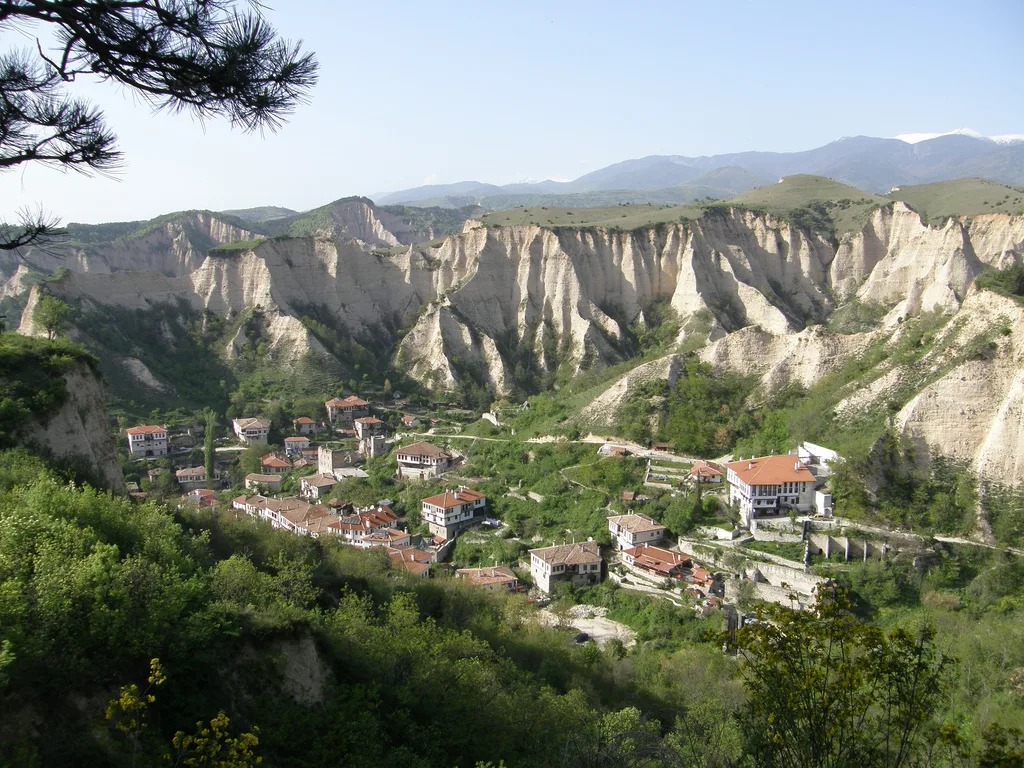
Melnik Sandstone Pyramids (Melnik Earth Pyramids) Visitor Guide
The Melnik sandstone pyramids (melnik earth pyramids) visitor guide helps you explore one of Bulgaria's most fascinating natural wonders. These towering spires create a surreal landscape that surrounds the smallest town in the country. Travelers often visit to witness the dramatic 100-meter cliffs and taste world-class red wine. This guide provides everything you need for a successful trip to the Pirin region in 2026.
For a visual sense of the formations and landscape before planning your visit, here's a 4K tour of the area:
Melnik sits 22 kilometers southeast of Sandanski and about 180 kilometers south of Sofia, close enough to the Pirin foothills and the Rila region for a longer loop through southern Bulgaria. Walking through the cobblestone streets feels like stepping back into the 19th century, when merchant families lined their courtyards with imported stained glass. Budget at least two nights if you want to hike to Rozhen Monastery, tour the wine cellars, and still have time for a proper sit-down meal. This guide covers the trail, the geology, and the real 2026 costs so nothing catches you off guard.
The Melnik Earth Pyramids: A Natural Spectacle
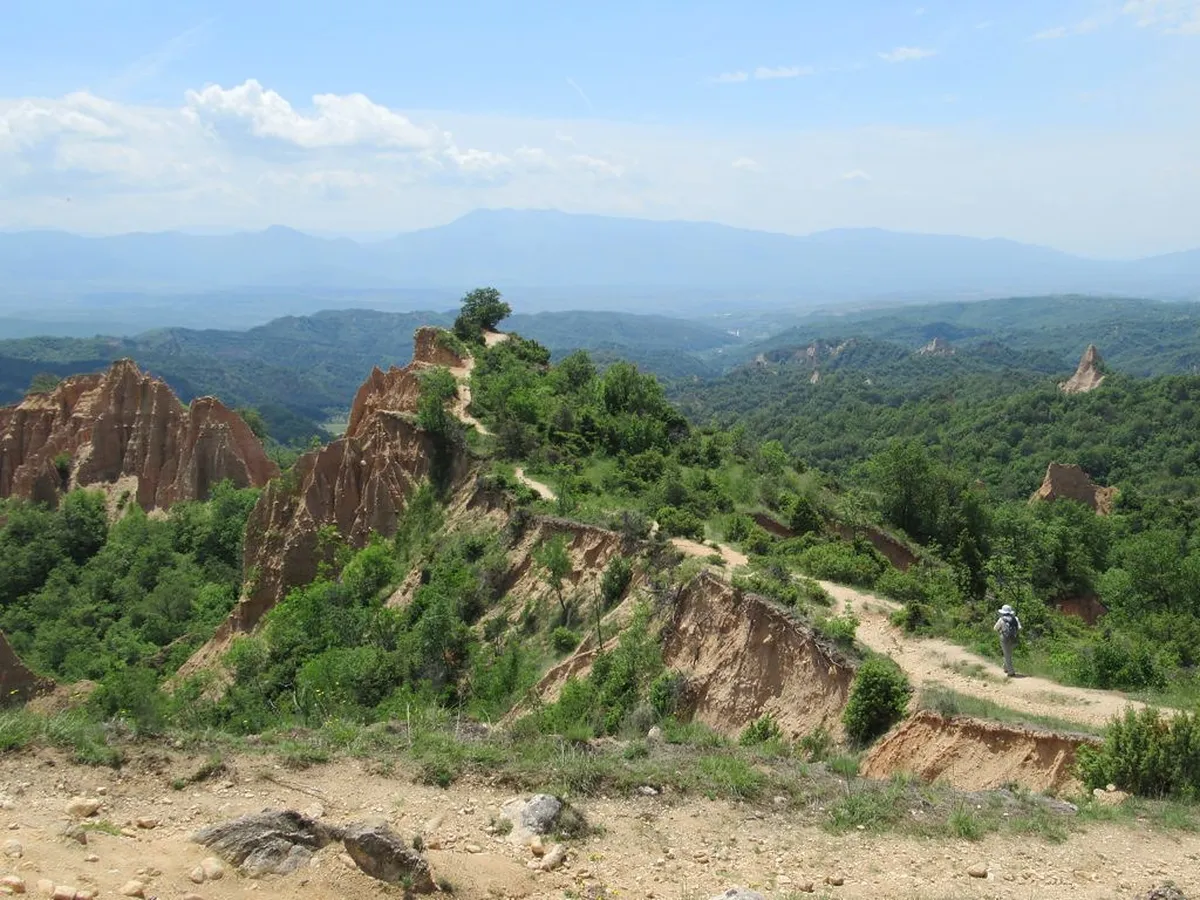
The Melnik Earth Pyramids are a striking natural spectacle in the foothills of the Pirin Mountains, rising up to 100 meters and shifting color with the angle of the sun. Geologists and locals divide the formation into three clusters spread across roughly 17 square kilometers: the Melnik group closest to town, the Karlanovo group to the east, and the Rozhen group along the monastery trail. Visitors often compare the jagged ridges to a fairytale kingdom carved from sand and clay. This protected natural landmark, declared in 1960, remains one of the most photographed attractions in Melnik today.
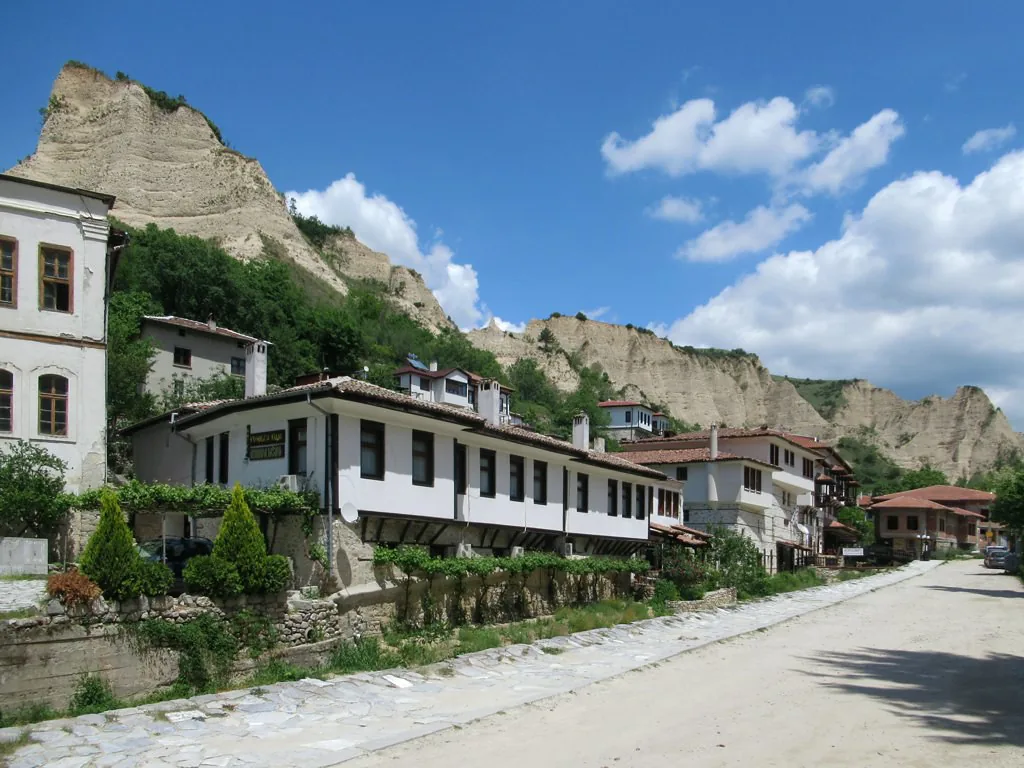
The pyramids take on shapes that read as mushrooms, obelisks, and needles, visible from almost any point in town or along the surrounding ridges. The scenery is most dramatic at sunset, when the sandstone glows deep orange against the darkening Struma valley. Planning your visit around golden hour, roughly 30 to 45 minutes before sunset in summer, gives you the best light for photos.
- Quick Facts for Your Visit
- Location: Southwest Bulgaria, Blagoevgrad Province
- Height: Up to 100 meters
- Town population: 385 people
- Distance from Sofia: 180 kilometers
- Distance from Sandanski: 22 kilometers
Geology and Formation: How the Sandstone Pyramids Were Created
The geological structure of the Melnik Earth Pyramids consists of Pliocene sands and light-colored clays laid down roughly 4 to 5 million years ago at the bottom of a shallow ancient lake in today's Sandanski-Petrich hollow. As the Pirin, Ograzhden, and Belasitsa massifs rose and the lake drained south, rivers and rain carved the soft rock into sharp peaks. The mineral mix gives the pyramids their pale yellow and reddish tones, and the tallest, steepest faces cluster near Karlanovo.
The interaction between sandstone and clay allows these vertical structures to remain standing despite heavy rain. The sandstone itself is porous and would wash away quickly on its own, but the clay layers bind the grains together like a natural cement, holding the spires upright for centuries at a time. This is the key difference from the Stob Pyramids near Kocherinovo, whose formations rely on thicker rock caps to protect softer material underneath rather than clay-bound sand. Geologists still study both sites to track how quickly the sculpting continues.
Heavy rainfall occasionally causes the Melnishka riverbed to fill with fast-moving water and sediment. This natural cycle constantly reshapes the base of the pyramids over several decades. Travelers should avoid hiking immediately after major storms due to the risk of slippery clay surfaces. Understanding the fragile nature of the sandstone helps visitors respect the designated walking paths.
If you are weighing Melnik against the Stob Pyramids for a single day trip, the choice usually comes down to time and interest. Stob sits about an hour from Sofia via the Rila road and suits a 30- to 45-minute roadside stop on the way to Rila Monastery. Melnik's formations are taller, spread over a much larger area, and sit inside a town with wine cellars, guesthouses, and a monastery hike, so it rewards a full day or an overnight stay rather than a quick detour.
Hiking the Trail: From Melnik to Rozhen Monastery
The primary hiking route connects the town of Melnik to the historic Rozhen Monastery, climbing along the ridge above the earth pyramids for roughly 6 kilometers one way. You can find the marked path on the AllTrails Melnik Route before you set out. The climb is steady rather than technical, and most walkers with moderate fitness cover it in about two hours at an easy pace.
Shade is limited on the ridge, so start early during summer months. The path winds through narrow sand canyons before opening onto wide mountain vistas, passing viewpoints where the spires drop away beneath your feet. Carry at least two liters of water — there are no springs along the way.
Budget about four hours round trip if you walk both directions, or arrange a return by taxi or the afternoon mini-bus that runs between Rozhen and Sandanski for a few leva — a shortcut several hikers use rather than retracing the same 6 kilometers back to Melnik. Rozhen Monastery (Nativity of the Mother of God) Visitor Guide is a good place to refill water bottles and rest before you decide which way to head back.
Travelers who cannot manage the ridge walk still have an option: a paved road connects Melnik to Rozhen village, so a taxi or rental car reaches the monastery gate directly, and the short, flat courtyard path inside gives a version of the same view without the climb. It is not the full ridge panorama over the pyramids, but it lets visitors with limited mobility, strollers, or a tight schedule see the monastery and the lower slopes of the formations.
Exploring Melnik: Bulgaria’s Smallest Town and Its History
Melnik is famously the smallest town in Bulgaria, with a population of just 385 people. This creates a paradox: a tiny village functions today as a major national cultural reserve, even though it was a commercial hub of more than 20,000 residents as recently as the 18th century. Trade routes shifted, wars and fires took their toll, and the town shrank to what stands today, where more than 96 buildings still carry cultural-heritage protection.
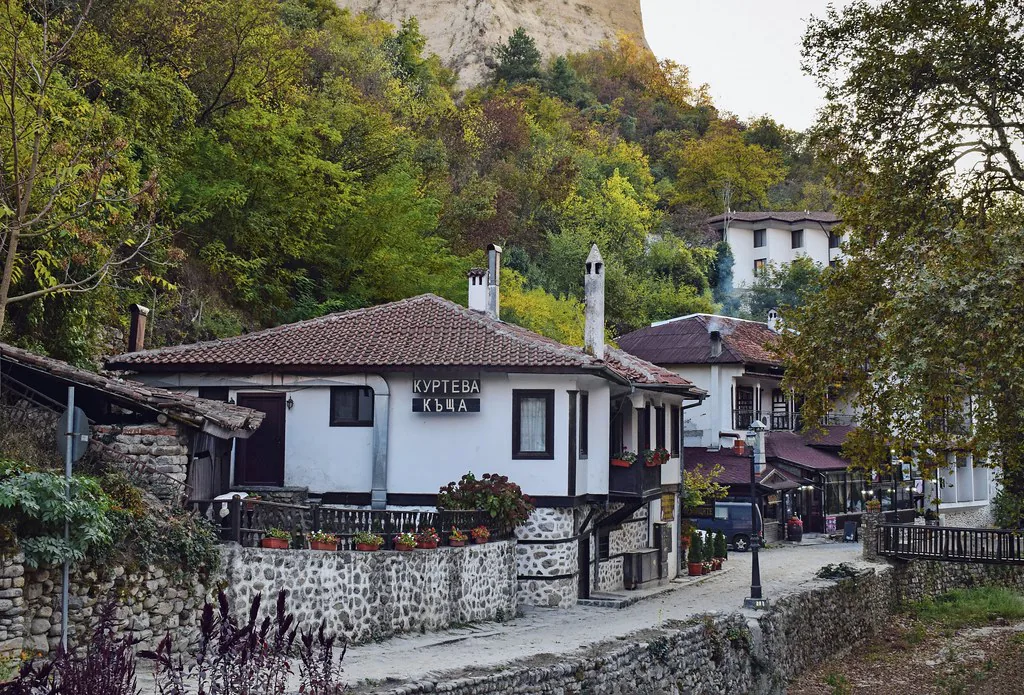
The architecture reflects the prosperity of the Bulgarian National Revival period, with whitewashed houses perched on steep hillsides and finished with large wooden balconies over stone foundations. Walking through the center feels like visiting an open-air museum dedicated to Balkan heritage. Despite its small size, the town keeps a lively atmosphere thanks to steady tourism.
The decline from regional capital to small village is easiest to trace at the ruins on the cliffs above town. The Despot Slav Fortress (St. Nicholas Fortress) Guide overlooks the pyramids from its 13th-century perch and is a short, free walk from the main street, on the same ridge route that continues on toward Rozhen. Today residents focus almost entirely on tourism and wine production, and a stroll through the side streets still turns up hidden chapel ruins and old cellar doors cut straight into the sandstone.
The Kordopulov House and Melnik’s Wine Heritage
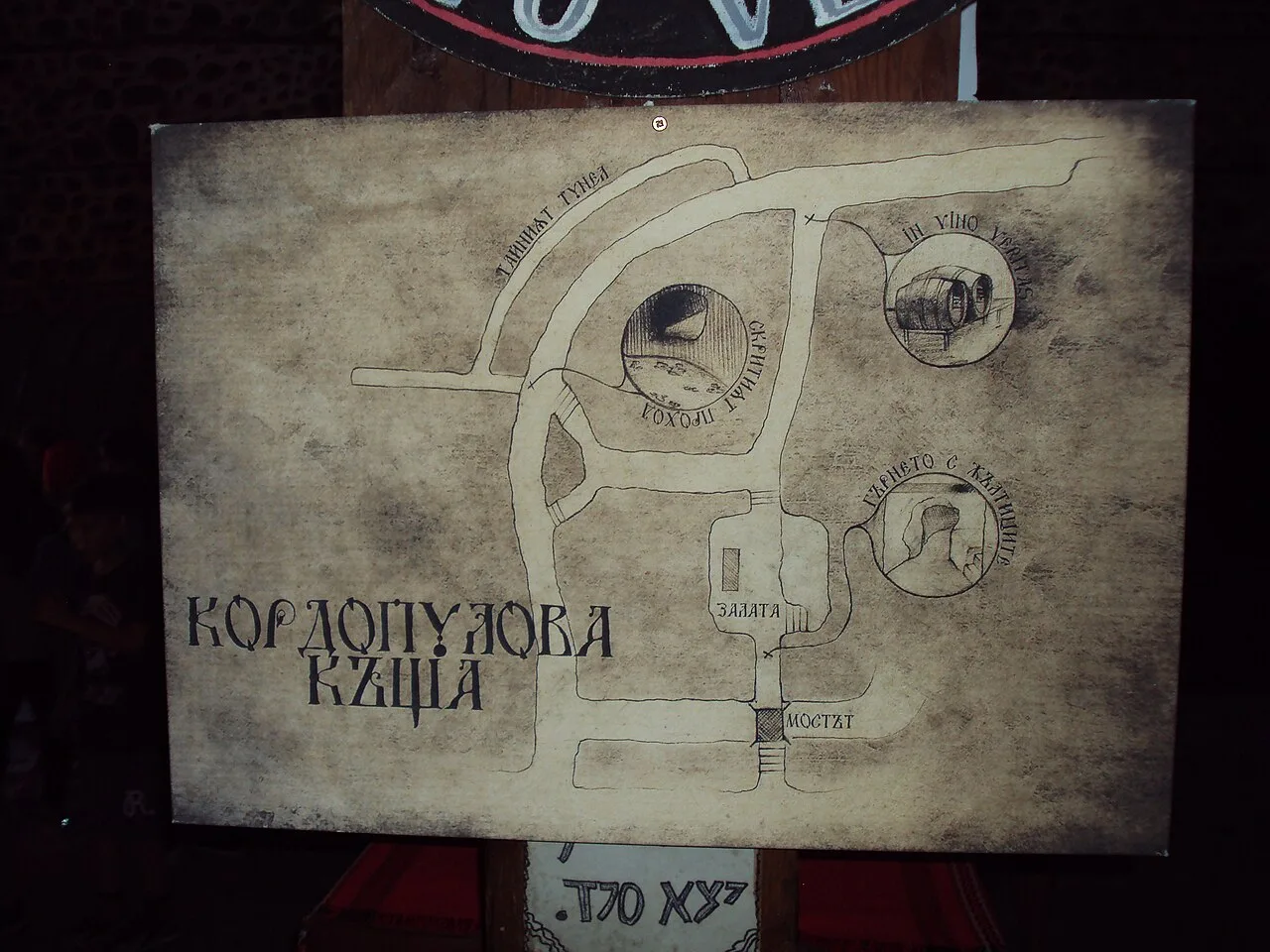
The 1754 Kordopulov House Visitor Guide is the largest National Revival house on the Balkan Peninsula. It belonged to a wealthy family of wine merchants who traded across Europe, and its interior still holds stained-glass windows in Venetian and Ottoman styles alongside a wine cellar cut into the rock. Entry costs about 5 BGN (roughly 2.5 EUR) per person, and the ticket covers both the house and the cellar.
Melnik is known for its dark, tannic red wine made from the Shiroka Melnishka Loza grape, a variety that grows almost nowhere outside this sandy, sun-baked microclimate. Locals call the style cherveno vino, and it has a long export history — Bulgarian sources credit Winston Churchill with ordering roughly 500 liters of Melnik wine a year through the 1940s. You can sample it at the Melnik Museum of Wine Visitor Guide in the town center.
Many local families still produce wine in private cellars dug deep into the sandstone hills. The constant temperature inside these tunnels provides the perfect environment for aging red varieties. You can often buy a liter of house wine directly from the producers for a low price. Pairing the wine with local cheeses creates an authentic Bulgarian culinary experience.
Practical Visitor Guide: Getting There, Costs, and Timing
Reaching Melnik takes some planning: it sits 180 kilometers south of Sofia and 22 kilometers southeast of Sandanski, the nearest town with a train station and frequent bus connections. The most reliable approach is a direct bus from Sandanski, which runs several times a day and takes about 30 minutes; you can check the stop location on Melnik Pyramids Google Maps. Drivers coming from Sofia follow the A3 and Struma motorway toward Sandanski, while those coming from Bansko take the longer loop through Gotse Delchev or back via Blagoevgrad rather than a direct mountain road — plan on roughly 1.5 to 2 hours either way.
Melnik has no bank or ATM; the nearest cash machine is in Sandanski, 22 kilometers away, so bring enough leva for your whole stay. The historic core is a single narrow, stepped street that cars cannot drive through, so vehicles park in the paid lot at the town entrance and everyone walks the last stretch to their guesthouse — a detail that surprises first-time drivers who expect to pull up to the door.
Budgeting for 2026 should account for rising costs in the most popular tourist areas. Expect to pay between 40 EUR and 60 EUR for a standard double room per night. Daily expenses for food and museum entries typically average around 50 BGN per person.
The best time to visit is during spring or fall when temperatures are mild. Summer can be extremely hot with temperatures often exceeding 35 degrees Celsius. Winter offers a quiet atmosphere but some hiking trails may be muddy or icy. Plan for at least two full days to see the pyramids and the surrounding monasteries.
Where to Stay and Eat: Local Recommendations
Finding a place to stay is easy, as most historic houses operate as small guesthouses. We recommend looking at the Melnik Pyramids Guesthouse for a central location. These accommodations often include a traditional breakfast with homemade jam and yogurt. Reserve your room at least two weeks in advance during the peak summer season.
Be aware of price inflation at restaurants located directly on the main tourist strip. A light meal might cost 19 BGN while a house special can reach 75 BGN in some spots. Look for smaller taverns tucked away in the side streets for more authentic pricing. Local dishes like Melnik kavarma are hearty and perfect after a long day of hiking.
Many restaurants offer outdoor seating under old grapevines for shade. Service can be slow on busy weekends, so eat slightly earlier than usual. Check whether the menu already includes a service charge before you calculate a tip.
Beyond the Pyramids: Other Sights in the Pirin Region
The Pirin region offers other attractions for those staying longer than a day. Pirin National Park, a UNESCO World Heritage site, is a short drive north and features high-altitude glacial lakes and some of the oldest trees in Bulgaria.
The rock mushrooms near Rozhen are another geological curiosity worth a quick visit. These smaller formations look like giant fungi made of white and pink volcanic tuff. They sit near the main road and require very little walking to reach, and the site is usually less crowded than the main pyramid trails around Melnik.
Sandanski is a nearby town known for its healing mineral springs and spa resorts. It is a good place to rest sore legs after hiking the sandstone ridges. The town park in Sandanski is one of the largest and most beautiful in the country, and combining a trip to Melnik with a spa day makes for a well-balanced short break.
Continue planning: Use Melnik Attractions: Things to Do in Bulgaria's Smallest Wine Town to connect this guide with the rest of your Bulgaria itinerary.
Frequently Asked Questions
What are the Melnik Sandstone Pyramids?
They are dramatic eroded sandstone rock formations, geologically known as hoodoos or earth pyramids, that surround the town of Melnik in southwestern Bulgaria's Pirin wine region. Shaped by rainfall and erosion into towers, mushrooms, and obelisks, they cover about 17 square kilometres and were declared a natural landmark in 1960.
Is there an entry fee for the Melnik Pyramids?
No. The pyramids are a free, open-access outdoor natural site with no ticket office or gate, reachable on foot from Melnik and along the trail toward Rozhen village and monastery.
How tall are the pyramids?
The formations reach up to about 100 metres in height, with the tallest, steepest cliffs found near Karlanovo. They stand at altitudes between roughly 350 and 850 metres in the valley of the Melnishka River.
How were they formed?
They formed from Eocene marine sediments - mainly sandstones and conglomerates - deposited some 40-50 million years ago, later uplifted and sculpted over time by rainfall, running water, and wind erosion into their distinctive pyramid shapes.
Can you hike among the Melnik Pyramids?
Yes. Marked footpaths run through and above the formations, and the classic walking route links Melnik with Rozhen Monastery (about 6 km), passing viewpoints over the pyramids. Bring water and sun protection, as the trails are open and exposed.
Are these the same as the Stob Pyramids?
No. The Melnik Earth Pyramids surround the town of Melnik in the far southwest near the Greek border. The Stob Pyramids are a separate, smaller formation near Stob village at the foot of the Rila Mountains, roughly 100 km to the north - a different site.
Where exactly are the Melnik Pyramids?
They lie around Melnik in Blagoevgrad Province, about 180 km south of Sofia and 65 km south of Blagoevgrad, at approximately 41.526 N, 23.395 E. The formations divide into three groups: Melnik, Karlanovo, and Rozhen.
The Melnik sandstone pyramids provide an unforgettable experience for nature lovers and history enthusiasts. From the 100-meter spires to the ancient wine cellars, every corner of this town tells a story. Use this visitor guide to plan your logistics and avoid common tourist pitfalls. Bulgaria's smallest town is ready to welcome you with its unique charm and golden landscapes in 2026.
For more Melnik planning, read our 10 Best Things to Do in Melnik (2026), Melnik Wine: Guide to Bulgarian Varietals & Wine Country, and Melnik Sandstone Pyramids Travel Guide guides.
To verify current details, consult the Melnik Sandstone Pyramids (Melnik Earth Pyramids) on Wikipedia and Melnik Sandstone Pyramids (Melnik Earth Pyramids) official site.