Oslekov House Visitor Guide: History, Tickets, and Tips
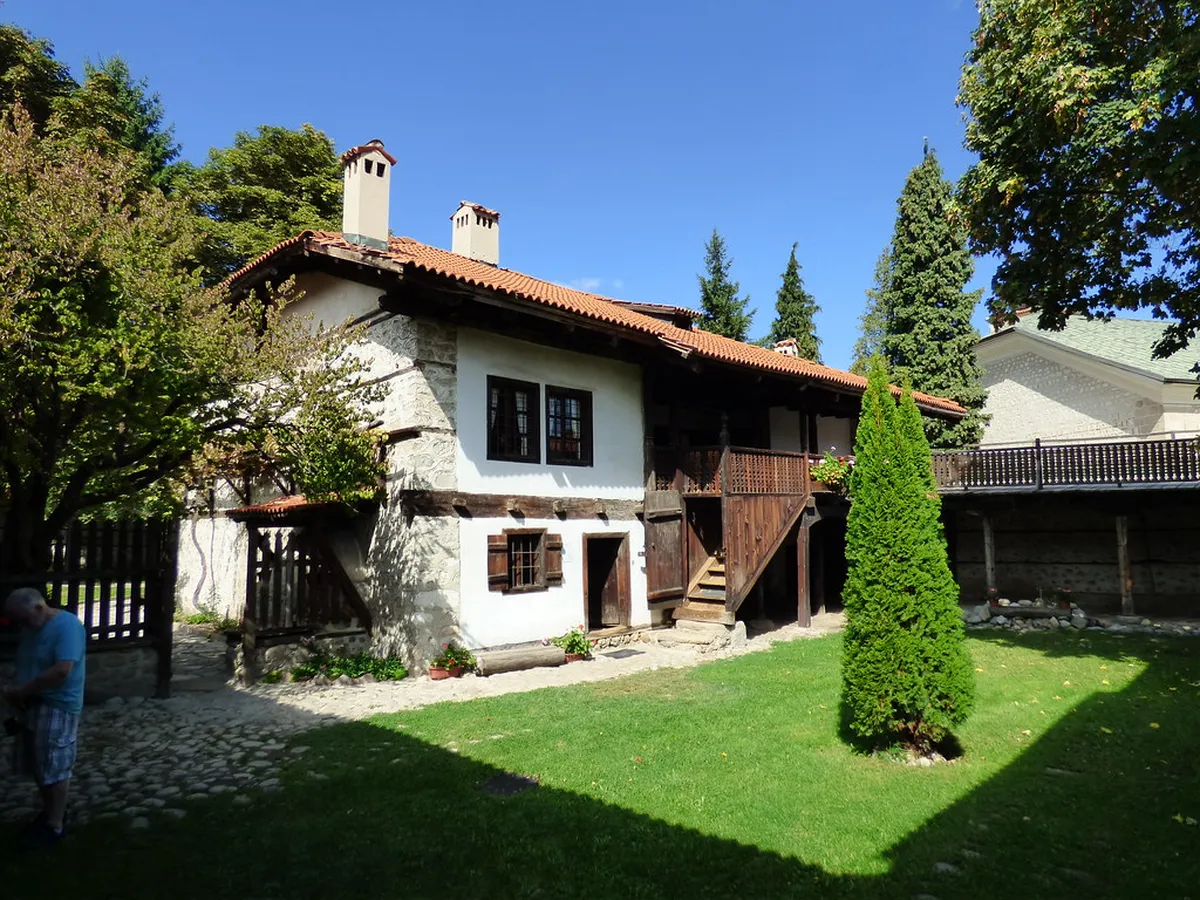
Koprivshtitsa is one of the most beautiful museum towns in Bulgaria, and the Oslekov House is its showpiece. Built for a wool merchant in the mid-1850s, this three-columned blue mansion is generally judged the finest National Revival house in a town that protects 383 historic monuments. Most visitors come specifically for the wall paintings and carved ceilings, then discover the rest of the town almost by accident.
To see the ornate second floor before your visit:
This oslekov house visitor guide covers 2026 ticket prices, the six-house combined museum pass, transport from Sofia, and what actually happened inside these walls in 1876. Walking the cobblestone lanes of Koprivshtitsa Attractions feels like stepping into a 19th-century engraving, and the Oslekov House is the natural place to start.
Historical Significance of Oslekov House
Nencho Oslekov was a wealthy wool merchant who built this house between 1853 and 1856. He traded across the Ottoman Empire and returned with ideas about Western-style living that few homes in the town could match. His wealth paid for craftsmen brought in specifically for the project, and the result quickly became the benchmark other merchant families tried to reach.
The house's history is inseparable from the 1876 April Uprising. Nencho Oslekov backed the revolutionary movement financially and logistically, and Ottoman authorities executed him for it once the rebellion was crushed. His family kept the house, and it eventually passed into state hands as one of Koprivshtitsa's protected museum properties.
Today the museum preserves the family's furniture, clothing, and household tools largely as they were used. The rooms are arranged to show how a prosperous Revival-era merchant family actually lived, not as a generic history display. It remains one of the most complete domestic interiors surviving from that period anywhere in Bulgaria.
Architectural Highlights and the Blue House Frescoes
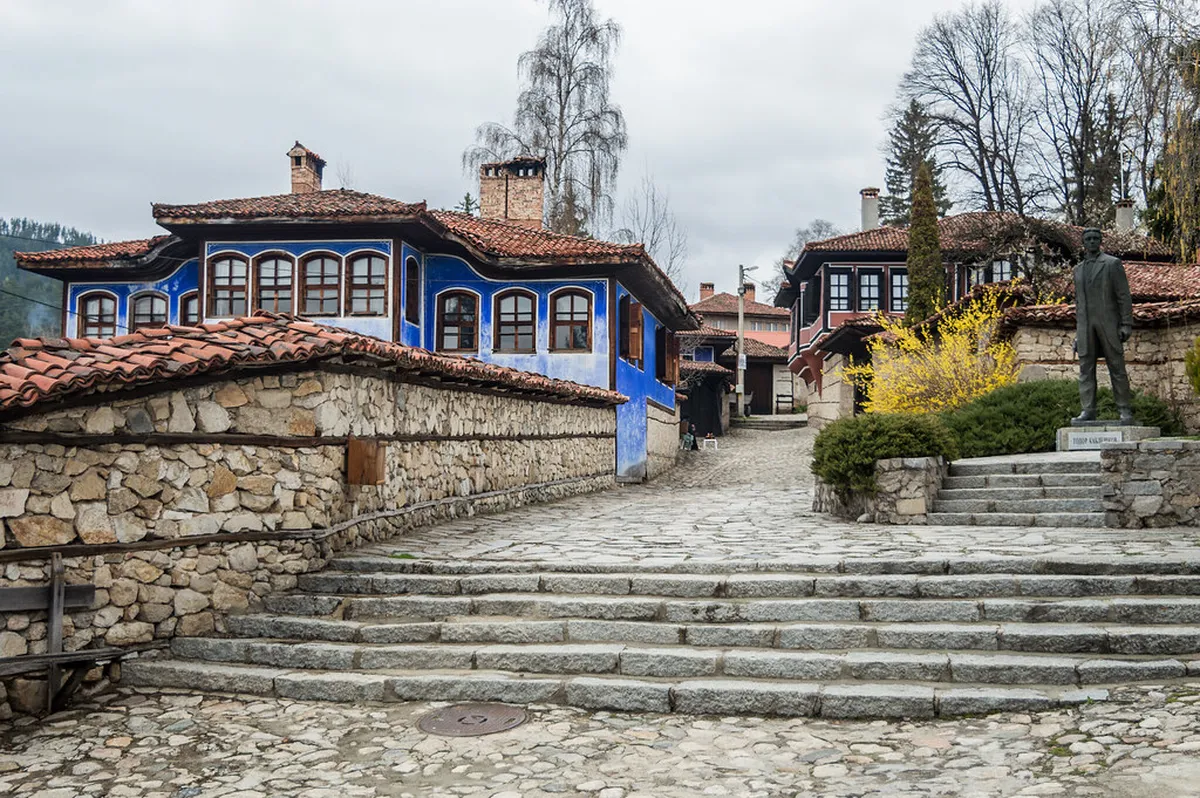
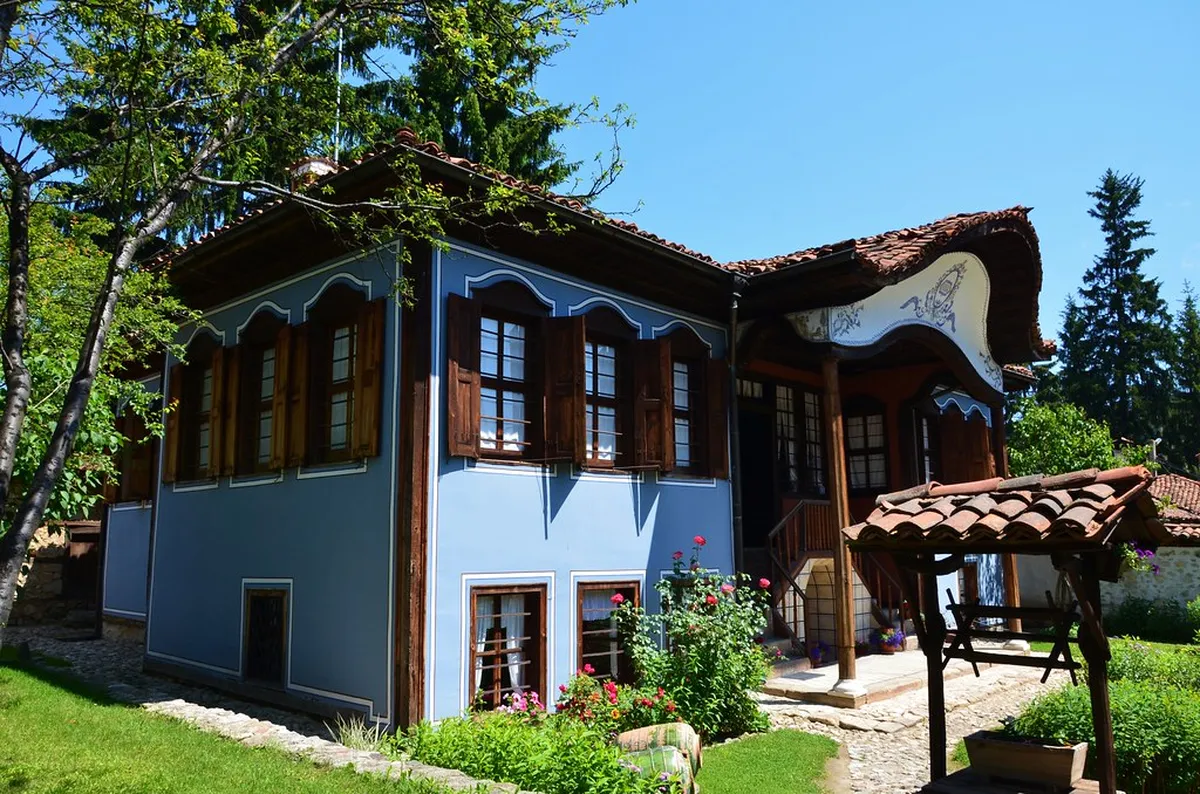
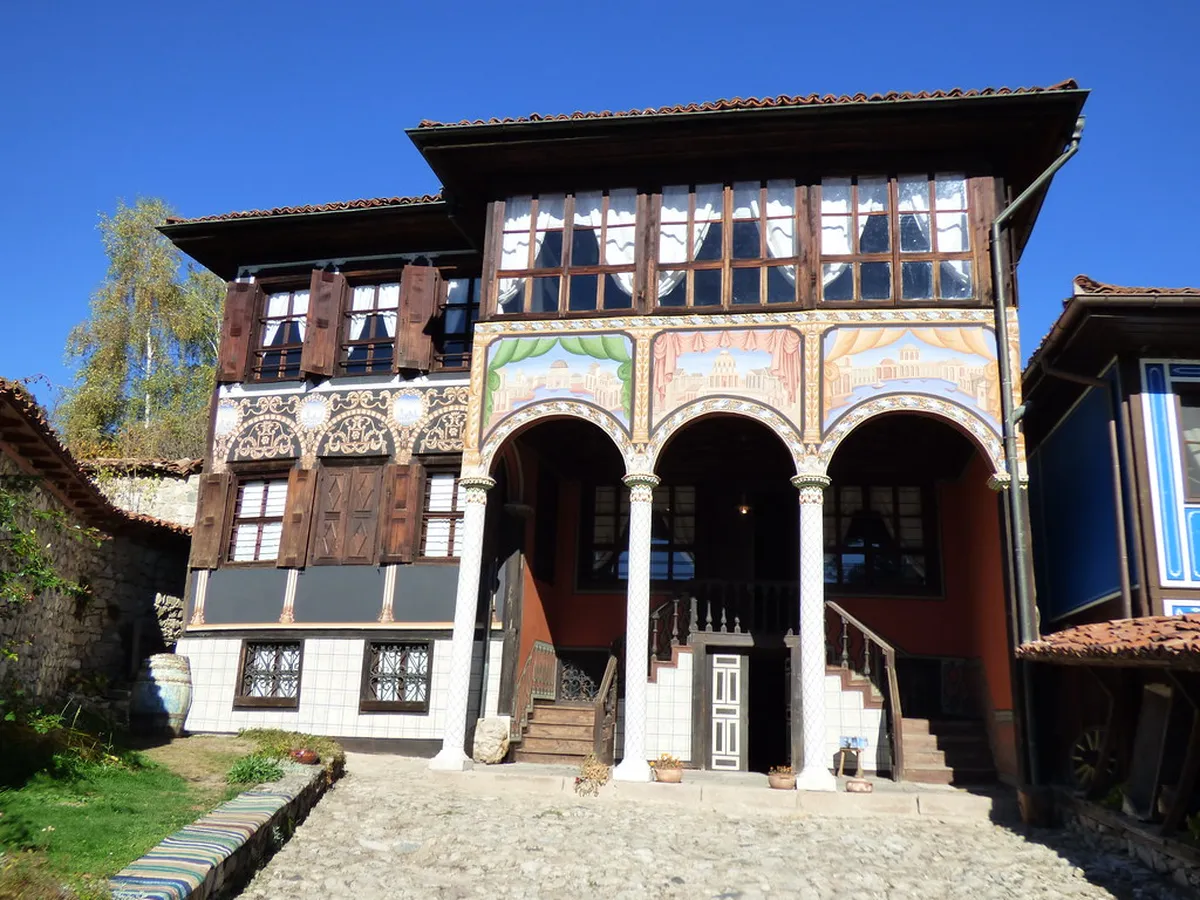
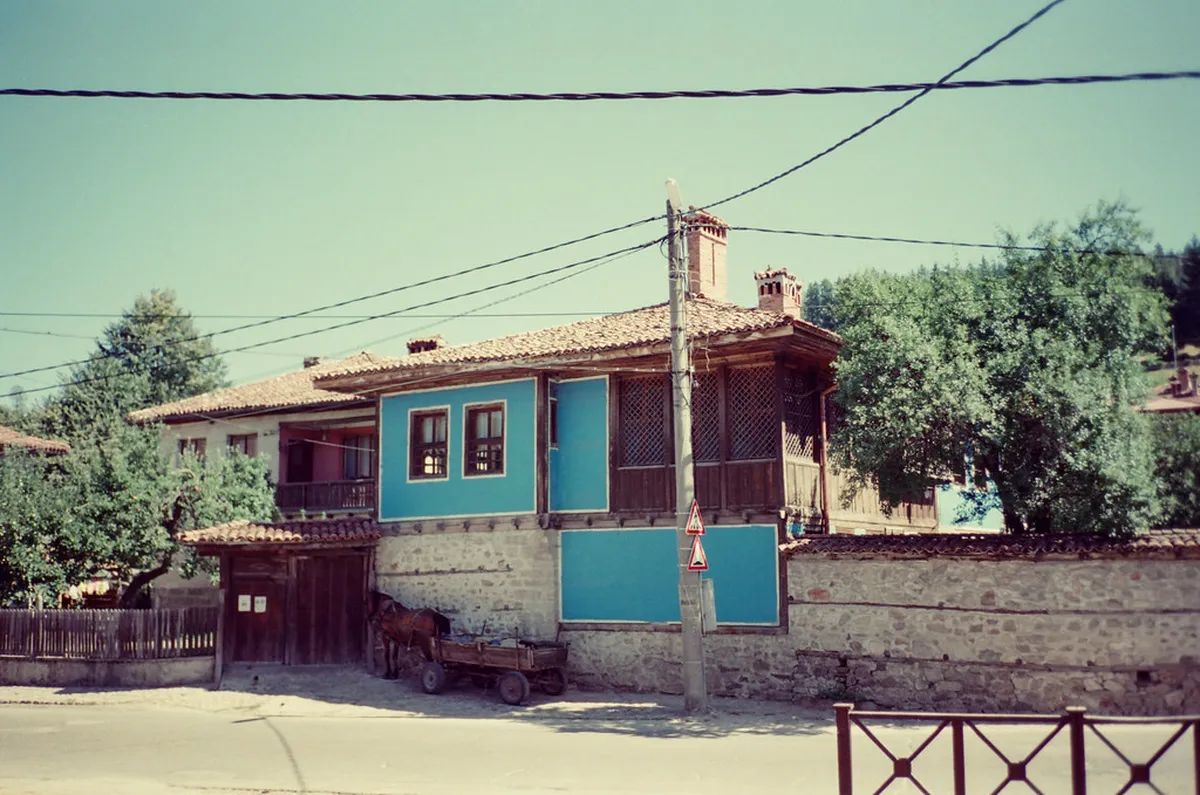
Locals still call it the Blue House for its saturated indigo facade, unusual among Koprivshtitsa's more pastel Revival homes. Three columns carved from imported Lebanese cedar dominate the entrance, a deliberate status marker at a time when shipping timber that far was expensive.
The house is also famously asymmetrical. Oslekov planned a fully symmetrical mansion but only completed half of it before building restrictions of the period stopped the rest, leaving a lopsided floor plan that architecture students still travel here to study. It is one of the few Revival houses in town where the imperfection, not a flawless facade, is the main draw.
Inside, frescoes painted around 1861 by masters of the Samokov school cover the walls and ceilings with scenes of Venice, Constantinople, and other cities the Oslekov family likely never visited but wanted to display anyway. The wood-carved ceilings use a different geometric pattern in almost every room, and the level of detail is generally rated above the other five house-museums on the combined ticket.
Essential Visitor Information (Hours & Tickets)
Prices are set in euros as of 2026. A single ticket to Oslekov House alone costs 5.00 EUR (about 9.78 BGN) for a standard adult, with the same 5.00 EUR rate for students and pensioners. Most visitors instead buy the combined ticket covering all six house-museums for 10.00 EUR (19.56 BGN), which pays for itself the moment you visit a third house.
Two prices worth knowing that many guides skip: a family ticket covering two adults and their children costs 20.00 EUR, and beats buying two separate adult combined tickets once even one child is in the group. An audio guide is also available for 15.00 EUR per person, useful since in-room signage leans on short Bulgarian and English placards rather than detailed wall text. Admission is free for everyone on the last Monday of each month, and free year-round for visitors with disabilities.
Buy the combined pass at the ticket office on the central square or at the first house-museum you enter; either issues the same pass, valid across multiple days, so there is no need to rush through all six in one afternoon. The house is at Генерилото 4, 2077 Koprivshtitsa, a short walk from the main square, and it keeps summer hours of 09:30 to 17:30 from 1 April to 1 November, switching to winter hours of 09:00 to 17:00 the rest of the year, with no midday closure in either season. Check the Official Koprivshtitsa Museum Directory before a winter visit, since individual houses each close one extra day midweek.
- Paying for Oslekov House alone makes sense only if you have under an hour in town and want to see just the best-preserved interior.
- The combined ticket becomes the better deal the moment a second house is on the itinerary, since 10.00 EUR for six houses beats 5.00 EUR per single entry after just two stops.
- Families should compare the 20.00 EUR family ticket against buying combined passes per adult before queueing, since the savings scale with how many children are along.
How to Get to Koprivshtitsa and the Oslekov House
Koprivshtitsa sits about 110 km from Sofia in the Sredna Gora mountains, roughly 1.5 to 2 hours by car via the A1 Trakia motorway, or a longer but more scenic drive on Route 6 through the Sub-Balkan foothills. Parking is available near the river and central square for a small fee, and the house itself is easy to find using the Google Maps Location: Oslekov House.
The train is the cheapest and most reliable option. Bulgarian Railways runs the Sofia-Plovdiv line through Koprivshtitsa station, with the faster services covering the distance in around two hours; the same line makes Koprivshtitsa a workable day trip from Plovdiv in the other direction too. Tickets run roughly €7 each way, and booking a seat in advance is worth doing on weekends.
The catch is that Koprivshtitsa's train station sits 8 km below the actual town, too far to walk with luggage. A minibus shuttle meets every arriving train and costs about €2 per person for the 10 to 15 minute ride up to the central square; the return timetable is posted at the station only, so photograph it on arrival rather than relying on memory. About three buses a day also run from Sofia's Central Bus Station, taking roughly three hours, though there is no direct bus link from Plovdiv.
Once you are in town, everything is within walking distance. The walk from the bus stop to Oslekov House takes about five minutes along narrow, cobbled streets that follow the sound of the river toward the museum district.
Insider Tips for a Smooth Visit
Wear shoes with real grip. Koprivshtitsa's cobblestones are uneven and slick after rain, and the walk from the bus stop to Oslekov House alone is enough to twist an ankle in the wrong footwear. Skip heels or thin-soled sandals regardless of the season.
The house runs cold. Like the other Revival museums in town, it relies on the original stone walls and thick shutters rather than modern heating, so bring a layer if you visit between November and March. Photography is generally permitted without flash, since flash exposure damages the 1861 frescoes over time, and some rooms restrict photos entirely, so ask the attendant on duty rather than assuming.
Bring cash. Museum entry, the train station shuttle, and many small shops in town do not take cards, even though most restaurants and guesthouses do. Visitors who post about their trips on TikTok, Instagram, and Reddit consistently flag two things about Oslekov House: how affordable the ticket feels for what you see, and how willingly the staff walk you through individual rooms in English even without a formal guided tour.
Mobility is worth planning around. The house has steep original wooden stairs and narrow doorways with no elevator, and the same is true of the other five house-museums, so allow extra time if stairs are difficult for anyone in your group.
Other Must-See Attractions in Koprivshtitsa
The combined ticket actually covers six house-museums, and Oslekov House is only the best known of them. Todor Kableshkov House-Museum Visitor Guide tells the story of the man whose "Blood Letter" triggered the April Uprising, while Georgi Benkovski House-Museum Visitor Guide covers the uprising's military side with period weapons and documents.
Dimcho Debelyanov House-museum Visitor Guide, another blue-painted mansion, is the birthplace of one of Bulgaria's best-loved poets and suits visitors more interested in literature than politics. Lyutov House (Lutova House) Visitor Guide rounds out the well-known five with a focus on everyday household craftsmanship rather than a single famous resident. The sixth house on the pass, Lyuben Karavelov House, honors the writer and revolutionary and sits a short walk from the others.
Beyond the house-museums, the First Shot Bridge (Kalachev Bridge) Visitor Guide marks the exact spot where the April Uprising's opening shot was fired in 1876, a five-minute walk from the town center. The climb to the Georgi Benkovski Monument is gentle enough for most families and rewards the effort with a full view of the town's red rooftops against the Sredna Gora hills.
Where to Eat and Stay Nearby
Koprivshtitsa's mehanas serve the same hearty dishes found across the region: banitsa for breakfast, kavarma stewed slowly with meat and peppers, shopska salad topped with grated white cheese, and tarator, a cold cucumber-yogurt soup that suits the town's warm summer afternoons. Most of these taverns cluster around the main square, a two-minute walk from Oslekov House.
Staying overnight is worth it once the day-trip crowds leave and the town quiets down. Many guesthouses occupy restored Revival-era homes with the same wood-carved ceilings you see in the museums, and waking up to the sound of the river is a large part of the appeal.
Book ahead for summer weekends, when Sofia residents fill the town's limited guesthouse rooms. Many hosts include breakfast with homemade jam and yogurt, and cash is still the safer bet for smaller family-run guesthouses even though larger properties and restaurants generally take cards.
Prices for a double room typically run 60 to 100 BGN a night, making Koprivshtitsa an affordable base for a long weekend built around the house-museums and the surrounding hills.
Continue planning: Use Koprivshtitsa Attractions: 6 House-Museums & Things to Do to connect this guide with the rest of your Bulgaria itinerary.
Frequently Asked Questions
Is Oslekov House covered by the combined Koprivshtitsa museum ticket?
Yes. Oslekov House is one of the six house-museums run by the Koprivshtitsa Directorate of Museums, all covered by a single combined ticket costing 10.00 EUR (19.56 BGN) for adults and 5.00 EUR (9.78 BGN) for students and pensioners. A single-museum ticket for just one house is 5.00 EUR (9.78 BGN) for adults, so the combined ticket is the better value if you plan to see more than two houses.
What makes Oslekov House worth visiting?
Built in 1853-1856 for merchant Nencho Oslekov, it is considered the most beautifully decorated National Revival house in Koprivshtitsa, famous for its three-columned facade, carved wooden ceilings and richly painted walls executed by masters of the Samokov school. Inside it now functions as an ethnographic museum showing 19th-century daily life, textiles and embroidery.
What are the opening hours?
The Koprivshtitsa museums keep summer hours of 09:30-17:30 (1 April to 1 November) and winter hours of 09:00-17:00 (1 November to 1 April), with no lunch break. Individual houses each close one day midweek, so confirm the exact closure day at the ticket office on the central square before planning your route.
How do I get to Koprivshtitsa from Sofia?
Koprivshtitsa lies about 110 km east of Sofia. Direct trains from Sofia Central Station reach Koprivshtitsa station in around two hours, but the station is about 9 km below the town, where a municipal shuttle van meets each train and drives passengers up to the centre. There are also about three daily buses from Sofia Central Bus Station (roughly 3 hours), and driving via the A1 Trakia motorway takes about 1.5 hours.
Can I get to Koprivshtitsa from Plovdiv?
Yes. Koprivshtitsa sits between Sofia and Plovdiv in the Sredna Gora mountains, and the same Sofia-Plovdiv rail line serves Koprivshtitsa station, so it works as a day trip from either city. As with arrivals from Sofia, allow time for the shuttle van that connects the valley station to the town centre and plan your return around the limited daily train timetable.
How long do I need to see the town and its museums?
A half to full day is typical. The six house-museums, including Oslekov House, are all within a short walk of one another in the compact old town, so a focused visit of three or four houses takes two to three hours, while a relaxed full day lets you cover all six plus the bridges and monuments of the April Uprising.
Is there a way to visit for free?
The Directorate of Museums offers free admission on the last Monday of each month and for visitors with disabilities. On all other days the standard combined or single-museum ticket applies, purchased at the ticket office or tourist information office on the central square.
Oslekov House earns its reputation as Koprivshtitsa's finest Revival mansion, and the 10.00 EUR combined ticket makes it easy to see the other five house-museums in the same afternoon. Plan around the train shuttle, bring cash, and dress for cobblestones rather than city sidewalks.
Whatever else you skip in this town, do not skip the frescoes inside the Blue House. Bring a camera without a flash, wear real shoes, and give yourself at least half a day to take in Bulgaria's revolutionary history at walking pace.
For more Koprivshtitsa planning, read our 12 Best Things To Do in Koprivshtitsa (2026) and The Six Koprivshtitsa House-Museums: Combined Ticket Guide (2026) guides.
For official details, visit the Oslekov House on Wikipedia, Oslekov House on Wikipedia, Oslekov House official site, Oslekov House official site and Oslekov House official site.