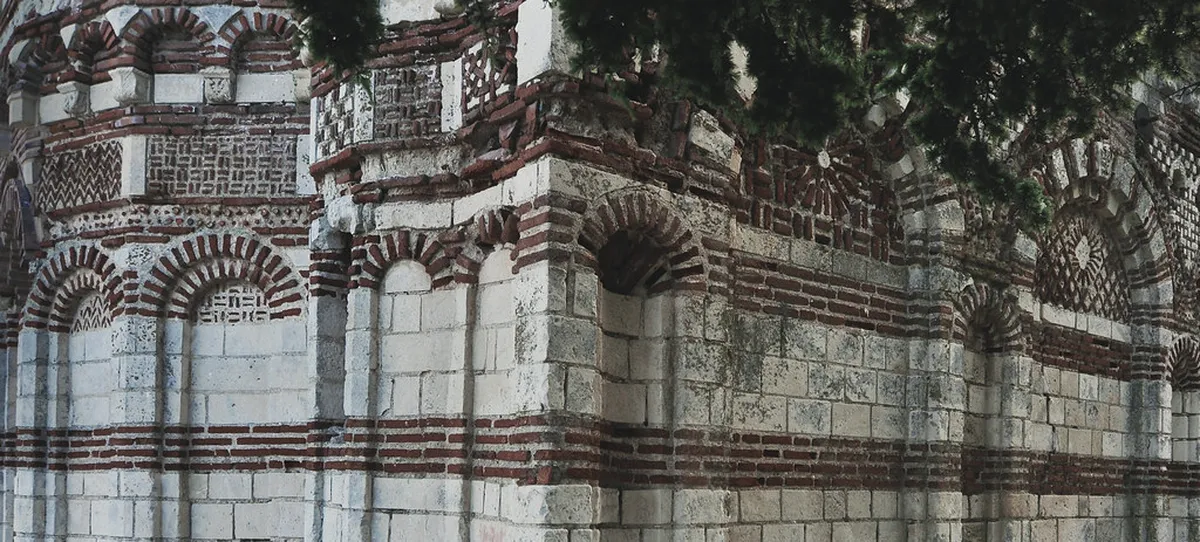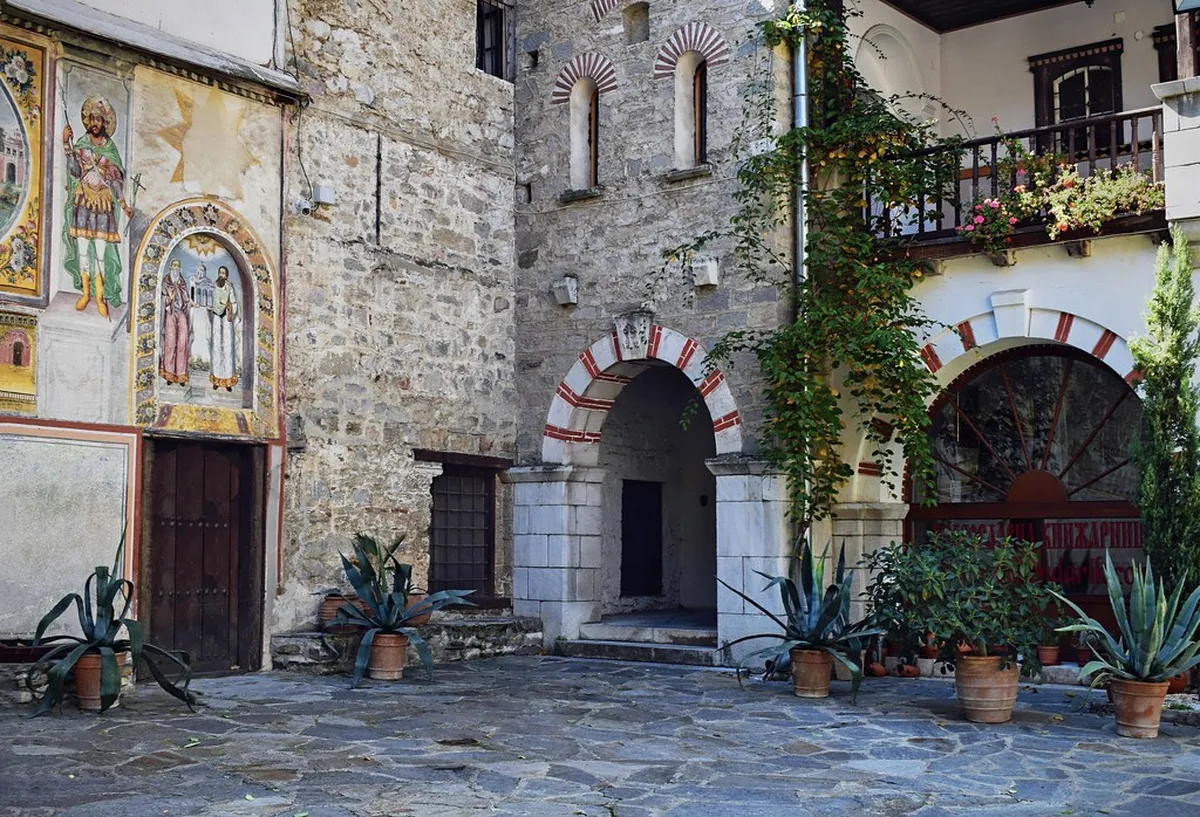
Bachkovo Monastery
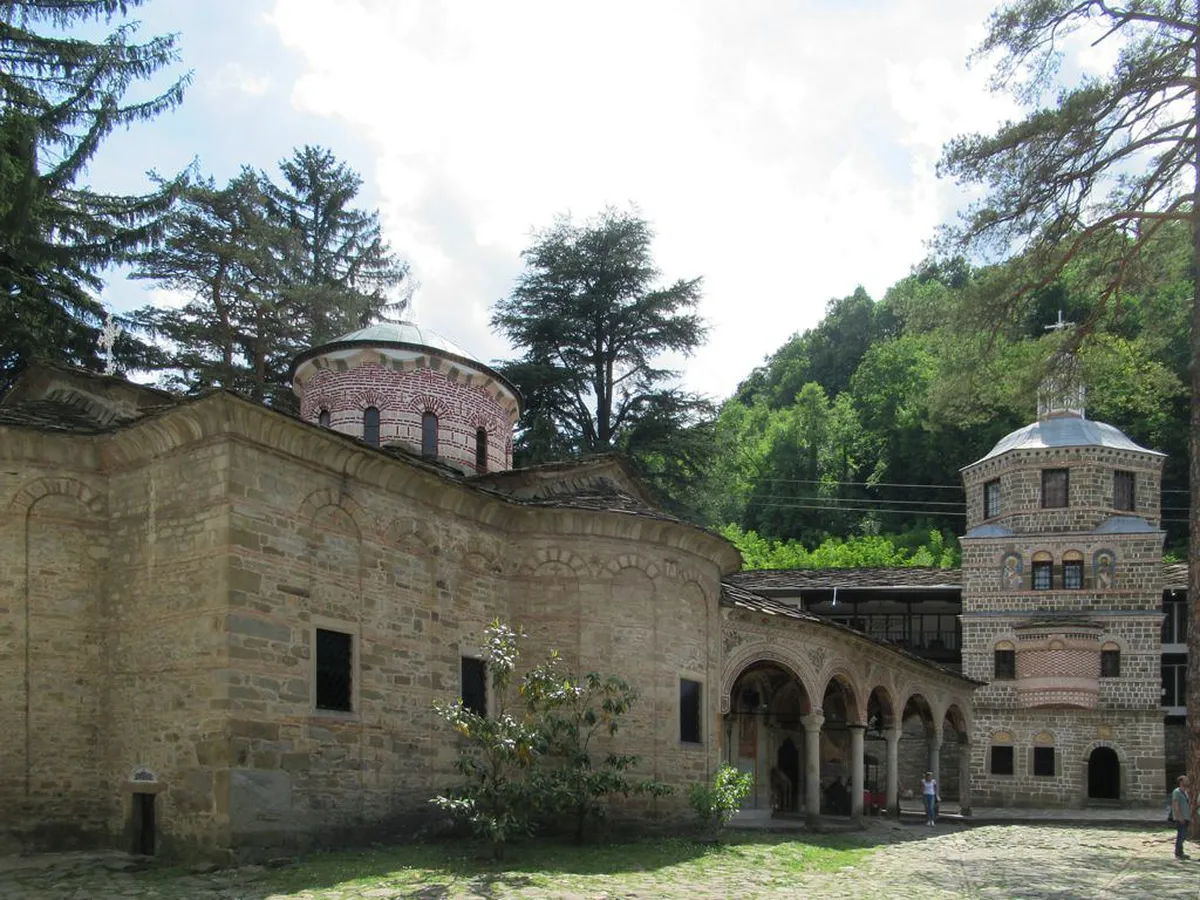
Nestled in the lush folds of the Rhodope Mountains, Bachkovo Monastery Visitor Guide stands as the second-largest monastic complex in Bulgaria. This spiritual landmark draws thousands of visitors who seek to witness its unique blend of Byzantine, Georgian, and Bulgarian traditions. Founded nearly a millennium ago, the site remains a vibrant center of Orthodox life and pilgrimage.
To preview the monastery's courtyards and scale, here's a guided walkthrough:
The monastery sits along the Chepelarska River, 10 kilometres south of Asenovgrad and 30 kilometres from Plovdiv. Most visitors arrive as part of a Bachkovo Monastery day trip from Plovdiv, combining it with Asen's Fortress on the same route. For full transport options including buses and taxis, see the dedicated Plovdiv to Bachkovo Monastery transport guide.
While Rila Monastery Visitor Guide commands more international fame, Bachkovo offers a quieter and in many ways richer encounter with medieval Bulgaria. The complex holds three distinct churches, a 17th-century refectory with pagan philosophical murals, a bone-vault ossuary, and one of the most venerated icons in the Balkans. It is a place that rewards visitors who take time to look closely.
The History and Georgian Legacy of Bachkovo Monastery
The monastery was founded in 1083 by Gregory Pakourianos, a Georgian-born Byzantine military commander who held the title of Domestic of the Schools of the West. He donated the land and endowed it as a Georgian Orthodox seminary, teaching religion, mathematics, history, and music. The founding charter, known as the Typikon, was written in Greek and survives as one of the oldest documents connected to the site.
For its first two centuries, Bachkovo functioned primarily as a Georgian institution. The founding statutes required monks to be fluent in Georgian, a condition that preserved the community's distinct cultural identity long after its patron's death. This Georgian connection distinguishes Bachkovo from virtually every other monastery in Bulgaria, most of which were founded under purely Slavic patronage.
The Ottoman conquest brought destruction in the late 14th century. Bulgaria's last patriarch, Evtimiy, was reportedly exiled here after the fall of Tarnovo. The complex was gradually rebuilt from the late 16th century onward, and today it sits on the UNESCO Tentative List as a site of outstanding cultural significance. Unlike many Bulgarian monastery circuit that were razed entirely, Bachkovo retained its ossuary from the original 11th-century foundation — the only pre-Ottoman structure still standing on the grounds.
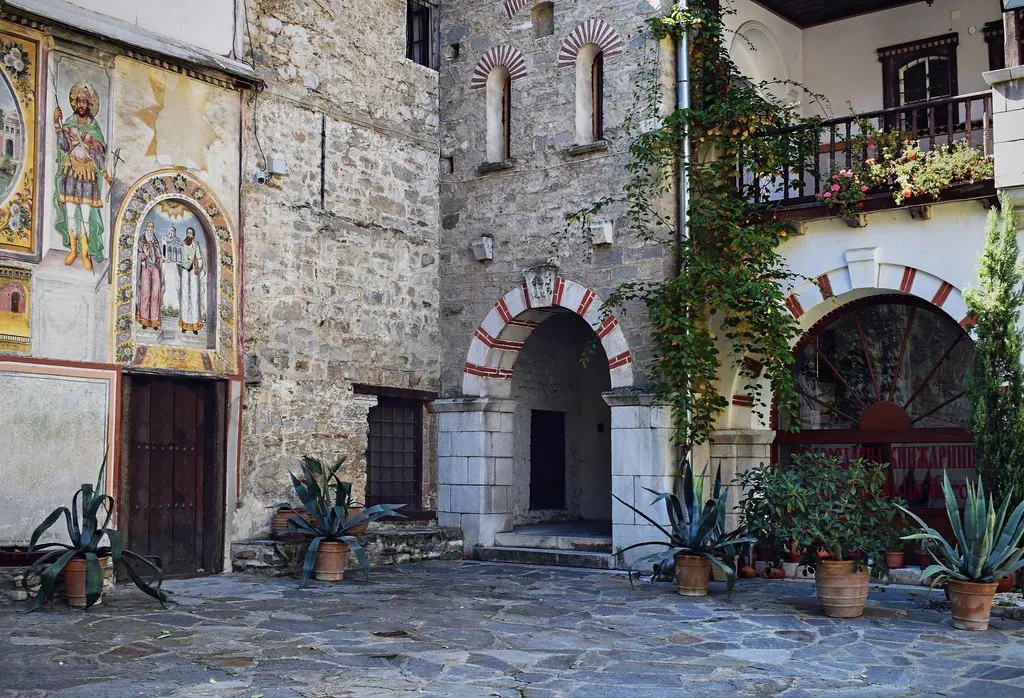
The Cathedral Church of the Assumption of the Virgin Mary
The Cathedral Church, completed in 1604, is the physical and spiritual heart of the complex. It has three naves, an apse, a narthex, and a cupola, with every interior surface covered in frescoes. The nave paintings date from 1850 and were cleaned of centuries of candle soot in relatively recent years, so the colours visitors see in 2026 are close to their original brilliance.
Inside, the iconographic programme is dense and intentional. The three-fingered blessing depicted in multiple images of Christ signals the Holy Trinity to Orthodox viewers. The western wall shows the Assumption of the Virgin — a standard image in Bulgarian churches — alongside scenes from both the Old and New Testaments, including the Last Supper and Jacob's Ladder. The two founding Bakuriani brothers are portrayed holding a model of the church building, a common donor portrait convention.
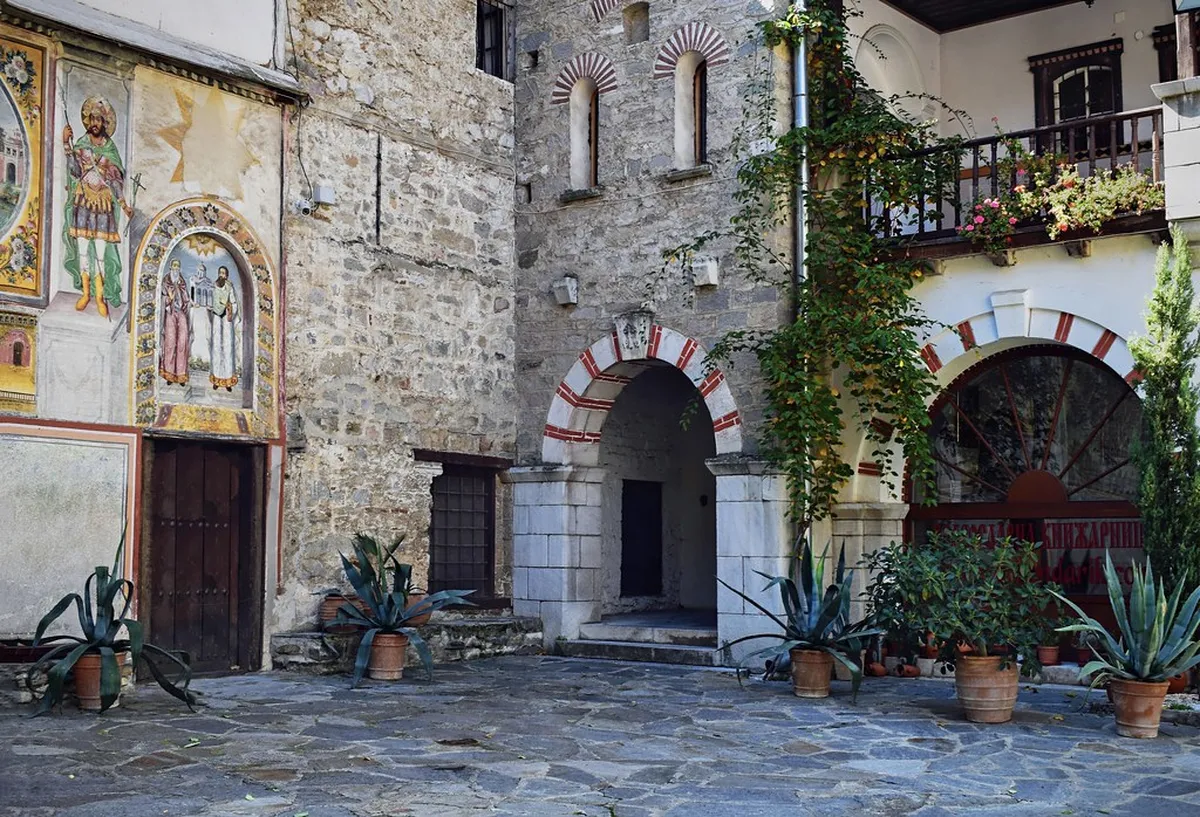
Zahariy Zograf (1810–1853), the most celebrated Bulgarian icon painter of the National Revival period, contributed work to the narthex and to two of the other churches on site. His expressive figures and vivid palette give Bachkovo's churches a visual intensity that sets them apart from monasteries where restoration work has smoothed out the rougher, more visceral medieval aesthetic. Photography is permitted throughout the Cathedral Church, though visitors are expected to behave quietly around those at prayer.
The Miraculous Icon of the Holy Mother of God
The monastery's most venerated possession is the Icon of the Holy Mother of God, dated to 1311. It is housed in the Cathedral Church in a dedicated iconostasis to the right of the central door, positioned at ground level so that pilgrims can approach it directly. The icon is encased in a heavy silver repousse cover added to protect and honour the image.
Local tradition holds that during the early Ottoman period the icon was hidden in the Kluviya area nearby. It was rediscovered in the early 17th century and twice returned to the monastery after reportedly disappearing again on its own. Following a monk's dream, it was finally installed in its current permanent position. These stories, whether historical or legendary, have shaped the icon's enormous reputation for healing and intercession throughout the Balkan region.
Every year on the second day of Easter, a major procession carries the icon through the monastery gates and out to the Kluviya site in commemoration of its rediscovery. This is one of the most attended religious events in the southern Rhodope region. Visitors who are not Orthodox will still find the spectacle and the devotion of the pilgrims deeply affecting. The BNR describes the icon as one of the most significant treasures of ancient Christian art in Bulgaria.
The solemn Easter procession of the icon from the monastery to the nearby Kluviya site is one of the most attended religious events in the southern Rhodope region.
The Refectory, the Magernitsa, and the Philosophers' Murals
The southern wing of the monastery contains the refectory, rebuilt in 1601. At its centre stands a massive marble dining table with the year of its construction carved directly into the stone — a detail visitors often photograph before realising it is entirely functional, not decorative. The table is long enough to seat dozens of monks at once and remains one of the most striking pieces of monastic furniture in Bulgaria.
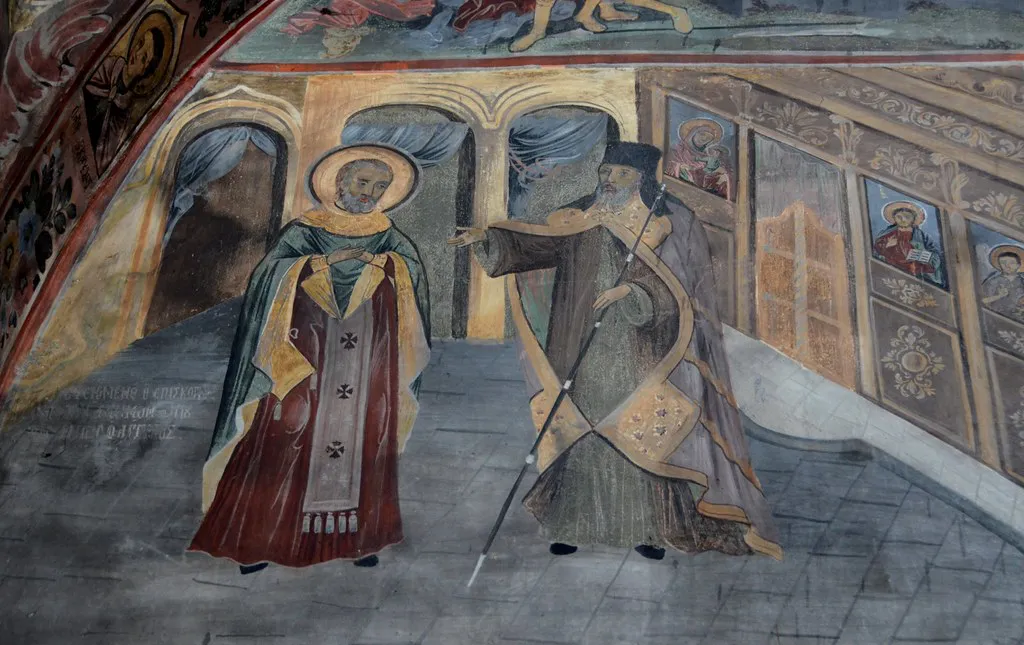
What makes this room genuinely unusual for an Orthodox monastery is the secular mural programme on its walls. Alongside traditional Christian imagery including the Tree of Jesse, the paintings include portraits of the ancient Greek philosophers Socrates, Plato, and Aristotle. Depicting pagan thinkers inside a working religious dining hall was a deliberate theological statement — a claim that classical wisdom was a legitimate precursor to Christian revelation. No other monastery in Bulgaria carries this specific iconographic choice, and it alone is worth the small entrance fee charged for refectory access.
Adjacent to the refectory is the magernitsa, the monastery's original 17th-century kitchen. This vaulted stone structure is rarely covered in travel guides but is one of the more atmospheric corners of the complex. The fireplace hoods and hearth architecture give a concrete sense of the daily life that sustained the monastic community through centuries of hardship and rebuilding. A painted panorama on the north wall of the dining hall, completed in 1864, depicts the Easter procession carrying the Miraculous Icon — the founding brothers are shown among the procession dressed as monks, despite neither having taken monastic vows.
Exploring the Ossuary and Secondary Churches
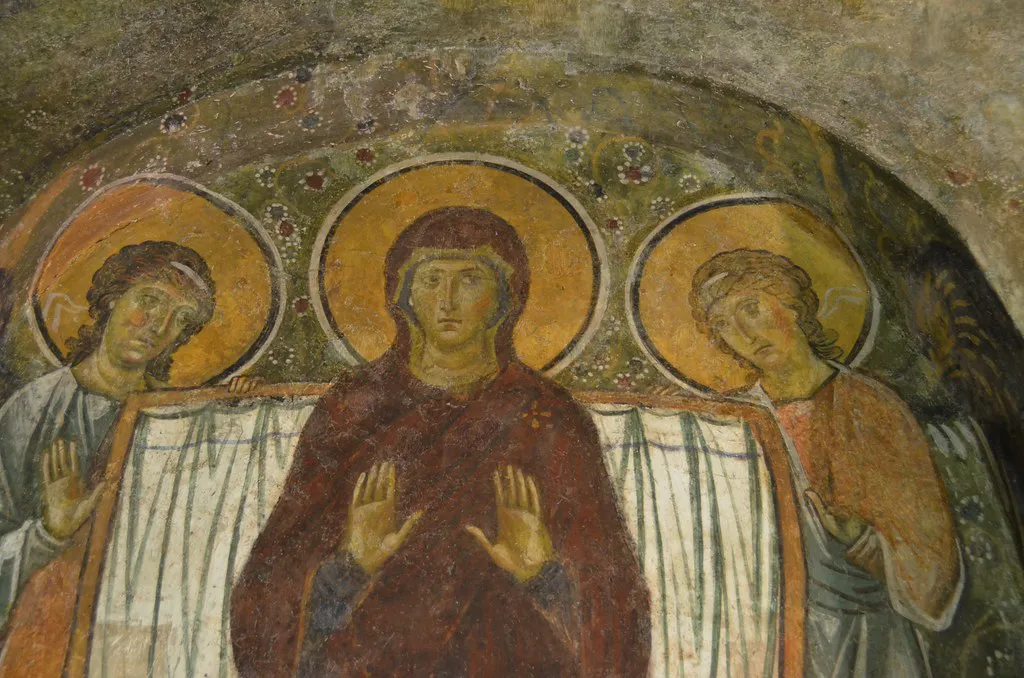
Located roughly 400 metres outside the main gate, the Ossuary is the only structure from the original 1083 complex still standing. This two-story cemetery church predates every other building on the grounds by several centuries. The lower floor serves as a bone vault; the upper floor contains a chapel dedicated to the Holy Trinity and holds some of the oldest and most valuable frescoes in Bulgaria — fragile, darkened, and visibly older in character than the polished 19th-century work inside the Cathedral.
The Holy Archangels Church, built at the end of the 12th century and into the 13th, occupies the second floor of the western wing and was designed for the monks' winter services. It is not generally open to the public but can be seen from the courtyard. Zahariy Zograf completed the frescoes on its exterior in 1841, including a dramatic composition on the facade above the entrance.
St. Nikola Church stands in the southern courtyard and is used today primarily for weddings and baptisms. Zograf painted its interior from 1838 to 1840, including a celebrated Last Judgment scene that covers the entire western wall of the narthex. On the left the saved souls ascend toward Heaven; on the right the condemned are led away to Hell. Zograf famously included a self-portrait among the saved souls — a characteristic piece of artist bravado that observers enjoy finding on their own.
Practical Guide: Getting There, Staying Overnight, and Asen's Fortress
Bachkovo Monastery is open daily from 08:00 to 19:00. Entry to the main courtyard and Cathedral Church is free. The museum charges approximately 5 BGN and the refectory access is a separate small fee of 2–3 BGN. Parking below the monastery entrance costs 2–3 BGN per hour. The monastery's annual holiday and busiest day is 15 August, the Feast of the Assumption; arriving before 09:00 on that date is advisable to avoid the crowds.
Bachkovo's busiest day is 15 August — arrive before 09:00 or expect significant queues at the entrance and monastery roads.
| Detail | Information |
|---|---|
| Opening hours | Daily 08:00–19:00 |
| Courtyard and Cathedral Church | Free |
| Museum entry | Approx. 5 BGN |
| Refectory access | 2–3 BGN |
| Parking | 2–3 BGN per hour |
| Bus from Plovdiv | ~40 min, every 30–60 min from Rodopi Bus Station |
| Distance from Plovdiv | 27–30 km |
| Overnight accommodation | Available; book via official website |
| Busiest day | 15 August (Feast of the Assumption) |
Frequent buses from Plovdiv's Rodopi Bus Station run toward Asenovgrad and Smolyan throughout the day, stopping within walking distance of the monastery gates. The journey takes around 40 minutes and buses run approximately every 30 to 60 minutes. For a full breakdown of timings, ticket prices, and taxi alternatives, see the Plovdiv to Bachkovo transport guide. Drivers will find the monastery clearly signed off the Asenovgrad–Smolyan road.
One option almost no travel guide mentions: the monastery offers overnight accommodation in basic rooms within the monastic complex. The monks manage a small number of guest cells suitable for pilgrims or visitors who want to experience early morning services and the quiet of the grounds before day-trippers arrive. To arrange a stay, contact the monastery directly through the official Bachkovo Monastery website. Rates are modest and the experience of waking up inside a functioning Orthodox monastery in the Rhodope is unlike any hotel stay nearby.
Ten kilometres north of the monastery on the road back toward Plovdiv, Asen's Fortress sits on a rocky ridge above the Asenitsa River gorge. The ruined medieval stronghold is a 20-minute uphill walk from the car park and offers panoramic views across the Rhodope foothills. The fortress church, dedicated to the Holy Mother of God, contains fragments of frescoes that share iconographic themes with Bachkovo's Cathedral Church — including another depiction of the Assumption on the western wall. Most visitors who make the Bachkovo day trip from Plovdiv combine both sites comfortably in a single afternoon.
Continue planning: Use 15 Best Bulgarian Monasteries: UNESCO & lesser-known places and Aladzha Monastery Travel Guide: History, Tickets & Visiting Tips to connect this guide with the rest of your Bulgaria itinerary.
Frequently Asked Questions
How do I get to Bachkovo Monastery from Plovdiv?
You can take a bus from the Rodopi Bus Station in Plovdiv heading toward Smolyan or Asenovgrad. These buses run every 30 to 60 minutes throughout the day. The journey takes about 40 minutes and drops you within walking distance of the monastery gates.
What is the history of the Miraculous Icon at Bachkovo?
The icon dates to 1311 and is believed to have been brought from Georgia. It survived the Ottoman conquest and is famous for its silver cover and healing reputation. For more details on sacred sites, see our Troyan Monastery for comparison.
Is Bachkovo Monastery worth visiting on a day trip?
Yes, it is highly recommended due to its proximity to Plovdiv and its rich artistic heritage. You can easily combine it with a visit to Asen's Fortress. The rare murals in the refectory and the ancient ossuary make it a unique cultural stop.
What are the opening hours and entrance fees for Bachkovo Monastery?
The monastery grounds are typically open from 8:00 AM to 7:00 PM daily. While entry to the main courtyard and church is free, the museum and refectory charge small fees. Always check the Bachkovo Monastery Official Site for current holiday schedules.
Bachkovo Monastery rewards visitors who go beyond a quick walkthrough. The refectory's philosophers, the bone-vault ossuary from the original 11th-century complex, and the layered frescoes of three distinct churches give it more depth than a single visit can fully absorb. It is one of the places in Bulgaria where the medieval past is not reconstructed or displayed but simply still present.
Whether you arrive as a pilgrim or a curious traveller, allow at least two to three hours on site. Add Asen's Fortress for a complete day, and consider the overnight option if you want to experience the monastery at its most peaceful. For a broader picture of Bulgaria's monastic heritage, the Bulgarian monasteries guide covers the country's other major sites alongside Bachkovo.