Trigrad Gorge and Devil's Throat Cave
The Trigrad Gorge Visitor Guide and Devil's Throat Cave are among the most dramatic natural sites in Bulgaria. Deep inside the Western Rhodope Mountains, the Trigrad River plunges 42 meters underground into a cavern large enough to swallow a cathedral — the highest underground waterfall on the Balkan Peninsula. Scientists once poured red dye into the river to track where it goes. The dye reappeared 90 minutes later, suggesting the water travels approximately 40 kilometres through an undiscovered labyrinthine network beneath the mountain before surfacing again.
That mystery alone makes Devil's Throat Cave one of the most intriguing karst sites in all of southeastern Europe. Add the ancient legend of Orpheus, three carved reliefs hidden in the stone walls, and a 301-step exit staircase equivalent to a 22-storey building, and you have a destination unlike anything else in Bulgaria. This guide covers everything you need for a 2026 visit: the cave tour, the gorge drive, the physical demands, where to sleep, and what to eat nearby.
For the geology and the Orpheus legend behind the cave, see the Devil's Throat Cave reference.
The Legend of Orpheus and the Devil's Throat
The most enduring story attached to this cave belongs to Orpheus, the legendary Thracian musician of ancient myth. According to the legend, when his wife Eurydice died and descended to the underworld kingdom of Hades, Orpheus followed her here — into the throat of the earth. Hades agreed to release Eurydice on a single condition: both must walk out of the cave without looking back.
The roar of the underground waterfall inside the Hall of Thunder is so immense that Orpheus could not hear Eurydice's footsteps behind him. Fearing she had not followed, he turned. She vanished back into darkness forever. A small spring near the exit stairs is called the Tears of Orpheus, and local guides still point visitors toward it at the end of the tour.
The cave earned its Bulgarian name, Dyavolsko Garlo, partly from this myth and partly from the sheer violence of the river as it disappears into the earth. The entrance opening in the rock does resemble a gaping mouth. Exploring the Rhodope Mountains reveals many layers of Thracian heritage, but nowhere else does mythology and geology fuse as powerfully as here. The cultural weight of the site transforms what might otherwise be a simple geological tour into something genuinely moving.
The Hall of Thunder and the Underground Waterfall
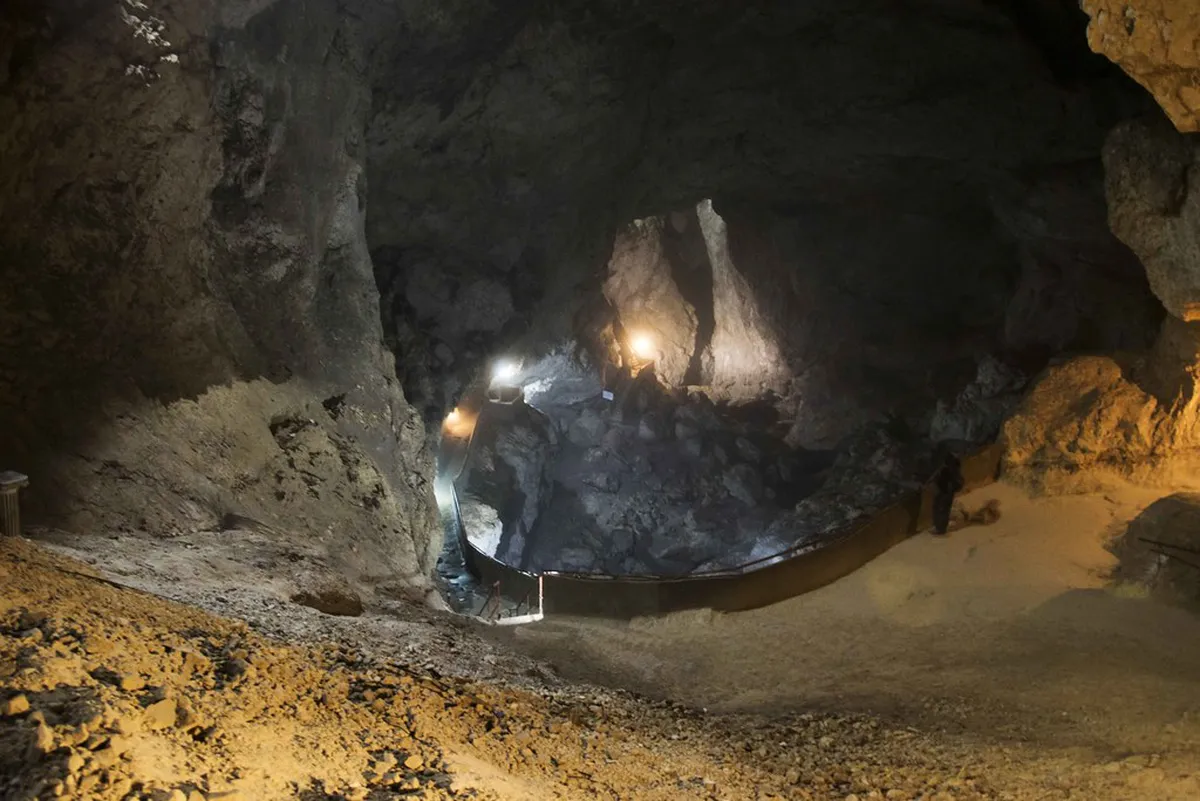
The cave tour begins inside an artificial gallery blasted into the rock. It leads you alongside the roaring Trigrad River into the main chamber, known as the Hall of Thunder. The name is literal: the noise from the 42-metre waterfall bouncing off the stone walls makes normal conversation almost impossible. This is the second-largest cavern in Bulgaria, and the sheer volume of the space takes most visitors by surprise.
The waterfall drops from a fissure high in the vault into a dark funnel at the base of the hall. That funnel is more than 150 metres deep. When two divers attempted to enter the cave from the lower exit to reach the main chamber, neither returned. The 90-minute dye experiment described above remains the closest researchers have come to mapping what lies between the hall and the exit.
As you move through the Hall of Thunder, look for the three carved reliefs cut into the rock by unknown hands. Near the entrance to the hall sits a relief of a devil's head. Further along the wall of the main cavern, you will find a classical full-figure carving known as the Antique Man. Near the exit staircase, a small recessed altar holds a carving of the Virgin Mary above the Tears of Orpheus spring. Many visitors miss all three because the low light and the noise of the water pull attention to the waterfall. Slow down and look at the walls.
The constant mist from the waterfall fills the hall with water particles. Bring a light waterproof jacket even in summer. The temperature inside stays at a constant 8°C year-round, which feels refreshing in July but genuinely cold if you are underdressed. Sturdy shoes with non-slip soles matter on the wet stone paths.
Navigating the 301 Steps: What to Expect on the Exit
The tour is one-way. You enter through the artificial gallery at road level and you exit by climbing 301 steep stone steps cut into the cliff face above the cave. The ascent is the equivalent of a 22-storey building. Handrails run the full length of the staircase, which is essential because the steps are perpetually damp from the mist below.
Most visitors in average physical condition complete the climb in 10 to 15 minutes at a steady pace. The staircase is narrow — single file in places — so parties of more than a few people tend to spread out naturally. People with serious knee problems or limited mobility should weigh this carefully before booking the tour. The cave itself is not wheelchair accessible, and there is no alternative exit route.
Children who can manage a normal staircase handle this well. The age floor for the tour is typically around five years old, though younger children have completed it with a parent. The climb emerges onto the road above the cave entrance, roughly level with the surrounding cliffs. Your guide will be at the top. Take your time on the stairs — the views of the gorge wall from the upper steps are worth pausing for.
Driving Through Trigrad Gorge
The cave sits at the far end of a seven-kilometre gorge where limestone walls rise up to 250 metres on each side of the road. The road itself is narrow asphalt, single-lane in the tightest sections, with passing pockets cut into the rock. Drivers approaching from the north follow the Vacha River valley south from Teshel dam for roughly 15 kilometres before entering the gorge proper.
The scenery escalates continuously. Deciduous woodland gives way to denser fir forest as altitude increases, and then the canyon walls close in until only a narrow strip of sky is visible above. The road passes through a short tunnel just before the cave parking area. Several small lay-bys allow you to stop and look up at the cliffs. Do this — the scale of the rock face is hard to appreciate from a moving vehicle.
Drive slowly. Falling rock is an occasional hazard, and local traffic including agricultural vehicles uses the same single lane. Allow at least 20 minutes for the gorge section even if you make no stops. Early morning arrivals (before 10:00) typically find lighter oncoming traffic and better light for photography of the western cliff faces.
Practical Visitor Information: Tickets, Hours, and Best Time to Visit
The cave operates guided tours only. Groups depart approximately once per hour. The entry fee is 10 BGN per adult (around 5 EUR at 2026 exchange rates). Each tour lasts roughly 45 minutes from entrance to exit. The official opening hours are 09:15 to 16:15 daily, though the last tour may depart earlier depending on group size and season.
The spelunkers' club Silivryak, based in Trigrad village, organises boat descents from the lower cave exit from May to October. These trips run in groups of three plus an instructor and give a completely different perspective — looking up into the fissure where the river emerges back into daylight. Equipment is provided. Contact them on +359 3040 2220 or +359 889 052208 if you want to combine a boat trip with your cave visit. Full verified details appear on the Devil's Throat official information page.
The best months to visit are June, July, and September. June combines the freshest greenery with manageable crowds. July and August bring the heaviest tourist traffic and the most reliable weather. The cave is open in winter but access can be complicated after heavy snowfall — Trigrad sits at around 1,200 metres altitude and snow can remain until May on shadowed slopes. Spring visits in April–May come with the risk of high water levels that can intensify the roar inside the Hall of Thunder to genuinely disorienting levels.
Parking is available in a small lot directly in front of the cave entrance. It fills quickly from mid-morning in July and August. Arriving before 10:00 solves the parking problem and typically means joining the first tour of the day, before the humidity from the waterfall has been churned by earlier visitor groups.
How to Get to Trigrad
Trigrad village is located 17 kilometres south of Devin in the Western Rhodopes. By car, the standard approach follows the Vacha River valley south from the town of Devin, joining the gorge road at Teshel dam. From Smolyan, allow approximately 90 minutes. From Plovdiv, the drive takes around two hours depending on which mountain road you choose.
Public transport exists but requires patience. Buses from Devin to Trigrad run twice daily — one service at midday and one in the afternoon. Devin itself is accessible by bus from Plovdiv and Sofia. If you are relying on public transport, check current schedules at the Devin bus station before committing to the day, as the afternoon return bus from Trigrad can leave you little time at the cave if the midday inbound connection runs late.
A hire car from Plovdiv is by far the most practical option. It allows you to stop along the gorge, combine the cave with a visit to Yagodina Cave Travel Guide the same day, and reach the area in your own time. The road through the gorge requires attention but presents no serious technical challenge for a standard vehicle.
Birdwatching in Trigrad Gorge: The Wallcreeper
Trigrad Gorge has a dedicated following among European birdwatchers for one specific reason: the wallcreeper (Tichodroma muraria). This small bird with crimson-flashed wings lives almost exclusively on vertical rock faces, feeding on insects from cliff crevices. The limestone walls of the gorge — sheer, damp, and covered in micro-habitats — are ideal territory, and the site is considered one of the most reliable places in southeastern Europe to observe the species.
Wallcreepers are present year-round but easiest to spot from October through March, when they descend from higher elevations and become more active on the accessible lower cliffs near the road. Morning light hits the western cliff face between roughly 09:00 and 11:00, silhouetting birds against the rock. Bring binoculars and allow 20 to 30 minutes stopped in one of the gorge lay-bys. You are looking for something smaller than a starling, moving in short bursts along the vertical face with flashes of red visible when it opens its wings.
No competitor guide covering this site mentions the wallcreeper. If you have a birding interest at all, add the gorge drive to your itinerary even if you skip the cave — the cliffs are impressive in their own right and the chance of seeing this charismatic bird is a genuine bonus that few travellers know to look for.
Devil's Throat vs. Yagodina Cave: Which Should You Visit?
Both caves are within easy driving distance of each other and many visitors combine them in a single day. They offer entirely different experiences. Devil's Throat is about raw power: vertical scale, thundering water, near-darkness, and a mythological atmosphere that borders on unsettling. There are no delicate formations to admire — the appeal is geological drama and narrative weight.
Yagodina Cave Travel Guide is the horizontal counterpart. It is the longest cave in Bulgaria, known for its stalactites, stalagmites, and rare cave pearls. Tours wind through well-lit chambers at a gentle pace. It suits younger children and anyone who finds the physical demands of Devil's Throat's 301-step exit unappealing. The temperature inside Yagodina is slightly warmer — around 6°C to 10°C — but the mist factor is absent.
If you have one day and must choose: go to Devil's Throat first while you have full energy for the staircase exit, then drive the 12 kilometres to Yagodina for the afternoon tour. The two caves together give a complete picture of the Rhodopes' underground world — one visceral, one beautiful — and the day requires no more than a single base in the area.
Where to Stay and Eat Near Trigrad Gorge
Trigrad village has a small but functional selection of guesthouses and small hotels. The village sits at the southern end of the gorge beyond the cave exit, roughly two kilometres from the parking area. Most accommodation is simple and clean, reflecting the Rhodopean tradition of family-run hospitality. The guesthouse Horlog Castle is the first building you pass entering the village and is well regarded for its location. The Avitohol-Oblaka horse base, two kilometres south of the village, also offers rooms and serves as the launch point for horse rides into the high meadows.
For something with more amenity, Devin — 17 kilometres north — offers the area's spa hotels and the largest selection of restaurants. The town is built around its mineral springs and is a comfortable base for exploring both Trigrad and the wider Western Rhodopes. Accommodation in Devin runs considerably cheaper than equivalent mountain resorts elsewhere in Bulgaria.
Rhodopean food is worth seeking out. The local restaurants in and around Trigrad serve dishes specific to the mountain culture here. Patatnik is the defining dish — a dense potato and spice pancake cooked on a griddle, unlike anything you will find in lowland Bulgaria. Kachamak is a corn-flour porridge served with melted cheese and sometimes peppers. Lamb cheverme is a whole lamb slowly rotated on a spit over open coals, typically prepared for larger gatherings but available to order at village restaurants during festivals. The Smilyan bean salad, made from a large local variety of bean, is a simple and filling starter that appears on almost every menu in the region. Restaurants Horlog, Gnezdoto na Orlite (Eagle's Nest), and Kaminata all serve reliable versions of these dishes in or near the village.
Top Things to Do Near Trigrad Gorge
The Orlovo Oko (Eagle's Eye) viewpoint above the gorge is accessible by jeep tour from the village and offers a panoramic view over a large section of the Western Rhodopes and south toward the Greek border. Several operators advertise jeep trips from the village car park. You can also hike there on foot — the trail climbs steeply from the village and takes around two hours each way. The peak sits above 1,500 metres.
The Haramiyska Cave, on the opposite slope of the gorge from Devil's Throat, is smaller and less visited. Access is more demanding and there is no organised tour infrastructure, making it a better fit for visitors with some caving experience. If you want a second show cave without the crowds, Uhlovitsa Cave Guide near Mogilitsa makes a natural extension of a full day in the deep Rhodopes. The nearby horse base at Avitohol-Oblaka charges approximately 20 BGN for a 30-minute ride and 30 BGN for one hour. The route south from there toward the remote hamlet of Vodni Pad is one of the quieter walks in the area, following a forested valley for about six kilometres to a cluster of houses near the Greek border.
If you are exploring further, the village of Shiroka Laka is one of the most intact examples of traditional Rhodopean stone architecture in Bulgaria. A detour there and to the Wonderful Bridges natural marble arches on the way toward Plovdiv makes the entire loop into a full two-day Rhodopes circuit. See the full Rhodope Mountains guide for a broader itinerary.
Continue planning: Use 12 Best Things To Do In The Rhodope Mountains and 10 Best Things to Do in Pamporovo in Summer to connect this guide with the rest of your Bulgaria itinerary.
Frequently Asked Questions
Is the Devil's Throat Cave worth visiting?
Yes, it is absolutely worth visiting for the unique atmosphere and the highest underground waterfall in the Balkans. The combination of the Orpheus legend and the massive Hall of Thunder creates an unforgettable experience. It offers a different perspective than typical stalactite caves found elsewhere in Bulgaria.
How many steps are in the Devil's Throat Cave?
There are 301 steep and narrow steps that lead visitors from the bottom of the cave back to the surface. This climb is roughly equivalent to a 22-story building and requires a moderate level of physical fitness. Most visitors take about ten to fifteen minutes to complete the ascent.
What should I wear to visit Trigrad Gorge and the cave?
You should wear sturdy, non-slip shoes and warm layers because the cave temperature stays at 8°C year-round. A light waterproof jacket is also helpful to stay dry from the mist of the waterfall. Even in summer, the gorge can feel much cooler than the surrounding lowlands. Rhodope mountain weather can change quickly.
Where is the highest underground waterfall in the Balkans?
The highest underground waterfall in the Balkans is located inside the Devil's Throat Cave near Trigrad, Bulgaria. It drops 42 meters into the massive Hall of Thunder, creating a deafening roar that echoes through the cavern. The sight is one of the primary reasons travelers visit this remote mountain region.
Can you visit Trigrad Gorge and Devil's Throat in one day?
Yes, you can easily visit both the gorge and the cave in a single morning or afternoon. Most people spend about two to three hours exploring the cave and driving through the limestone cliffs. This leaves plenty of time to visit the nearby Yagodina Cave or the Eagle's Eye viewpoint nearby.
The Trigrad Gorge and Devil's Throat Cave represent the raw mystery of the Bulgarian Rhodopes at their most concentrated. Few sites in the Balkans combine geological spectacle, mythological depth, and physical challenge in the same square kilometre. The thundering Hall of Thunder, the carved reliefs in the walls, and the unresolved question of where the river actually goes make this a place that stays with you. Come prepared — warm layers, solid shoes, and enough energy for those 301 steps — and you will leave with one of the most memorable experiences Bulgaria offers in 2026.