Central Mineral Baths (Sofia History Museum) Visitor Guide
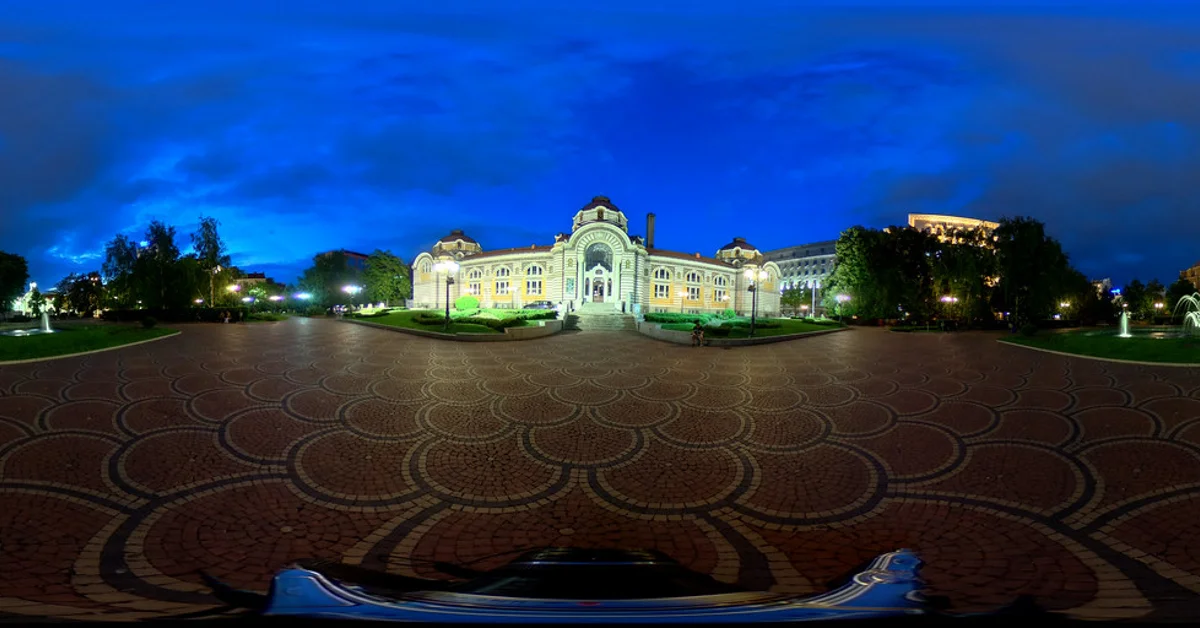
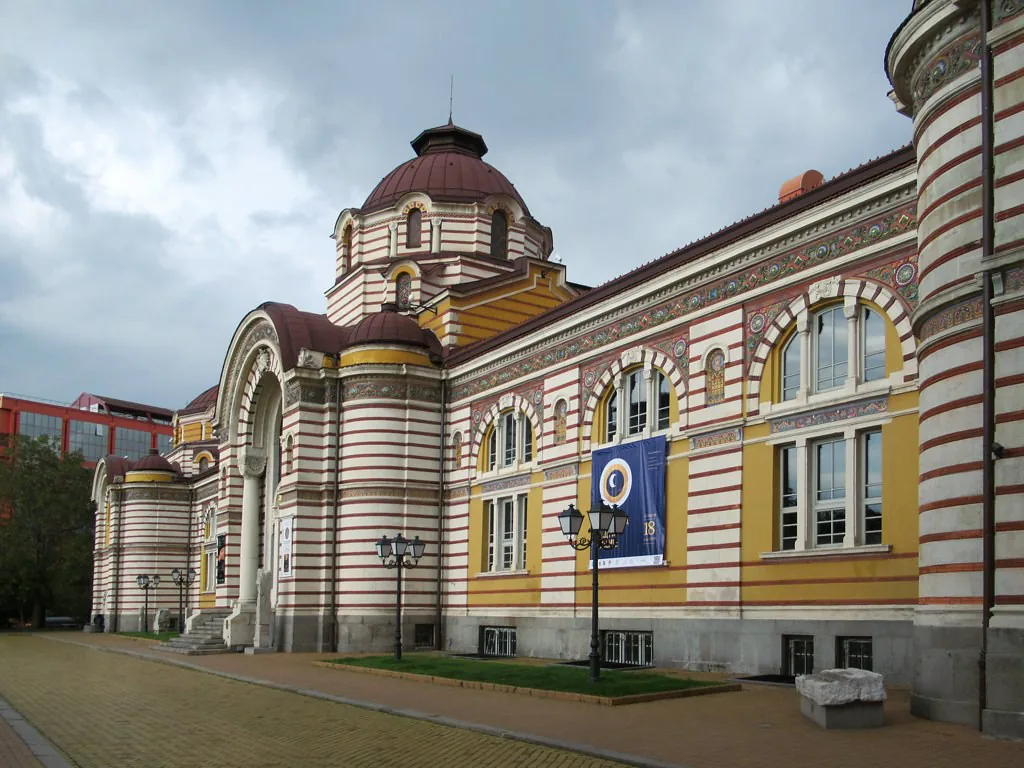
The Regional History Museum of Sofia sits inside one of the city's most beautiful landmarks. This vibrant yellow and red building was once the primary public bathhouse for the capital. Today, it serves as a gateway into the long and complex history of the Bulgarian people.
Visiting this site allows you to admire stunning Art Nouveau architecture while learning about ancient civilizations. The museum is located in central the city, making it an easy addition to any Sofia attractions itinerary. You will find it right behind the historic Banya Bashi Mosque.
This guide covers everything you need to know for a successful visit in 2026, from the euro-only ticket prices now in effect to the long-running local debate over whether part of this building should have stayed a working bathhouse. We explore the grand exhibition halls, the famous royal artifacts, and the steaming mineral fountains outside. Prepare to discover why this building remains a symbol of Sofia's cultural rebirth.
For a visual walkthrough of the Central Mineral Baths building and the Sofia History Museum before your visit, this vlog provides helpful context:
History of the Municipal Central Mineral Baths Building
The Central Mineral Baths building began life as an 1889 international design competition, won by the Austrian architect Emil von Foerster for a combined bathhouse and hotel. Funding collapsed in 1893, and in 1904 architects Petko Momchilov and Friedrich Gruenanger reworked the concept into the building standing today, blending Bulgarian, Byzantine, and Eastern Orthodox elements into a distinctive Vienna Secession style. The smaller bathhouse opened in 1908; the larger one — with two swimming pools, family bath tubs, and Turkish-Roman baths — followed on 13 May 1913, with a water-filling health institute added in the north wing in 1914.
The smaller bathhouse was destroyed in the 1944 Sofia bombing, and the larger building suffered serious damage. It was restored to its original design after the war, declared a cultural monument in 1955, but decades of wear forced its closure in 1986. The building then sat empty for a decade while the city argued over whether it could ever be safely reopened.
What followed is a genuinely contested chapter that locals still bring up. The city repaired the roof in 1996, won the building national monument status in 1998, and ran a competition for adapting it into a "Museum of Sofia with an Active Presence of Mineral Water," which architect Stanislav Konstantinov's team won. In 2006, however, the municipal council reversed course on the unfinished second construction phase and approved a working spa center with two pools instead of the planned museum wing. The compromise left the museum with only the western and southern ends of the building, the main lobby, and two of the original four courtyards — about 7,000 square meters in total — while the rest was earmarked to become a bathhouse again. That spa wing still hasn't opened two decades later, which is why the building today is effectively a museum and an unfinished bathhouse sharing one address, and why some Sofia residents still ask why the whole site wasn't simply restored to public baths. The museum itself opened to visitors in September 2015, after a final restoration completed between 2007 and 2013 with EU regional-development funding. Read the fuller construction history on the Sofiahistorymuseum.bg official page.
The Permanent Exhibition: Sofia’s History in Artifacts
The museum's permanent exhibition unfolds across eight themed halls that trace Sofia from its earliest settlements to the late twentieth century. Rather than one long timeline, each hall is built around a distinct period, so you can skip straight to the era that interests you most without losing the thread. Together they turn the building's own biography — from Roman Serdica to socialist Sofia — into a walkable narrative.
Here is how the eight halls break down, which is useful if you only have time to prioritize a few rooms:
| Hall | Period Covered | What to Look For |
|---|---|---|
| Prehistory | Neolithic settlements on the Sofia plain | Early tools and painted pottery |
| Antiquity | Roman Serdica | Mosaics, coins, and jewelry |
| Middle Ages | Bulgarian medieval statehood | Icons and medieval weaponry |
| Sofia in the 15th-19th Century | Ottoman rule and the Bulgarian Revival | Traditional costumes, early printing presses |
| New History | Sofia becomes capital, 1879 onward | Urban planning models, royal-era photographs |
| Dynastic Hall | Interwar monarchy | The Golden Carriage, King Boris III's desk |
| Cultural Life and Leisure | Early 20th-century leisure | Vintage clocks, Bulgaria's first Mercedes |
| Sofia 1944-1989 | Socialist-era Sofia | Everyday objects from the People's Republic years |
The "Antiquity" hall is usually the first stop and the most photographed, holding mosaics and everyday items used by the citizens of ancient Serdica, alongside jewelry and coinage that show how prosperous the Roman garrison town once was.
The final halls carry the story past the 1878 liberation and through two world wars into the socialist decades, closing with everyday objects rather than grand artifacts — one reason first-time visitors find the museum easy to navigate without a guide.
Essential Visitor Information: Tickets and Hours
Opening hours change with the season. From 1 May to 31 October the museum opens daily from 10:00 to 18:00, last admission 17:30; from 1 November to 30 April it opens Tuesday to Sunday over the same hours and closes on Mondays. Most visitors need around two hours for the permanent exhibition.
As of 2026, an adult ticket costs 5.00 EUR, while children aged 7 to 18, students, and seniors pay 2.00 EUR; a family ticket for two adults and up to three children is 10.00 EUR. A combined weekly ticket covering three other Regional History Museum of Sofia sites costs 11.00 EUR for adults, 5.00 EUR for concessions, and 24.50 EUR for a family. From 1 February 2026 the ticket desk accepts payment solely in euros, following Bulgaria's changeover from the lev. Admission is free for everyone on the first Thursday of each month, and always free for children under 7 and for disabled visitors with one companion — worth confirming on the official museum website before you plan around it.
The museum stands at 1 Banski Square in the center of Sofia, beside the Serdika 1 and Serdika 2 metro stations, so most visitors simply walk over rather than take a taxi. Trams 4, 12, 18, 20, and 22 all stop within a couple of minutes' walk.
Guided tours in several languages are available for an extra fee and are worth booking ahead for larger groups. Photography is generally allowed, though a small permit fee applies for tripods or professional equipment, and flash is switched off everywhere.
Architectural Highlights: Art Nouveau and Ceramic Facades
The exterior of the museum is just as impressive as the treasures found inside. Its facade features striking horizontal stripes of yellow and red ceramic tiles, a decorative style typical of the National Romantic movement in Bulgarian architecture.
Look closely at the main entrance to see the intricate majolica tile work drawn by Haralampi Tachev in 1908. The ceramic images flanking the doorway depict Apollo Medicus, the ancient god of healing, fired using a technique the chemist Stefan Dimitrov developed specifically for this facade.
The second figure on the facade is the goddess Tyche, patroness of cities and a symbol of civic fortune; the accompanying stone carvings are the work of sculptor Georgi Kiselinchev. Together, the two figures were a deliberate signal that this building served both public health and civic pride, a message that still reads clearly on the facade today.
The colorful patterns and floral motifs are best viewed on a sunny afternoon, when the light brings out the vibrant hues of the tiles and stonework. Walk the full perimeter of the building rather than just the main entrance — the side facing the garden has some of the least-photographed decorative panels.
Must-See Exhibits: From Roman Serdica to Royal Carriages
The most famous exhibit in the museum is undoubtedly the Golden Carriage of King Ferdinand. This opulent vehicle was a wedding gift from the French court in the 19th century. Its gold leaf and velvet interior showcase the extreme luxury of the Bulgarian royalty.
Another highlight is the royal desk used by King Boris III during his reign. The furniture in this room offers a glimpse into the private lives of the monarchy. You can also see the first Mercedes car ever brought into Bulgaria in this section.
Do not miss the basement area where you can see preserved Roman ruins. These stone structures were discovered during the renovation of the bathhouse building. They provide a physical connection to the Serdica Ancient Complex located nearby.
The museum also houses a collection of vintage clocks and watches from the royal palace. Many of these timepieces still work and are beautifully crafted with precious metals. These items are located in the "Cultural Life and Leisure" hall.
- The Golden Royal Carriage
- Origin: France
- Material: Gold leaf
- Significance: Wedding gift
- Roman Floor Mosaics
- Age: 4th Century
- Location: Basement level
- Design: Geometric patterns
- King Boris III Desk
- Period: Interwar years
- Style: Neo-Baroque
- Room: Dynastic Hall
Sofia History Museum Reviews and Visitor Tips
Many visitors recommend arriving early to avoid the largest tour groups. The museum gets busy on weekends when local families visit, so a weekday visit offers a quieter, more reflective atmosphere.
Families with children find the museum engaging thanks to its large royal carriages and vintage cars. It is also more accessible than its 1913 bones might suggest: ramps and lifts connect the ground-floor halls, and disabled visitors with one companion always enter free under the museum's 2026 pricing policy. If you use a wheelchair or stroller, ask staff at the entrance which route avoids the few remaining step transitions between the original bath wings.
The most common first-timer mistake is assuming the museum keeps the same schedule all year and skipping a Monday out of habit — that closure only applies from November to April. Between May and October the museum opens daily, including Mondays, so summer visitors who avoid it are missing a day they didn't need to.
Reviewers often mention good English signage throughout, though some temporary displays have limited translations. Wear comfortable shoes, as the stone floors can tire you after a couple of hours; small seating areas in some halls offer a short break.
The Mineral Water Fountains: A Local Tradition
One of the most authentic experiences in Sofia happens right outside the museum doors. You will see locals lining up at the public fountains with large plastic bottles, collecting the hot mineral water that flows directly from the ground.
The water is naturally warm and believed to have healing properties. It is safe to drink and has a distinct, slightly metallic taste. You can try a sip for free at any tap in the square.
The free public taps sit in the small block bounded by Ekzarh Yosif Street, Iskar Street, and Serdica Street, just behind the museum building — the same neighborhood the city fitted with dedicated water-filling spouts during the 2004 Beautiful Bulgaria restoration program. Locals treat it as a quick errand rather than a tourist stop, so don't expect signage in English; just follow whoever is carrying empty bottles toward the square.
If you want to join in, you can buy an empty bottle at a nearby kiosk. Be careful, as the water can be quite hot when it first comes out of the tap. This unique feature of the city is highlighted in several Nationalgeographic.com articles.
Nearby Attractions: Exploring Central Sofia
The museum is perfectly situated for a full day of historical exploration. Just across the street, you can visit the Banya Bashi Mosque, which dates back to the 16th century. It is the only functioning mosque in the city and features beautiful architecture.
Walking a few minutes south will bring you to the Alexander Nevsky Cathedral Visitor Guide, a true icon of Bulgaria. Its gold domes dominate the skyline and the interior is filled with impressive frescoes. This is a worth seeing forone interested in religious history.
You can also explore the Largo area, which houses the Presidency and other government buildings. The changing of the guard ceremony takes place here every hour and is free to watch. This area perfectly blends ancient ruins with grand socialist-era architecture.
For a bit of shopping or a coffee break, head over to the central department store nearby. The surrounding streets are filled with cafes that offer traditional Bulgarian pastries like banitsa. This central location makes it easy to find food and rest between museum visits.
Lively Local Market Experience at Zhenski Pazar
A short walk from the museum leads to Zhenski Pazar, also known as the Ladies' Market — the oldest and most famous open-air market in Sofia, offering a raw look at local life you won't find in malls.
You can find everything here from fresh seasonal produce to traditional Bulgarian pottery, honey, spices, and handmade wooden kitchenware, all cheaper than the tourist shops near the main cathedrals.
The market can be crowded and loud, so keep an eye on your belongings; it's generally safe, but the busy stalls demand a bit of extra caution.
If you only have a spare fifteen minutes, treat it as a quick detour — grab dried herbs or honey near the main entrance and move on, since covering every aisle properly can eat ninety minutes. Visitors with a free afternoon get more out of the deeper side lanes, where prices drop further and stalls shift from produce into household goods, a trade-off worth planning into any Sofia guide itinerary.
Day Trips: Hiking and Skiing Near Sofia
If you have more time in the city, consider heading toward the mountains. Vitosha Mountain Visitor Guide is visible from almost anywhere in Sofia and offers great hiking trails. It is only a short bus or taxi ride away from the city center.
In the winter, Vitosha becomes a popular destination for skiing and snowboarding. The slopes are accessible and provide a quick escape into nature for city dwellers. It is rare to find a major capital with such high peaks so close to the downtown area.
For a more spiritual journey, the Seven Rila Lakes Visitor Guide offer some of the most stunning scenery in the Balkans. These glacial lakes are located a bit further away but are well worth a full-day tour. The hiking here is world-class and offers breathtaking views.
Always check the weather forecast before heading into the mountains, even in the summer. Conditions can change rapidly, so bringing extra layers and water is essential. These natural escapes provide a perfect balance to the urban history found in the Central Mineral Baths.
Continue planning: Use Sofia Attractions: 12 Top Sights, Tickets & Tips to connect this guide with the rest of your Bulgaria itinerary.
Frequently Asked Questions
Can you still use the mineral baths in Sofia?
No, the Central Mineral Baths no longer function as a public spa. The building was converted into the Regional History Museum of Sofia in 2015. However, you can still drink the hot mineral water for free from the public fountains located just outside the museum entrance.
What are the opening hours for the Sofia History Museum?
The museum is typically open from Tuesday to Sunday, 10:00 AM to 6:00 PM. It remains closed on Mondays and certain national holidays. Always check the official website before visiting to confirm the current schedule for 2026. Sofia guide resources often list these updates.
How much do tickets cost for the Regional History Museum of Sofia?
Adult tickets cost 5.00 EUR in 2026, with a reduced 2.00 EUR ticket for children aged 7-18, students, PhD students, and seniors; a family ticket is 10.00 EUR. Children under 7 enter free, and admission is free for everyone on the first Thursday of each month.
What is the most famous exhibit in the Sofia History Museum?
The Golden Carriage of King Ferdinand is the museum's most iconic artifact. This 19th-century French carriage is decorated with real gold leaf and was used for royal weddings. Other popular items include the royal desk of King Boris III and ancient Roman mosaics.
Is the Sofia History Museum worth visiting for families?
Yes, the museum is very family-friendly due to its visual exhibits and spacious layout. Children usually enjoy seeing the large royal carriages and vintage cars. The central park area outside also provides plenty of space for kids to run around after the visit.
The Regional History Museum of Sofia is a worth considering forone interested in central the Balkans. Its home in the Central Mineral Baths provides a stunning backdrop for thousands of years of history. From Roman ruins to royal gold, the collections offer something for every type of traveler.
Beyond the artifacts, the building itself stands as a testament to the city's architectural beauty and its unfinished argument with its own past — part museum, part bathhouse that never reopened. Whether you are drinking mineral water with locals or admiring the Art Nouveau tiles Haralampi Tachev drew in 1908, you will feel the spirit of Sofia. This site remains a vital link between the city's ancient past and its vibrant future.
Plan your 2026 visit to experience one of Bulgaria's most cherished cultural landmarks, and budget the euros rather than leva for your ticket. The museum is waiting to tell you the story of a city that continues to grow but never forgets its roots. Enjoy your journey through the layers of time in central Sofia.
For the latest official information, see the Central Mineral Baths (Regional History Museum of Sofia) on Wikipedia.
For more Sofia planning, explore our Things To Do in Sofia, Bulgaria (2026 Guide), or plan a nearby excursion with the Boyana Church Day Trip From Sofia: The Complete Visitor's Guide.