A Complete Dohodno Zdanie Visitor Guide: 8 Essential Tips
Ruse stands as a beacon of European elegance on the banks of the Danube River. At its heart lies the Dohodno Zdanie, a masterpiece of Neoclassical design and cultural pride. This building serves as the city's most iconic landmark and a hub for the performing arts. Travelers often refer to it as the 'House of Profits' due to its unique economic history.
Watch this video for a detailed look at the building's iconic Neoclassical exterior and architectural features:
Visitors will find this architectural gem located prominently on the vibrant Svoboda Square. It houses the prestigious Sava Ognyanov Drama Theatre and various elegant event spaces. Our dohodno zdanie visitor guide provides everything you need to explore this historic site. You will discover the best ways to enjoy its beauty and cultural offerings during your stay.
The History of the "House of Profits"
The idea took shape in 1896, when a six-member city commission drew up requirements for a building that could fund the local school board. Their brief called for at least nine shops, a 200-square-metre casino, a 200-square-metre library hall, and a 300-square-metre theatre hall under one roof. The result was the Dohodno Zdanie, literally the "Profitable House," a name that still puzzles first-time visitors who expect a museum rather than a working theatre.
Viennese-trained architect Peter Paul Brang won the 1897 design competition with an entry titled "Voila une idee," beating fourteen rival submissions. Construction began in January 1898 under local contractors Gatyu Tsonev and Petar Atanasov, and money troubles along the way forced the school board to mortgage the building itself just to keep the work going. You can trace the full construction timeline through the Dohodno Zdanie History and Architecture guide.
The shell was declared finished in 1900, but the theatre hall did not open until 1902, after an earlier trial performance in the casino hall in 1901. Over the following century the building doubled as a cinema and a library for the people of 10 Top Things to Do in Ruse, Bulgaria. A restoration running from 1970 to December 2006 returned the facade and interiors to their original condition, and the structure is now protected as a monument of national significance.
Architectural Symbolism and the Seven Figures
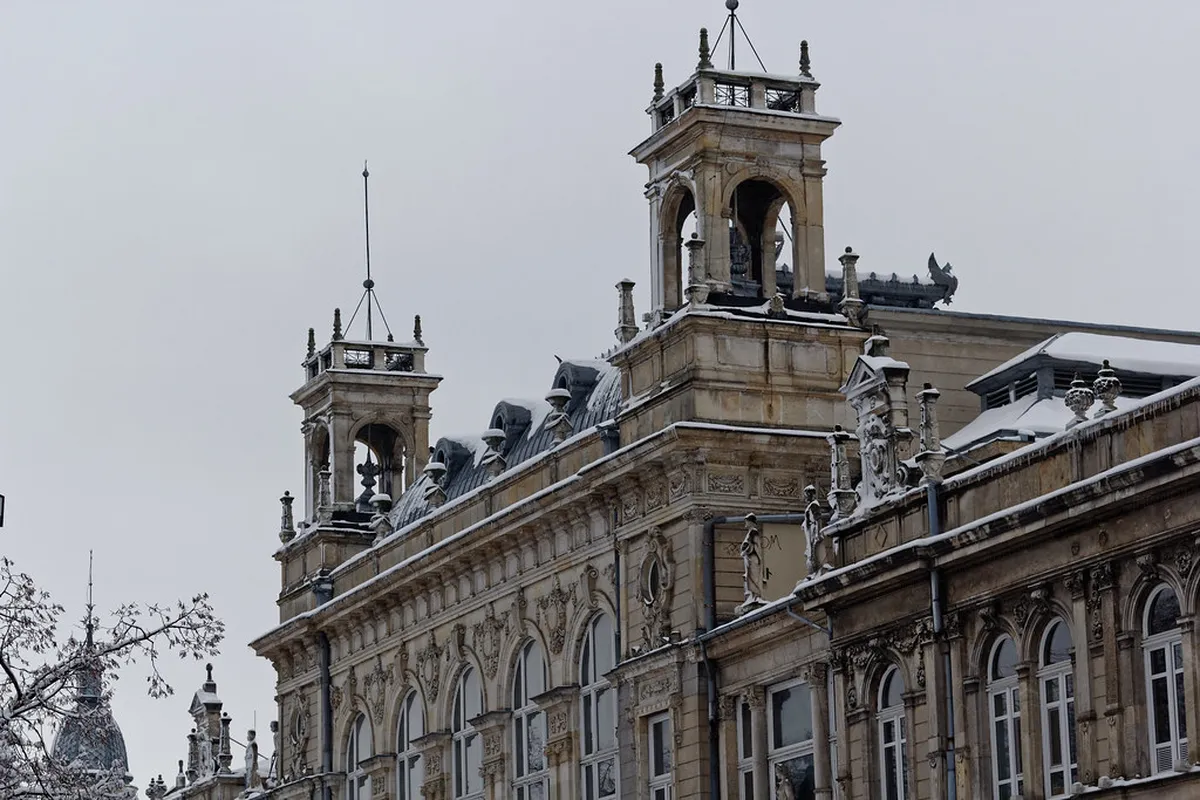
The facade blends Neoclassical proportion with Baroque flourish, part of why 19th-century Ruse earned its old nickname "Little Vienna" among Bulgarian cities. Columns, pediments, and carved stone reliefs cover the upper floors, and the whole composition is crowned by a winged figure of Mercury, the Roman god of commerce, watching over Svoboda Square. It is worth crossing to the far side of the square to see the roofline properly, since the detail is easy to miss from directly underneath.
Below Mercury, seven sculpted figures line the cornice, each standing for a pillar of the society the building's founders wanted to build. They were originally carved to symbolize agriculture and defense before local sculptor T. Petkov reworked them to better fit Bulgarian taste. Reading left to right, the seven are:
- The Seven Symbolic Facade Figures
- Agriculture: symbolizing the fertility of the Danube plain
- Trade: representing river commerce through the port of Ruse
- Crafts: honoring the city's artisans and guilds
- Science: promoting intellectual and technical progress
- Culture: representing the arts housed inside
- Defense: symbolizing protection of the city
- Spirit: representing the "flight of spirit" above material gain
Together with Mercury above them, the figures spell out the same idea as the building's name: profit and culture were meant to support each other, not compete. Photographers get the cleanest shot of the full roofline in the late afternoon, when low sun lights the west-facing statues without the midday glare washing out the detail.
The Sava Ognyanov Drama Theatre Experience
Inside, the Sava Ognyanov Drama Theatre has anchored Ruse's cultural life since the building's earliest years. The auditorium keeps its original red velvet, gilding, and chandeliers, and the resident company stages a mix of classic and contemporary Bulgarian drama through the autumn-to-spring season. Most productions are performed in Bulgarian, though visual staging and live music carry several shows without the audience needing the language.
The building is really a cluster of venues, not one hall, which is why it can host a play, a chamber concert, and a conference reception on the same evening. A quick reference for planning group visits:
| Hall or space | Capacity | Typical use |
|---|---|---|
| Large Hall | 600 seats | Drama, festival headliners |
| Europe Hall | 300 seats | Concerts, conferences |
| Chamber Hall | Intimate | Recitals, readings |
| Five foyers | Standing | Exhibitions, receptions |
One detail most visitor guides skip entirely: the building also houses the Elias Canetti public library, named for the Ruse-born writer who won the 1981 Nobel Prize in Literature. Canetti left the city as a child and wrote in German, but Ruse claims him as its most celebrated literary son, and the library's reading rooms sit just off one of the theatre's foyers, a short walk from his childhood home on Slavyanska Street.
Essential Visitor Info: Tickets and Hours
The exterior and Svoboda Square are open to view at any hour, free of charge, so a look at the facade costs nothing and needs no planning. Getting inside requires an event ticket, since the building runs as a working theatre, not a museum with fixed hours. The box office at Ruse Center, pl. "SVOBODA" 4, 7000 Ruse, Bulgaria keeps hours of Monday to Friday, 10:00-14:00 and 14:30-18:00.
Ticket prices vary by production, seat, and whether a touring company or the resident troupe is on stage, so there is no single figure worth quoting here. Since Bulgaria adopted the euro in January 2026, box office and online prices are now listed in EUR rather than the old lev. Call +359 82 830 168 or check rusetheatre.com before you go, and browse recent visitor notes on Google Maps Reviews - Dohodno Zdanie for what a specific show is actually like.
Worth checking before you build an itinerary around it: the facade periodically disappears behind scaffolding for maintenance, hiding the seven figures and the Mercury statue for weeks at a time. Recent visitors flag this on review sites, so a quick search for the current renovation status saves a wasted stop. If the exterior is covered, the interior is usually still open for ticketed events, so it is rarely a reason to skip the building.
Guided interior tours outside ticketed events are arranged case by case; groups should contact the theatre administration ahead of time. Step-free access into the main foyer and Large Hall is available by lift, and box office staff generally manage basic English.
Getting There: The Bucharest-Ruse Connection
Bucharest, not Sofia, is the practical gateway for most international visitors here. Henri Coanda Airport (OTP) sits roughly 75 km away, while Sofia Airport is over 300 km on the other side of the country. Flying into Romania and treating Ruse as a day trip from Bucharest is usually faster than routing through the Bulgarian capital.
The border crossing runs over the Danube Bridge between Giurgiu and Ruse, a straightforward land crossing rather than a formality-heavy one. Build in 30 to 60 minutes for passport and vehicle checks at peak times, longer on summer weekends. Shuttle vans and private transfers cover the 90-minute route between Bucharest and Ruse several times daily, and the drive suits a self-driven rental too.
Once you are in central Ruse, the Dohodno Zdanie needs no transport of its own. The pedestrianised zone around Svoboda Square is flat, well-lit, and safe at night, and most hotels in the historic center sit within ten minutes on foot. Taxis cover the rare longer trip cheaply.
When to Visit: Jazz Festivals and Seasonal Tips
Late spring and early autumn give the most comfortable weather for lingering outside to study the facade. April and May bring the Svoboda Square gardens into bloom, and September's low, warm light is the best time of year for photographing the roofline sculptures. Summer works too, but midday heat and glare make the statues harder to photograph clearly.
Music travelers should time a visit around the Ruse International Jazz Festival, which regularly uses the building's halls for headline concerts. The city fills with musicians and visiting fans during festival week, and hotel rooms near the center book out months ahead. Check the current 2026 festival dates before locking in flights, since the exact week shifts year to year.
Winter brings a quieter, more local atmosphere, with the theatre's regular season running at full pace and Svoboda Square dressed for the holidays. A ticketed evening performance is a good way to spend a few hours indoors on a cold night. Check current listings at rusetheatre.com rather than an old printed schedule.
Exploring Svoboda Square and Nearby Landmarks
Dohodno Zdanie anchors the western side of Svoboda Square, facing the Monument of Liberty across the plaza. The square itself, one of the largest pedestrian spaces in Bulgaria, is framed by the Court House and the municipal building, and it stays lively from morning coffee through late evening. A visit here pairs naturally with a stop at nearby Freedom Square, since the two spaces run into each other across the city's pedestrian core.
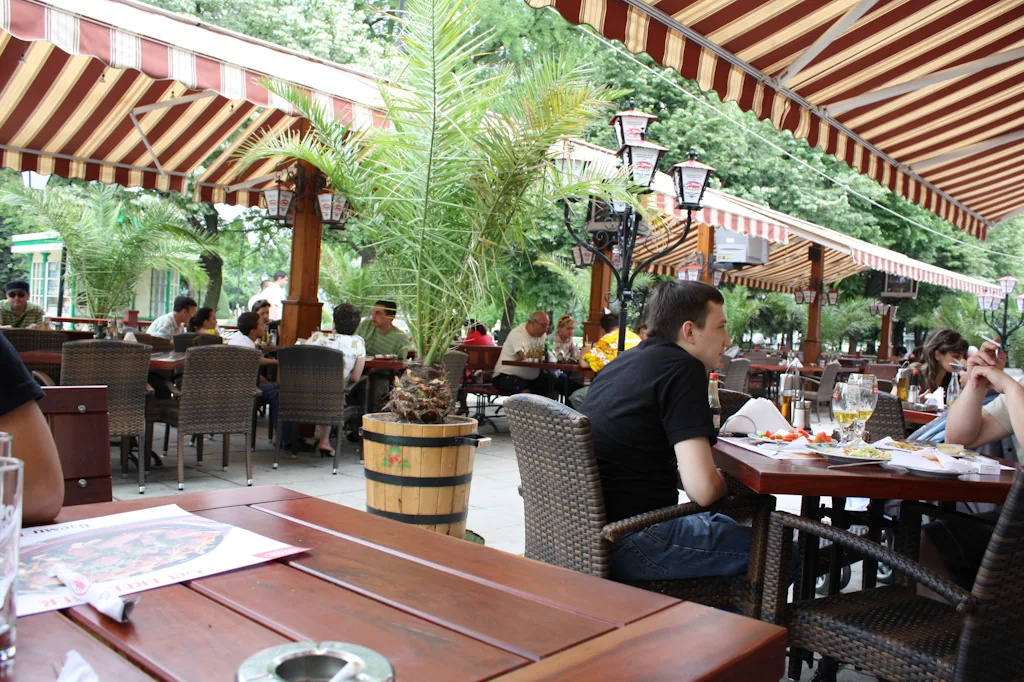
From the square, a signed walking route drops down toward the Danube riverbank in about fifteen minutes, passing more Neoclassical facades and a run of cafes along the way. The Ruse Opera, the sunken Holy Trinity Cathedral, and the terraces of Aleksandrovska Street are all within a few minutes on foot, so it is easy to build a half-day loop around the theatre without needing any transport.
Travelers with older kids, or any group wanting a structured way to see the center, can book self-guided city scavenger hunts that use Dohodno Zdanie as a central waypoint, alongside the Monument of Liberty and the riverside park. These typically run two to three hours and cost roughly EUR 13 to 16 per player, a good alternative to a formal walking tour for families. For a broader planning list, our guide to things to do in Ruse covers the rest of the city.
Nearby dining ranges from traditional Bulgarian taverns to modern European bistros, most within a five-minute walk of the theatre steps, making the square a logical start or end point for any day in the city.
Continue planning: Use Ruse Attractions: 10 Top Things to Do in Ruse, Bulgaria to connect this guide with the rest of your Bulgaria itinerary.
Frequently Asked Questions
What is the Dohodno Zdanie in Ruse?
It is Ruse's landmark Neoclassical theatre building on Freedom Square, built in 1898-1902. The name literally means 'profit-yielding building': rents from its theatre hall, casino, library and ground-floor shops were designed to fund the local school board. Today it is a listed cultural monument and home to the Sava Ognyanov Drama Theatre.
Can you go inside the Dohodno Zdanie?
The building opens to the public for performances, concerts, conferences and exhibitions rather than as a museum, so the way in is to attend an event of the resident Sava Ognyanov Drama Theatre. The ornate facade, with its statues and winged Mercury, can be admired for free from Freedom Square at any time.
How much are tickets for events at the Dohodno Zdanie?
Prices vary by production and seat, so check the official box office at the building (pl. Svoboda 4, tel. +359 82 830 168) or the theatre's online ticketing via entase.com/dtruse for current event pricing. Since January 2026 Bulgaria uses the euro, so tickets are priced in EUR. Most drama performances are in Bulgarian.
Who designed the Dohodno Zdanie and when was it built?
Viennese architect Peter Paul Brang won the 1897 design competition - his entry, 'Voila une idee', was chosen from 15 projects - and the building went up between 1898 and 1902. The first theatre performance was held in its casino hall in 1901, before the main stage and theatre hall were completed in 1902.
What is the statue on top of the Dohodno Zdanie?
The roof is crowned by a winged figure of Mercury, and seven sculptural figures on the building represent art, science, agriculture, crafts, trade, defence and spirituality - a stone summary of the civic ambitions behind the building.
How do I get to the Dohodno Zdanie?
It stands at pl. Svoboda 4, on the western side of Freedom Square directly across from the Monument of Liberty, in Ruse's pedestrianised centre. From the railway and bus stations it is about a 25-minute walk or a short taxi ride, and parking areas surround the square.
How long do you need to visit the Dohodno Zdanie?
Fifteen minutes is enough to take in the facade and statues from Freedom Square alongside the Monument of Liberty; an evening performance naturally fills two to three hours. The building also houses the Austrian Elias Canetti Library, honouring the Nobel laureate born in Ruse.
What else is there to see near the Dohodno Zdanie?
The Monument of Liberty stands directly in front of it on Freedom Square, with the Court House and municipal building framing the square. The Ruse Opera, the sunken Holy Trinity Cathedral and the cafes of Aleksandrovska Street are all within a few minutes' walk.
The Dohodno Zdanie remains the crowning jewel of Ruse's architectural and cultural landscape. Its rich history as the 'House of Profits' reflects the city's enduring spirit and ambition. Whether you come for the theater or the Neoclassical beauty, the experience is unforgettable. Plan your visit today to see why this landmark is a must-see in Northern Bulgaria.
From the seven symbolic figures to the grand stages inside, every detail tells a story. Ruse offers a unique blend of European tradition and Bulgarian hospitality for every guest. We hope this dohodno zdanie visitor guide helps you make the most of your journey. Enjoy your time exploring the elegance and artistry of this magnificent historic building.
For authoritative information, refer to the Dohodno Zdanie on Wikipedia and Dohodno Zdanie official site.