A 2026 Guide to the Aquae Calidae Thermal Complex
Bulgaria's Black Sea coast holds one of Europe's few sites where a Thracian sanctuary, a Roman spa city, and an Ottoman hamam sit stacked on the same hot spring.
This aquae calidae thermal complex visitor guide covers what to expect for the 2026 season, what the ruins actually look like on the ground, and how to pair the museum with a soak in the modern Aqua Centre.
The complex sits in Burgas's Vetren quarter, roughly 14 to 15 kilometers northwest of the city center, built directly over the 41 to 53°C springs that have drawn bathers since the Neolithic period.
Set aside a half day: the archaeological preserve, the restored hamam, and the Aqua Centre are ticketed separately, and each rewards unhurried time rather than a rushed walk-through.
This video walkthrough covers the layout of the Aquae Calidae Thermal Complex and its main facilities:
Historical Legacy of Aquae Calidae Thermopolis
The site began as the Thracian Sanctuary of the Three Nymphs, a water-cult shrine active by the 1st millennium BC where pilgrims left more than 4,000 votive coins minted in Apollonia (modern Sozopol), Messembria (Nesebar), and other Thracian and Greek cities.
![Transfiguration icon at The Holy Saviour Church [17th century], Nessebar, Bulgaria in Burgas, Bulgaria](https://toursbulgaria.com/images/aquae-calidae-thermal-complex-historical-legacy-of-aquae-calidae-t.webp)
Rome absorbed the sanctuary after conquering Thrace and, under Emperor Trajan, expanded it into a full spa city the Romans called Thermopolis - "warm city" - marking the settlement on the Tabula Peutingeriana as a stop on the Via Pontica between Anhialos and Apollonia.
Byzantine Emperor Justinian I fortified the town with stone-and-brick walls in the 6th century to protect bathers from raids, and the settlement survived Avar and Crusader attacks before passing into Ottoman hands in the 14th century.
Sultan Suleiman the Magnificent visited in the 16th century to treat his gout and ordered a new hamam built directly over the Roman pools - a layering of Thracian, Roman, Byzantine, and Ottoman construction that makes Aquae Calidae unusual even among Bulgaria's many ancient spa sites.
- Major Historical Eras of the Site
- Thracian: Sanctuary of the Three Nymphs
- Roman: Expansion into Thermopolis under Trajan
- Byzantine: Justinian-era fortification
- Ottoman: Suleiman the Magnificent's hamam
The Restored Ottoman Bath of Suleiman the Magnificent
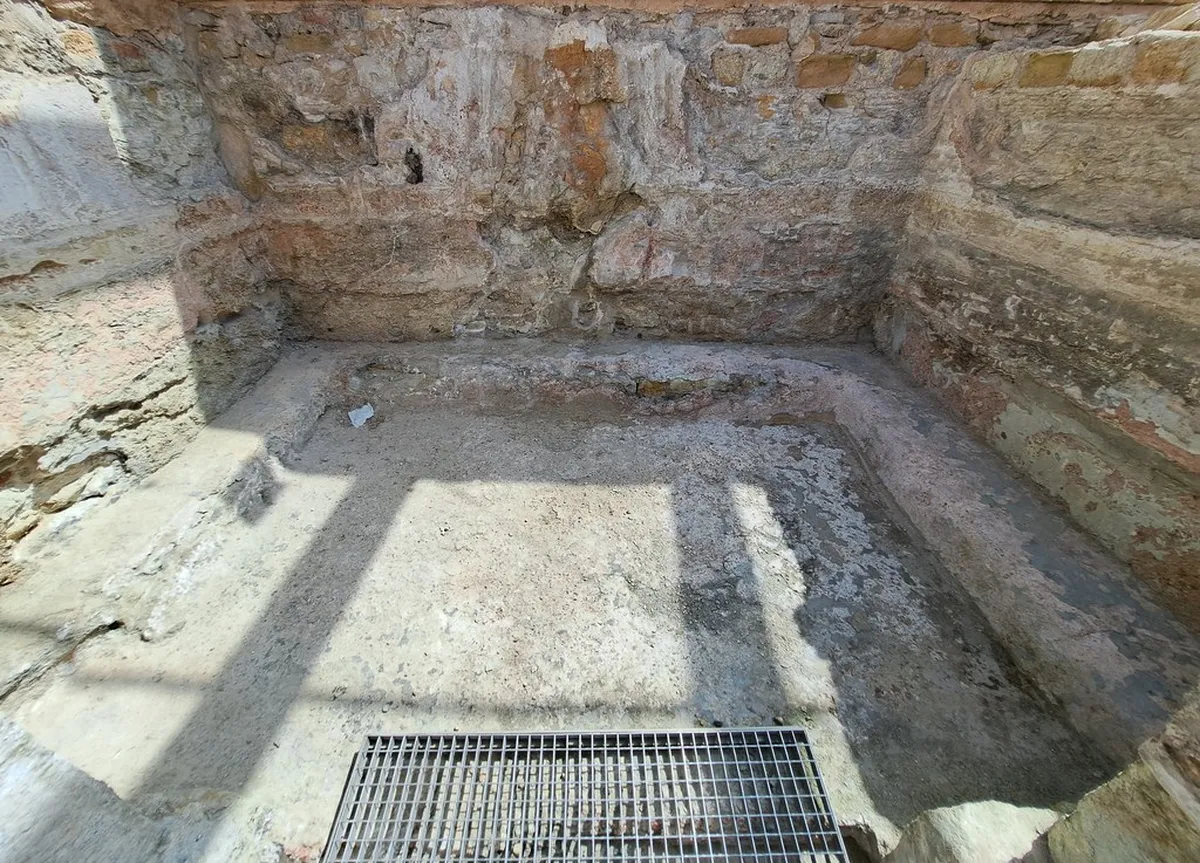
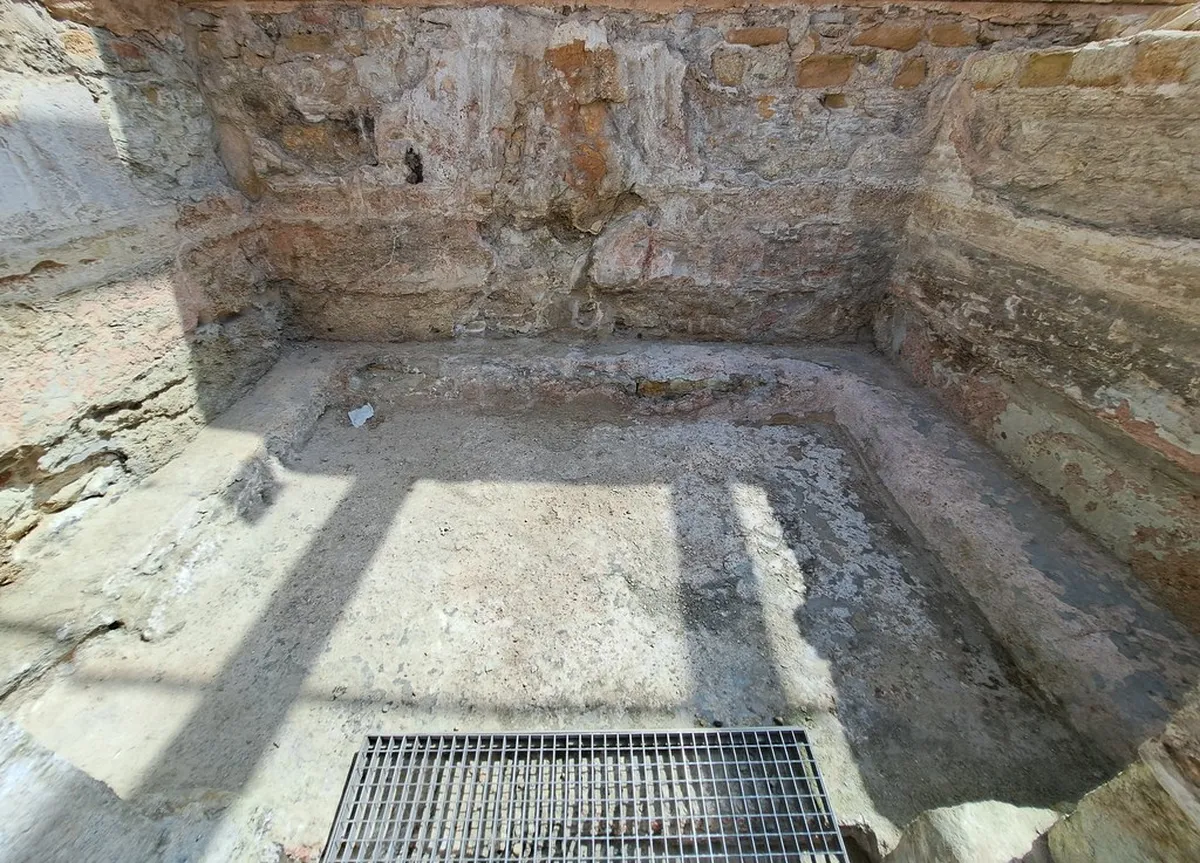
The hamam is the complex's best-preserved single structure: a marble-lined dome built in 1562 directly on the Roman bath's foundations, reusing some of the original Roman marble lining and ornamentation rather than replacing it.
Suleiman commissioned the bath after his own visit for gout treatment, and the Ottoman builders kept the Roman layout largely intact, which is why the hamam still sits over the same hot spring the Romans once piped into their caldarium.
Inside, a 3D cinema projects the site's history directly onto the ancient stone walls, walking visitors through the Thracian, Roman, Byzantine, and Ottoman phases in a single show before opening onto a virtual walkthrough of the original bath layout.
A ticket to the hamam with its 3D tour costs 3.50 EUR for adults in 2026 (2.50 EUR for students and seniors, 1.50 EUR for children aged 3-7), sold separately from the archaeological museum and the Aqua Centre, so budget it as its own stop rather than assuming one ticket covers everything.
Modern Aqua Centre: Mineral Pools and Spa Facilities
The Aqua Centre opened in October 2022 inside the same archaeological complex and draws on the identical 41°C spring the Romans and Ottomans used, filtered into a main mineral pool measuring 9.6 by 3.8 meters at a depth of 1.45 meters and held around 34 to 36°C.
A smaller children's pool (3.6 by 1.4 meters, 0.4 meters deep) runs at the same temperature, and a jacuzzi section reaches 37 to 38°C; a 90°C sauna, a steam bath, and a cold plunge pool round out the wet areas.
The water itself is alkaline (pH 9.73) with a total mineralization of 642 mg/l, carrying sodium (169 mg/l), sulfate (77 mg/l), fluoride (8 mg/l), and metasilicic acid (86 mg/l) - a mineral profile the official spa guidelines credit with benefits for joint, nerve, and skin conditions.
Entry to the Aqua Centre costs 8 EUR for one hour or 13 EUR for up to three hours per adult in 2026, and a free fountain of hot mineral water near the entrance lets anyone taste the source without paying to bathe.
- Water Properties and Temperature Guide
- Main Pool: 34-36°C
- Jacuzzi: 37-38°C
- Water pH: 9.73
- Mineralization: 642 mg/l
Archaeological Discoveries: Thracian and Roman Ruins
Systematic digging began in 1910 under Bulgarian archaeologist Bogdan Filov, who cleared the spring basin and its piping and recovered thousands of votive coins in the process.
Most of what's visible today came from a 2008 to 2013 excavation campaign led by the Regional Historical Museum Burgas, which exposed roughly 3,800 square meters of the site including the northern gate, the city walls, and a 6th to 14th-century church; the preserve was formally declared in July 2011 across 36,000 square meters.
The northern entrance gate stands 4.85 meters tall, the Justinian-era walls run up to 2.60 meters thick, and drilling has found cultural layers as deep as 9 meters - evidence of continuous use from the Neolithic period through the medieval era.
Not every corner is finished: a high water table has flooded parts of the dig more than once, including in 2015 per archaeological reports from the site's reopening, and the museum team still runs seasonal digs. A fenced-off trench or a tented excavation area next to the polished walkways is normal here, not a sign the site is unfinished or poorly kept.
- Significant Archaeological Site Dimensions
- Gate Height: 4.85 meters
- Wall Thickness: 2.60 meters
- Aqueduct Depth: 6.30 meters
- Preserve Area: 36,000 square meters
Practical Logistics: Getting There and Entry Fees
Aquae Calidae sits about 14 to 15 kilometers northwest of central Burgas in the Vetren quarter. Driving via the A1 motorway toward Sofia and following signs for Vetren takes 15 to 20 minutes in normal traffic, with parking available on site.
The public bus from Burgas's central bus station runs to Vetren for about 1.50 BGN per journey, paid on board, but drops you roughly a 20-minute walk from the entrance - worth planning around in summer heat or with young children. A taxi from the Vetren bus stop covers the same stretch in a few minutes.
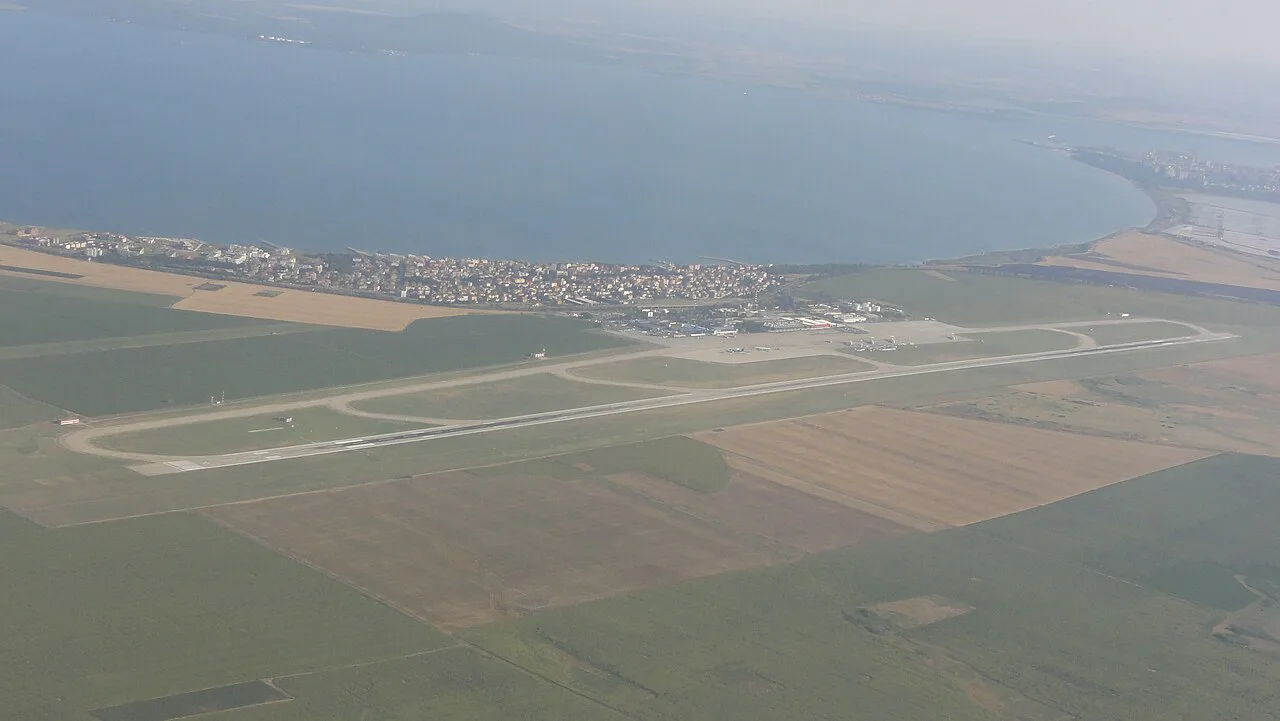
Flying in, Burgas Airport is about 14 kilometers from the complex, with a taxi running 20 to 30 BGN; the airport has direct summer flights from multiple European cities, so a same-day visit straight from arrival is realistic.
Budget for separate tickets: the hamam with its 3D tour is 3.50 EUR for adults, the museum complex with 3D mapping is 8 EUR, and the Aqua Centre is 8 EUR for one hour or 13 EUR for three - and remember the Aqua Centre caps every visit at two hours regardless of which ticket you buy. The whole complex is closed on Mondays, with the museum open 09:00-17:00 and the Aqua Centre 09:00-20:00 Tuesday through Sunday.
- Transport Options from Central Burgas
- Rental Car via A1: 15-20 minutes
- Public Bus: 1.50 BGN, plus a 20-minute walk
- Taxi from Burgas Airport: 20-30 BGN over about 14 km
- Aqua Centre Session Cap: 2 hours per visit
Essential Visitor Etiquette and Safety Tips
The sauna runs at 90°C, and staff recommend capping a single session at 15 minutes, then cooling off fully at the cold plunge before returning to any warm pool or the sauna again.
Every mineral pool session is capped at 20 minutes, and the whole Aqua Centre visit is capped at two hours total; the water is meant for still soaking rather than swimming or play, so attendants will ask you to slow down if you're too active in the pools.
Shower before entering any pool and remove lotions, sunscreen, or makeup first, since the alkaline mineral water reacts with cosmetic residue and the centre enforces this rule strictly. Visitors with cardiovascular conditions, rhythm disorders, thyrotoxicosis, epilepsy, active infections, or oncological conditions, along with pregnant guests, should skip the mineral pools and sauna and stick to the museum and hamam tour instead.
Wheelchair access across the spa and museum areas isn't formally confirmed on the uneven archaeological walkways, so visitors with mobility needs should contact aquae-calidae.com ahead of time to check the current step-free route. Children must be supervised at the pools at all times, and towels or flip-flops are worth bringing since rental adds to the cost.
- Spa Safety and Visit Constraints
- Sauna Temp: 90°C, max 15 minutes
- Pool Session: 20 minutes
- Total Aqua Centre Visit: 2 hours
- Medical Contraindications: cardiovascular conditions, epilepsy, pregnancy, active infection
Aquae Calidae or Varna's Roman Thermae: Choosing Between Bulgaria's Black Sea Bath Sites
Burgas isn't the only Black Sea city with a headline Roman bath. About two hours up the coast, Varna preserves its own 2nd-century Roman baths - the Roman Thermae Varna Visitor Guide, the fourth-largest surviving thermae complex in Europe - and travelers building a coastal itinerary often ask which one is worth the detour.
![Nessebar -St. Paraskeva Church [13th century] in Burgas, Bulgaria](https://toursbulgaria.com/images/aquae-calidae-thermal-complex-aquae-calidae-or-varna-s-roman-therm.webp)
The comparison isn't close for what each site actually offers. Varna's Thermae is a preserved ruin you walk through for a few euros, with no working spa attached, while Aquae Calidae layers Thracian, Roman, Byzantine, and Ottoman construction on one plot and still functions as an active mineral bath today.
If your trip only allows one stop, pick Aquae Calidae for the combination of deep history and a genuine soak in the same water Roman bathers used; pick Varna's Thermae if you're already in Varna for the day and want a focused, no-frills look at Roman engineering without booking a spa session.
Travelers doing a full coastal loop - Burgas to Nessebar to Varna - can reasonably fit both into the same week, since neither site needs more than half a day and the two sit roughly three hours apart by car.
Continue planning: Use Burgas Attractions: 10 Best Things to Do in 2026 to connect this guide with the rest of your Bulgaria itinerary.
Frequently Asked Questions
What is the Aquae Calidae Thermal Complex?
Aquae Calidae is a restored archaeological complex in Burgas's Vetren quarter, built on the site of the ancient Thracian and Roman spa town known as Therma and later Thermopolis, which grew around hot mineral springs. Today it combines a museum with 3D mapping, the restored Ottoman-era hamam of Suleyman the Magnificent with a 3D tour, and a mineral-water aqua center.
How much do Aquae Calidae tickets cost in 2026?
Entry to Suleyman the Magnificent's hamam with the 3D tour costs 3.50 EUR (6.85 BGN) for adults, 2.50 EUR for students and seniors, and 1.50 EUR for children aged 3-7. The museum complex with 3D mapping costs 8 EUR for adults. Children under 3 and visitors with disabilities enter free.
What day is Aquae Calidae closed?
The complex is closed on Mondays. The museum exposition is open Tuesday to Sunday from 09:00 to 17:00, and the Aqua Center from 09:00 to 20:00.
Can you bathe in the mineral water at Aquae Calidae?
Yes. The Aqua Center charges adults 8 EUR (15.65 BGN) for 1 hour or 13 EUR (25.43 BGN) for up to 3 hours, using the same hot mineral springs that made the ancient town famous.
Are Aquae Calidae prices in euro or leva?
Since Bulgaria adopted the euro in January 2026, the official price list is displayed in euro with lev equivalents - for example, the adult hamam ticket is 3.50 EUR / 6.85 BGN.
Are guided tours available at Aquae Calidae?
Yes. A private guide in Bulgarian or English costs 30 EUR (58.67 BGN), and group rates apply for parties of 20 or more.
Where is Aquae Calidae?
The complex is in the Vetren quarter on the northern edge of Burgas. Tickets can be bought on site or online via the official site aquae-calidae.com.
Aquae Calidae rewards travelers who treat it as two visits in one: an archaeological park layered with more than two thousand years of history, and a working mineral spa built on the same spring that drew Thracian pilgrims, Roman emperors, and an Ottoman sultan.
Book the hamam's 3D tour and a slot at the Aqua Centre separately if you want both, and keep the Monday closure and the two-hour session cap in mind when you plan your day.
2026 pricing keeps the site accessible for a half-day trip from central Burgas, whether you arrive by rental car in 20 minutes or take the budget bus and walk the last stretch from Vetren.
Leave time afterward to wander the Vetren quarter itself - most of the coast's other Roman-era sites, Varna's Thermae included, don't offer anywhere near this much layered history on a single afternoon.
For official details, visit the Aquae Calidae Thermal Complex official site and Aquae Calidae Thermal Complex on Wikipedia.
For more Burgas planning, read our 6 Things to Know Before Visiting Aquae Calidae Burgas and Best Time to Visit Burgas: Weather & Seasons (2026) guides.