Archaeological Museum Nessebar Visitor Guide
Stepping into the old town of Nessebar feels like traveling back through centuries of human history. This narrow peninsula on the Black Sea coast holds secrets from Thracian, Greek, and Roman civilizations. You will find that the archaeological museum nessebar visitor guide helps you navigate these ancient layers easily.
Here's a walk-through of the four exhibition halls to get oriented before your visit:
The museum serves as the primary entrance to the UNESCO World Heritage area. It provides a necessary context for the ruins you will see scattered across the town. Most visitors spend about an hour exploring the four halls of detailed exhibits. This guide ensures you make the most of your cultural journey in 2026.
Must-See Archaeological Attractions
The Archaeological Museum – Nessebar is the natural starting point for any visit, sitting at 2A Mesambria Street right where the isthmus meets the old-town gate. The collection first opened in 1956 inside the nearby Church of St. John the Baptist, then moved in 1994 into the purpose-built hall designed by architect Hristo Koev that houses it today. The permanent exhibition, "Nessebar through the Ages," fills a lobby and four halls tracing the town from Thracian Menebria and Greek Mesambria through the Roman, Byzantine and medieval Bulgarian periods, with labels in both Bulgarian and English.
![Nessebar -Hagia Sophia Church [5th century] in Nessebar, Bulgaria](https://toursbulgaria.com/images/archaeological-museum-nessebar-must-see-archaeological-attractions.webp)
The first hall covers Thracian and early Greek life on the peninsula: stone anchors dated to the 12th-11th century BC, pottery stamped with geometric ornament, and a 3rd-century BC decree honoring the Thracian dynast Sadalas. A hoard of silver tetradrachmas and a 2nd-century AD tombstone sit in the same room, alongside rare bronze hydriai pulled from Mesembria's ancient necropolis and used as funeral urns. Gold earrings, rings and necklaces recovered from 3rd- and 2nd-century BC burial gifts round out this section, evidence of how wealthy the Greek trading port once was.
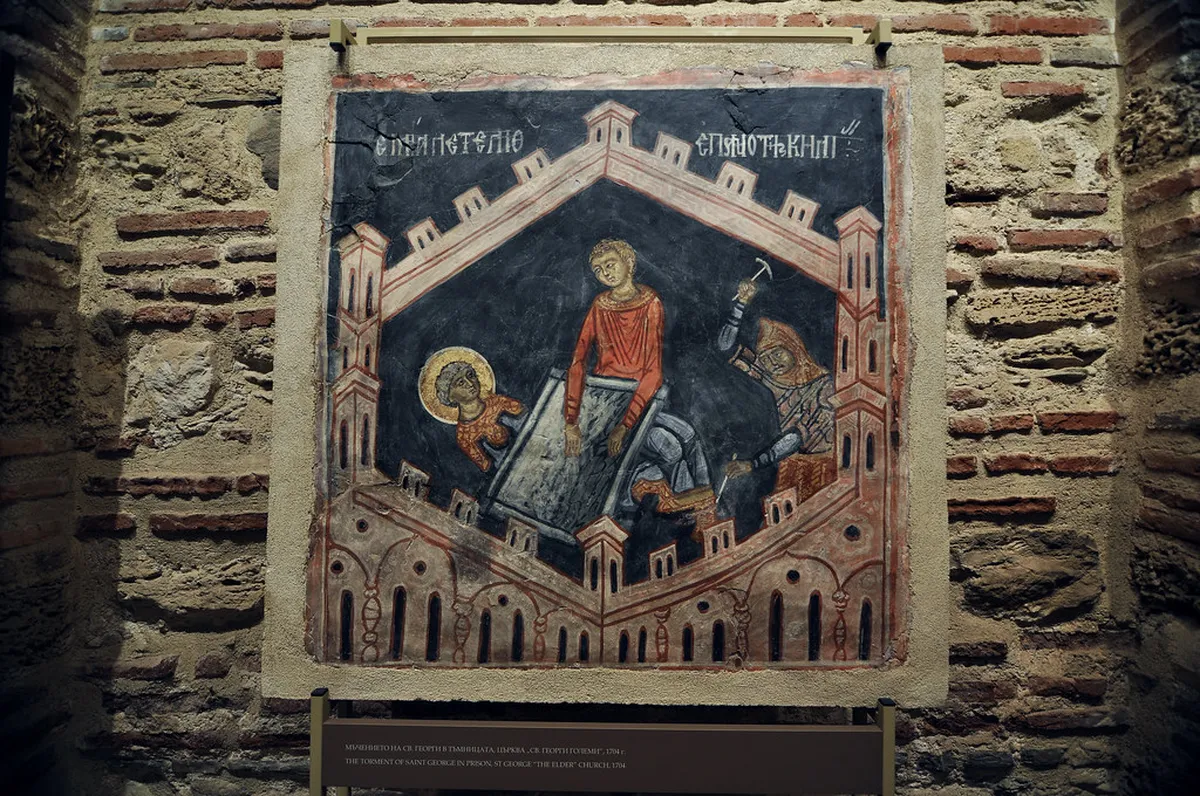
The third hall moves into Rome and Byzantium, anchored by the marble pedestal of a statue of Emperor Claudius and grey-clay pottery from the century after Khan Krum annexed the town to the First Bulgarian Empire in 812 AD. A dedicated icon hall closes the visit — around 250 works survive from Nessebar's own icon-painting school, which flourished in the 16th and 17th centuries, with the oldest surviving pieces dating to the 13th century. The lobby also displays Nessebar's UNESCO World Heritage certificate, awarded on 9 December 1983, worth a look before you head into the halls.
Museums, Art, and Culture in Archaeological
Nessebar keeps its museums under one roof of management. Museum 'Ancient Nessebar' — the operator behind the Archaeological Museum — also runs the town's Ethnographic Museum, housed in a 19th-century National Revival house furnished with traditional costumes, household tools and staged rooms showing daily life before the coast became a resort. Both sites, along with the old windmill at the isthmus, are folded into the same all-sites combination pass described below, so there is no need to queue separately at each ticket window.
For a different kind of exhibit, walk to the ruins beneath the Church of St. John Aliturgetos: the 14th-century church was built directly over a 2nd-3rd century Greco-Roman theatre, and the site still occasionally hosts performances during summer festival season. Small private galleries fill the side streets closer to the harbor, mostly showing contemporary Bulgarian painters working in seascapes and ruin studies; several set up easels outdoors in July and August.
If your visit lines up with a festival weekend, folk-dance and music programs sometimes use the open ground near the ancient theatre rather than a purpose-built stage. Dates shift year to year and are not published far in advance, so check the municipal events calendar close to your travel dates rather than months ahead.
Parks, Gardens, and Outdoor Spots in Archaeological
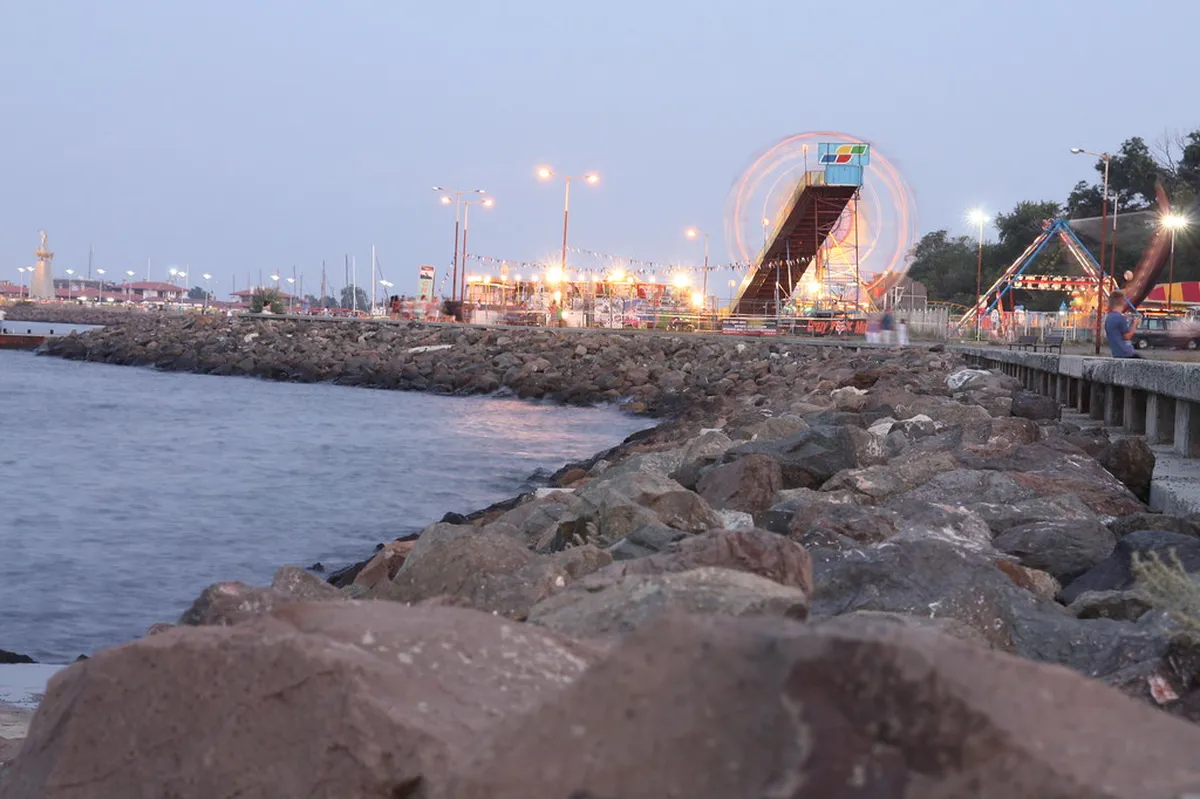
The seaside promenade rings the entire peninsula and is the easiest way to decompress after the museum halls. It delivers steady views across the bay toward Sunny Beach, with a sea breeze that cuts the summer heat even at midday — golden hour, an hour or so before sunset, is when the light on the old stone photographs best.
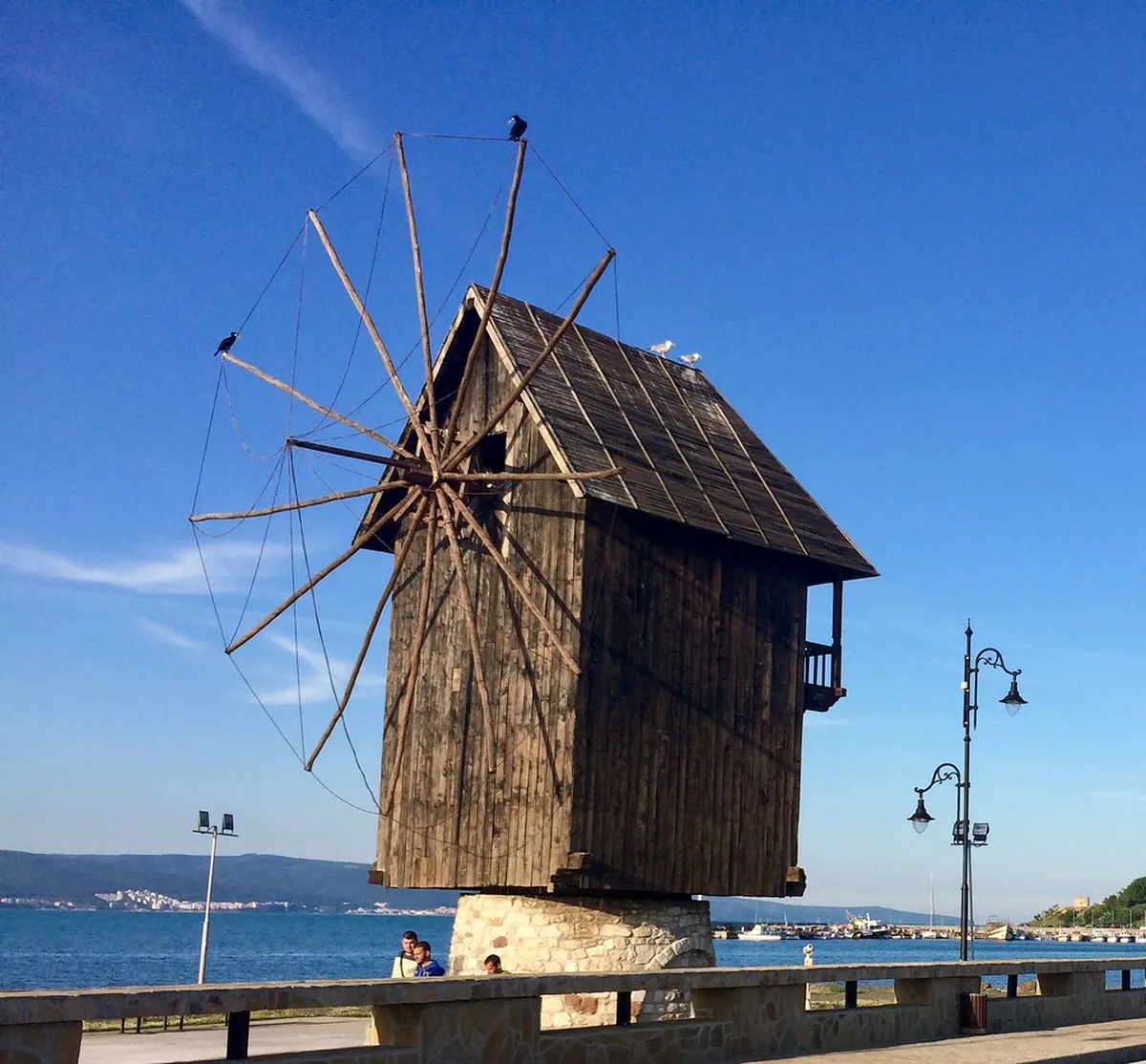
The wooden windmill at the entrance to the isthmus is the most photographed landmark on the approach road; it no longer turns, but the structure and the adjacent statue of St. Nicholas, patron of the town's fishermen, mark the transition from new town to old. You cannot go inside, but the surrounding grass strip is a natural gathering point for tour groups and a good place to regroup before crossing into the old town proper.
Quieter gardens hide behind several of the churches — fig trees and rosebushes shading marble fragments, with a bench or two tucked out of the main foot traffic. These pockets rarely appear on maps, so the simplest approach is to duck down a side alley off the main street whenever the crowds thicken.
Family-Friendly and Budget-Friendly Options in Archaeological
The all-sites combination pass is the most efficient way for a family to see the peninsula without paying at every door: it covers the Archaeological Museum, the staffed churches (St. Stephen, St. Spas, St. Paraskeva and St. John the Baptist), the Ethnographic Museum and the windmill for EUR 17.90 (35.00 lv) per adult and EUR 8.69 (17.00 lv) per child on the 2026 tariff. It pays for itself once you plan to visit four or more paid sites in a day; for a shorter stop, the museum alone runs EUR 4.60 (9.00 lv) for adults and EUR 2.30 (4.50 lv) for children.
Plenty of the town costs nothing at all. Walking the streets and admiring church exteriors, browsing the open-air ruins of St. Sophia, and circling the promenade are all free. A small playground near the harbor entrance gives children somewhere to burn off energy between stops, and the pedestrian-only core of the old town makes it easy to let younger kids range a little without traffic worry.
For food on a budget, look for bakeries selling banitsa, a flaky cheese pastry that works as a filling, inexpensive lunch. Bottled water and fruit are cheaper in the new town than inside the old-town gate, so it is worth stocking up before you cross the isthmus, and a reusable bottle is handy since public fountains are scarce once you are inside the walls.
How to Plan a Smooth Archaeological Attractions Day
The museum keeps a seasonal schedule: 09:00-19:00 in high summer (early June to mid-September), 09:00-18:00 in the shoulder months, and 09:00-17:00 from mid-October through April. Arrive before 10:00 in peak season to get ahead of the coach tours that unload at the old-town gate through the morning.
Bulgaria's move to the euro at the start of 2026 means ticket windows across old-town Nessebar, including the museum's, now price and accept both currencies without fuss, though small souvenir stalls and family-run cafés still lean on cash lev out of habit. Carry a mix of small euro notes and a card, since change usually comes back in whichever currency you paid with. Because the museum sits right at the gate, it is also the most efficient place to buy the all-sites pass rather than queuing again at a smaller church window later in the day.
Driving in is workable but tight on parking: use the "Old town Nessebar Parking" (Несебър – стар град) lot just before the bridge — mapped here — where municipal rates typically run around EUR 1.02 (2.00 lv) per hour started, capped near EUR 6.14 (12.00 lv) for a full day. Outer lots almost always have space but add 10-15 minutes of walking.
Public buses from Burgas's South Terminal (route 10, run by M-BUS and DS Bus) cost EUR 4.09 (8.00 lv) one-way and take 35 to 60 minutes depending on traffic, dropping passengers directly at the old-town entrance before continuing on to Sunny Beach. Current pricing for every site is on the Museum Ancient Nessebar website.
Our Walking Tour of Nessebar Old Town – Things to Do in Nessebar
Start at the gate of Nessebar's Old Town, where the early Byzantine city wall meets the sea — its "opus mixtum" banding of stone and brick repeats in several of the churches you will pass later. The Archaeological Museum is the first building through the gate, so buy tickets and get oriented here before the ruins start blending together further along the walk.
From there, the peninsula splits into two natural loops. Heading south along Mena Street takes you past St. Stephen Church and its dense fresco interior, then around to the ancient theatre beneath the Church of St. John Aliturgetos, perched on the eastern rocks with sea views through its collapsed arches. Heading north instead brings you along the shoreline with sightlines to Sunny Beach across the bay, past the ruins of the Basilica of the Holy Mother of God Eleusa, one of the town's largest and oldest churches, dating to the 6th century.
Both routes converge in the town center, where the concentration of churches is thickest and souvenir shops crowd the ground floors of the old wooden houses. Plan on roughly two hours for the full loop with photo stops, finishing at the eastern tip for the best late-afternoon light over the water. It is a manageable walk for most fitness levels, with only mild inclines.
My Mixed Feelings About Nessebar
Nessebar is genuinely beautiful, but it leans commercial in July and August — the main streets fill with souvenir stalls selling near-identical magnets and ceramics, which can dull the sense of walking through a 3,000-year-old town. Ducking into the side streets one block off the main drag usually restores the atmosphere.
Peak-season crowds are real: expect lines at the museum and a wait for a table at the better restaurants. In total, most visitors spend two to three hours covering the whole peninsula, though the museum itself rarely takes more than an hour on its own. Shoulder-season visits in May or September cut the crowds substantially without losing much in weather.
None of that undercuts what is actually here. Standing inside a church that has survived a thousand years of earthquakes, fires and conquest is still a genuine experience once you look past the modern signage — a fair trade for tolerating a few tourist traps.
Quick Guide to Nessebar's Churches
Four churches account for most of what visitors actually go inside or photograph up close.
- Church of Christ Pantocrator Visitor Guide, 13th century, has the best-preserved Byzantine brick-and-stone facade in town and now operates as an art gallery; entry runs EUR 3.07 (6.00 lv) without a combo pass.
- St. Stephen Church holds Nessebar's most complete interior, with more than 1,000 frescoes covering nearly every wall; visit early to beat the tour groups, at the same EUR 3.07 (6.00 lv) entry.
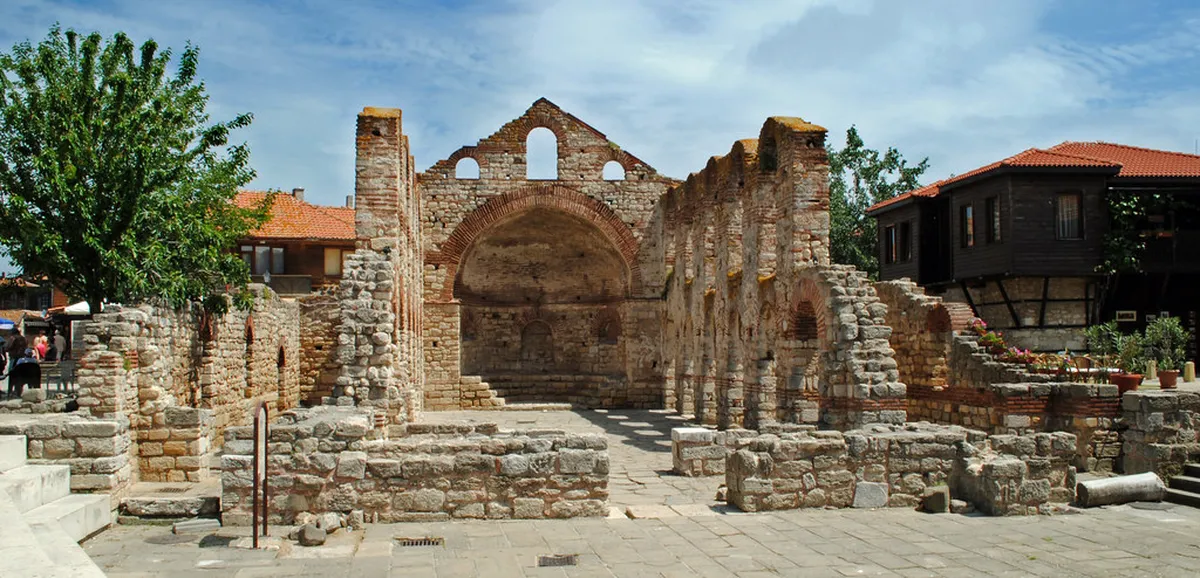
- St. Sophia, the Old Metropolitan Church, is a free, roofless 5th-century basilica in the town center that once seated the Bishop of Nessebar — its scale makes it one of the best sunset photo spots on the peninsula.
- Church of St. John Aliturgetos, on the eastern rocks above the ancient theatre, was never formally consecrated — hence the name — and costs nothing to view through its surviving arches.
If you are not planning to go inside every church, prioritize St. Stephen for the frescoes and skip the rest of the paid interiors; the exteriors and free ruins carry most of the town's visual impact anyway.
Beaches in Nessebar
The old town itself has only one real strip of sand, near the eastern tip of the peninsula, and it fills up fast simply because there is not much of it. Most travelers instead walk or take a short bus hop to South Beach, just outside the isthmus, which has more room, rental umbrellas and sunbeds, and a run of beach bars.
Sunny Beach, Bulgaria's largest resort strip, is a few minutes away by bus or car if you want more space and nightlife alongside the sand, though it trades Nessebar's quiet for crowds and noise. Lifeguards cover the main beaches through summer, and the water stays shallow enough close to shore for families with small children.
For something quieter and rockier, the small coves on the peninsula's northern side are usually near-empty but sharp underfoot. Water shoes are worth packing if you plan to snorkel there, since the seabed is stone rather than sand.
Fuel Our Adventures!
Restaurants overlooking the water are the main event — grilled fish caught that morning, and Shopska salad (tomato, cucumber, feta) on nearly every menu. Prices inside the old-town gate run noticeably higher than in the new town, so budget travelers often eat a few streets back from the water, where locals eat.
![Nessebar -Hagia Sophia Church [5th century] in Nessebar, Bulgaria](https://toursbulgaria.com/images/archaeological-museum-nessebar-fuel-our-adventures.webp)
The eastern cliffs hold the best sunset tables; book ahead on summer weekends, since walk-ins get turned away once the harbor-view seats fill. Most sit-down restaurants take cards in both euro and lev, but the street vendors selling grilled corn and ice cream along the main walking paths are usually cash-only.
For something quick between sights, the same street-food stalls are the fastest way to refuel without sitting down — a cheap, fast option to keep your energy up during a long day of church-hopping and museum halls.
Continue planning: Use Nessebar Attractions: 8 Best Things to Do in the Old Town to connect this guide with the rest of your Bulgaria itinerary.
Frequently Asked Questions
How much does the Archaeological Museum Nessebar cost?
On the official 2026 tariff, adult entry is EUR 4.60 (9.00 lv) and children pay EUR 2.30 (4.50 lv). Better value are the combos: museum plus one church for EUR 6.14 (12.00 lv), or all seven museum-run sites in the old town for EUR 17.90 (35.00 lv) adults / EUR 8.69 (17.00 lv) children.
What are the museum's opening hours?
It opens daily year-round: 09:00-19:00 in high summer (early June to mid-September), 09:00-18:00 in the shoulder months, and 09:00-17:00 from mid-October through April. Exact season-change dates shift slightly each year, so check the official site before an off-season visit.
What can you see inside the Archaeological Museum Nessebar?
The permanent exhibition 'Nessebar through the Ages' fills a lobby and four halls, tracing the town from Thracian Menebria and Greek Mesambria through Roman, Byzantine and medieval Bulgarian eras — stone anchors, amphorae, coins, tombstones and a noted collection of icons. The lobby also displays Nessebar's UNESCO World Heritage certificate from 9 December 1983.
Where is the museum located?
At 2A Mesambria Street, right at the entrance gate of the old town — it is the first building you reach after crossing the isthmus onto the peninsula, which makes it a natural first stop before exploring the churches.
Is there a combined ticket with the churches?
Yes. The museum administers several old-town churches (St Stephen, St Spas, St Paraskeva, St John the Baptist) plus the Ethnographic Museum and windmill, and sells combination tickets — from EUR 6.14 for museum plus one church up to EUR 17.90 for everything (adult prices, 2026 tariff).
How long does a visit take?
Most visitors spend 45 minutes to an hour in the four exhibition halls — an easy add-on at the start or end of an old town walk.
Are guided tours available?
Yes, Museum 'Ancient Nessebar' offers a guide service for the museum and its churches; tours should be reserved in advance by phone on +359 554 46012 or +359 554 46019.
Nessebar is a rare gem where ancient history and modern coastal life meet. The Archaeological Museum provides the perfect starting point for any visitor looking to understand this unique heritage. By following this guide, you can navigate the crowds and find the authentic stories buried in the stone.
Whether you are exploring the frescoes of St. Stephen or enjoying the breeze on South Beach, the town leaves a lasting impression. Plan your trip with a mix of culture, relaxation, and local food for the best experience. The layers of history in this Black Sea town are waiting for you to discover them.
For more Nessebar planning, read our 12 Best Things to Do in Nessebar (2026), The Best 3-Day Nessebar Itinerary: A UNESCO Journey, and Best Time to Visit Nessebar: 10 Seasonal Tips & Insights guides.
For authoritative information, refer to the Archaeological Museum Nessebar on Wikipedia.