Alexander Nevsky Cathedral Visitor Guide
Sofia's skyline is dominated by the shimmering gold domes of its most famous landmark. This 2026 visitor guide to Alexander Nevsky Cathedral covers what to expect inside, how much time to set aside, and the practical details — transit, dress code, crypt tickets — that make a Sofia city break run smoothly.
The cathedral stands in the historic center of Bulgaria's capital, an easy walk from most central hotels and squares. Planning the visit in the right order, nave first and crypt second, means you see every detail without doubling back through the square.
More than a photo stop, it remains a working patriarchal cathedral and a symbol of Bulgarian independence. Free admission to the main hall keeps it accessible to any budget, while the crypt icon museum rewards anyone who sets aside an extra half hour.
This video walks you through the cathedral's golden interior, showing you the nave, chandeliers, and architectural details you'll experience during your visit:
Visiting Alexander Nevsky Cathedral: What to Expect
Walking into the nave is a shift in mood from the busy square outside. Locals come to light candles and pray at the icon stands near the entrance, so first-time visitors should expect a hush rather than a museum-style buzz.
Silence is observed inside the main hall out of respect for people worshipping, not just as a posted rule. The air carries the scent of incense, and candlelight does more of the work than the ceiling fixtures.
Photography inside requires a paid permit from the small desk near the entrance, a detail most first-time visitors miss, and guards do check for it.
The interior is noticeably darker than the gold exterior suggests, so give your eyes a moment to adjust before hunting for the frescoes. The nave floor is flat and step-free from the main west doors, which helps visitors using wheelchairs or strollers; the crypt entrance around the side is less consistent, so ask the desk staff if that matters for your visit.
Overview of the Alexander Nevsky Cathedral
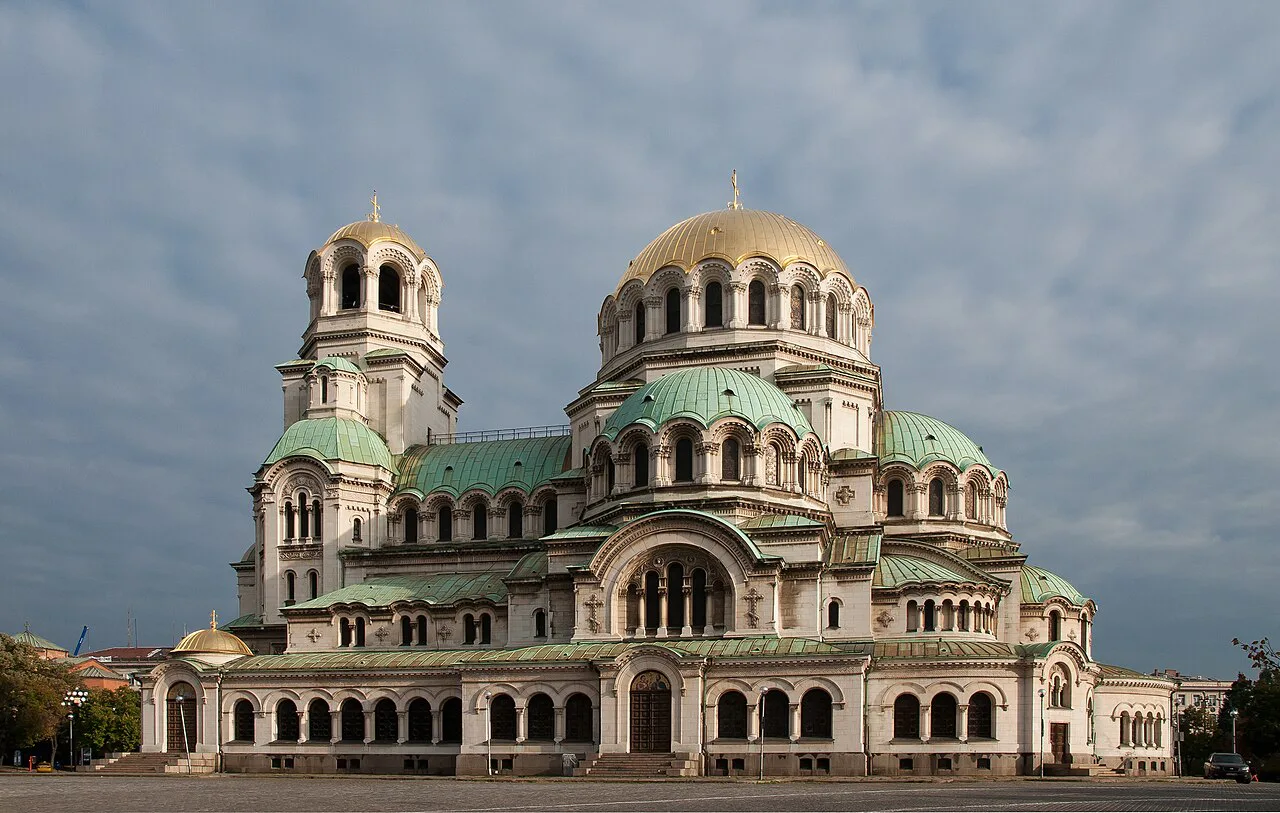
This Neo-Byzantine cathedral serves as the seat of the Patriarch of Bulgaria and was designed by Russian architect Alexander Pomerantsev. Ground was broken in 1882 to honor the Russian soldiers who died liberating Bulgaria in the Russo-Turkish War, though most of the actual construction took place between 1904 and 1912.
It can hold up to 5,000 people within its massive and ornate interior. You can learn more about the surrounding old town at the Sofia information hub before your visit.
The gold-plated central dome rises 45 meters, and the bell tower behind it reaches 53 meters — tall enough that both are visible from many parts of the city. Builders used premium materials like Italian marble and Brazilian onyx to decorate the space.
This landmark remains one of the most significant architectural achievements in the Balkan region, built in one sustained campaign rather than over centuries.
Who Would Love This Tour?
Architecture enthusiasts will appreciate the mix of Italian marble and Brazilian onyx used throughout the nave, plus the scale of the mosaics and chandeliers overhead.
History lovers will find the Bulgaria-Russia connection fascinating, especially anyone following a broader Sofia planning guide around the city's 19th- and 20th-century politics.
Families do fine here: the open plaza surrounding the building makes for easy walking and photos, and the cathedral itself is a short, low-effort stop rather than a half-day commitment.
Art fans should not miss the frescoes painted by renowned masters, a solid introduction to late 19th-century religious art before or after a stop at the crypt museum.
Key Points
Planning your logistics in advance helps you avoid common traveler mistakes during your visit. Most people spend about one to two hours exploring the main hall and the crypt.
The cathedral is generally open daily from 7 AM to 7 PM for all visitors. Admission to the main cathedral area is free, making it an accessible stop for any budget.
Keep in mind that religious services take priority over tourist visits. You should check the schedule in advance if you want to hear the famous cathedral choir perform.
- Admission Fees and Photography
- Entry: Free for main hall
- Photo/video permits: ask at the candle desk inside
- Crypt Entry: €4.09 (8 BGN); €1.53 on Thursdays
- Timing and Duration
- Opening Hours: 7 AM - 7 PM
- Typical Visit: 1-2 hours
- Best Time: Early morning
- Crowd Level: Low on weekdays
- Dress Code and Conduct
- Attire: Modest clothing required
- Shoulders: Must be covered
- Knees: Must be covered
- Noise: Silence is mandatory
Getting There: Transport Options to Alexander Nevsky Cathedral
Reaching the cathedral is simple because it sits in the historic center of the city. The Sofia University metro station is only a five-minute walk from the main entrance.
Serdika metro station, on the M1/M4 lines, is a longer walk, closer to 15 minutes, but useful if combining the visit with the Serdika ruins. Trams 20 and 22 run along the boulevards near the square if you'd rather not walk.
You might also enjoy walking from the popular Vitosha Boulevard Visitor Guide shopping area, about 10-15 minutes on foot through the park in front of the National Palace of Culture.
Taxis are plentiful but usually unnecessary if you stay centrally, and parking is difficult and expensive in this high-traffic part of the capital.
In-Depth Review of the Alexander Nevsky Tour Experience
Most visitors choose between three ways to see the cathedral: a free self-guided walk-through, a paid audio guide, or a short session with a licensed guide. The right pick depends more on your appetite for context than on budget alone.
A guided or audio-guided visit typically runs around $12.73 per person for 1 to 2 hours, covering the mosaics, the Russo-Turkish War context, and the symbolism behind the central chandelier. Guides are usually available in English and other major European languages.
- Self-guided: free beyond crypt admission, best for repeat visitors or anyone short on time.
- Audio guide: around $12.73, best for solo travelers who want context without booking a person.
- Licensed guide: the highest cost, best for architecture or history specialists who want to ask questions on the spot.
Discover the Cathedral’s Crypt and Icon Museum
The cathedral crypt houses a magnificent collection of Orthodox icons from across Bulgaria. This museum contains pieces dating back to the 4th century and showcases incredible artistic evolution.
Admission to the crypt is separate from the main cathedral and costs €4.09 (8 BGN) for adults, with a reduced €1.53 ticket on Thursdays. It is widely considered one of the best icon museums in all of Europe.
The entrance is located on the left side of the building as you face the main doors. Inside, it's cool and quiet, better suited to close study of the wood carvings than a quick walk-through.
Many of these icons were rescued from abandoned monasteries and churches throughout the country during periods of unrest, so the museum works as a visual archive of the Bulgarian Orthodox tradition rather than a single collection built for one building.
Experiencing Sofia’s Culture Through the Cathedral
The cathedral remains the spiritual heart of the nation and hosts major religious ceremonies year-round. Visiting during a holiday service lets you hear the full choir, a different experience from a quiet weekday walk-through.
Check our Sofia events guide for concerts or special services timed to your trip. Locals still gather here for major life events, so it functions as a living landmark rather than a purely historical one.
The square out front does double duty on weekend mornings as an open-air antiques and collectibles market, separate from the church itself: expect tables of Soviet-era medals, old coins, vintage postcards, and reproduction icons. It's cash-only, haggling is normal, and the best pieces tend to go early, so arrive before the tour buses if that's your interest.
This same area becomes a hub for Easter and Christmas celebrations, when the plaza fills with people rather than souvenir tables.
Exploring Nearby: Top Attractions Around the Cathedral
Several other historic sites are within walking distance of the golden domes. You can easily visit the St. George Rotunda, which is the oldest building in Sofia.
First-time visitors often mix up St. Sofia Church, the small, much older building right beside the cathedral that gave the city its name, with Alexander Nevsky itself. They're separate buildings with separate histories, so budget a few extra minutes to see both rather than assuming one covers the other.
The Ivan Vazov National Theatre Visitor Guide is also nearby and offers a beautiful park setting. The Ancient Serdica Archaeological Complex Visitor Guide is another short walk away for those interested in the Roman ruins beneath the modern city.
Many small cafes and restaurants line the streets leading away from the cathedral, the natural rest point after a morning of sightseeing rather than a special trip on its own.
Continue planning: Use Sofia Attractions: 12 Top Sights, Tickets & Tips to connect this guide with the rest of your Bulgaria itinerary.
Frequently Asked Questions
Is Alexander Nevsky Cathedral free to enter in 2026?
Yes, entry to the main hall of the Alexander Nevsky Cathedral is free for all visitors. However, you must pay a small fee to enter the icon museum in the crypt. Photography and video recording also require a paid permit from the entrance desk.
What is the best time of day to visit Alexander Nevsky Cathedral?
The best time to visit is early in the morning when the light hits the golden domes perfectly. This is also when the cathedral is quietest before the large tour groups arrive. Late afternoon provides a beautiful glow for exterior photos of the Sofia city center.
Are there any dress code requirements for the cathedral?
Visitors should dress modestly to respect the religious nature of the site. Shoulders and knees should be covered, and men should remove their hats before entering. Avoid wearing revealing clothing or loud accessories that might disturb the peaceful environment.
How long should I plan for a visit to Alexander Nevsky Cathedral?
You should plan to spend between one and two hours at the cathedral. This allows enough time to admire the main interior and visit the icon museum in the crypt. If you are a fan of religious art, you may want even more time.
Alexander Nevsky Cathedral is more than a photogenic dome. It's a working cathedral, a war memorial, and a museum in one square, and treating it that way changes how you plan the visit.
Set aside one to two hours, go early if you want quiet, dress modestly, and budget the small crypt fee if the icon collection interests you. In 2026 that combination still gets you the best version of the visit for the least effort.
The golden domes will likely be one of the more lasting images from a Sofia trip. Give the crypt and the surrounding square their fair share of time rather than treating the cathedral as a five-minute photo stop.
To verify current details, consult the Alexander Nevsky Cathedral official site and Alexander Nevsky Cathedral on Wikipedia.
For more Sofia planning, read our 11 Essential Tips for a Rila Monastery Day Trip From Sofia guide.