Rozhen Observatory: Visitor Guide to Bulgaria's National Astronomical Observatory
Last updated July 2026. Rozhen Observatory crowns a 1,759-meter peak in the central Rhodopes, and visiting it takes a little planning: tours run around active research schedules, the approach road climbs through repeated switchbacks, and public transport barely reaches the site. This guide covers what the guided visits actually show, how to drive in from Smolyan, Pamporovo, or Chepelare, and what to confirm before you set out.
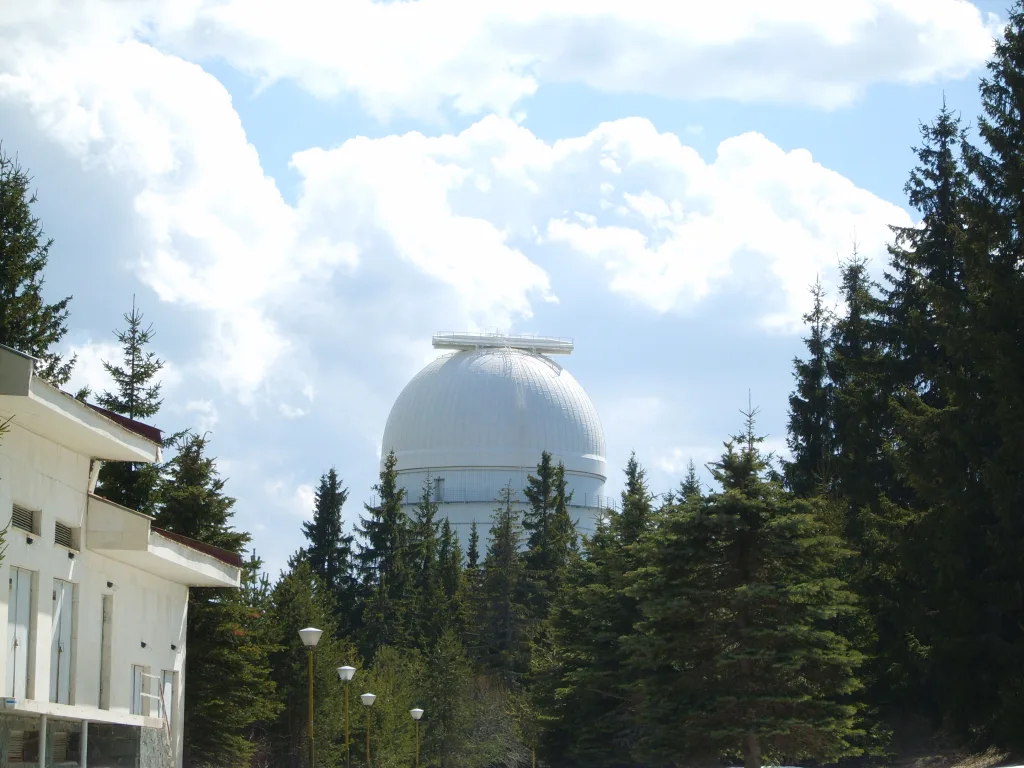
Here's a closer look at the 16-meter focal-length telescope and the working observatory dome:
Bulgaria's Eye on the Universe
Rozhen Observatory, officially the Bulgarian National Astronomical Observatory (NAO-Rozhen), sits at 1,759 meters on Peak Rozhen in the Rhodope Mountains, roughly 15 kilometers from the town of Chepelare and 90 kilometers south of Plovdiv, within Smolyan Province. It is one of the largest astronomical centers in Southeastern Europe and the principal hub for astronomical research in Bulgaria, run by the Institute of Astronomy at the Bulgarian Academy of Sciences (BAS) with an active team of around 50 astronomers. For travelers based in Smolyan or exploring things to do around Smolyan, Rozhen is the region's most distinctive detour: a working scientific facility rather than a polished visitor attraction, set against some of the best panoramic views in the Rhodopes.
What to See: Telescopes and Technology
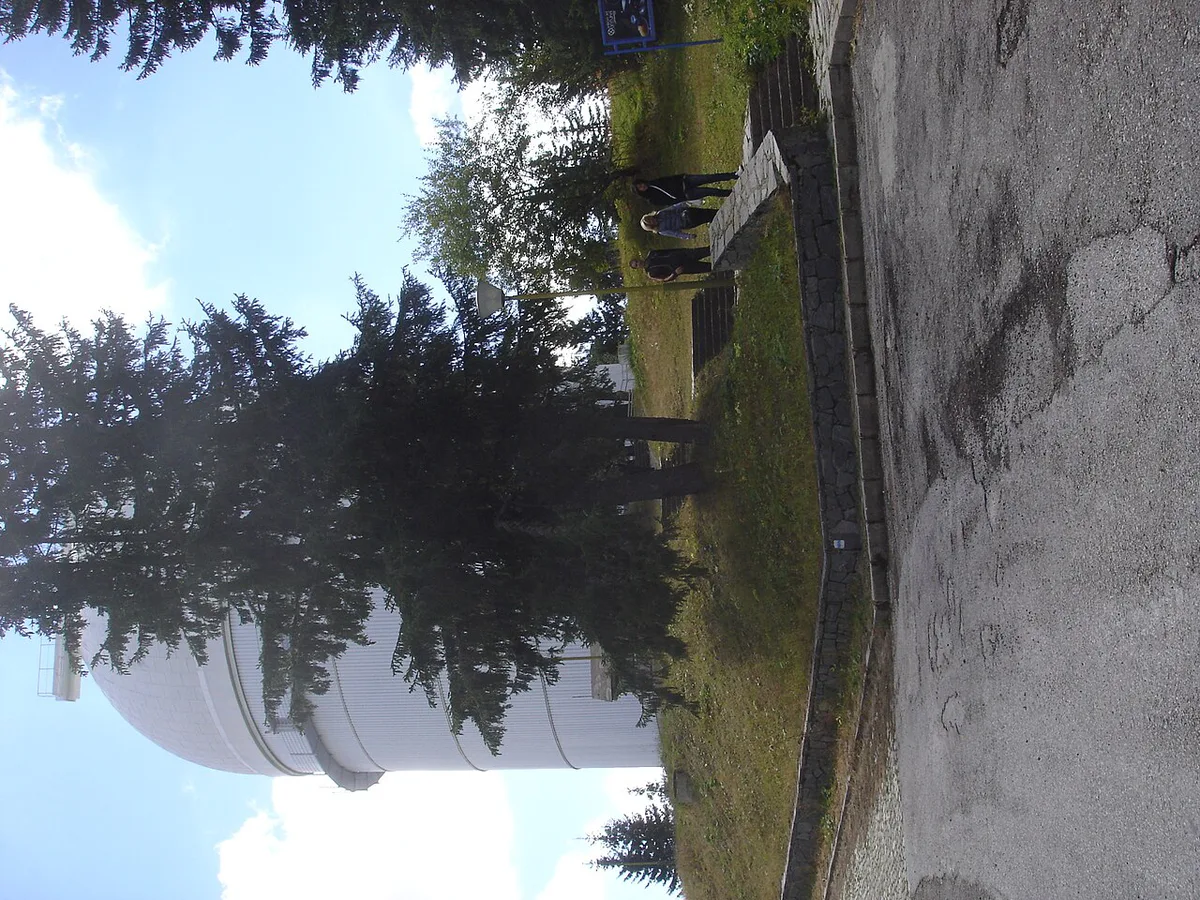
The centerpiece of the site is the 200-centimeter Ritchey-Chretien-Coude (RCC) telescope, the largest optical telescope in Southeastern Europe and the instrument most visitors come to see up close inside its large dome. It sits alongside a smaller but still substantial roster of instruments: a 150-centimeter Ritchey-Chretien-Nasmyth telescope, a 60-centimeter Cassegrain reflector, a 50/70-centimeter Schmidt camera used for wide-field sky surveys, a 30-centimeter Meade telescope, and a 15-centimeter solar coronagraph for observing the sun. A standard guided visit typically walks groups through the main dome housing the 2-meter telescope, with staff explaining the mechanics of the mount and how the observatory's instruments are used for research rather than casual eyepiece viewing. Some tours also include a short lecture-hall stop covering the observatory's research programs, from solar-system studies to stellar clusters and galaxy observation.
- 200 cm Ritchey-Chretien-Coude telescope — the primary research instrument and visitor highlight
- 150 cm Ritchey-Chretien-Nasmyth telescope
- 60 cm Cassegrain reflector
- 50/70 cm Schmidt camera for wide-field sky surveys
- 15 cm solar coronagraph telescope
Planning Your Rozhen Observatory Visit
Rozhen operates as an active research facility first and a visitor site second, so opening hours and tour availability can shift seasonally and around observing schedules — confirm current times and ticket prices in Bulgarian lev (BGN) on the official NAO-Rozhen site before setting out, since researchers frequently work through the night and public access is generally limited to daytime guided tours. Groups wanting an English-language tour should plan to reserve ahead where possible, as staffing for non-Bulgarian tours is limited compared to standard Bulgarian-language visits. The most reliable visiting window is late spring through early autumn, when access roads are clear and skies over the Rhodopes are more likely to be free of the fog that can settle over the peaks. Winter visits are possible but depend heavily on snow clearance on the mountain road up to the site.
The observatory is an active research facility where opening hours and tour availability shift around observing schedules. Confirm current times on the official NAO-Rozhen site before departing, and reserve English-language tours in advance where possible.
Getting There and Around
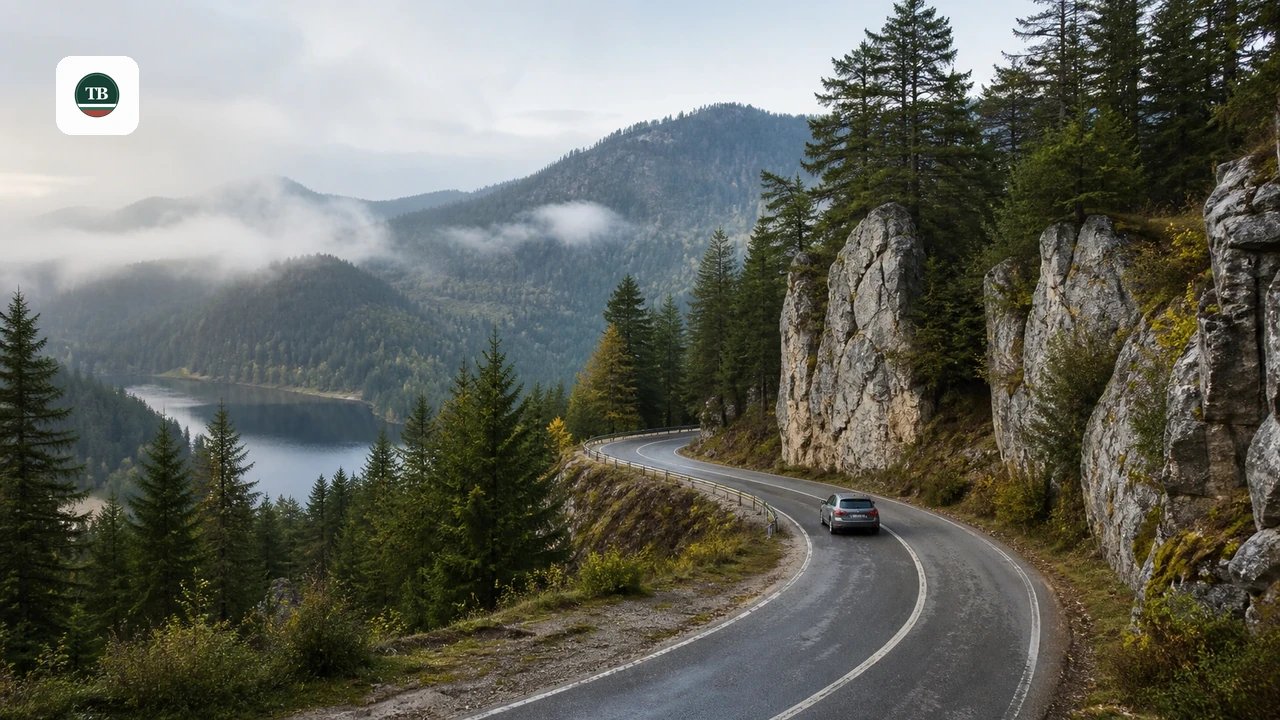
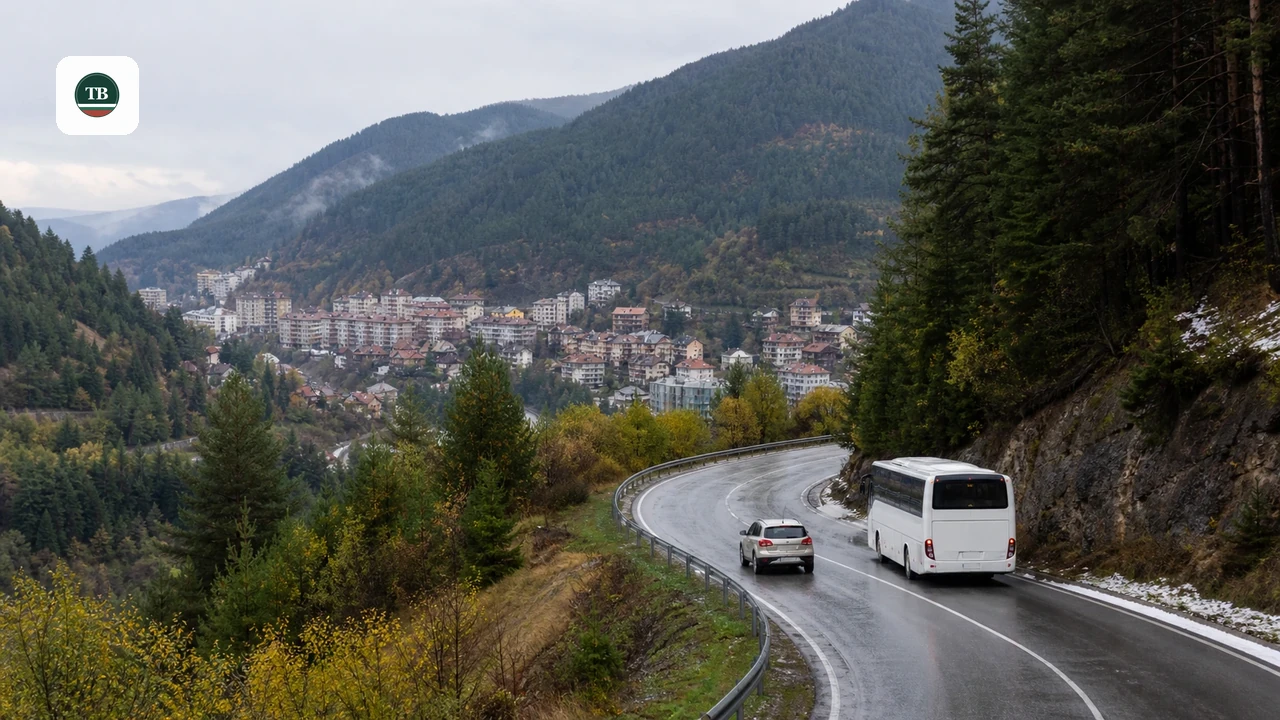
The observatory is reached via a winding mountain road climbing from Chepelare, about 15 kilometers away, making a private car or a taxi from Chepelare the most practical option — public bus access to the site itself is limited to nonexistent, so self-driving or arranging transport in advance is strongly recommended. From Smolyan, the drive covers similar Rhodope mountain terrain with multiple switchbacks gaining elevation toward the 1,759-meter peak; allow extra time compared to flat-road driving estimates. From Pamporovo, the route also passes through or near Chepelare, making it a natural add-on for skiers or summer hikers already based at the resort. Parking is available near the entrance, though space is limited during peak weekend and holiday traffic, so arriving earlier in the day is worthwhile.
| Route Origin | Distance | Route Description |
|---|---|---|
| Chepelare | ~15 km | Via mountain road; car or taxi recommended |
| Smolyan | Similar distance | Mountain roads with significant elevation gain toward 1,759 m |
| Pamporovo | Via Chepelare | Routed via or near Chepelare; workable day-trip pairing |
| Plovdiv | ~90 km | Roughly 90 km south to observatory area |
Should You Visit? A Quick Decision Guide
Rozhen Observatory suits astronomy enthusiasts, photography-minded travelers, and anyone drawn to sweeping panoramic views across the Rhodope Mountains, especially those already exploring the wider Rhodope Mountains beyond the usual villages and gorges. It is a good fit for travelers who find value in understanding how a working research facility operates, rather than expecting an interactive, hands-on science-center experience. Skip it, or manage expectations carefully, if the goal is a theme-park-style exhibit with touchscreens and simulators, or if winding mountain roads with repeated switchbacks are likely to cause motion sickness — the drive itself is a significant part of the visit.
Combining Your Trip: Nearby Rhodope Highlights
Rozhen Observatory pairs naturally with several other Rhodope attractions on a single day trip out of Smolyan. The Wonderful Bridges rock formations make for a striking contrast stop between the observatory's engineered domes and the region's natural limestone arches. The glacial Smolyan Lakes Guide 2026: the Emerald Eyes of the Rhodopes and the dramatic Uhlovitsa Cave Guide: the Rhodopes' Underground Icefall both sit within a manageable driving radius for travelers building a fuller Rhodope itinerary. History- and architecture-minded visitors can extend the day toward the preserved village of Shiroka Laka, known for its traditional Rhodope houses. Winter-season travelers based at the ski resort should check our Pamporovo guide for lodging and logistics, since Pamporovo sits closest to the Chepelare access road used to reach the observatory.
Common Mistakes to Avoid
The most frequent planning error is arriving without checking current visiting hours, since researchers often work through the night and daytime tour slots can be limited or seasonal. A second common misconception is expecting a true stargazing experience through the 2-meter telescope's eyepiece — in practice, the RCC telescope is used almost exclusively for digital imaging and scientific data collection rather than casual visual observation, so the professional instruments are rarely opened up for public night viewing. Travelers should also pack a jacket regardless of season: at 1,759 meters, temperatures run noticeably cooler than in Smolyan or Plovdiv even in summer. Finally, underestimating the drive time on the winding mountain approach from Chepelare is a recurring issue — build in extra buffer beyond flat-road GPS estimates.
At 1,759 meters, temperature is noticeably cooler than Smolyan or Plovdiv even in summer—pack a jacket. The winding mountain road from Chepelare involves multiple switchbacks; allow buffer time beyond GPS estimates.
- Not checking current opening hours and tour availability before departure
- Expecting eyepiece stargazing through the 2 m telescope (it is primarily used for digital imaging)
- Forgetting a jacket — 1,759 m stays cool even in summer
- Underestimating drive time on the winding Chepelare mountain road
- Skipping ahead reservations for English-language guided tours with larger groups
The Scientific Legacy: WASP-3c and Beyond
Rozhen Observatory officially opened on 13 March 1981, nearly two decades after astronomer Bogomil Kovachev began advocating for its creation, and its construction represented Bulgaria's largest one-time investment in scientific infrastructure at the time, costing more than $10 million. That investment has paid off in real scientific output: astronomers at Rozhen, working alongside Jena Observatory and the Toruń Centre for Astronomy, used the Transit Timing Variation (TTV) method — tracking subtle timing shifts in a known planet's transits to infer the presence of another body — to help identify the exoplanet WASP-3c. The observatory has also contributed to the discovery of minor planets, including 6267 Rozhen, named after the site itself. For visitors, this research legacy is the context that turns a mountain-top dome into a meaningful stop: it is an active outpost of the Bulgarian Academy of Sciences, still contributing to solar-system, stellar-cluster, and exoplanet research today.
Pair this with our broader guide to 10 Best Things to Do in Smolyan: Complete 2026 Guide for the full city overview.
The Rozhen Meadows and Open-Door Nights
Just below the observatory ridge, the broad grassy saddle known as the Rozhen meadows opens out across the mountainside — one of the most recognizable high-mountain landscapes in the central Rhodopes and worth a stop in its own right. These meadows are famous across Bulgaria as the grounds of the Rozhen National Folklore Fair, a mass gathering of bagpipe players, folk singers, and dance ensembles that draws enormous crowds from across the country when it takes place. The fair is an occasional event rather than a fixed annual one, and its dates have varied between editions, so treat it as a fortunate coincidence rather than something to build a trip around — check current-year announcements before making it the centerpiece of your plans. Outside fair time, the meadows serve as an easy, open walking area with wide views over the surrounding ridgelines: a natural place to stretch your legs, picnic, and take in the domes on the skyline before or after the guided tour.
The observatory itself also steps beyond its standard daytime tours at certain points in the year. NAO-Rozhen has a tradition of open-door days and public astronomy evenings, with the highest-profile events typically clustering around the Perseid meteor shower season in August, when the dark, high-altitude skies above the Rhodopes offer some of the best naked-eye meteor watching in Bulgaria. Dates, formats, and capacity are announced on the official site each year and can shift with observing schedules and weather, so confirm the details before traveling specifically for an evening event. Even without a formal program, the meadows next to the observatory make a legitimate informal stargazing spot on any clear, moonless night — bring warm layers, because temperatures at this altitude drop sharply after sunset even in midsummer, and keep headlights and phone screens dimmed if researchers are working nearby.
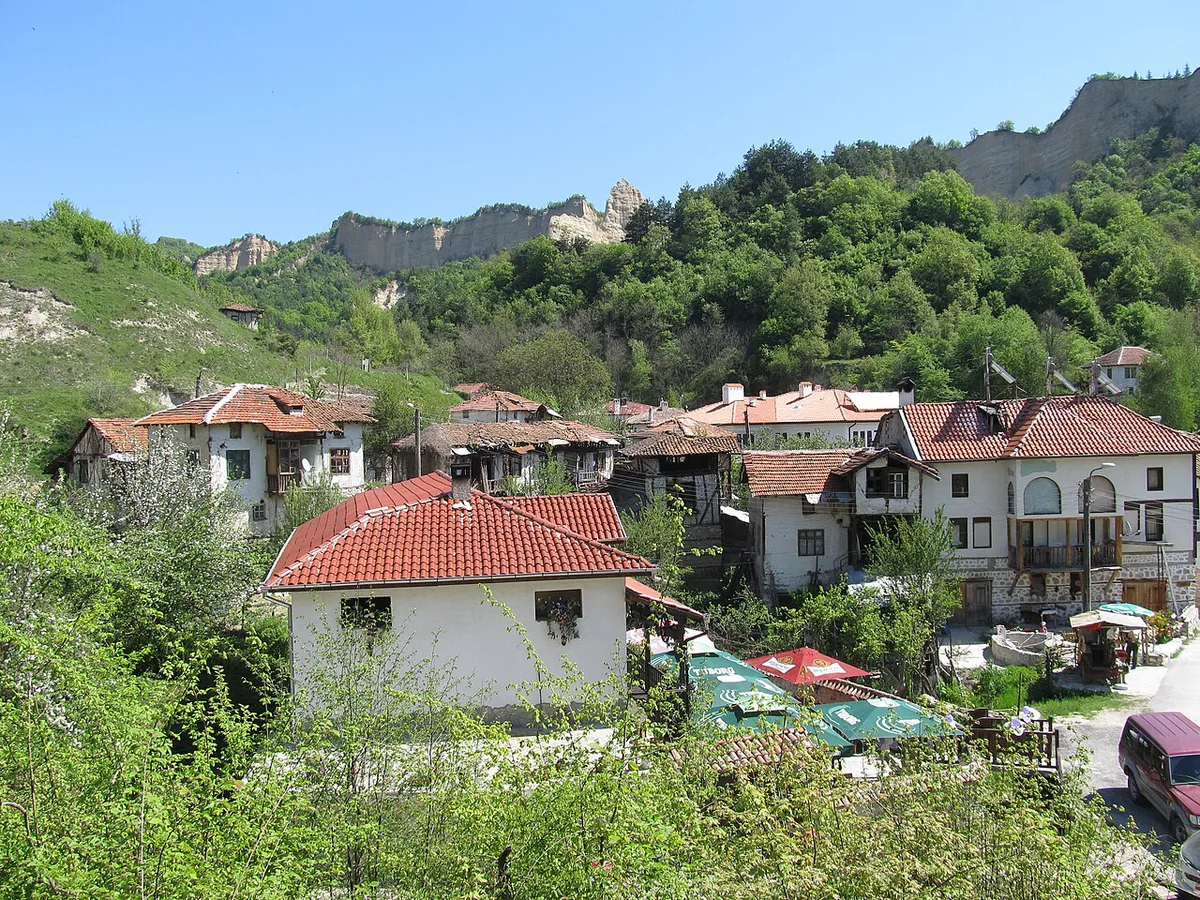
One naming trap catches out first-time visitors every year: this Rozhen is not to be confused with Rozhen Monastery near Melnik, which sits in Bulgaria's far southwest close to the Greek border — several hours' drive away in an entirely different part of the country. If a navigation app proposes a route heading toward Melnik and the Pirin foothills, it has picked the wrong Rozhen; the observatory's approach always runs through Chepelare in the central Rhodopes.
Continue planning: Use 10 Best Things to Do in Smolyan and Smolyan Lakes Guide 2026: the Emerald Eyes of the Rhodopes to connect this guide with the rest of your Bulgaria itinerary.
Frequently Asked Questions
Can visitors look through the telescopes at Rozhen Observatory?
Generally no. The 2-meter Ritchey-Chretien-Coude telescope is used almost exclusively for digital imaging and scientific research rather than eyepiece viewing, and true public night observation sessions are rare since researchers use the instruments for active work. Standard visits are guided daytime tours of the facility and domes rather than stargazing sessions.
How do I get to Rozhen Observatory without a car?
Public transport access is limited, so a private car or a taxi arranged from Chepelare, about 15 kilometers away, is the most practical way to reach the site on the winding mountain road up to 1,759 meters.
How much time should I plan for a visit to Rozhen Observatory?
Budget at least half a day once driving time from Smolyan, Pamporovo, or Chepelare is factored in, since the mountain approach road involves significant switchbacks beyond flat-road time estimates, plus time for the guided tour itself.
Is Rozhen Observatory open year-round?
Access depends on road conditions as much as facility hours. Late spring through early autumn is the most dependable visiting window, while winter access can be affected by snow on the mountain road despite the observatory's proximity to Pamporovo's ski season.
What is the largest telescope at Rozhen, and why does it matter?
The 200-centimeter Ritchey-Chretien-Coude telescope is the largest optical telescope in Southeastern Europe and the primary research instrument at the site, used in studies that have contributed to discoveries such as the exoplanet WASP-3c and the minor planet 6267 Rozhen.