Church of Christ Pantocrator Visitor Guide
Nessebar's Old Town packs one of the densest collections of medieval churches in the Balkans onto a single rocky peninsula, and the Church of Christ Pantocrator is the first one most visitors reach. It stands directly on Mesembria Street, the old town's main pedestrian route, just past the fortress gate — and its striped brick-and-stone facade is one of the most photographed details in the whole Nessebar Old Town: 8 Best Things to See and Do.
For a visual preview of the church's iconic striped brick-and-stone facade and interior layout, watch this walk-through video:
The church no longer holds religious services. It now operates as a small museum and art gallery under Nessebar's municipal heritage authority, with the building itself — not what's on display inside — doing most of the work as the actual attraction. This 2026 guide covers what a visit involves: what's included, what it costs, and how to time it around the cruise-ship crowds.
Overview of the Church of Christ Pantocrator Visitor Guide
The church was built during the 13th and 14th centuries in the late-Byzantine cross-in-square plan, roughly 16 meters long by 6.9 meters wide, with three eastern apses and a rare surviving medieval bell tower over the entrance vestibule. It is recognized as a key monument within the Nessebar Attractions UNESCO World Heritage site, one of dozens of churches that once stood on this small peninsula.
![Nessebar - Church of the Holy Saviour [17th century] in Nessebar, Bulgaria](https://toursbulgaria.com/images/church-of-christ-pantocrator-overview-of-the-church-of-christ-pan.webp)
Day-to-day, the site is managed by Museum "Ancient Nessebar," the same body that runs several of the town's other church-museums. There is no active congregation now — it functions purely as a heritage exhibition space.
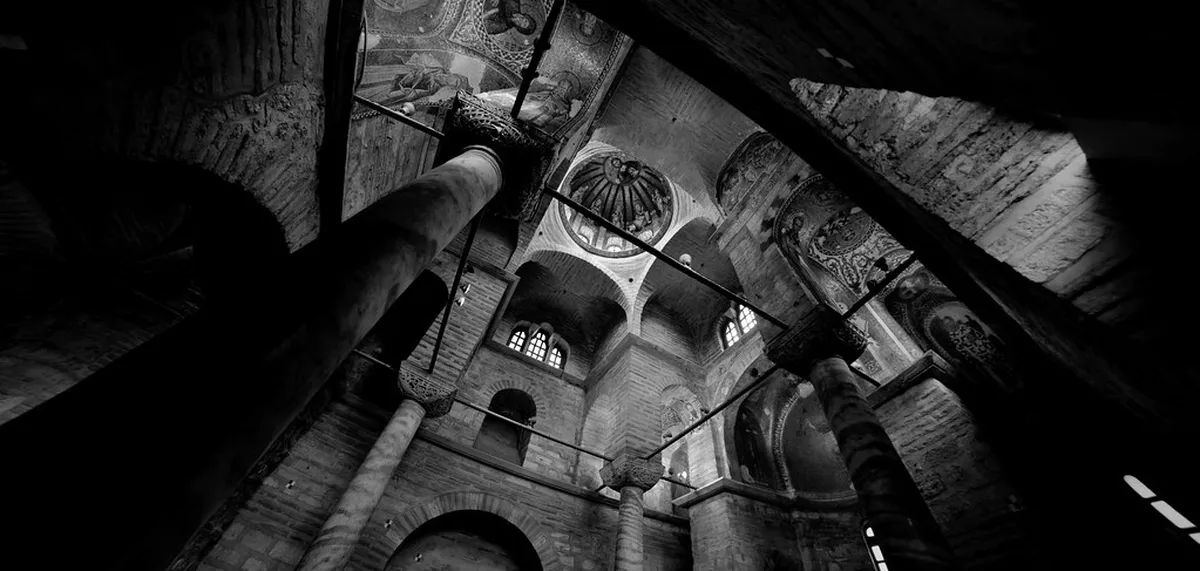
The name Pantocrator comes from the Greek for "Ruler of All," a title used across Byzantine iconography. Only fragments of the church's original wall paintings survive inside, so its fame rests almost entirely on the exterior rather than any surviving fresco cycle.
Ticket Options and Booking Information
The church does not sell its own dedicated entrance ticket in 2026 — it isn't listed as a separate line item on Museum "Ancient Nessebar's" official price sheet. Whatever exhibition is currently rotating through the interior may carry a small on-site fee, so budget a couple of euros just in case and confirm the amount at the door.
For a deeper visit, an independent self-guided audio tour runs about €7 (roughly 13.70 BGN at Bulgaria's fixed euro-conversion rate) and covers 60 to 90 minutes of narrated context on the church and its surroundings. Most of these third-party digital tours allow free cancellation up to 24 hours before your scheduled start, so it's worth booking even if your plans might shift.
If visiting several museum-churches in one trip, ask at the ticket booth about combined passes — pricing changes by season.
- The exterior along Mesembria Street costs nothing and takes about 10 minutes to walk.
- The current exhibition inside may involve a small on-site fee, confirmed at the door.
- The €7 audio tour adds 60-90 minutes and usually folds in nearby landmarks too.
What is Included in the Visitor Experience
Whatever you pay at the door buys access to whichever exhibition Museum "Ancient Nessebar" currently has installed inside — the 2026 rotation is "Nessebar and the Bay on Old Maps," a display of eighteen historical maps of the Black Sea region spanning the 4th to 19th centuries. Exhibitions change periodically, so what you see may differ from what's described elsewhere online.
A standard visit does not include a live guide; you're free to walk the interior at your own pace, using the informational plaques posted near each section to follow the architecture and the surviving decorative elements. A private guide can be arranged separately through local tour operators if you want a live narrative.
If you opt for the digital audio route instead, the content plays through your own phone rather than a rented device, so downloading the app and content ahead of arrival matters more than it would with a rented headset.
Planning Your Visit: Best Times and Logistics
Crowd management matters more here than at most Nessebar sites, since cruise-ship shore excursions and coach tours cluster around the church between roughly 10:00 and 14:00. Arriving right at opening or after 16:00 gets you the facade largely to yourself.
If you only have 10-15 minutes, circle the exterior on Mesembria Street for the brickwork and skip the interior — you'll still see the church's main draw. With 30-60 minutes, add the current exhibition inside. If you're building a full audio tour into your day, plan for 60-90 minutes, since the narration usually loops in nearby sights along with the church itself.
Check current opening-hours listings before you go, since seasonal hours shift. Summer brings longer hours but also the heaviest foot traffic; visiting during the shoulder months of May or September gives a better balance of daylight and lighter crowds.
Audio Tours and Digital Guide Options
A phone-based guide is the most practical way to get real narration here, since no live guide is included with standard access. The church's thick medieval stone walls routinely block mobile signal once you're near the entrance, so download your tour content in full — not just cache a preview — while you still have hotel or cafe Wi-Fi.
Running GPS and audio playback together drains a phone battery fast, especially in summer heat, and Old Nessebar's narrow lanes have few charging options. A small power bank is worth the extra weight in your bag for a full sightseeing day on the peninsula.
Bring your own headphones — shared museum audio units are not standard here — both for sound quality and to keep the space quiet for other visitors. Apps such as Smart-Guide.org offer point-by-point narration across Old Nessebar's churches, not just this one.
Key Highlights and Byzantine Architecture
The exterior is built in opus mixtum masonry: narrow courses of red brick alternating with blocks of white-hewn stone, a technique tied to the same late-Byzantine building tradition seen in Constantinople-era churches. On this church the pattern isn't just structural — it was clearly designed as decoration, since the brick-and-stone bands grow more elaborate the higher up the facade you look.
Look closely at the blind concave arches lining the outer walls, the green ceramic discs set into the brickwork, and the arched windows ringing the dome drum. These details were built to catch low-angle light, which is why the eastern facade looks strongest in the first couple of hours after opening.
A frieze of meander and swastika motifs runs through the brickwork — an ancient solar symbol common in Byzantine decorative art, not a later addition. For comparison, the painted interior of the nearby Church of St. Stephen shows what this church's frescoes likely looked like before time stripped most of them away.
Other Things To Do in Old Nessebar
After visiting the Pantocrator, walk a few minutes further to the St. John Aliturgetos ruins, perched on the cliff edge with open sea views. It's another strong example of the same decorative brick-and-stone building tradition.
The Nessebar Windmill Visitor Guide sits on the isthmus bridge connecting the peninsula to the mainland and is the most photographed single landmark in the area — a natural meeting point before or after your church visit. Walking the fortress-wall perimeter from there gives a good sense of how compact the old town actually is.
With extra days on the coast, Sozopol and Plovdiv both make good add-ons — Sozopol for a smaller, quieter old town, Plovdiv for Bulgaria's largest surviving Roman theater. Nessebar still stands out for its density of medieval churches in one walkable area.
Practical Visitor Information and Policies
The church sits in the center of Old Nessebar and is easy to find on foot from the fortress gate. In peak summer, hours typically run from around 9:00 to 19:00, but rotating exhibitions can shift this — check current listings before you go rather than assuming.
Photography is generally permitted inside for personal use, but flash must stay off to protect the fragile surviving artwork. Keep your voice down inside; even as a gallery, the space still functions as a quiet contemplative room for many visitors.
One detail worth planning around: the entrance has a raised, uneven medieval threshold with no ramp, so wheelchair and stroller access inside isn't realistic. That matters less here than at most sites, though — the facade carries almost all the artistic value, so a five-minute stop on Mesembria Street without going inside still delivers the brickwork, ceramic inlays, and swastika frieze the church is known for. The surrounding streets are cobblestone, so flat shoes matter either way.
Continue planning: Use Nessebar Attractions: 8 Best Things to Do in the Old Town to connect this guide with the rest of your Bulgaria itinerary.
Frequently Asked Questions
Can you go inside the Church of Christ Pantocrator?
Yes. The church operates as a museum exhibition space run by Museum 'Ancient Nessebar' — the current display, 'Nessebar and the Bay on Old Maps', shows eighteen historical maps of the Black Sea region from the 4th to the 19th century. Only fragments of the original wall paintings survive inside; the exterior is the real showpiece.
How old is the Church of Christ Pantocrator?
It dates to the 13th-14th century, making it roughly 700 years old. It was built in the late-Byzantine cross-in-square plan, about 16 m long by 6.9 m wide, with three eastern apses and a rare surviving medieval bell tower rising over the entrance vestibule.
Is there an entrance fee for the Church of Christ Pantocrator?
The church does not appear with its own ticket on the official 2026 Museum 'Ancient Nessebar' price list, though the rotating exhibitions inside may charge a small fee on site. Admiring the famous exterior brickwork from Mesembria Street costs nothing.
What makes the Church of Christ Pantocrator special?
It is considered one of Bulgaria's best-preserved medieval churches, prized for its facade decoration: blind concave arches, chequered brick-and-stone patterns, green ceramic inlays, arched windows around the dome drum, and ornamental friezes including brick swastika meanders — an ancient solar symbol.
Where exactly is the church in Nessebar?
On Mesembria Street, the old town's main street, just past the fortress gate — it is the first major monument you meet after crossing the isthmus onto the peninsula, a couple of minutes from the Archaeological Museum.
Is this the same Pantocrator church as the one in Istanbul?
No. Many Orthodox churches carry the Christ Pantocrator ('Ruler of All') dedication, including the famous Pantocrator monastery (Zeyrek Mosque) in Istanbul. This one is the 13th-14th-century church in Nessebar, Bulgaria, part of the town's UNESCO-listed ensemble.
How long does a visit take?
Around 15-30 minutes — enough to circle the exterior for the brickwork and ceramic detail, step inside for the current exhibition, and spot the medieval tomb beneath the narthex floor.
The Church of Christ Pantocrator rewards a short visit as much as a long one — its facade alone justifies the stop, and the interior exhibition is a bonus rather than the main event. Even travelers tight on time or unable to manage the stepped entrance get most of what makes this church worth seeing.
Download any audio guide content before you set out, since signal drops fast near the old town's stone walls. Exploring the rest of Nessebar Bulgaria will round out the trip with the town's other medieval churches, the fortress walls, and its Black Sea views.
For more Nessebar planning, read our 12 Best Things to Do in Nessebar (2026), The Best 3-Day Nessebar Itinerary: A UNESCO Journey, and Best Time to Visit Nessebar: 10 Seasonal Tips & Insights guides.
For authoritative information, refer to the Church of Christ Pantocrator official site.