Pleven Panorama (Pleven Epopee 1877) Visitor Guide: 7 Key Sections
The Pleven Panorama stands as a massive tribute to the Russo-Turkish War of 1877. This guide walks through its history, architecture, museum halls, and the practical details you need for a smooth visit in 2026. It sits atop a hill where some of the bloodiest fighting for the city took place.
Here's a short visual overview of the Panorama's distinctive architecture and grounds:
Visitors see a famous 115-meter canvas inside the main circular hall, one of only a handful of true panorama paintings still operating anywhere in the world. This artwork captures the intensity of the five-month siege with striking realism. You will find the monument inside the quiet, tree-lined Skobelev Park.
Most travelers find the site both moving and architecturally impressive. These exhibits tell a story of bravery and sacrifice from nearly 150 years ago. Local guides can add real depth to your visit to the city of Pleven and its role in Bulgaria's liberation.
The History of the Pleven Epopee 1877
The Siege of Pleven was the turning point of the Russo-Turkish War of 1877-78. General Mikhail Skobelev led Russian forces against the Ottoman garrison commanded by Osman Pasha, whose fortifications held off three separate assaults over five months. The city's fall opened the road to the liberation of Bulgaria after five centuries of Ottoman rule, and its strategic position over the Balkan Peninsula made it the war's most closely watched battlefield.
The human cost was severe: taking Pleven cost the Russian and Romanian alliance roughly 38,000 casualties, and the third assault on 11 September alone accounted for around 20,000 of them. Osman Pasha finally surrendered on 10 December 1877 after a failed breakout attempt. The panorama was commissioned to mark the siege's 100th anniversary and, deliberately, opened its doors on 10 December 1977 — exactly a century after the surrender it depicts.
One detail often glossed over is the Romanian division's role in the third battle. Romanian troops took and held the Grivitsa Redoubt even after Russian forces were pushed back from two other captured positions, denying Osman Pasha the ability to retake the line. This international effort is commemorated throughout the museum's displays, and it adds a layer to the visit that many travelers miss entirely.
Architecture and Symbolic Design
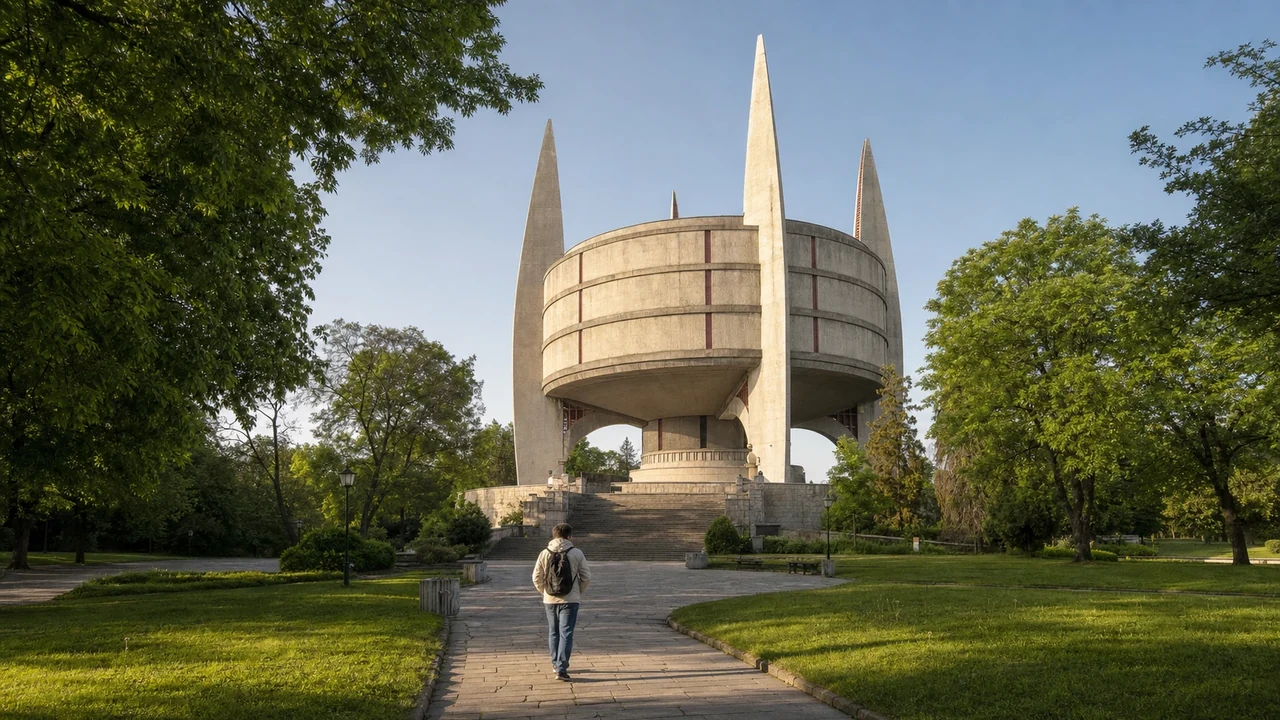
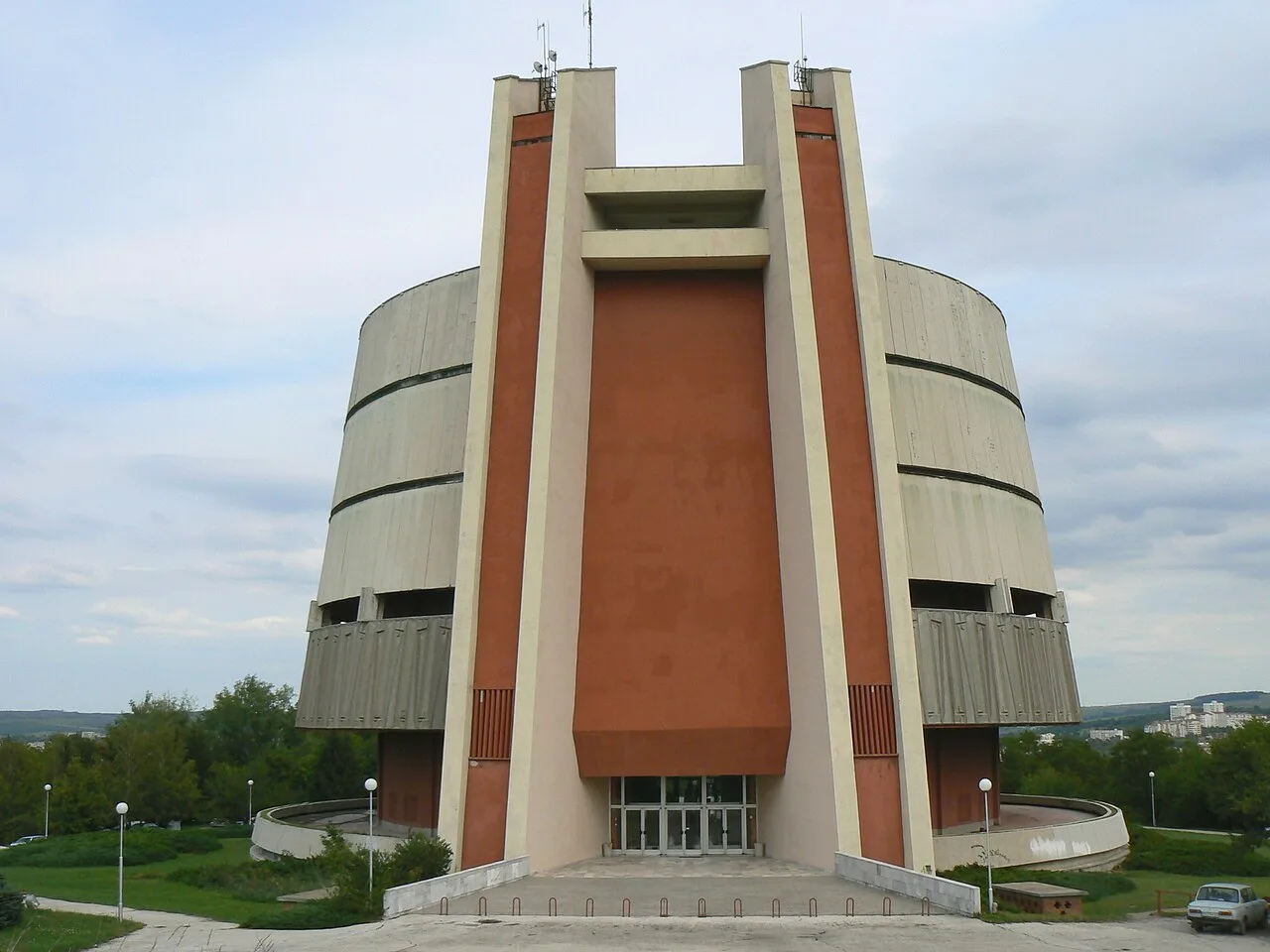
The exterior of the Pleven Panorama is rich with symbolic meaning. Three massive concrete pillars rise toward the sky like fixed bayonets, representing the three major battles fought for control of the city. Their sharp, vertical lines create a striking silhouette against the Pleven skyline, visible long before you reach the park gates.
Four horizontal rings wrap around the main body of the building. Three symbolize the three battles, while the fourth represents the final siege that ended the campaign. Inside, the canvas itself measures roughly 115 by 15 meters with a further 12-meter sculpted foreground blending painted figures into three-dimensional props — the work of eleven Russian and two Bulgarian artists. It is counted among only a couple of dozen true panorama museums still operating worldwide, a lineage that includes Russia's Borodino Panorama in Moscow and the Sevastopol Panorama in Crimea, though Pleven's is one of the largest by canvas area.
The building's location on the hill is a deliberate choice by the designers. It sits on the very spot where Skobelev's troops made their most famous charge. This connection between architecture and landscape makes the experience more immersive, and you can see much of the city of Pleven from the top of the entrance stairs.
Essential Visitor Information (Hours & Tickets)
The Pleven Panorama is open every day of the year, with no rest days. Summer hours (April to September) run 09:00-12:00 and 12:30-17:30, with a short midday break for staff. Winter hours (October to March) run 09:00-12:00 and 12:30-16:30. For questions before you travel, the site can be reached on (+359 64) 830 251.
As of 2026, ticket prices are straightforward and inexpensive. Adults pay 5.11 EUR (10 BGN); seniors over 65 pay 2.56 EUR (5 BGN); students and pupils pay 1.53 EUR (3 BGN). Children under 7, people with disabilities, and children from social homes enter free. A family ticket covering two parents and up to three children aged 7-18 is 9.20 EUR (18 BGN) — for most families that beats buying tickets separately, since two adult tickets alone already run 10.22 EUR before a single child's ticket is added.
Bring cash, since the ticket window does not always take cards, and budget a small extra fee if you want to photograph inside (flash is restricted to protect the canvas). One scheduling tip rarely mentioned elsewhere: Bulgarian school groups tend to arrive on chartered buses from around 10:00 onward, so visiting right at the 09:00 opening usually means having the viewing platform to yourself.
- Summer Operating Hours
- Morning: 09:00 to 12:00
- Afternoon: 12:30 to 17:30
- Days: Open daily, April-September
- Note: Short midday break
- Winter Operating Hours
- Morning: 09:00 to 12:00
- Afternoon: 12:30 to 16:30
- Days: Open daily, October-March
- Note: Earlier closing time
The Four Museum Halls Explained
The tour begins in the Introductory Hall, which features six large oil paintings. These works depict the suffering of the Bulgarian people and their struggle for freedom under Ottoman rule. Each painting sets the stage for the military conflict that follows, and the dim lighting keeps your attention on the dramatic scenes rather than the room itself.
The Panorama Hall is the centerpiece of the entire building — this is the room people mean when they say "the panorama." You stand on a raised platform surrounded by the 360-degree painted canvas depicting the third and bloodiest assault on the city, on 11 September 1877. Painted figures blend into sculpted foreground props to create a convincing 3D effect that most first-time visitors don't expect.
Next comes the separate Diorama Hall, easy to confuse with the Panorama Hall but distinct in scale and purpose. It uses smaller models and paintings to zoom in on specific moments of the siege, including the brutal winter conditions soldiers on both sides endured during the months-long standoff. Many visitors find the level of detail in these smaller-scale props more affecting than the main canvas.
The Conclusion Hall closes the historical journey with images of the final victory: Osman Pasha's surrender and the liberation of the city. This last section provides a sense of closure before the exit path returns you to the daylight of the park.
Exploring Skobelev Park and War Monuments
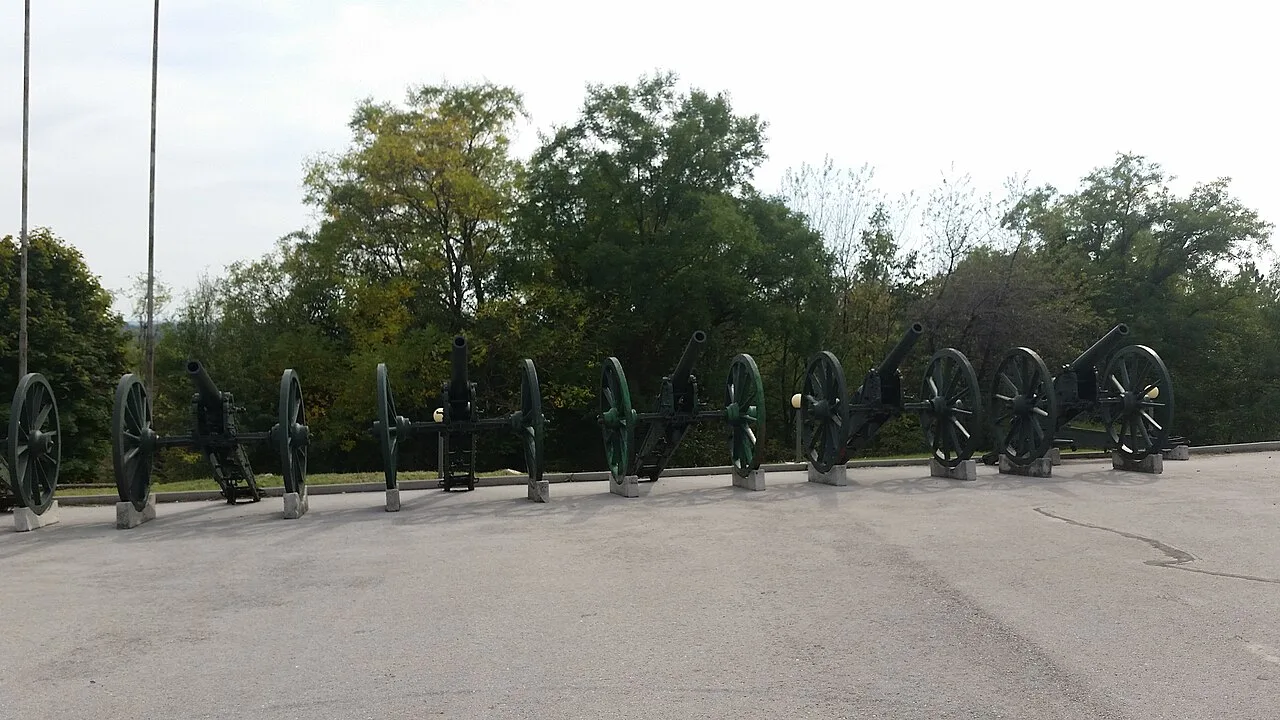
The area surrounding the panorama is Skobelev Park-museum (skobelev Park) Visitor Guide, a lush green space perfect for walking and named for the general who commanded the decisive assault here. It holds several mass graves and monuments to the fallen, and the atmosphere throughout the grounds stays respectful even when the park is busy with locals out for a quiet afternoon.
One unique feature is the park's signature street furniture: fences built from actual war relics, crossed cannons and bayonets rather than replicas. These iron structures are found throughout the grounds and have become a visual shorthand for Pleven itself, echoed across roughly 200 war monuments scattered around the wider city.
Photographers rate two windows above all others here. After dark, floodlighting on the concrete bayonets against a black sky produces the building's most striking profile, and in winter, snow settling on the cannon-and-bayonet fences turns the whole memorial ground stark and monochrome. Neither look shows up in a typical daytime visit, so if photography matters to you, plan around one of those two conditions rather than midday.
Walking through the park offers several vantage points of the Panorama building itself, including how the concrete bayonets pierce the sky from below. Paths lead down toward the city center for anyone up for a longer stroll, and the park stays open later than the museum, which makes it a good spot for a sunset walk after the exhibits close.
Practical Travel Tips: Getting to Pleven
Reaching Pleven from Sofia is straightforward. Pleven has no airport of its own, so international arrivals land at Sofia Airport, roughly 170 km southwest. From there, buses run hourly and take about 2 to 2.5 hours; trains run several times daily and take about 2.5 to 3 hours, a slightly slower but more scenic option across the northern plains.
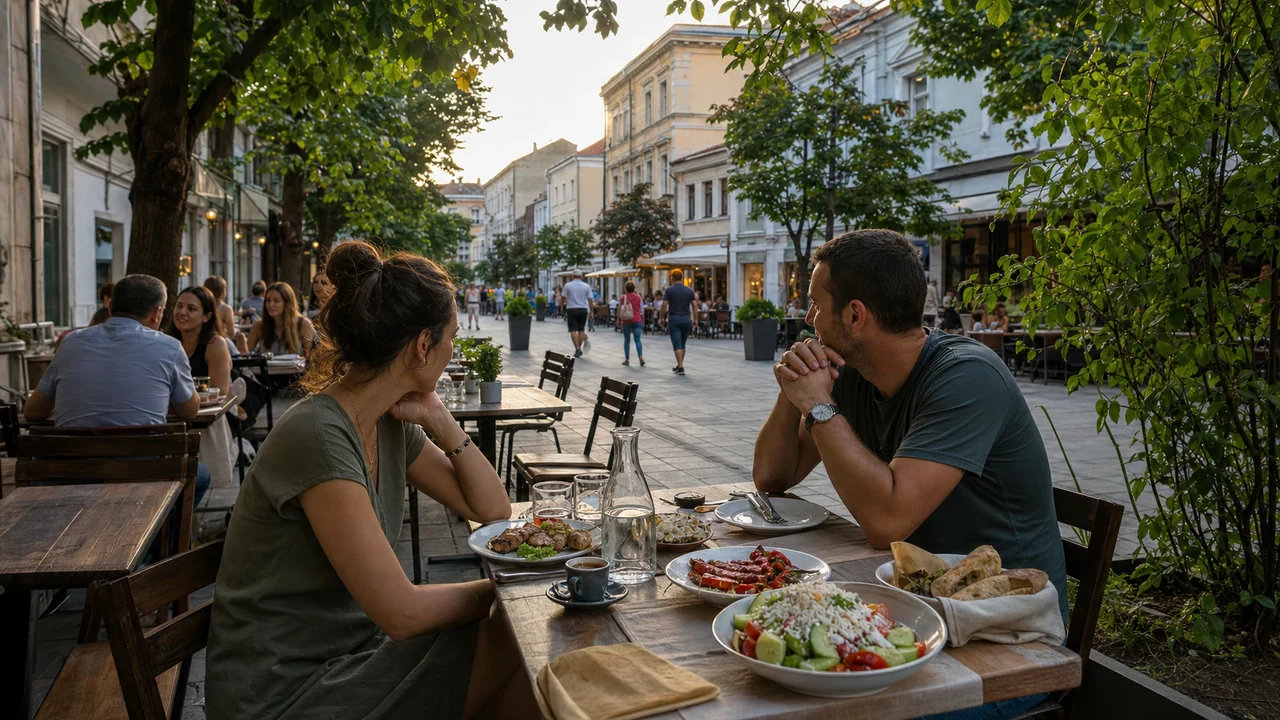
Once you arrive at the Pleven bus or rail station, the Panorama is about a 30-minute walk or a short taxi ride away. Taxis uphill typically cost under 5 BGN (about 2.56 EUR). Walking takes you through the pleasant city center and pedestrian zones along Vasil Levski Boulevard, giving you a look at local architecture and cafés before you reach the park.
Local costs in Pleven run well below Sofia or the coastal resorts. A coffee costs about 1.20 to 1.50 EUR, and a full dinner for two with wine rarely crosses 35 EUR. Small cafés cluster near the park entrance, so it's easy to combine the visit with a cheap, unhurried meal.
- Taking the train from Sofia
- Duration: 2.5 to 3 hours
- Cost: about 5.11 to 7.67 EUR (10-15 BGN)
- Comfort: standard seating
- Frequency: multiple departures daily
- Taking the bus from Sofia
- Duration: 2 to 2.5 hours
- Cost: about 7.67 to 10.23 EUR (15-20 BGN)
- Comfort: modern coaches
- Frequency: roughly hourly departures
Top Attractions Near the Pleven Panorama
After the Panorama, head to the St. George Mausoleum in the city center, a neo-Byzantine chapel honoring the Russian and Romanian soldiers interred there. It sits in the middle of a large square surrounded by fountains and flowers, and the interior is decorated with intricate frescoes and religious icons.
For a change of pace, visit Kaylaka Park (Kaylъka) Visitor Guide on the southern edge of the city. This protected natural area features limestone cliffs, lakes, and a small zoo, making it a good place to unwind after a morning of historical sightseeing. It even hides a small wine museum tucked inside one of its caves.
The Regional History Museum is another worthwhile stop for anyone interested in local culture beyond 1877. It houses thousands of artifacts spanning from prehistoric settlement through the modern era, inside a historic building with a handsome courtyard, and it gives useful context for the wider Pleven region that the war sites alone don't cover.
Continue planning: Use Pleven Attractions & Things to Do: Panorama, Kaylaka Park to connect this guide with the rest of your Bulgaria itinerary.
Frequently Asked Questions
What is the Pleven Panorama (Pleven Epopee 1877)?
It is a monumental 360-degree panoramic painting that recreates the fierce battles of the 1877 Siege of Plevna during the Russo-Turkish War of 1877-1878. Standing in Skobelev Park on the actual third-assault battlefield, it combines a huge circular canvas with a three-dimensional foreground, and is one of only a few panoramas of its kind in the world.
How do I get to the Pleven Panorama from Sofia?
Pleven lies about 170 km north-east of Sofia. By car it is roughly a 2 to 2.5 hour drive via the A2 Hemus motorway. Direct trains and buses from Sofia take about 2.5 to 3.5 hours; from Pleven's centre the Panorama is a short taxi ride or walk out to Skobelev Park on the southern edge of town.
How much is admission to the Pleven Panorama?
As of 2026 the adult ticket is 5.11 EUR (10 BGN), seniors over 65 pay 2.56 EUR (5 BGN), and students and pupils pay 1.53 EUR (3 BGN). Children under 7, people with disabilities, and children from social homes enter free. A family ticket (2 parents with up to 3 children aged 7-18) is 9.20 EUR (18 BGN).
What are the opening hours?
The Panorama is open every day with no days off. Summer hours (April-September) are 09:00-12:00 and 12:30-17:30; winter hours (October-March) are 09:00-12:00 and 12:30-16:30, with a short midday break around 12:00-12:30.
What is the history behind the panorama?
It was built to mark the 100th anniversary of Pleven's liberation and opened on 10 December 1977. A team of 13 Russian and Bulgarian artists painted the canvas, which depicts the five-month siege and eventual fall of the Ottoman-held fortress to Russian and Romanian forces, a turning point that led to Bulgaria's liberation.
How long does a visit take?
Most visitors spend about 30 to 60 minutes inside, enough to take in the painting from the viewing platform and read the accompanying displays. Paid guided commentary is available and adds context to the battle scenes.
Is the Panorama accessible for people with disabilities?
Yes. The building is accessible for people with disabilities, and people with disabilities are admitted free of charge.
Where exactly is the Panorama located?
It stands in Skobelev Park on the southern edge of Pleven, on the authentic battlefield of the third assault on the city (11-12 September 1877), roughly at coordinates 43.39861, 24.60611.
The Pleven Panorama is more than just a museum; it is a powerful, immersive experience. Walking through its four halls offers a direct connection to Bulgaria's path to freedom, and the architecture alone — bayonets, rings, and hilltop siting — tells part of the story before you buy a ticket. The blend of art and history makes it a highlight for any traveler in the region.
Make sure to explore the surrounding park to see the war monuments and cannon fences, and time your visit around opening hour or after dark if photography or a quiet platform matters to you. Plan your trip today to witness this impressive piece of European history.
For more Pleven planning, read our 11 Best Things To Do In Pleven, Bulgaria (2026) Guide and Pleven Panorama 2026: Tickets, Hours & Visiting Guide.
To verify current details, consult the Pleven Panorama (Pleven Epopee 1877) official site, Pleven Panorama (Pleven Epopee 1877) on Wikipedia and Pleven Panorama (Pleven Epopee 1877) on Wikipedia.