Complete Lyutov House (Lutova House) Visitor Guide
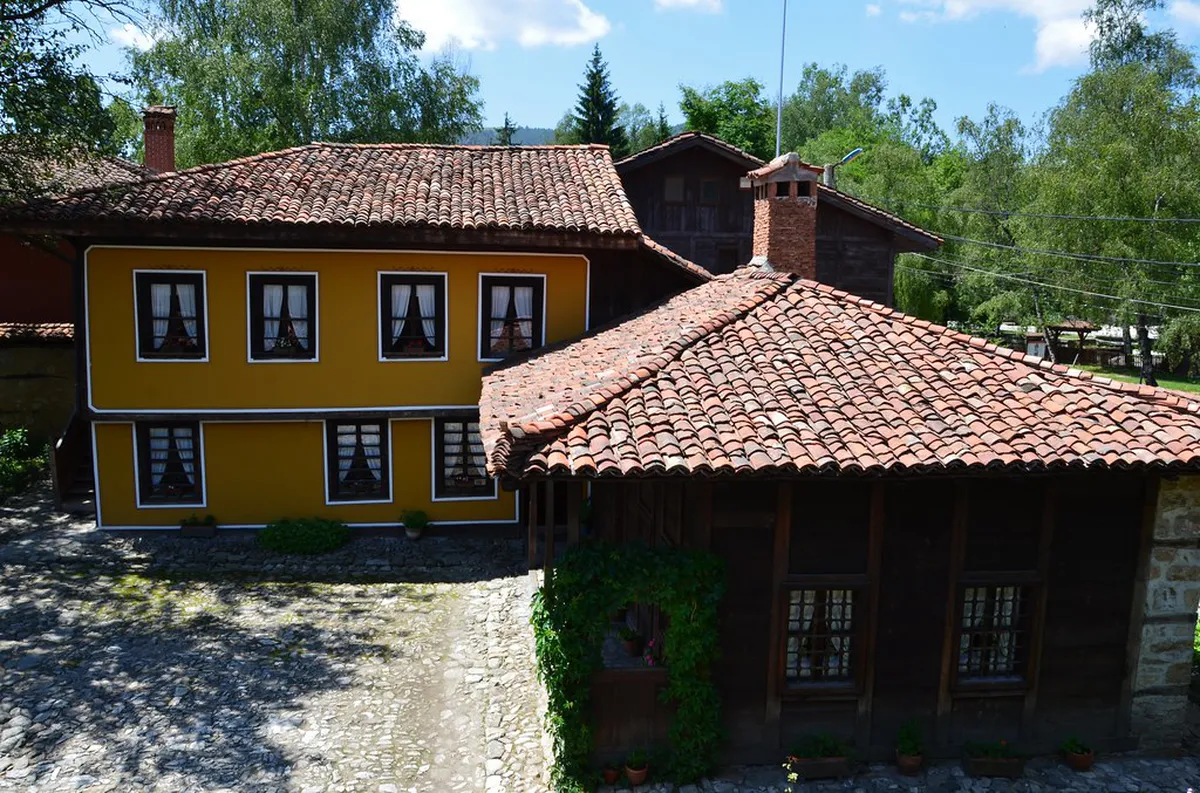
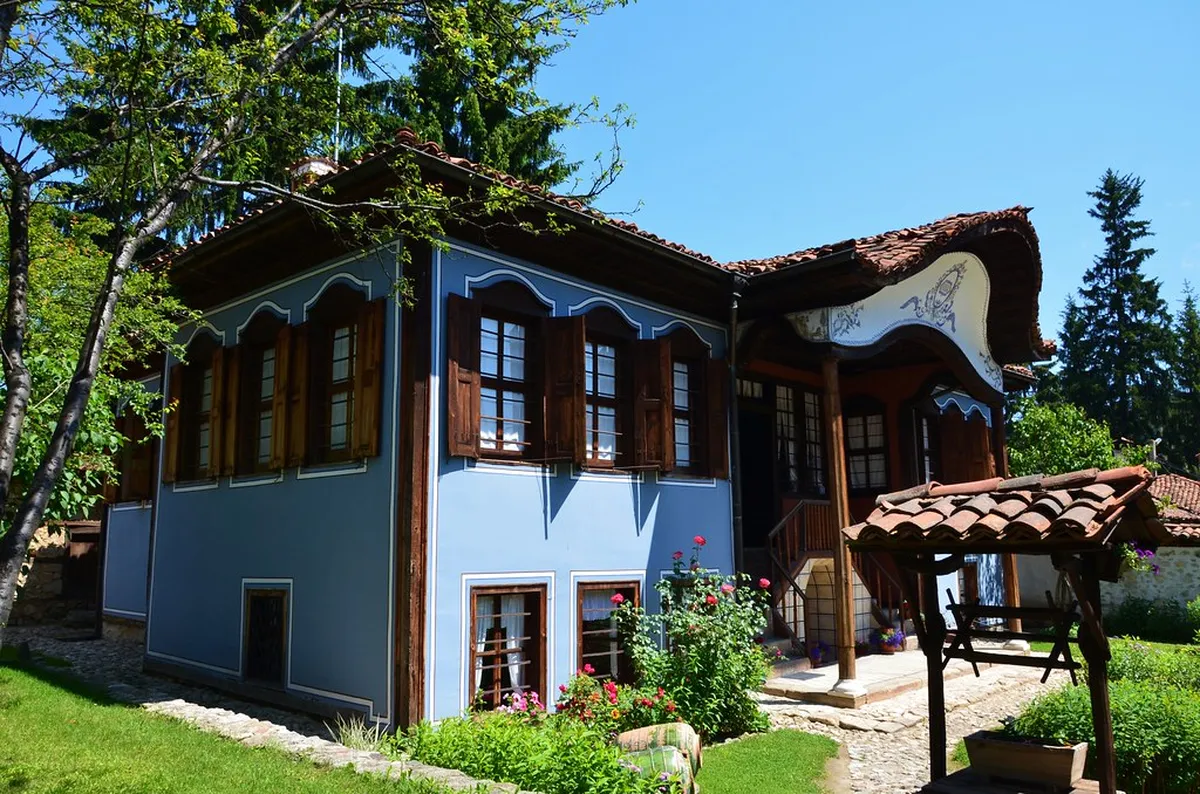
Lyutov House stands among the finest National Revival mansions in Koprivshtitsa, distinguished by a curved, undulating "Genoese" facade unlike any other house in town. Master builders from Plovdiv completed the structure in 1854 for the local citizen Stefan Topalov; the house only took its present name in 1906, after the merchant Petko Lyutov bought the property. Today it operates as an ethnographic museum, its rooms preserved much as the Lyutov family left them.
This Lyutov House (Lutova House) visitor guide covers the architecture, the murals, and what a 2026 ticket actually costs, plus how to fold the house into a longer walk through Koprivshtitsa's National Revival quarter. Exploring the cobblestone lanes of Koprivshtitsa feels like stepping into the 1870s, and Lyutov House is one of the best-preserved stops on that walk.
The house rewards visitors who slow down rather than rush through. Its carved ceilings, alafranga wall paintings, and wool textile collection take closer to 30-40 minutes to appreciate properly, and the practical details below will help you time your visit around the museum's seasonal hours.
For a visual overview of the house's distinctive curved facade and interior details, this walk-through covers both the Lyutov House and the neighboring Oslekov House:
History of the Lyutov House (Lutova House)
The house was built in 1854, not by the Lyutov family but for Stefan Topalov, a Koprivshtitsa citizen who commissioned master builders brought in from Plovdiv. Plovdiv craftsmen were in high demand across the region for a distinctive late-Revival building style, and Topalov's commission reflects the same wave of wealth that filled the town with elaborate merchant houses in the 1840s and 1850s. Wool trading with Ottoman and European markets financed most of this construction boom, and Topalov's house was built to show it.
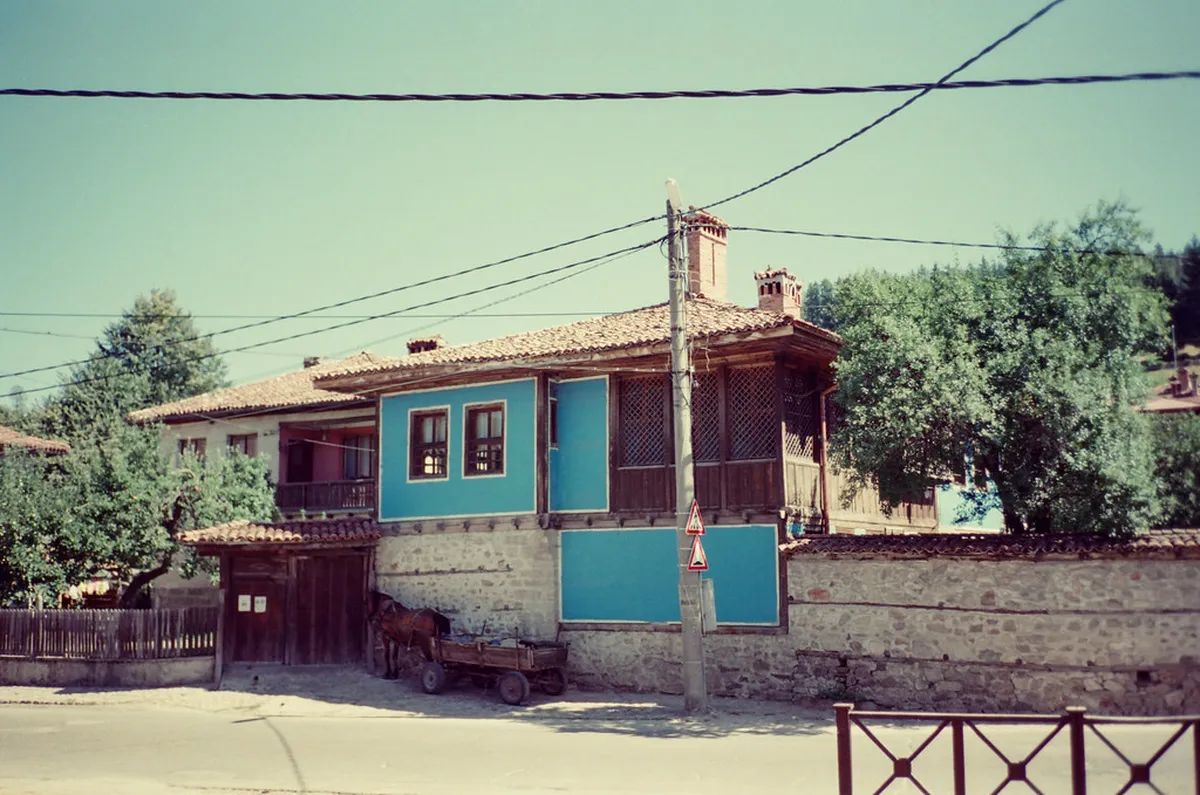
The murals and decorative niches inside draw on Orient-inspired themes that were fashionable among Bulgaria's trading elite, a visual record of the commercial routes that connected small mountain towns like Koprivshtitsa to Constantinople and beyond. Most historians place the house among the last and most accomplished examples of National Revival domestic architecture before the style faded after Bulgarian independence in 1878. Its scale and finish still stand out even among Koprivshtitsa's other well-preserved merchant homes.
In 1906, half a century after construction, the property was bought by Petko Lyutov, a local merchant whose family name the house has carried ever since. This second chapter matters for understanding the building: everything visitors call "the Lyutov House" today reflects both the original 1854 construction and the Lyutov family's decades of stewardship afterward. The name change is one of the more common points of confusion for first-time visitors, since most museum plaques and guides mention Lyutov without explaining the earlier Topalov ownership.
Today the building operates as one of six house-museums under the Koprivshtitsa Directorate of Museums, protecting the ethnographic collection assembled from families across the town. Walking across the original wooden floors, worn smooth by generations of visitors, is as much a part of the experience as the murals themselves.
The Genoese Facade and National Revival Architecture
The single detail that sets Lyutov House apart from its neighbors is its facade: a curved, undulating front commonly described as "Genoese" or Baroque in influence, in contrast to the flat, symmetrical facades typical of Koprivshtitsa's other National Revival mansions. Curving a timber-framed upper story like this required carpentry techniques that were unusual even for the era's best builders, and the result reads as a deliberate flourish of wealth and cosmopolitan taste rather than a structural necessity.
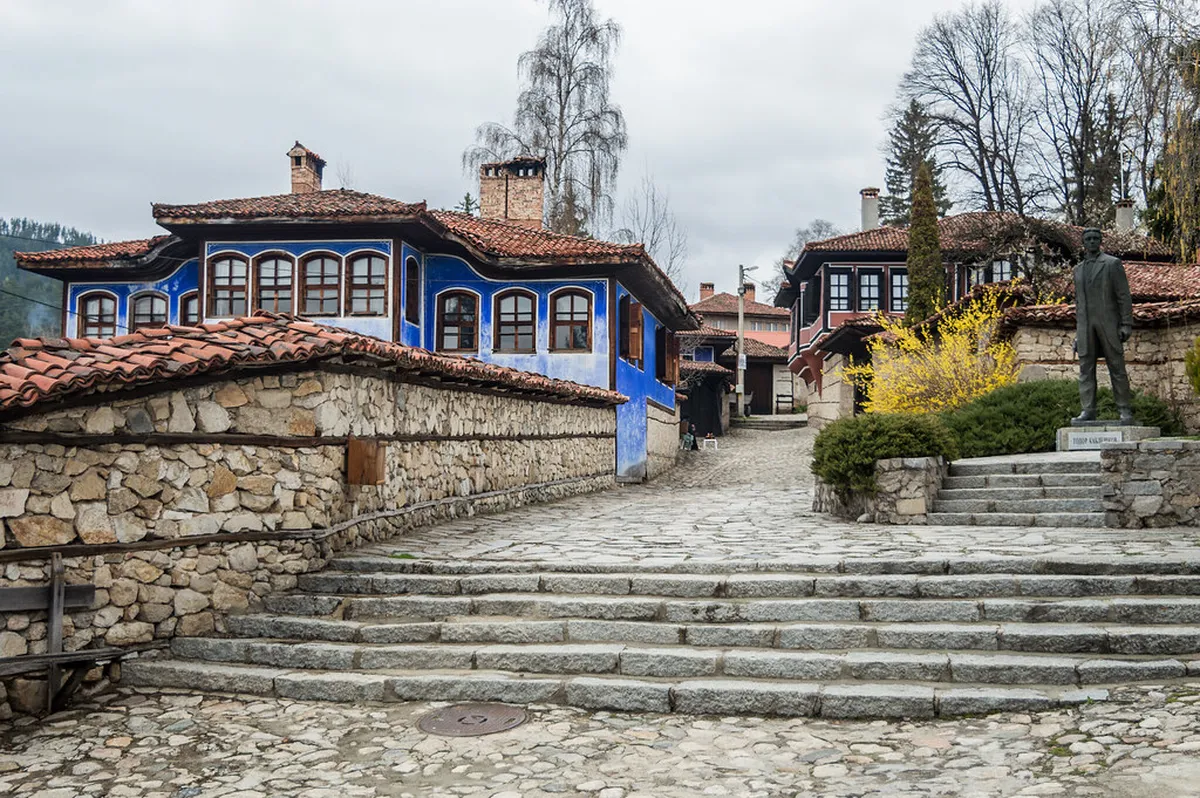
Below the curved upper floor, the ground level follows a more conventional stone-and-timber construction typical of the region, built to withstand both earthquakes and the damp mountain climate. Large windows and a tall central hall bring in far more natural light than older Koprivshtitsa houses, a design choice that also flatters the murals painted across the upper-floor rooms. The exterior is finished in a striking blue that photographs well against the dark exposed timber beams and white-painted window frames.
Because the curved facade is so rare locally, it is worth comparing to the more angular, symmetrical fronts of other merchant houses on the same street before or after your visit, which makes the design choice easier to appreciate in context. The contrast is part of what makes Koprivshtitsa's architecture trail interesting: nearly identical wealth and era, expressed through very different facade styles house to house.
Interior Highlights: Murals, Ceilings, and the Alafranga Niche
The interior is best known for its "alafranga" niches, decorative wall recesses painted with landscape scenes rather than left as plain shelving. The most famous of these depicts a painted panorama of Plovdiv, the city where the house's original builders trained, and it remains the single most photographed detail inside the museum. The rest of the mural scheme follows the same Orient-inspired visual language found in other wealthy Koprivshtitsa homes of the period.
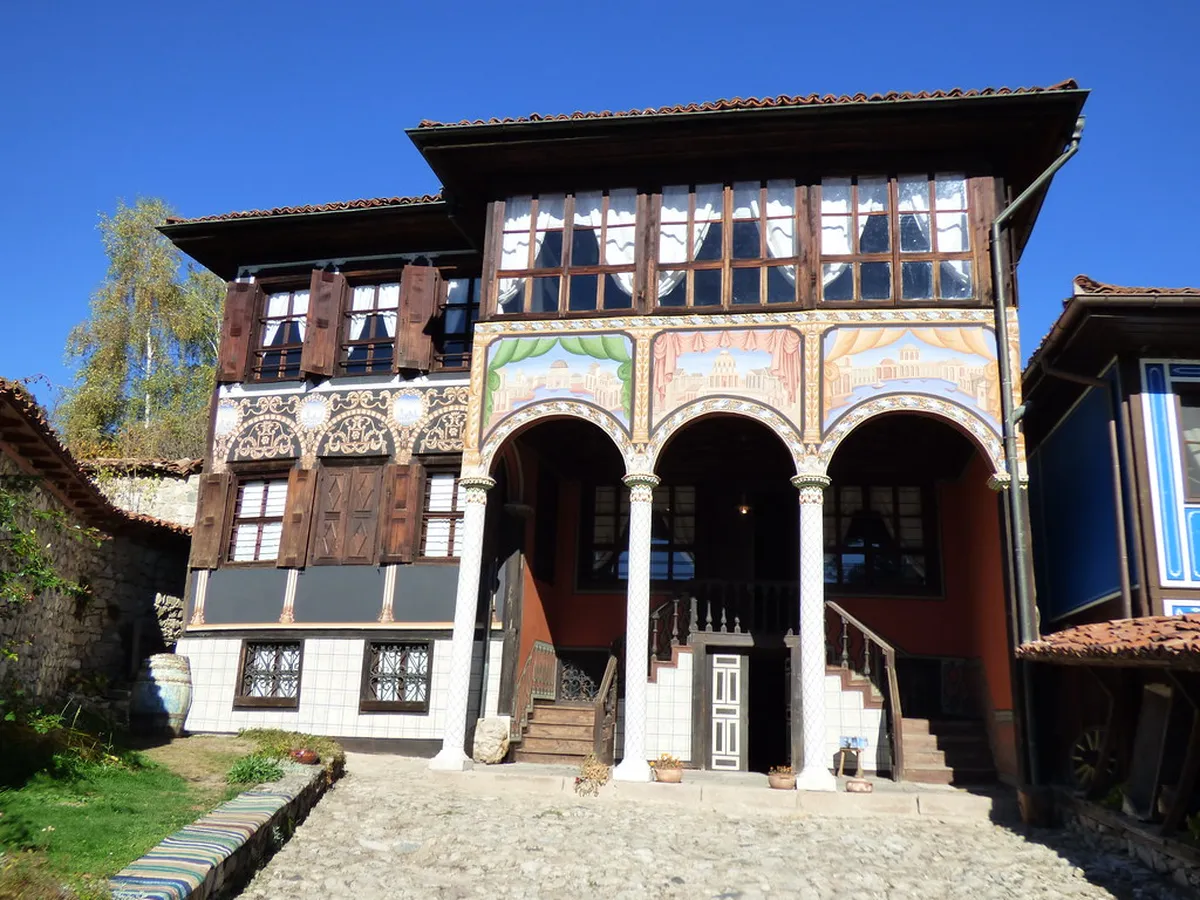
Each ceiling in the main rooms is carved by hand from local oak and walnut into sunburst and floral patterns, a technique that took master woodworkers months per room to complete. Comparing these ceilings to the nearby Oslekov House Visitor Guide is a useful exercise, since the two families' competing commissions show just how far Koprivshtitsa's merchant elite pushed local craftsmen in the 1850s.
The museum's ethnographic collection includes low divans, carved chests for storing textiles, and a set of colorful handmade wool "plasti" rugs that are among the best-preserved examples of the craft in town. Natural light through the tall windows brings out the original pigments in the murals, which curators have deliberately never repainted, monitoring humidity and light exposure instead to slow their fading.
Smaller domestic details, including copper vessels and woven textiles displayed in the family rooms, round out a picture of daily life in a merchant household where the men were often away on trading trips for weeks at a time. The house's layout channels a natural cross-breeze through the central hall, a piece of vernacular engineering that kept the rooms livable through hot Koprivshtitsa summers long before electric fans existed.
Visiting Hours, Tickets, and Prices in 2026
Lyutov House keeps summer hours of 09:30-17:30 from 1 April to 1 November, switching to 09:00-17:00 for the winter season from 1 November to 1 April. The museum is closed on Mondays year-round, with last entry 30 minutes before closing, and admission is free on the last Monday of every month if your schedule allows for a return trip.
A single ticket costs 5.00 EUR (9.78 BGN) for adults and 3.00 EUR (5.87 BGN) for students and pensioners. The combined ticket covering all six Koprivshtitsa Directorate of Museums houses costs 10.00 EUR (19.56 BGN), and it pays for itself once you visit three or more houses in a day, which most travelers do given how close together the museums sit.
Since Bulgaria's euro adoption on 1 January 2026, prices at Lyutov House and every other Koprivshtitsa museum are now quoted in euro first, at the long-standing fixed rate of 1.95583 leva per euro. The short window of dual cash circulation closed by early spring, so by mid-2026 ticket booths handle payment and change entirely in euro; card payment is accepted everywhere in town, and any leftover leva notes and coins can still be exchanged free of charge at Bulgarian National Bank branches in Sofia or Plovdiv, with no expiry date on that exchange.
One detail rarely mentioned in visitor write-ups: the house is not wheelchair accessible. The approach involves steep, uneven cobblestones, and the original 1854 staircase to the upper floor, where most of the murals and ceilings are, has no lift alternative. Visitors with limited mobility can usually still view the ground-floor rooms and courtyard, but it is worth calling the Directorate of Museums ahead if that affects your plans.
- A single ticket to Lyutov House costs 5.00 EUR (9.78 BGN) for adults and 3.00 EUR (5.87 BGN) for students and pensioners, payable by card or cash.
- The combined ticket covering all six Koprivshtitsa museum houses costs 10.00 EUR (19.56 BGN) and is the better deal once you plan on three or more houses.
- The museum opens 09:30-17:30 in summer and 09:00-17:00 in winter, closes on Mondays, and offers free admission on the last Monday of each month.
Combining Your Visit With Nearby Landmarks
After finishing your tour, walk toward the First Shot Bridge (Kalachev Bridge) Visitor Guide to see where the 1876 uprising began. The landmark is only a few minutes away on foot and offers a quieter, more reflective stop than the museum houses, with good views of the traditional stone bridges along the river.
Continue to the Todor Kableshkov House-Museum Visitor Guide to learn about the town's role in the independence struggle. Kableshkov was a key figure in the uprising, and his home serves as a memorial rather than a purely decorative house-museum, which gives it a different tone from Lyutov House.
If you have more time, pair the Dimcho Debelyanov House-museum Visitor Guide, the birthplace of one of Bulgaria's best-known poets, with the Georgi Benkovski House-Museum Visitor Guide, another revolutionary-era stop. Together the four houses give a rounded picture of Koprivshtitsa: merchant wealth, poetry, and revolt, all within a fifteen-minute walk of each other.
For a full route that sequences all of the town's museum houses efficiently, the Koprivshtitsa attractions guide lays out a day plan that avoids backtracking. Between houses, most travelers stop at one of the taverns along the main street for bean soup or grilled meats, which is enough to refuel for a full day of walking the cobblestones.
Cultural Significance of the Lyutov Family
Understanding the house's later history means understanding Petko Lyutov, the merchant who bought the property in 1906 and gave it the name it carries today. Like Topalov before him, Lyutov operated within the trading networks that connected Bulgaria to the wider Ottoman and European economy, and his purchase of an already-prestigious 1854 mansion signaled his own arrival among the town's commercial elite.
Houses like this one also functioned as informal meeting points for the merchants, teachers, and revolutionaries who shaped Koprivshtitsa's role in the 1876 uprising. Trading wealth from families such as the Lyutovs helped fund local schools and churches that still stand in the town today, even if the merchants themselves were rarely the public face of the revolutionary movement.
Local guides sometimes mention hidden compartments once used to store valuables or documents, a detail that is unverified but adds some color to museum tours, especially for younger visitors. What is well documented is the sheer commercial importance of Koprivshtitsa in the mid-1800s, when a small mountain town could produce houses on this scale from wool trading alone.
The museum's curators continue to run educational programs in the courtyard, teaching visiting students traditional crafts like weaving and woodcarving that the original ethnographic collection was built to preserve. Visiting the house, and paying the modest entry fee, directly supports that ongoing work.
Continue planning: Use Koprivshtitsa Attractions: 6 House-Museums & Things to Do to connect this guide with the rest of your Bulgaria itinerary.
Frequently Asked Questions
When was Lyutov House built and who owned it?
The house was built in 1854 for the wealthy Koprivshtitsa citizen Stefan Topalov by master builders from Plovdiv, and in 1906 it was sold to the merchant Petko Lyutov, from whom it takes its present name.
Why is Lyutov House worth visiting?
It is one of the finest National Revival mansions in Koprivshtitsa, admired for its ornate carved wooden ceilings, richly painted walls and a rare curved Baroque facade, and it now functions as an ethnographic museum displaying colourful handmade wool 'plasti' rugs and period interiors.
What is the 'Genoese' facade?
Lyutov House is distinguished by an unusual curved, undulating front, often described as a 'Genoese' or Baroque facade, which sets it apart from the more angular houses of the town and reflects the wealth and cosmopolitan taste of its 19th-century owners.
What is the famous alafranga painting in the house?
Among its rich mural decoration, Lyutov House is known for an 'alafranga' painted wall niche depicting a panorama of the city of Plovdiv, part of a wider scheme of Orient-inspired murals connected to the owner's trading travels.
How much does it cost to visit Lyutov House?
A single-museum ticket is EUR 5.00 (BGN 9.78) for adults and EUR 3.00 (BGN 5.87) for students and pensioners; a combined ticket to all six directorate museums is EUR 10.00 (BGN 19.56) for adults and is better value across multiple houses.
What are the opening hours of Lyutov House?
The museum is open 09:30-17:30 in summer (1 April to 1 November) and 09:00-17:00 in winter (1 November to 1 April), and is closed on Mondays. Confirm current hours at the museum ticket office or on direkciamuzei.com.
Is Lyutov House part of the combined museum ticket?
Yes. Lyutov (Lutova) House is one of the ethnographic museums run by the Koprivshtitsa Directorate of Museums and is included in the combined six-museum ticket, with free admission on the last Monday of each month.
Lyutov House earns its place on any Koprivshtitsa itinerary through the curved Genoese facade alone, but the alafranga murals, carved ceilings, and textile collection inside give visitors a reason to linger well past the entrance hall. Knowing the Topalov-to-Lyutov ownership story before you arrive also makes the museum's own plaques and guides easier to follow.
Use this Lyutov House (Lutova House) visitor guide to plan around the 2026 euro-denominated ticket prices and seasonal hours, and consider the combined six-museum ticket if you are pairing this stop with the Oslekov, Kableshkov, Debelyanov, or Benkovski houses. The blue facade and carved interiors tend to stay memorable well after the rest of the day blurs together.
As you walk back through the cobblestones toward the river, it is worth remembering that Koprivshtitsa's National Revival houses were built on wool and trade money, not tourism, which is part of why the details still feel authentic rather than staged. Few small towns in the Balkans preserve that period as completely as this one does.
For more Koprivshtitsa planning, read our The Six Koprivshtitsa House-Museums: Combined Ticket Guide (2026).
For official details, visit the Lyutov House (Lutova House) official site, Lyutov House (Lutova House) official site and Lyutov House (Lutova House) official site.