11 Best Things To Do In Pomorie, Bulgaria (2026)
Pomorie is one of those southern Black Sea towns that surprises you the moment you step off the bus from Burgas. You expect a tired resort. Instead you find a narrow rocky peninsula jutting into the sea with dark, iron-rich sand on one side, a hypersaline healing lagoon on the other, and one of the most unusual museums in Eastern Europe at the water's edge. I came back to Pomorie in spring 2026 with fresh eyes and a plan to actually spend two nights — rather than the usual lunchtime detour — and the town revealed itself as a far richer place than a quick stop-off suggests.
Pomorie (Поморие) has been inhabited since antiquity, known to ancient Greek colonists as Anchialos, and the layers of that long history sit comfortably alongside the wellness hotels and wine cellars that define it today. The town's two calling cards — healing mud from the Salt Lake and remarkably distinctive dark-sand beaches — draw a devoted clientele of Bulgarian spa-goers and a growing number of travellers from further afield who have heard that Pomorie does something the rest of the coast simply cannot. In 2026 it's also an easier destination than ever: Bulgaria adopted the euro on 1 January (dual lev and euro pricing everywhere), and the country has been fully inside the Schengen Area since January 2025, so there are no border hassles arriving overland. Below are the eleven things I tell everyone to do here, with links to the deeper guides for each topic.
Key Takeaways
- Pomorie sits on a slender peninsula on Bulgaria's southern Black Sea coast, about 18–20 km northeast of Burgas, with a hypersaline salt lagoon on the western side and the open sea to the east.
- The Pomorie Salt Lake (Pomoriysko Ezero) is famous across the Balkans for its healing peloid mud and lye — the adjacent Salt Museum is the only one of its kind in Eastern Europe.
- The town's beaches are unusually dark, coloured by iron-rich fine sand, and include a long sandbar spit — quite different from the pale sands of Sunny Beach a few kilometres north.
- Pomorie is one of Bulgaria's oldest wine and brandy regions; the Black Sea Gold winery offers cellar-door tastings, and the local rakia tradition runs deep.
- Beyond the spa and sea, the compact old town holds traditional timber Black Sea houses, St George Monastery with its ayazmo healing spring, and a domed Thracian beehive tomb on the town's edge.
- In 2026 Pomorie benefits from euro pricing and Schengen access, making it easy to combine with Burgas, Nessebar and the wider southern coast on a single trip.
| Attraction / Experience | What It Is | Best Time | Duration / Notes |
|---|---|---|---|
| Pomorie Salt Lake & Museum | Hypersaline lagoon with solar evaporation pans; Eastern Europe's only salt museum | May–Sep (working season) | 1–2 hours; flamingo spotting |
| Mud Baths & Lye Therapy | Peloid mud sediment + mineral brine from the lake; medically supervised balneotherapy | June–Aug (peak season) | 1+ hour session |
| Dark-Sand Beaches | Iron-rich fine sand (dark charcoal color); main town beach + southern sandbar spit | July–Aug warmest; May–Jun & Sep ideal | All day; families prefer spit |
| Old Town & Monastery | 19th-century timber houses; St George Monastery with sacred healing spring (ayazmo) | Any season; early morning best | 1–2 hour walk |
| Pomorie Tomb | Thracian beehive burial (heroon), 3rd–2nd century BC; corbelled stone dome preserved | Any (confirm hours locally) | 30 min–1 hour |
| Wine & Brandy Cellars | Black Sea Gold winery tastings + local rakia producers; Muscat-heavy grapes | Any; October post-harvest | 2–3 hours |
| Wellness Spa Hotels | Balneotherapy resorts combining mud, lye, hydrotherapy & physiotherapy treatments | June–Sep (peak wellness season) | Multi-day packages standard |
Discover Pomorie: The Peninsula Town on Bulgaria's Black Sea
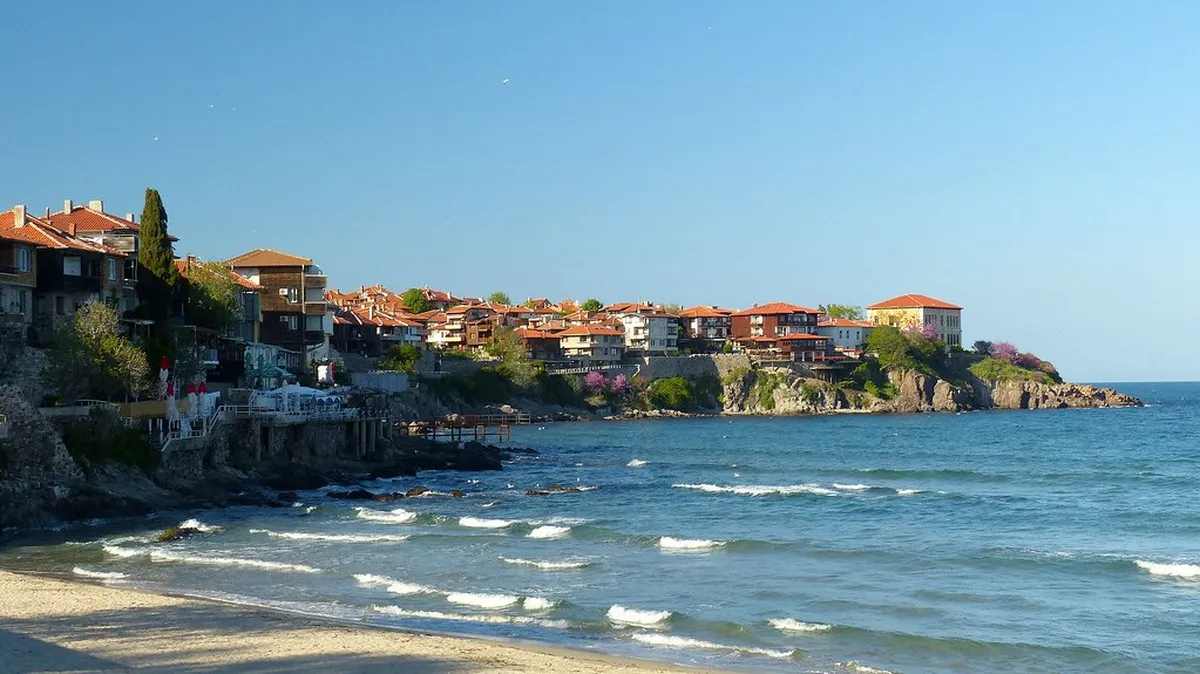
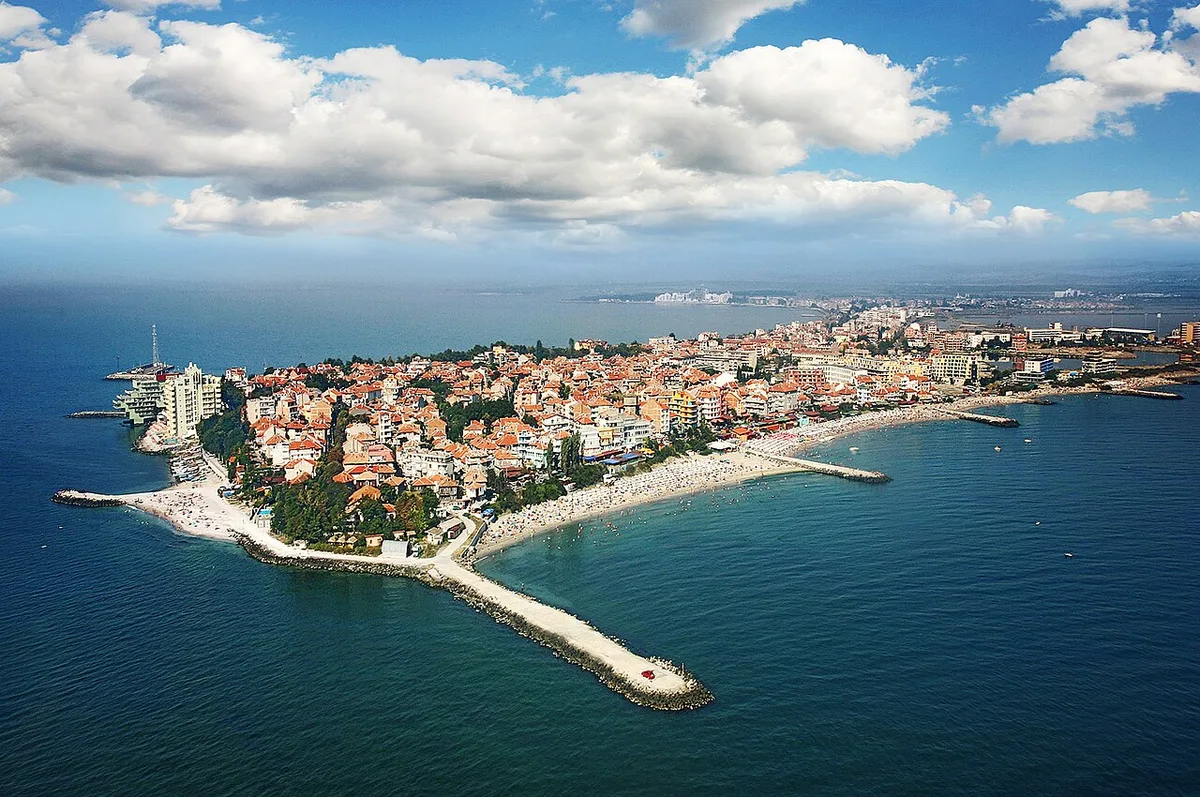
Drive northeast from Burgas on the coast road and after about twenty minutes the sea begins to appear on both sides — you're crossing the narrow isthmus onto Pomorie's peninsula. The town itself occupies the rocky tip, with the open Black Sea on the east and the calm, shimmering waters of Pomoriysko Ezero (Pomorie Lake) on the west. That geographical pinch — peninsula, lagoon, open coast — gives Pomorie a character completely unlike the big beach resorts to the north, and it's the source of everything that makes the town special.
Ancient Greek colonists founded a settlement here they called Anchialos, meaning "near the sea", and the name is still used today by the local Greek community. Later it became Anhialo under Byzantium and the medieval Bulgarian tsardoms, a trading port and salt-production centre whose income funded fine churches and a small prosperous merchant class. The old timber mansions of the 19th century Black Sea style that still line several streets are the direct descendants of that tradition. Today Pomorie has around 13,000 residents — a working town rather than a purpose-built resort — and that working-town quality, the early-morning fishing boats, the open-air market, the locals drinking coffee outside the municipal park, is precisely what makes it worth more than a day trip. For a broader picture of where Pomorie fits into the country, my overview of 18 Best Things To Do In Bulgaria sets the full context.
Getting to Pomorie
For most international visitors, Burgas Airport is the entry point — it receives direct flights from across Europe in summer, and it's by far the most convenient gateway for this stretch of coast. From the airport or Burgas bus/train station, Pomorie is a short hop: local buses run the route regularly throughout the day and the ride takes around 30 to 40 minutes, while a taxi or rideshare covers the 18–20 km in under 25 minutes. If you're travelling from Sofia by train or bus, change at Burgas; the intercity connections are regular and the journey from the capital takes around four to five hours depending on the service.
Once in Pomorie the town is highly walkable — the peninsula is compact enough that the salt lake shore, the old town, the beaches and the wine cellars are all within comfortable strolling distance of each other. You won't need a car unless you're making day trips along the coast, in which case Burgas is a natural hire-car base. For a full run-down of how to get around Bulgaria by train, bus and hire car, including the regional quirks around the southern Black Sea coast, see my guide to Getting Around Bulgaria: The Ultimate Transportation Guide. Details on the Burgas transport hub are in my Burgas guide.
Pomorie is easy to combine with Nessebar and Burgas in a single coastal loop. The bus between the three towns runs frequently in summer, so you don't need to backtrack to Burgas each time. If you're spending more than one night on this stretch, base yourself in Pomorie for the spa access and do the other two as half-day excursions.
Best Time to Visit Pomorie
Pomorie's appeal shifts with the season in ways that are worth thinking about before you book. The mud-bath and wellness season runs roughly from late May through September, when the Salt Lake water and mud reach their therapeutic peak and the spa hotels fill up with returning regulars. Beach season follows the same arc — the water is warmest from July to August, though those months also bring the biggest crowds and the highest prices along this stretch of coast. If you want the mud baths, the beach and a bit of breathing room, late May to mid-June and September are the sweet spots: warm sun, manageable crowds, and the old town cafés not yet overwhelmed.
Outside the beach season, Pomorie takes on a quieter, almost meditative quality. The old town, the monastery and the Thracian tomb are equally good in autumn; the wine cellars are particularly atmospheric after harvest in October. Winter is genuinely off-season and many spa hotels scale back to skeleton service, but the Salt Museum stays open year-round and the town's core restaurants and bakeries remain trading. For a month-by-month view of Bulgaria's weather, festivals and regional patterns, my best time to visit Bulgaria guide has the full picture.
Pomorie Salt Lake and the Salt Museum
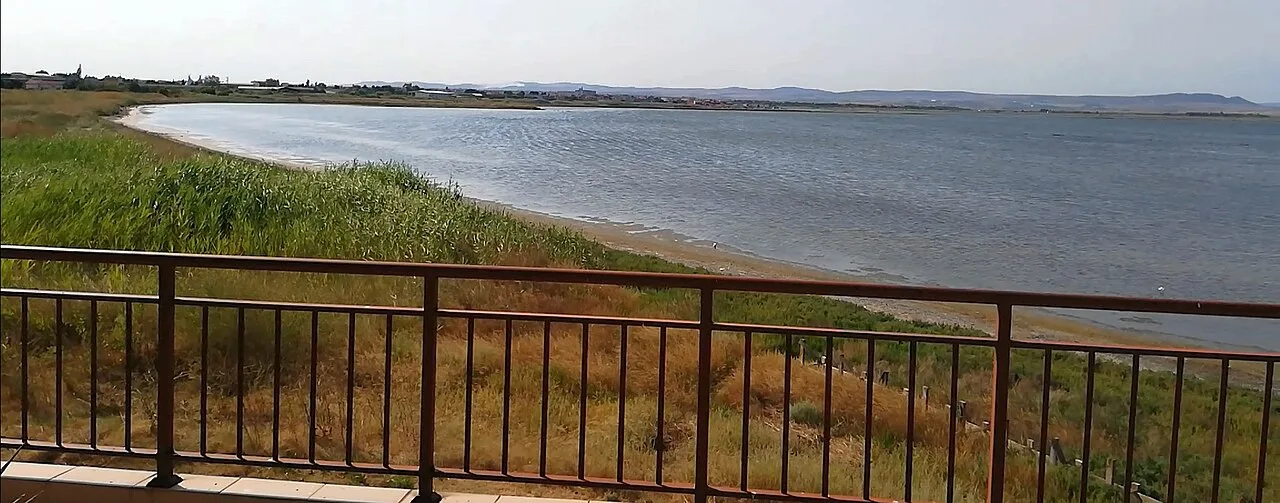
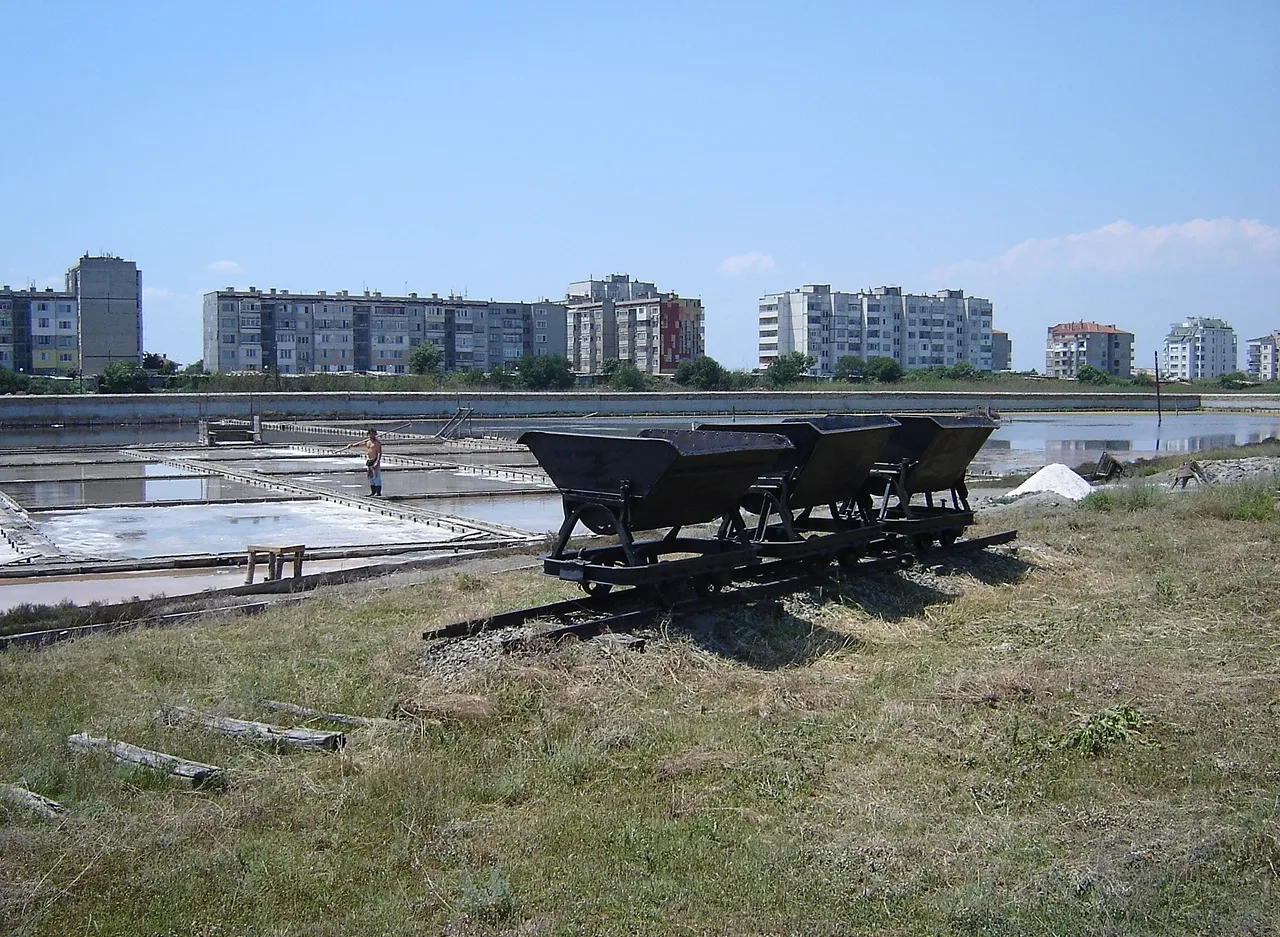
The western side of the Pomorie peninsula is fringed by a hypersaline lagoon — Pomoriysko Ezero, Pomorie Lake — and it is the reason the town exists in the form it does today. The lagoon has been worked for salt since antiquity, its shallows divided into evaporation pans where seawater is channelled in, left to concentrate under the Black Sea sun, and eventually harvested in the traditional way. Watching this process play out across a shimmer of pink-tinged brine, with the low hills behind Burgas on the horizon, is one of those quietly absorbing experiences that has no obvious parallel in Bulgarian travel.
The Museum of Salt — often called simply the Salt Museum — stands at the lake's edge and is the only institution of its kind in Eastern Europe dedicated to the history and practice of sea-salt production. The exhibits walk you through the full cycle from ancient salt-working to the evaporation-pan method that Pomorie has refined over centuries, and the outdoor section lets you walk among the actual working pans. Entry fees are modest (confirm the current rate locally as of 2026) and a visit of an hour or two is plenty for most people, though salt enthusiasts could happily spend longer. The lake is also a significant wetland — a resting and nesting site for flamingos and other wading birds — so bring binoculars if wildlife is your thing. I've covered the full ecology, the salt-harvesting process and visitor practicalities in the dedicated Pomorie Salt Lake and mud baths guide.
Mud Baths, Lye Therapy and Balneotherapy
The same lagoon that produces Pomorie's salt also yields something rather more famous among Bulgarian wellness travellers: peloid mud — a dark, sulphurous mineral-rich sediment that accumulates in the shallower parts of the lake. Applied to the skin in controlled sessions, this mud has been used medicinally for joint pain, skin conditions and general recuperation for at least a thousand years. The lye (the mineral-saturated brine left after salt crystallises out) is used separately, either in baths or as a soak — it feels slippery and slightly oily against the skin, which is disconcerting if you haven't encountered it before, but devotees swear by its restorative properties.
Pomorie's spa hotels and treatment centres have professionalised all of this into what Bulgarians call balneotherapy — medically supervised wellness using the lake's natural products alongside hydrotherapy, physiotherapy and other complementary treatments. The more established centres take bookings well in advance in peak season, and packages typically combine mud and lye sessions with accommodation. Even if a full programme isn't for you, a single mud-bath session is well worth the experience — strange, warm, oddly relaxing. The full guide to Pomorie's wellness scene, including how to choose a reputable centre and what to expect, is in the dedicated wellness spas in Pomorie guide, which is the most detailed resource I have for this; and for the accommodation angle, the where to stay in Pomorie guide covers the spa-hotel options in depth.
Mud baths stain — wear an old swimsuit you don't mind sacrificing to the cause. Most centres provide changing facilities and showers, but bring a spare plastic bag for your post-session kit. Rinse off thoroughly immediately after: the mud dries quickly on skin and hair and is much harder to remove once it sets.
Pomorie's Dark-Sand Beaches and the Sandbar
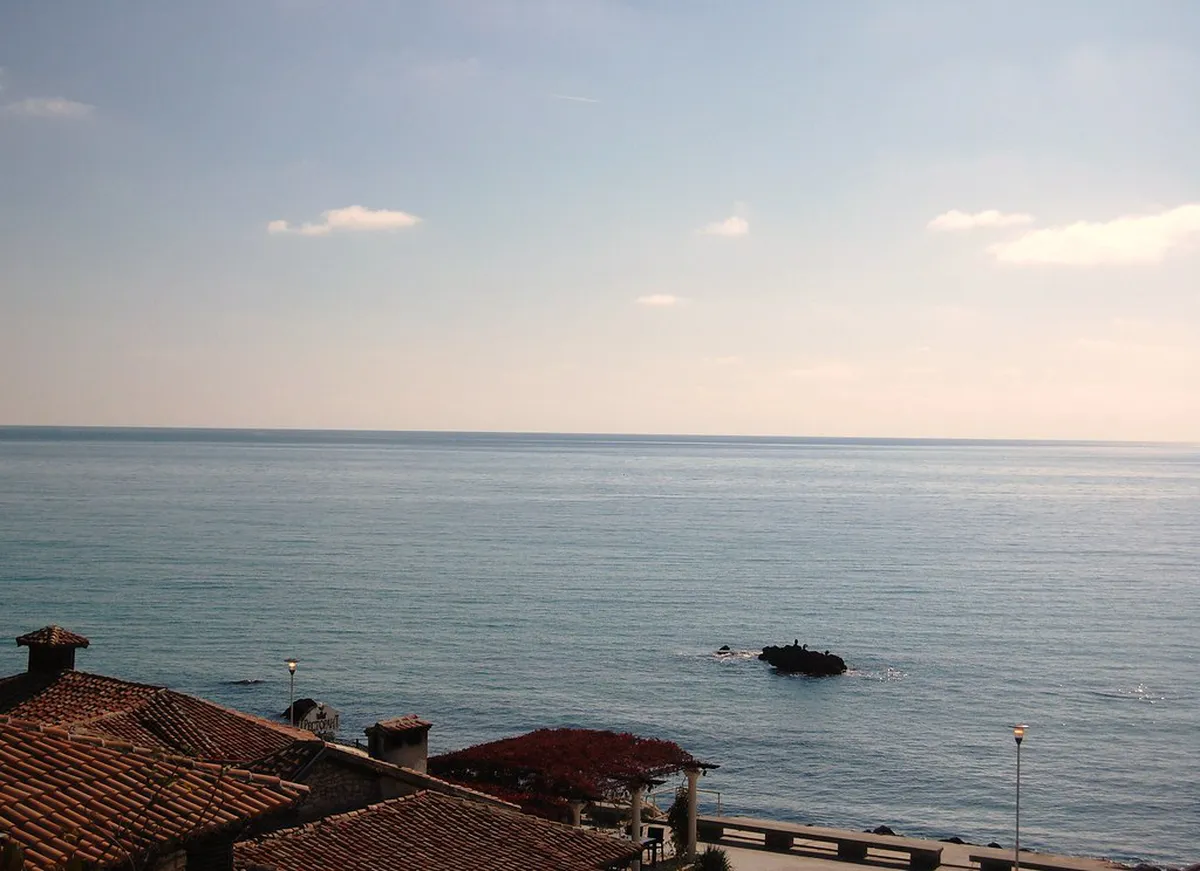
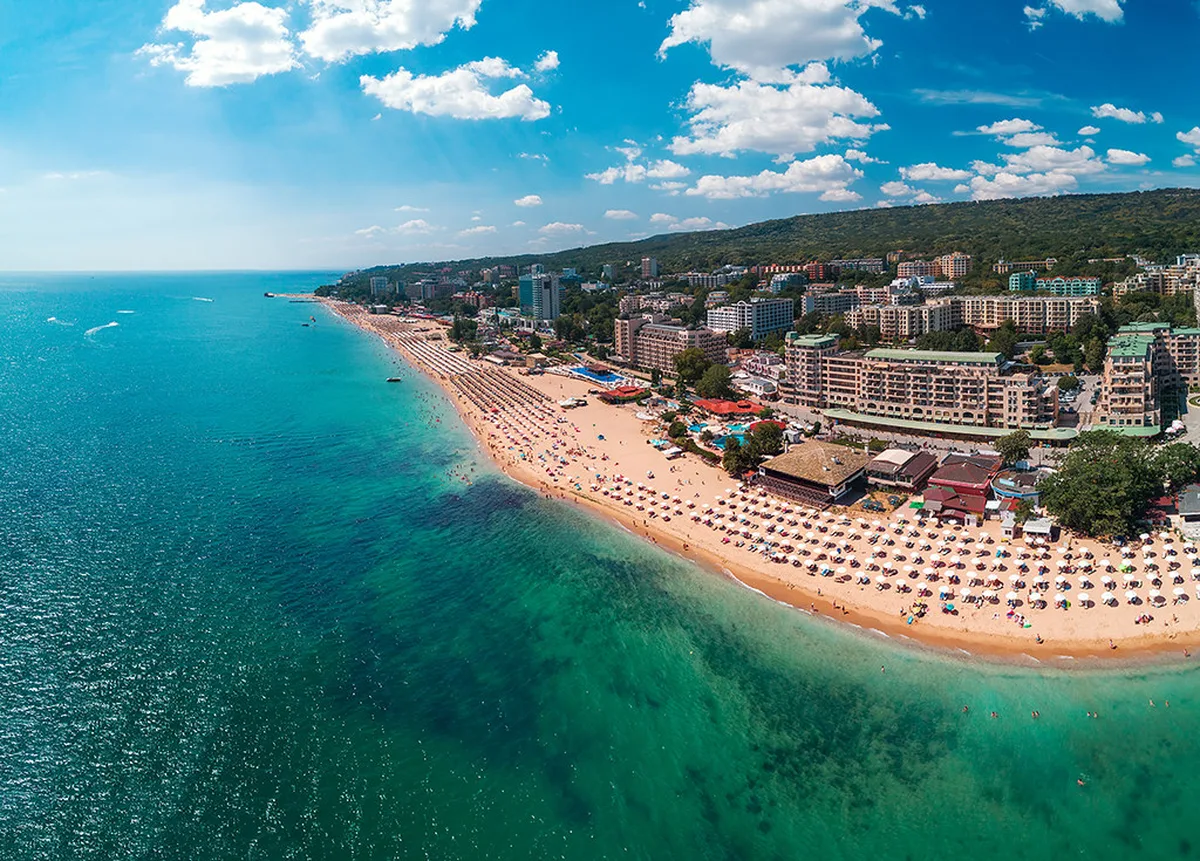
The eastern face of the peninsula gives you something the northern resorts lack: a beach with genuinely unusual sand. Pomorie's shore is coloured by iron-rich minerals in the fine sediment, giving it a dark, almost charcoal hue in certain light — quite different from the pale, almost white sand at Sunny Beach a short drive to the north. It's denser underfoot than the lighter sands you find elsewhere on the Bulgarian coast, and it tends to stay cooler in direct sun, which is a genuine practical bonus in July heat.
The main town beach runs the length of the eastern shore and is well served by the hotels and cafés set back from the promenade. More interesting, geographically, is the sandbar spit at the southern end of the peninsula — a narrow neck of accumulated sand that connects the peninsula to the mainland and creates a sheltered shallow bay ideal for families or anyone who prefers calmer water to the open sea. It's photogenic at low tide when the spit is exposed and the lagoon colours behind it shift from blue-green to rose depending on the time of day. For a full comparison of the beaches here — position, facilities, crowds, best months — and how they sit in the wider context of the southern coast, see my Pomorie beaches guide, and for the broader coast, my round-up of the 12 Best Beaches in Bulgaria for Your 2026 Trip places Pomorie's sands alongside the other main options.
The Old Town: Timber Houses, Monastery and Thracian Tomb
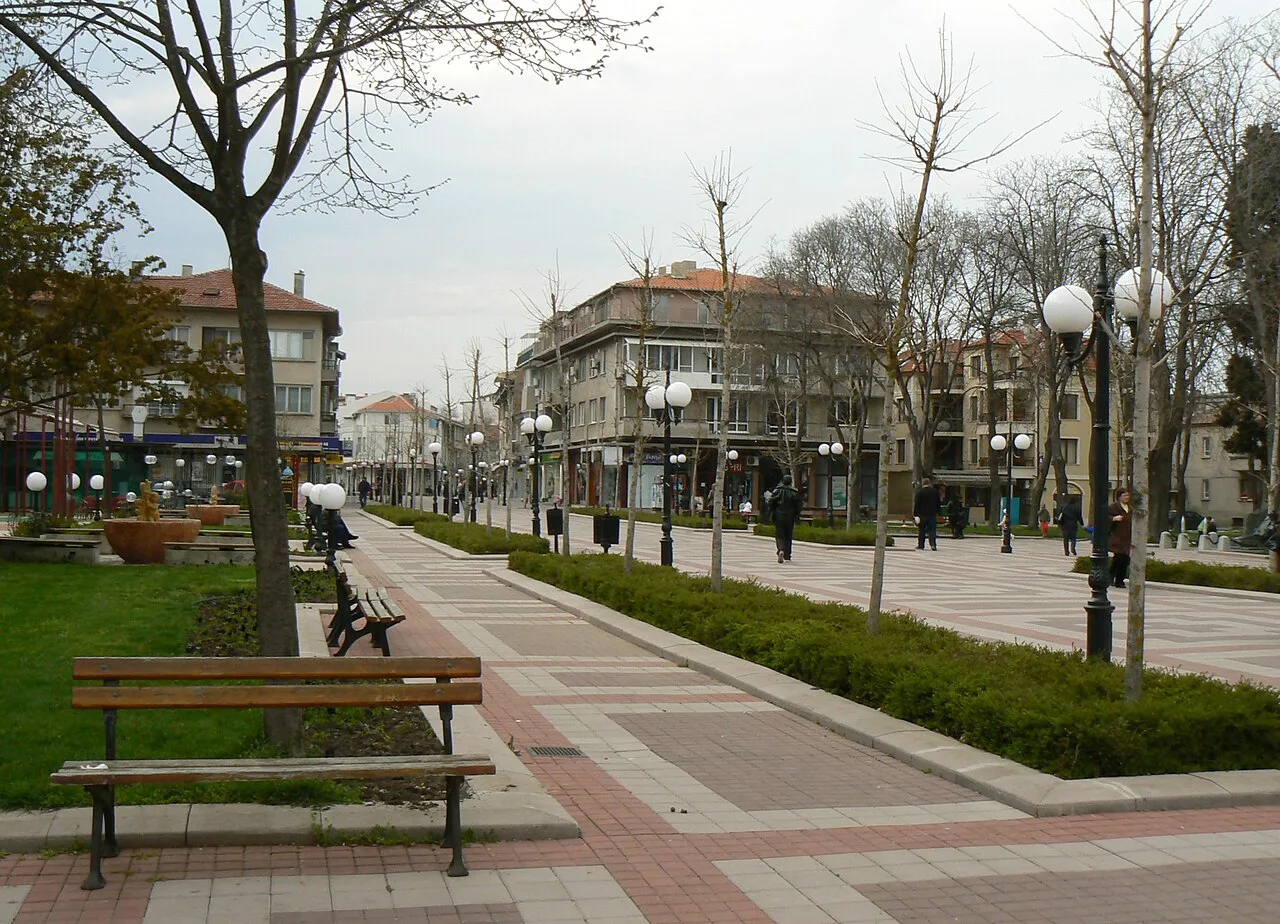
Beyond the spa hotels and the beach promenade, Pomorie has an old town that rewards a slow afternoon walk. The architecture here belongs to the Black Sea vernacular — two-storey timber-framed houses with wide overhanging upper floors, built in the 19th century by prosperous merchants and sea captains whose wealth came from the salt trade and from Anchialos's position on the coastal shipping routes. Several streets in the central peninsula preserve this character well, and the effect — weathered wood, climbing vines, cobbled lanes between whitewashed walls — is quite distinct from the National Revival style you see in inland Bulgarian towns like Plovdiv or Koprivshtitsa.
Two monuments stand out from the historical layers. St George Monastery (Manastir Sveti Georgi) sits just inside the town and contains one of the most quietly compelling features on the whole peninsula: an ayazmo, a sacred healing spring. The water here has a centuries-long reputation for therapeutic properties — the monastery has long been both a spiritual and a physical healing site, and the spring draws local visitors who come to fill bottles with the slightly mineral water. The monastery church is modest but atmospheric, particularly in the early morning before the day-trippers arrive. On the landward edge of the peninsula, a few minutes' walk from the centre, stands the Pomorie Tomb — a Thracian beehive burial monument (often called a heroon, a memorial to a heroic ancestor) that dates to the Hellenistic period, roughly the third to second century BC. The corbelled stone dome and the long entrance corridor are remarkably well preserved, and the chamber inside has an eerie, slightly uncanny quality. As of 2026, the site is accessible; confirm the current opening hours and any entry fee locally before visiting. Most guided town walks include both the monastery and the tomb as a combined old-town circuit, which I'd recommend over visiting them separately.
Wine, Brandy and the Pomorie Cellar Doors
Pomorie has an oenological reputation that surprises most visitors who associate Bulgarian wine mainly with Melnik in the southwest or the Thracian Valley inland. The town and its immediate hinterland form one of the Black Sea's oldest wine-producing zones — the combination of continental and maritime climate, well-drained soils and long sunshine hours suits varieties like Muscat, Cabernet Sauvignon and the local Dimyat to the conditions here. The flagship producer is Black Sea Gold (Chernomorsko Zlato), a large winery whose vineyards extend across this part of the coast; their visitor centre and cellar door in Pomorie offers tastings and tours, and it's worth factoring in a couple of hours if wine is any kind of interest at all.
Equally worth pursuing is Pomorie's brandy tradition — the town is historically one of Bulgaria's centres for grape rakia production, and a number of smaller producers in and around the peninsula continue the craft. Local rakia here tends to be smoother and slightly more fragrant than the fiery inland versions, reflecting the Muscat-heavy grape base. The market and a handful of specialist shops in the old town are good places to pick up bottles to take home — far better value than anything you'll find at the airport. For full detail on the wineries, the tasting formats, which labels to look for and how to arrange a cellar visit in 2026, see my dedicated Pomorie wine and brandy guide.
Where to Stay in Pomorie
Pomorie's accommodation is defined by the wellness industry — the majority of the larger hotels are balneo or spa resorts built around their access to lake mud, mineral water and treatment facilities. That means the town punches above its size in terms of hotel quality, with several well-equipped four-star properties that would be far more expensive in comparable coastal destinations in Western Europe. Rooms at a comfortable spa resort in high season (July–August) run roughly from €60 to €150 per night in 2026, though rates shift significantly outside peak months; always check the live rate when booking, as the seasonal spread is wide.
If wellness isn't your priority, there are also smaller guesthouses and apartments in the old town that offer good value and a more local atmosphere — useful if you're here primarily for the beaches, the wine region and the history. The town is compact enough that any accommodation puts you within easy reach of everything. For a proper breakdown of the best hotels by type, neighbourhood and budget — and which spa centres are worth the premium — see my dedicated where to stay in Pomorie guide. The wellness spas in Pomorie guide covers the treatment side of those same properties in more depth.
Day Trips: Burgas, Nessebar and the Southern Coast
Pomorie's position — tucked between Burgas to the south and Sunny Beach and Nessebar to the north — makes it one of the best-placed bases on this stretch of coast for day trips. Burgas, just 18–20 km south, is the regional capital: a proper city with a sea garden, a covered market, decent restaurants and the Burgas Lakes, a system of wetland nature reserves right on the urban edge. It's an easy morning out; my Burgas guide covers the best of it, and there's a broader coastal itinerary in the day trips from Burgas guide that strings together several of the routes most easily done from this end of the coast.
Heading north, Nessebar is a UNESCO World Heritage Site and one of the most visited places in Bulgaria for good reason — an ancient town on its own small peninsula, packed with Byzantine churches, medieval walls and the sort of photogenic old streets that make the coastal resort complexes nearby look very temporary by comparison. The drive or bus from Pomorie takes around 25 minutes; see my things to do in Nessebar guide for what to prioritise and when to go to beat the summer crowds. If you're building a longer Bulgaria itinerary, my Bulgaria itinerary guide shows how the southern coast connects with Sofia, Plovdiv and the interior.
Planning Your Pomorie Trip in 2026
A few practicalities worth knowing before you go. Bulgaria adopted the euro on 1 January 2026, so prices are now displayed in both euros and the old Bulgarian lev (BGN) at the fixed rate of approximately 1.9558 BGN to €1. Cards are accepted at hotels, larger restaurants and the wineries, but carry some cash for the market, small cafés, museum tickets and bus fares — Pomorie is not a cashless town. Since Bulgaria joined the Schengen Area fully on 1 January 2025, there are no internal border controls for travellers arriving from within the zone.
For length of stay: one full day is enough to tick off the Salt Museum, a beach walk and the old-town circuit, but you'll get much more out of Pomorie with two nights — the second day allows a proper spa session, a wine tasting and a more relaxed pace. Most spa packages are sold in minimum two-night blocks for good reason. Burgas Airport handles the arrivals and departures; the bus from the airport to Pomorie is straightforward and cheap. English is spoken at the major hotels and tourist sites but is less universal on the street than in Sofia or Varna, so a translation app is handy. Dress modestly when visiting the monastery. For the broader practical essentials — money, safety, SIM cards, tipping and cultural norms — my Bulgaria travel tips guide has everything in one place. Come with a day or two to spare and Pomorie will quietly exceed every expectation.
Explore things to do in other cities
Explore more: Best Things To Do In Pomorie, Bulgaria Guide
Use these focused guides to plan the details, compare options, and build an itinerary that fits your trip.
Frequently Asked Questions
Is Pomorie worth visiting in 2026?
Yes, particularly if wellness, beaches or wine are on your agenda. Pomorie offers healing mud baths and lye therapy from its hypersaline Salt Lake, distinctive dark iron-sand beaches, a Thracian beehive tomb, and one of Bulgaria's oldest wine and brandy regions — all in a compact peninsula town that is far less crowded than nearby Nessebar or Sunny Beach. In 2026 it is also straightforward to reach: Burgas Airport is 20 km away, euro pricing is in effect, and Schengen membership means no border hassle overland.
What are the famous mud baths in Pomorie?
Pomorie's mud baths use peloid sediment — a mineral-rich dark mud — harvested from the hypersaline Pomorie Salt Lake (Pomoriysko Ezero) on the western side of the peninsula. Applied in controlled sessions at spa hotels and balneotherapy centres, the mud is used to treat joint pain, skin conditions and fatigue. The same lake also produces a therapeutic lye brine. Most spa hotels offer single mud-bath sessions as well as multi-day programmes; booking ahead is advisable in peak season (June–August).
How do I get from Burgas to Pomorie?
Pomorie is 18–20 km northeast of Burgas. Local buses run the route regularly throughout the day and the journey takes about 30 to 40 minutes; it is one of the most frequent bus services on the southern Black Sea coast. By taxi or car the drive is around 20–25 minutes. Burgas Airport, located on the edge of the city, is the most convenient international gateway; a bus or short taxi ride connects it to the Burgas bus station for onward travel to Pomorie.
What is the Salt Museum in Pomorie?
The Museum of Salt (Salt Museum) in Pomorie is the only institution in Eastern Europe dedicated to the history and practice of sea-salt production by solar evaporation. It sits at the edge of Pomorie Salt Lake and combines indoor exhibits tracing salt-making from antiquity to the present with an outdoor section among the working evaporation pans. It is open to visitors year-round; confirm current opening hours and entry fees locally before visiting in 2026.
What is the best time to visit Pomorie for the beach?
The sea is warmest from July to August, but those months are also the busiest and most expensive. Late May to mid-June and September offer the best balance: warm sunshine, swimmable water, far fewer crowds and lower accommodation rates. Pomorie's beaches are distinctive for their dark iron-rich sand; the main town beach runs the length of the eastern peninsula shore, and there is a sandbar spit at the southern end that creates a sheltered, calmer bay.
Pomorie has quietly earned its place among the southern Black Sea coast's most rewarding stops, and not because of anything flashy. It's the specificity that gets you: salt pans that have been worked since ancient Greek times, mud that has been healing people for a millennium, wine cellars that have been fermenting Muscat grapes longer than anyone can precisely date, and a Thracian tomb that stands on the edge of town as casually as a park bench. On a coast that can lean heavily on sun-and-sand, Pomorie has something genuinely distinctive to offer at every turn.
If you're planning a 2026 trip to Bulgaria's Black Sea, give Pomorie at least a full night — ideally two — rather than a day trip from Burgas or Nessebar. Use the focused guides linked throughout this page to plan each part in detail: the Salt Lake and mud baths, the beaches, the wine cellars, the spa hotels. Combine it with a morning in Nessebar and an afternoon in Burgas and you have three of the southern coast's best experiences without retracing a single step.
Explore More Pomorie Guides
This pillar is the hub for everything Pomorie. Dive into the focused guides below to plan each part of your trip in detail.
Pomorie In Depth
- Pomorie Salt Lake & Mud Baths 2026
- Pomorie Beaches 2026
- Pomorie Wine & Brandy 2026
- Where to Stay in Pomorie 2026
- 8 Best Wellness & Spas in Pomorie Experiences
Nearby & the Southern Black Sea Coast
- Things to do in Burgas guide
- Best Day Trips from Burgas
- 12 Best Things to Do in Nessebar
- 12 Best Beaches in Bulgaria for Your 2026 Trip
Plan Your Bulgaria Trip
- 18 Best Things To Do In Bulgaria
- Bulgaria Itinerary 2026
- Getting Around Bulgaria: The Ultimate Transportation Guide
- Best Time To Visit Bulgaria: Seasonal Weather & Travel Guide
- Bulgaria Travel Tips: Your Essential Guide to Planning a Trip
- Best Time to Visit Pomorie
- How to Get to Pomorie, Bulgaria
- One Day in Pomorie Itinerary
- Where to Eat in the Old Town and New Town