
Sirene po Shopski: The Complete Guide to Bulgaria's Baked Clay-Pot Cheese
Last updated July 2026, this guide breaks down what sirene po shopski actually is and why it shows up on nearly every Bulgarian menu. The dish bakes white Bulgarian cheese with tomatoes and peppers inside a small clay gyuveche, finished with an egg. Below, find its Shopluk-region roots, where to order it well in Sofia and Plovdiv, and a step-by-step method for the home oven.
What Is Sirene po Shopski? A Fast Answer
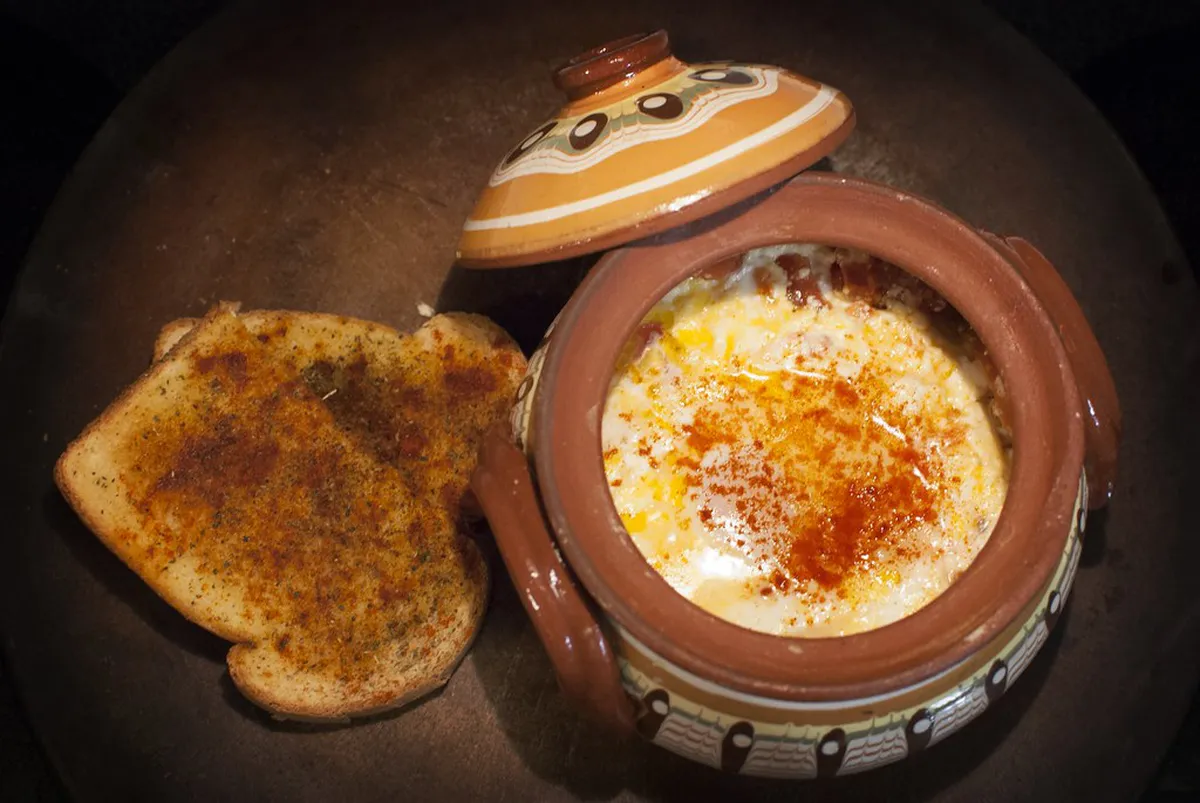
Sirene po shopski is a Bulgarian dish of white cheese baked with tomatoes and peppers inside a small clay pot called a gyuveche. A raw or lightly cooked egg goes on top for the final few minutes in the oven, so the yolk stays soft when the dish reaches the table. The name pairs sirene, the Bulgarian word for white brined cheese, with Shopski, a reference to the Shopluk region of western Bulgaria. Most mehana menus list it as a starter, or predyastie, though the portion is filling enough to work as a vegetarian main course. It is one of the more affordable dishes on a typical Bulgarian menu, and it rarely takes long to arrive since it is baked to order in individual pots.

The Shopluk Region and the Shopi People: Where the Dish Began
Shopluk is not a city. It is the historical region of western Bulgaria, including Sofia, where the Shopi people farmed for generations. Sirene po shopski grew out of that agricultural tradition, built from tomatoes, peppers, and cheese that were already on hand in most kitchens. Laborers and farmers ate it as a midday meal, paired with bread, because it was filling and quick to prepare in a clay pot over low heat. The dish did not need a restaurant-grade oven; a fire and a gyuveche were enough. Over time it spread beyond Shopluk kitchens and became a fixture on menus throughout Bulgaria, including Sofia and Plovdiv. Today it functions less as a regional specialty and more as a default order that nearly every mehana keeps on the menu, regardless of region. Recipes vary slightly from household to household. Tomatoes, peppers, and a soft white cheese stay constant, whether the version in front of you leans mild or sharp.

The Anatomy of Sirene po Shopski: Cheese, Clay Pot, and Egg
Three elements define an authentic sirene po shopski: the cheese, the clay vessel, and the egg on top. Get any one wrong and the dish drifts toward a generic baked-cheese dip instead of the dish Bulgarian menus describe. Cow's milk sirene is the everyday version, milder and easier to find. Sheep's milk sirene is sharper and saltier, closer to what older Shopluk recipes call for. Many kitchens also add kashkaval, a yellow, aged cow's-milk cheese, layered in alongside the sirene for extra melt. The gyuveche matters as much as the cheese itself. Its porous, unglazed clay absorbs heat slowly and releases it just as slowly, so the cheese cooks evenly instead of scorching at the edges the way it can in a thin metal pan. That gradual heat also lets the tomatoes and peppers release their juices slowly. That slow release is part of why the same ingredients taste different when baked in a glass casserole dish instead. The pepper used is typically a bull's horn chushka, a long, tapered sweet pepper, rather than a standard bell pepper. It is usually roasted and peeled first, which softens the flesh and adds a smokier note than a raw bell pepper would. Bell peppers do work in a pinch, but the flavor reads blander and slightly more watery once baked in the pot. The egg goes in last, uncovered, once the cheese has already melted underneath. Bake it just long enough for the white to set while the yolk stays loose, roughly five to ten additional minutes after the cheese layer is ready.
Using a small ramekin better approximates clay's heat distribution than a large tray, but Bulgarian sirene's firmness will still differ from softer cheese substitutes like Greek feta when baked.
| Cheese Type | Milk Source | Flavor Profile | Best Role in the Dish |
|---|---|---|---|
| Sirene (cow's milk) | Cow | Milder, tangy | Everyday layering cheese |
| Sirene (sheep's milk) | Sheep | Sharper, saltier | Traditional Shopluk-style version |
| Kashkaval | Cow (aged, yellow) | Nutty, melts smooth | Adds pull and stretch alongside sirene |
- 400g Bulgarian white cheese (sirene)
- 150g yellow cheese (kashkaval)
- 2 bull's horn peppers, roasted and peeled
- 2 tomatoes, sliced or diced
- 2 eggs
- Parsley, oregano, or another dried herb to season
Where to Eat Sirene po Shopski in Sofia and Plovdiv
Sirene po shopski shows up on nearly every mehana menu, the traditional Bulgarian tavern format found across Sofia and Plovdiv. Order it as a starter to share, or ask for a larger portion if it is meant to be a vegetarian main course. Modern bistros in both cities also serve versions of it, sometimes with a lighter hand on the oil, but the clay-pot presentation stays the standard across both formats. Waitstaff in busier Sofia restaurants sometimes bring the dish out still bubbling from the oven. A short rest before the first bite helps avoid a burned tongue. Price is one of the dish's advantages for a travel budget. As a starter on a typical mehana menu, expect to pay roughly 6 to 12 BGN as of 2026, making it one of the more budget-friendly, filling options on the table. That is generally less than a main course of grilled meat, so it works well as a shared plate to start a full meal.
The original Shopluk recipe is vegetarian, but many restaurants outside the region add lukanka sausage; diners with meatless dietary needs should confirm with their server.

- Listed as an appetizer or predyastie on most menus, but a main-size portion is usually available on request
- Served in an individual gyuveche per person, not as a shared communal dish
- Priced near the lower end of the menu, roughly 6 to 12 BGN as of 2026
How to Make Sirene po Shopski: Step-by-Step
Two methods show up across Bulgarian kitchens and food blogs. One sautés the onion and pepper first, then simmers them with tomato before folding in the cheese, closer to a stovetop stew finished under high heat. The other layers everything raw directly in the gyuveche and lets the oven do the work from a cold start. Layering raw is the more traditional method for a home gyuveche, since it needs less attention at the stove. No gyuveche on hand? A small oven-safe ramekin or individual casserole dish gets closer to the result than one large baking tray, since a smaller surface area still concentrates the heat around the cheese. It will not replicate the clay's slow heat exactly, but it is a workable substitute for a home kitchen without specialty cookware. Serve straight from the gyuveche rather than transferring to a plate, since the pot keeps the dish hot at the table for longer.
- Oil the bottom of the gyuveche or an oven-safe clay dish
- Layer half the sirene, then the tomatoes and roasted peppers
- Season with parsley, oregano, or chili flakes
- Add the remaining cheese on top
- Bake at around 200C (390F) for about 20 minutes, until the cheese melts
- Crack an egg on top and return to the oven, uncovered, for 5 to 10 minutes
- Rest for a few minutes before serving directly from the pot
Pro Tips and Common Mistakes to Avoid
A few details separate a dish that tastes right from one that misses the point. Expect two textures side by side once the dish is out of the oven. Kashkaval brings the pull, stretching the way many people expect a baked cheese to behave. Sirene keeps more of its crumb, breaking into soft pieces rather than stretching into strings. A heat-safe trivet under the gyuveche protects the table, since the clay stays hot well after the dish leaves the oven.
- Skip Greek feta as a direct swap. Bulgarian sirene tends to be less brined and firmer, so it holds its shape differently once baked
- Use a bull's horn pepper, or chushka, if available, rather than a bell pepper; it roasts sweeter and softer
- Do not skip roasting and peeling the pepper. Raw pepper skin stays tough even after a 20-minute bake
- Add the egg late, not at the start of baking, if a runny yolk is the goal
- Expect regional variation. Some kitchens outside Shopluk add lukanka sausage, while the Shopluk-style version stays vegetarian with just cheese, vegetables, and egg
What to Pair with Sirene po Shopski
Rakia is the standard drink pairing, usually poured before the meal to open the appetite. Shopska salad, with its diced tomato, cucumber, pepper, and grated sirene on top, is the most common table companion, since the two dishes already share the same cheese. Crusty bread rounds out the plate, useful for scooping up the tomato and egg once the cheese layer is gone. For a wider sense of what else appears on the same table, the 15 Must-Try Bulgarian Foods: A Culinary Travel Guide (2026) overview covers the rest of the country's staples. Another clay-pot dish worth ordering alongside it is Bulgarian Sarma Guide: Stuffed Cabbage and Vine Leaf Rolls Explained, the stuffed cabbage roll that shows up on the same mehana menus. In colder months, a side of Bulgarian turshiya adds a sharp, vinegared contrast to the baked cheese. To finish the meal, a spoonful of Bulgarian honey over yogurt or bread is a common way to close out a mehana meal.
How to Recognize and Order It on Bulgarian Menus
For travelers, the biggest clue is the word gyuveche, because many Bulgarian menus group clay-pot dishes together. In Sofia, Plovdiv, and Veliko Tarnovo, look under warm appetizers, vegetarian dishes, or the mehana section rather than grilled mains.
- Сирене по шопски means sirene po shopski, the classic baked cheese version.
- Сирене в гювече means cheese in a clay pot, often very similar.
- Гювечe по шопски may include meat, sausage, or a fuller vegetable stew.
If the menu is unclear, ask whether it comes with yaytse, meaning egg, and whether it includes lukanka. That check matters for vegetarians, because some restaurants use the same clay pot format for sausage-heavy variations.
For trip-planning details, see Bulgaria - Wikivoyage and Bulgaria - Wikipedia.
Continue planning: Use 15 Must-Try Bulgarian Foods: A Culinary Travel Guide and The Best Banitsa Recipe: Authentic Bulgarian Cheese Pie Guide to connect this guide with the rest of your Bulgaria itinerary.
Frequently Asked Questions
What is the difference between sirene po shopski and a standard gyuvech?
Gyuvech is the broader term for a Bulgarian dish baked in a clay pot, and it can include meat and vegetables. Sirene po shopski is a specific cheese-forward version, built from sirene, tomatoes, peppers, and a baked egg, without meat.
Can you make sirene po shopski without a Bulgarian clay pot?
Yes. A small oven-safe ramekin or individual casserole dish is the closest substitute. It will not distribute heat exactly like porous clay, but it holds the layered cheese, vegetables, and egg well enough for a home kitchen.
Is sirene po shopski vegetarian-friendly?
Yes, in its Shopluk-style form. The dish is built from cheese, tomatoes, peppers, and egg, with no meat in the base recipe. Some regional versions elsewhere in Bulgaria add sausage, so it is worth confirming with a server if that matters.
What is the best type of cheese to use for an authentic taste?
Bulgarian sirene, a brined white cheese made from cow's or sheep's milk, is the base. Many recipes also add kashkaval, a yellow cheese, alongside it for extra melt and pull. Greek feta works as a stand-in if sirene is not available, though the texture differs once baked.
How do you get the egg yolk to stay runny in the clay pot?
Add the egg only after the cheese has already melted, not at the start of baking. Bake it uncovered for roughly five to ten more minutes, and pull the dish as soon as the white sets but the yolk still looks soft.
How much does sirene po shopski typically cost in a Bulgarian restaurant?
As a starter, expect roughly 6 to 12 BGN on most mehana menus as of 2026, which is one of the more affordable, filling options on the table compared with a full meat main course.
For connected planning, compare practical Bulgaria travel guide with Bulgaria seasonal planning guide before finalizing your route.