Melnik: Bulgaria's Smallest Town, Built on Wine and Sandstone
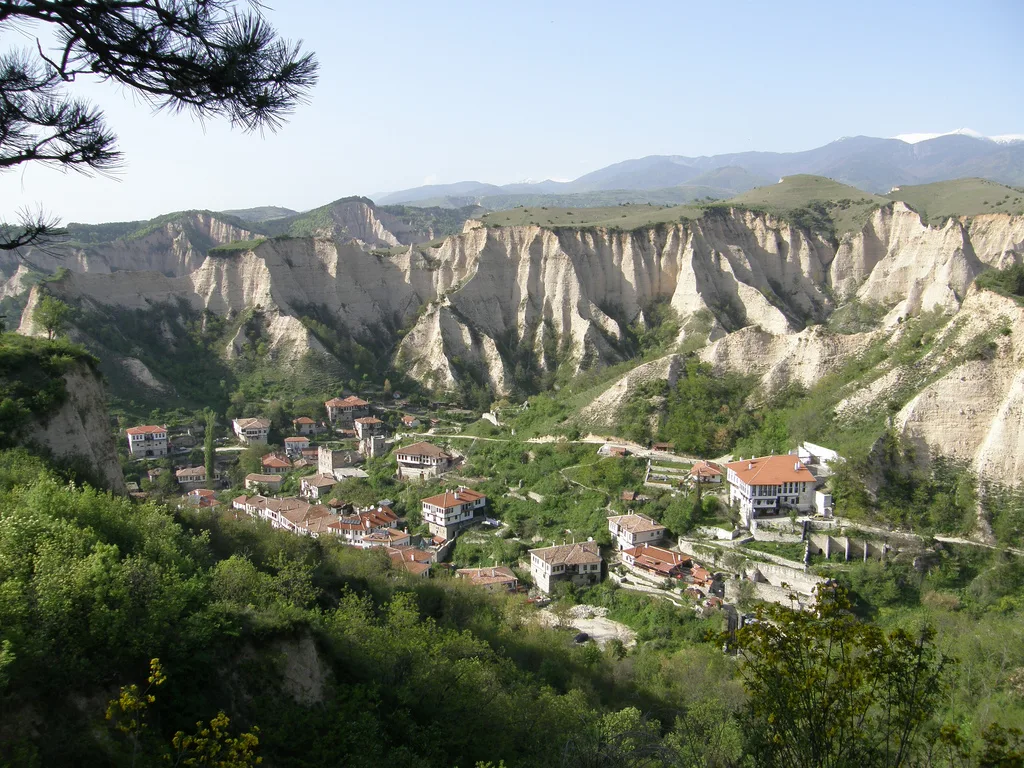
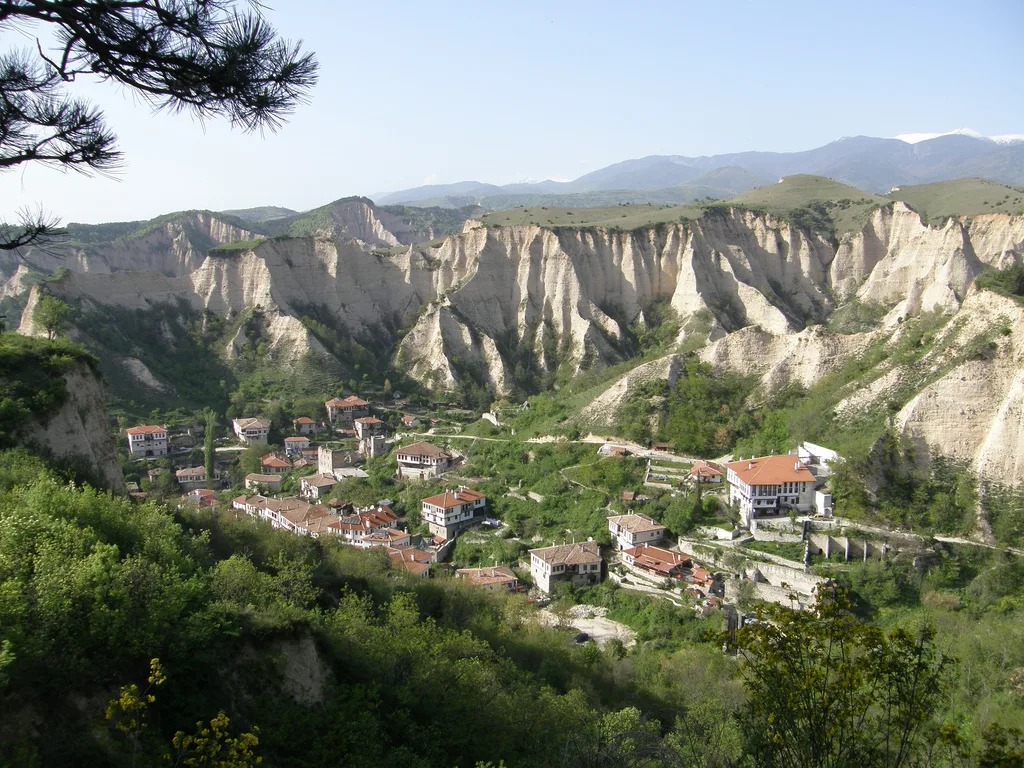
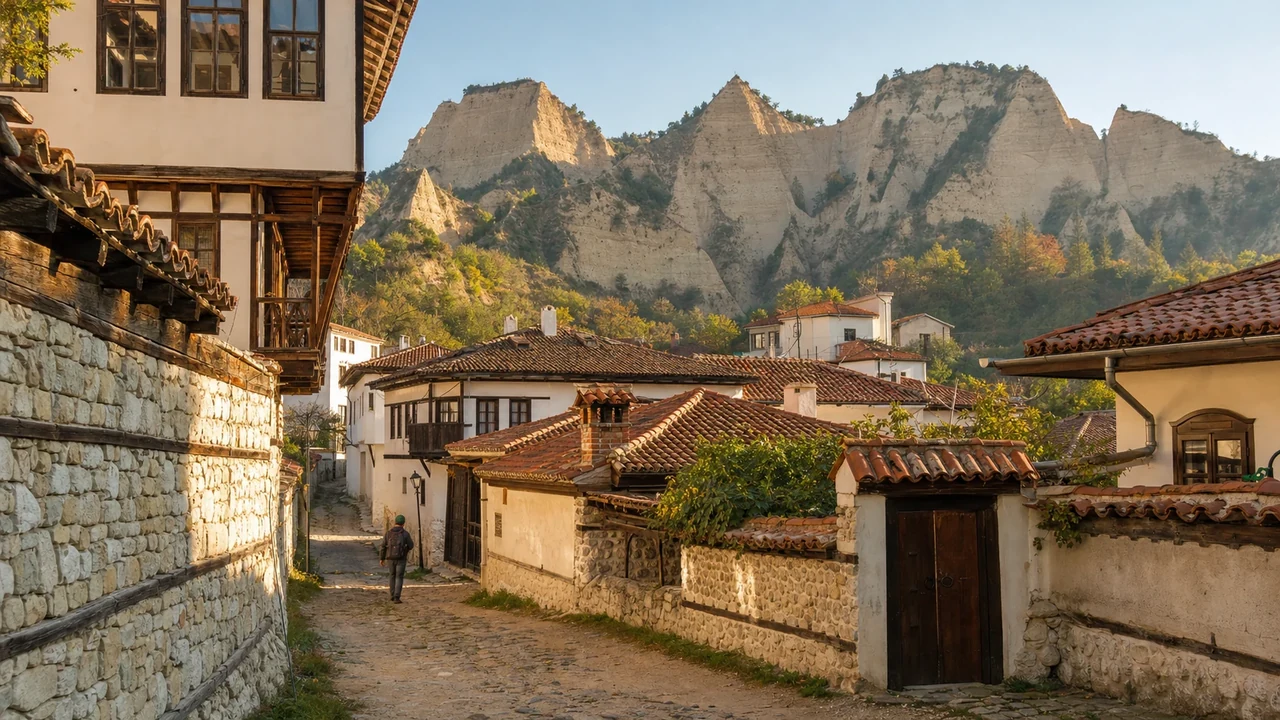
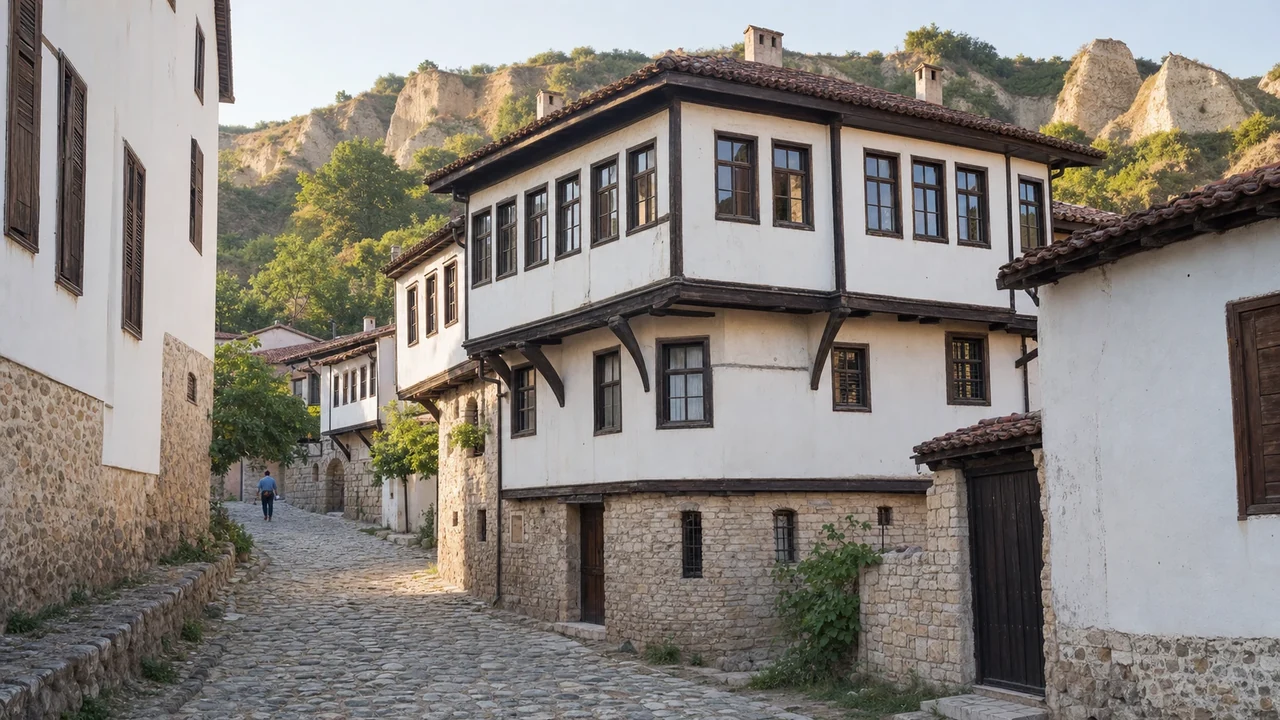
Melnik is officially Bulgaria's smallest town - fewer than 200 residents strung along a single stone-paved street wedged into a ravine of the southern Pirin foothills, a short drive from the Greek border. Its size is deceptive: the surrounding badlands have eroded into some of the country's strangest scenery, with sandstone pyramids and spires rising up to 100 metres around the settlement, while the town itself is lined with jettied, timber-and-stone National Revival houses built by 18th- and 19th-century wine merchants. Wine is the thread that runs through everything here. Melnik gave its name to the Broadleaved Melnik Vine (Shiroka Melnishka Loza), a grape grown almost nowhere else, and the merchant houses and cave-cut cellars that made the town rich are now its main attractions - most famously the Kordopulov House, whose cellars still hold tastings more than 150 metres underground. A short walk or drive from the centre climbs past the pyramids to Rozhen Monastery, the largest in the Pirin Mountains and an easy half-day extension to any Melnik visit, while the ruined Despot Slav Fortress above town marks the spot where a 13th-century warlord once ruled his own breakaway principality. This guide covers Melnik's five essential attractions by theme, what each one costs to visit, how to string them into an itinerary, how to get around, and when to time a trip around the autumn grape harvest.
This 360-degree walk showcases Melnik's streets and distinctive sandstone landscape:
Melnik's five attractions split naturally into two groups: the wine-and-architecture sights inside town, and the nature-and-history sights on the slopes above it. Pair one from each column for a well-rounded day, or work through both using the itineraries further down.
Wine and National Revival Houses
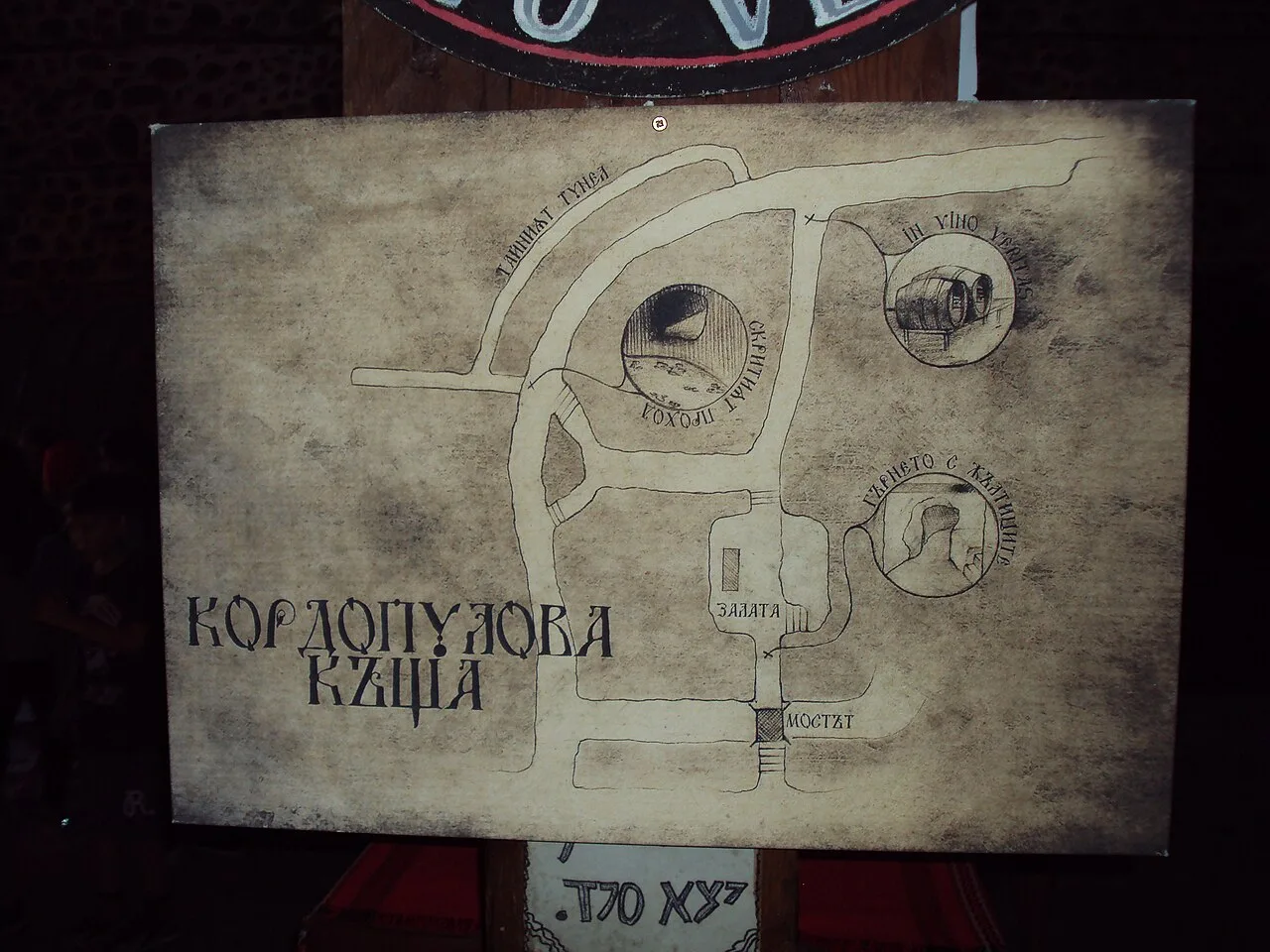
Kordopulov House Visitor Guide is the largest surviving Revival-era house in Bulgaria, built in 1754 for the Kordopoulos wine-merchant family. Painted rooms lit by Venetian stained glass sit above more than 150 metres of sandstone-cut cellars, where the same family once aged wine for export and where visitors can still taste it today. A few minutes' walk away, the Melnik Museum of Wine occupies a cool cave-vault in the centre of town and holds more than 400 labels from Bulgaria and abroad. Its centrepiece is the Broadleaved Melnik Vine (Shiroka Melnishka Loza), a grape that grows almost exclusively around Melnik and produces a smoky, berry-forward red once reportedly favoured by Winston Churchill. A modest tasting fee lets visitors sample three reds and a white alongside olive-oil toast, and you can bottle a personalised souvenir label on the way out. Together, the two sights cover Melnik's wine story from the merchant houses that built the town to the grape that gave it a name.
Nature, Hiking and History
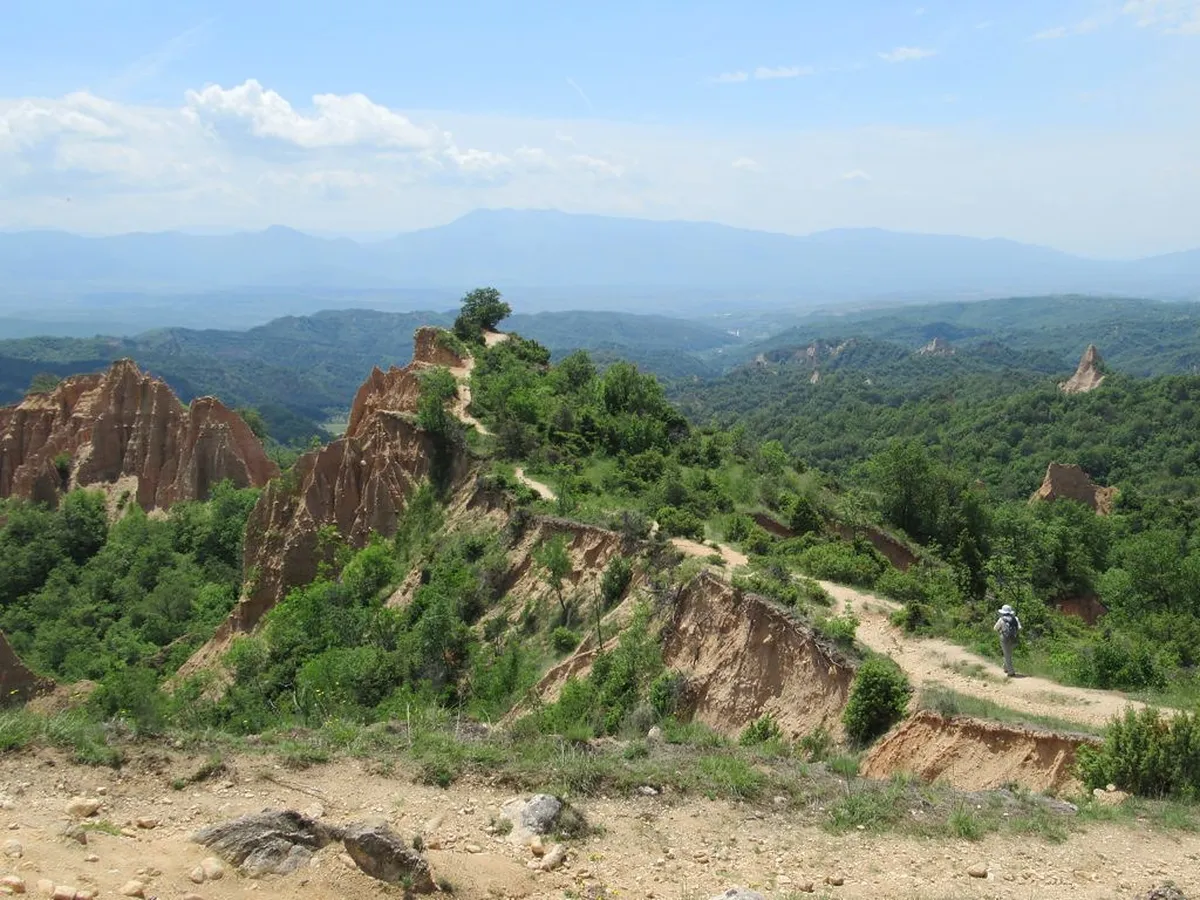
The Melnik Sandstone Pyramids (Melnik Earth Pyramids) Visitor Guide (also called the Melnik Earth Pyramids) are the free, open-access natural landmark that gives the town its skyline - eroded sandstone hoodoos rising up to 100 metres, protected as a natural monument since 1960 and laced with marked hiking trails, including the scenic route up to Rozhen Monastery. They are a separate formation from the Stob Pyramids near Rila, further north, and are easy to confuse with them by name alone. High on St Nicholas hill above town, the Despot Slav Fortress (St. Nicholas Fortress) Guide marks where Despot Alexius Slav declared Melnik the capital of his own breakaway principality in the early 13th century; weathered wall fragments up to ten metres tall survive, and the short uphill walk is rewarded with a free panorama over the pyramids and the Struma valley. About 6 km from Melnik, Rozhen Monastery (Nativity of the Mother of God) Visitor Guide (Nativity of the Mother of God) is the largest monastery in the Pirin Mountains, rebuilt by 1732 and known for its 16th-18th-century frescoes and carved iconostases; entry is free, and the walking trail up from Melnik through the pyramids is one of the region's best short hikes.
Free vs Paid: What Melnik Attractions Cost
Three of Melnik's five attractions cost nothing to visit. The Melnik Sandstone Pyramids are a free, open-access natural site with no gates or ticket booths. The Despot Slav Fortress ruins are likewise free and unstaffed, open to walk around at any time. Rozhen Monastery charges no entrance fee, though donations toward its upkeep are welcome, and modest dress is expected inside the church. The two paid sights are both wine-related and inexpensive by any standard. Kordopulov House charges an entry fee of around EUR 1.53 (3 BGN under the old currency) - approximate, so confirm current pricing on site, since Bulgaria's January 2026 switch to the euro has left some listings quoting the two currencies inconsistently. The Melnik Museum of Wine charges roughly EUR 1.50 (about 3 BGN) for entry alone, or around EUR 2.55 (about 5 BGN) for entry plus a guided tasting of three reds and a white - again approximate and worth confirming locally, since small cash-friendly sites are slower to update posted prices than hotels or restaurants. Neither paid sight will strain a travel budget; the real cost of a Melnik visit is time, not money.
Suggested Itineraries for Melnik
How much of Melnik you can see comfortably depends on whether you're passing through for a few hours or basing yourself here for a night.
Half Day: Wine and Houses
Start at Kordopulov House for the painted rooms and cellar tasting, then walk the few minutes to the Melnik Museum of Wine for the Broadleaved Melnik Vine story and a second tasting. Both sights are inside town, so this pairing needs no transport and comfortably fits a 3-4 hour window between a morning arrival and an afternoon departure.
Full Day: Pyramids, Monastery and Fortress
For the nature-and-history side, climb to the Despot Slav Fortress first thing for the cooler morning air and the best light over the pyramids, then follow the marked trail down through the Melnik Sandstone Pyramids and on to Rozhen Monastery - a walk of roughly three hours depending on pace. Visitors short on time or mobility can drive to Rozhen directly and hike only the pyramid section.
Full Melnik Day (All Five Attractions)
With a full day and a car, most visitors manage all five: the wine sights first while the town is quiet, then the fortress, pyramids and monastery in the afternoon, finishing with dinner at one of the mehanas along the main street. This is the pace covered hour-by-hour in our one-day Melnik itinerary.
Getting Around Melnik
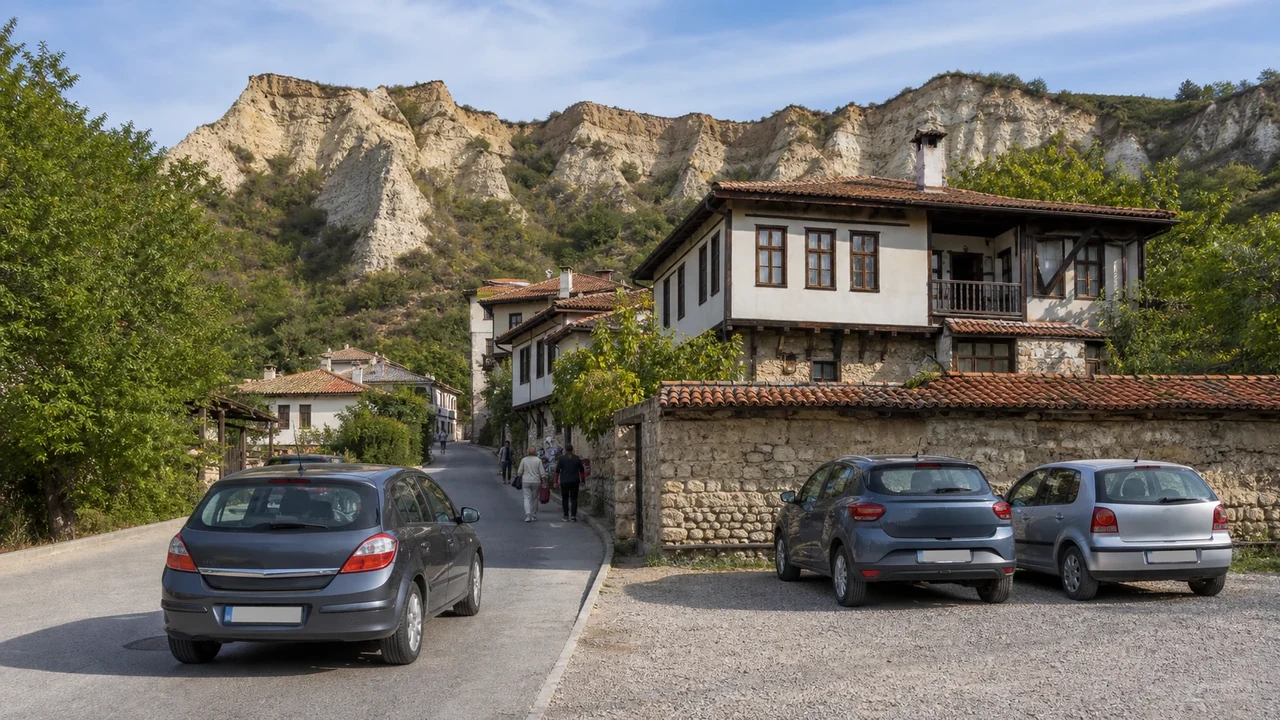
Melnik sits in a narrow ravine off the main Sofia-Thessaloniki road, and most visitors arrive by car. From Sofia it's roughly 180 km and about 2.5 hours' drive via the A3 motorway before the final stretch of mountain road; from Sandanski, the nearest larger town, it's a straightforward 20-minute drive. There's no train station in Melnik itself, and bus connections from Sofia are limited, so a rental car or an organised day trip - such as our Melnik Day Trip From Sofia And Bansko Travel Guide - is the most reliable way in for visitors without their own transport. Once you've arrived, the town itself is entirely walkable: Kordopulov House, the Wine Museum and the main-street mehanas are all within a few minutes of each other. The Despot Slav Fortress is a short, steep uphill walk from the centre, and the Melnik Sandstone Pyramids are reachable on foot along marked trails in several directions. Rozhen Monastery is the outlier - it's about 6 km away, so plan on a short drive (10-15 minutes) or the roughly three-hour marked hiking trail through the pyramids if you'd rather walk the whole way. Parking in Melnik itself is limited to a couple of small lots near the entrance to town; on peak summer weekends, arriving early secures a spot.
Best Time to Visit Melnik
Melnik is a spring-to-autumn destination. April through June brings mild temperatures, green hillsides around the sandstone pyramids and thinner crowds than midsummer. July and August are hot - the ravine traps heat - but also when the town's restaurant terraces and wine cellars are liveliest, so book accommodation ahead. September and October are arguably the best months to visit: the grape harvest, bringing in the Broadleaved Melnik Vine from the surrounding hillsides, is in full swing, the light is softer for photographing the pyramids, and daytime temperatures suit the hike up to Rozhen Monastery. Winter is quiet - some guesthouses and smaller wine cellars close or reduce hours, and the hiking trails can be muddy or icy - but the handful of open mehanas and cellars make for an atmospheric, crowd-free visit if you don't mind fewer options. Whatever the season, check individual attraction opening hours before a winter visit, since these change more than the summer schedule.
Frequently Asked Questions About Melnik
Is Melnik worth visiting?
Yes - Melnik packs sandstone pyramid scenery, Bulgaria's most distinctive wine tradition and well-preserved Revival architecture into a town you can comfortably see in a day. It's a genuine detour rather than a drive-through stop, especially paired with Rozhen Monastery or a Sandanski spa stay.
How do you get to Rozhen Monastery from Melnik?
Rozhen Monastery is about 6 km from Melnik. Most visitors either drive the short mountain road (10-15 minutes) or take the marked hiking trail through the Melnik Sandstone Pyramids, a scenic walk of roughly three hours each way.
What wine is Melnik famous for?
Melnik is famous for the Broadleaved Melnik Vine (Shiroka Melnishka Loza), a grape grown almost exclusively in the region. It produces a deep, tannic red with berry and tobacco notes, historically exported abroad and tasted today at Kordopulov House and the Melnik Museum of Wine.
What is the best time of year to visit Melnik?
September and October, during the grape harvest, offer the best mix of mild weather, good light for the sandstone pyramids and full wine-cellar activity. Spring (April-June) is a quieter, greener alternative; summer is hottest and busiest.
How much does it cost to visit Melnik's attractions?
Very little. The sandstone pyramids, Despot Slav Fortress and Rozhen Monastery are all free to visit. Kordopulov House costs around EUR 1.53 (3 BGN), and the Melnik Museum of Wine costs around EUR 1.50 for entry or EUR 2.55 with a tasting - confirm current prices on site.
How many days do you need in Melnik?
One full day covers all five attractions comfortably if you have a car. A half day is enough for just the wine sights (Kordopulov House and the Wine Museum); allow a full day if you're adding the pyramids hike and Rozhen Monastery on foot.
Is Melnik walkable, or do you need a car?
The town centre is entirely walkable, and the fortress and pyramids are reachable on foot from the centre. A car (or organised day trip) is the practical way to reach Melnik itself, since public transport options are limited, and it makes the short hop to Rozhen Monastery much faster.
Plan Your Melnik Trip
Melnik rewards a little planning: decide whether you're doing a half-day wine stop or the full five-attraction day before you arrive, since that changes whether you need a car for the Rozhen Monastery leg. If you're coming from the capital, our Melnik Day Trip From Sofia And Bansko Travel Guide lays out the driving route and timing; for an hour-by-hour plan once you're in town, see our one-day Melnik itinerary. And if you're weighing which season to book, our guide to the Best Time to Visit Melnik, Bulgaria breaks down the harvest season, weather and crowd patterns month by month.