Bachkovo Monastery Visitor Guide
The Bachkovo Monastery stands as one of the most significant spiritual landmarks in central the Rhodope Mountains. Located just 30 kilometers from the vibrant city of Plovdiv, it offers a peaceful retreat into Bulgarian history. Visitors often find themselves captivated by the ancient frescoes and the serene atmosphere of the monastery courtyards. This spiritual site remains a primary destination for those exploring the cultural riches of Plovdiv and its surroundings.
Planning a visit requires understanding the unique blend of Byzantine and Bulgarian traditions found within these walls. The official Bachkovo Monastery website provides updates on religious services and special events throughout the year. Whether you are a history enthusiast or a spiritual seeker, this guide helps you navigate the site with ease. Modern travelers appreciate the balance of accessible logistics and profound historical depth offered at this mountain sanctuary.
Get a visual tour of the monastery's history and frescoes before your visit:
Must-See Bachkovo Attractions
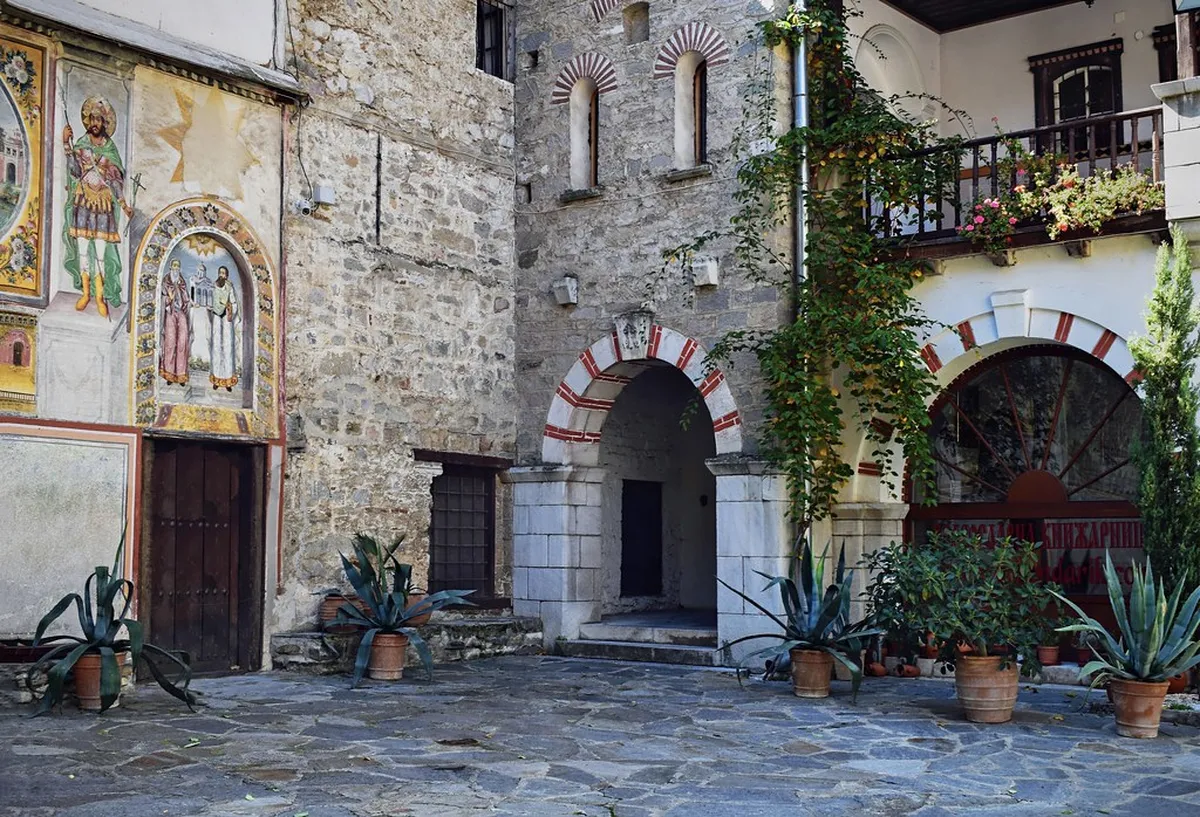
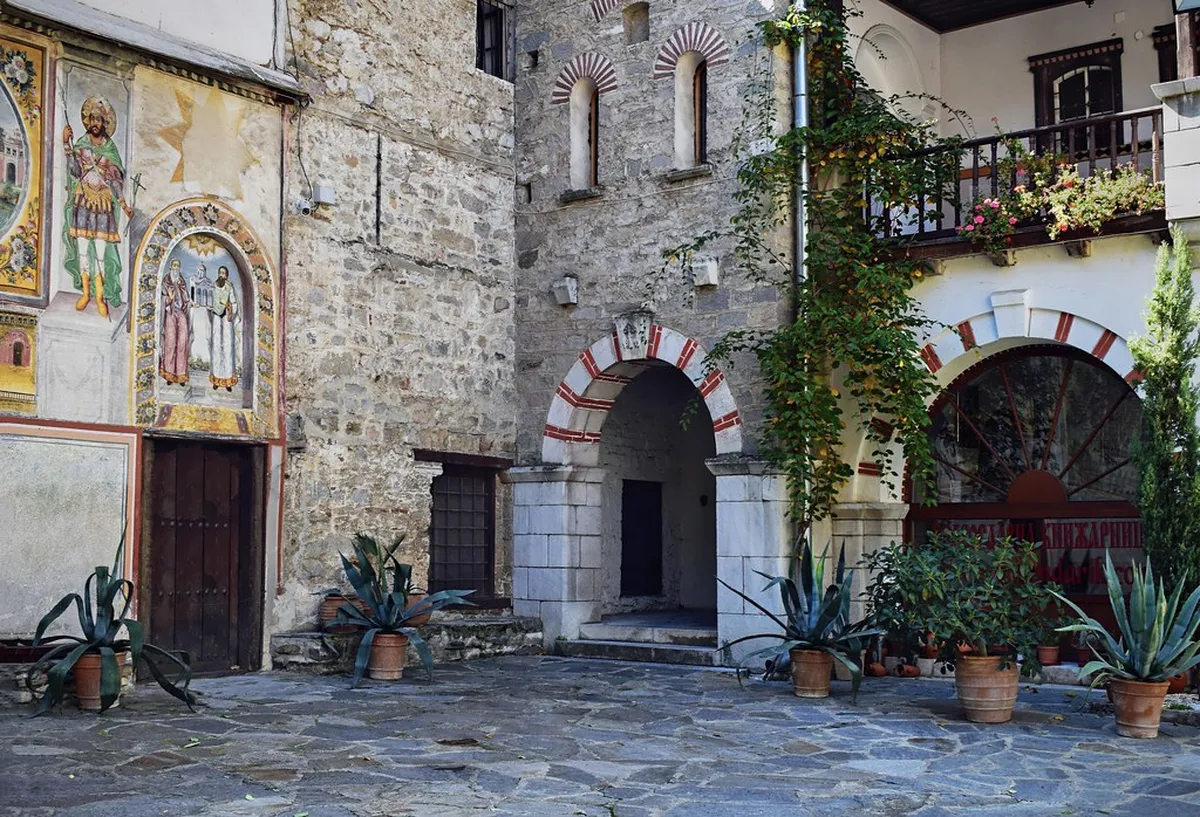
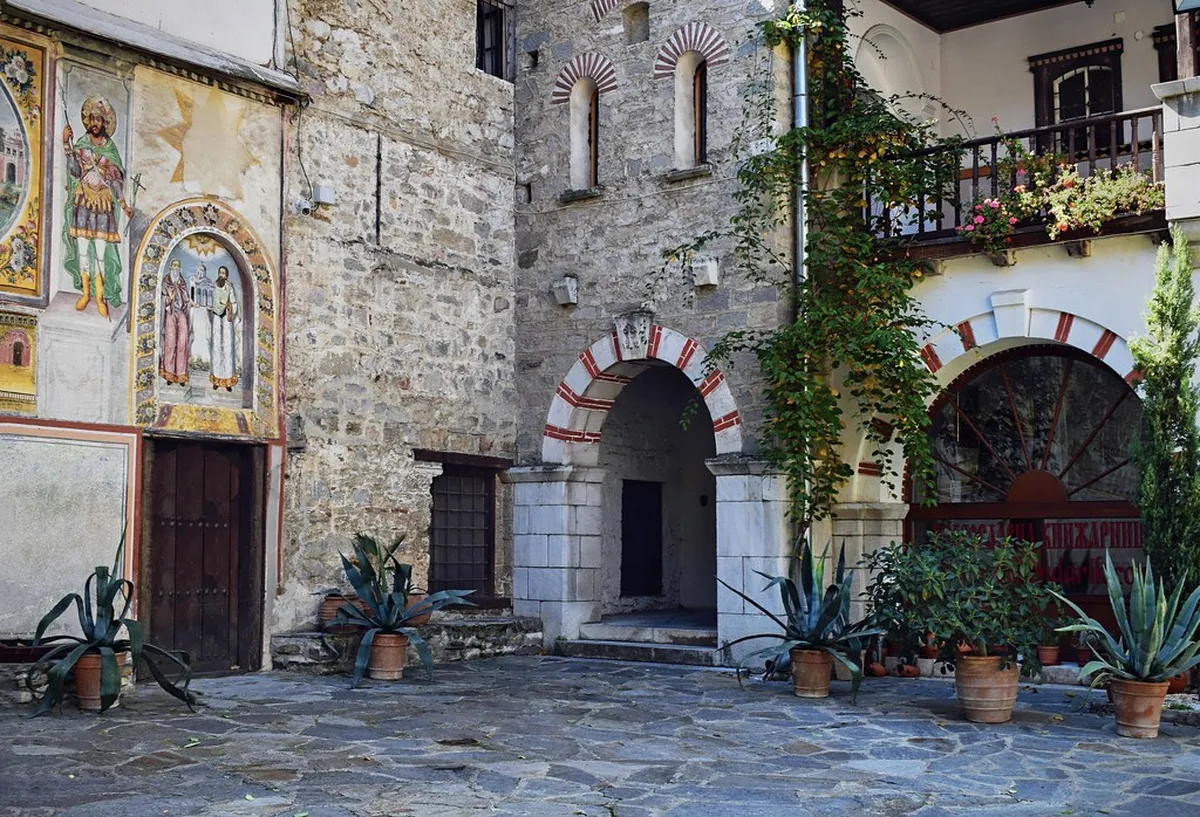
The Cathedral Church of the Assumption of the Virgin Mary is the only one of the monastery's three churches open to casual visitors, and it holds the site's most venerated object: the icon of the Virgin Mary Eleusa, painted in 1310 and kept on its own small iconostasis to the right of the central door so pilgrims can reach it. Most of the frescoes covering the nave date from an 1850s repainting rather than the founding era, and a recent cleaning stripped away more than a century of candle soot, so the colors read brighter than in older photos. At the entrance gate, look for painted scenes of the Archangels Michael and Gabriel attending the birth of Christ, and in the main courtyard a gingko tree said to have been a gift from Japan.
Two smaller churches sit beyond the main courtyard and are largely closed to the public. The Archangels' Church, probably built in the 12th century, is the oldest structure on site but is reserved for the monks' own services. St. Nicholas Church, used only for weddings and baptisms, still rewards a look from outside at its narthex frescoes. Neither requires a special detour, since both are visible in passing on the walk between the main gate and the refectory.
About 300 meters east of the main complex, the two-story ossuary is arguably Bachkovo's most overlooked highlight. Built in 1083, the same year as the monastery's founding, it preserves frescoes from both the 11th and 14th centuries, including a donor portrait of Tsar Ivan Alexander, and it is often described as the only ossuary in the Orthodox world with frescoes surviving to this degree of detail. Visits aren't self-guided; ask at the monastery to have someone unlock it, and build in an extra 20 to 30 minutes for the short walk there and back.
Museums, Art, and Culture in Bachkovo
The Monastery Museum, whose core collection dates back to the 1930s, displays carved wooden crosses, Holy Communion vessels, a Venetian monstrance, and richly decorated icons collected over centuries of monastic life. An icon hall renovated in 2022 brings together pieces spanning the 13th to the 19th centuries in one room, which is worth the detour even if you skip everything else paid. Entry costs 3 EUR in 2026, payable at the small desk near the main courtyard.
The Old Refectory holds a long stone table and a well-preserved panorama mural from the 19th century, painted by Alexi Atanasov, showing the monastery itself with an Easter procession carrying the miracle-working icon through the gate. It's a useful way to picture how the complex looked to earlier generations of pilgrims. Whether the refectory is open on a given day depends on staffing, so ask at the museum desk rather than assuming access.
St. Nicholas Church's narthex holds a separate set of frescoes attributed to Zahari Zograf, the best-known painter of the Bulgarian National Revival, including a large Doomsday scene above the door in which he is said to have included a self-portrait among the saved. Photography is generally fine in the courtyard and inside the Cathedral Church, but many visitors choose not to photograph the icon itself or people in prayer, and the two smaller churches don't allow public entry at all, so there is nothing to photograph inside them regardless.
Parks, Gardens, and Outdoor Spots in Bachkovo
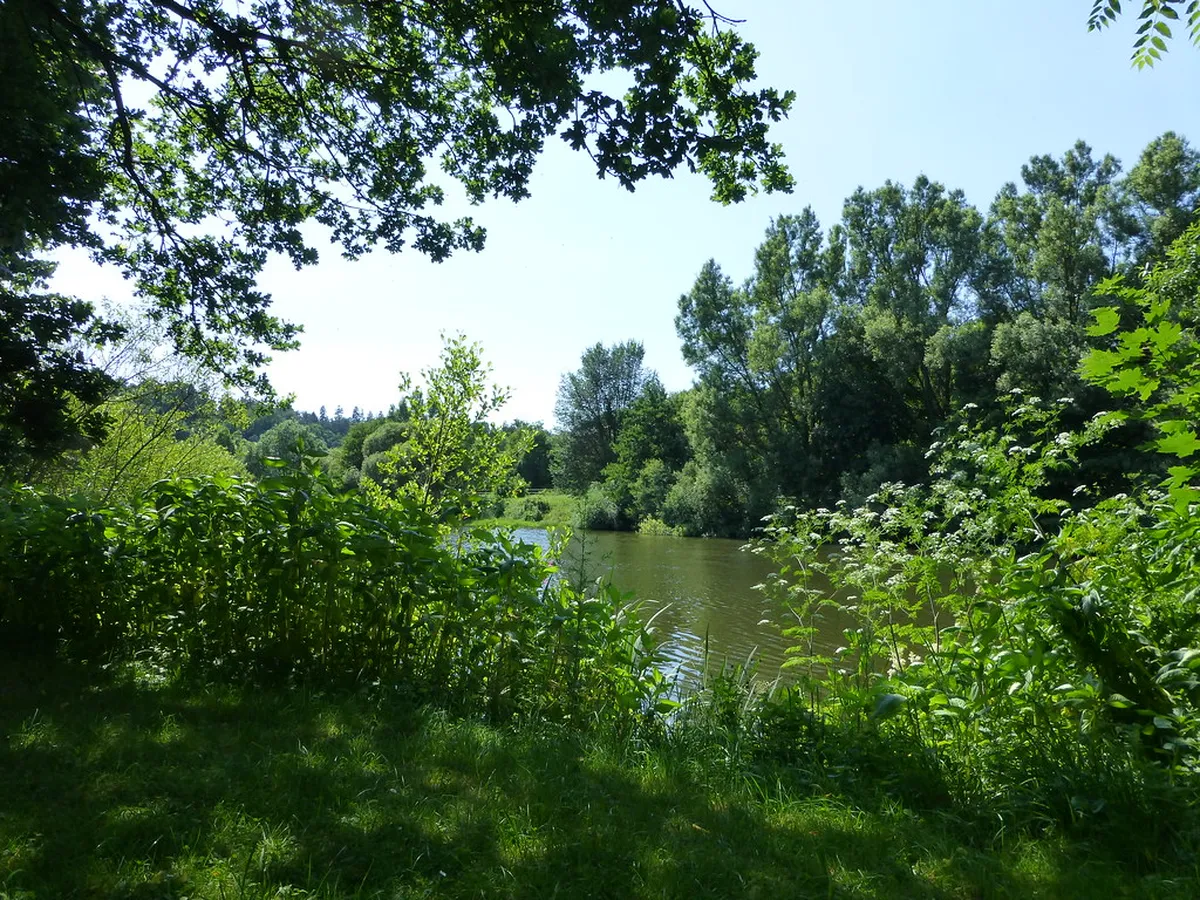
The natural setting around the monastery is as much a reason to visit as the buildings themselves. Trails from the village climb into the wider Rhodope foothills, where tree cover shifts from orchards to pine forest within a short walk. Nature enthusiasts can spot wildflowers and enjoy noticeably cooler air than Plovdiv during summer, which is one reason locals treat Bachkovo as an easy heat-escape day trip.
A roughly ten-minute walk from the monastery leads to a small waterfall and canyon area, with the sound of running water providing a break from the courtyard crowds. Wooden bridges and marked paths keep the route manageable for most fitness levels, though the surface is uneven in places rather than fully paved. It suits families well as a short add-on after the main visit, especially with a packed picnic.
The road between Asenovgrad and Smolyan passes several pull-off points with views back toward the monastery and the Chepelarska River valley. Autumn brings strong color to the surrounding forest and is the most popular season for photographers. Budget at least an hour for the outdoor half of the visit if you want to see the waterfall as well as the courtyard.
Family-Friendly and Budget-Friendly Options in Bachkovo
Traveling with a family is easy since the grounds themselves cost nothing to enter. Local restaurants such as Tunela and Dzhamura serve fresh trout from nearby streams alongside other Rhodopean staples, and a full meal remains inexpensive compared with central Plovdiv. Outdoor garden seating makes these places forgiving for kids who need to move around between courses.
Entry to the monastery grounds and the Cathedral Church is free in 2026, which makes Bachkovo an easy add-on for anyone already budgeting a stay around the Kapana Creative District Visitor Guide in Plovdiv. The only costs are the museum, at 3 EUR, and whatever you spend at the market stalls or restaurants. Bringing your own snacks for the waterfall walk is an easy way to trim the day's spending further.
Parking near the entrance carries a small daily fee, and the walk up from the lot is lined with stalls selling local honey, herbs, and jams. These make better souvenirs than anything sold in the museum shop, and buying from them supports the village directly rather than a tour operator. Keep some small change in Bulgarian leva on hand, since not every stall or parking attendant takes cards.
How to Plan a Smooth Bachkovo Attractions Day
The complex is open daily from 07:00 to 20:00 in summer and 07:00 to 19:00 in winter in 2026. Mass is held twice a day, at 07:00 in the morning and 17:00 in the evening (18:00 during summer), and arriving for either service is the clearest way to see the Cathedral Church without a tour group crowding the aisle. Arriving right at opening also gets the best light on the frescoes before the day's first coaches pull in.
Getting to Bachkovo from Plovdiv is straightforward by public bus or car. Buses leave regularly from the Plovdiv South Bus Station and take about 40 to 50 minutes. Drivers should follow the road toward Asenovgrad and continue roughly 10 kilometers further into the valley; combining the trip with a stop at the Ancient Theatre of Plovdiv Visitor Guide on the way back works well since both sit on the same side of the city.
Dress code is enforced at the church doors: shoulders and knees need to be covered before you go in. The monastery keeps wraps at the entrance for visitors who arrive underdressed, though bringing a light scarf saves you from relying on whatever is left on the rack during a busy weekend. Keep voices low and phones silenced once inside, since this remains an active religious community rather than a museum piece.
History of The Bachkovo Monastery
The monastery was founded in 1083 by two brothers, Gregory and Abasios Bakuriani, high-ranking Byzantine officials of Georgian origin who set it up as both a religious community and a seminary teaching theology, mathematics, history, and music. That Georgian imprint is still visible in the layout and iconography today, distinguishing Bachkovo from monasteries founded by purely Bulgarian or Greek patrons.
Ottoman-era raids looted and damaged the complex not long after the conquest of Bulgaria, and it stood in poor repair for decades afterward. Reconstruction began in 1601, and the Cathedral Church of the Assumption of the Virgin Mary was completed in 1604, which is largely the building visitors walk through today. Further work in the 19th century, including the Zahari Zograf frescoes at St. Nicholas Church, added to the layered look of the complex.
During the Bulgarian National Revival, the monastery became a gathering point for clergy and writers pushing for cultural independence, a role that mirrors what the Plovdiv Old Town Visitor Guide represents for the city's own 19th-century revival architecture. Its survival through Ottoman rule and two world wars is part of why Bulgarians still rank it second only to Rila Monastery in national significance.
Common Mistakes First-Time Visitors Make
The most frequent mistake is treating Bachkovo as a 30-minute photo stop. Between the Cathedral Church, the museum, the market stalls, and the walk out to the ossuary and waterfall, most visitors need two to four hours to see the site properly, and rushing it means missing the ossuary entirely, since it isn't visible from the main courtyard and has to be requested separately.
Underestimating the dress code is another common stumble. Shorts, sleeveless tops, and short skirts will get you turned away at the church door, and while the monastery keeps loaner wraps at the entrance, supply runs thin on busy weekends and religious holidays. Bringing a scarf or light trousers in your own bag solves this before it becomes a problem.
Visitors also assume the whole complex is open to explore freely. The Archangels' Church is reserved for the monks and St. Nicholas Church only opens for weddings and baptisms, so budget your time around the Cathedral Church, museum, and ossuary rather than waiting for doors that won't open. Finally, carry cash: card machines at the museum desk and the honey and herb stalls on the approach path are unreliable, and the nearest dependable ATMs are back in Asenovgrad or Plovdiv.
Accessibility for Visitors with Limited Mobility
Bachkovo is a working medieval complex, not a retrofitted modern site, and that shows in its accessibility. The courtyard is cobbled and uneven in places, the Cathedral Church has a raised stone threshold with no ramp, and the museum sits up a short flight of stairs from ground level. Wheelchair users and anyone with limited mobility can still take in the courtyard, the church exterior, and the frescoes visible from the doorway, but full interior access requires help from a companion.
The path out to the ossuary is unpaved and slopes gently uphill, which rules it out for wheelchairs and makes it a slower walk for anyone using a cane or walker; factor this in when deciding how much of the site to attempt in one visit. The market stalls and parking area near the entrance sit on flatter ground and are easier to manage than the interior of the complex.
Visiting early on a weekday, before tour buses arrive, gives more room to navigate the courtyard at your own pace and makes it easier for monastery staff to help with specific access questions. There is no dedicated accessibility line for the museum or ossuary, so ask at the entrance gate rather than the ticket desk if you need a hand.
Bulgarian Monasteries
Bachkovo is part of a wider network of monastic communities that shaped Bulgarian and Balkan Orthodox tradition, and it ranks as the country's second-largest monastery after Rila Monastery near Sofia. Where Rila is known for its striped Revival-era facades and mountain amphitheater setting, Bachkovo's identity comes from its Georgian founders and a Byzantine-era layout that's rarer among Bulgarian monastic sites. Travelers weighing both stops on a longer Bulgaria trip can find Rila's own hours, museum, and access details in our Rila Monastery guide.
Many travelers combine a Bachkovo day trip with smaller churches and shrines scattered along the route from Plovdiv Attractions into the Rhodopes, many of which served as refuges during periods of political upheaval. These smaller sites remain active parish churches rather than tourist stops, so a quiet, respectful visit is expected if you do stop in.
What sets Bachkovo apart within this circuit is the specific blend of Georgian, Byzantine, and Bulgarian building styles, visible in details like the monastic cell layout and the fresco programs across its three churches. That mix is part of why art historians treat it as a distinct case rather than a smaller copy of Rila, and why it's worth visiting on its own terms rather than as an afterthought.
Key Details
Keep a few practical details in mind for a 2026 visit. The monastery sits about 10 kilometers south of Asenovgrad on the road toward Smolyan, and 30 kilometers from central Plovdiv. Most visitors spend between two and four hours on site once the museum and the ossuary walk are included; add more time if you're combining the day with the waterfall trail.
The Tourist Information Center in Plovdiv can help with current bus schedules and route maps before you set out. Reach them at +359 32 620 229; their office sits near the Roman Stadium square in the city center, making it an easy stop before or after a walk through the old town.
Carry cash in Bulgarian leva for parking, the museum desk, and the market stalls, since card acceptance is inconsistent outside central Plovdiv. A handful of ATMs exist in Bachkovo village, but withdrawing money in Asenovgrad or Plovdiv before you leave is the safer plan.
Continue planning: Use Plovdiv Attractions: 12 Top Sights, Tickets & Tips to connect this guide with the rest of your Bulgaria itinerary.
Frequently Asked Questions
Which bachkovo monastery visitor guide options fit first-time visitors?
First-time visitors should focus on the Main Church and the miraculous icon. A guided walk to the ossuary and a meal at a local trout restaurant provide a complete experience. Most travelers find that a half-day trip from Plovdiv is the most convenient option for their first visit.
How much time should you plan for bachkovo monastery visitor guide?
You should plan for at least three to four hours to explore the site fully. This allows time for the main church, the museum, and a short walk to the Waterfall Canyon. If you include a traditional lunch in the village, a total of five hours is ideal.
What should travelers avoid when planning bachkovo monastery visitor guide?
Avoid visiting during major religious holidays if you want to skip large crowds and long lines. Do not wear shorts or sleeveless tops, as you will be denied entry to the churches. Finally, avoid rushing the experience, as the peaceful atmosphere is a key part of the visit.
Bachkovo Monastery earns its place as one of Plovdiv's most rewarding day trips, but the fastest way to shortchange the visit is to treat it as a quick photo stop. Give the ossuary, the museum's icon hall, and at least one of the outdoor trails their own time, and you'll come away with a fuller picture than the courtyard alone offers. With free grounds access, a modest 3 EUR museum fee, and an easy 30-to-50-minute trip from Plovdiv, there's little reason to leave it off a 2026 itinerary.
For official details, visit the Bachkovo Monastery on Wikipedia.
For more Plovdiv planning, read our 7 Steps to Visit Bachkovo Monastery from Plovdiv guide.