The Rozhen Observatory (National Astronomical Observatory) Visitor Guide
The Rozhen Observatory sits at about 1,750 meters on the highest ridge of the Rhodope Mountains, roughly 25 km from Smolyan and 15 km from Chepelare. It is Bulgaria's National Astronomical Observatory and home to the largest telescope in the Balkans, and in 2026 it remains one of the few places in Southeastern Europe where a day tour or a night observing session is open to the general public. This guide covers current hours, approach routes, prices, and what a guided visit includes.
The facility is a working research station first and a tourist site second: fixed tour times, minimum group sizes, and a schedule that bends around weather rather than tourist demand. Plan around those constraints and the visit delivers mountain views most Rhodope travelers never see, plus a real look at how astronomers track asteroids, variable stars, and distant galaxies.
To get a comprehensive view of the observatory's instruments and mountain setting, this video provides an overview of the Rozhen Observatory:
Rozhen Observatory (National Astronomical Observatory) Visitor Guide Overview
The National Astronomical Observatory "Rozhen" is the largest astronomical research center on the Balkan Peninsula, sited on Rozhen peak at roughly 1,750 m and about 25 km by road from Smolyan. It is managed by the Institute of Astronomy at the Bulgarian Academy of Sciences and serves as the country's main hub for optical astronomy. The site sits a short drive from the resort of Pamporovo Attractions, making it an easy add-on to a Rhodope ski or hiking trip.
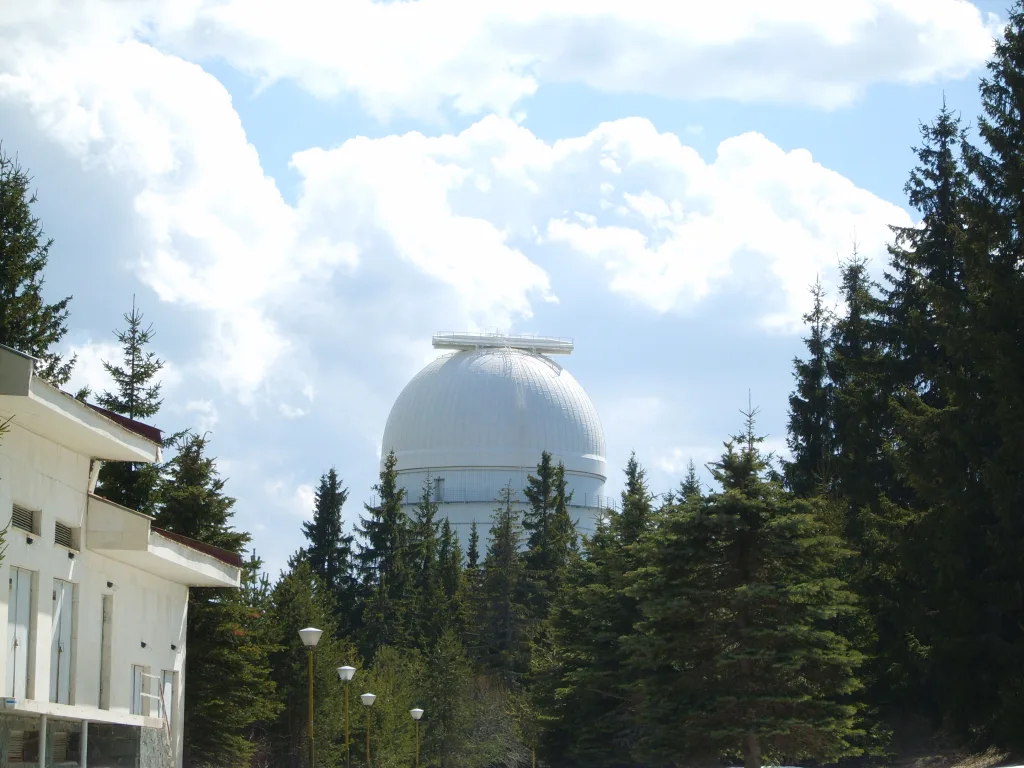
Researchers here study solar system physics — asteroids, comets, near-Earth objects — alongside extragalactic work on quasars, variable stars, and distant galaxies. The complex holds four telescopes, the largest a 2-meter instrument that remains the biggest in the Balkans, and hosts scientific meetings and training schools as well as long-run observation campaigns, not just public tours.
The observatory opened in 1981, timed to the 1300th anniversary of the Bulgarian state, and its high, dark ridge still offers some of the clearest skies reachable by paved road in the country. From the parking area the white telescope domes are visible for kilometers, and the drive up is part of the appeal for most first-time visitors.
Best Time to Visit: Seasonal Hours and Weather
The observatory runs guided day tours from 10:00 to 16:00, with a new group admitted on the hour, and it is closed to visitors every Tuesday year-round — this is the schedule confirmed on the official nao-rozhen.org site and the one staff quote by phone. Older write-ups sometimes list a longer summer closing time or extra winter closures; treat those as outdated and confirm the current hours before you drive up, since the Institute of Astronomy can adjust the schedule for maintenance or staffing.
Weather matters more here than at almost any other Rhodope attraction. At 1,750 m, fog and low cloud roll in fast even on clear summer mornings, and a socked-in ridge can flatten an otherwise good day tour and cancel a night session outright. Aim for a forecast with low humidity and light wind, and build a spare day into a multi-day Rhodope itinerary if stargazing is the priority.
Rozhen has also held an annual public Open Doors Day around the Orthodox Pentecost weekend (Petdesetnitsa), when the site waives its usual small-group booking process for walk-in visitors. The date moves every year, so check the observatory's 2026 announcements closer to the date rather than planning around a fixed weekend.
How to Get There: Directions from Smolyan, Chepelare, and Borovo
Reaching Rozhen requires a private car or a pre-arranged taxi — no public bus serves the peak, which catches first-time visitors off guard. Factor the return fare into your day, since drivers rarely wait on spec at 1,750 m and getting back down without your own transport can mean a long wait with no phone signal.
From Smolyan, the drive takes about 30 minutes on the main Chepelare–Smolyan road; watch for the turnoff at Rozhenski polyani (Rozhen meadows), then follow the spur road roughly 6 km up to the gate. Coming from Chepelare, the same route runs about 15 km on well-maintained asphalt in summer, and it pairs naturally with a stop at the Snezhanka TV Tower (Pamporovo Tower) Visitor Guide on the way back down.
Drivers starting from Borovo village get a quieter, longer route: about 40 km via roads 8611 and 8612, passing through a small village before reaching the Kutsinsko swamp, a protected Rhodope wetland known for its rare plant life. Just past the swamp, a signed junction turns right onto road 8612, which runs directly to the gate — the only way in from that side, so a wrong turn is unlikely.
What to Expect: Guided Tours and the Visitor Center
Guided day tours center on the 2-meter telescope dome, the largest in the Balkans, where a staff astronomer explains how the instrument tracks asteroids, variable stars, and distant galaxies. You won't look through the big telescope during the day — the visit is about the engineering and the lecture, while any hands-on viewing happens through the visitor center's smaller demonstration telescope.
That distinction is worth planning around: a day visit is a museum-and-lecture experience, good for families, school groups, and anyone short on time, while an evening slot is the one that delivers actual stargazing. If the goal is genuinely seeing planets or a star cluster through an eyepiece, book a night session rather than assuming the day tour covers it.
Tours run mostly in Bulgarian, though English-speaking guides are available if you call ahead to request one. The visitor center's exhibits on solar system physics and decades of staff astrophotography fill the wait between tour slots.
Nightly Observations: Booking and Requirements
Night sessions are the only way to actually look through a telescope at Rozhen, and they must be booked several days ahead. Plan for cold: even in July the ridge temperature drops sharply after sunset, so bring a jacket regardless of season, and expect the session to run about an hour once the group is assembled and the dome is open.
Groups need a minimum of four people, so solo travelers should recruit fellow guests at their guesthouse or ask the observatory about joining an already-scheduled group. Build slack into your itinerary — a session can be pushed or cancelled on short notice if the sky clouds over.
One detail rarely covered in general travel guides: check the moon phase before you book. A few nights either side of full moon wash out faint star clusters and dim galaxies, so if the trip is built around deep-sky viewing, aim for a date within a few days of new moon, ideally paired with the longer, darker nights of autumn or winter. Staff can usually confirm which upcoming dates fit that window when you call.
Practical Tips: Prices, Group Sizes, and Facilities
Day tours run about EUR 2.50 for adults and EUR 1 for children and seniors; a night observation session costs roughly EUR 5 for adults, with discounts for children and seniors. These figures are consistent across recent visitor reports, but prices can shift, so confirm the current rate when you call to book.
Groups for day tours run 6 to 25 people, so a solo traveler or a pair may need to wait for the next scheduled slot rather than getting a private walk-through. The on-site desk handles both tour fees and the small gift shop.
- Confirm you have a car or booked taxi, since no bus reaches the peak.
- Dress warmer than the valley weather suggests, especially for a night session.
- Bring cash rather than cards — there is no ATM on-site.
- Call ahead if you need an English-language guide.
The site has basic restrooms and a small parking area but no restaurant, so pack water and snacks for the visit. Round out the day with a stop in Shiroka Laka Visitor Guide for a traditional Rhodope meal on the way back down.
Continue planning: Use Pamporovo Attractions: Top 9 Things to Do in the Rhodope Mountains to connect this guide with the rest of your Bulgaria itinerary.
Frequently Asked Questions
Can the public visit Rozhen Observatory?
Yes. It offers guided daytime tours where an astronomer explains the facility and its telescopes, and night sky observations can be arranged after sunset.
How much does a tour cost?
Daytime tours are consistently reported at about EUR 2.50 for adults and EUR 1 for children and seniors; night observations are roughly double (about EUR 5 for adults, with discounts). Confirm the current price when you book.
What days and hours is it open?
Generally 10:00-16:00 with entries on the hour, every day except Tuesday, including public holidays.
Do daytime tours include looking through the big telescope?
Daytime visits focus on a guided lecture plus the visitor centre's demonstration telescope, photo exhibits and museum; observing the sky through the telescopes is done during night sessions, weather permitting.
Are there group requirements?
Daytime tours are run for small groups of roughly 6 to 25 people, so it is wise to arrange your visit in advance, especially for larger parties.
Where is Rozhen Observatory?
It sits on Rozhen peak in the Rhodope Mountains at about 1,750 m elevation, in Smolyan Province, reached by mountain road from the Chepelare/Pamporovo and Sokolovtsi area.
Is this the same as Rozhen Monastery?
No. This is the National Astronomical Observatory on Rozhen peak in the Rhodopes; Rozhen Monastery is a separate site near Melnik in southwestern Bulgaria.
What is the best time to visit for stargazing?
Clear, moonless nights offer the best views; night observations depend on the weather and must be arranged in advance, so check ahead before travelling.
A trip to the Rozhen Observatory offers a unique blend of scientific discovery and mountain beauty. Whether you visit for a day tour or a night session, the experience is truly memorable. Make sure to check the weather and operating hours to ensure a smooth and educational journey.
For more Pamporovo planning, read our Things to Do in Pamporovo, Bulgaria: Complete 2026 Guide and Day Trips from Pamporovo 2026: Smolyan, Caves & Rhodope Highlights guides.
For authoritative information, refer to the Rozhen Observatory (National Astronomical Observatory) on Wikipedia.