Rozhen Monastery Travel Guide
Tucked away in the southwestern folds of the Pirin Mountains, Rozhen Monastery (Nativity of the Mother of God) Visitor Guide stands as a testament to Bulgaria's enduring spiritual heritage. This medieval sanctuary is the largest monastery in the Pirin region, offering a quieter alternative to the more visited Rila Monastery. The site is famous for its preserved 16th-century frescoes, a miraculous icon with a legend stretching to Mount Athos, and a dramatic setting above the unique Melnik Sand Pyramids. Whether you are a history enthusiast or a nature lover, this guide gives you everything you need for a well-planned visit in 2026.
For a visual introduction to the monastery and its setting in the Pirin Mountains, this video walk-through captures the key architecture and highlights:
History and Significance of Rozhen Monastery
The origins of Rozhen Monastery date back to at least the 13th century, during the height of the Second Bulgarian Kingdom. Some accounts place its founding as early as 1220. Despot Alexius Slav, a powerful local ruler, played a significant role in its early development, and the monastery maintained close ties with Byzantine Emperor Michael VIII Palaiologos — a mark of its medieval political importance. Its location near the modern border with Greece made it a vital cultural and spiritual hub for centuries.
Unlike many other Bulgarian monastery circuit, Rozhen survived repeated periods of regional conflict with much of its original fabric intact. A fire in the early 17th century required extensive rebuilding, which produced the handsome Baroque-inflected residential wings visible today. During the Ottoman era the complex served as a centre for calligraphy and literacy, quietly preserving the Bulgarian language when few other institutions could. It remains an active monastic community and a protected national monument.
Unlike many Bulgarian monasteries that were razed during the Ottoman era, Rozhen retained much of its original medieval fabric — making it an exceptionally well-preserved example of Balkan monastic architecture.
Rozhen draws a useful comparison for travellers who have already seen Rila. Where Rila is grand and heavily visited, Rozhen is low-key and peaceful — less polished, more authentically lived-in. Visitors who arrive in the late afternoon often find the courtyard nearly empty, the monks going about their routines undisturbed.
Architecture and the Church of the Nativity of the Mother of God
The main church, dedicated to the Nativity of the Mother of God, follows a triple-nave design with a slightly irregular footprint that reflects centuries of incremental rebuilding. Walking into the courtyard you immediately notice the residential wings forming a fortress-like perimeter around the temple — a deliberate defensive arrangement common in Balkan monasteries that faced Ottoman-era instability. Wooden galleries run the length of each wing, and trailing grape vines hang over the walkways in summer.
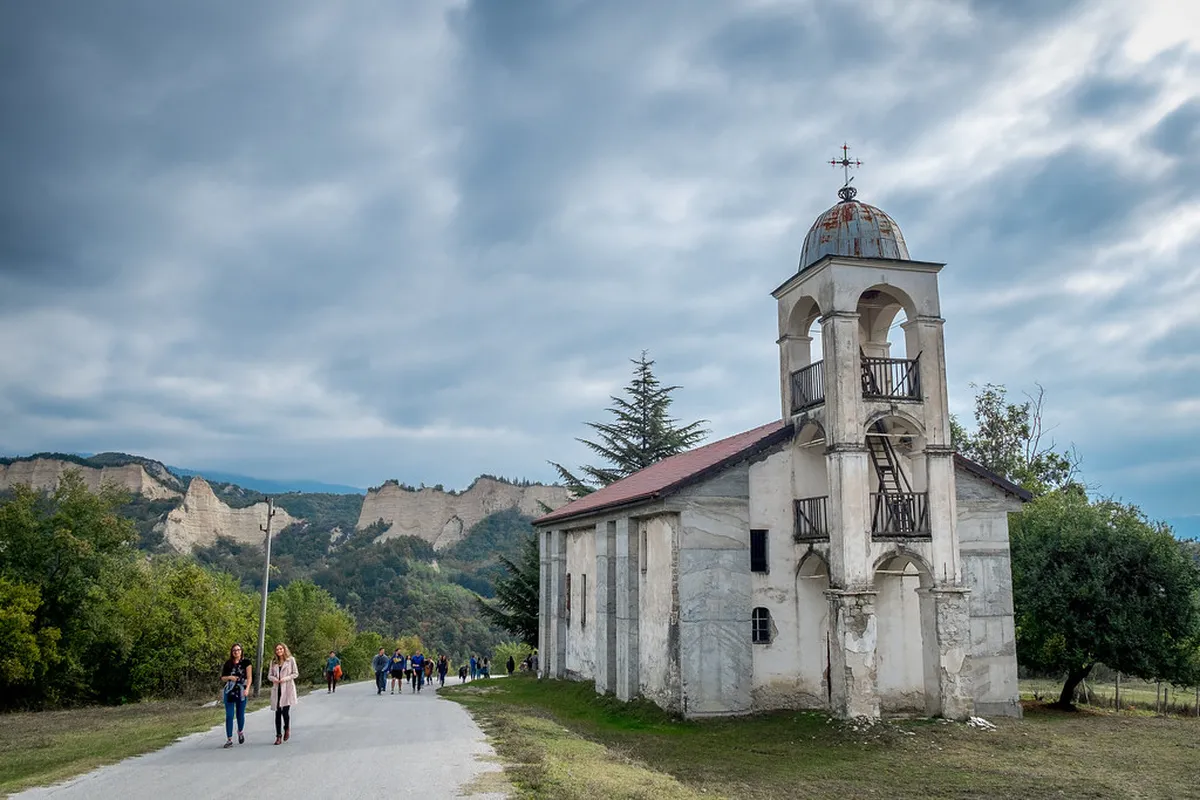
Inside the church, walls are covered with frescoes depicting biblical scenes and Bulgarian saints. The wood-carved iconostasis is particularly striking for its density of detail and the quality of the gilding. Light enters through small windows and catches the gold leaf in a way that changes hour by hour. On the external gallery, a rarely-noted fresco cycle depicting scenes from the life of the Virgin is worth seeking out before you leave the courtyard.
A detail most visitors walk past is the old monks' dining room, dating to the 17th century. The interior is spare and powerful: a single long narrow wooden table runs almost the full length of the room, worn smooth by generations of use. It gives a sense of daily monastic life that the church's formal art does not quite convey.
The Miraculous Icon of the Virgin Mary Portaitissa
The most revered treasure inside the monastery is the icon of the Holy Virgin Portaitissa. It is a copy of a famous icon kept at the Iviron Monastery on Mount Athos. According to the legend attached to the original, a widow from Nicaea threw the icon into the sea to save it from destruction during the Byzantine iconoclast persecutions under Emperor Theophilos in the 9th century. The icon floated unharmed for many years until, in 999, it reached the shore below the Iviron Monastery on Mount Athos, where monks received it with a solemn procession.
The Rozhen copy is kept near the entrance of the main church, adorned with a white floral border that makes it recognisable even in dim lighting. Many pilgrims believe it carries protective and healing powers. Every year on 8 September, the monastery celebrates the Nativity of the Virgin with a major liturgy and a procession that draws visitors from across the Melnik region. The atmosphere on that day transforms the usually quiet courtyard into a genuinely moving communal event.
How to Get to Rozhen Monastery from Melnik
Most visitors start from Melnik, roughly 6 kilometres away by road. Drivers follow a paved but steep road through the village of Rozhen and up to a large plateau parking area just below the monastery. The drive takes about 15 minutes and the road is passable for cars, small campervans, and most tour vehicles. Overnight parking is possible near the Dinchova Kushta hotel-restaurant at the base of the plateau, which historically charges around 10 EUR per vehicle per night and allows campers to use bathroom facilities.
On foot from the village of Rozhen, a signpost at the base marks two options. The first is a steep stairway climb of about 10 minutes — short but genuinely precarious, with uneven stone steps that demand care and are unsuitable for anyone with limited mobility. The second is the 1.5 km road walk, which takes around 30 minutes at a comfortable pace and passes through hairpin bends with good views back over the Rozhen Pyramids. The road walk is the better choice for most visitors, offering broader views and a gentler gradient throughout.
- Stairway path: approximately 10 minutes, steep uneven steps, good for the sure-footed only, limited views en route.
- Road walk: approximately 30 minutes (1.5 km), steady gradient, views of the sand pyramids, accessible for most fitness levels.
- By car or camper: 15 minutes from Melnik, large plateau car park at the top, overnight camper parking available at Dinchova Kushta nearby.
| Route | Distance | Time | Notes |
|---|---|---|---|
| Stairway path on foot | ~0.5 km | ~10 min | Steep, uneven steps; not for limited mobility |
| Road walk on foot | 1.5 km | ~30 min | Gentle gradient, views of sand pyramids |
| By car or camper | 6 km from Melnik | ~15 min | Large plateau car park at top |
| Taxi from Sandanski/Petrich | ~20–30 km | ~30 min | Door-to-door service |
| Minibus from Sandanski | Several times daily | Varies | Drops in Melnik; walk or drive from there |
There is no direct public bus to the monastery itself. From Sandanski, minibuses run to Melnik several times daily; from there you walk or drive the final stretch. Taxis from Sandanski or Petrich can take you door to door in under 30 minutes.
Exploring the Melnik Pyramids and Surrounding Nature
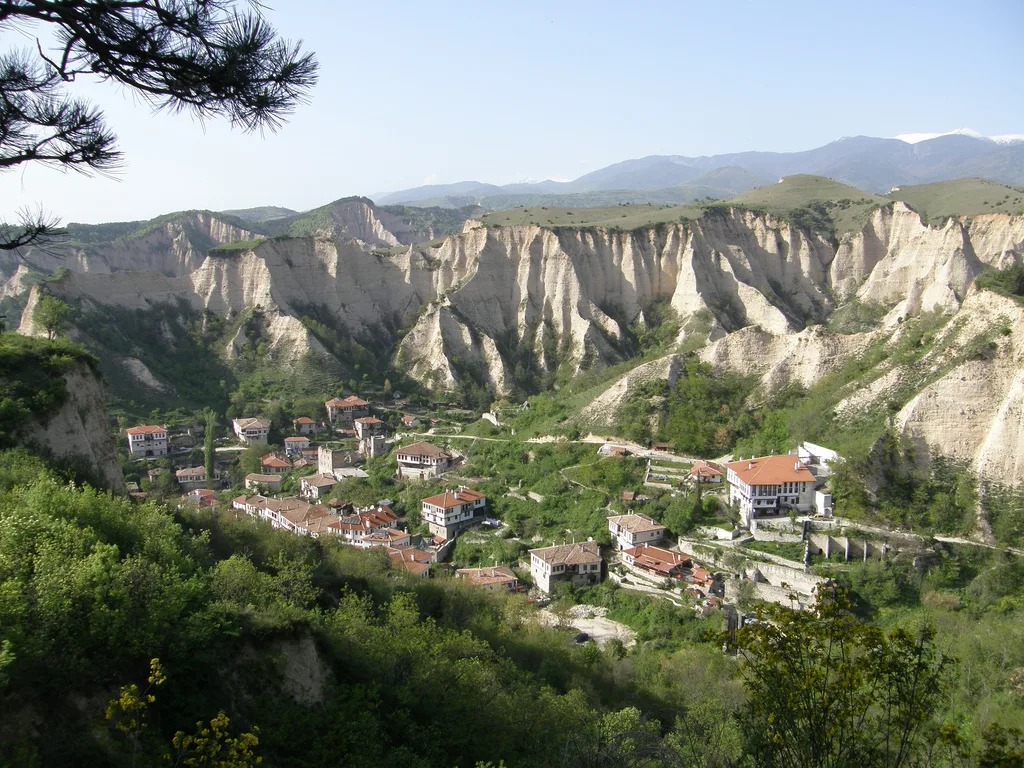
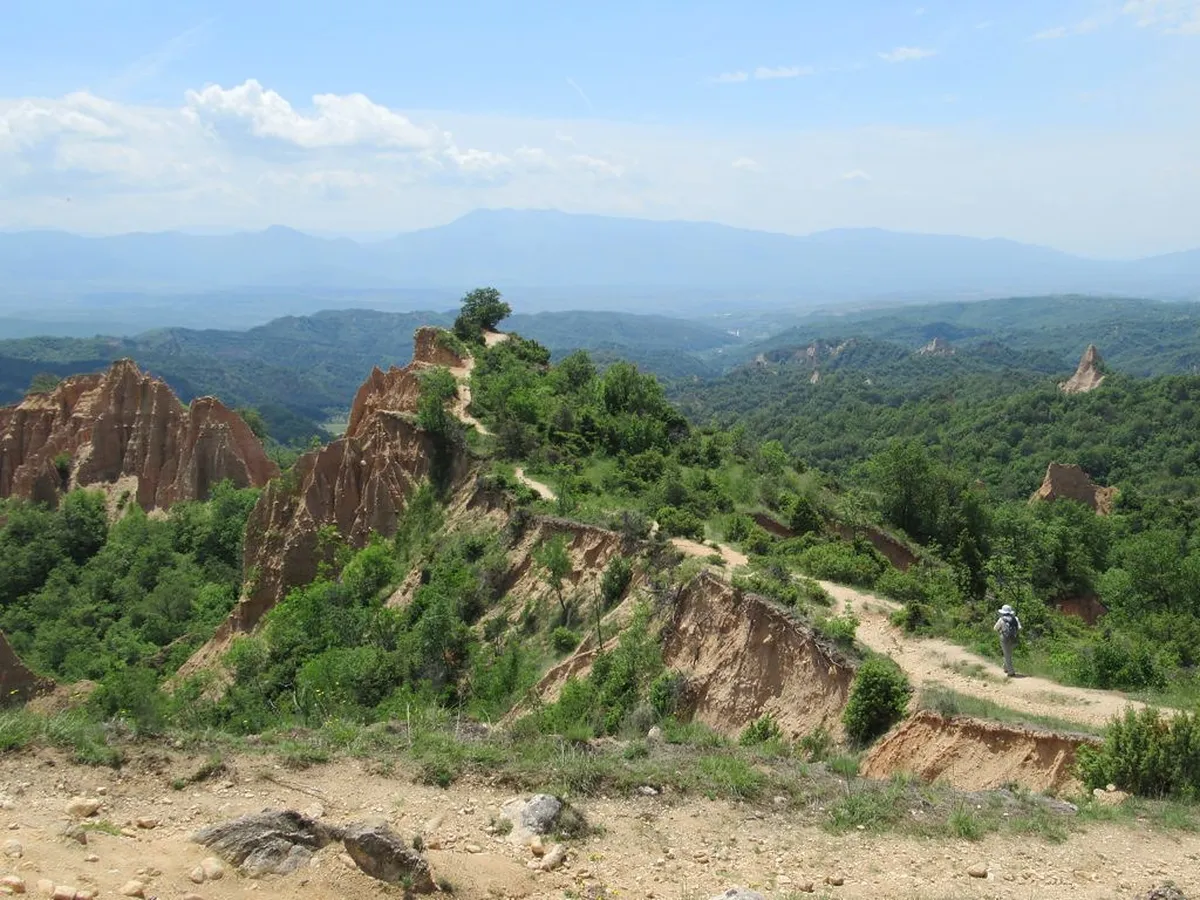
The landscape between Melnik and the monastery is dominated by the Melnik Pyramids, a geological phenomenon unique in the Balkans. These sandstone formations were carved by wind and water erosion over thousands of years out of sediment deposited by an ancient lake. On the walk up from Rozhen village you pass them at eye level and can make out the distinct shapes clearly: tall towers, broad-topped mushrooms, and thin obelisks, many reaching 30 to 100 metres in height. The soft yellow and red hues of the sand shift dramatically as the light changes — morning light flattens the texture, while the late-afternoon sun throws the shapes into sharp relief.
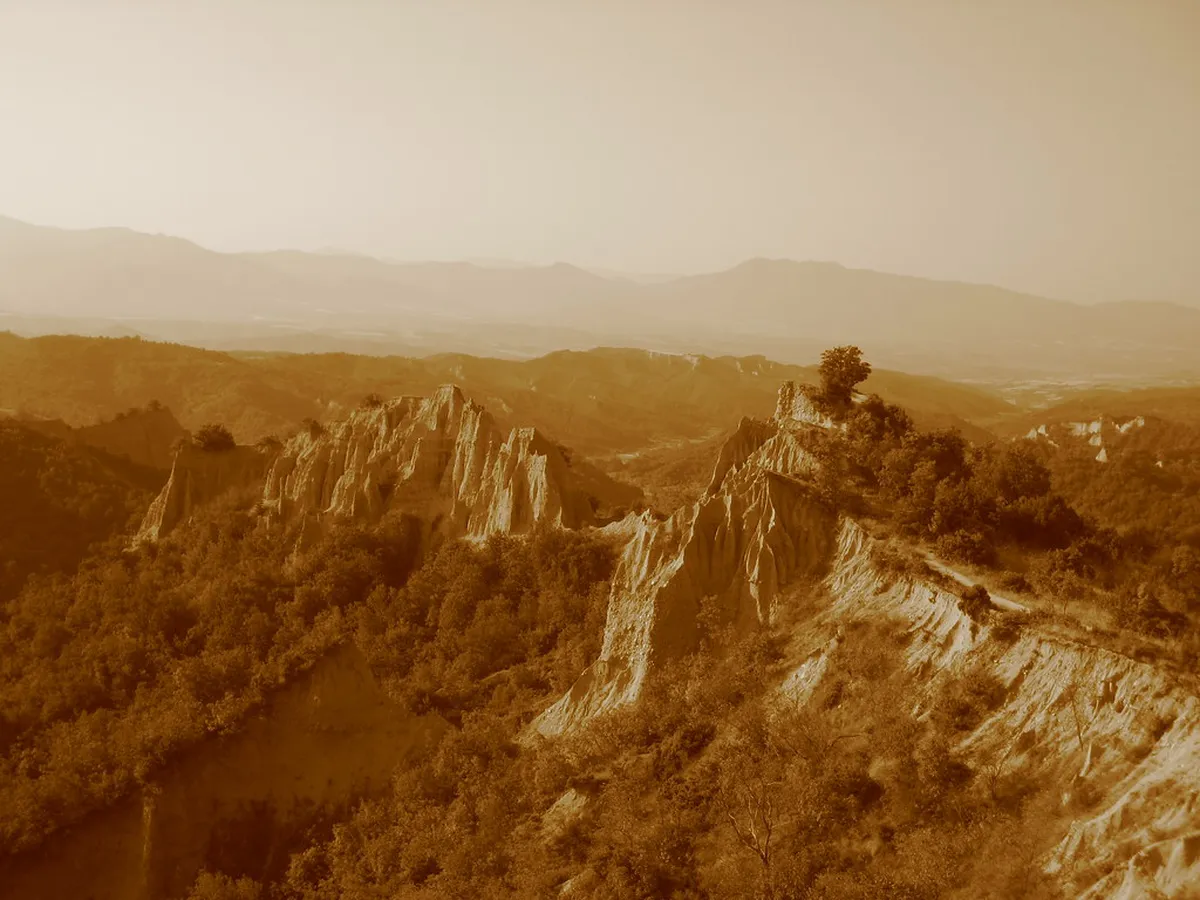
The area sits on the edge of Pirin National Park, a UNESCO World Heritage site. Mediterranean plant species thrive in the warm, dry microclimate of this valley — species you will not find further north in Bulgaria. The cliffs shelter nesting birds, and the surrounding forest holds populations of roe deer and wild boar. Photographers should aim for the golden hour in the late afternoon, when the pyramid silhouettes against the dark mountain backdrop produce some of the most dramatic landscape images in southwestern Bulgaria.
Practical Information: Opening Hours and Entry Fees
The monastery is generally open to visitors from 08:00 to 18:00 during the summer months (May to October). In winter the gates may close earlier, around 16:00 to 17:00, so plan to arrive with time to spare. The site is an active monastic community, not a museum, so hours can shift around major feast days. Arriving before midday gives you the most flexibility and avoids any tour groups that arrive in the early afternoon.
Entry to the monastery grounds and the main church is free. Donations for the preservation of the medieval frescoes and woodcarvings are welcome and customary. The site is listed among Bulgaria's official cultural heritage sites by the national tourism board. Photography inside the Church of the Nativity is strictly prohibited, both to protect the fragile frescoes and out of respect for active worship. You are free to photograph the courtyard, the exterior walls, and the pyramids on the walk up. Modest dress is required — shoulders and knees must be covered when entering any of the sacred buildings; scarves and wraps are sometimes available at the entrance for those who need them.
Entry to the Rozhen Monastery grounds and main church is free. Modest dress is required — bring a scarf or wrap for shoulders and knees.
Nearby Attractions: Melnik and the Grave of Yane Sandanski
Immediately outside the monastery gates stands the Church of Saints Cyril and Methodius, built in 1914, and beside it the grave of Yane Sandanski. Sandanski was a Macedonian-Bulgarian revolutionary who led guerrilla campaigns for regional independence and is still revered as a folk hero across southwestern Bulgaria. He was killed on 21 April 1915 in the Pirin Mountains. His tombstone is inscribed in Cyrillic with a phrase that translates as: "To live is to fight. The slave — for freedom, the free man — for excellence." It is a quiet, contemplative spot with a long view down the valley, and the inscription gives the visit a cultural weight that most monastery guidebooks underplay.
After the monastery, spend time in Melnik itself — officially the smallest town in Bulgaria, with around 300 inhabitants, and on the tentative UNESCO World Heritage List. The town is famous for its deep red wine, historically a favourite of Winston Churchill, who reportedly ordered 500 litres annually. Visit the Kordopulov House Visitor Guide, an 18th-century merchant's mansion with an extraordinary wine cellar cut directly into the sandstone cliff beneath it. Local guesthouses serve traditional Bulgarian food — grilled meats, shopska salata, banitsa — that pairs naturally with a glass of Melnik wine after a long day on the pyramid trails.
Continue planning: Use 15 Best Bulgarian Monasteries: UNESCO & lesser-known places and Aladzha Monastery Travel Guide: History, Tickets & Visiting Tips to connect this guide with the rest of your Bulgaria itinerary.
Frequently Asked Questions
How do I get from Melnik to Rozhen Monastery?
You can reach the monastery by driving 6km on a paved road or hiking a scenic 3km trail through the sand pyramids. The drive takes 15 minutes, while the hike takes about an hour. Both routes offer stunning views of the Pirin region. For more monastery travel tips, check our Bachkovo Monastery.
Is Rozhen Monastery free to enter?
Yes, entry to the Rozhen Monastery grounds and the main church is generally free for all visitors. Small donations are encouraged to help with the preservation of the medieval frescoes and woodcarvings. Some specific museum exhibits on-site may occasionally charge a nominal fee for entry.
What is the best time of year to visit the Melnik region?
Spring and autumn are the best times to visit because the weather is mild for hiking. Summer can be very hot, with temperatures often exceeding 35 degrees Celsius in the valley. Late September is particularly beautiful as the autumn colours blend with the red sandstone pyramids.
Can you take photos inside the Rozhen Monastery church?
Photography is strictly prohibited inside the Church of the Nativity to prevent damage to the delicate 16th-century frescoes. However, you are welcome to take as many photos as you like in the courtyard and of the external buildings. Always remain respectful of worshippers during your visit.
Rozhen Monastery remains one of the most evocative spiritual sites in the Balkans. Its combination of medieval history, miraculous legends, and stunning natural scenery makes it a must-see destination. By following this guide, you can enjoy a respectful and well-planned visit to this Bulgarian treasure. Plan your trip today to experience the quiet beauty of the Pirin Mountains for yourself.