Trigrad Gorge Visitor Guide
Trigrad Gorge cuts through the Western Rhodope Mountains as one of Bulgaria's most dramatic landmarks: a marble canyon with cliffs that climb past 300 meters. Driving through it costs nothing — it's the adjoining Devil's Throat Cave, not the gorge itself, that charges a fee for its guided tours.
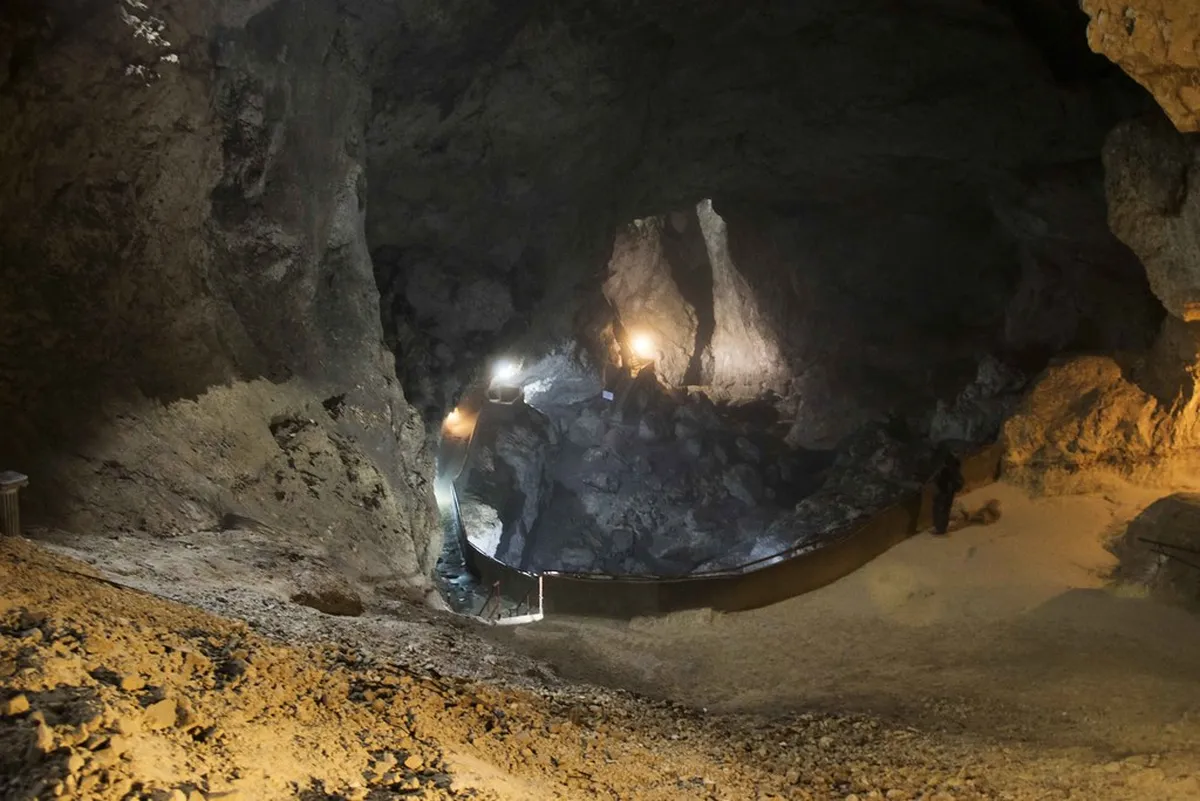
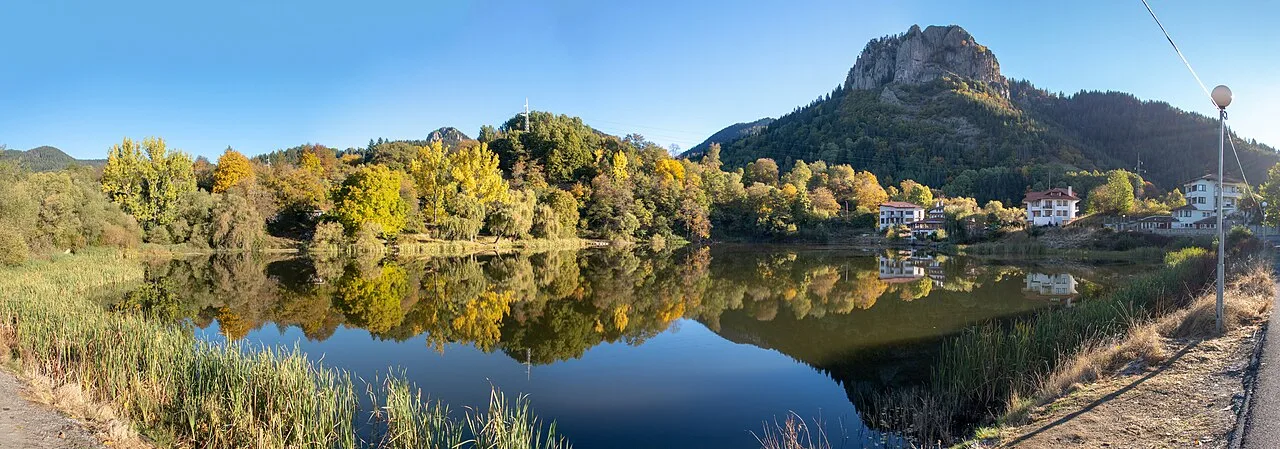
Get a sense of the gorge's scale and the cave's interior before your visit:
Visitors often base themselves in nearby hubs like Pamporovo Attractions before driving south to Trigrad village, where the road threads through a short tunnel carved into the rock.
This 2026 guide covers the geology, the cave, the one-lane driving rules, and where to base yourself for a full day in the Rhodopes.
Geography and Formation of the Trigrad Gorge
The gorge's walls reach around 300 meters on the western side and up to 300-350 meters on the eastern side. The canyon starts about 300 meters wide near the entrance and squeezes to roughly 100 meters across in its tightest northern stretch, which gives Trigrad its closed-in, cathedral-like feel.
The Trigrad River carved this seven-kilometer passage over millions of years, dissolving marble and limestone into the karst terrain typical of the Western Rhodopes. The same forces shaped the Wonderful Bridges (chudnite Mostove) Visitor Guide further north, though those are smaller natural arches rather than a full canyon.
According to Visit Bulgaria - Trigrad Gorge, the canyon ranks among the country's most striking natural landmarks. The whole stretch is free to view from the road — there is no gate, ticket booth, or fee for the gorge itself.
The Devil’s Throat Cave: Legend and Exploration
The centerpiece of the gorge is the Devil's Throat Cave, home to a 42-meter underground waterfall crashing into the so-called Noisy Hall. Local legend places this as the spot where Orpheus descended into the underworld to plead for Eurydice, only to lose her again when he turned to check she was following.
The river vanishes into the hall and resurfaces just 530 meters away as the crow flies, yet dye tests once clocked a 90-minute journey between the two points — far longer than 530 meters of open river would take. That gap points to a much larger, still-unmapped cave system beneath the gorge.
Visitors reach the waterfall hall through a man-made tunnel, then climb out via a steep, mist-slicked staircase of 301 steps. The entry fee applies only to this guided cave walk — the gorge and its cliffs stay free to view from the road at any time.
Top Activities: Hiking, Spelunking, and Jeep Tours
Adventure seekers can hire a local jeep driver along the gorge road up to the Eagle's Eye viewing platform (Orlovo oko), a 1,563-meter perch reachable on foot in about 90 minutes.
Underground, the three local caves suit different comfort levels. Devil's Throat is easiest: a fixed staircase and a guided 30-40 minute walk to the waterfall, no caving experience needed. Yagodina Cave Visitor Guide, a short drive west, runs a longer 45-60 minute route past cave pearls and stalactites on solid paths. Haramiyska Cave, across the gorge, is most demanding — no fixed lighting or handrail, so a guide and sturdy boots are required.
For a quieter outing, the Avitohol-Oblaka horse base 2 km south of Trigrad rents horses by the half hour and hour, and the same road continues toward the 10 Essential Tips for Your Smolyan Lakes Visitor Guide for a full Rhodope day.
Logistics: How to Get to Trigrad and Driving Tips
Reaching the gorge requires your own transport: 26 kilometers from Devin, about 70 from Smolyan, with the final stretch narrowing into a single-lane road cut into the cliff face. Buses reach Devin, but from there you need a car, taxi, or a limited local shuttle — no bus runs into the gorge itself.
The road has only a handful of passing points, so driving here takes patience more than speed. A few habits from Bulguides - Devil's Throat Cave keep you safe and on good terms with other traffic:
- Honk before entering the tunnel or any blind curve to warn oncoming drivers.
- Yield to vehicles coming uphill — convention here is that the descending driver reverses to the nearest turnout.
- Only pass at the marked pull-offs; do not squeeze by on the open roadway.
- Keep speed under 30 km/h and watch for gravel, fog, and livestock on the pavement.
Parking near the Devil's Throat Cave entrance fills up fast on summer weekends, so arriving before 10:00 gives you the best chance of an easy spot.
Best Time to Visit and Seasonal Highlights
Spring brings the waterfall to its most powerful, as snowmelt swells the Trigrad River and the roar inside the Devil's Throat becomes genuinely thunderous. It is also when the cave reopens after its winter closure.
Summer is easiest logistically: trails are dry, guided cave walks run their full daytime schedule, and the constant 8°C inside the cave is a welcome break from Rhodope heat. July and August are busiest, so early mornings avoid the tour-bus crowds.
Autumn paints the forests around the gorge in color against the gray marble walls, and crowds thin noticeably. By late October the cave's guided season winds down, and heavy winter snow can make the narrow road impassable, so aim for the May-to-October window if the cave is on your list.
Where to Stay: Unique Accommodations in the Rhodopes
Trigrad village has a handful of family-run guesthouses offering home-cooked Rhodopean meals and mountain views, and staying here lets you start the gorge and cave visit before the day-trip buses arrive.
For more amenities, search Booking.com - Trigrad Accommodations for small hotels with spas that have opened in the area in recent years. Devin, 26 km away, has a wider range of options if you would rather base in a larger town.
Many travelers pair a night in Trigrad with a stop in Shiroka Laka, an architectural reserve of stone houses known for its music school and traditional Rhodopean singing.
What to Eat: Traditional Rhodopean Flavors
Patatnik, a thick, slow-cooked potato cake flavored with mint and often cheese, is the dish to order in almost any Trigrad tavern — filling enough to fuel a day of hiking or cave-climbing.
Smilyan beans, a large local variety grown nearby, turn up in hearty salads and stews alongside grilled meats and thick yogurt. Local honey and Mursal tea, harvested from high mountain slopes, make good souvenirs.
Most Trigrad guesthouses cook to order rather than running a full menu, so tell your host in the morning if you want a hot meal waiting after a long day outdoors.
Trigrad Gorge Visitor Guide: Hours, Fees, and Planning
The Devil's Throat Cave runs on a seasonal schedule, roughly May through October, with guided walks departing every 30 minutes between about 09:15 and 16:15 (some seasons extend to 17:00 in summer). Outside that window the cave is closed, though the gorge road and cliffs stay viewable year-round.
Entry is cash-only, historically around 3-4 BGN (roughly EUR 1.50-2.00) per adult; confirm the exact 2026 price at the ticket booth. The gorge itself has no entrance fee — you only pay if you join a cave walk.
The climb out of the cave is worth planning around: 301 stairs on wet, mist-slicked stone, with no elevator, ramp, or alternate exit. That rules out wheelchairs and strollers entirely, and it is worth thinking twice if you have a heart or breathing condition, a fear of enclosed spaces, or young children who tire quickly on stairs — the guided groups keep moving, and there is no way to turn back partway through.
Wear shoes with real grip rather than sandals, and bring a light jacket even in summer; the cave holds a steady 8°C regardless of the season outside.
Regional Extensions: Connecting to Pirin and Vitosha
Trigrad sits in the Rhodopes, so travelers building a longer Bulgaria circuit often head west to the Pirin Mountains next — about 3 to 4 hours by car, with Bansko working well as a base for combining both ranges.
Coming from Sofia without a car, a bus to Devin followed by a local connection to Trigrad is the only realistic route; there is no direct service into the gorge. Sofia-based travelers can also reach Vitosha Mountain by city bus for a same-day taste of Bulgarian nature.
For contrast, Iskar Gorge near Sofia has wider limestone cliffs and monastery-dotted slopes rather than Trigrad's narrow marble corridor, while Krushuna Waterfalls further north trade vertical rock for cascading travertine terraces often compared to Turkey's Pamukkale.
Continue planning: Use Pamporovo Attractions: Top 9 Things to Do in the Rhodope Mountains to connect this guide with the rest of your Bulgaria itinerary.
Frequently Asked Questions
What is Trigrad Gorge?
Trigrad Gorge is a dramatic limestone/marble canyon in the Western Rhodope Mountains of Smolyan Province, where the Trigradska River cuts between near-vertical walls up to 300-350 m high before disappearing into the Devil's Throat Cave. It lies about 1.2 km from Trigrad village and is one of the most striking natural sights in the Rhodopes.
Is it free to visit?
Yes. Driving the narrow asphalt road through the gorge and admiring the cliffs is free. Only the attractions inside the gorge, chiefly the Devil's Throat Cave, charge an entry fee for their guided tours.
What is the Devil's Throat Cave and how much does it cost?
The Devil's Throat Cave is a cave inside the gorge famous for a 42-metre underground waterfall, entered via an artificial tunnel to the Noisy Hall. Entry is only with a guide, cash only, for a small fee (historically about 3-4 BGN / ~1.53-2.04 EUR for adults). Confirm the current 2026 euro price at the ticket office.
When can you visit the cave?
Guided cave tours run seasonally, roughly from May to the end of October, in a daytime window of about 09:15-16:15 (some sources note up to 17:00 in high summer). Late spring and summer are the recommended times to visit.
How do you get to Trigrad Gorge?
The gorge is reached by a narrow, winding asphalt road that climbs from the Devin direction through the canyon toward Trigrad village. There is parking near the Devil's Throat Cave entrance; the drive itself is a highlight, hugging the towering rock walls.
What else is there to see and do?
Besides the cave, the gorge is prized for hiking, rock climbing, birdwatching (including nesting wallcreepers) and fishing. Trigrad village at the head of the gorge is a traditional Rhodopean settlement with guest houses, small restaurants and a mix of Orthodox and Muslim heritage.
How tall are the gorge walls?
The western wall reaches about 300 m and the eastern wall up to 300-350 m. The canyon starts around 300 m wide and narrows to roughly 100 m in its tightest northern section, which gives the gorge its dramatic, enclosed feel.
Trigrad Gorge is one of Bulgaria's most striking sights, and the best part costs nothing: the drive and the cliffs are free year-round. Add the Devil's Throat Cave, a jeep run to Eagle's Eye, or a night in a Trigrad guesthouse, and you have a full Rhodope itinerary built around one canyon.
Plan around the cave's seasonal hours and drive the one-lane stretch with patience, and the memory you take home will be the waterfall roar and the marble walls — not a stressful drive.
For more Pamporovo planning, read our Things to Do in Pamporovo, Bulgaria: Complete 2026 Guide and 10 Best Things to Do in Pamporovo in Summer guides.
To verify current details, consult the Trigrad Gorge on Wikipedia.