Church Of St. John Aliturgetos Visitor Guide
Walking through the ancient streets of Nessebar Attractions feels like stepping back into a rich medieval history. This UNESCO World Heritage site is famous for its high density of historical churches per capita. The Church of St John Aliturgetos stands as one of the most striking ruins on the peninsula.
Using a comprehensive church of st. john aliturgetos visitor guide helps you appreciate the intricate masonry and coastal views. You will find this monument perched on the southern edge of the Old Town overlooking the sea. Its unique name and architectural beauty make it a mandatory stop for every traveler in 2026.
Many visitors enjoy the way the red brick and white stone glow during the golden hour. The site offers a mix of spiritual history and breathtaking natural scenery. Prepare to explore a structure that has survived centuries of change while maintaining its majestic presence.
Watch this walk-through of the church's celebrated stone and ceramic facades overlooking the Black Sea:
Architecture and History of St John Aliturgetos
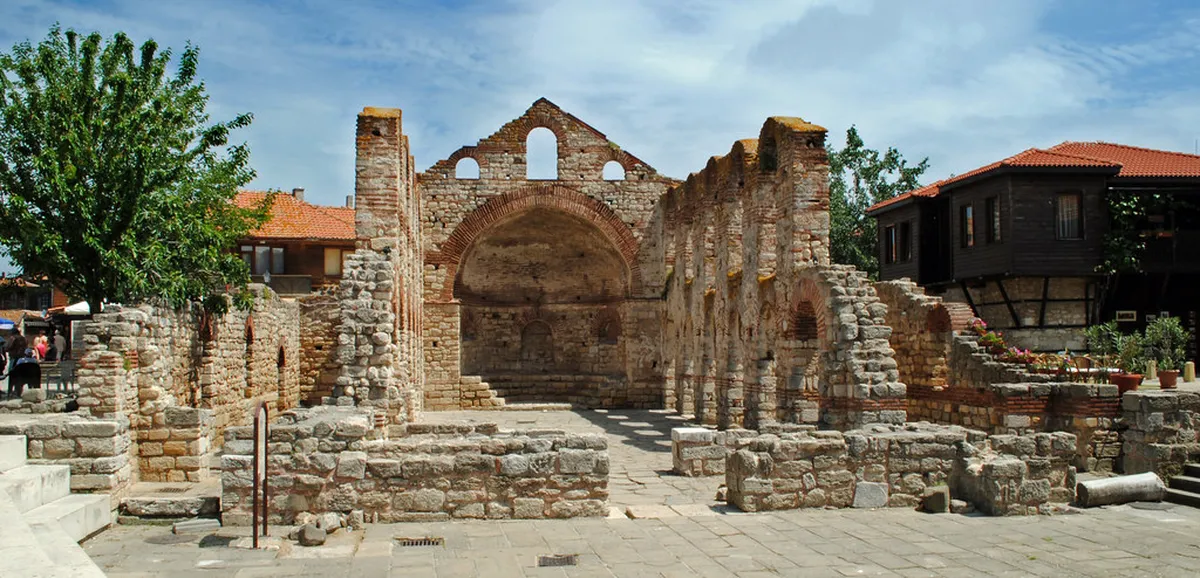
St John Aliturgetos was built around the middle of the 14th century as a cross-domed church on a nearly square plan, measuring 18.5 by 10.25 meters. A wide narthex opens into the naos, where four columns once carried a tall, narrow drum and dome. Above the narthex rose a rectangular bell tower, and the building had two working entrances - one from the north, one from the south - an unusually generous arrangement for a church this size.
![Nessebar - St John Aliturgetos Church [14th century] in Nessebar, Bulgaria](https://toursbulgaria.com/images/st-john-aliturgetos-architecture-and-history-of-st-john.webp)
Architectural historians class it among the finest surviving examples of the Tarnovo style, the pictorial late Byzantine-Bulgarian school that peaked in the 14th century, just before the Ottoman conquest ended large-scale church building on the coast. The name comes from the Greek "aliturgetos," unconsecrated. Local legend says a workman died during construction and church canon forbade holding services where a death had occurred, so the bishop refused to consecrate it - though some historical sources suggest services were held here anyway, a contradiction local guides still debate.
The Chirpan earthquake of 1913 collapsed the dome and left the structure roofless; it had already fallen out of regular use before the quake struck. Bulgaria protected the ruin early, declaring it a national antiquity in 1927 and a monument of national importance in 1964, decades before Nessebar's Old Town joined the UNESCO World Heritage List in 1983. A four-year, US-funded conservation project - roughly $706,000 from the Ambassadors Fund for Cultural Preservation - stabilized the walls without rebuilding the lost dome, reopening in November 2018. What you see today is a deliberately preserved ruin, not a reconstruction.
The Facade That Makes It Nessebar's Most Photographed Church
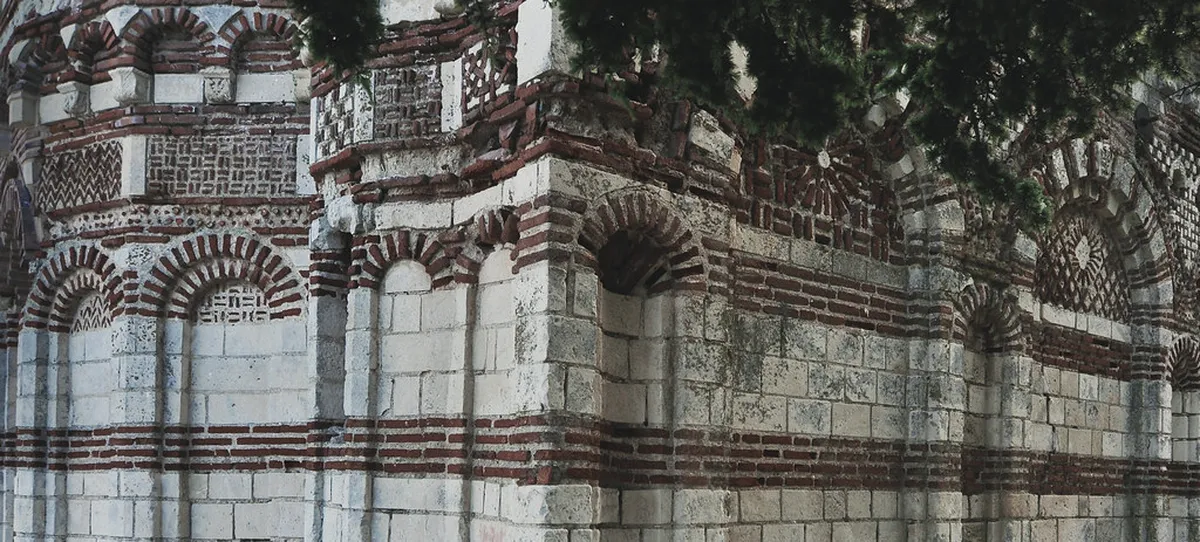
The exterior is the reason most people stop here. Builders alternated bands of white stone and red brick, then inlaid the walls with green-glazed ceramic plates and rosettes set inside blind, two-step niches. The result reads less like conventional masonry than woven fabric, which is why local guides routinely compare it to multicolored embroidery.
The best-preserved section is the eastern facade, with three apses framed by slender arches and proportioned niches - widely considered the finest single wall of medieval church decoration on the Bulgarian coast. Look closely at the ornament bands and you'll spot motifs with a distinct Arabic influence, a detail that sets this facade apart from the more strictly Byzantine decoration on the nearby Church of Christ Pantocrator Visitor Guide and points to active trade contacts around the medieval Black Sea.
You view all of this from the seaside path off ul. Mena, above the old southern harbor - there's no vantage point that gets you closer, and none is needed. Late afternoon light hits the eastern facade directly, turning the ceramic inlay a deep green-gold, which is why most of the photographs you'll see online were taken an hour or two before sunset rather than at midday.
Which Nessebar Church Ruins You Can Actually Walk Into
Nessebar's Old Town once held as many as 40 churches for a population that never numbered more than a few thousand people, one of the densest concentrations of ecclesiastical architecture anywhere on the Black Sea. Only a handful survive in recognizable form today, and first-time visitors often assume every one of them is open to explore. St John Aliturgetos isn't: it has no roof, no ticket booth and no regular opening hours, so the entire visit happens from outside.
That's different from some of its neighbors. The Church of St. John the Baptist, a separate 10th-11th-century building near the town center, operates as a paid museum you can walk through. Christ Pantocrator, a short walk north, is generally open as an exhibition space for contemporary art inside a medieval shell. St Sophia, like Aliturgetos, is viewed from outside only and costs nothing.
If you want at least one indoor stop on your church-hopping route, pair Aliturgetos with Christ Pantocrator or the paid interior at St. John the Baptist rather than assuming you can wander into the ruin itself - a mistake that trips up a fair number of first-time visitors who show up expecting a nave to walk through.
Family Visits, Accessibility and Budget Notes
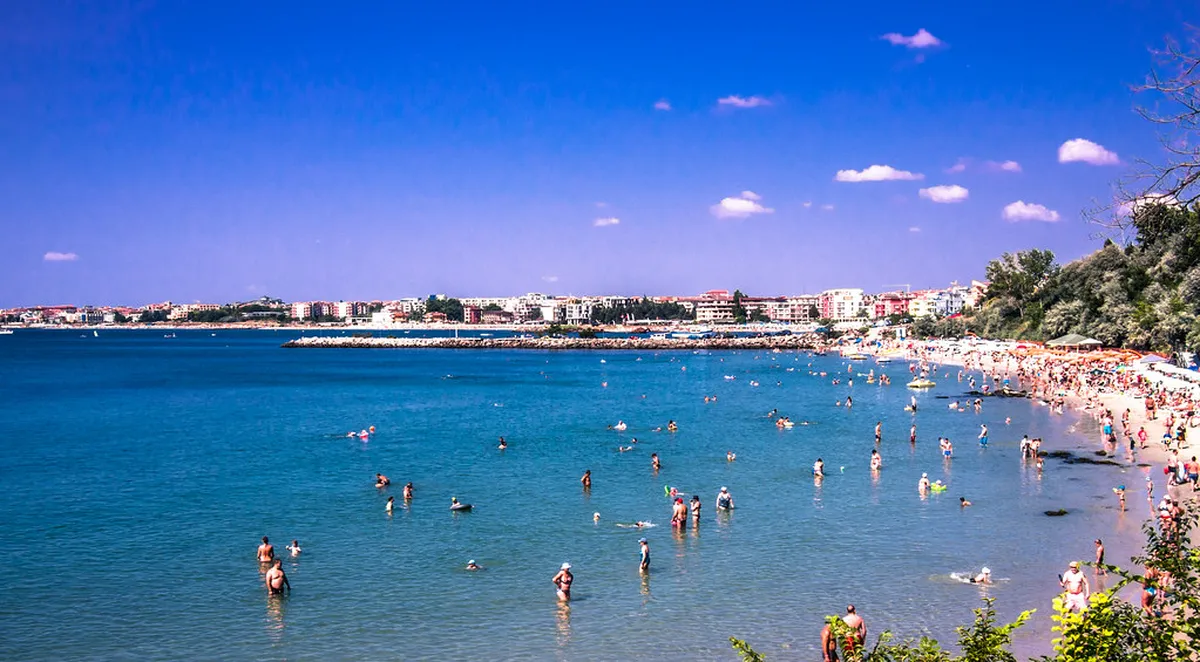
Families can see the church for free at any time of day, and the 9 Essential Tips for the Nessebar South Beach Visitor Guide is a short walk away, so it's easy to combine a quick history stop with an afternoon swim. Kids generally respond well to the ruin's scale and the coastal setting more than to explanatory text, so budget more time for looking than reading.
The approach is cobbled and uneven, with no ramps or paved surface around the ruin itself, so it isn't practical for wheelchairs or standard strollers without help - a detail none of the standard visitor write-ups mention. If mobility is a concern, budget for someone to carry a lightweight stroller over the roughest stretch, or prioritize Christ Pantocrator instead, which sits on flatter ground closer to the main pedestrian street.
Because the church itself is free, save your budget for one paid indoor stop rather than several. A combined ticket at the main museum entrance covers the archaeological collection and a few of the indoor church-museums, and works out cheaper than paying for each separately. Walking the Old Town costs nothing beyond that, and ice cream and snack stalls near the entrance are inexpensive by coastal Bulgarian standards.
Money, Timing and Getting There in 2026
From Sunny Beach, the trip takes about 30 minutes by local bus or water taxi across the bay; from Burgas, it's roughly 35 kilometers and about 40 minutes by car or bus. Arrive before 10:00 if you want the narrow lanes near the church to yourself - tour buses from both resorts tend to land mid-morning and stay through lunch.
Bulgaria adopted the euro on 1 January 2026, so prices across Nessebar - museum tickets, cafe menus, souvenir stalls - are now quoted in EUR rather than the Bulgarian lev that older guides still reference. Cards are accepted almost everywhere on the peninsula now, though small stalls near the church still prefer cash for purchases under a few euros.
Bring a hat and sunscreen; the open ground around the ruin has essentially no shade, and the cobblestones get slippery when wet. Late afternoon works best for both crowds and light - the golden hour glow on the eastern facade is the version of this church you've seen in photos, and it's easiest to get without a crowd of day-trippers in the frame.
Nearby Landmarks to Pair With Your Visit
A few minutes' walk brings you to the St. Sophia Church, a 5th-century basilica and one of the oldest structures on the peninsula, and to the Nessebar Windmill Visitor Guide, which marks the causeway entrance to the Old Town and is one of the most photographed spots in Nessebar for a reason.
![Nessebar -Christ Pantocrator Church [13th century] in Nessebar, Bulgaria](https://toursbulgaria.com/images/st-john-aliturgetos-nearby-landmarks-to-pair-with-your-v.webp)
Nearby, a coastal viewpoint known as Angelo Roncalli Point commemorates Angelo Roncalli - later Pope John XXIII - who served as the Vatican's representative in Bulgaria in the 1930s; it's a quiet spot with some of the best open-sea views on the southern shore, just steps from the church.
The ancient theater still hosts summer performances, and stretches of the old defensive walls survive near the causeway. Everything here sits within a 10-15 minute walk of St John Aliturgetos, and brown tourist signage makes it easy to string the sites into one loop rather than backtracking through the same lanes twice.
Continue planning: Use Nessebar Attractions: 8 Best Things to Do in the Old Town to connect this guide with the rest of your Bulgaria itinerary.
Frequently Asked Questions
Can you go inside the church?
Normally no - St. John Aliturgetos is admired from the outside, and its celebrated facades are the main attraction anyway. The building has no regular public opening hours; after its restoration the interior is used only for occasional events, so plan to view it from the seaside path above the southern harbour.
Is it free?
Yes. The church stands on open ground above the southern shore of the Old Town, so walking up to it and viewing the famous stone-and-brick facades costs nothing at any time of day.
Why 'Aliturgetos' - what does the name mean?
Aliturgetos is Greek for 'unconsecrated': no liturgy was ever served in the church. According to legend it was never consecrated because one of the builders fell to his death during construction in the 14th century.
What makes it Nessebar's most celebrated church facade?
Its 14th-century walls alternate white stone blocks and red bricks inlaid with green-glazed ceramic plates, forming geometric patterns often compared to multicoloured embroidery. The eastern facade, with its three apses framed by decorated niches, is considered the finest, and the church is ranked among the peaks of medieval Bulgarian ecclesiastical architecture.
What happened to it in 1913?
The Chirpan earthquake of 1913 destroyed the dome and much of the structure, leaving the church a partial shell. It had originally been a domed cruciform building about 18.5 by 10.25 meters, with a square naos, a large narthex and entrances from north and south.
Has it been restored?
Yes - a four-year, roughly US$706,000 conservation project backed by the United States (Ambassadors Fund for Cultural Preservation) stabilised the monument, and it was officially reopened in November 2018 by the US ambassador and Nessebar's mayor. The work was non-invasive, preserving the surviving medieval fabric rather than rebuilding the lost dome.
Where is it and what's nearby?
It stands above the old southern harbour at the edge of the Old Town, off ul. Mena, with open views over the Black Sea - one of the most photogenic corners of UNESCO-listed Nessebar. Don't confuse it with the Church of St. John the Baptist, a separate 10th-11th-century Nessebar church that operates as a paid museum site.
The Church of St John Aliturgetos is a crown jewel of medieval architecture in Nessebar Bulgaria. Its stunning facade and dramatic coastal location make it a highlight of any Bulgarian holiday. You will leave with a deeper appreciation for the artistry and resilience of the Byzantine era.
Remember to bring your camera and wear comfortable shoes for your walk through the Old Town. Planning your visit around the golden hour will provide the most memorable views of the ruins. This visitor guide ensures you won't miss the small details that make this site so special.
For more Nessebar planning, read our 12 Best Things to Do in Nessebar (2026), The Best 3-Day Nessebar Itinerary: A UNESCO Journey, and Best Time to Visit Nessebar: 10 Seasonal Tips & Insights guides.
For authoritative information, refer to the Church of St. John Aliturgetos on Wikipedia and Church of St. John Aliturgetos official site.