St. Sophia Church (Old Metropolitan Basilica) Visitor Guide
The St. Sophia Church (Old Metropolitan Basilica) sits in central Nessebar's Old Town, one of the most recognizable ruins on Bulgaria's Black Sea coast. This guide covers the Bulgarian site only - not the mosque-museum in Istanbul or the cathedral-museum in Kyiv, both of which also carry the "St. Sophia" name and crowd the search results for this term. What you'll find here is a roofless 5th-6th century basilica standing open to the sky in a public square, free to enter at any hour, with no ticket booth and no dress code.
Get a preview of the basilica's Byzantine arches and surviving apse in this walk-through tour:
Walking through the surviving arches and the semicircular apse takes you back to the early Byzantine period, when this building was the cathedral of the Diocese of Mesembria - Nessebar's ancient name. It sits inside the UNESCO-listed Ancient City of Nessebar, a short walk from the harbor and the town's other medieval churches. This guide covers the church's history, what's still standing today, how to plan a visit in 2026, and how to avoid confusing it with the wrong "St. Sophia" - or with Nessebar's own other cathedral, just down the street.
The History of the Old Metropolitan Basilica in Nessebar
The origins of this grand structure date back to the turn of the 5th and 6th centuries during the early Byzantine era. Historians believe the church was built upon the foundations of an even older temple dedicated to the Greek god Apollo. As the seat of the Metropolitan of Mesembria, it served as the primary religious center for the region for several hundred years. The current ruins reflect the major reconstruction that took place in the early 9th century to expand the basilica's reach.
The church remained an active place of worship until regional conflicts began to take their toll in the late Middle Ages. In 1257, a Venetian fleet raided the city and looted many of the church's most valuable religious relics and treasures, which were eventually taken to the Church of San Salvatore in Venice, where some remain to this day. Despite the loss of its riches, the building continued to function for centuries afterward, including a burial in 1441 of the Byzantine princess Mataisa - an honor reserved for the city's most prominent citizens - before it was finally abandoned in the 18th century.
Today the site is protected as part of the UNESCO World Heritage Centre - Ancient City of Nessebar listing. Archaeologists have worked extensively to stabilize the remaining walls and preserve the intricate brickwork for future generations of travelers. Standing within the nave allows you to visualize the scale of the original cathedral that once dominated the local skyline, and the layers of stone and mortar still reveal the cultural shifts that shaped the Bulgarian Black Sea coast.
Architectural Highlights: A Three-Nave Byzantine Masterpiece
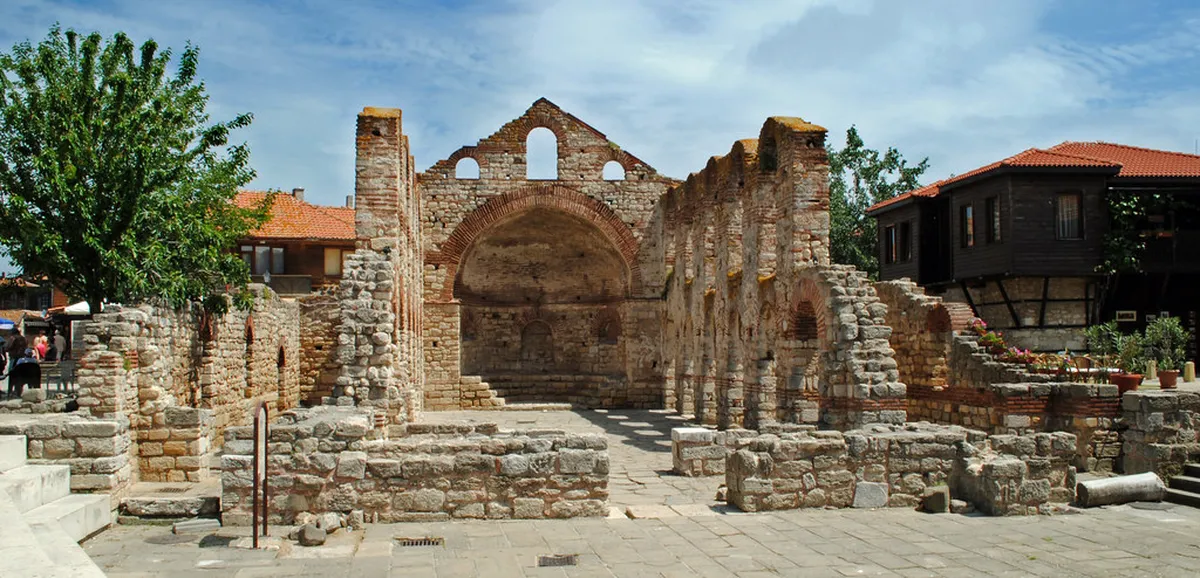
This impressive three-nave basilica showcases the classic architectural style favored by Byzantine builders during the height of their power. The structure measures approximately 25.5 meters in length and over 20 meters in width, making it a significant regional landmark. Each nave was originally separated by two rows of five stone columns that supported a massive timber roof, and the eastern end features a large, semicircular apse that remains one of the most photographed elements of the entire site.
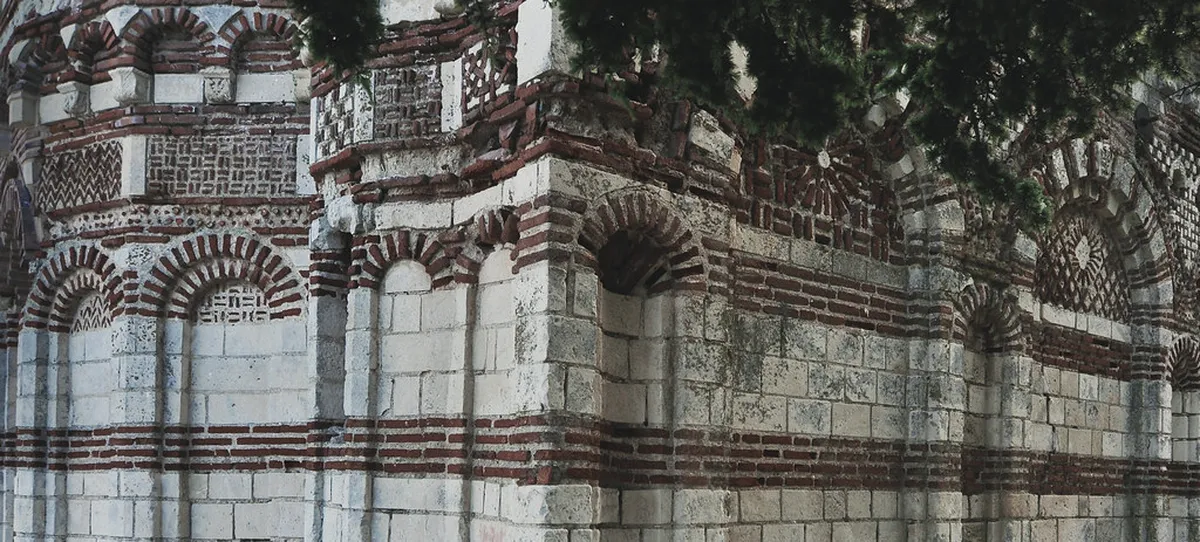
Masons used a combination of local stone and red brick to create the decorative patterns visible on the exterior walls - a technique known as opus mixtum, which provided both structural integrity and a striking visual aesthetic that defined the era. You can still see the remains of the arched windows that once allowed natural light to flood the interior sanctuary, an architectural choice that helped create a sense of divine space for the medieval congregations who gathered here to pray.
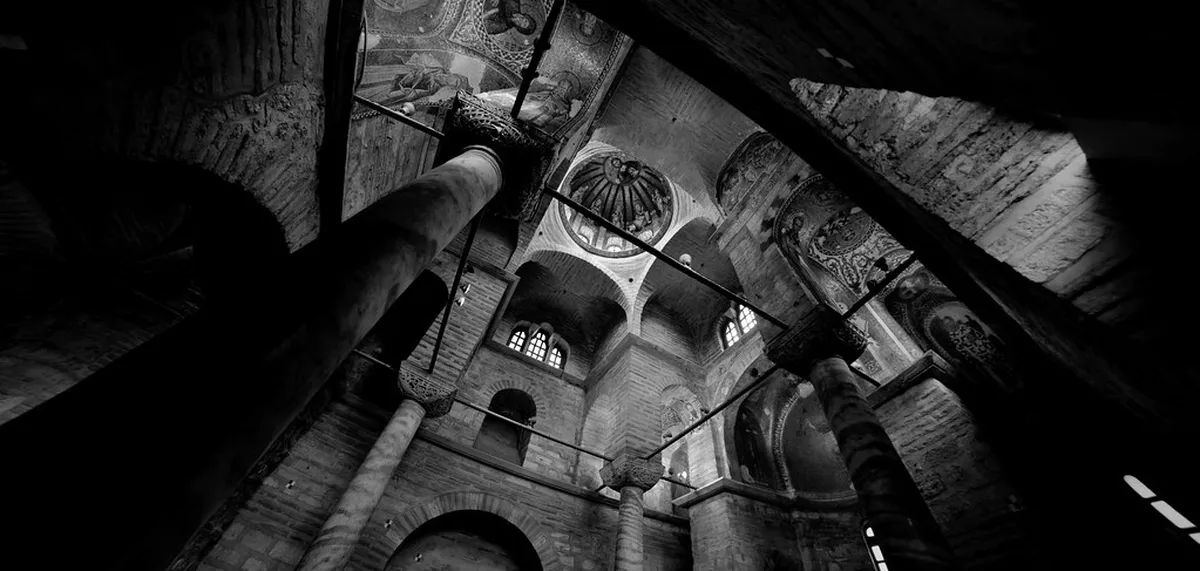
The interior once featured elaborate floor mosaics and colorful frescoes, though most of these have been lost to time and weather - a sharp contrast with the nearby Church of St. Stephen, where the murals survived intact. Fragmented remains of the original marble decoration can still be spotted by keen-eyed visitors exploring the ground level, and the height of the surviving walls gives a clear sense of the basilica's former grandeur.
What You Can Actually See Inside the Ruins Today
Set expectations before you arrive: this is a roofless shell, not a restored monument. What survives is the semicircular apse with three arched windows at the eastern end, long stretches of the north and south side walls, and the stone pillars and brick arches that once separated the central nave from its two side aisles. The floor is bare earth and worn stone rather than the mosaic pavement that would have covered it in the 6th century.
Look closely at the arches on the northern side and you'll find the spot where the burial chamber of princess Mataisa was built into the masonry in 1441 - a rare piece of documented medieval history attached to a specific, still-visible stone. The opus mixtum banding of brick and stone on the exterior walls is easiest to appreciate from just outside the ruin, where the alternating courses catch the light.
What's missing is just as telling as what remains: no gabled roof, no columns standing at full height, and none of the frescoes or floor mosaics that once decorated the interior. Most visitors need only 20 to 30 minutes to walk the full perimeter and take in the apse, the arches, and the scale of the original footprint.
Planning Your Visit: Hours, Location, and Entry Fees
One of the best aspects of visiting the Old Metropolitan Basilica is the ease of access for all types of travelers. The site is an open-air ruin located in a public square, meaning there are no official gates or restrictive opening hours. You can explore the ruins at any time of day or night, depending on your schedule and lighting preferences, which makes it a natural stop on a self-guided Nessebar Old Town walking tour through the historic district.
There is no entry fee to walk through the main nave or admire the historic architecture, unlike the ticketed museum-churches elsewhere in the Old Town. That makes the basilica an easy stop for budget-conscious travelers exploring the Bulgarian coast in 2026. Official information on the wider UNESCO site is available through the Official Tourism Portal of Bulgaria. Most visitors find that 20 to 30 minutes is enough to take in the ruins fully.
Finding the basilica is simple - it sits near the center of the peninsula, on ul. Mitropolitska, a short walk from the harbor. If you're arriving by bus from Sunny Beach, the walk from the town gate to the church takes about ten minutes, and clear signage throughout the Old Town points the way to all the major archaeological sites.
Old Metropolitan vs. New Metropolitan: Nessebar's Two Cathedrals
Before you plan tickets or a route, know that Nessebar itself has two churches with "Metropolitan" in their history, and mixing them up is the most common local booking mistake. This ruin is Stara Mitropoliya - the Old Metropolitan Church - the cathedral of the diocese until it fell out of use. When that role passed on, it went to what locals call Nova Mitropoliya, the New Metropolitan Church, better known today as the Church of St. Stephen, a few minutes' walk away.
The practical gap between them is bigger than the shared title suggests. St. Sophia is a free, roofless ruin with no ticket booth and nothing to book in advance; St. Stephen's is a roofed, actively managed museum site with an entry fee (around EUR 4.60 / 9.00 BGN for adults as of 2026) and a fully preserved interior covered in post-Byzantine frescoes. If you search for "Old Metropolitan Church tickets" expecting a booking page, you won't find one - because there isn't one - and if it's painted interiors and a fee you're after, St. Stephen's is the church you actually want.
Visiting both in the same afternoon works well precisely because they contrast so sharply: the open, sunlit shell of the Old Metropolitan followed by the dim, mural-covered nave of the New Metropolitan gives a fuller picture of what Nessebar's medieval churches looked like both before and after time took its toll.
How the Nessebar Basilica Differs from Istanbul's Hagia Sophia and Kyiv's St. Sophia
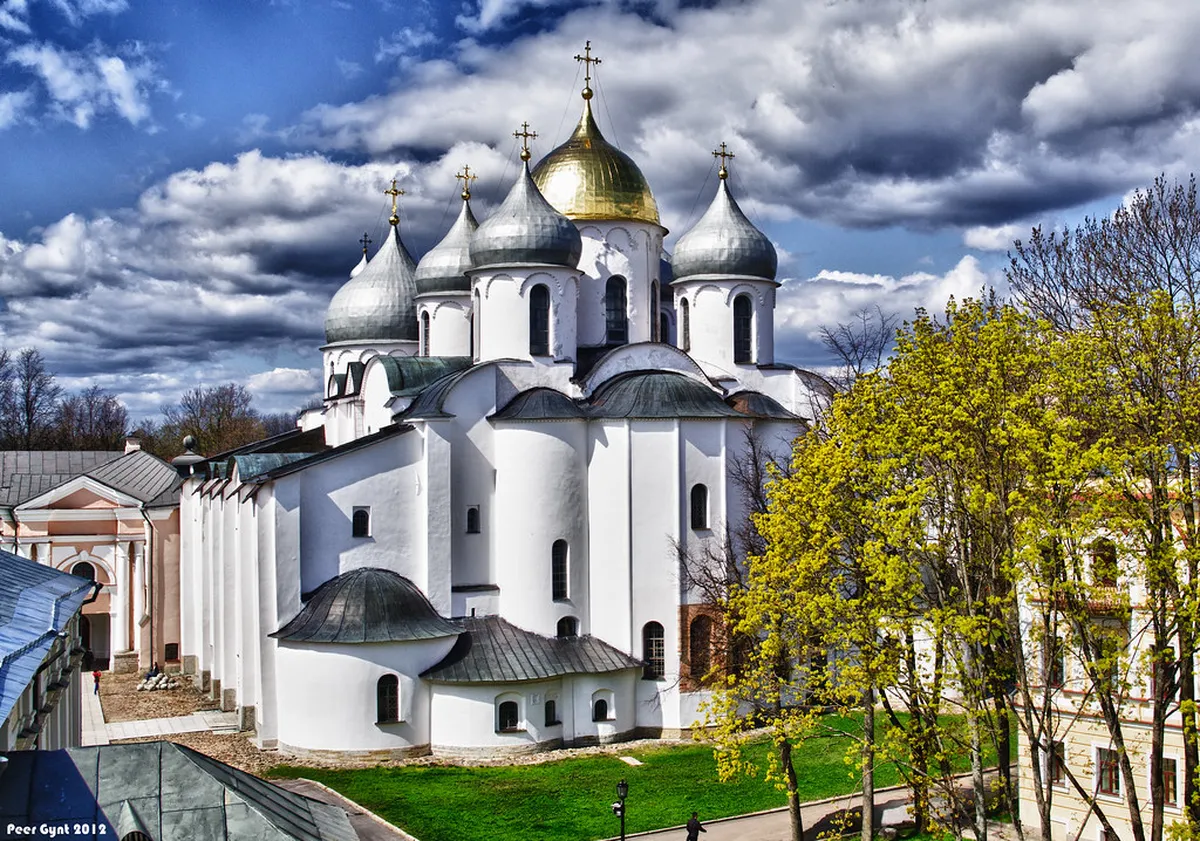
Many travelers searching for a "St. Sophia Church" guide land on information for the Hagia Sophia mosque in Istanbul or the Saint Sophia Cathedral museum in Kyiv - both far larger, far more visited sites that happen to share the same dedication. Knowing which one you're planning for matters, since entry rules, hours, and even dress codes differ completely between them.
The Nessebar basilica is an unroofed ruin you can walk into for free at any hour; Istanbul's Hagia Sophia is an active mosque with scheduled prayer closures; Kyiv's St. Sophia is a ticketed museum complex built around surviving 11th-century mosaics. None of that makes one "better" than another - they're simply different chapters of Byzantine-influenced history, and only one of them is in Bulgaria.
- St. Sophia in Nessebar, Bulgaria: free, open-air ruin; three-nave basilica; quiet, unmanaged site.
- Hagia Sophia in Istanbul, Turkiye: active mosque; paid, managed visitor site; large central dome; prayer-time closures apply.
- St. Sophia Cathedral in Kyiv, Ukraine: ticketed museum complex; 11th-century mosaics and a climbable bell tower.
Exploring the UNESCO Old Town: A Walking Route Past Nessebar's Ancient Churches
Nessebar is often called the "City of 40 Churches," and several other historic sites sit within a short walk of the Old Metropolitan. The Church of Christ Pantocrator Visitor Guide is a must-see stop just up the same street, famous for its patterned brick-and-stone facade, and the Nessebar Attractions archaeological museum a few doors further on provides deeper context for the ruins scattered across the peninsula.
Continue past the fortification walls that have guarded the entrance to the Old Town for over two thousand years, and loop back via the wooden windmill near the isthmus bridge - one of the most photographed sights on the peninsula and a natural bookend to a churches-and-ruins circuit that takes roughly two to three hours at an unhurried pace.
After the history, head down to 9 Essential Tips for the Nessebar South Beach Visitor Guide for the contrast between ancient stone and modern seaside resort life. Local seafood restaurants along the northern coast of the peninsula round out a day that mixes ruins, museums, and the Black Sea in a single manageable loop.
Best Times to Visit for Photography and Fewer Crowds
Timing your visit correctly can significantly enhance the quality of your photographs and your overall enjoyment of the site. The "golden hour" just before sunset provides a warm glow that highlights the texture of the ancient stone and brickwork, and shadows stretching across the nave in late afternoon create a dramatic look that's perfect for photos. Early mornings are just as good for those wanting to avoid the midday heat and tour groups.
During the peak summer months of July and August, the Old Town gets crowded with day-trippers from nearby resorts. Visiting before 09:00 lets you enjoy the ruins in near-silence before the shops and cafes fully open. Spring and autumn bring milder temperatures and thinner crowds, making those seasons ideal for a more contemplative visit; winter has a stark, haunting beauty of its own, though coastal winds can be sharp.
If you want the church without other people in frame, patience during the busy afternoon usually pays off - wait for the gaps between tour groups. The night lighting in the Old Town also offers a distinct look for long-exposure photography, so check the forecast and aim for a clear evening if that's your goal.
Practical Tips for a Smooth Visit
The terrain in the Old Town is mostly uneven cobblestones and ancient pathways, so comfortable walking shoes with good grip matter more than in most European old towns. Visitors with limited mobility should take extra care, since some areas around the church ruins have small steps or loose stones; planning your route ahead of time helps you avoid the steepest sections while moving between landmarks.
Since the basilica is an open-air site, there's no formal dress code as there would be at an active church - but it's respectful to keep a quiet demeanor while walking through the nave. Sun protection matters in summer, since there's almost no shade inside the ruins, and carrying water is worth it while wandering the sun-drenched streets of the Nessebar historic district.
Public restrooms near the harbor and the main town square charge a small fee, typically around EUR 0.50 (1.00 BGN). Most local shops and restaurants accept cards, but keep some small cash on hand for minor purchases. Free Wi-Fi is common in the cafes surrounding the church, and out of respect for the preservation work, avoid climbing on the ancient walls or removing any stone fragments from the site.
Continue planning: Use Nessebar Attractions: 8 Best Things to Do in the Old Town to connect this guide with the rest of your Bulgaria itinerary.
Frequently Asked Questions
Is there an entrance fee for St. Sophia?
No. Unlike the museum churches such as St. Stephen, the Old Metropolitan basilica is a free, open-air ruin in the middle of the Old Town - there are no gates, tickets or fixed hours, so you can walk through it at any time of day.
How old is the basilica?
It was built at the end of the 5th and the beginning of the 6th century, on what is believed to have been the ancient town's original centre, and was rebuilt in the early 9th century. That makes it one of the oldest surviving Christian monuments on the Bulgarian Black Sea coast.
Is this the Hagia Sophia from Istanbul?
No - it only shares the dedication. This is Nessebar's own St. Sophia, a ruined early Byzantine basilica in Bulgaria, distinct from both Hagia Sophia in Istanbul and the St. Sofia church in Bulgaria's capital, Sofia.
What can you actually see today?
The roofless shell of a three-nave basilica about 25.5 meters long: the semicircular apse with its three arched windows, stretches of the side walls, and the stone pillars and brick arches that once separated the central nave from the aisles. The gabled roof and most interior decoration have not survived.
Why is it called the Old Metropolitan Church?
Through the Middle Ages it was the cathedral of the Diocese of Mesemvria (Nessebar's historical name) and part of the bishop's residence. When the church fell out of use - it was abandoned by the 18th century - the cathedral role had passed to the Church of St. Stephen, so locals distinguish Stara Mitropoliya (old) from Nova Mitropoliya (new).
Where is it in the Old Town?
Right in central the peninsula, on ul. Mitropolitska in the centre of Old Nessebar - you will almost inevitably pass it walking between the western gate and the harbour. It is one of the emblematic monuments of the UNESCO-listed Ancient City of Nessebar.
Any notable history connected to the ruins?
In 1441 the Byzantine princess Mataisa was buried in the church - an honour reserved for the most prominent citizens - and a limestone burial chamber was built into one of its arches. Centuries earlier the basilica hosted the deliberations of the metropolitan bishops whose seat governed church life along this stretch of the Black Sea coast.
The St. Sophia Church (Old Metropolitan Basilica) is one of the easiest UNESCO monuments in Bulgaria to fold into a day trip: free, unticketed, and open at any hour you happen to be walking through Nessebar's Old Town. Understanding its Byzantine roots, its 25.5-meter three-nave footprint, and how it differs from both its Nessebar neighbor and its more famous overseas namesakes lets you appreciate the ruin for what it actually is, rather than what a mismatched search result promised.
Whether you're a dedicated history reader or just after the best golden-hour photo on the peninsula, the basilica delivers in twenty unhurried minutes. Pair it with the Church of St. Stephen for the frescoes this ruin lost, or with the Church of Christ Pantocrator and the archaeological museum for a fuller loop through the Old Town's 40-churches history. Either way, plan for early morning or late afternoon light, and let this free ruin anchor the rest of your 2026 visit to Nessebar.
For more Nessebar planning, read our 12 Best Things to Do in Nessebar (2026), The Best 3-Day Nessebar Itinerary: A UNESCO Journey, and Best Time to Visit Nessebar: 10 Seasonal Tips & Insights guides.
For the latest official information, see the St. Sophia Church (Old Metropolitan Basilica) on Wikipedia.