Melnik Sandstone Pyramids
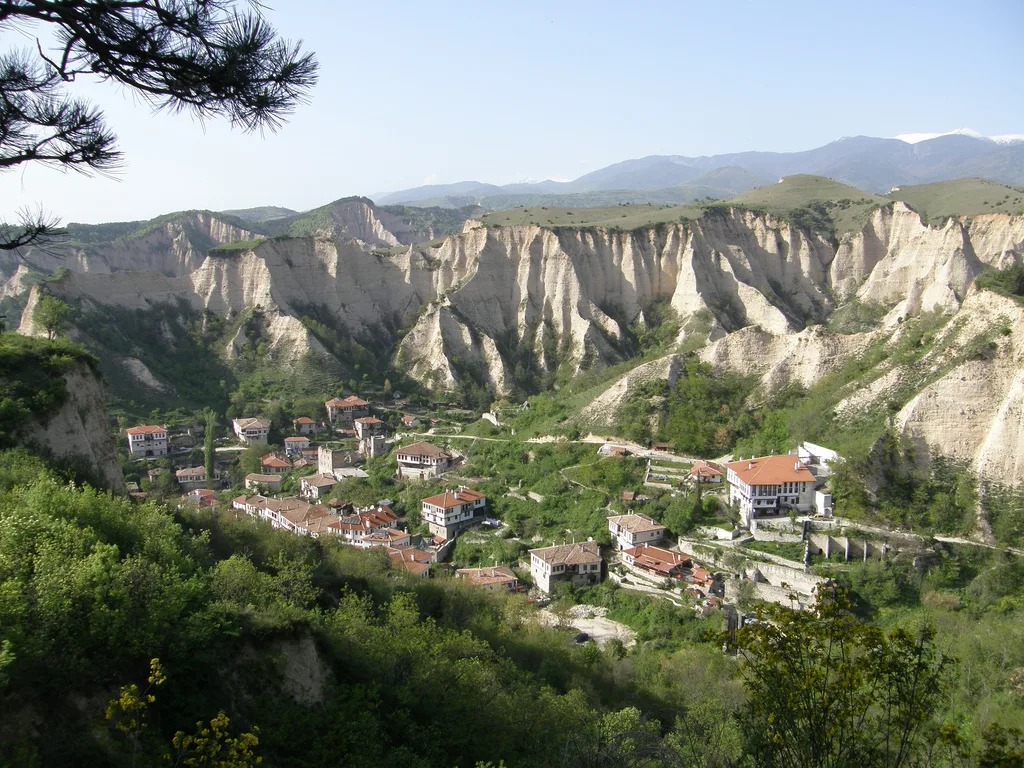
The Melnik sandstone pyramids are one of Bulgaria's most striking natural landmarks. These towering spires of eroded sandstone rise just outside Melnik, the country's smallest town. Shaped over millions of years by wind and rain, they reach heights of up to 100 meters.
Visiting the pyramids takes less than a day, but combining them with Melnik's other highlights can fill a rewarding full itinerary. You can walk through the formations, hike to ridgeline viewpoints, and end with a wine tasting at a centuries-old cellar. This guide covers the best viewpoints, the main hiking routes, ideal photography timing, and practical safety tips.
This aerial footage reveals the scale and texture of the pyramids from above:
Melnik Town: Bulgaria's Smallest Wonder
Melnik is officially the smallest town in Bulgaria, with only a few hundred permanent residents. It sits in a narrow valley carved by the Melnishka River, surrounded by pale sandstone cliffs and terraced vineyards. Its main street is lined with Revival-period stone houses, shaded taverns, and small shops selling local wine and honey.
The town was a thriving trading hub in the 18th and 19th centuries, exporting wine to Venice and Western Europe. Today that history lingers in the preserved architecture and the wine cellars carved deep into the sandstone hillsides. Most visitors arrive on a day trip, but staying overnight rewards you with much better light for the pyramid hike.
For a broader look at what the area offers, the full guide to things to do in Melnik covers everything from wineries to walking trails. Between the Kordopulov House, the pyramid trails, and the monastery hike, a single afternoon can feel rushed. An overnight stay gives you more flexibility and quieter streets to explore after day-trippers have left.
The Sandstone Pyramids Up Close
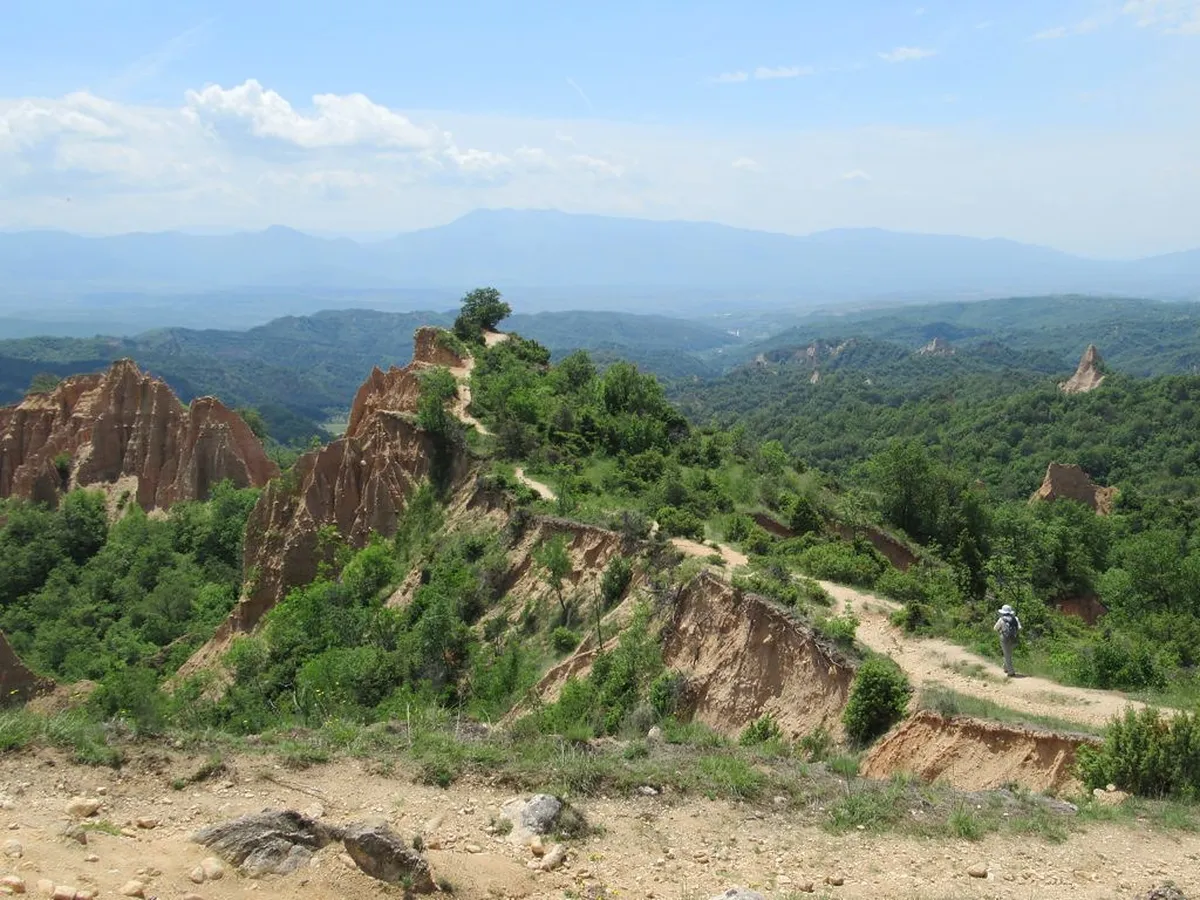
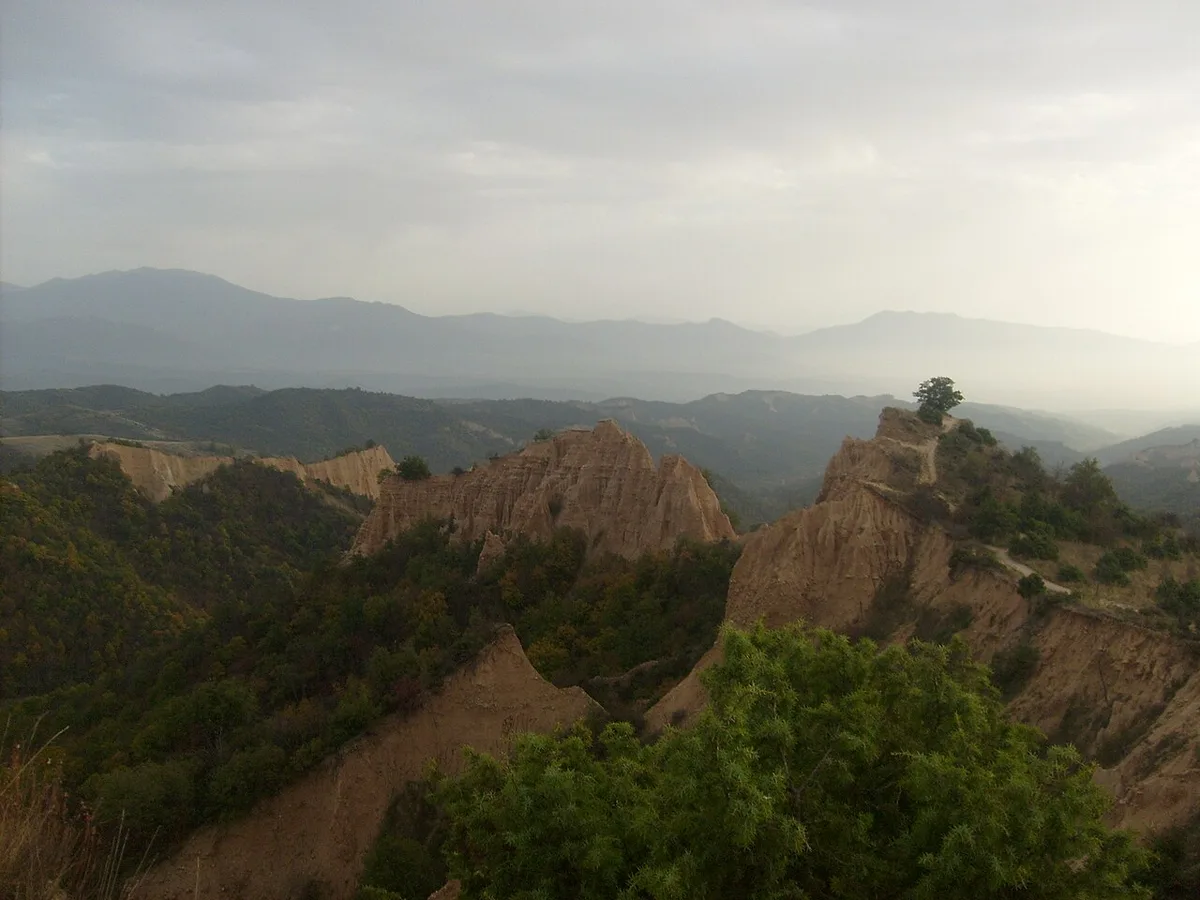
The Melnik pyramids were declared a protected natural landmark in 1960. They spread across roughly 50 square kilometers and are divided into three groups: the Melnik, Karlanovo, and Rozhen pyramids. The Karlanovo group contains the tallest formations, with some obelisks reaching 100 meters high.
These shapes are created by ongoing erosion, so the landscape is always changing. Rain and wind carve new cones and towers while older formations slowly crumble and shift. Visitors often describe them as resembling stone mushrooms, minarets, obelisks, and Gothic spires all at once.
The main cluster nearest to town is easy to reach on foot from the central street. You can locate the trailhead using this Melnik Pyramids map before you set out. No entrance fee applies to walk the pyramid area itself.
Hiking Trails and Best Viewpoints
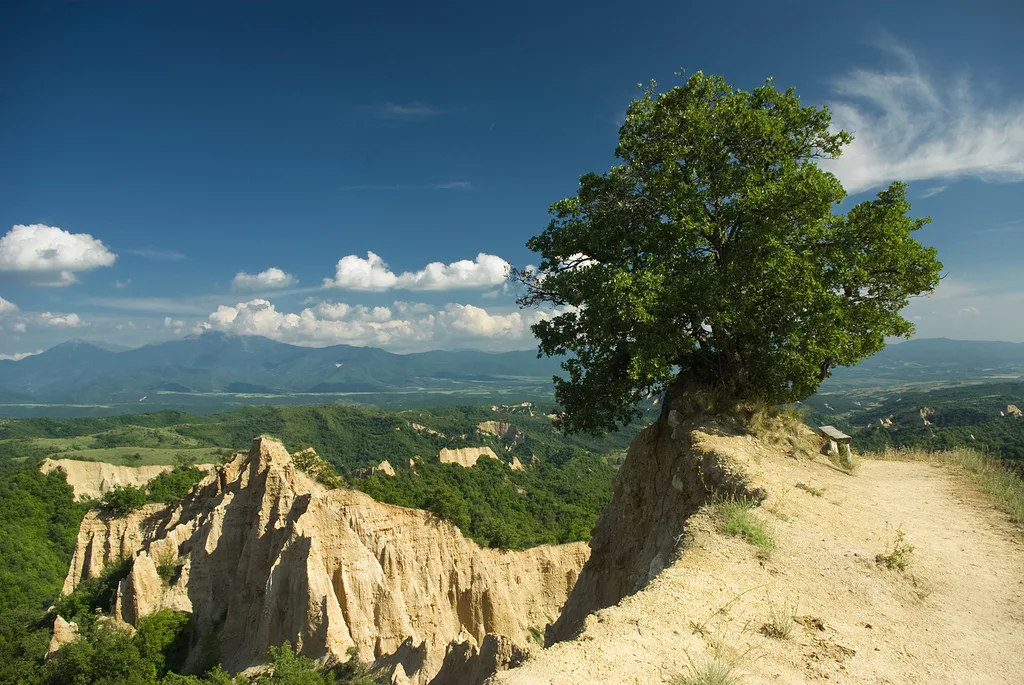
Several footpaths climb from the valley floor into the pyramid formations above town. The most rewarding short route heads uphill past the ruins of Despot Slav Fortress (St. Nicholas Fortress) Guide and the old St. Nicholas church. Both ruins sit on the ridgeline and reward the climb with sweeping views of the sandstone valley.
The full loop covering the pyramids, the fortress, and the St. Virgin Mary Spileotisa monastery runs about 2.4 kilometers. Allow 1.5 to 2 hours at a relaxed pace, with extra time for photos and stopping at the ruins. Trails are not always paved, so wear shoes with grip for loose gravel and sandy inclines.
Photographers get the best light on the sandstone in the early morning, roughly 7 to 9 AM, when side light rakes across the spires. Golden hour before sunset, around 7 to 8 PM in summer, also turns the rock a deep amber-red. Avoid midday shooting, when harsh overhead light flattens the texture and washes out fine detail.
The viewpoint at the ruins of Despot Slav Fortress offers the most dramatic panorama of the entire pyramid cluster. It sits about 20 minutes uphill from town and catches side light perfectly during the 7–9 AM window, giving you sharp texture and saturated colors without harsh shadows.
A few safety points are worth knowing before you set out. The sandstone edges are unstable and crumble easily, so stay on the path and well away from cliff edges. Carry at least half a liter of water per person, as there is no water source on the trail. In wet weather, clay-heavy sections become slippery, so consider postponing if it has rained recently.
The pyramid valley offers almost no shade, and the pale sandstone reflects intense heat and UV rays. Apply high-SPF sunscreen generously before you start, bring sunglasses, and wear a wide-brimmed hat. Summer midday temperatures can exceed 30°C (86°F), so plan morning or late-afternoon hikes to avoid the heat peak between noon and 4 PM.
- Despot Slav Fortress Ruins
- Distance from town: ~20 min uphill
- What you see: 8-10 m medieval walls with pyramid panoramas
- Access: unmarked trail following the ridgeline path
- Best for: history lovers and wide landscape views
- St. Nicholas Church Ruins
- Age: oldest church in Melnik, pre-13th century
- What you see: stone walls and sweeping valley viewpoints
- Access: continue along the ridgeline from the fortress
- Best for: history buffs and landscape photographers
- St. Virgin Mary Spileotisa Monastery
- Distance: part of the 2.4 km loop from town
- Access: steep but manageable trail with clear path
- What you see: small monastery surrounded by wildflower meadows
- Best for: first-time hikers wanting a complete loop
The 1754 Kordopulov House
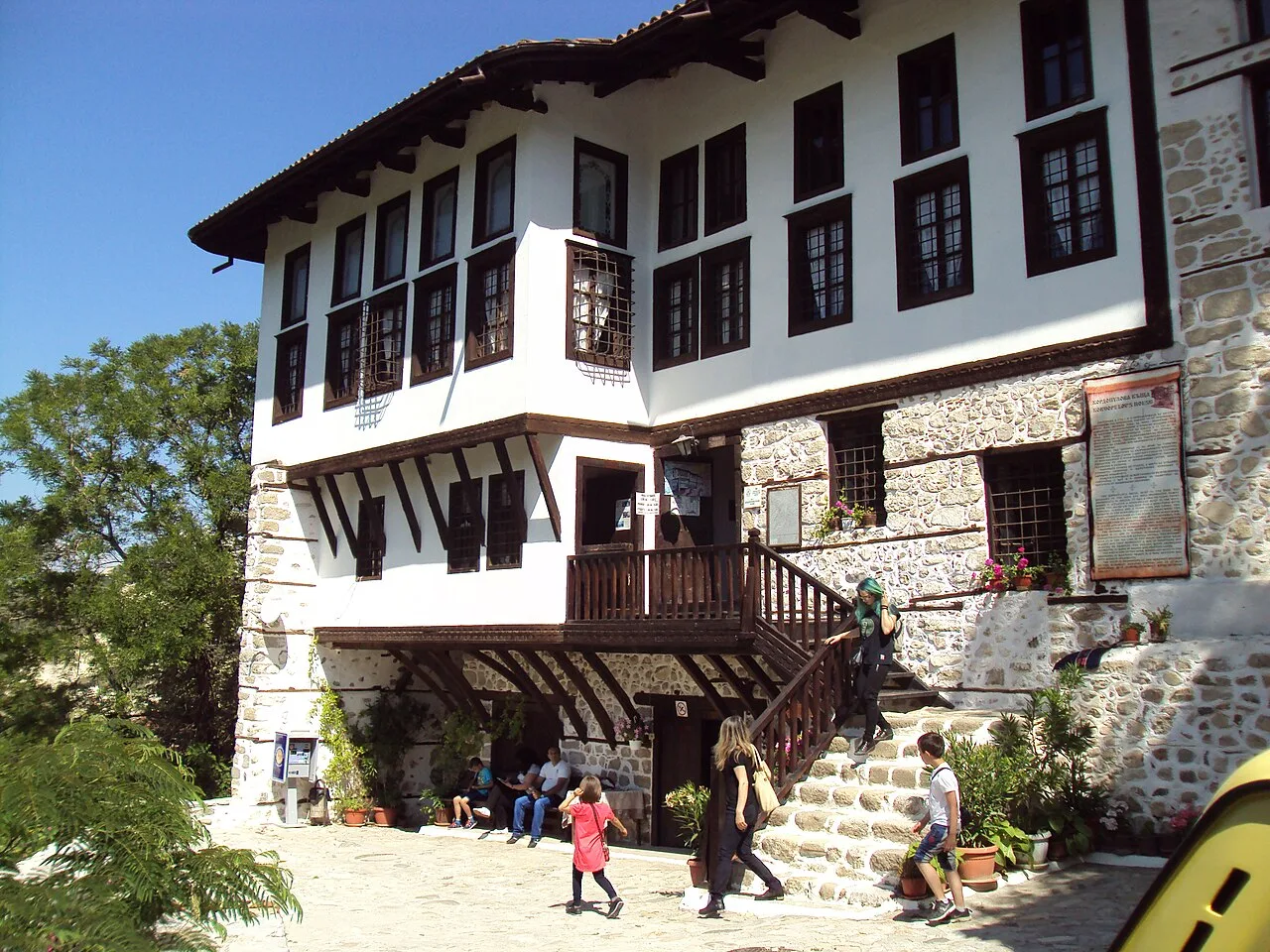
The Kordopulov House Travel Guide, built in 1754, is recognized as one of the largest Revival-era buildings in the Balkans. It belonged to a wealthy merchant family that traded wine with Venice, Vienna, and markets across Western Europe. The mansion stands at the edge of town on a steep lane and is easy to spot from the main street.
Inside, the rooms feature Venetian stained-glass windows, carved wooden ceilings, and a minaret-shaped fireplace. A hidden chamber off the main dining room was used to conceal a witness during important trade negotiations. The family also sheltered Bulgarian revolutionaries within these walls during troubled times in the 19th century.
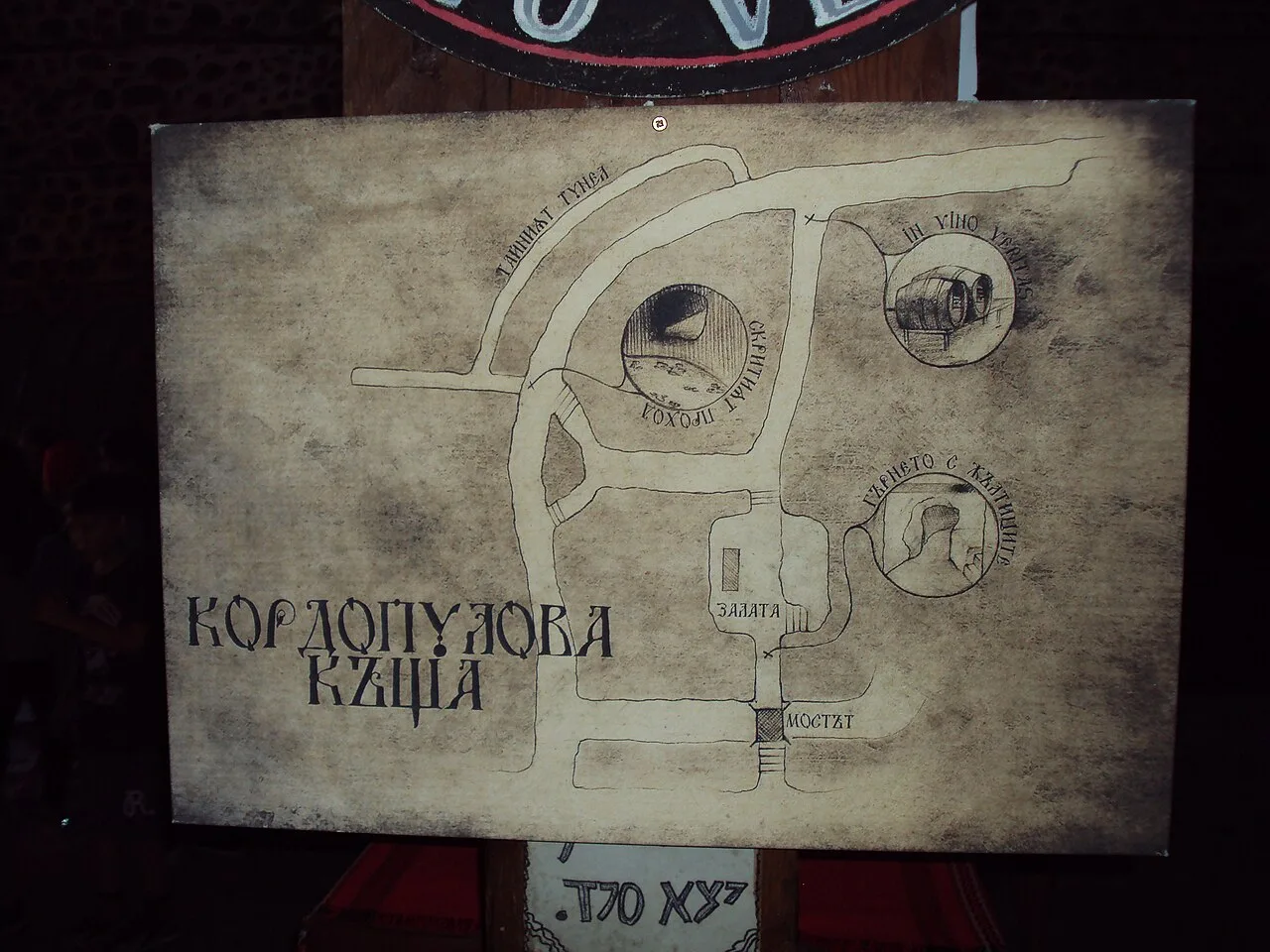
Below the house, 200 meters of tunnels are carved directly into the sandstone. These naturally cool cellars hold temperatures between 7 and 9 degrees Celsius year-round, ideal for aging wine. Entrance costs around EUR2.50 to EUR3 per person and includes access to the wine tasting area in the lower level.
Hiking from Melnik to Rozhen Monastery
The trail from Melnik to Rozhen Monastery is the most popular longer hike in the area. It runs approximately 4.6 kilometers one way and takes about 2 to 2.5 hours at a comfortable pace. The route is well-marked with green and white trail signs from the edge of town.
Most of the trail follows an old river bed through the sandstone pyramid valley before climbing toward Rozhen. You can preview the elevation profile and waypoints on the AllTrails Melnik route map. A viewpoint roughly halfway along offers one of the best panoramas of the Struma valley and the pyramid ridge.
Rozhen Monastery: Travel Guide is free to enter and is one of the oldest religious sites in the Pirin region. Its frescoes blend Byzantine and local craftsmanship, and the courtyard trees are often tied with Martenitsi ribbons in spring. Photography is not permitted inside the church itself, but the courtyard and exterior are open to all visitors.
From Rozhen village, you can catch a mini bus back to Sandanski rather than retracing the full trail. The bus costs roughly EUR3.50 for two tickets and runs in the afternoon, so confirm local departure times before setting out. Rozhen also has a small restaurant and a honey stand where you can stop and restock before heading back.
Plan Your Visit: Tips and Timing
Spring, from April to June, and early autumn, from September to October, are the most comfortable times to hike. Temperatures stay mild, the wildflowers along the trails peak in May, and the sandstone looks its best in filtered light. For a seasonal breakdown, see the guide on the Best Time to Visit Melnik, Bulgaria.
Day trippers from Sofia should allow at least 5 to 6 hours to cover the pyramids, one cultural site, and lunch. A day trip from Sofia or Bansko guide has route options and transport details. Overnight visitors get better access to morning and evening light, which makes a real difference for both hiking and photography.
- Day trip from Bansko (1 hour drive)
- Best for: hikers and wine tasters
- Budget: EUR10-20 for food plus EUR3 for Kordopulov House
- Constraint: afternoon start limits available trail time
- Day trip from Sofia (2.5 hour drive)
- Best for: travelers short on available time
- Budget: EUR15-25 including transport and food
- Constraint: arrive by 10 AM to fit pyramids and one attraction
- Overnight stay in Melnik
- Best for: photographers, hikers, and wine lovers
- Budget: guesthouses from EUR35-45 per night
- Constraint: book ahead in May and September when demand peaks
Continue planning: Use 10 Best Things to Do in Melnik and Best Time to Visit Melnik, Bulgaria to connect this guide with the rest of your Bulgaria itinerary.
Frequently Asked Questions
How long should I spend at the Melnik sandstone pyramids?
Allow 1.5 to 2 hours for the pyramid loop trail alone. If you add the Kordopulov House and lunch in town, plan for 4 to 5 hours total. Overnight visitors benefit from golden-hour light on the sandstone, which makes a significant difference for both hiking enjoyment and photography.
Is the pyramid trail safe for children and older visitors?
The lower trail through the main pyramid cluster is relatively flat and suitable for most visitors. The upper ridgeline path to Despot Slav Fortress is steeper and involves loose gravel, making it better suited to confident walkers. Keep children away from cliff edges, as the sandstone is unstable and can crumble without warning.
What is the best time of day to photograph the Melnik pyramids?
Early morning, from 7 to 9 AM, gives the best raking side light that brings out the texture of the spires. Late afternoon and the hour before sunset also produce warm, golden tones on the sandstone. Avoid midday shooting, when overhead light is flat and contrast is too high.
Can I visit Melnik as a day trip from Sofia?
Yes, but it makes for a long day. The drive from Sofia takes about 2.5 hours each way. Arriving by 10 AM gives enough time for the pyramid trail, one cultural site, and lunch before the return drive. Our one-day Melnik itinerary has a suggested schedule to keep you on track.
Is there an entrance fee for the Melnik sandstone pyramids?
Walking the pyramid trail and viewpoints is free of charge. The Kordopulov House charges around EUR2.50 to EUR3 per person. Rozhen Monastery is free to enter. Wine tastings at local cellars are priced separately, typically starting from EUR3 to EUR5 per person.
Where to Eat in Melnik
Melnik's taverns and guesthouse restaurants serve hearty Pirin cuisine alongside the town's own wine. Mehana Lozata on the main street is a reliable choice for grilled meats, kavarma stew, and Shiroka Melnishka Loza poured straight from the barrel. Most places open around 11 AM and close by 9 PM, and the majority accept only cash, so carry Bulgarian lev before you arrive.
Budget around BGN 20 to 35 (roughly EUR 10 to 18) per person for a two-course lunch with wine. Portions are large and service unhurried, a welcome contrast to busier tourist towns. In peak season, May and September, stop in early to reserve a table — seating fills when day-trip groups and overnight guests overlap in the early evening.
The Melnik sandstone pyramids are one of Bulgaria's most overlooked natural wonders. They sit in a valley that also holds some of the country's best wine, most interesting historic architecture, and a rewarding monastery hike. Whether you spend an afternoon or a full day, the landscape rewards a slower pace.
Pair the pyramid trail with the Kordopulov House and the walk to Rozhen Monastery for a complete Melnik experience. For accommodation options, see the guide on Where To Stay In Melnik Travel Guide to find a guesthouse near the pyramids. Melnik tends to leave visitors already planning a return before they have made it back to the car.