Uhlovitsa Cave Visitor Guide: 7 Things to Know Before You Go
Deep in central the Rhodope Mountains lies a hidden geological wonder known as the Underground Palace. Uhlovitsa Cave offers a unique experience for travelers seeking beauty far beneath the earth's surface. This site stands out as one of the oldest and most decorated caves in the entire Balkan region.
Visitors often combine this adventure with a stay in the nearby mountain resort of Pamporovo to enjoy the fresh air. The cave is famous for its rare stone formations and a challenging climb that rewards the brave. You will discover why locals cherish this site as a crown jewel of the Upper Arda Valley.
Planning a trip here requires a bit of physical preparation and knowledge of the local terrain. Our guide covers everything from the steep metal stairs to the shimmering stone waterfalls inside. Get ready to explore a world that has been forming for millions of years.
For a preview of the cave's distinctive corallite formations and the climb to its entrance, this video captures the key features:
Essential Overview: Why Uhlovitsa is the "Underground Palace"
Uhlovitsa Cave sits at roughly 1,040 meters above sea level near the village of Mogilitsa, making it one of the higher-altitude show caves in the Rhodope Mountains. Speleologists first documented it in 1967, and it opened to guided visitors in the early 1980s. Its "Underground Palace" nickname comes from the ornate stone draperies lining its two connected floors, not from any single feature.
Inside, a multi-level karst system links narrow passages to sudden vertical drops, shaped by water working through limestone over millions of years. The cave sits in the same Upper Arda karst belt as Yagodina Cave Visitor Guide and Devil's Throat Cave, though its formations and access are distinct from both — more on how the three compare below.
Thick beech forest and steep cliffs hide the entrance almost until you are standing beneath it, which has helped keep the interior relatively undisturbed. That isolation is part of why Uhlovitsa still feels like a discovery rather than a tourist stop, even with a marked trail and metal staircase leading up to it in 2026.
Getting There: From Sofia, Plovdiv, Smolyan, and Mogilitsa
Most visitors start from Sofia (about 240 km, roughly 4 hours by car via the Trakia motorway and the mountain road through Chepelare) or from the closer city of Plovdiv (about 95 km, closer to 1.5 hours). Both routes pass through Pamporovo Attractions, a convenient overnight base before the final push to Mogilitsa. There is no train service into this part of the Rhodopes, and the nearest airports are Plovdiv (small, seasonal routes) and Sofia (the country's main international hub).
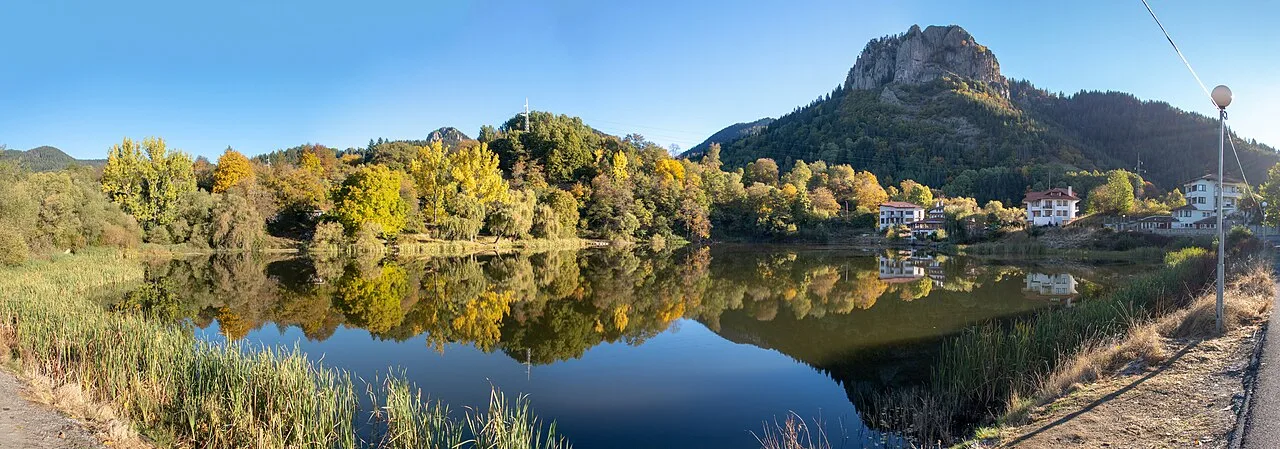
From Smolyan or Pamporovo, the drive to Mogilitsa covers about 30 km on a road that narrows and curves through the Arda River valley past traditional stone houses. Follow signs for Mogilitsa village, a few kilometers short of the Greek border, and continue to the small parking area at the base of the cave's access trail. A kiosk selling snacks and water, plus a restroom, are worth using here before the climb.
Public transport into this stretch of the valley is thin and aimed at locals rather than day-trippers. Renting a car or joining an organized tour from Smolyan or Pamporovo remains the most practical option, and it gives you the flexibility to add a stop at the 10 Essential Tips for Your Smolyan Lakes Visitor Guide on the way back.
The Caves Around Mogilitsa: How Uhlovitsa Compares
Uhlovitsa is one of several karst features clustered around Mogilitsa, and it helps to know how they differ before planning your day. Yagodina Cave Visitor Guide, a short drive away, is longer and mostly flat, with a different set of dripstone formations and an easier walk than Uhlovitsa's climb and stairs. Devil's Throat Cave, near Trigrad, trades delicate decoration for drama: a thundering underground waterfall tied to local Orpheus legend.
Nadarska Cave, closer to Mogilitsa itself, is the wild counterpoint to both — an undeveloped cave with no lighting, walkways, or scheduled tours, visited mostly by hikers and cavers rather than day-trippers. Locals sometimes group these three sites together as a rough "Mogilitsa cave circuit," but only Uhlovitsa and Yagodina run as proper show caves with guides, lighting, and fixed hours. If you only have time for one, Uhlovitsa's corallites and two-floor layout make it the most visually distinct of the group.
The Physical Challenge: Navigating the 180-Step Ascent
The signature challenge at Uhlovitsa is reaching the cave mouth at all. From the parking area, a roughly 1 km path climbs to a metal staircase of about 180 steps bolted to the cliff face, and the full approach takes most visitors 20-30 minutes. Sturdy, closed-toe shoes with real tread matter here — the metal grating gets slick when wet, and flip-flops or worn sneakers are a genuine hazard rather than a minor inconvenience.
Several small landing platforms break up the ascent and double as rest stops with views over the Arda valley below, as Rexby.com notes for families weighing the climb. Budget extra time if you're traveling with young children, older relatives, or anyone with knee or balance issues — there is no shortcut, alternate route, or wheelchair access, and the climb is unavoidable if you want to see the interior.
If part of your group cannot manage the stairs, the kiosk and parking area at the base is a reasonable place to wait; it has seating, shade, and simple refreshments, so splitting the group for an hour rather than skipping the cave entirely is a workable plan many families use. Whoever does climb should carry water — there's no vendor at the top — and expect the temperature to drop sharply at the entrance, which feels like a reward after the exertion.
What's Inside: Rare Formations and the Two-Floor Layout
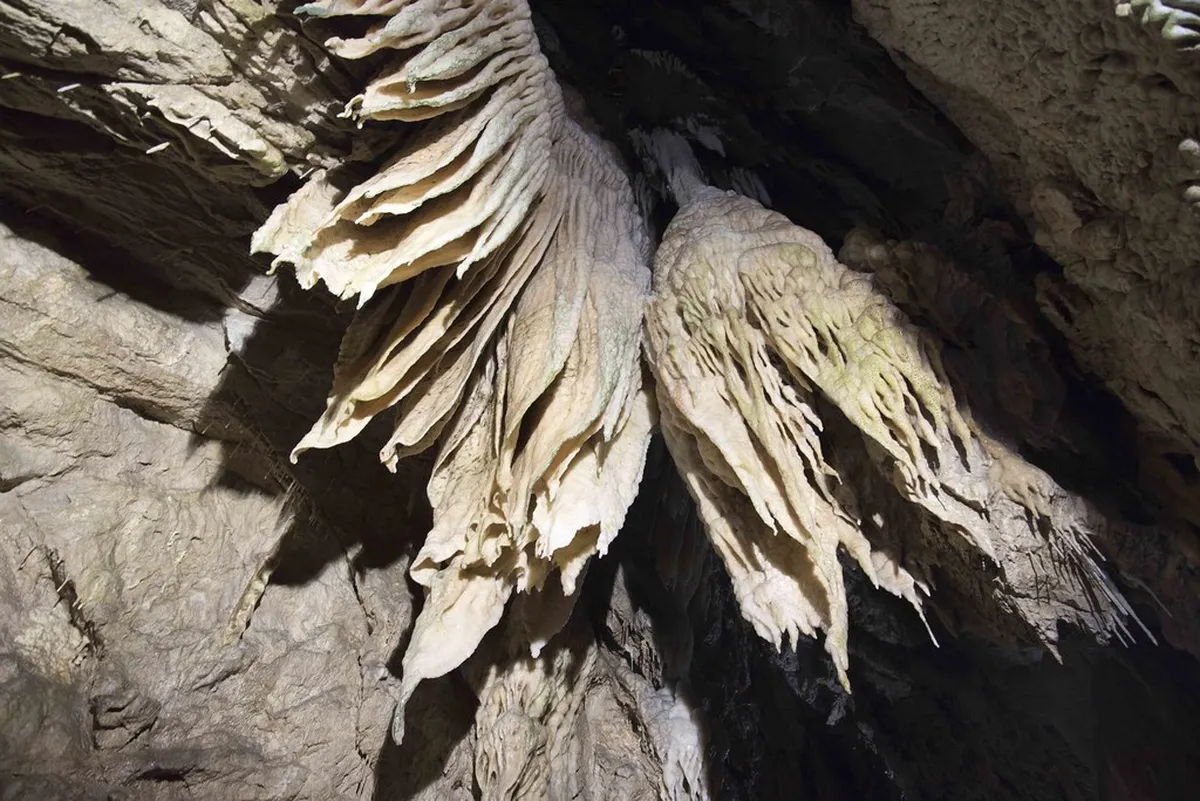
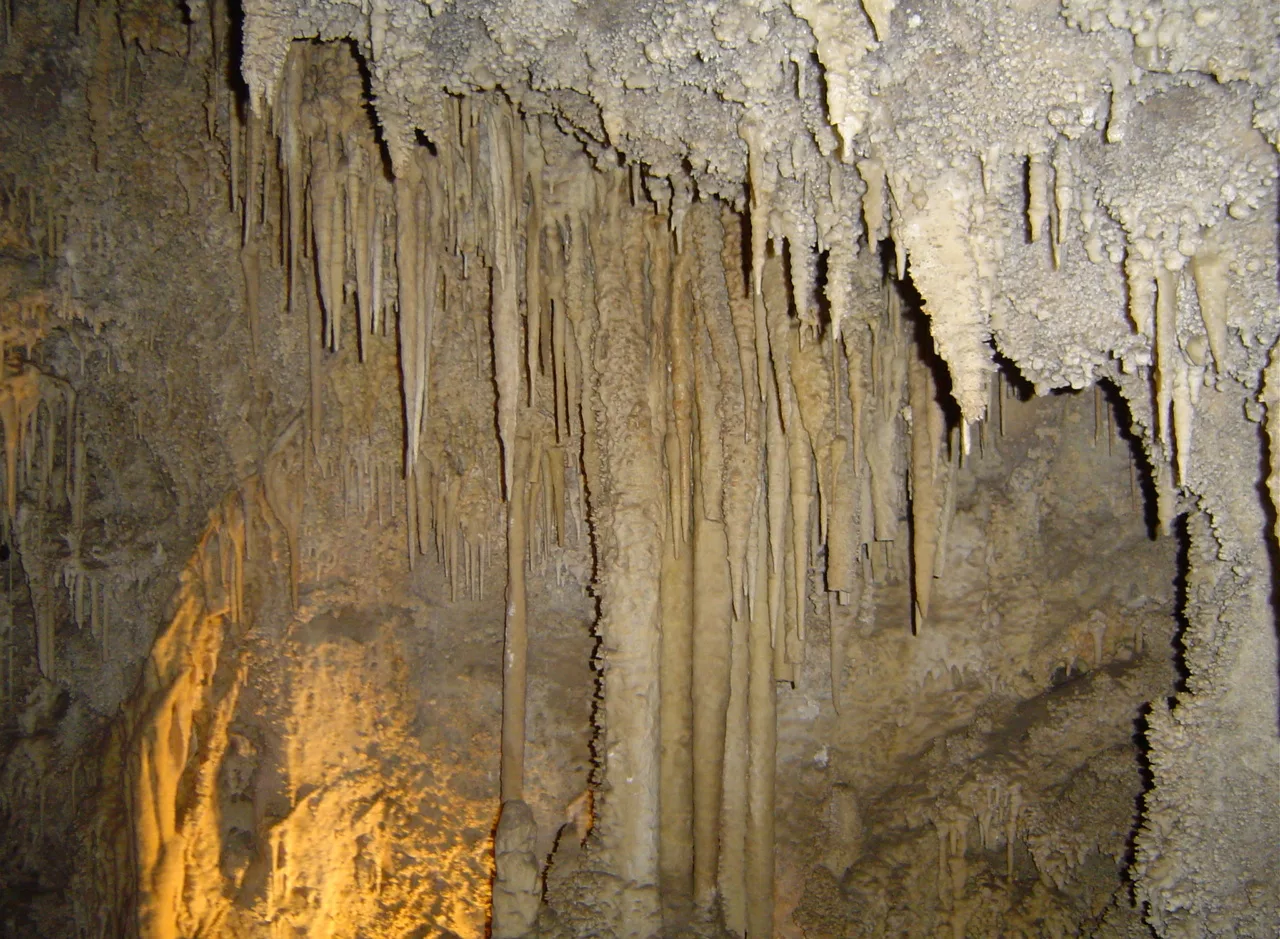
Uhlovitsa's calling card is its corallites — small, coral-like knobs of calcite that form from mineral-rich water splashing and evaporating rather than steadily dripping, which is why they branch outward instead of hanging down like ordinary stalactites. They coat entire chamber walls in several spots, and they're the real reason for the "palace" nickname, more than any single formation.
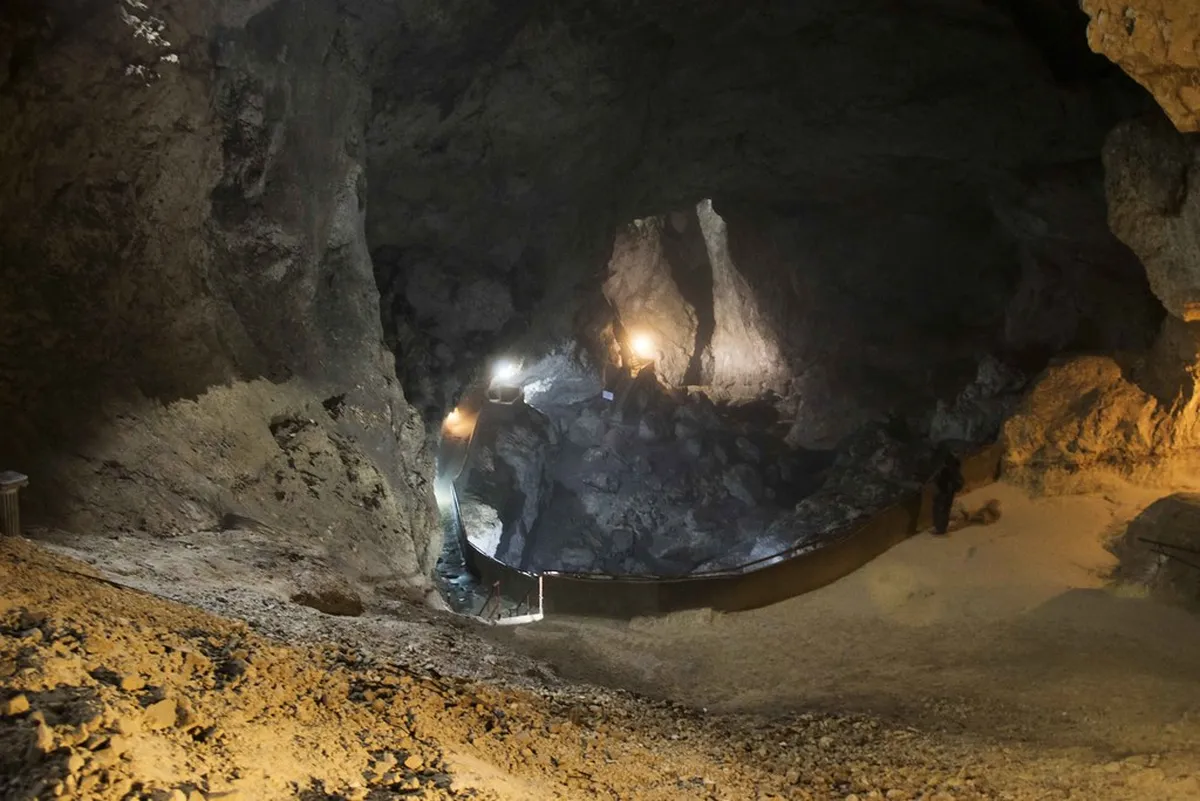
The guided route crosses two connected floors, with steep internal stairs linking the upper and lower levels — a noticeably different layout from Yagodina Cave Visitor Guide's mostly single-level path. The standout feature is a large flowstone cascade known locally as the Icefall, which glazes over with real ice in the coldest winter months and looks like frozen water year-round under the tour lighting.
According to en.Wikipedia.org, the cave runs roughly 460 meters total, of which about 330 meters are developed and lit for the public tour; the rest stays closed to protect more fragile passages. Small, clear pools sit along the route, and the path is arranged so nearly every turn reveals a new shape — stone curtains, thin draperies, and clusters of pearl-like crystals among them.
Practical Details: Opening Hours, Ticket Prices, and Tours
Entry is guided-group only, with tours departing on the hour once enough visitors have gathered. Arrive at least 15 minutes before your target slot, since a small group can fill quickly in peak summer weeks.
Tickets are inexpensive by Western European standards: budget roughly 3 EUR (about 6 BGN) for an adult, with reduced rates for students and children. Treat these as approximate and confirm on-site, since small increases happen year to year, and bring cash — card readers are unreliable this far into the mountains. The guided portion runs about 40 minutes underground, on top of the uphill walk to reach the entrance.
Photography is generally allowed without flash, to protect the cave's micro-environment, though tripods are awkward on the narrow walkways during a moving group tour. Guides — mostly Bulgarian-speaking, with limited English — share the discovery history and point out the best-lit formations; check Visitbulgaria.com for the latest word on seasonal hours before you drive out.
- Summer season (roughly May-September)
- Hours: 09:00-17:00, last entry 16:00
- Days: daily
- Tours: on the hour, group-dependent
- Winter season (roughly October-April)
- Hours: reduced, commonly closed Monday-Tuesday
- Note: some local sources list Wednesday-Sunday, 10:00-16:00
- Always confirm the current schedule with Smolyan tourist information first
- Visitor requirements
- Guide: mandatory for entry
- Group: usually a small minimum before a tour departs
- Language: Bulgarian, limited English
- Duration: about 40 minutes inside, plus the approach walk
When to Go: Seasonal Access, Temperature, and What to Wear
The interior holds a steady 10-11°C year-round, so the biggest planning variable isn't the calendar — it's the jump between a hot Rhodope summer day outside and cave-cellar temperatures a few steps in. That contrast catches first-time visitors off guard more than any other detail about Uhlovitsa.
Spring brings wildflowers along the approach trail and a greener Arda valley, but heavy rain can occasionally force a temporary closure, so check ahead after a storm. Summer is the easiest season logistically — full daily hours and the most tour departures — but also the busiest. Winter thins the crowds dramatically and, in the coldest stretches, turns the Icefall formation into real ice, though you'll want winter tires for the mountain roads and should expect the reduced off-season schedule.
- A light jacket or fleece, even on a hot day outside
- Long trousers rather than shorts — the internal stairs and damp rock reward coverage
- Closed-toe shoes with grip, both for the 180-step ascent and the interior floors
- A light extra layer for humidity — the air feels colder than the thermometer suggests
Beyond the Cave: Exploring the Upper Arda Valley
A natural day-trip sequence links Smolyan, the cave, and Mogilitsa village: drive down from Smolyan, tour Uhlovitsa, then spend the afternoon at the Agushevi Konatsi, a fortress-like 19th-century feudal residence and one of the largest Ottoman-era konaks left in the Balkans. This loop is what most local guesthouses recommend, and it fits comfortably into a single day if you start early.
Mogilitsa and the surrounding valley have become a quiet base for slow travel — guesthouses serving home-cooked Rhodopean patatnik and fresh yogurt, and patchy cell service that pushes visitors toward the kind of digital-detox weekend the region is increasingly known for. It's less an organized wellness product than a side effect of the geography, but it's real, and many visitors mention it as the unexpected highlight of the trip.
With more time, extend the loop to Shiroka Laka Visitor Guide, known for its folk-music school and Rhodope architecture, or the Trigrad Gorge Visitor Guide. Either pairs naturally with a Uhlovitsa morning, turning one cave visit into a fuller two- or three-day picture of the Upper Arda.
Continue planning: Use Pamporovo Attractions: Top 9 Things to Do in the Rhodope Mountains to connect this guide with the rest of your Bulgaria itinerary.
Frequently Asked Questions
How long does the Uhlovitsa Cave tour take?
The guided tour through the developed 330 m section lasts about 40 minutes. Add roughly 20-30 minutes for the uphill walk from the car park to the cave entrance before the tour begins.
How difficult is the visit and are there many stairs?
The visit involves an uphill approach path of about 1 km and staircases inside the cave (around 200 steps in total), so it requires reasonable fitness. Paths can be damp and slippery.
How cold is it inside, and should I bring a jacket?
The interior stays around 10-11 C all year, so a jacket is recommended. In winter the cave's waterfalls and flowstone can freeze into spectacular ice formations.
What days and hours is Uhlovitsa Cave open?
It is a seasonal cave with guided tours on the hour and a last entry around 16:00. In summer (about May-September) it typically opens daily; in the colder months it runs on reduced days (commonly closed early in the week), so it is best to confirm hours locally before you go.
Do I need a guide to enter?
Yes. Entry is only with a guide, and groups are admitted at set times on the hour. Note that the accompanying lecture is delivered in Bulgarian.
What is special about Uhlovitsa Cave?
It is prized for its unusual dendritic 'corallite' popcorn formations and cascade-style flowstone, including a feature called the Icefall. It is one of the higher-altitude show caves in the Rhodopes at about 1,040 m.
How do I get to Uhlovitsa Cave from Pamporovo?
The cave lies about 3 km northeast of Mogilitsa village and roughly 30 km southwest of Smolyan, near the road between Smilyan and Mogilitsa. From the parking area at the base it is about a 1 km uphill walk (20-30 minutes) to the entrance.
Uhlovitsa Cave is more than just a geological site; it is a journey into the ancient history of the Rhodope Mountains. From the heart-pumping climb to the delicate corallite formations, every moment offers something unique. It remains a worth considering forone exploring the southern reaches of Bulgaria in 2026.
Whether you are a seasoned hiker or a casual nature lover, the Underground Palace will leave a lasting impression. The combination of physical challenge and natural beauty makes it a standout destination in the Upper Arda Valley. Pack your jacket, lace up your boots, and prepare for an unforgettable subterranean adventure.
For more Pamporovo planning, read our Day Trips from Pamporovo 2026: Smolyan, Caves & Rhodope Highlights guide.