Thracian Tomb of Kazanlak Visitor Guide
The Thracian Tomb of Kazanlak stands as a masterpiece of ancient art in central Bulgaria. This narrow brick tomb dates back to the late 4th century BC. It belongs to a larger necropolis near the ancient Thracian capital of Seuthopolis. For history lovers, this site offers a rare glimpse into the burial rituals of a lost civilization.
Visitors find the site nestled within the scenic greenery of Tyulbeto Park. The structure features a narrow corridor and a circular burial chamber with a beehive roof. Its world-class frescoes represent the best-preserved examples of Hellenistic painting in the Balkan region. This guide provides everything you need to plan a successful visit to this archaeological gem.
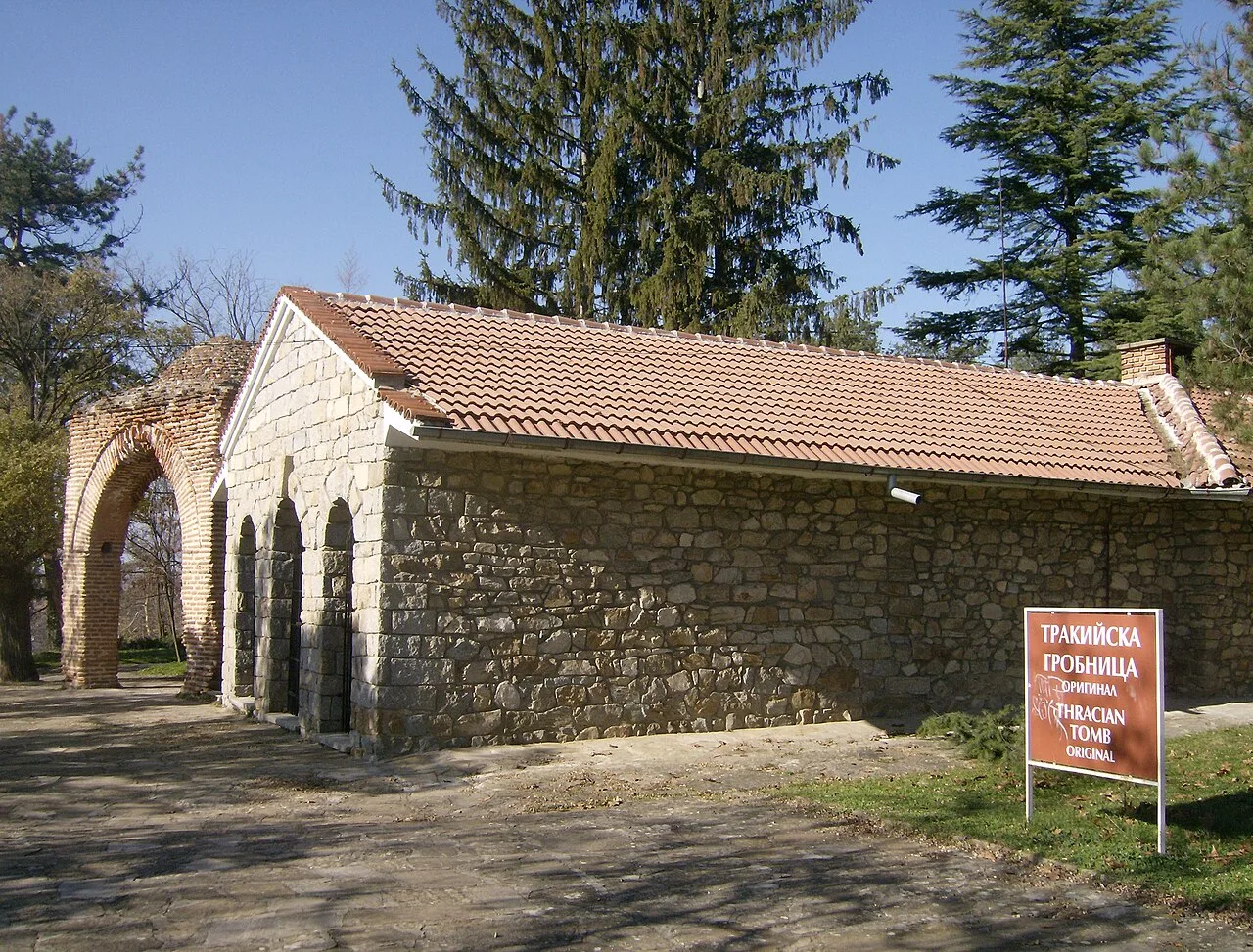
Understanding the difference between the original site and the replica is vital for your expectations. Because the ancient murals are extremely fragile, the original tomb remains closed to the general public. You will explore a perfect 1:1 replica that captures every detail of the ancient craftsmanship. This preservation strategy ensures the site remains intact for centuries to come.
Watch this walkthrough of the replica chamber to see the ancient frescoes and burial layout before you visit:
What is the Thracian Tomb of Kazanlak?
This ancient structure is a prime example of a Thracian tholos, or beehive-shaped tomb. It was built for a Thracian ruler and his wife during the Hellenistic period, in the late 4th century BC. The tomb consists of a narrow dromos corridor and a vaulted burial chamber. Experts consider the interior murals the most significant surviving example of Hellenistic-era painting anywhere in the Balkans.
The site sits on a low hill inside Tyulbe Park, on the edge of modern Kazanlak. The town itself lies at the heart of the Rose Valley (kazanlak) Visitor Guide, the region that supplies a large share of the world's rose oil. Many travelers use Kazanlak as a base for exploring the wider Stara Zagora province, pairing the tomb with a rose distillery or a drive into the Balkan Mountains. The surrounding park is quiet enough for an unhurried walk before or after the visit.
The tomb's architecture reflects the high social status of the couple buried inside. Precise stonework and geometry point to the engineering skill of the Thracian tribes, who once controlled territory stretching from the Danube to the Aegean. Today the tomb is a rare, tangible link to a culture that shaped the ancient Balkans but left almost no written record of its own.
History and UNESCO World Heritage Significance
Soldiers accidentally discovered the tomb in 1944 while digging a bomb shelter into the mound known locally as Tyulbeto. The find exposed a fully intact painted chamber, sealed beneath the earth for more than two thousand years, and it quickly became one of the most important archaeological discoveries in Bulgarian history.
UNESCO inscribed the site on the World Heritage List in 1979, one of Bulgaria's first entries, recognizing the murals as an exceptional and unrepeated record of Hellenistic Thracian art. You can read the official citation at whc.unesco.org. Nearly fifty years on, it remains one of the very few places anywhere in the world where Hellenistic-period murals have survived in this condition.
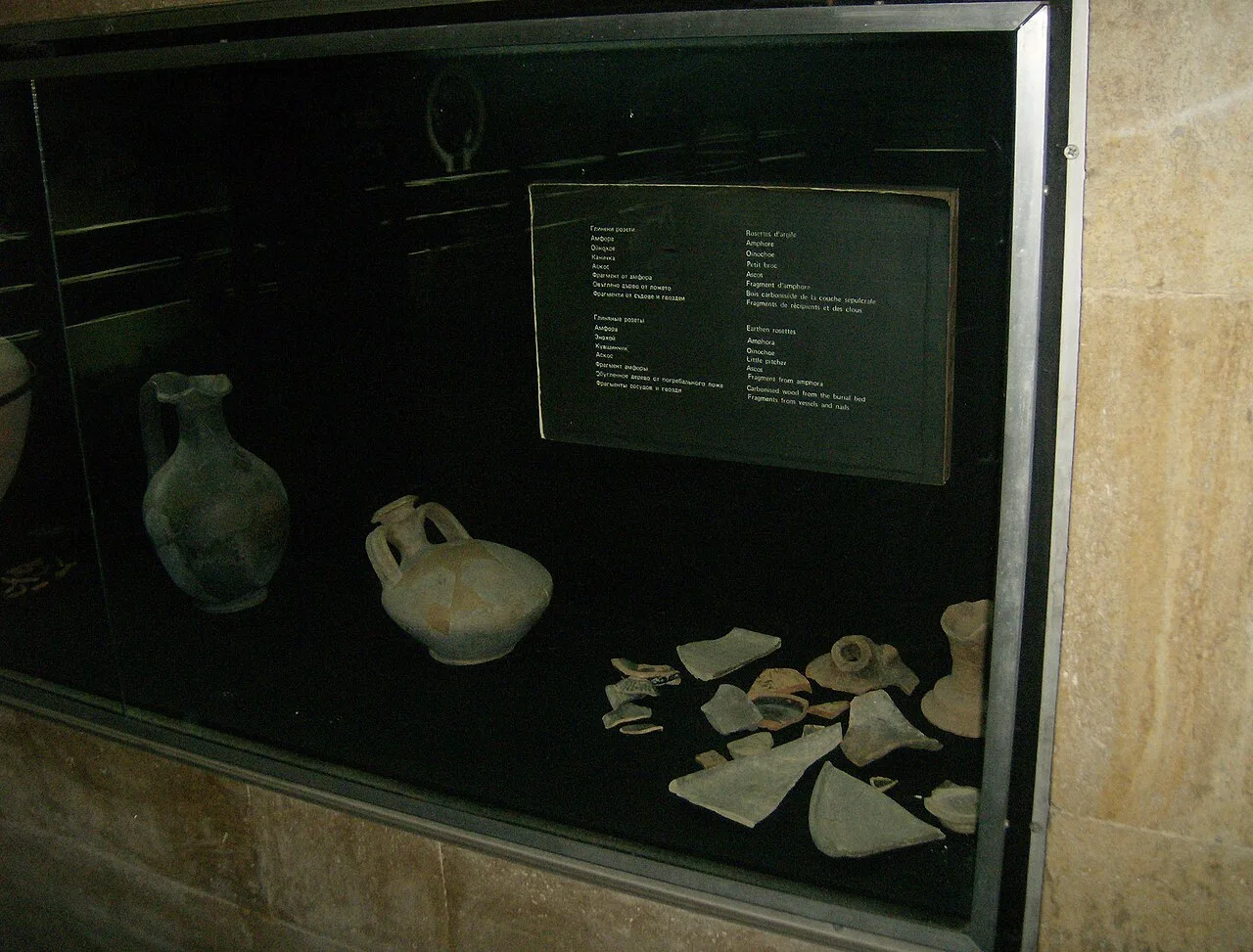
One detail rarely mentioned in the postcard version of the story: when archaeologists opened the chamber, there were no bones, no jewelry, and no grave goods inside. The tomb had already been broken into and stripped by robbers, probably within a generation or two of the burial - a fate shared by most of the roughly 1,500 mounds scattered across the surrounding valley. Looters wanted gold, not painted plaster, which is exactly why the frescoes survived while everything portable disappeared. It is also why the gold funerary masks and jewelry on display at the Iskra Historical Museum in town come from other, later-excavated mounds such as Golyama Kosmatka, rather than from the tomb you are about to see.
The Replica Experience: What You Will Actually See
To protect the fragile 2,300-year-old murals, authorities sealed the original tomb permanently. A precise 1:1 replica was built a few meters away in 1984 for public viewing, and this is the chamber every visitor enters today. Every brushstroke and color hue from the original has been reproduced, down to the plaster texture on the domed ceiling.
The burial chamber measures just 2.65 meters in diameter and 3.25 meters high, so the frescoes are close enough to study in real detail. Inside, the main frieze depicts a Thracian ruler and his wife at a ritual funeral feast, holding hands while surrounded by servants and musicians. A second, narrower frieze above the main scene shows a dramatic chariot race, full of motion despite its age.
Artists worked in natural mineral pigments - red and yellow ochre and black from charcoal - to build these images, and the colors still read as vivid rather than faded. Standing in the small chamber, it is the combination of scale and detail that lands hardest: this is a private, intimate space that was never meant to be seen by anyone after the burial.
- What to look for in the murals
- Main scene: a Thracian ruler and his wife at a ritual funeral feast
- Upper frieze: a chariot race in motion
- Figures: mourners, musicians, and attendants bearing gifts
- Palette: red and yellow ochre and black
Essential Visitor Info: Hours, Tickets, and Timing
Most visitors spend 20 to 30 minutes inside the replica and its small museum room - this is a short stop, not a half-day excursion. The site is a gentle 15-minute walk from central Kazanlak Attractions, and about the same distance again from the Kazanlak Rose Museum (Museum of Roses) Visitor Guide on the other side of town, which makes an easy walking loop if you are combining both stops in one morning.
The tomb is open daily from 09:00 to 17:00 in 2026. Adult admission is 3.07 EUR (6.00 BGN); students pay 1.02 EUR (2.00 BGN), and children under 7 enter free. Entry is free for everyone on the last Monday of every month, worth building a visit around if your schedule is flexible, though the chamber is also at its busiest that day. For any holiday-schedule exceptions, the official listing is maintained at tourism.government.bg.
- Photography without flash is allowed inside the replica; flash and tripods are restricted to protect the same pigment colors that led to the original being sealed.
- The dromos corridor and burial chamber are narrow and low-ceilinged - fine for most visitors, but worth knowing if you are prone to claustrophobia or traveling with a large tour group.
- The tomb, the Rose Museum, and the Iskra Historical Museum are all run by the same municipal museum authority, so it is worth asking at the ticket window whether a same-day combined ticket is available.
- Wear flat shoes - the path in from the car park runs over gravel and grass in Tyulbe Park rather than paved sidewalk.
Weekends and summer months bring the largest crowds, mostly school groups and coach tours arriving mid-morning. Coming right at opening or in the last hour before closing avoids most of that traffic; the chamber only comfortably holds a handful of people at a time, so a quiet slot means a longer, unhurried look at the frescoes.
Getting There: Transport from Sofia, Plovdiv, and Veliko Tarnovo
Kazanlak sits near the geographic center of Bulgaria, workable as a long day trip or an overnight stop from any of the main tourist bases. The table below compares the three common starting points.
| From | Distance | Best mode | Typical duration |
|---|---|---|---|
| Sofia | ~200 km | Train or bus, multiple daily departures from Sofia Central Bus Station | About 3 hours |
| Plovdiv | ~100 km | Bus or car over the Sredna Gora hills | 1.5-2 hours |
| Veliko Tarnovo | ~100 km | Bus or car through the Balkan foothills | About 1-1.5 hours |
The Sofia train is the scenic option, threading through the Balkan foothills via Karlovo, though buses run more often and are usually faster. From Plovdiv, a direct bus or shared taxi is simplest since rail options are limited. From Veliko Tarnovo, many travelers drive or bus via Gabrovo, crossing the Balkan Mountains at Shipka Pass - the same route that passes the Shipka Pass memorial.
Renting a car gives the most flexibility if you want to combine the tomb with other mounds in the valley or the mountain sites above Kazanlak. Parking is available near Tyulbe Park and around the town center, and roads in the region are well-marked with light traffic outside of festival weekends.
Is the Kazanlak Tomb Worth the Trip?
A 20 to 30 minute visit can feel like a lot to ask for a three-hour trip from Sofia, and it is a fair question. On its own, the tomb is small and quick to see; the case for making the trip rests on pairing it with everything else Kazanlak and the valley around it offer, rather than on the tomb alone.
Most visitors find the density of detail in the frescoes justifies the stop regardless of travel time - there is nothing else quite like it on this scale anywhere in Bulgaria. The intimacy of the small chamber is part of the experience rather than a drawback: you are close enough to see individual brushstrokes that a larger space would put at a distance.
To round out the trip, add the Iskra Historical Museum in the town center, where gold and jewelry recovered from other Thracian mounds in the valley - including the well-known finds from Golyama Kosmatka - are on permanent display. Seeing that material alongside the tomb's frescoes gives a fuller picture of Thracian burial culture than either site provides alone.
Beyond the Tomb: The Bulgarian Rose Festival
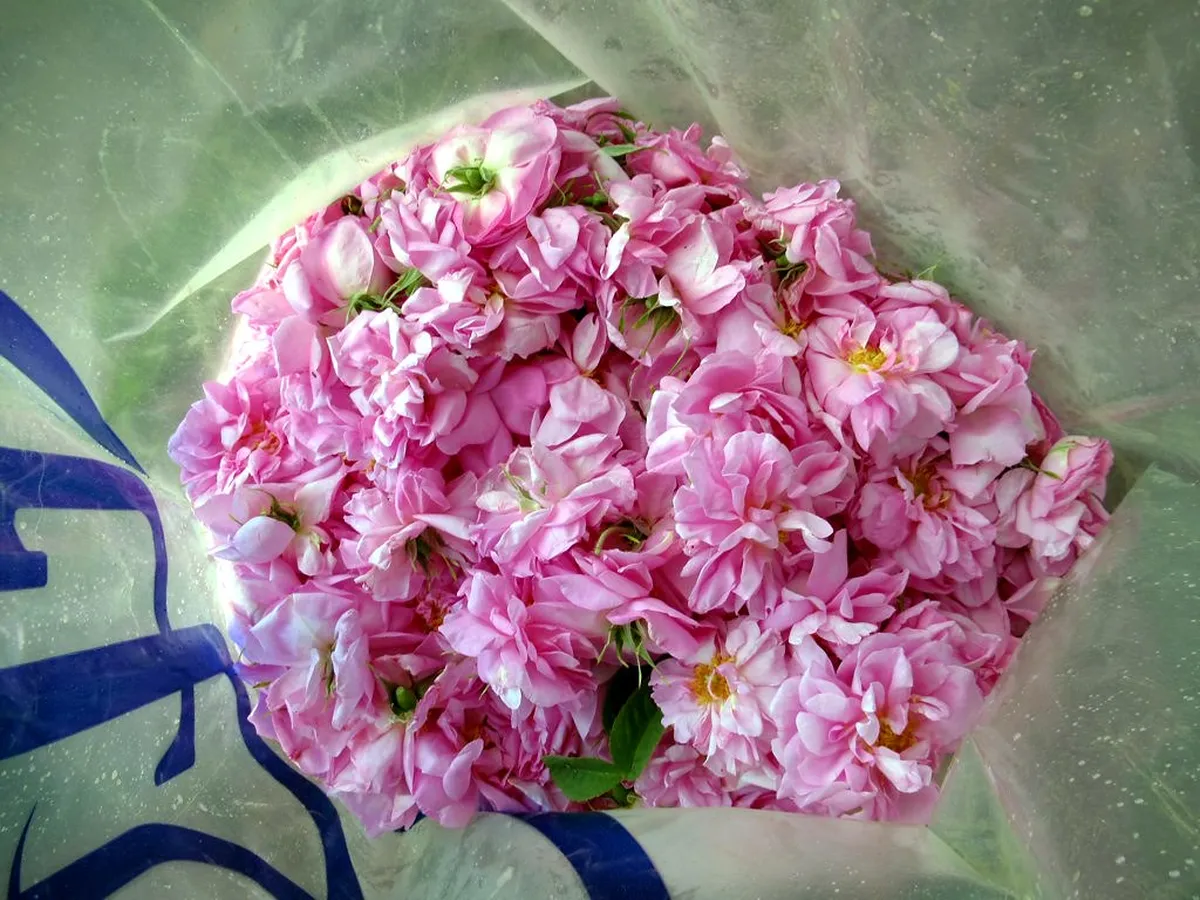
Visiting in late May or early June puts you in the valley during the Bulgarian Rose Festival, when the fields around Kazanlak are in full bloom. The main festival days fall on the first weekend of June, and dawn rose-picking demonstrations run in the surrounding villages throughout the harvest. It is a rare chance to see the industry that built the town's economy in full swing rather than in a museum display case.
The festival brings folk parades, traditional music, and rose-picking rituals staged for visitors, and it is also peak season for the tomb itself - expect longer waits at the door than on an ordinary week. If you are traveling during festival dates, book Kazanlak Attractions accommodation well ahead, since rooms fill up fast.
Outside festival week, the Kazanlak Rose Museum stays open year-round and explains why this particular valley, rather than any other rose-growing region, became central to the world's rose-oil supply. It is an easy add-on to a tomb visit and a good rainy-day alternative if the weather turns.
Exploring the Valley of the Thracian Kings
Kazanlak is the gateway to the Valley of the Thracian Kings, which holds more than 1,500 burial mounds, though only a handful are open to visitors. Golyama Kosmatka, believed to be the tomb of King Seuthes III, is a larger and more architecturally imposing stone structure than the Kazanlak tomb, and it is the obvious next stop for anyone who wants more than a replica.
Ostrusha, another nearby mound, is known for its single monolithic stone chamber - a very different construction technique from Kazanlak's brick tholos. Both sites sit within a short drive of the UNESCO tomb, and visiting more than one in a day gives a much clearer sense of how varied Thracian burial architecture actually was. For a more academic overview of the wider necropolis, see bhfieldschool.org.
If you have a full day rather than a quick stop, add the Kulata Ethnographic Complex Visitor Guide for a hands-on look at the copper stills once used for rose-oil distillation - a change of pace from burial mounds and a good midday break between sites. Consider closing the loop with the Shipka Memorial Church (nativity Memorial Temple) Visitor Guide on the Balkan Mountain slopes nearby, whose golden domes and 1877 war history make a striking contrast to the ancient tombs earlier in the day.
Continue planning: Use Kazanlak Attractions: Rose Valley, Thracian Tombs & Shipka to connect this guide with the rest of your Bulgaria itinerary.
Frequently Asked Questions
Can you go inside the original Thracian Tomb of Kazanlak?
No. To protect its fragile 4th-century BC frescoes the original tomb is permanently sealed for conservation. Visitors instead enter an exact, full-size replica built a few metres away that faithfully recreates the burial chamber and its paintings.
How much does it cost to visit the Thracian Tomb of Kazanlak?
Adult entry is 3.07 EUR (6.00 BGN) and students pay 1.02 EUR (2.00 BGN). Children under 7 enter free. Prices follow the Iskra Historical Museum tariff in effect from 05.01.2026.
What are the opening hours?
The tomb (replica) is open every day from 09:00 to 17:00.
Is there a free admission day?
Yes. Entry is free on the last Monday of each month.
Is the Thracian Tomb of Kazanlak a UNESCO World Heritage Site?
Yes. It was inscribed on the UNESCO World Heritage List in 1979 as a masterpiece of the Thracian creative spirit.
Where is the tomb located and how do I get there?
It sits in Tyulbe Park on the northeastern edge of Kazanlak in central Bulgaria. It is a short walk or drive from the town centre, with visitor parking nearby on General Radetski Street.
How long does a visit take?
The replica chamber is small, so most visitors spend around 20-30 minutes seeing the tomb and its frescoes.
What will I see inside?
A domed beehive burial chamber and corridor decorated with Hellenistic-era murals, most famously a frieze of a Thracian couple at a funeral feast - among the finest surviving ancient paintings in the Balkans.
The Thracian Tomb of Kazanlak remains an essential stop for anyone exploring Bulgaria's rich heritage. Its UNESCO-listed frescoes provide a rare window into the artistic soul of an ancient warrior culture. By visiting the replica, you help preserve the original masterpiece for many generations to come.
Make the most of your trip by exploring the wider Valley of the Thracian Kings and the local rose industry. Combining these sites creates a diverse and memorable travel experience in central the country. We hope this visitor guide helps you navigate the history and logistics of this incredible destination.
Whether you are a history buff or a casual traveler, the tomb's beauty is sure to leave a lasting impression. Plan your journey today to witness one of the ancient world's greatest artistic treasures. The Rose Valley is waiting to share its secrets with you in 2026 and beyond.
For comprehensive planning, read our 7 Best Things to Do in Kazanlak (2026), 2-Day Kazanlak Itinerary, and Thracian Tomb Of Kazanlak Travel Guide.
For the latest official information, see the Thracian Tomb of Kazanlak on Wikipedia.