Shipka Memorial Church (nativity Memorial Temple) Visitor Guide
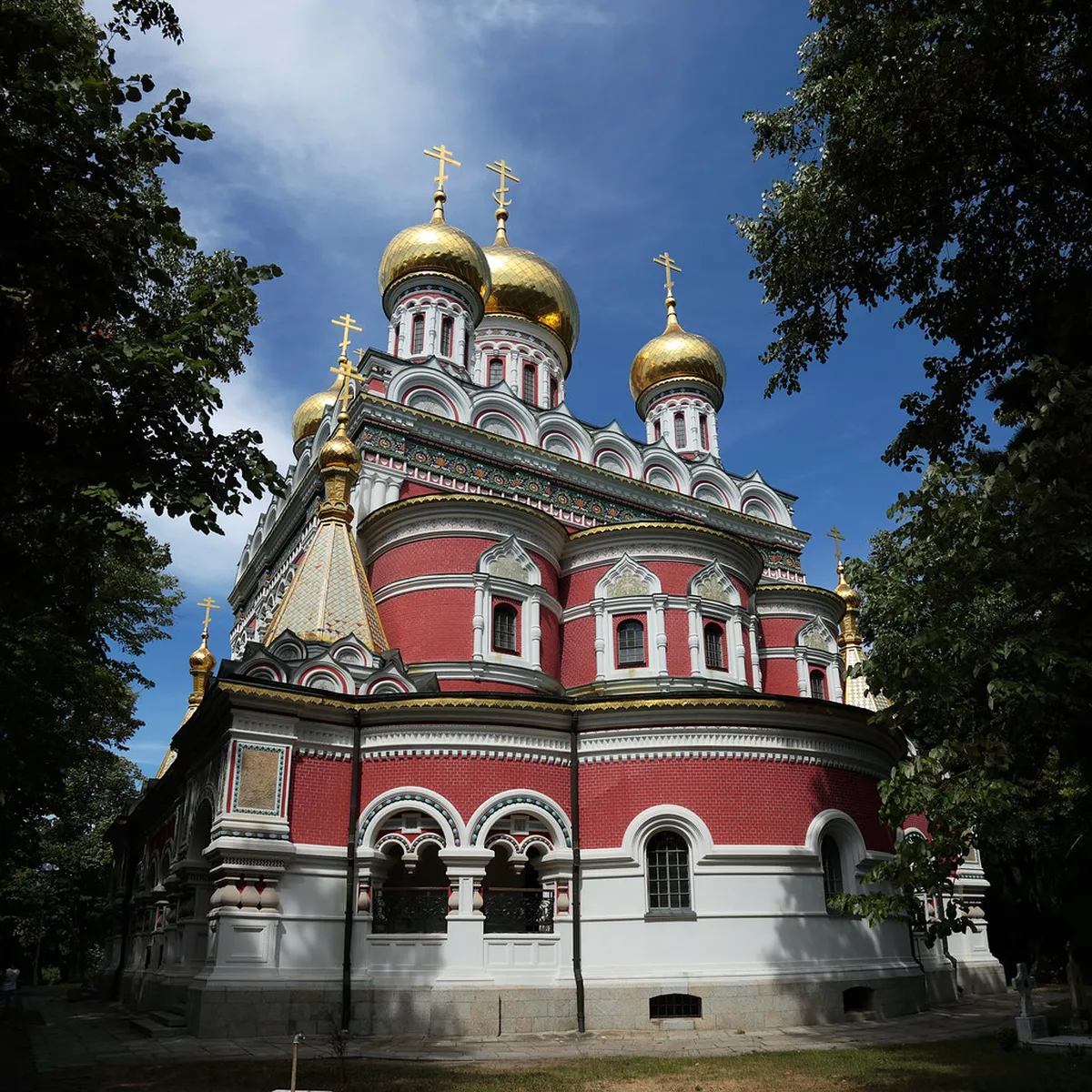
The five gold domes of the Shipka Memorial Church catch the sun long before you reach the village of Shipka, on the northern edge of the Rose Valley about 13 km from Kazanlak. Formally the Nativity Memorial Temple, it was raised in Russian Revival style to honor the Russian and Bulgarian dead of the Russo-Turkish War of 1877-78, and it still works as an active Bulgarian Orthodox parish and monastery rather than a roped-off monument. Entry is free every day of the year, in every part of the grounds, and donations toward its upkeep are welcomed but never asked for.
For a closer look at the distinctive golden domes and the monastery setting, here's a visual tour:
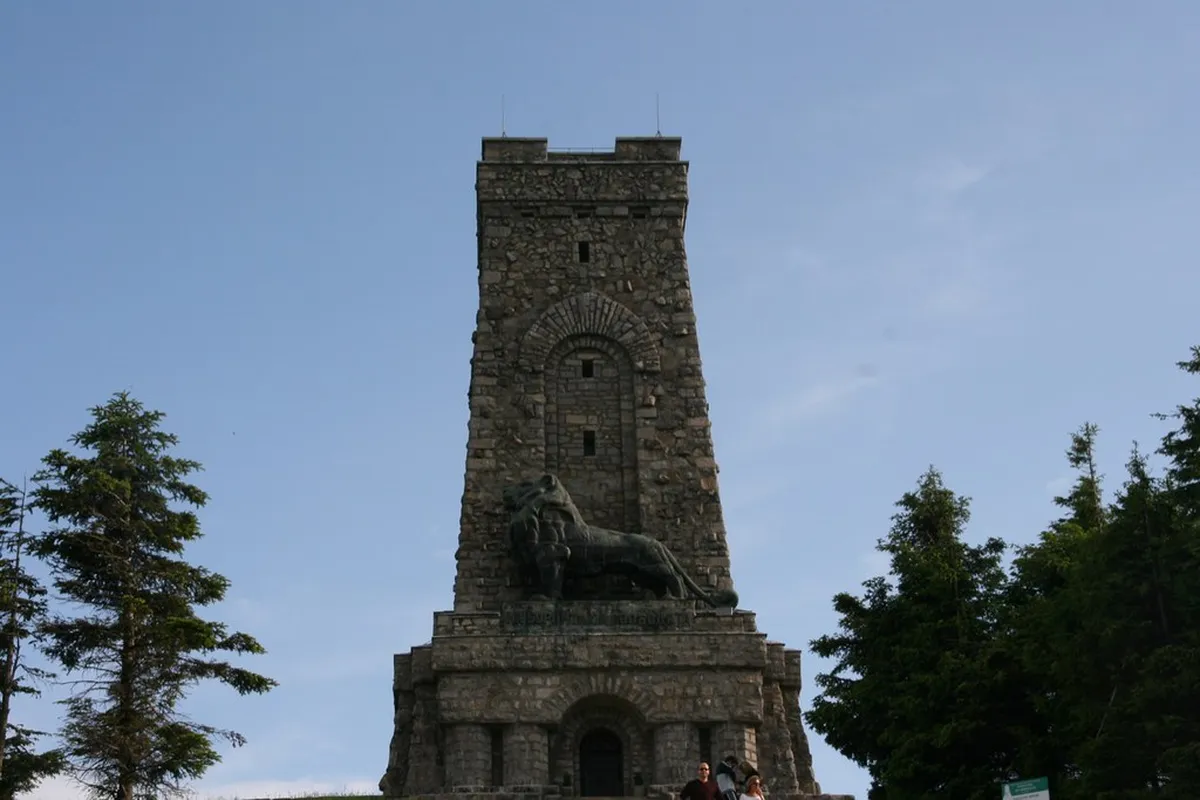
This is a separate site from the stone Freedom Monument that crowns Shipka Pass higher up the mountain road — the two are often visited together, but the facts below apply only to the church in the village. The temple opens daily, 08:30-18:00 from May through October and 08:30-16:30 from November through April in 2026, and it sits within easy reach of the wider Kazanlak Attractions sightseeing circuit.
Must-See Shipka Attractions
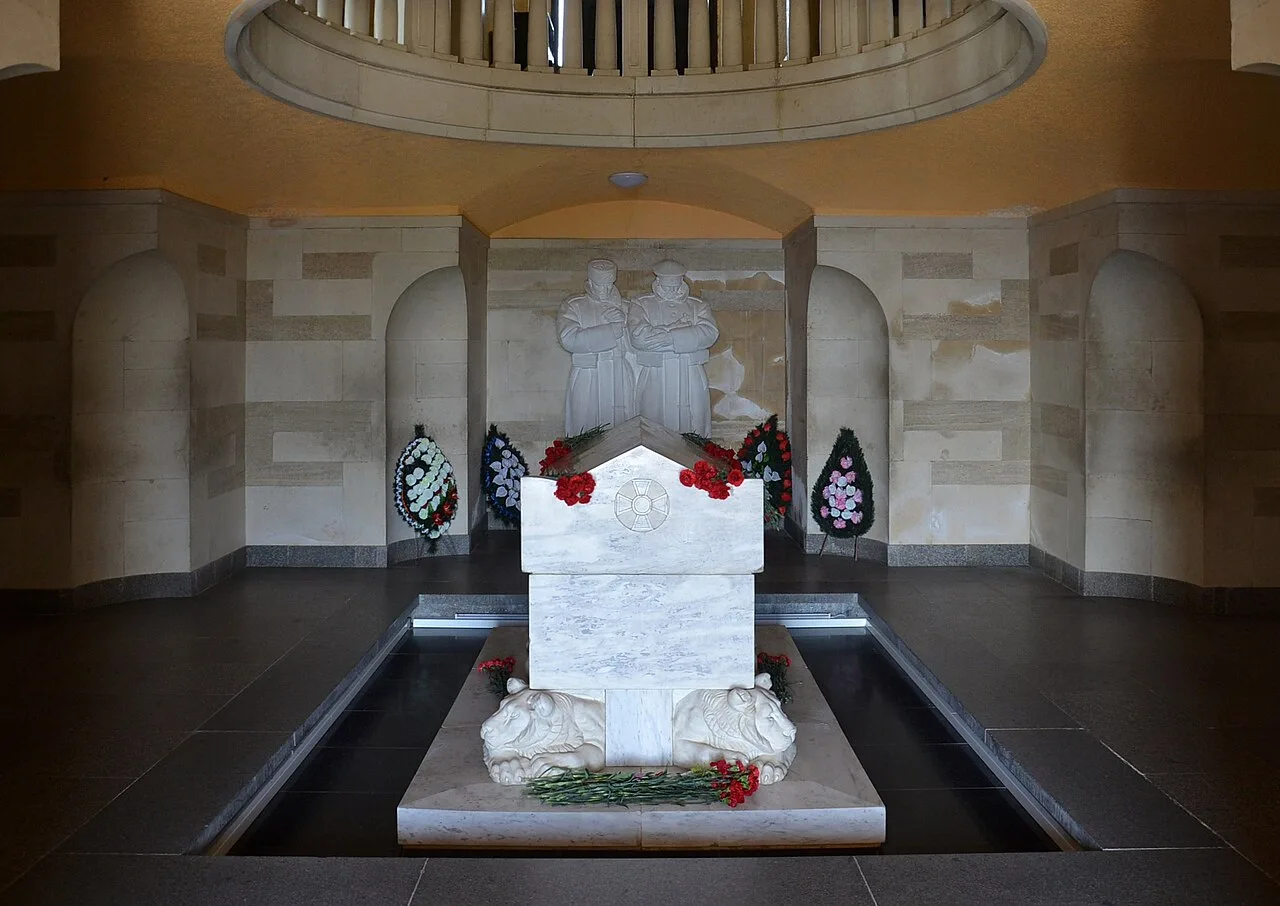
The church's five gilded onion domes are the reason most people stop here at all, visible from the road well before the turnoff into Shipka village. Beneath the main sanctuary, a narrow internal stairway leads down to a memorial crypt where marble sarcophagi hold the remains of soldiers who died defending the pass — a quiet, cool space that contrasts sharply with the gold and color above. Give the church itself 45-60 minutes; longer if you plan to combine it with the pass or the wider Kazanlak circuit.
Outside, ceramic tiles and carved stone details run along the courtyard walls, and the separate 53-metre bell tower is worth walking around rather than just photographing from the parking area. Weekday mornings before the tour buses arrive are the best window for unobstructed photos of the domes against the forested slope behind them.
- Fast highlights
- Five gilded onion domes, visible from the approach road
- Memorial crypt with marble sarcophagi, reached by internal stairs
- Free-standing bell tower, 53 metres tall
- Courtyard ceramic tile and stone carving details
Museums, Art, and Culture in Shipka
There is no separate museum wing or ticket desk here — the church's interior does the cultural work instead. A gilded iconostasis anchors the main prayer hall, and Orthodox murals of saints and Gospel scenes cover the walls and domed ceiling, painted by Russian artists in the early 1900s and restored more than once since.
Thirty-four marble plaques line the sanctuary walls and outer galleries, listing the Russian regiments and Bulgarian volunteer units that fought and died at Shipka Pass — the single most concrete artifact inside the building, and one worth reading slowly rather than photographing and moving on. Because the space is a working church, exhibits change little from year to year; what you're seeing is largely what pilgrims and soldiers' descendants have been seeing since 1902.
Services still run in Bulgarian, so a printed English information sheet (sometimes available near the entrance) or a translation app fills in details the murals alone won't explain.
Parks, Gardens, and Outdoor Spots in Shipka
The monastery courtyard blends straight into pine forest, and shaded benches around the grounds make for an easy rest stop after the crypt. The elevation keeps the air noticeably cooler than Kazanlak below, even in the height of summer.
A marked trail climbs from near the church toward the Shipka Pass Freedom Monument at the summit — allow 30-45 minutes by car on the switchback road, considerably longer on foot, and expect a genuine mountain hike rather than a stroll if you walk it. Families tend to stick to the courtyard and lower paths; the uphill route is better suited to visitors with sturdy shoes and some time to spare.
Family-Friendly and Budget-Friendly Options in Shipka
There is no charge anywhere on site — not for the church, the courtyard, the crypt, or taking photographs. That makes Shipka one of the better zero-cost stops on a Kazanlak-area itinerary, and children generally respond well to the scale of the bells and domes even before they grasp the history.
One practical gap worth knowing before you go: the main sanctuary and courtyard are step-free from the entrance, but the crypt is reached only by a narrow stone stairway, which rules it out for wheelchair users, strollers, and anyone unsteady on steps. There's no ramp or lift alternative. Pair that with the language point above — the monks in residence typically explain the history in Bulgarian only, so travelers who want more than the plaques and murals convey should book an English-speaking guide out of Kazanlak or come with a translation app loaded.
Small stalls near the entrance sell brochures and regional souvenirs, including rose-oil products from the surrounding Rose Valley. On-site parking is available for visitors arriving by car. You can find more budget-focused planning for the area on the Kazanlak attractions hub.
How to Plan a Smooth Shipka Attractions Day
The drive from Kazanlak takes about 20 minutes over 13 km of scenic mountain road; regular public buses also connect Kazanlak and Shipka village if you're not driving. Arrive early — tour buses tend to cluster here from mid-morning onward, and the courtyard gets noticeably busier once they do.
As an active church, modest dress (shoulders and knees covered) and quiet behavior are expected, especially if a service is underway; photography is generally fine outside those moments but always follow posted signs. December 25 is the temple's patronal Nativity feast day, when resident monks hold the year's most significant liturgy — beautiful to witness if your visit lines up with it, but not the day to aim for if you want a quiet, unhurried look around.
Most travelers combine the church with the Shipka Pass Freedom Monument higher up the same road, and some extend the day north to the derelict Soviet-era Buzludzha Monument Visitor Guide for a fuller circuit of Bulgaria's 19th- and 20th-century memorial architecture. Budget three to four hours for the church and the pass together, more if Buzludzha is added.
Cultural and National Significance
The church stands as one of Bulgaria's clearest physical symbols of liberation from Ottoman rule, and it draws a steady stream of Bulgarian visitors making what amounts to a patriotic pilgrimage rather than an ordinary sightseeing stop. National Liberation Day, marked every March 3, keeps that association current even outside the church itself.
The Bulgarian state declared the church a cultural monument of national importance in 1970 (Issue No. 33 of the State Gazette), formalizing protections that had already governed its upkeep informally for decades. Ownership history reflects the church's origins: it was built and initially held as Russian Orthodox property, then transferred to Bulgaria in 1934, and today the site sits within the administrative framework of the Shipka-Buzludzha National Park-Museum while continuing to function as a working Bulgarian Orthodox parish with resident monks.
That dual identity — protected monument and living church — is part of what makes a visit here different from touring a museum piece. Candles are lit constantly by visitors as a private gesture of remembrance, and the building's day-to-day rhythm is still set by the liturgical calendar, not a visitor-center schedule.
Memorial and Symbolic Role
Every major element carries a deliberate memorial purpose. The bell tower holds 17 bells, cast partly from spent cartridges collected off the battlefields; the largest weighs roughly 1,643 kg and the tower itself rises 53 metres above the courtyard. The bells still ring out across the valley on commemorative dates.
Below the main floor, the crypt holds marble sarcophagi containing the remains of Russian and Bulgarian soldiers killed at Shipka Pass, and the 34 marble plaques upstairs record the names of the regiments and volunteer units involved — the closest thing the church has to a formal soldier registry. The gold of the domes was chosen deliberately to symbolize both divine light and the memory of the fallen.
None of this is presented as a static exhibit; it functions as an ongoing act of remembrance, renewed every time a candle is lit or a wreath is laid during an anniversary service.
Architecture and Design
The design follows the 17th-century Muscovite Revival tradition, generally attributed to Russian architects working in the school of Antoniy Tomishko and Alexander Pomerantsev, and it shows in the decorative arches, tent-shaped roof elements, and colorful ceramic tilework that would look at home in Moscow or Yaroslavl more than in the Bulgarian countryside. Five onion-shaped domes, gilded in gold leaf, sit atop a cruciform church plan with a rectilinear nave and three apses.
The bell tower is a freestanding structure separate from the main church body, rising 53 metres — one of the taller examples of its type anywhere in the Balkans. White stone carvings contrast against red brick on the exterior, and mosaic work frames the entrance portals.
Maintaining the gilded domes is a specialized, recurring job rather than a one-time build; the most recent restoration work focused on returning their original shine after decades of mountain weather.
Construction and Development
The idea for the church is usually credited to Russian diplomat Count Nikolay Ignatiev and Olga Skobeleva, mother of General Mikhail Skobelev, who championed a permanent memorial to the war dead soon after the fighting ended. Funding came almost entirely from public donations raised across Russia and Bulgaria, and residents of Shipka village donated the land the church stands on.
Construction began in 1885 and continued for 17 years through difficult mountain terrain and harsh winters, with the temple consecrated in 1902 to coincide with the 25th anniversary of the battles. A monastery building attached to the site houses the resident monks who still live and serve there today.
The church was Russian Orthodox property for its first three decades before ownership passed to Bulgaria in 1934, and it has undergone several restoration campaigns since to repair weather damage to the domes and frescoes.
Historical Context
The Battle of Shipka Pass (July 1877-January 1878) was fought several kilometers up the mountain road from where the church now stands, at the pass itself, where a heavily outnumbered force of Russian soldiers and Bulgarian volunteers held the crossing against repeated Ottoman assaults. That defense kept the road to northern Bulgaria open and fed directly into the country's liberation from Ottoman rule the following year.
It's worth being precise about geography here: the actual defensive lines, trenches, and the stone Freedom Monument commemorating the fighting sit at the summit of Shipka Pass, not around the church. The church was built afterward, down in the village, as a memorial temple rather than on the battlefield itself — a distinction that matters if you're trying to picture where the fighting actually happened versus where it's commemorated.
Understanding that split gives useful context before a visit: come to the church for the memorial and the religious art, and go up to the pass if you want to stand where the battle lines actually held.
Continue planning: Use Kazanlak Attractions: Rose Valley, Thracian Tombs & Shipka to connect this guide with the rest of your Bulgaria itinerary.
Frequently Asked Questions
How much does it cost to enter the Shipka Memorial Church?
Entry is free — there is no charge to visit the church or the surrounding monastery grounds. It is a working place of worship, so donations toward its upkeep and restoration are welcomed but never required.
What are the opening hours of the Shipka Memorial Church?
The church is open daily, with seasonal hours: roughly 08:30–18:00 from May to October and 08:30–16:30 from November to April. Because it is an active church, hours may shift around services, so allow some flexibility on the day.
How do I get to the Shipka Memorial Church?
The church stands on the wooded outskirts of Shipka town, about 13 km north of Kazanlak on the road toward Shipka Pass. It is easy to reach by car, taxi or organized tour, with clear signposts along the route; it is also a common stop combined with the Freedom Monument on Shipka Peak and the Rose Valley.
Why was the Shipka Memorial Church built?
It was built as a memorial temple to honour the Russian and Bulgarian soldiers who died in the Russo-Turkish War of 1877–78 that led to Bulgaria's liberation. Constructed between 1885 and 1902 and consecrated in 1902, its crypt holds stone sarcophagi with the remains of the fallen, and its bells were cast in part from cartridges gathered from the battlefields.
Is there a dress code for the Shipka Memorial Church?
Yes. As an active Orthodox church, visitors are expected to dress modestly — shoulders and knees covered — and to behave quietly and respectfully inside, especially during services. Photography rules can vary inside the church, so follow any posted signs or staff guidance.
What is the best time to visit the Shipka Memorial Church?
Spring and early autumn are ideal, with mild weather and the golden domes set against green forest; the nearby Rose Valley is at its best in late May to early June during the rose harvest. Mornings are usually quieter than midday, when tour groups arrive.
What is the Shipka Memorial Church known for?
It is instantly recognizable for its five gilded, onion-shaped domes and Russian Revival architecture, unusual in Bulgaria. Highlights include the towering 53-metre bell tower, the peaceful monastery setting, and its role as a memorial to the liberation of Bulgaria, which makes it one of the most visited sights in the Kazanlak area.
The Shipka Memorial Church rewards a slower visit more than a quick photo stop: the gold domes get you through the gate, but the crypt, the 34 marble plaques, and the still-active liturgical life of the place are what make it worth the 20-minute drive from Kazanlak. Free entry every day removes any reason to rush the decision.
Pair it with the Shipka Pass Freedom Monument above it and the wider Kazanlak Attractions sightseeing circuit below it, and the church becomes one stop in a coherent day of Bulgarian liberation history rather than an isolated curiosity. Just remember which site is which: the church commemorates in the village, the monument marks the battlefield up at the pass.
For more Kazanlak planning, read our 7 Best Things to Do in Kazanlak (2026), 2-Day Kazanlak Itinerary: Tombs, Roses & Shipka, and Shipka Pass And Memorial Travel Guide guides.
For the latest official information, see the Shipka Memorial Church (Nativity Memorial Temple) on Wikipedia, Shipka Memorial Church (Nativity Memorial Temple) official site and Shipka Memorial Church (Nativity Memorial Temple) official site.