Monument Of Liberty Visitor Guide
The Monument of Liberty stands at the exact center of Ploshtad Svoboda (Freedom Square), where Ruse's pedestrianised Aleksandrovska Street meets the rest of the city center. Unlike its far more famous American namesake, this monument needs no ferry, no ticket and no advance booking - it is a public square landmark that stays open around the clock, every day of the year, completely free to visit. Standing 17.8 metres tall and completed in 1908 by Italian sculptor Arnoldo Zocchi, it is the single most photographed symbol of a city that has long called itself Bulgaria's "Little Vienna" for its neoclassical facades and Danube-trade wealth.
This guide covers what the monument actually commemorates, how to read the sword, the lions and the chains carved into its base, and how to fold a short stop here into a longer walk around Freedom Square in 2026 without losing half a day to something that, done properly, takes under an hour.
This 3D reconstruction and historical tour provides a clear sense of the monument's scale, composition, and place at the center of Freedom Square:
A Monument to Bulgaria's Liberation from Ottoman Rule
The monument commemorates Bulgaria's liberation from five centuries of Ottoman rule, secured after the Russo-Turkish War of 1877-78. It was raised largely through public donations, organised by the Pobornik volunteers' society - the veterans' organisation representing the Bulgarian opalchentsi who had fought alongside the Russian army during the war. Sculptor Arnoldo Zocchi won the commission, working with Bulgarian architects Simeon Zlatev and Stoycho Kiryazov on the surrounding stonework; construction finished in 1908 and the monument was formally unveiled the following year, in 1909. Fundraising took years and was collected largely in small sums from opalchentsi veterans and ordinary residents rather than paid for outright by the state, which is part of why the monument has always been treated locally as a civic memorial rather than a government commission.
Ruse itself, known under Ottoman rule as Ruschuk, was one of the most heavily fortified administrative centers in the region and held out longer than most Bulgarian cities before the war ended. That local history is part of why the monument sits so squarely at the city's geographic and civic center rather than tucked into a park: for Ruse, liberation was not an abstract national event but something that played out in the streets around this exact square.
Reading the Symbolism: Sword, Lions and Chains
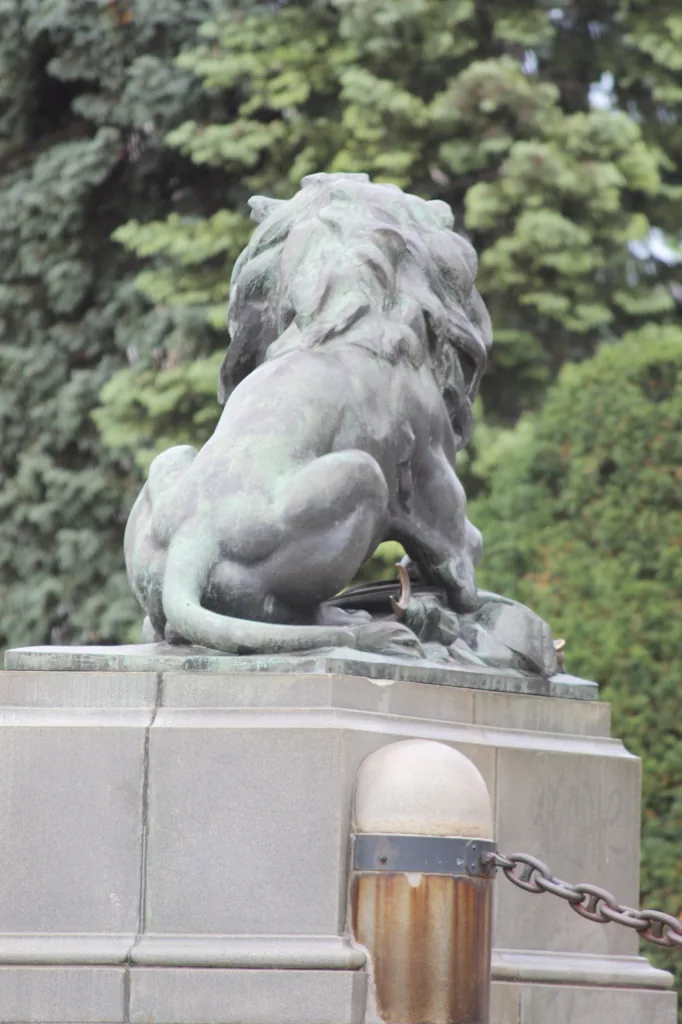
The bronze figure on top of the pyramidal stone base personifies a free Bulgaria. She holds a raised sword in her left hand, while her right hand points northwest - tradition holds this is the direction from which the liberating army arrived. At the base, two bronze lions face outward: one tears at broken chains with its mouth, representing the end of the Ottoman yoke, while the other stands guard over the Shield of Freedom.
Two cannons are mounted at the rear of the monument, trophies referencing the military campaign that made the liberation possible. Together the figures form one continuous narrative - conflict, liberation and vigilance - that is easy to read in under ten minutes if you walk a full circle around the base rather than viewing it only from Aleksandrovska Street.
Why She Points Northwest: The Monument's Very Local Geography
Most write-ups mention that the figure's outstretched hand points toward the liberators without explaining why that direction matters in Ruse specifically. The city sits directly on the Danube, and the Russian army that broke the Ottoman hold on the region approached from across the river to the north. From Ploshtad Svoboda, that means the gesture is not a symbolic abstraction - it lines up, roughly, with the actual river crossing that ended the siege of the city in the war's final weeks, shortly before the Treaty of San Stefano confirmed Bulgaria's liberation on 3 March 1878, still marked today as Bulgaria's National Day.
It's worth standing at the base and orienting yourself before you read the reliefs: face northwest, toward the river, and the composition starts to feel less like a generic liberty allegory and more like a specific piece of local memory. Locals still use "at the monument" (do pametnika) as shorthand for meeting in the city center, which says a lot about how thoroughly the statue has become part of Ruse's everyday geography rather than just a tourist stop.
Freedom Square and Ruse's "Little Vienna" Center
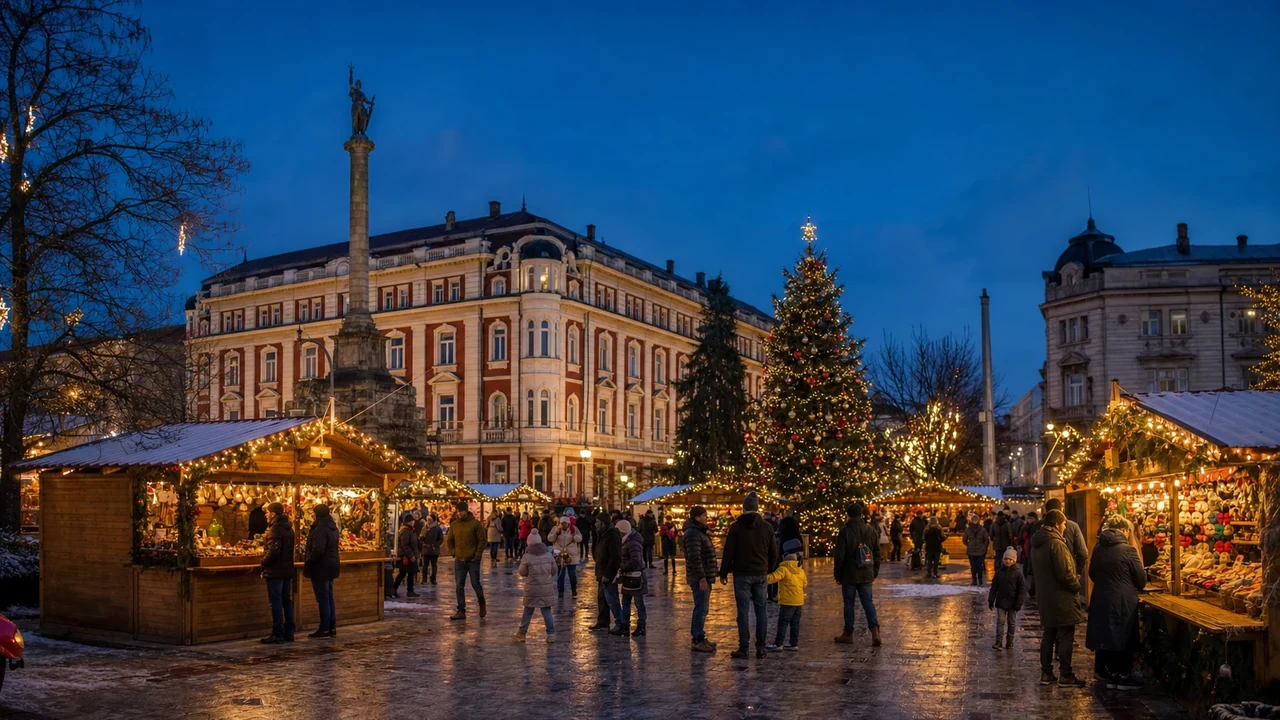
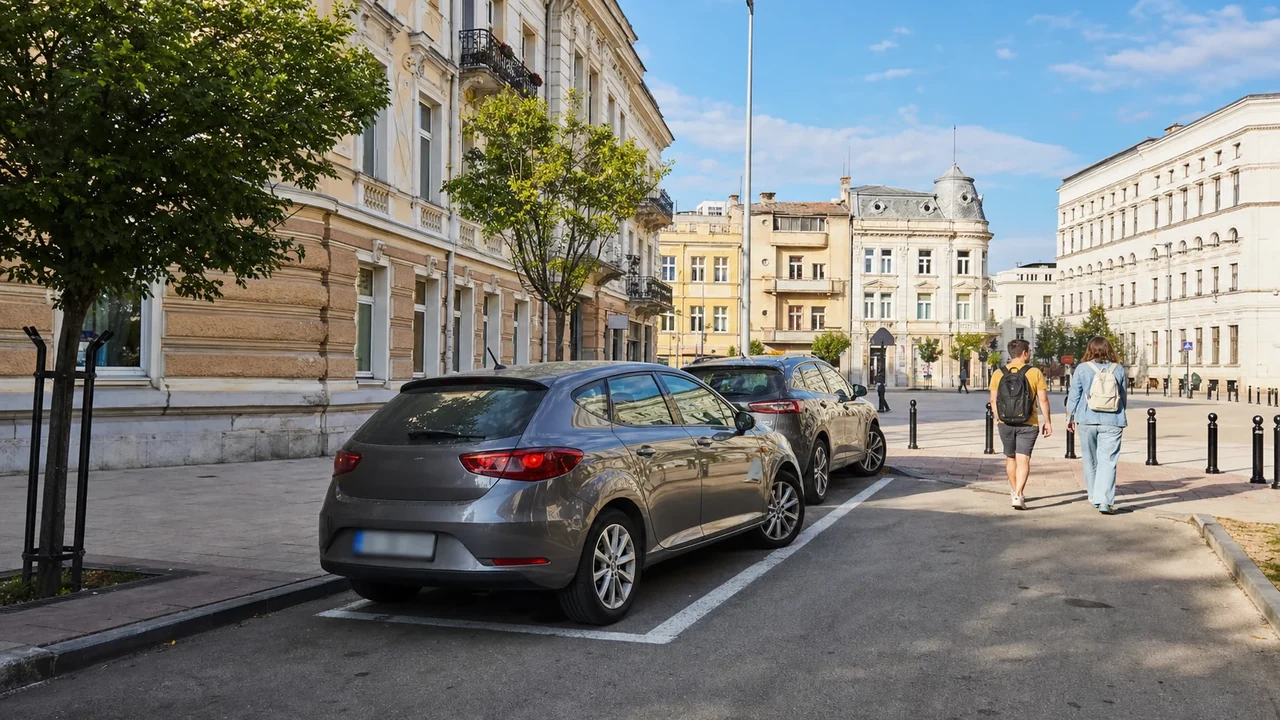
Twelve streets converge on Ploshtad Svoboda, which puts the monument at the literal center of the city rather than off to one side. Directly across the square stands the Dohodno Zdanie Visitor Guide, an ornate neoclassical theatre and former income-generating municipal building whose facade is one of the most photographed in Ruse; the Court House and other civic buildings frame the square's remaining sides.
The wider square, including its fountains and seating areas, is covered in more depth on our Freedom Square guide, but the short version is that this is Ruse's answer to a grand European plaza. The 19th-century Danube trade boom brought Austro-Hungarian and Central European architects and money into the city, which is why locals still nickname Ruse "Little Vienna" - a label that fits nowhere in the city better than the buildings ringing this square.
Getting There, Visiting Hours and the Best Time for Photos
There is nothing to book. The monument sits on open, unfenced public ground, so it is accessible 24 hours a day, every day of the year, at no cost. From Ruse's railway and bus stations it is roughly a 25-minute walk, or a short taxi or city-bus ride; if you are driving in for the day, there are parking areas around the square itself.
Early morning, before the cafes on Aleksandrovska Street fill up and before delivery traffic crosses the square, is the quietest window for photographs and the easiest time to read the reliefs without anyone standing in front of them. The monument is also lit at night, which changes its character completely - the bronze figure and lions stand out sharply against the stone base once the sun goes down, worth a second look if you're staying in the city center after dinner.
One day a year the square is genuinely busy: on 3 March, Bulgaria's National Day, official wreath-laying ceremonies and crowds gather right at the monument to mark the anniversary of the Treaty of San Stefano. If your trip lands on or around that date and you'd rather have the square to yourself, come well before mid-morning or plan your close look for the following day instead.
Accessibility and Visiting with Kids
The square is flat, paved and entirely step-free, which makes the monument one of the easiest sights in Ruse to reach with a wheelchair, a pushchair, or simply tired feet after a day of sightseeing. There are no gates, turnstiles or ticket queues to navigate, and benches around the square's fountains give you somewhere to sit while kids run around the open plaza.
Because it's free and needs no timed entry, it's an easy add-on rather than a planned excursion - you can walk through on the way between the train station and Aleksandrovska Street's cafes without adding real detour time to your day. Travelling with young children, the bronze lions at the base tend to be the highlight; older kids get more out of the visit once they know the liberation story behind the chains and the sword.
Not New York's Statue of Liberty
The name causes genuine confusion. Aside from the shared theme of a female figure personifying freedom, Ruse's monument has no connection to the statue in New York Harbor - it is a Bulgarian national-liberation memorial from 1908, built for an entirely different historical moment. If you arrived here searching for ferry times, crown-access tickets or Ellis Island information, none of that applies: there is no boat, no security line and no admission gate to plan around.
Locals do sometimes call their monument the city's own "Statue of Liberty" affectionately, which is part of how the naming mix-up spreads online. Treat the resemblance as a fun bit of trivia rather than a travel-planning shortcut, and plan your visit around Freedom Square's actual opening hours - which, since it's a public square, are simply always.
Rounding Out Your Visit: What's Nearby
Ten to fifteen minutes covers a proper look at the monument itself, but almost nobody stops there. The Regional Historical Museum, housed in the former Battenberg Palace a short walk away, is the natural next stop for anyone who wants more depth on the liberation period and Ruse's 19th-century boom years. The Ruse Opera and Holy Trinity Cathedral are both within a few minutes' walk of the square, and the Pantheon of National Revival Heroes - a domed memorial to the figures of Bulgaria's independence movement - rounds out a liberation-themed half-day if the monument's history has hooked you.
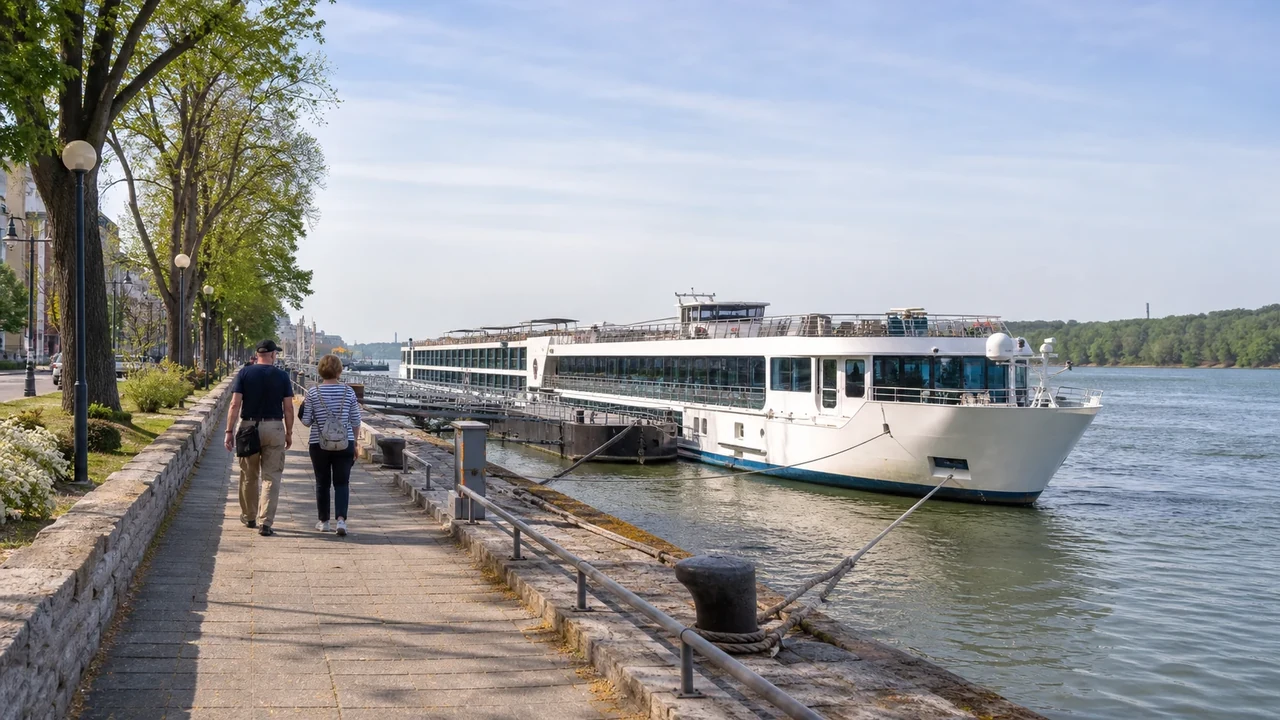
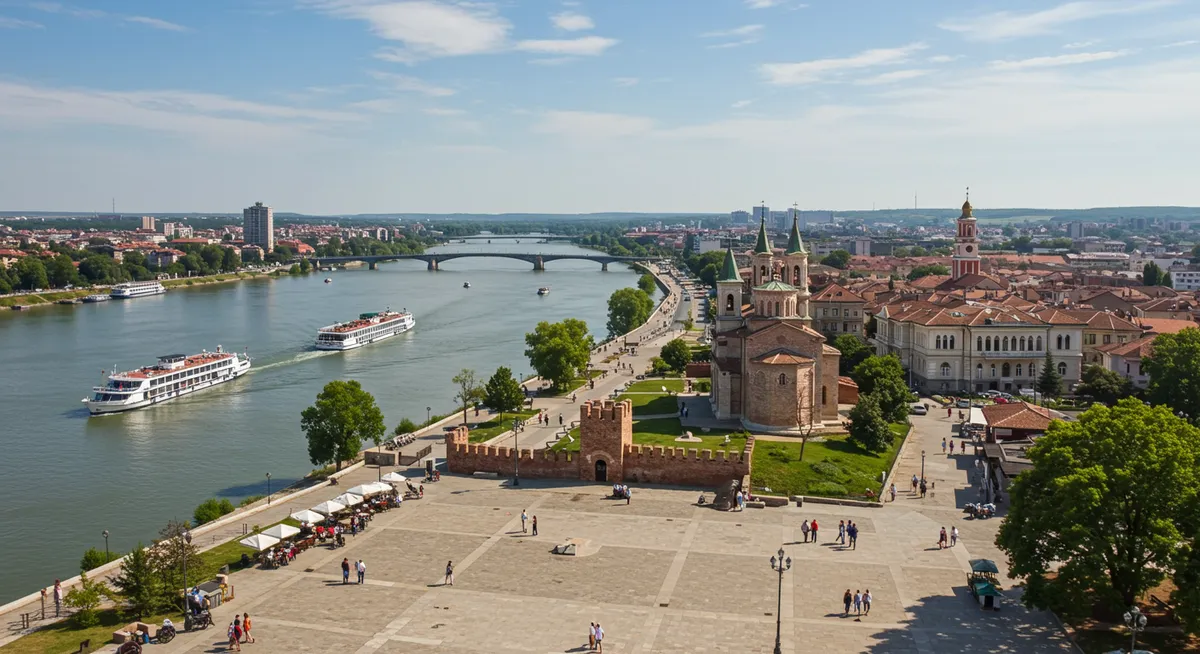
If you'd rather trade architecture for open air, the Danube Riverside Park is an easy downhill walk from the square and a good way to close out the afternoon along the river that the monument's gesture points toward. For a broader look at the city beyond this one corner, our guide to Ruse covers the rest of the "Little Vienna" itinerary.
Continue planning: Use Ruse Attractions: 10 Top Things to Do in Ruse, Bulgaria to connect this guide with the rest of your Bulgaria itinerary.
Frequently Asked Questions
How much does it cost to visit the Monument of Liberty in Ruse?
Nothing - the Monument of Liberty stands on an open public square in the pedestrianised heart of Ruse, so it is free to visit around the clock, every day of the year. There are no gates, tickets or opening hours to plan around.
Who built the Monument of Liberty in Ruse?
The statue and bas-reliefs are the work of Italian sculptor Arnoldo Zocchi, working with Bulgarian architects Simeon Zlatev and Stoycho Kiryazov. It was funded largely by public donations organised through the Pobornik volunteers' society, completed in 1908 and unveiled in 1909.
What does the Monument of Liberty in Ruse symbolize?
It commemorates Bulgaria's liberation from Ottoman rule. The female figure on top personifies free Bulgaria - she holds a sword in her left hand while her right hand points northwest, in the direction from which the liberators came. At the base, one bronze lion tears the chains of the yoke with its mouth while the other defends the Shield of Freedom, and two cannons stand at the rear.
How tall is the Monument of Liberty in Ruse?
The monument is 17.8 metres (58 feet) tall - a pyramidal stone composition topped by the bronze figure of Liberty. Its scale and position at the centre of Freedom Square make it visible along several of the twelve streets that converge on the square.
How do I get to the Monument of Liberty in Ruse?
It stands at the centre of Ploshtad Svoboda (Freedom Square), where Ruse's pedestrianised Aleksandrovska Street crosses the city centre. From Ruse's railway and bus stations it is roughly a 25-minute walk or a short taxi or city-bus ride; if you are driving, there are parking areas around the square.
How long do you need to see the Monument of Liberty?
Ten to fifteen minutes is enough to walk around the monument and read the reliefs, but most visitors combine it with Freedom Square itself, the Dohodno Zdanie theatre directly across from it, and a stroll along Aleksandrovska Street - which together make for an easy hour in Ruse's 'Little Vienna' centre.
Is the Monument of Liberty in Ruse related to the Statue of Liberty in New York?
No - apart from the shared theme of a female figure personifying freedom, they are unconnected. Ruse's monument is a Bulgarian national-liberation memorial created by Italian sculptor Arnoldo Zocchi in 1908, and locals sometimes affectionately call it the city's own 'Statue of Liberty'.
What else is there to see near the Monument of Liberty?
The Dohodno Zdanie theatre building faces the monument across Freedom Square, and the Court House and municipal buildings frame the square's other sides. Within a few minutes' walk are the Ruse Opera, the Holy Trinity Cathedral, the Regional History Museum in the Battenberg Palace, and the cafe-lined Aleksandrovska Street.
The Monument of Liberty rewards a slow, deliberate look more than a rushed photo stop - the sword, the lions and the northwest-facing gesture all tie back to a specific chapter of Ruse's history, not a generic liberty motif. Because it costs nothing and never closes, there's no reason to squeeze it into a single stop on a checklist; pair it with Freedom Square, the Dohodno Zdanie facade across the plaza, and a walk down Aleksandrovska Street, and you have an easy, unhurried hour in the center of one of Bulgaria's most distinctive cities.
For the latest official information, see the Monument of Liberty on Wikipedia and Monument of Liberty official site.