Balchik Beaches: Town Sands, Tuzlata Mud Lagoon, and Nearby Alternatives (2026)
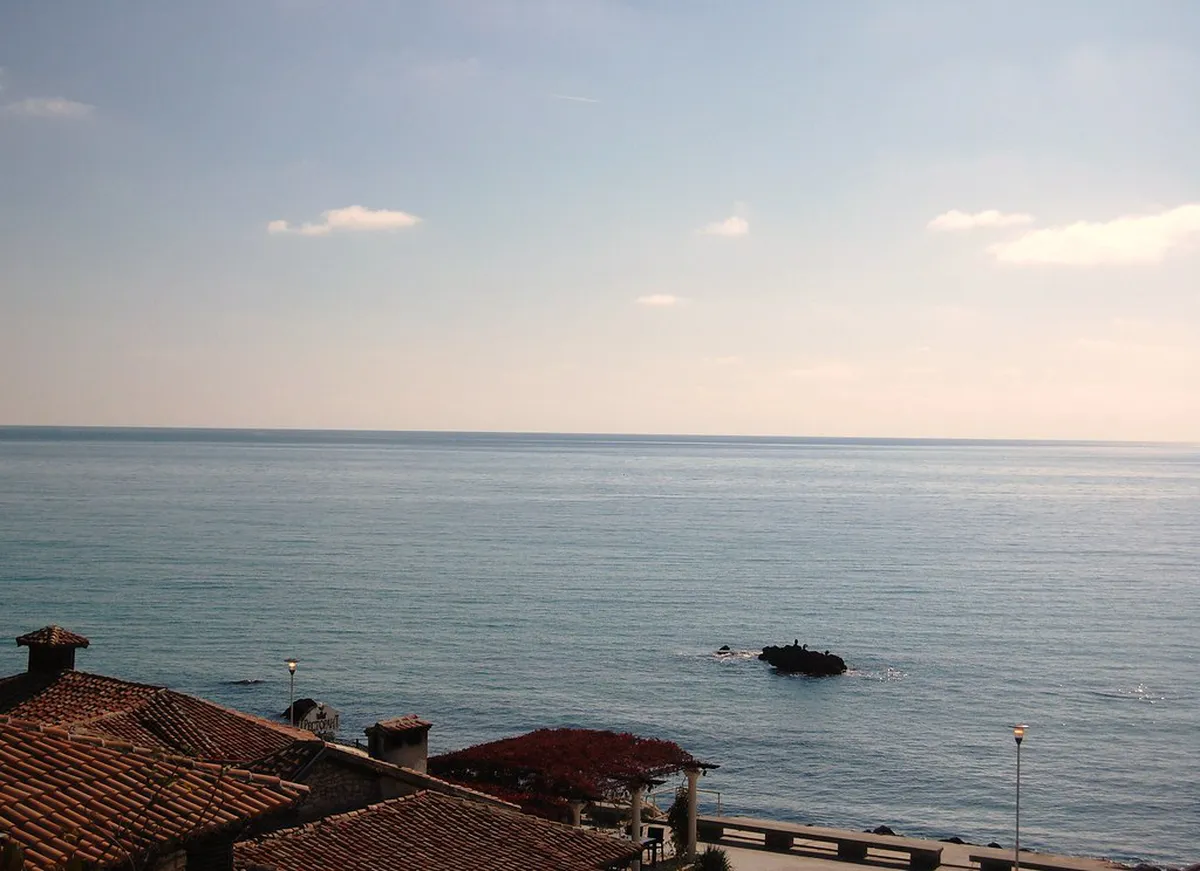
Balchik earns its reputation from limestone cliffs, a celebrated Botanical Garden, and a long seafront promenade — not from wide sandy beaches. That honesty matters if you are choosing between towns: Balchik is a compact northern Black Sea town of about 12,000 people where the beach is a pleasant add-on rather than the headline act. The town beach is real and swimmable, the water is clean, and the seafront walk is one of the more enjoyable on the Bulgarian coast. But if a sun-lounger-to-sea ratio is your primary metric, Albena — 12 km to the south — is what you are after.
What makes Balchik genuinely interesting from a beach perspective is what surrounds it: the Tuzlata estuary mud lagoon a few kilometres along the coast road, the quieter village beach at Kranevo, the boutique bay at White Lagoon towards Kavarna, and the easy bus connection to fully-developed Albena resort. This 2026 guide works through each option honestly, with practical details on access, water quality, and what each suits best.
The Town Beach and Seafront Promenade
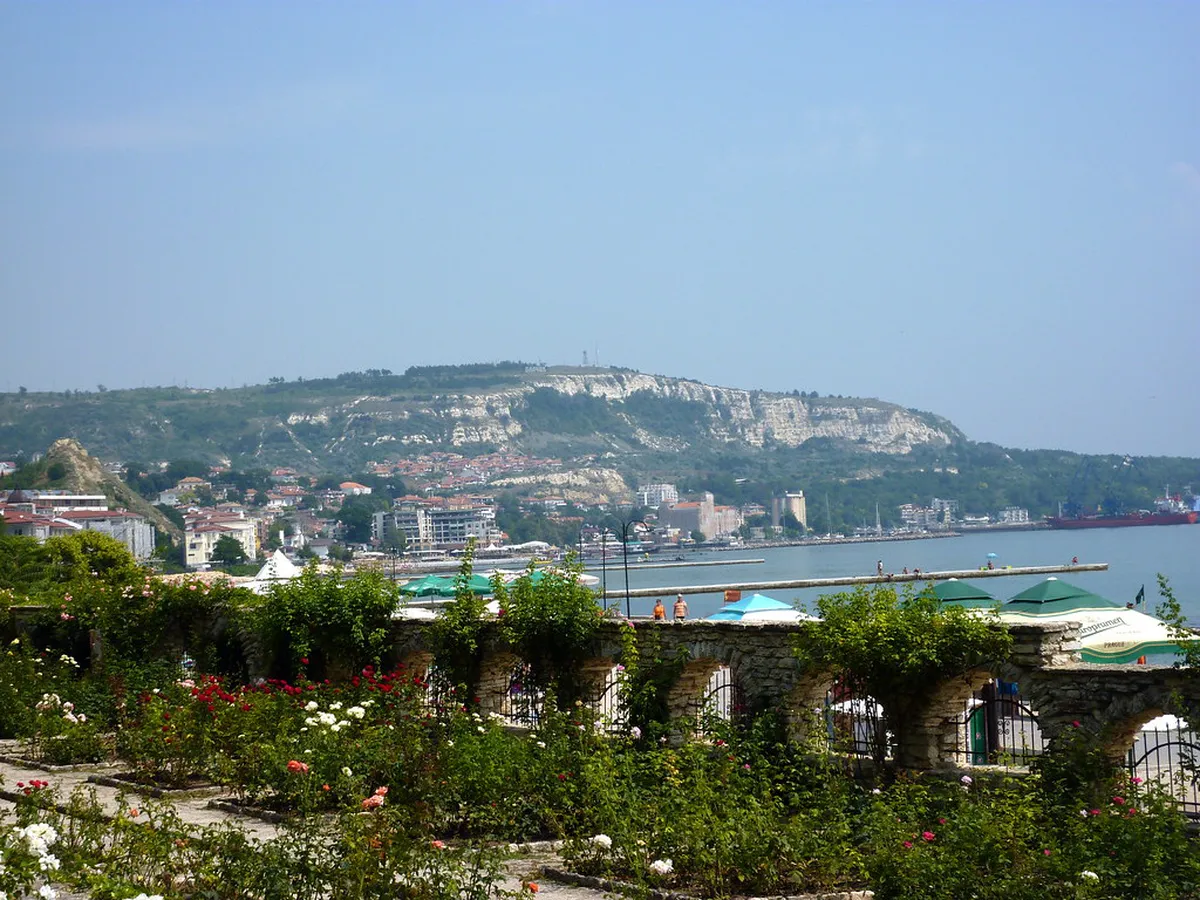
Balchik's Central Beach sits at the southern edge of the harbour area, just beyond the port terminal. It is a genuine sandy beach — fine-to-medium grain, typically pale in colour — but it is small by Bulgarian resort standards. In high summer (July–August) it fills up, and the atmosphere is local rather than international. Access is free; sunbed and umbrella hire costs roughly 7–10 BGN per item per day, in line with most Bulgarian beaches.
The water in this bay is shallow and sheltered, which suits families with young children. The Black Sea reaches 22–25 °C between June and September, with the warmest conditions in late July and August. Water quality here is generally good; the northern Black Sea coast around Balchik has consistently avoided the crowding and runoff issues that affect some of the larger resort beaches further south.
What the seafront promenade does better than almost any beach on this stretch is walking. The pedestrian walkway runs for roughly 2.2 km along the waterfront, lined with open-air restaurants serving fresh fish and grilled meats, souvenir stalls, and benches overlooking the water. In the evening it becomes the social centre of town — busy, pleasant, and free. If the beach fills up, the promenade itself gives you the sea air and the view without needing a patch of sand.
A second smaller beach area sits near the marina, and short stretches of pebble-and-sand can be found at intervals along the cliffs. None of them are large enough to build a day around, but combined they give the town enough of a coastal character that swimming is always accessible during summer. The full Balchik activities guide covers the cultural side — the Palace, Botanical Garden, and cliff walks — that make the town worth more than a beach stop.
Tuzlata: The Estuary Mud Lagoon
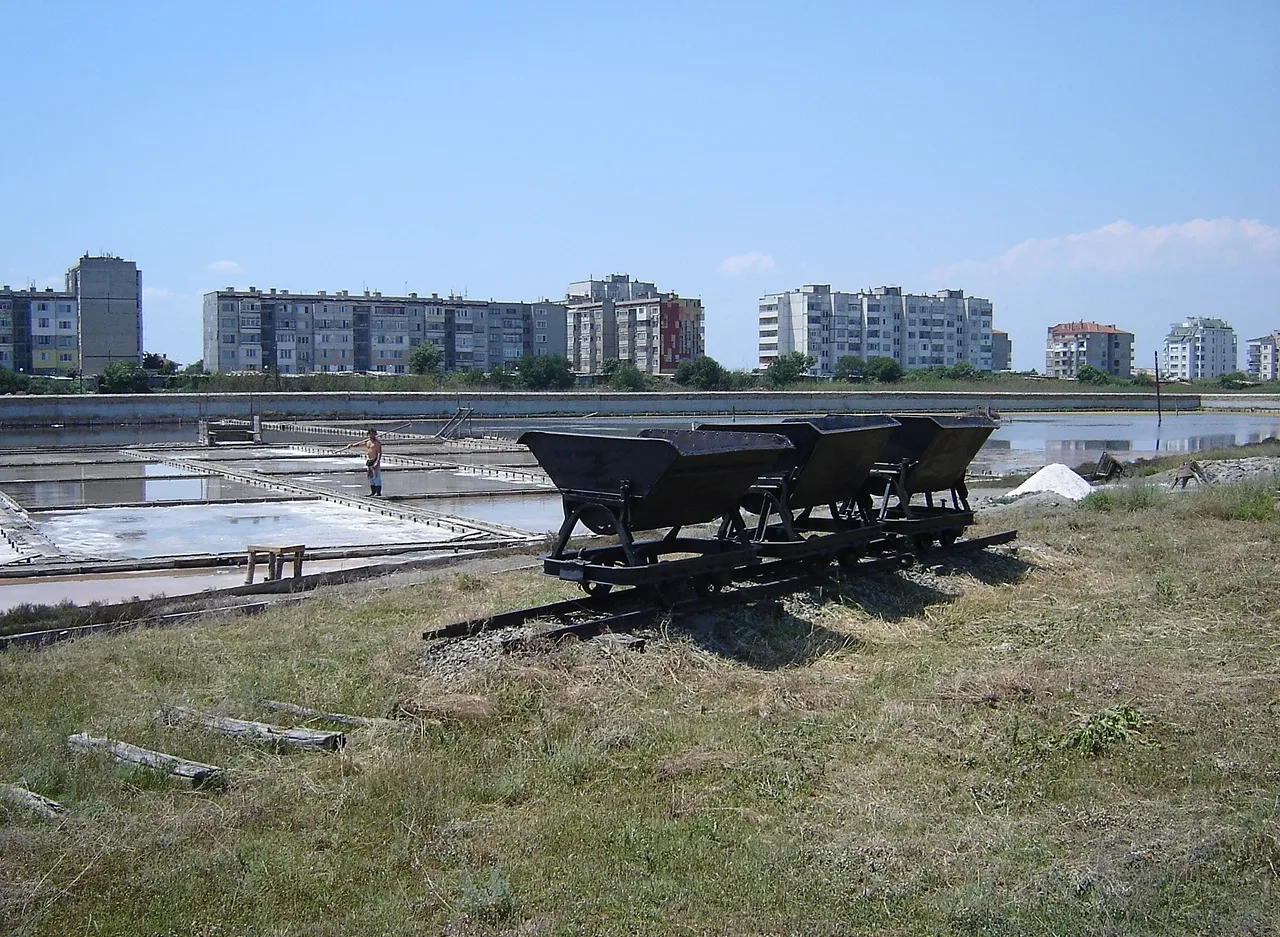
The Tuzlata area is the most distinctive natural feature on this section of coast, and it has nothing to do with sand. It consists of two estuary lakes sitting literally metres from the Black Sea shoreline, formed on a landslide where saltwater seeps inland. The salinity of the water is close to that of the Dead Sea — far higher than the open Black Sea — and the sedimentary mud at the bottom of the lagoon has been used therapeutically for decades.
The treatment itself follows what practitioners here call the Egyptian method: a period of sunbathing to warm the body, followed by an application of mud roughly half a centimetre thick across the skin, allowing it to dry in the heat, then rinsing in the estuary water or at the mineral water showers on site. One session lasts a maximum of two to three hours. There are separate outdoor wards for men and women, a sandbox area for lying down, benches, changing rooms, umbrellas, and bathtubs continuously replenished with fresh mud from the lagoon. Access costs a small fee — facilities here are maintained rather than improvised.
The conditions treated by the mud include arthrosis, skin disorders, radiculitis, plexitis, and musculoskeletal conditions generally. This is not spa marketing; the therapeutic mud of Tuzlata has been documented in Bulgarian medical literature and the site functions partly as a wellness facility rather than purely a tourist attraction. The Bulgarian National Radio coverage of Tuzlata gives the clearest plain-language account of how the treatment works.
There is a small beach adjacent to the lagoon for swimming, and the lagoon water itself — warm, salty, and buoyant — can be entered. The site is located about 4 km east of Balchik along the coast road, accessible by car or taxi from the town centre. It is not on the main bus routes, so plan for a short drive or a longer walk along the cliff path.
White Lagoon: The Bay Between Balchik and Kavarna
Heading northeast from Balchik towards Kavarna, the coast opens into a small bay where the White Lagoon resort complex occupies a panoramic clifftop position roughly 45 km from Varna airport. The resort has a private beach with free parasols for guests, two semi-Olympic pools with mineral water, and accommodation in two separate buildings — one beachfront, one set back in parkland.
The beach here is quieter than anything you will find at Albena or Golden Sands, with a calm arc of sand and clear water that suits the resort's intentionally low-key character. It is not a public beach in the open-access sense — the sand is effectively tied to the accommodation — but as a base for this section of the northern coast it is the most comfortable option if you want beach access alongside the Balchik and Kavarna cultural sights.
Day visitors to the bay should note that the cliff road north of Balchik is one of the more dramatic drives on the Bulgarian coast. The limestone bluffs here drop sharply to the sea, and the road offers views across open water towards Romania on clear days. Cape Kaliakra Visitor Guide, a medieval fortress headland, is another 20 km northeast and worth combining with any trip in this direction.
Albena and Kranevo: The Nearby Beach Alternatives
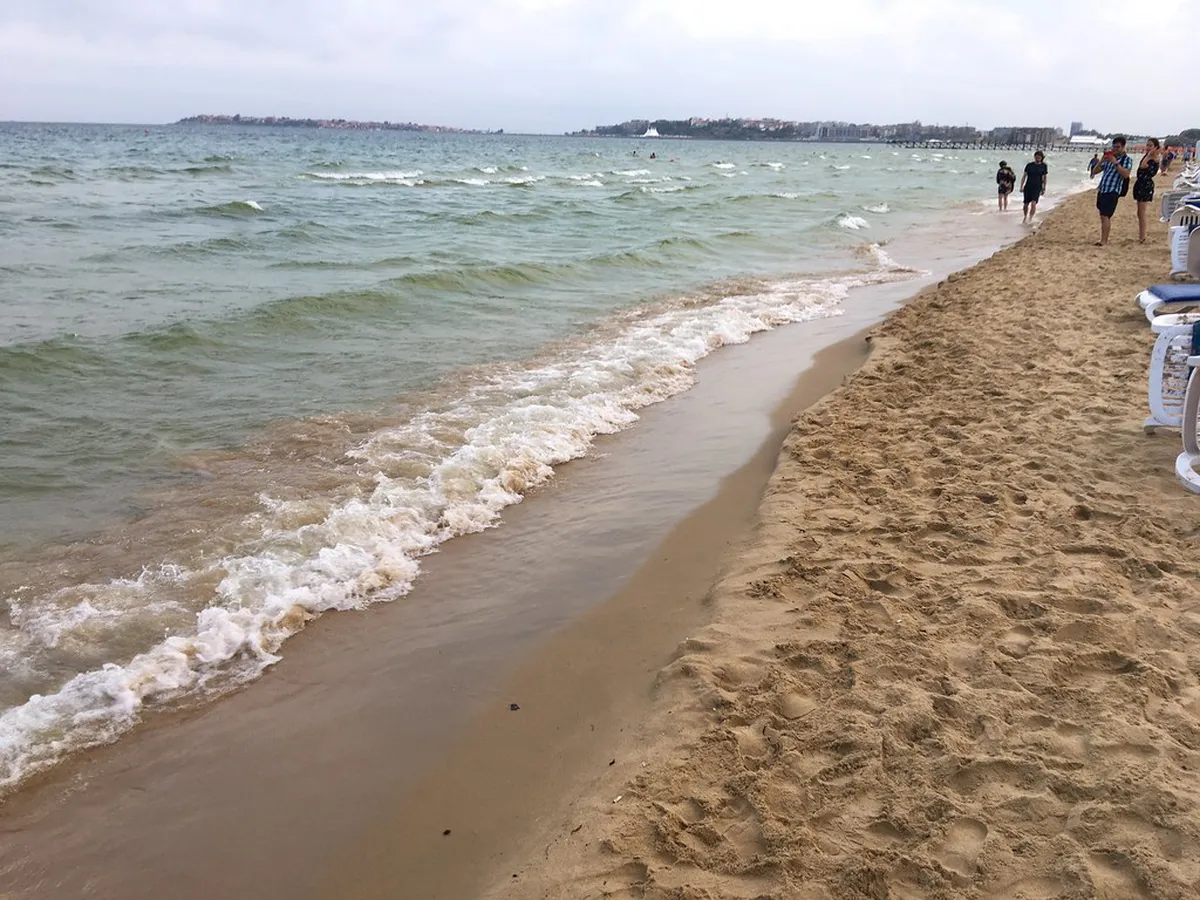
If the primary goal is a long day on a well-maintained sandy beach with full facilities, Albena is the correct answer for anyone based in Balchik. The resort lies around 12 km south by road and is one of the largest purpose-built beach resorts on the Bulgarian coast. The beach stretches more than 6 km and reaches up to 150 m in width, with a gently sloping sea floor that stays shallow for a considerable distance — water depth reaches only about 1.6 m within 150 m of the shore. Albena holds the Blue Flag award for water quality and beach management. Sunbeds, umbrellas, lifeguards, water sports rental, and food concessions are all present throughout the season.
Albena functions as a managed resort rather than an organic town. That means consistent facilities and a family-optimised environment, but also a certain planned uniformity. Most visitors here are on package holidays, and the infrastructure reflects that: everything needed for a beach week is in place, but the character of the place is the resort, not the surrounding territory. Albena's Wikipedia entry gives useful background on the resort's development history and structure.
Kranevo is the better-kept secret between the two towns. The village sits roughly 2 km north of Albena — close enough to reach on foot along the beach — and its beach shares the same fine sand and calm water without the resort pricing. Sunbeds and meals here cost noticeably less than in Albena, and the atmosphere is closer to a functioning Bulgarian fishing village than a purpose-built holiday complex. The beach at Kranevo is wide, clean, and maintained, and the river Batova runs through a forested valley just north of the village, which gives the area a greener setting than most of this coast. For visitors choosing accommodation in the Balchik area, Kranevo is worth considering as a quieter base with easy beach access and lower prices.
Getting to Albena from Balchik takes around 20 minutes by car or a similar time on the regional bus that connects the two towns. Kranevo is served by the same route. Neither destination requires a car if you are comfortable with bus schedules — the connections are reliable in summer.
Facilities, Costs, and Practical Details
Balchik's Central Beach is free to enter. Renting a sunbed typically costs 7–10 BGN and an umbrella a similar amount; combined this is still considerably less than the equivalent at fully-developed resorts. There are cafes and restaurants within a short walk of the beach, and the main promenade is immediately adjacent. The marina area has toilet facilities, and the promenade has public seating throughout.
Tuzlata charges a small admission fee for the mud treatment sector. No specific price is fixed publicly, but accounts from visitors consistently describe it as modest. Bring a bag for muddy clothing and wear old swimwear — the mud stains and the rinsing, while effective, does not guarantee complete removal from fabric.
At Albena, the beach itself is free as the public strip, but sunbed hire and any water sports activity comes at resort pricing — expect to pay more than at the town beach or Kranevo. Albena operates its own shuttle and taxi services, and the resort has ATMs, pharmacies, and shops within the complex.
The Balchik restaurant guide covers the best seafood and Bulgarian cuisine options along the promenade and in the town centre, most of which are a short walk from the beach. For the Balchik Palace and Botanical Garden: Complete 2026 Visitor Guide, the entrance is at the southern end of the promenade — you can combine a morning at the gardens with an afternoon swim at the town beach in a single day without needing transport.
When to Come for Swimming
The Black Sea swimming season on the northern coast runs from mid-June through early September, with the warmest water in July and August when surface temperatures reach 24–25 °C. June is slightly cooler at around 21–22 °C but the beaches are less crowded and prices for accommodation are lower. September extends the comfortable swimming window into early autumn — water retains its warmth from the summer, air temperatures are still above 25 °C on most days, and the crowds thin considerably after the school year begins.
Balchik itself is at its liveliest in July and August, when the promenade fills in the evenings and the town beach is busy through the middle of the day. For Tuzlata, the mud treatment is most effective when the sun is strong enough to heat the body during the drying phase — peak summer is when the site is most actively used, though it operates across the season. Albena's facilities run from May to October, with the most complete service between June and September.
The northern Black Sea coast around Balchik is less exposed to the southern winds that can affect beaches further down the coast. This makes conditions generally calmer here than at Sunny Beach or the central coast, though the sea can still become choppy during weather systems moving in from the northeast. Check conditions on the morning of a planned swim rather than relying on seasonal generalizations.
For a wider view of what Balchik has to offer year-round, the Wikivoyage guide covers seasonal timing, transport connections from Varna and Dobrich, and the cultural calendar alongside beach considerations.
Continue planning: Use Things to Do in Balchik, Bulgaria: 2026 Travel Guide and Balchik Palace & Botanical Garden to connect this guide with the rest of your Bulgaria itinerary.
Frequently Asked Questions
Does Balchik have a proper sandy beach?
Yes — Central Beach at the harbour has fine-to-medium sand and is free to enter. It is compact by Bulgarian resort standards and gets busy in July and August, but it is a genuine swimmable beach with clear, shallow water. Balchik is primarily a promenade and cultural town rather than a large beach resort, so if extensive sands are the priority, nearby Albena (12 km south) is the better choice.
What is Tuzlata and how does the mud treatment work?
Tuzlata is an estuary lagoon about 4 km east of Balchik with salinity close to the Dead Sea and sedimentary therapeutic mud used for treating musculoskeletal and skin conditions. The Egyptian method involves warming in the sun, applying mud about half a centimetre thick, letting it dry, then rinsing in the lagoon or mineral water showers. A session lasts up to two to three hours. There is a small entrance fee and facilities include changing rooms, umbrellas, and separate wards for men and women.
How does Balchik compare to Albena for a beach holiday?
Albena has a 6+ km Blue Flag beach with full resort facilities, managed water sports, lifeguards, and family infrastructure — it is the better choice for a dedicated beach week. Balchik has a smaller town beach, far more cultural interest (Palace, Botanical Garden, promenade), and a quieter atmosphere. Many visitors use Balchik as a base and make day trips to Albena or Kranevo for longer beach days.
What is Kranevo and is it worth visiting?
Kranevo is a small village 2 km north of Albena with a wide, clean sandy beach on the same stretch of coastline. The atmosphere is quieter than Albena, prices for sunbeds and food are lower, and it is close enough to walk to Albena along the beach. It suits travellers who want a relaxed beach day without the managed-resort environment.
When is the best time to swim at Balchik?
The comfortable swimming season runs from mid-June to early September. Water temperatures peak at 24–25 °C in July and August. June and September are good shoulder months — water is still warm, crowds are thinner, and accommodation costs less. The northern coast around Balchik is generally calmer and less choppy than central coast resorts.
Balchik rewards visitors who arrive expecting a charming northern Black Sea town with a usable beach rather than a beach resort that happens to have some cultural sights. The Central Beach and seafront promenade are genuinely pleasant, the Tuzlata mud lagoon is a unique experience you will not find duplicated along this coast, and both Albena and Kranevo are close enough to reach on a day trip when a longer stretch of sand is what the day calls for. The town itself — the limestone cliffs, the Queen's Palace gardens, the evening promenade — is the reason most people remember Balchik. The beaches are the easy bonus.