Balchik Palace and Botanical Garden: Complete 2026 Visitor Guide
On a limestone terrace above the northern Black Sea, a Romanian queen built a summer retreat so quietly personal she named it "The Quiet Nest" — Dvoreca in Bulgarian. The complex she created at Balchik between 1924 and 1937 is unlike any other royal residence in the Balkans: a cluster of whitewashed villas descending through terraced gardens to the water's edge, anchored by a small Orthodox chapel and a freshwater spring once called the Throne of Allah. Queen Marie of Romania brought all of it into being, and the site has outlasted every political upheaval since — Romanian, Bulgarian, communist, post-communist — with remarkable dignity.
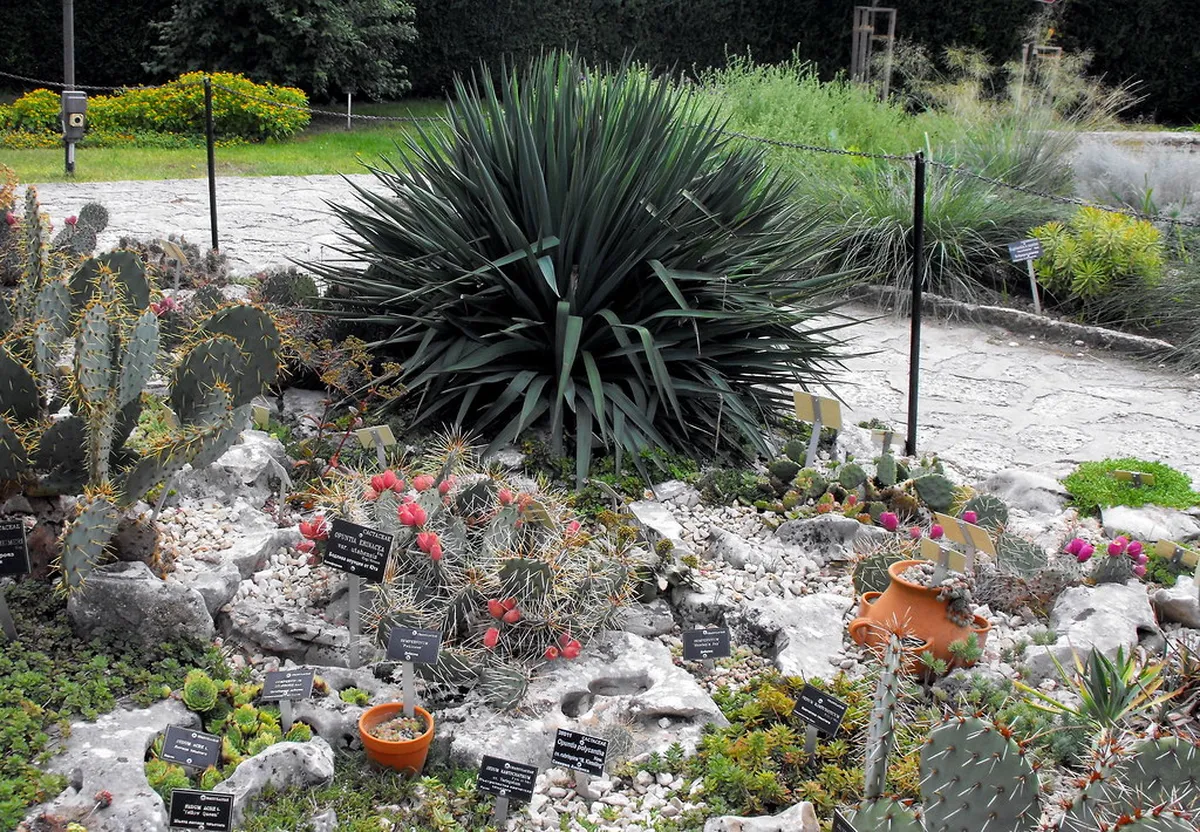
Today the Architectural Park Complex "The Palace" and its adjoining University Botanical Garden together cover roughly 65,000 square metres. The botanical garden holds around 2,000 plant species from 85 families, and its outdoor cactus collection — spread across a full 1,000 square metres — is the second-largest of its kind in Europe, after Monaco. Plan two to three hours to do the complex justice. This guide covers 2026 ticket prices drawn from the official site, current opening hours by season, what to look for in each section, and how to get there from Varna or Golden Sands.
Queen Marie and the History of Dvoreca
Queen Marie of Romania — born Marie of Edinburgh in 1875, a granddaughter of both Queen Victoria and Tsar Alexander II — first visited the Balchik coast in 1921. Southern Dobrudja had passed to Romania after the First World War, and the town's mild climate, dramatic chalk cliffs, and relatively isolated shoreline caught her imagination immediately. She began acquiring land and commissioning buildings in 1924, and construction continued in successive waves until 1937, the year she died.
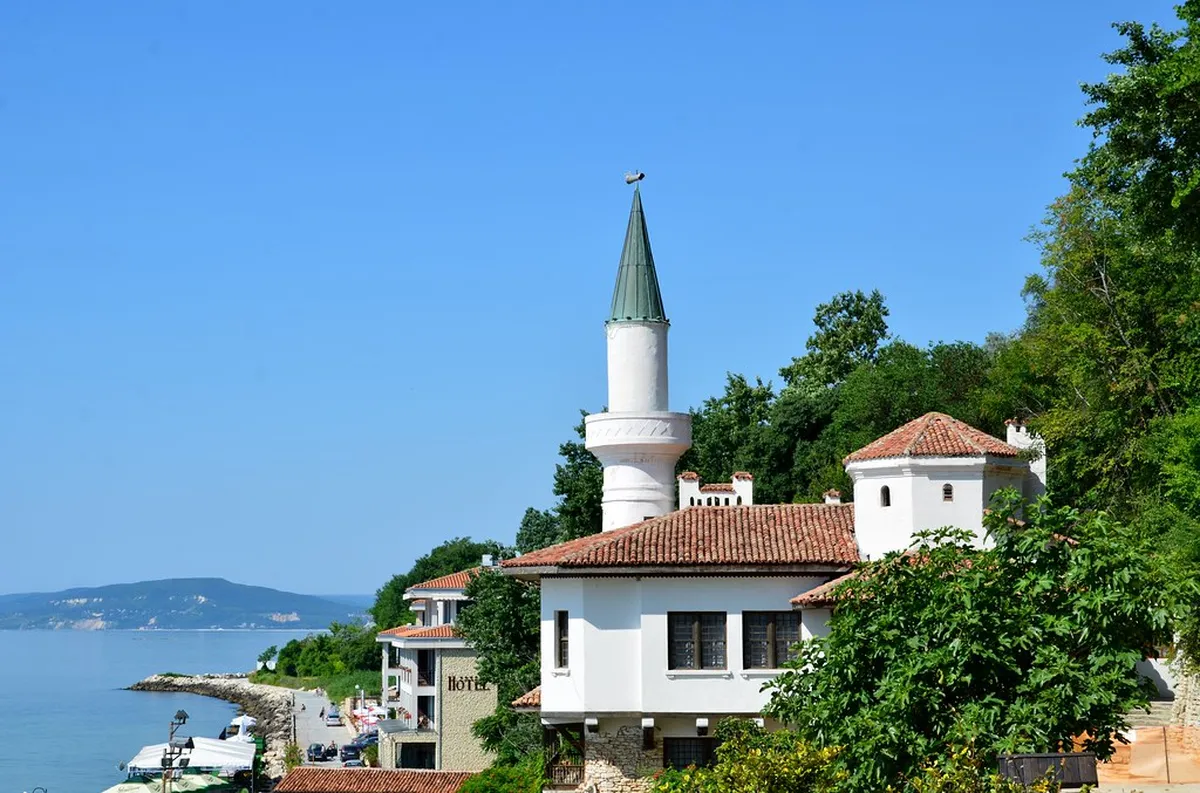
Marie's approach to architecture at Balchik was deliberately personal and eclectic. She drew on Ottoman Turkish, Bulgarian vernacular, Byzantine, and Moorish references rather than conventional European royal grandeur. The result is a complex of modest whitewashed villas and pavilions that feel more like a private village than a state residence. The largest building, a three-storey main palace with a tall minaret-like tower, sits at the centre of the terrace, but even it avoids ostentation. Marie reportedly chose the name "Tiha Gnezdo" — The Quiet Nest — specifically to signal her intention: this was a retreat from court life, not an extension of it.
After Marie's death in 1938 the property passed briefly to her son King Carol II of Romania. In 1940 the Treaty of Craiova returned southern Dobrudja to Bulgaria, and with it the palace complex. The Bulgarian state formally acquired full ownership rights in 1970 following a bilateral Romanian-Bulgarian agreement. The site operated as a state cultural venue through the communist period and has been managed as a public park and cultural centre since. Today Dvoreca is one of Balchik's best-known attractions and the anchor of the town's tourism economy.
The Palace Villas and Architecture
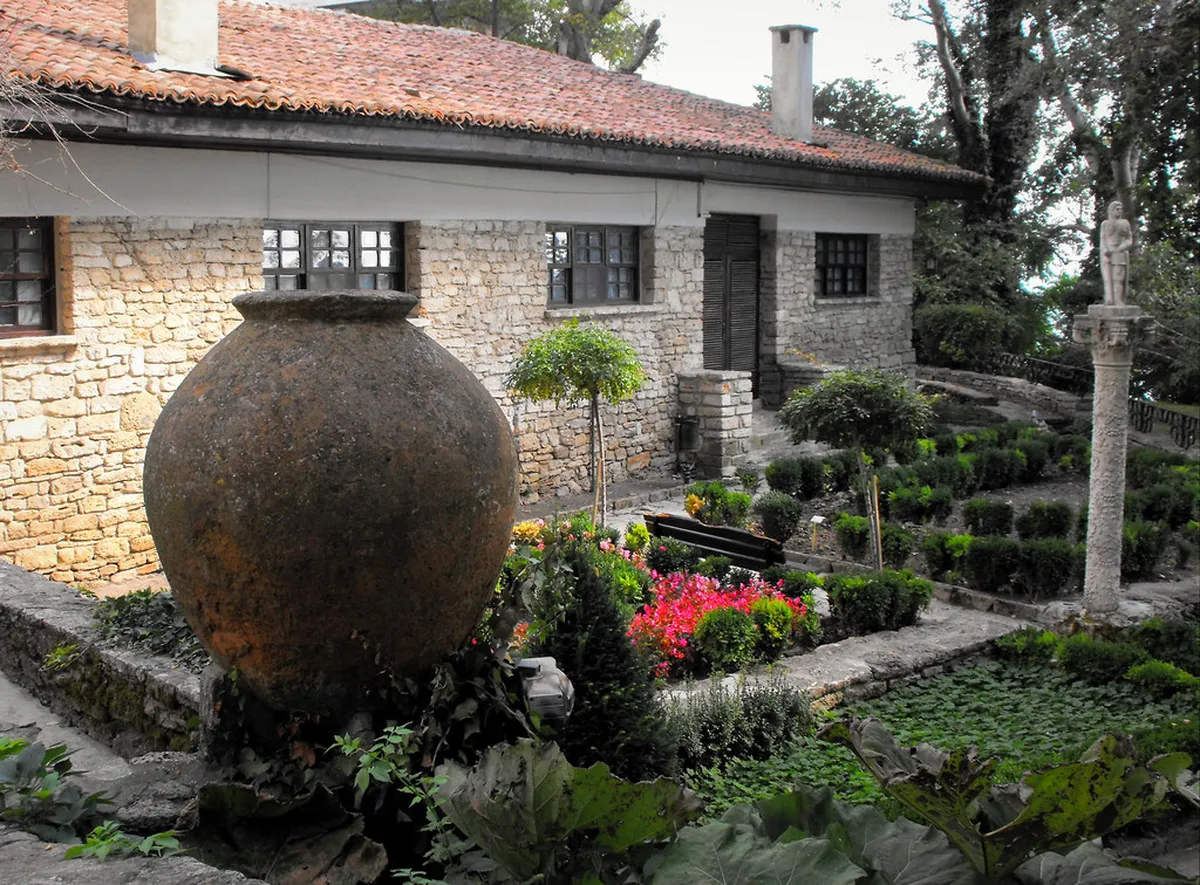
The complex is not a single palace building but a cascade of interconnected structures descending from the cliff road toward the water. Visitors enter from the upper level and move downhill through terraced gardens, encountering different villas and pavilions at each level. The main residential building rises three storeys and is distinguished by its slender tower — sometimes described as a minaret — which Marie incorporated as an architectural homage to the Ottoman heritage of the landscape rather than any religious statement.
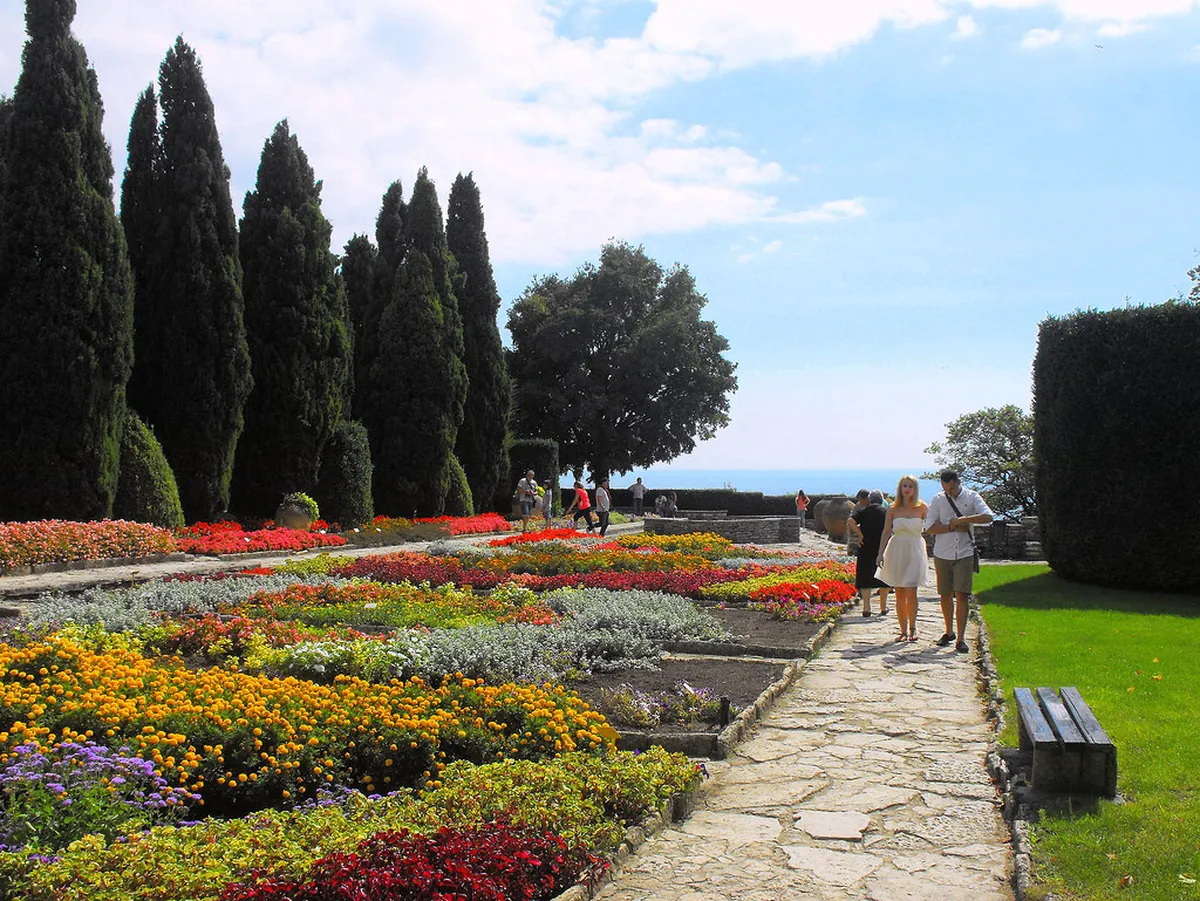
Adjacent to the main villa stands a smaller smoking hall, built in a more overtly Ottoman style with carved wooden screens and tiled floors, which Marie used as a private writing room. A wine cellar cut into the limestone below the terrace still exists, and during the summer season the cultural centre hosts small exhibitions in several of the ground-floor villa rooms. The interiors are not lavishly furnished — much of the original furniture was removed or lost after 1940 — but the architectural detailing: arched doorways, carved stone lintels, painted tile inserts, and the integration of the gardens into every sightline, conveys what the residence was about. Marie wanted the view, the plants, and the light, not the furniture.
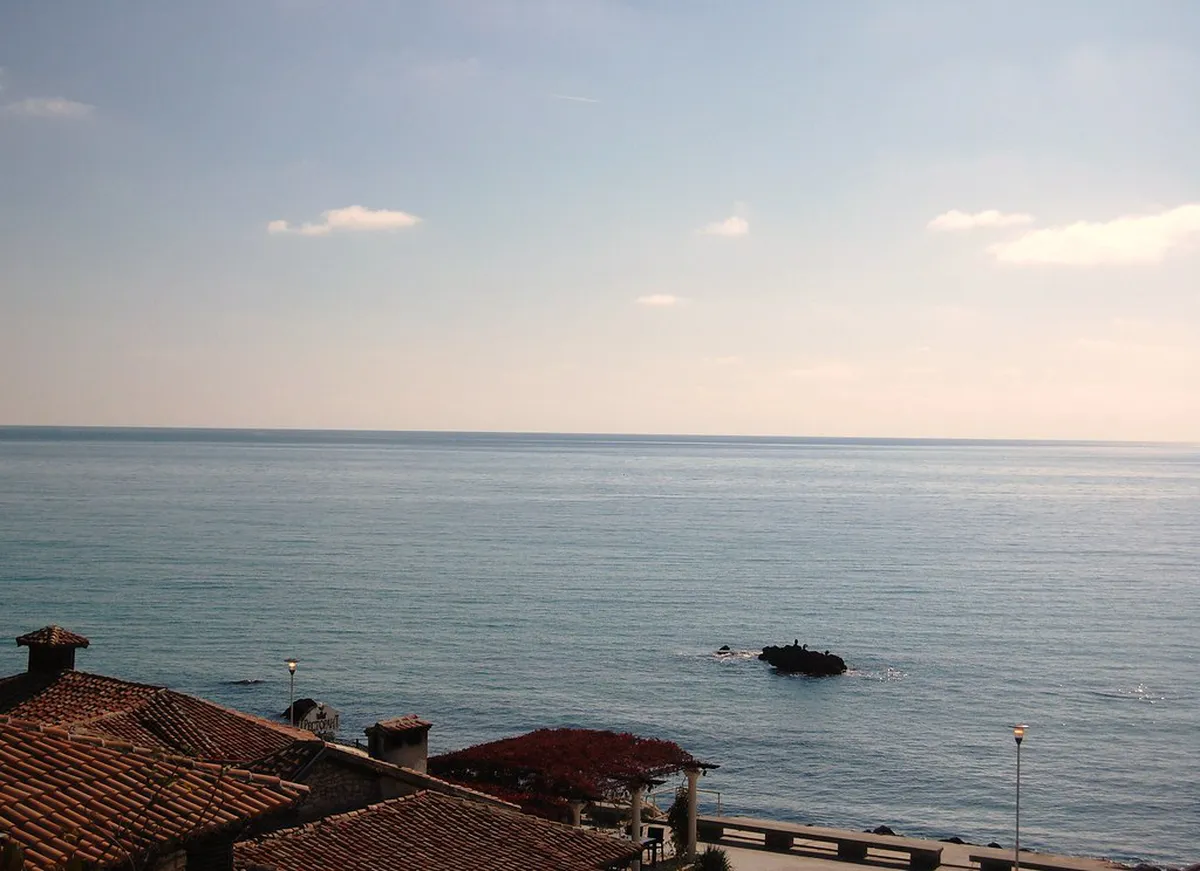
The terrace garden immediately around the villas is formally laid out, with low hedges, ornamental plantings, and stone pathways that direct you toward the water and toward the chapel. At the lowest point of the complex, steps lead directly to the Black Sea shore, and on clear summer days the view along the chalk cliff line toward the cape is one of the finest coastal panoramas on Bulgaria's northern coast.
The Stella Maris Chapel and the Allah Water Spring
The most evocative structure in the complex is the Stella Maris chapel — "Star of the Sea" — built for Queen Marie in a compact Byzantine style. It sits partway down the terraced slope, sheltered by the garden planting, and is small enough to feel genuinely intimate: a single nave, stone walls, and a simple carved iconostasis inside. Marie was a devout and somewhat unconventional Christian with a strong attachment to Orthodox aesthetics, and the chapel reflects that: it is Orthodox in form but free of the heavy iconographic programme typical of a parish church.
Marie's wishes for the chapel went beyond architecture. She requested that after her death her heart be removed from her body and placed in a small golden casket, embellished with the emblems of the Romanian provinces, and interred here at Stella Maris. That wish was honoured. The casket remained in the chapel until the Second World War, when it was moved to Bran Castle in Romania for safekeeping; it is no longer at Balchik, but the chapel retains its emotional weight as the site Marie chose for this purpose. Visiting it knowing that context gives the modest building a very different quality from the surrounding garden structures.
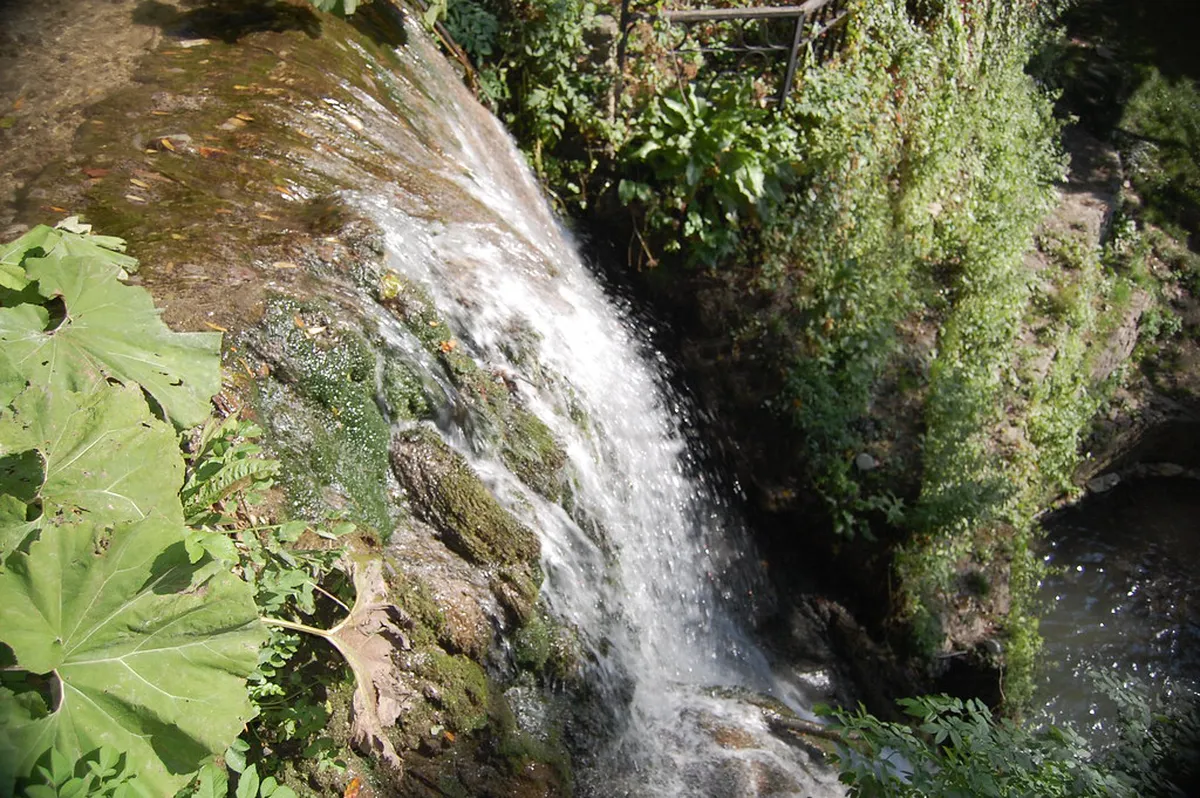
Nearby stands one of the more architecturally striking elements of the complex: the Throne of Allah, also called the Allah Water Spring. This is a carved stone canopy above a freshwater spring, built in a Moorish style with a horseshoe arch and decorative stonework. It was not a religious structure but a decorative folly that Marie commissioned as part of her layered approach to the site's visual language. The spring beneath it produces real freshwater — visitors can drink from it — and the carved inscription "Allah" reflects Marie's interest in combining the cultural references of the Dobrudja landscape into the garden's decorative vocabulary.
The University Botanical Garden and Cactus Collection
The botanical garden at Balchik is formally the University Botanical Garden of Sofia University "St. Kliment Ohridski," though in practice it is fully integrated into the palace complex and most visitors move between the two without noticing the institutional boundary. The garden covers 65,000 square metres and contains around 2,000 plant species from 85 families and approximately 200 genera. Its position on a south-facing limestone terrace above the Black Sea creates a microclimate warmer and drier than the Bulgarian average, which is why a collection of this botanical range is possible at this latitude.
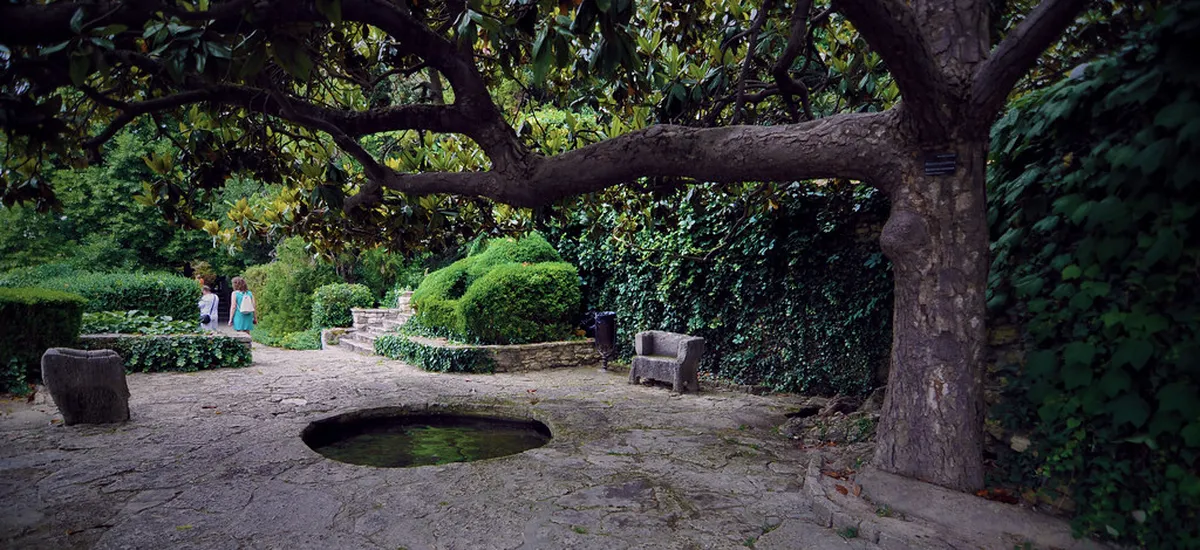
The garden is organised into themed sections: a rose garden, a medicinal herb section, collections of deciduous and coniferous trees, sections devoted to Balkan endemic species, an aquatic garden with water lilies and bog plants, and the famous cactus terrain. The cactus collection occupies a full 1,000 square metres of outdoor ground and contains several hundred species, including large specimens of Opuntia, Cereus, Echinopsis, and various columnar cacti that would be implausible at this latitude without the site's sheltered cliff-face microclimate. According to the garden's own documentation, this outdoor cactus display is the second-largest of its kind in Europe, after the one in Monaco — a claim backed by the sheer scale of the planting when you stand in the middle of it. The best time to see it is late morning when the light falls directly onto the terrace.
The rose garden peaks in late May and June — over a hundred cultivars in bloom simultaneously, a good reason to visit in early summer rather than August heat. The endemic Balkan section includes species found only in limestone terrain across the central and eastern Balkans, several on conservation watchlists. The aquatic garden, shaded by willows, contrasts well with the exposed cactus terrace and is typically quieter. Allow at least 45 minutes for the botanical garden alone to cover the main sections without rushing.
Tickets, Opening Hours, and Practical Logistics
As of 2026, the palace complex and botanical garden require two separate tickets bought from two separate ticket booths at the entrance. The official dvoreca.com pricing for the palace complex is: adults €10 / 19.56 BGN; children aged 6–18 €3 / 5.87 BGN; children under 6 free; students and pensioners up to age 25 €3.60 / 7.04 BGN; family package (parents with children under 18) €18 / 35.20 BGN. People with documented disabilities enter free. If you are staying in accommodation directly adjacent to the complex for two or more nights, a multi-entry adult pass costs €16 / 31.30 BGN for the duration of your stay. The botanical garden ticket is purchased separately at the garden's own booth; adult admission is approximately 15 BGN. Both booths are located at the main upper entrance and the process takes only a few minutes.
Opening hours vary clearly by season. During the peak summer months of May through August, the complex opens at 08:00 and closes at 20:00 — a long day that gives you the option of a morning visit before the bulk of coach tours arrive, or a late-afternoon session when the light on the chalk cliffs and the water is at its best. In April and September hours shift to 08:30–19:00, in October to 08:30–18:00, and from November through March to 08:30–17:00. The complex is open every day of the year with no weekly closure day.
Coach tours and day-trippers from Varna and Golden Sands typically arrive between 10:00 and 12:30, making mid-morning the busiest period. Arriving at opening time in summer, or after 15:00 in the afternoon, gives you noticeably quieter access to the chapel, the spring, and the narrower garden paths. Photography is best in morning light, when the sun falls on the sea-facing terraces from the east. There are cafés and a restaurant within the complex grounds, and a gift shop selling botanical prints and local products near the main villa. The terrain is hilly with stone steps throughout — comfortable walking shoes are necessary; sandals make for an uncomfortable afternoon on the steeper sections.
Getting There: From Varna, Golden Sands, and Beyond
Balchik is roughly 45 km northeast of Varna. Minibuses from Varna's central bus station (Avtogara Yug) run throughout the day; the journey takes 45–60 minutes and costs 6–8 BGN each way. The bus drops you on the main road above the palace, which is a short walk downhill. From Golden Sands, seasonal direct minibuses run in summer; from Albena (12 km north) a local bus or short taxi ride gets you there. By car from Varna take the scenic coastal road via Golden Sands and Albena — roughly 40–50 minutes. Parking near the palace entrance fills quickly in July and August; arrive early or walk in from the town centre. Balchik pairs cleanly with a day trip from Varna. If you plan to stay overnight, the Balchik accommodation guide covers guesthouses with direct views of the palace terrace. The town's beaches are compact but pleasant; the Balchik beaches guide notes which are within walking distance of Dvoreca.
Combining the Palace with Balchik Town
The palace complex fills a half-day comfortably. Balchik's old Bulgarian quarter — Sveta Bogoroditsa church, a small ethnographic museum, 18th-century lanes above the cliffs — sees far fewer visitors and rewards an hour of wandering after you finish the gardens. The seafront promenade running west toward the marina is pleasant in the late afternoon. North of town, Cape Kaliakra Visitor Guide (about 20 km by road) is the natural next stop: a limestone peninsula with Thracian, Roman, and medieval Bulgarian remains and dramatic cliff scenery on both flanks. See the full Things to Do in Balchik, Bulgaria: 2026 Travel Guide guide for routes, distances, and everything else the northern coast offers.
Continue planning: Use Things to Do in Balchik, Bulgaria: 2026 Travel Guide and Balchik Beaches: Town Sands, Tuzlata Mud & Nearby Resorts 2026 to connect this guide with the rest of your Bulgaria itinerary.
Frequently Asked Questions
How much does it cost to enter Balchik Palace and Botanical Garden in 2026?
Two separate tickets are required. The palace complex (Dvoreca) charges adults €10 / 19.56 BGN; children aged 6–18 pay €3 / 5.87 BGN; under 6 are free. A family package for parents and children under 18 costs €18 / 35.20 BGN. Students and pensioners up to age 25 pay €3.60 / 7.04 BGN. People with disabilities enter free. The University Botanical Garden charges a separate admission of approximately 15 BGN for adults. Both tickets are purchased at the upper entrance to the complex.
What are the opening hours for Balchik Palace in 2026?
The complex is open every day of the year. From May to August it opens at 08:00 and closes at 20:00. In April and September hours are 08:30 to 19:00. In October the site closes at 18:00. From November through March hours are 08:30 to 17:00. There is no weekly closure day.
Is the cactus collection at Balchik really one of the largest in Europe?
Yes. The outdoor cactus display covers 1,000 square metres and contains several hundred species of large-sized cacti, making it the second-largest outdoor cactus collection in Europe after the one in Monaco. The Black Sea coast microclimate — warm, dry summers on a south-facing limestone terrace — allows species to grow outdoors that would require greenhouses further north.
What happened to Queen Marie's heart at the Stella Maris chapel?
Queen Marie requested that after her death her heart be placed in a small golden casket and interred at the Stella Maris chapel in Balchik, a wish that was carried out when she died in 1937. The casket remained in the chapel for several years but was moved to Bran Castle in Romania during the Second World War for safekeeping and has not returned to Balchik. The chapel itself remains intact and open to visitors.
How long does a visit to Balchik Palace and Botanical Garden take?
Most visitors spend between two and three hours to cover the palace villas, Stella Maris chapel, Allah Water Spring, and all main sections of the botanical garden including the cactus collection. If you are only visiting the palace buildings and the immediate terrace garden, one hour is sufficient. The botanical garden alone warrants at least 45 minutes to move through its main sections without rushing.
Balchik Palace is one of the most rewarding sites on Bulgaria's Black Sea coast precisely because it resists easy categorisation: it is too intimate to feel like a conventional royal residence, too architecturally unusual for any single style label, and too botanically serious to be treated as a garden ornament. Queen Marie built something genuinely personal here, and the site still reads that way. The Stella Maris chapel, the carved spring, the 1,000-square-metre cactus terrain, and the views along the limestone cliff line all repay a slow visit rather than a rushed circuit. For more on what to see across the wider area, the complete Balchik guide covers day-trip routes, beaches, and the surrounding northern coast in full. For authoritative background on the palace's history, the Wikipedia article on Balchik Palace and the official dvoreca.com visitor page are both reliable starting points. Wikivoyage's Balchik entry provides additional practical travel context for the northern coast region.