
Bansko Itinerary: 10 Essential Sections for Your Trip
Plan the perfect Bansko itinerary with this 4-day guide covering Old Town history, Pirin Mountain adventures, thermal springs, and budget tips for digital nomads.
On this page
4-Day Bansko Itinerary: 10 Essential Sections for Your Trip
Bansko offers a unique mix of mountain peaks and historic cobblestone streets for first-time visitors to Bulgaria. We recommend starting your trip in the Old Town to appreciate the local culture before hitting the slopes. Last updated June 2026.
This guide helps first-timers and digital nomads balance outdoor adventure with relaxing thermal spring visits. The town serves as the primary gateway to the stunning Pirin National Park throughout the entire year. We have designed this plan to minimize backtracking between the mountain base and the historic center.
Bansko features over 70 km of skiable terrain across 21 varied pistes during the snowy winter months. Summer visitors will find a vast network of hiking trails and mountain bike paths across the alpine landscape. Our itinerary ensures you see the best of both worlds without feeling rushed or overwhelmed.
What You Should Know Before Your Bansko Trip
Bansko is a near year-round destination. Visitors come for skiing in winter, hiking in summer, and the hot springs work in every season. Understanding a few logistics before you arrive makes the whole trip smoother.
The resort has over 70 km of skiable terrain across 21 pistes — roughly 35% of them beginner-friendly blue runs, with red intermediate and black advanced slopes covering the rest. A one-day adult lift pass costs 110 BGN (~€56). Multi-day passes offer better value: 320 BGN for 3 days, 530 BGN for 5 days. The Gondola opens at 08:30 and queues build fast during winter weekends — aim to be at the base by 08:00.
The Old Town and the Gondola area are roughly 20–30 minutes apart on foot via Pirin Street. This is more than a walk — it is a shift in atmosphere and price. Restaurant meals in the Old Town typically cost 30–50% less than the same dish near the Gondola. If you are on a budget, base yourself in the Old Town and taxi or walk up to the lifts each morning.
The Velyanova House charges 10 BGN for adults and opens daily 09:00–17:00, closed Mondays. Thermal pool entry at Izgreva in nearby Banya runs about 15 BGN; Villa Victoria nearby charges 7 BGN. Outdoor ice skating by the Gondola costs 30 BGN for 2 hours (skates included) and is open daily 13:00–22:00 in winter.
4-Day Bansko Itinerary At a Glance
Our quick overview highlights the best activities for each day of your stay in this mountain town. We suggest following this sequence to transition smoothly from historical discovery to high-altitude mountain adventures. Each day focuses on a specific neighborhood or activity type to keep your logistics simple.
Digital nomads may prefer to stretch these activities over a week to accommodate their work schedules. Most visitors find that four days provides the perfect window to see the major landmarks and relax. We have included a mix of high-energy sports and quiet cultural moments for a balanced experience.
| Day | Morning | Afternoon | Evening | Duration |
|---|---|---|---|---|
| Day 1 | Old Town walk + Free Walking Tour (09:00–12:00) | Velyanova House museum | Traditional Mehana dinner | ~6 hours |
| Day 2 | Mountain activity (08:30–13:00) | Banderishka Meadow | Craft bar or après-ski | ~8 hours |
| Day 3 | eBike tour (09:30–12:30) | Demyanishka eco-trail hike | Casual dinner on Pirin Street | ~7 hours |
| Day 4 | Scenic train ride (10:00–13:00) | Banya thermal bath soak | Farewell dinner in center | ~6 hours |
Day 1: Old Town, Free Walking Tour, and Cultural Exploration
Start your morning at the the historic old quarter, a UNESCO-listed neighborhood of fortress-like stone houses and cobblestone lanes. The Bansko Free Walking Tour departs at 11:00 AM from under the tree near Holy Trinity Church — look for someone holding the "Bansko Free Tour" sign, not outside the church entrance where many visitors wait by mistake. The tour covers local history, the Bulgarian National Revival period, and useful restaurant tips. It runs 1.5–2 hours and is technically free; tipping 10–20 BGN per person is customary and fair.
After the tour, visit the Velyanova House (10 BGN adults), one of the best-preserved 19th-century merchant residences in Bulgaria. Nikola Vaptsarov Square nearby hosts weekend markets and occasional open-air concerts. The Holy Trinity Church is free to enter and notable for the star, crescent, and cross above the door — a symbol that all faiths are welcome.
For dinner, choose a Mehana (traditional tavern) in the Old Town rather than near the Gondola. Prices for the same dishes are noticeably lower, and the atmosphere is more local. Try Shopska salad, grilled katak dip with parlenka bread, and banitsa if you want a proper Bulgarian introduction on your first night.
The Old Town and Gondola area feel like two different towns. Old Town is quiet and cobblestoned; the Gondola zone is neon-lit and tourist-priced. Walk Pirin Street between them (20–30 min) to see both characters of Bansko in one go.
Day 2: Skiing, Snowboarding, and Pirin National Park
Be at the Gondola base by 08:00 in winter to avoid the queue that forms by 08:30. The riding the gondola lift serves 21 pistes across more than 70 km of terrain, with blue beginner runs making up about 35% of the total. The upper area around Banderishka Meadow sits above the tree line and offers panoramic views of the Pirin range even if you are not skiing.
Summer visitors swap ski passes for hiking permits into the Pirin mountains above town. The most popular summit hike is Vihren Peak (2,914 m), Bulgaria's second-highest mountain. The standard route departs from Vihren Hut and takes 3–4 hours to the summit for anyone with moderate fitness. Book a private guide at least a week ahead during July and August when the hut fills quickly.
Both winter and summer Day 2 schedules work best if you carry your own lunch rather than eating at mountain restaurants, which are busy and expensive. Return to town by 16:00 and spend the evening at one of the après-ski bars near the Gondola or a craft beer spot in the center. If snow conditions allow, the outdoor ice skating rink near the Gondola (open 13:00–22:00, 30 BGN for 2 hours) is a fun early-afternoon option before the evening crowd arrives.
Day 3: Nature, eBiking, and the Demyanishka River Trail
Day 3 is built around the lower mountain environment rather than the high peaks. Rent an eBike near the Gondola base and head out by 09:30 for a morning circuit through the meadows and forest roads. eBiking suits visitors who want quiet nature immersion and the ability to cover ground without exertion. If you prefer adrenaline, ATV tour operators near the Gondola run guided forest routes of 1–2 hours — the terrain is rougher but the experience is faster.
For the afternoon, walk the Demyanishka River eco-trail. The path is shaded, mostly gravelled, and follows the river toward Demyanishka Hut with a total elevation gain of around 600 m. There are several picnic spots along the route and the trail is one of the better ways to experience Bansko's hiking network without committing to a full summit day. The river itself is the most scenic section — cross at the wooden bridges and double back on the opposite bank.
End the day with a casual dinner on Pirin Street or at one of the small places in the City Park area. If your legs feel recovered by evening, the Krinetz Dam walk (36 minutes from Old Town) makes a relaxed post-dinner stroll with mountain reflections in the water.
Day 4: Thermal Springs, Scenic Train, and Farewell
Start the morning with the Rhodope Narrow-Gauge Railway, a scenic train that winds through the mountains south of Bansko. The morning departure gives the best light for photography of the valley. The journey runs through otherwise inaccessible gorges and is particularly good for travellers who want slow, beautiful movement without heavy logistics.
In the afternoon, head to the village of Banya (15 minutes by taxi from the center) for the mineral pools. The two main options are Thermal Mineral Pool "Izgreva" (15 BGN entry, large pools set in natural rock, a traditional atmosphere that has not changed much in decades) and Villa Victoria (7 BGN entry, cleaner changing rooms with lockers, slightly more polished but smaller pools). Izgreva is the classic choice. Both draw from the same natural mineral springs and both are warm enough to sit in for two hours without difficulty. Neither requires a booking for general pool access, though spa treatments at either site should be reserved 3–5 days ahead in high season.
| Thermal Bath | Entry Price | Vibe | Distance from Center |
|---|---|---|---|
| Izgreva (Banya) | 15 BGN | Traditional, large pools, natural rock | ~15 min taxi |
| Villa Victoria (Banya) | 7 BGN | Cleaner, lockers, slightly smaller | ~15 min taxi |
| Pulse Therme (Bansko) | Varies by package | Modern spa hotel, massage add-ons | In town |
Return to Bansko for a farewell dinner. Book your table by lunchtime if you are visiting on a Friday or Saturday evening — Old Town Mehanas fill up, and waiting outside in winter is genuinely unpleasant.
Dip in the Hot Springs: A Guide to Bansko Thermal Baths
The thermal springs near Bansko are one of the most underused assets of any itinerary here. Most ski visitors skip them entirely; most summer hikers treat them as an afterthought. In practice a two-hour soak at Izgreva after a heavy day on the mountain is one of the most satisfying ways to spend an afternoon in any season.
Izgreva sits next to an old Bulgarian bathhouse dating from the 16th and 17th centuries. The pools are made of natural rock and the water temperature stays consistently warm. Entry is 15 BGN and you can stay as long as you like. There are separate changing rooms for men and women but no lockers, so leave valuables in your bag on a poolside chair. The on-site restaurant is worth staying for — look for the house potato and cheese dish if it is on the menu.
Villa Victoria is a short walk from Izgreva and charges only 7 BGN. The changing rooms here have lockers and private stalls, though they are unisex. The pool experience is slightly more spa-like and less rustic than Izgreva. For visitors who prioritize convenience over character, Villa Victoria works well. For everyone else, Izgreva is the classic Bansko hot springs experience that competitors talk about first.
Pulse Therme is the in-town alternative if you cannot get to Banya. It is attached to a hotel and runs a more commercial spa model with massage packages and access fees that vary by package. Useful for Day 4 if you prefer not to take a taxi, but the pools are smaller and the atmosphere is more resort than traditional.
Alternative Winter Activities: Snowshoeing, Ice Skating, and Snowmobiling
Non-skiers have more options than most guides acknowledge. Snowshoeing with operators like Uhuru Trekking runs from the upper Gondola area to Vihren Hut — a beautiful route through forest and open snowfields. Group tours cost around £25 per person including equipment; night snowshoe adventures are available from £15. The pace is slower than skiing and the scenery is arguably better because you are not focused on not falling.
The outdoor ice skating rink sits near the Gondola. It opens daily at 13:00 and costs 30 BGN for 2 hours with skate hire included. Arriving at opening time (13:00) on weekdays means you practically have the rink to yourself. Weekend evenings after 18:00 are crowded and the ice quality suffers. The rink converts to a tennis court in spring, so it is strictly a winter-season venue.
Snowmobiling is available through several operators near the Gondola, though conditions vary with snowfall. The Sunday market in the Old Town — open from morning until about 13:00, with a handful of vendors daily — is worth 30 minutes of browsing for local honey, cheese, homemade wine, and pickled vegetables. Aerial yoga and fitness classes at small studios in town (look for Club Hanuman) round out the non-snow options on quieter days.
Where to Stay in Bansko: Luxury vs. Digital Nomad Hubs
Choosing the right base depends on whether you prefer mountain access or the charm of the historic center. Luxury seekers usually book hotels near the Gondola station for easy ski-in access each morning. Kempinski Hotel Grand Arena is the only true ski-in ski-out property in Bansko and includes full spa facilities.
The town has also become a major destination for remote workers. Coworking Bansko runs the most established coliving and coworking operation and is especially active from September through November. Monthly rentals for furnished apartments in the area typically start between €300 and €500, making Bansko one of the most affordable mountain towns in Europe for long-term stays.
Budget travelers can find family-run guesthouses offering affordable rooms and home-cooked Bulgarian breakfasts — the kind of stay where the host hands you pancake crepes and fresh yoghurt in the morning. Staying further from the Gondola saves money. Check whether your accommodation offers a free shuttle to the lifts during winter; several mid-range hotels include this.
Pirin Street: Old Town vs. Gondola Zone — Which Bansko Do You Want?
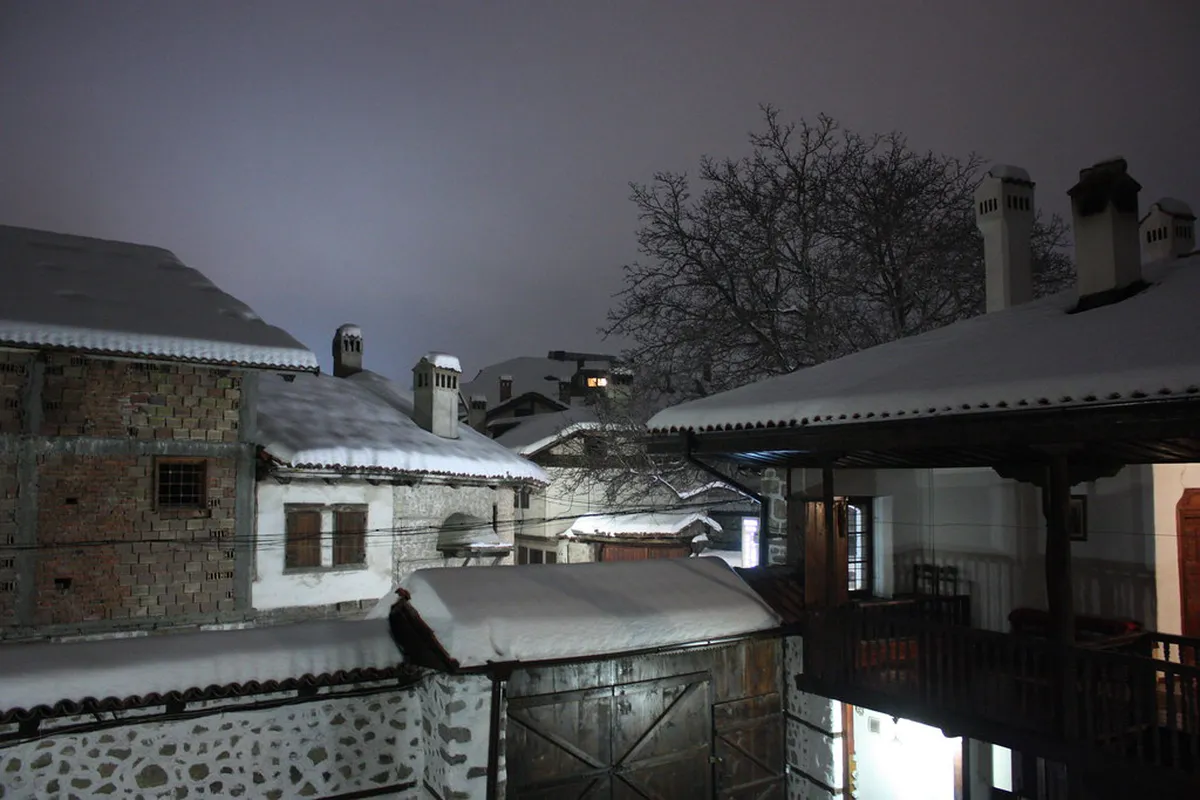
Pirin Street connects the two very different characters of this town. Start at the Old Town end — quiet cobblestoned lanes, traditional Bulgarian houses, local grocery shops — and walk toward the Gondola. The transition takes about 20–30 minutes on foot and the change in atmosphere is dramatic. By the time you reach the Gondola zone the streets fill with people in ski suits, neon bar signs, and menus priced for tourist wallets.
Restaurant prices roughly double between the Old Town end and the Gondola end of the same street. A Shopska salad that costs 6 BGN in the Old Town may cost 12 BGN three blocks from the lifts. This price gap is consistent and meaningful if you are staying more than two days. The practical rule: eat dinner in the Old Town, buy mountain-day snacks there too, and only pay Gondola prices when the convenience of being at the base matters.
For the best sunset photographs, walk Pirin Street toward the Gondola around 18:00 when the light hits the mountain directly behind the ski zone. If you want photos without crowds, go at 13:00 on a weekday. The parallel street — ul "Gotse Delchev" — has a small stream running through it and is worth taking as the return route for the change of scenery.
Add an Extra Day: Day-Trip Add-Ons
If you have more time, we highly recommend taking one of the many easy excursions nearby. The Rila Monastery is a UNESCO World Heritage site located about 90 minutes away by car or shuttle. It features stunning frescoes and a peaceful mountain setting that is perfect for a day of history.
The Belitsa Bear Sanctuary currently houses 15 rescued brown bears in a natural park. Tours last about 45 minutes and cover the story of Bulgaria's dancing bear tradition — most animals here were former performing bears rescued from Bulgaria, Serbia, and Albania. Check seasonal opening hours before making the drive.
The Stapalata Scenic Walk in nearby Razlog is worth the 10-minute drive. About 300 steps climb a hillside above the town, giving views across the valley ringed by three mountain ranges. Razlog is twice the size of Bansko and has its own historical museum if you want a lower-key day away from the resort crowds.
Frequently Asked Questions
Is Bansko worth it for non-skiers?
Bansko is excellent for non-skiers because of its rich history and thermal spas. You can explore the Old Town museums or enjoy the local Mehanas. Many visitors come just for the mountain air and scenery.
How do I get from Sofia to Bansko?
The most common way is by bus from the Sofia Central Bus Station. The journey takes about three hours and costs roughly 20 BGN. Private transfers and car rentals are also popular options.
When is the best time to visit Bansko?
Winter is best for skiing from December to March. Summer offers great hiking from June to September. Shoulder seasons are quiet but many mountain facilities may be closed.
We hope this itinerary helps you plan a memorable trip to the beautiful Pirin Mountains of Bulgaria. Bansko provides a rare combination of affordable luxury and deep historical roots for every traveler to enjoy. Whether you are skiing or hiking, the local hospitality will make you feel right at home.
Remember to book your essential activities in advance to secure the best prices and time slots. We recommend exploring beyond the main tourist streets to find the most authentic Bulgarian experiences. Safe travels on your upcoming adventure to this incredible mountain destination.
For the wider city context, see our complete Bansko tourism attractions guide.