Sarafkina House Visitor Guide
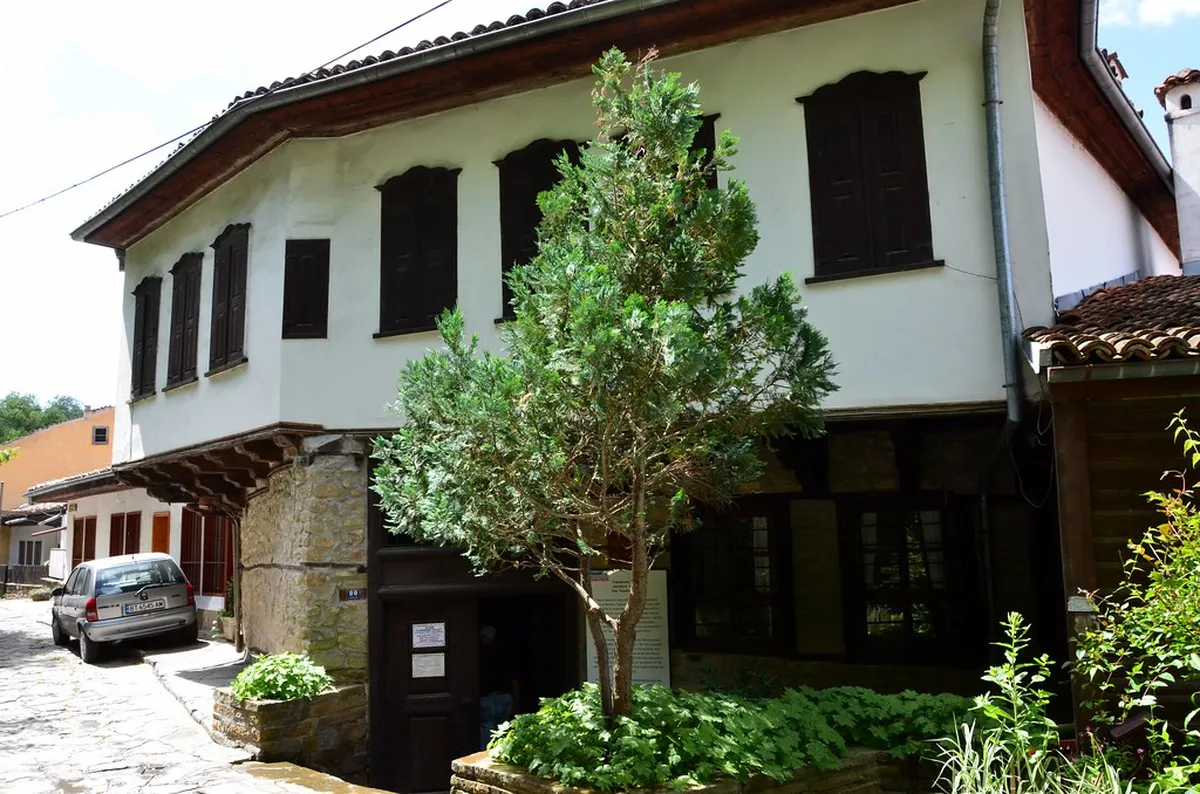
The Sarafkina House stands as a masterpiece of the Bulgarian National Revival period in central Veliko Tarnovo. This iconic building offers a rare glimpse into the wealthy merchant lifestyle of the mid-19th century. Visitors often marvel at how the structure clings to the steep cliffs above the Yantra River. Our sarafkina house visitor guide will help you navigate this architectural gem and its rich ethnographic collections in 2026.
Stepping inside this museum feels like traveling back to a time of booming trade and artistic flourishing. The house serves as a primary example of the craftsmanship that defines the Varusha-South district. Every room tells a story of local traditions, from intricate wood carvings to delicate silver ornaments. Planning a trip to Veliko Tarnovo Attractions is incomplete without exploring this historic residence.
This walkabout tour captures the dramatic approach to Sarafkina's House and its striking cliffside setting:
The History of Sarafkina House and Merchant Dimo Sarafina
The house was commissioned in 1861 by Dimo Sarafina, a wealthy local merchant and moneychanger who wanted a home that announced his standing among Veliko Tarnovo's trading elite. He died before construction finished, and his heirs completed the building to his original plan, and it remained a private family residence through the final decades of Ottoman rule and into Bulgaria's independence.
In 1981 the Regional Museum of History - Veliko Tarnovo opened the house to the public as an ethnographic museum, a role it still holds in 2026. It survived intact through more than a century of change, including a railway tunnel cut beneath its foundations and the earthquake that damaged other Revival-era houses nearby (more on both below) - part of why local guides treat it as one of the clearest windows onto Tarnovo's 19th-century merchant class.
Walking through its rooms gives a more grounded sense of pre-independence urban life than the fortress ruins on Tsarevets hill, which document political rather than domestic history. Everything on display belonged to a specific social tier - successful traders and moneychangers - so pair a visit here with a walk along Gurko Street to see the same style repeat at a smaller scale.
Architectural Marvel: A Five-Story House on a Cliff
Some guides label the house "Renaissance" architecture, but that is a loose translation - the accurate term is Bulgarian National Revival (Vazrazhdane) style, the same idiom seen along Gurko Street and in Arbanasi's fortified houses. It has nothing to do with Italy's Renaissance; its signature features are heavy timber framing, cantilevered upper floors, and densely carved wooden ceilings.
The clearest example of the style's engineering is the building itself. From General Gurko Street on the north side, it reads as a modest two-story home; walk around to the Yantra River side to the south and the same building reveals five full floors stacked down the cliff face, a trick builders used to add storage and service space on a narrow plot without expanding the footprint.
Beneath those lower floors, 19th-century engineers cut a railway tunnel directly into the rock, so the foundation sits above an active rail line. That should have made the structure fragile, yet it withstood the 1913 earthquake that damaged several nearby Revival-era buildings - proof, local guides say, of the original builders' skill.
For photographs, the river-side balconies catch the most even light in mid-morning, before the sun swings behind the opposite ridge; late-afternoon light backlights the valley and tends to overexpose the view.
Inside the Museum: Ethnographic Exhibits and Folk Art
The museum's permanent exhibition, Folk Art of the Tarnovo Region, covers regional crafts, textiles, costumes, jewelry, ritual objects, and photographs of everyday life from the late 19th to the mid-20th century.
The silverwork cases are worth slowing down for: hand-chased candlesticks, filigree jewelry, and ritual objects made by Tarnovo goldsmiths, whose guild supplied merchant households across the region. Look closely for the difference in technique between pieces made for church use and pieces made for domestic display.
Equally worth the extra minutes are the carved wooden dowry chests, each cut with floral motifs specific to the family or workshop that made it, so no two are identical - several still carry original iron hardware and painted interiors, details easy to miss on a quick pass.
Traditional costumes fill several rooms, with embroidery patterns marking the wearer's town, wealth, and occasion - wedding dress, everyday wear, and mourning clothes each show distinct palettes and cuts.
Floor-by-Floor Guide to the Museum Collections
The lowest levels, built directly into the rock, held storage and service functions and stay noticeably cooler than the rest of the house - a good place to start if you want context before the display rooms. The middle floors hold the core of the Folk Art exhibition and the best of the carved ceilings, particularly the reception salon, where the woodwork alone is worth the stop.
The top floor opens onto the river-facing balconies described above, plus a handful of side rooms with smaller displays - antique musical instruments among them - that most visitors miss on the way to the view. Budgeting 45 to 60 minutes covers all floors at an unhurried pace.
Essential Visitor Information: Hours, Fees, and Location
See the Official Museum Location (Google Maps) for directions. Since Bulgaria adopted the euro on 1 January 2026, the museum quotes prices in EUR first with the lev equivalent alongside; a guided tour adds EUR 10.23 (BGN 20.00) in Bulgarian, or EUR 20.45 (BGN 40.00) in another language.
Group tours can be arranged in advance through the Regional Museum of History - Veliko Tarnovo, which administers the site. For special exhibitions or temporary closures, check the Official Veliko Tarnovo Cultural Site or recent Visitor Reviews (Google).
- Address: ul. General Gurko 88, Varusha-South, 5000 Veliko Tarnovo
- Hours: Tuesday-Saturday 09:30-17:30, last entry 17:00; closed Wednesday 09:30-11:00 for maintenance
- Closed: Sunday and Monday, year-round
- Admission: EUR 5.11 standard / EUR 2.56 student / EUR 3.07 over-60 / EUR 7.67 family
- Typical visit length: 45 to 60 minutes
Best Times to Visit and Seasonal Weather Tips
Sarafkina House draws far smaller crowds than Tsarevets Fortress a few minutes away, so queueing is rarely an issue - the main scheduling risk is the Wednesday-morning closure, not congestion. Arrive right after the 09:30 opening on a Tuesday, Thursday, or Friday for the quietest visit and the cleanest light on the balconies.
May, June, and September bring mild temperatures and clear air for photography. July and August push into the low 30s Celsius, and the lower stone floors stay noticeably cooler than the exposed top-floor balconies, so plan that stop for morning or early evening. Winter brings occasional snow and shorter daylight, but the indoor rooms make it a comfortable stop on a cold day.
Getting There: General Gurko Street and the Varusha-South Quarter
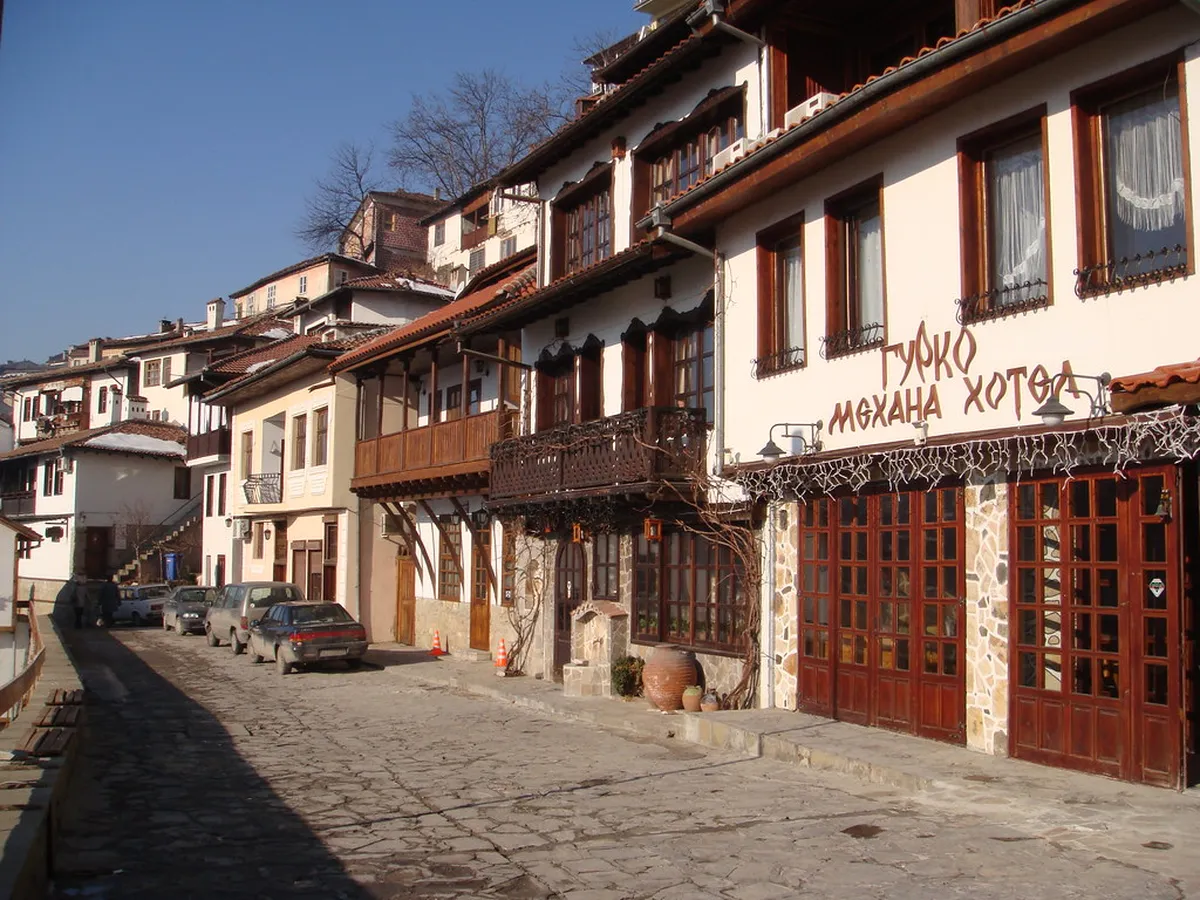
The house sits on General Gurko Street, a cobbled lane tracing the cliff edge above the Yantra and regularly named among Bulgaria's most photogenic streets - National Revival merchant houses in a row, the river gorge dropping away just beyond the front doors. It is a five- to ten-minute walk from the old town's pedestrian core, uphill and clearly signed.
There is no dedicated visitor parking at the house; the street is narrow and pedestrian-friendly, so most visitors park near the town center and walk in. The approach from the fortress side stays mostly flat; from the lower old town, expect a short climb on uneven cobblestones.
Mobility, Bags, and What to Bring
This is the detail most visitor guides skip: Sarafkina House has no elevator. The five levels are connected by the original 19th-century wooden staircases, narrow, steep, and uneven by modern standards - the house was never retrofitted for accessibility, since doing so would compromise the historic structure. Visitors using wheelchairs, pushing strollers, or with significant mobility limitations should expect to see only the ground-floor rooms; staff at the entrance can advise on what is viewable from there.
Bring cash in small denominations - euro and lev are both accepted at the desk in 2026, but card readers at small regional museums can be unreliable. Large backpacks and umbrellas are usually left at the entrance rather than carried through the display rooms, so pack light if visiting straight after checking out of a hotel.
Planning Your Veliko Tarnovo Walking Itinerary
Sarafkina House fits naturally into a longer walking day. Start at Tsarevets Fortress Visitor Guide in the morning, then head toward the merchant quarter; General Gurko Street is lined with shaded cafes for a break, and the shift from the fortress's medieval stonework to Revival-era timber houses is one of the more interesting contrasts in the old town.
From Sarafkina House, continue to Samovodska Charshia Visitor Guide, the craft market where potters, weavers, and silversmiths still work in open shopfronts - the same trades represented in the museum's collection, practiced live. It is the best spot in the old town for souvenirs that connect to what you just saw.
With extra time, add a short trip to Arbanasi Visitor Guide, whose fortified merchant houses come from the same National Revival period and give a rural counterpoint to Sarafkina House's urban setting. Wear real walking shoes - the cobblestones throughout Varusha-South get slick when wet.
Continue planning: Use Veliko Tarnovo Attractions: 10 Top Things to Do to connect this guide with the rest of your Bulgaria itinerary.
Frequently Asked Questions
How much does Sarafkina House cost to visit in 2026?
Standard admission is EUR 5.11 (BGN 10.00). Students with a valid document pay EUR 2.56 (BGN 5.00), Bulgarian citizens over 60 pay EUR 3.07 (BGN 6.00), and a family ticket for parents with up to 3 children aged 7-18 costs EUR 7.67 (BGN 15.00). Since Bulgaria adopted the euro on 1 January 2026, the museum lists prices in euros first with lev equivalents alongside.
What are Sarafkina House opening hours?
The museum is open Tuesday to Saturday from 9:30 to 17:30, with the last visitor admitted at 17:00. There is a short maintenance closure on Wednesday mornings from 9:30 to 11:00.
Which days is Sarafkina House closed?
Sarafkina House is closed on Sundays and Mondays throughout the year, so plan your visit between Tuesday and Saturday.
What is inside Sarafkina House?
The house holds the ethnographic exhibition Folk-art of Tarnovo's region, displaying regional crafts, textiles, traditional costumes, jewelry, ritual objects, and historical photographs of everyday life from the late 19th to the mid 20th century.
When was Sarafkina House built and who owned it?
The house was built in 1861 for the wealthy merchant Dimo Sarafina and has operated as a museum since 1981. Its foundations proved so solid that it withstood both a railway tunnel excavated beneath it in the late 19th century and the 1913 earthquake.
Where exactly is Sarafkina House in Veliko Tarnovo?
It stands at ul. General Gurko 88 in the Varusha-South quarter of the old town, on the historic Gurko Street above the Yantra River, a short walk from the city center.
Are guided tours available at Sarafkina House?
Yes. A guided tour in Bulgarian costs EUR 10.23 (BGN 20.00) and a tour delivered in another language EUR 20.45 (BGN 40.00), per the official museum price list.
Sarafkina House earns its place on a Veliko Tarnovo itinerary as much for its structural ingenuity as for what is inside it. The cliffside engineering, the rock-cut railway tunnel beneath the foundations, and a collection documenting a specific, vanished merchant class make it one of the more substantial stops in the old town, not just a photogenic exterior.
Budget 45 to 60 minutes, check the Wednesday-morning closure before you plan your day, and bring small cash alongside a card, since there is no elevator and card readers at small regional museums can be unreliable. Pair it with Gurko Street's other Revival-era houses and, time permitting, Arbanasi village.
For more Veliko Tarnovo planning, read our Things To Do in Veliko Târnovo guide.
For the latest official information, see the Sarafkina House official site and Sarafkina House on Wikipedia.