Guide to Preobrazhenski (Transfiguration) Monastery: 10 Essential Tips
The Preobrazhenski Monastery stands as a beacon of Bulgarian faith and artistic mastery near the historic city of Veliko Tarnovo.
Often called the Transfiguration Monastery, this site offers a unique blend of spiritual peace and dramatic cliff-side scenery.
Visitors come from around the world to witness the famous Wheel of Life mural and the stunning architecture.
This guide provides everything you need for a smooth and meaningful visit to this sacred Bulgarian Orthodox landmark.
For a preview of the monastery's iconic frescoes and cliff-side setting, watch this guided tour:
Historical Significance of the Preobrazhenski Monastery
The story of this holy site begins in the Second Bulgarian Empire, when Tsaritsa Sarah-Teodora and her son Tsar Ivan Shishman founded the monastery around 1360 as a spiritual center for the medieval capital.
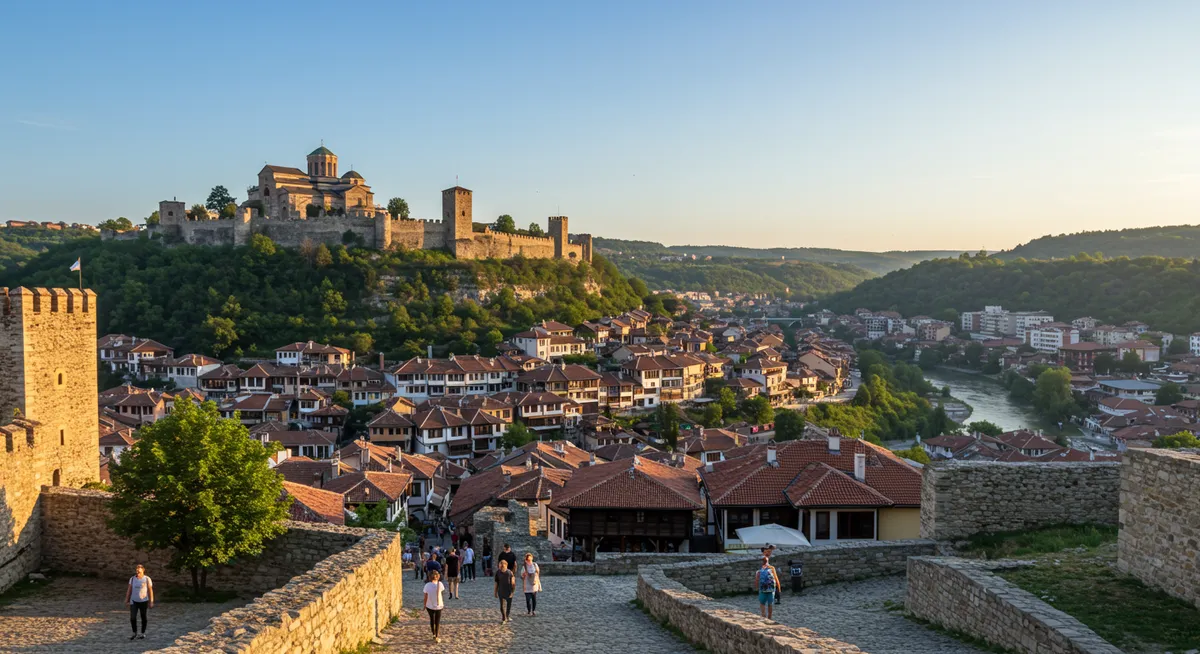
Its location near the Tsarevets Fortress Visitor Guide made it a vital part of Tarnovo's religious life, and locals still sometimes call it Sarah's or Shishman's monastery after its founders.
The original complex stood roughly 400-500 meters south of today's buildings; excavations carried out in 1952 uncovered Tarnovo-school ceramics and wall-painting fragments confirming that earlier site before it was destroyed during the Ottoman conquest and burned repeatedly afterward by kardzhalii raiders.
In 1825, with the Sultan's permission, the monk Father Zotik of Rila rebuilt the monastery on its present, more defensible ground, and construction of the full complex continued until 1863. During the Russo-Turkish War of 1877-78 the buildings served as a field hospital, and after Bulgaria's liberation the grateful Russian army donated bells, chandeliers and liturgical books that the monastery still holds today.
Must-See Preobrazhenski Attractions
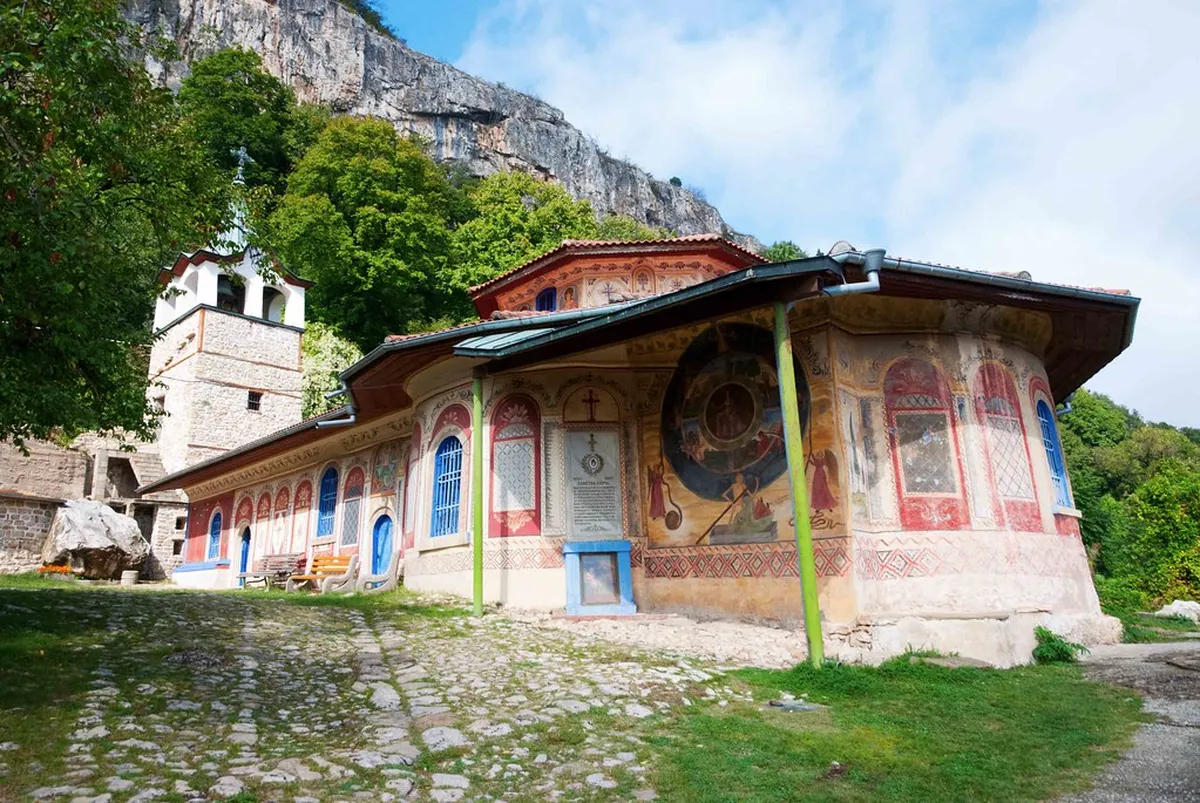
The primary draw for most visitors is the Church of the Transfiguration, which serves as the heart of the complex.
Inside, the intricate wood-carved iconostasis showcases the incredible skill of 19th-century Bulgarian craftsmen.
The belfry with its clock was raised by master builder Kolyu Ficheto in 1861; the main church itself was begun in 1834 by master Dimitar Sofiyaliyata and finished by Ficheto, who also added the south wing and the carved main entrance in 1837.
A smaller, quieter structure worth seeking out is the Annunciation Church, built in 1863 above the older St. Andrew underground chapel from 1834. Because the whole complex sits directly beneath the Biskalski Wreath cliffs, which shed loose rock after heavy rain, stay on the marked courtyard paths rather than wandering toward the cliff base.
Museums, Art, and Culture in Preobrazhenski
The monastery is a living museum of the Samokov Artistic School, known for its vibrant and expressive style.
Zahariy Zograf decorated the interior and exterior with wall-paintings between 1849 and 1851, and his nephew Stanislav Dospevski later painted the icons inside the Annunciation Church.
Zograf's most famous work is the Wheel of Life, an exterior fresco that depicts the stages of human existence and the passage of time; it remains the single most photographed feature of the site.
Photography tip: the exterior Wheel of Life can be photographed freely at any hour, but flash photography of the interior frescoes is generally discouraged, and photography may be paused altogether during services, so ask the monk on duty before shooting inside. Check the official Navicup.com listing for further mural descriptions and artistic context.
Parks, Gardens, and Outdoor Spots in Preobrazhenski
The monastery sits in the wooded Dervent gorge beneath the towering Biskalski Wreath cliffs of the Belyakovo Plateau, creating a natural amphitheater of stone.
From the courtyard, you can enjoy sweeping views of the Yantra River as it winds through the valley below, and on a clear day the smaller Holy Trinity monastery is visible on the opposite slope of the canyon.
The surrounding forest offers several walking paths that connect the site to the nearby Arbanasi Visitor Guide for active travelers.
Many visitors enjoy the quiet garden areas where the monks cultivate traditional herbs and flowers.
Family-Friendly and Budget-Friendly Options in Preobrazhenski
Visiting this historic site is an excellent choice for budget-conscious travelers exploring the region.
There is no mandatory entrance fee to enter the grounds, though small donations are always appreciated.
A relaxed loop through the church and courtyard takes most families about 30 to 45 minutes, longer if you linger over the murals or combine the stop with a nearby market visit.
The steep paths require sturdy shoes, so ensure everyone in your group is prepared for a bit of light climbing.
- Budget Travel Essentials
- Entry: Free of charge
- Parking: Available nearby
- Water: Natural spring onsite
- Souvenirs: Monastery-made honey and low-cost candles
- Tips for Families
- Terrain: Steep and rocky
- Restrooms: Basic facilities available
- Snacks: Bring your own
- Vibe: Quiet and respectful
Essential Visitor Logistics: Hours and Fees
Planning your timing is crucial for a successful trip to this active religious community, which remains one of only five stauropegic monasteries in Bulgaria, meaning it answers directly to the Holy Synod rather than a local diocese.
- Hours: open daily from 07:00 to 19:00, year-round in 2026
- Entry: free, donations welcome
- Typical visit: 30-45 minutes for the church and courtyard
- Best time: early morning, before tour groups arrive from the city
- Patron feast day: 6 August (Preobrazhenie Gospodne, the Transfiguration) draws a large pilgrim crowd for the hram service, so plan around it for quiet or visit that day for the atmosphere
Dress Code and Monastery Etiquette
As an active monastery, visitors must follow strict rules regarding clothing and behavior.
Both men and women should ensure their shoulders and knees are covered before entering the church, and sleeveless tops are best avoided by everyone.
- What to wear: a headscarf or shawl covering the hair
- A long skirt, dress, or wrap-around cloth below the knee (a wrap is sometimes available to borrow near the entrance)
- Covered shoulders, no low necklines
- Flat, sturdy shoes for the steep approach
Keep your voice low, silence your phone, and step aside respectfully if a liturgy is already underway rather than walking in front of the altar area. Standard Orthodox visitor etiquette applies: covered shoulders and knees, no flash photography inside the church, and step aside quietly if a liturgy is underway.
How to Get There: Directions from Veliko Tarnovo
The Bulgarian site is located 6-7 km from Veliko Tarnovo near Samovodene Village, north of the city toward Ruse.
Leave town on the Ruse road and watch closely: after about 4.5 km the turn-off appears as a small, easy-to-miss sign on the left, not always visible from a moving car. GPS pins for "Preobrazhenski Manastir" can be imprecise without a street address, so slow down once you pass the Samovodene turn.
The side road climbs steeply into the forest on a narrow but paved surface; drive carefully on the final stretch, which has no guardrail in places.
If you do not have a car, a taxi from the city center is a straightforward, inexpensive alternative, and most drivers know the site even without an exact address.
Not the Same Monastery: Bulgaria vs. Russia's Transfiguration Sites
Several other Orthodox sites share the "Transfiguration" name. Do not confuse this Bulgarian monastery with the Spaso-Preobrazhensky Monastery museum-reserve in Yaroslavl, Russia, or the Spaso-Preobrazhensky Monastery in Murom — both are unrelated institutions in a different country with their own tickets, hours, and history. Readers who actually want the Yaroslavl museum-reserve can find its details via Rusmania.com. If you searched for the Preobrazhenski Manastir near Veliko Tarnovo, you are in the right place.
Within Bulgaria itself, Preobrazhenski is the largest monastery in the Veliko Tarnovo region but ranks fourth nationally by size, after Rila Monastery (Bulgaria's largest and most visited, a UNESCO-listed site that typically demands a dedicated day trip from Sofia), Bachkovo Monastery near Plovdiv (the country's second-largest and one of its oldest continuously inhabited communities), and Troyan Monastery in the Balkan foothills. Because of its short distance from the old capital, most travelers treat Preobrazhenski as a half-day add-on to a Veliko Tarnovo itinerary rather than a standalone destination.
Virtual Map and Planning a Smooth Attractions Day
To make the most of your day, combine your visit with a trip to the Samovodska Charshia Visitor Guide market.
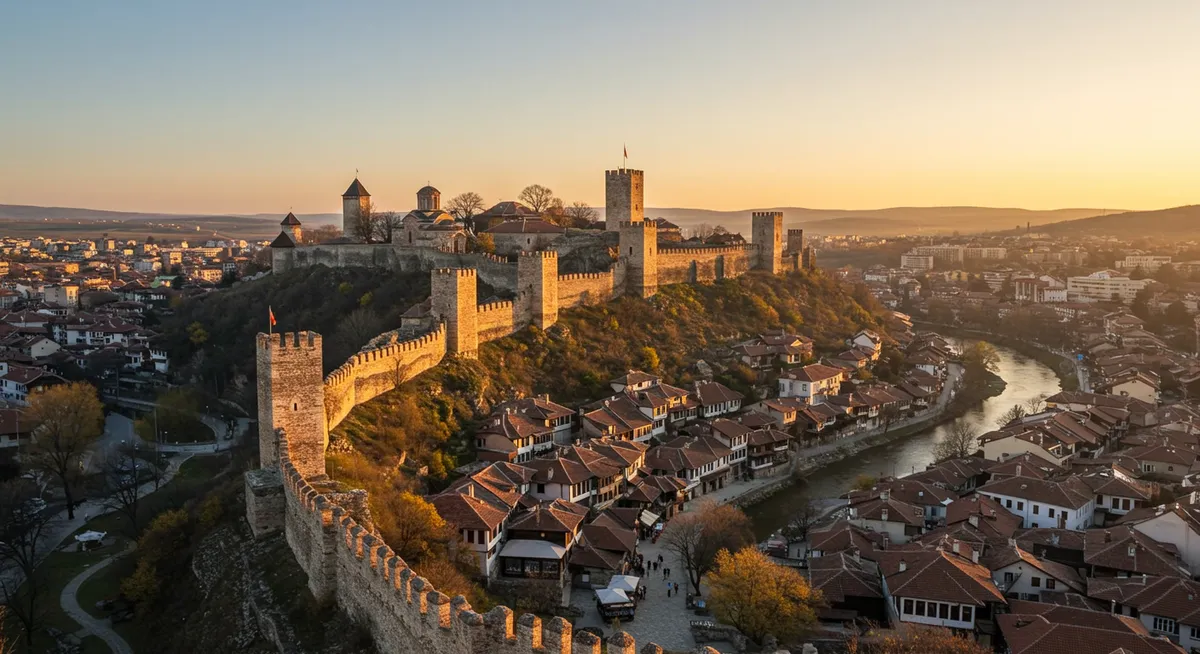
This allows you to see both the spiritual and commercial history of the region in one outing.
Photography enthusiasts should aim for the late afternoon when the sun illuminates the Zahariy Zograf murals perfectly.
Always check the local Orthodox calendar for 2026, since Easter week and the 6 August patron feast can shift service times and briefly limit access to the main church.
Continue planning: Use Veliko Tarnovo Attractions: 10 Top Things to Do to connect this guide with the rest of your Bulgaria itinerary.
Frequently Asked Questions
Is Preobrazhenski Monastery free to enter?
Yes. This is an active Orthodox monastery, not a ticketed museum, so there is no entrance fee in 2026. Donations are welcome and help maintain the complex.
What are the opening hours of Preobrazhenski Monastery?
The monastery is open to visitors every day from 07:00 to 19:00, according to the official Veliko Tarnovo tourism office. As a working monastery it keeps these hours year-round, though services may limit access to the main church at certain times.
Where is Preobrazhenski Monastery and how far is it from Veliko Tarnovo?
It sits about 7 km north of Veliko Tarnovo in the wooded Dervent gorge of the Yantra River, near the village of Samovodene, beneath the cliffs of the Belyakovo Plateau. It is an easy short drive or taxi ride from the city.
Who painted the frescoes at Preobrazhenski Monastery?
The celebrated Bulgarian National Revival painter Zahari Zograf painted the frescoes of the main church between 1849 and 1851, including the Wheel of Life, the Last Judgment and the Last Supper. Icons in the Annunciation church were painted by his nephew, Stanislav Dospevski.
What is the Wheel of Life fresco?
The Wheel of Life (Kolelo na Zhivota) is Zahari Zograf's famous allegorical fresco on an exterior wall of the monastery's main church, painted around 1849-1851. It depicts the cycle of human life and the seasons and is the single best-known artwork of the monastery.
How old is Preobrazhenski Monastery?
Its origins go back to the 11th century as a cloister of the Vatopedi monastery of Mount Athos, and it became independent in 1360 under Tsar Ivan Alexander. Destroyed during Ottoman rule, it was re-established in 1825; the present main church was completed in 1834 by master builder Kolyu Ficheto.
Is Preobrazhenski Monastery still a working monastery?
Yes. It is one of the five stauropegic monasteries of the Bulgarian Orthodox Church, meaning it answers directly to the Holy Synod, and monks still live there. Visitors should dress modestly and keep quiet inside the church.
A trip to the Preobrazhenski Monastery is a highlight for anyone visiting the Veliko Tarnovo region.
The combination of 14th-century history and 19th-century art creates a profound cultural experience.
Whether you come for the murals or the mountain views, the site offers a rare sense of tranquility.
Plan your visit today to witness one of the most significant spiritual landmarks in central Bulgaria.
To verify current details, consult the Preobrazhenski (Transfiguration) Monastery official site and Preobrazhenski (Transfiguration) Monastery on Wikipedia.