St. Cyril and Methodius Cathedral Visitor Guide
The Cathedral of Saints Cyril and Methodius is Burgas's principal Orthodox church, standing on its own square in the middle of the city centre. Completed in 1907 to a design by the Italian architect Ricardo Toscani, it remains the city's largest Orthodox place of worship and its working cathedral church. Entry is free, the building is still an active parish, and there is no admission gate to pass through, which makes it an easy stop to fold into a walk around central Burgas in 2026.
Visitors come for the three-nave basilica layout, the marble columns lining the interior, and the frescoes painted by two of the artists who also worked on Sofia's Alexander Nevsky Cathedral. Because several unrelated churches around the world share this exact dedication, it helps to confirm you have the right city before you plan transport or read up on the history — this guide covers the Burgas building only, with verified details on its design, interior, and how to visit respectfully.
This walk-through captures the cathedral's marble columns and soaring interior:
Essential Visitor Information: Location, Access, and Timing
The cathedral stands on St. Cyril and Methodius Square in central Burgas, a short walk from the pedestrian core of the city. Neither the Burgas Regional Museums nor the municipal tourism portal publishes fixed opening hours for the church, so the honest approach is to treat it as a working parish: drop in outside scheduled services, and if you want to see a liturgy rather than just the building, ask locally or check the parish noticeboard for the current timetable.
Entry is free. There is no ticket booth and no turnstile, though it is customary to leave a small donation or buy a candle at the stand near the entrance if you would like to contribute. Drivers get an easier ride here than at most historic Bulgarian churches: a three-level underground car park sits directly beneath the square, so you can park close by rather than circling the surrounding streets. More detail on the church's setting is available via Burgas Tourism Portal (Official).
If you are arriving without a car, the cathedral is an easy walk from most of central Burgas. It sits roughly 15 to 20 minutes on foot from the main railway and bus station complex on the northern edge of downtown, and closer still if you are already staying somewhere along ul. Alexandrovska or near the Sea Garden. There is no need to plan a special trip around it; most visitors simply pass through the square as part of a longer loop through the pedestrian centre.
- Address: St. Cyril and Methodius Square, central Burgas, 8000
- Admission: Free, active parish church
- Hours: No published fixed hours — visit outside liturgy times
- Parking: Three-level underground car park beneath the square
History: From an 1894 Foundation to the 1907 Basilica
Sources disagree slightly on the exact start date, which is normal for a project that took over a decade. The Burgas Regional Museums date construction from 1894, while the municipal tourism portal gives 1897 as the starting point; both agree the building was finished in 1907. That stretch covers Burgas's transformation from a modest Black Sea port into a growing regional centre, and the cathedral was one of the city's major civic projects of the period.
The design came from Italian architect Ricardo Toscani, who planned a three-nave basilica topped by a central dome resting on a twelve-sided drum pierced with small windows. That drum is the cathedral's most recognisable feature from a distance — it lifts the roofline above the surrounding square and lets light drop into the nave from above rather than only from the side windows.
The timing matters as much as the design. Under Ottoman rule, Orthodox churches across Bulgaria were commonly restricted from having tall bell towers or prominent domes, so many older parish churches were kept deliberately low and modest. Burgas's cathedral was built after the 1878 Liberation, when that restriction no longer applied, which is part of why Toscani could plan a structure with a full dome and a drum tall enough to be seen from across the square — a visible statement of the newly re-established Bulgarian Orthodox Church rather than just a place of worship.
For more on how Burgas's church-building era fits into the city's wider 19th and early 20th-century growth, the Regional Historical Museum Burgas (History Exposition) Guide covers the period in more depth, including the civic and commercial buildings that went up alongside it.
Inside the Cathedral: Columns, Glass, and Frescoes
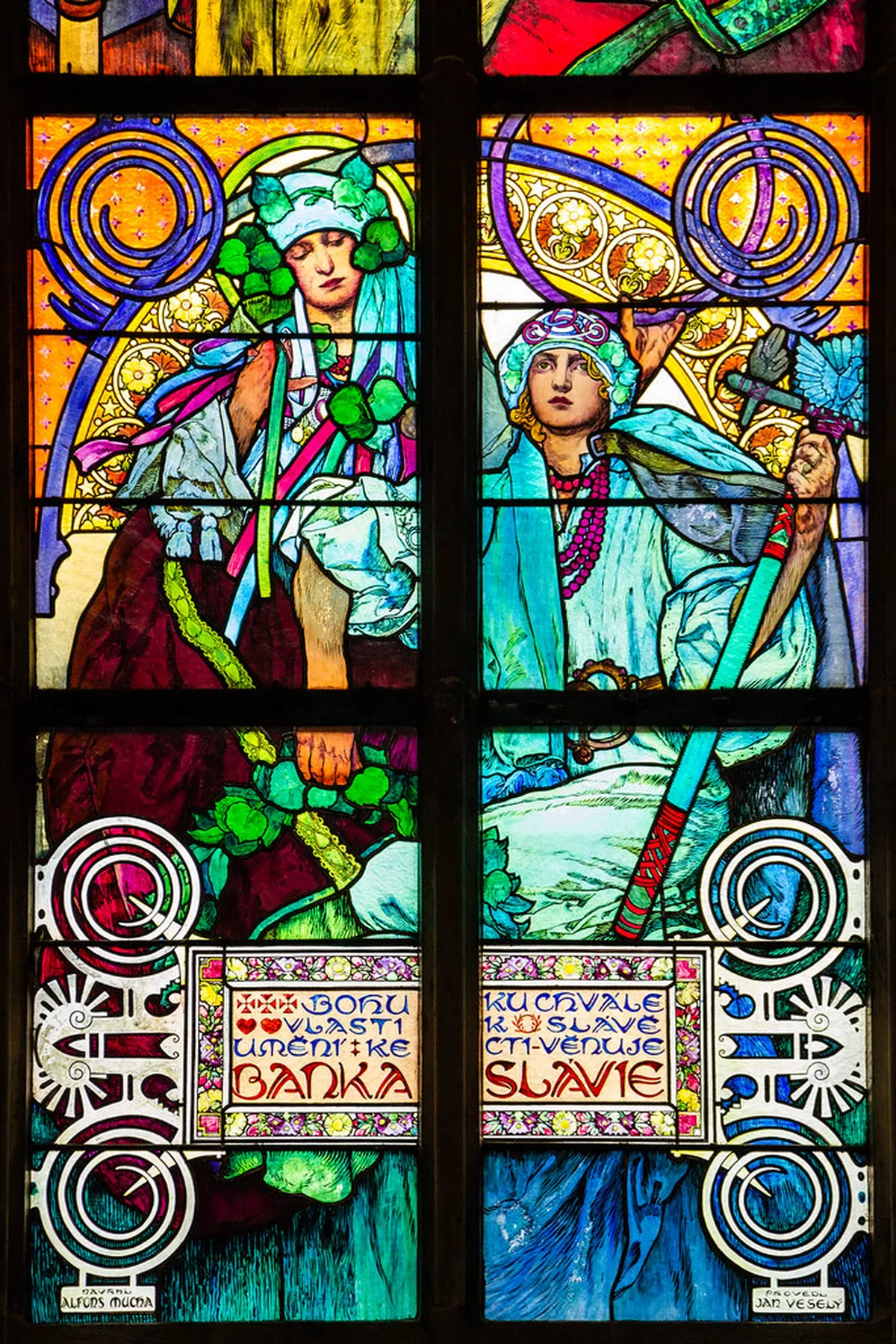
Inside, five pairs of marble columns divide the nave and carry the eye toward the iconostasis at the front of the church, the screen of icons that is standard in Orthodox architecture and marks the boundary of the altar area. Above the main entrance, a stained glass window depicts Saints Cyril and Methodius themselves, the two 9th-century missionaries credited with creating the Glagolitic script that became the basis for the Cyrillic alphabet.
The frescoes are the detail most worth slowing down for. They were painted by Prof. Gyudzhenov and Kozhuharov, artists better known for their work on Sofia's St. Alexander Nevsky Cathedral, so visitors who have already seen the capital's most famous church will recognise a family resemblance in the brushwork and colour palette here, on a smaller scale.
Because it remains a working church rather than a museum, the interior changes with the liturgical calendar: expect more candles, flowers, and incense around major Orthodox feast days, and a quieter, emptier nave on an ordinary weekday afternoon.
Saints Cyril and Methodius and the Cathedral's Role in Burgas
Cyril and Methodius are venerated across the Orthodox world as the "Apostles to the Slavs," missionary brothers from Thessaloniki who brought Christian liturgy in the Slavic vernacular to the region in the 9th century and devised the Glagolitic alphabet that Cyrillic later grew out of. Naming the city's cathedral after them was a deliberate statement about Bulgarian Orthodox identity at a time when Burgas was rebuilding its civic institutions after Ottoman rule.
Today the Burgas Regional Museums describe it as the biggest Orthodox church in the city, and it functions as Burgas's cathedral church, the seat of its senior clergy and the venue for the city's major religious observances. If you are interested in how Slavic religious and cultural identity shaped the wider region, the Ethnographic Museum Burgas Visitor Guide is a natural next stop, with exhibits on regional dress, craft, and folk tradition from the same period.
Which St. Cyril and Methodius Cathedral Is This?
The dedication is common enough that a general search can easily send you to the wrong city. Prague has an Orthodox cathedral of the same name, famous as the hiding place of the paratroopers who assassinated Reinhard Heydrich in 1942 — if a page mentions a crypt, bullet holes, or Operation Anthropoid, that is the Prague site, not this one. Sofia has its own Cyril-and-Methodius connection too, most visibly the National Library of Bulgaria, which carries the saints' names near the capital's own cathedral district, and Veliko Tarnovo has a separate parish church under the same dedication in the old capital's historic quarter.
None of those buildings are this cathedral. The Burgas church is the one on St. Cyril and Methodius Square in the city centre, identifiable by Toscani's twelve-sided drum dome and its Black Sea coastal setting rather than by any WWII history or capital-city landmarks nearby. It is worth checking twice if you have bookmarked a page or copied an address from a general search — the coordinates and street address on this page are for the Burgas building only.
Etiquette for an Active Parish Church
This is a functioning parish, not a heritage site run for tourists, so the usual Orthodox church courtesies apply. Keep your voice down, silence your phone, and avoid walking across the nave while a service is underway; enter quietly near the back instead and wait for a natural pause if you need to move further in. Modest dress is customary: covered shoulders for everyone, and many Bulgarian women choose to cover their heads with a scarf inside Orthodox churches, though this is a tradition rather than a strictly enforced rule at the door.
![Nessebar -St. John the Baptist Church [10th century] in Burgas, Bulgaria](https://toursbulgaria.com/images/st-cyril-and-methodius-cathedral-burgas-etiquette-for-an-active-parish-churc.webp)
Photography is generally tolerated in the nave when no service is in progress, but ask before using flash near the icons, and put the camera away entirely if a liturgy or a private ceremony such as a baptism or wedding is underway. There are no public restrooms inside the building itself, so plan accordingly if you are combining the visit with a longer walk.
Because it sits right in the centre, the cathedral pairs easily with the rest of a walking loop through Burgas Attractions's pedestrian streets; most visitors fold in 15 to 20 minutes here on the way between the Sea Garden and the old town squares rather than treating it as a standalone stop. Late afternoon light through the drum windows is a good window for photos of the interior, and the square itself is a pleasant place to sit for a few minutes afterward, with benches and a scattering of cafés facing the facade.
Solo travellers and anyone visiting with limited mobility will find the square itself flat and easy to navigate, which is not true of every historic site in Burgas — several of the city's older churches and museums sit up a flight of steps from street level. Neither the parish nor the municipal tourism portal publishes formal accessibility details for the entrance itself, so if step-free access matters for your trip, it is worth calling ahead or asking locally rather than assuming.
Continue planning: Use Burgas Attractions: 10 Best Things to Do in 2026 to connect this guide with the rest of your Bulgaria itinerary.
Frequently Asked Questions
Is entry to St. Cyril and Methodius Cathedral free?
Yes. It is an active Orthodox parish church, and entry is free - there is no ticket in 2026, though donations and candle purchases support the church.
When was the cathedral built?
It was completed in 1907; Burgas's municipal sources date construction to the mid-1890s onward (the Regional Museums give 1894-1907, the tourism portal 1897-1907).
Who designed the cathedral?
Italian architect Ricardo Toscani designed the building as a three-nave basilica with a central dome set on a twelve-sided drum with small windows.
What is there to see inside?
Five pairs of marble columns divide the nave, stained glass above the main entrance depicts Saints Cyril and Methodius, and the frescoes were painted by Prof. Gyudzhenov and Kozhuharov - artists best known for their work in Sofia's St. Alexander Nevsky Cathedral.
Is it the biggest church in Burgas?
Yes. The Burgas Regional Museums describe it as the biggest Orthodox church in the city, and it serves as the city's cathedral church.
What are the cathedral's opening hours?
The city's official sources do not publish fixed visiting hours. It is a working church with regular services, so visit outside liturgy times or check service schedules locally before you go.
Where is the cathedral and is there parking?
It stands on St. Cyril and Methodius Square in central central Burgas, a short walk from the pedestrian centre; a three-level underground car park lies directly beneath the square.
The St. Cyril and Methodius Cathedral is a working piece of Burgas's civic life as much as it is a historic building: a free, still-active church that carries over a century of the city's architectural and religious history inside Ricardo Toscani's three-nave basilica. Seeing the marble columns, the stained glass, and the Alexander Nevsky-linked frescoes takes only a short stop, but it adds real context to a visit built around the Sea Garden, the pier, and the rest of central Burgas.
Just make sure it is the right cathedral before you go: this guide covers the Burgas church on St. Cyril and Methodius Square, not the WWII memorial site in Prague or the churches of the same name elsewhere in Bulgaria. With that settled, it is an easy, free addition to a day spent exploring the city centre in 2026.
For official details, visit the St. Cyril and Methodius Cathedral on Wikipedia.
For more Burgas planning, read our Best Time to Visit Burgas: Weather & Seasons (2026) guide.