Ivanovo Rock-Hewn Churches: The Complete 2026 Day-Trip Guide from Ruse
Carved into the limestone cliffs above the Rusenski Lom River roughly 24 kilometres south of Ruse, the Ivanovo Rock-hewn Churches preserve some of the most expressive medieval frescoes in southeastern Europe. The complex earned UNESCO recognition in 1979 for its unbroken record of monastic life from the 1220s through the Ottoman conquest. Visitors who pair the site with other Top 20 Things To Do in Ruse can build a full day around frescoes, river canyons, and a working rock monastery. This guide covers transport, ticketing, the climb itself, and the specific Tarnovo School details worth slowing down for.
History and UNESCO Significance of the Ivanovo Rock-Hewn Churches
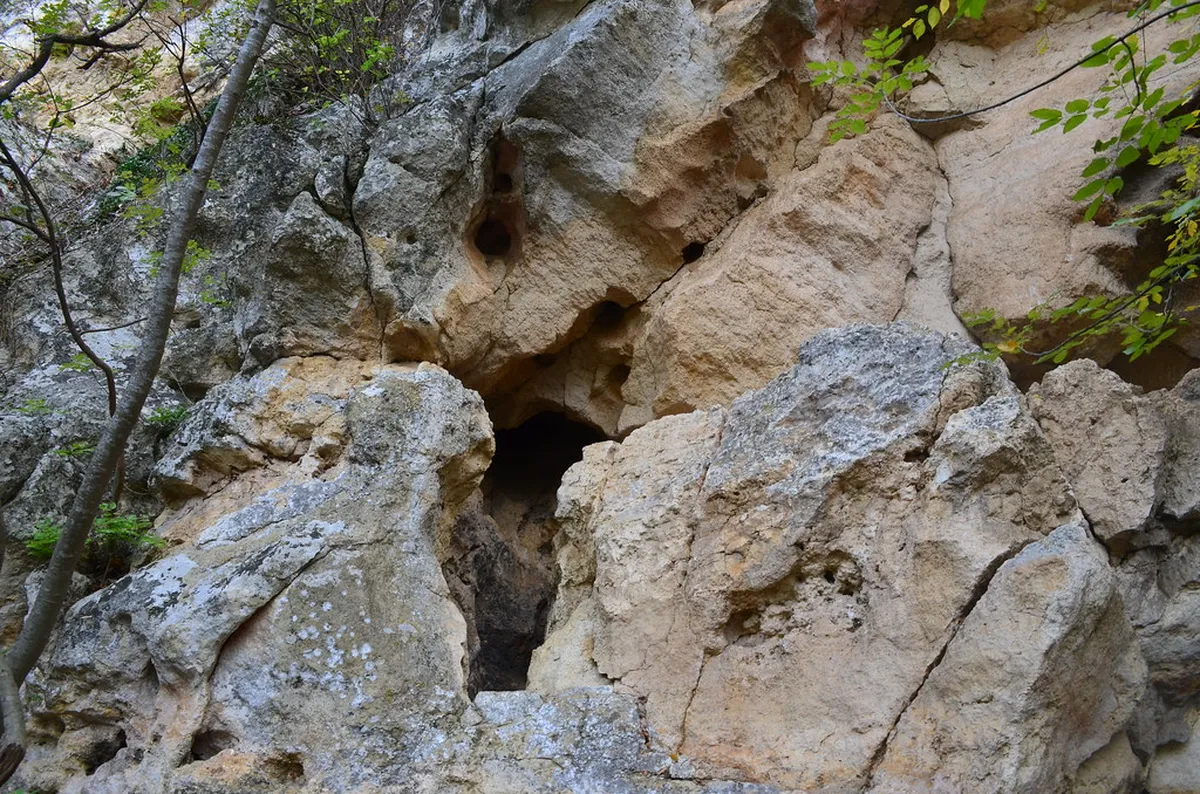
The complex was founded in the 1220s by Joachim I, who later became the first Patriarch of the restored Bulgarian church. Monks chose the canyon for solitude and for the soft Aptian limestone, which let them carve cells, refectories, and chapels directly into the cliff face. At its medieval peak the site held more than 40 churches and roughly 300 individual cells linked by ledges and stairways along the rock wall. The UNESCO World Heritage Centre - Rock-Hewn Churches of Ivanovo entry catalogues the surviving chapels and notes their continuous monastic occupation across two centuries.
By the mid-14th century Ivanovo had become a major centre of Hesychasm, the contemplative prayer tradition that shaped Orthodox theology under Tsar Ivan Alexander. The tsar himself funded the most ambitious fresco programme inside the Church of the Holy Virgin, tying the cliff complex directly to the political and intellectual capital at Veliko Tarnovo. After the Ottoman conquest in 1393 the monastery slowly emptied, and erosion stripped most of the outer ledges that once connected the chambers. Today only five churches retain meaningful painted decoration, which is why UNESCO inscribed the site in 1979 as Bulgaria's earliest cultural listing.
The protected zone covers both the rock-cut interiors and the surrounding cliffs, which means archaeological work proceeds slowly and access is deliberately limited. Conservation teams monitor humidity inside the Holy Virgin chapel because moisture is the single biggest threat to the surviving pigments. Visitors who understand this background tend to spend longer inside the small main chapel rather than rushing the climb. The site rewards a slow read more than a quick photo stop.
How to Get There: Logistics from Ruse and Veliko Tarnovo
From Ruse the churches sit about 24 km (15 miles) south, a 25 to 30 minute drive on Road 23 toward Ivanovo village. From Veliko Tarnovo the trip is closer to 130 km (80 miles) and takes around 1 hour 45 minutes via the E85. A taxi from central Ruse runs roughly 40 to 60 BGN one way in 2026, and most Ruse drivers will agree to wait two hours at the trailhead for an additional 20 to 30 BGN. Renting a car in Ruse from 35 BGN per day usually works out cheaper if you also plan to visit Cherven Fortress or Basarbovo the same day.
Public transport is workable but slow. The Ruse to Gorna Oryahovitsa local train stops at Ivanovo village six to eight times daily, takes about 25 minutes, and costs under 4 BGN. From Ivanovo station you face a 3.5 km walk to the trailhead along a paved road with a 120-metre climb, and there are no taxis at the station. A weekday bus from Ruse central station also serves the village but runs only two or three times a day. Check the latest schedules in our Transportation in Ruse, Bulgaria: Complete 2026 Travel Guide before committing to the train option, especially on weekends.
Most visitors find the easiest path is a hired driver-guide for around 120 to 180 BGN that combines Ivanovo with Basarbovo and Cherven in a single circuit. Parking at the trailhead costs 2 to 4 BGN and fills by 11:00 on summer weekends. Aim to arrive by 09:30 to walk the cliff path before the midday heat and the tour-bus arrivals from Bucharest. Cell signal drops inside the canyon, so download offline maps before you leave Ruse.
💡 Good to know: If you take the train, the cheap fare hides a catch — Ivanovo station is 3.5 km from the trailhead with a 120-metre climb and no taxis waiting. Budget about 45 minutes each way on foot in the heat, or treat the train as a one-way leg and arrange a driver back. For most travellers a taxi or driver-guide from Ruse ends up easier than it first looks.
Essential Visitor Info: Opening Hours and Entry Fees
The Holy Virgin chapel opens daily from 09:00 to 18:00 between April 1 and October 31, with the last entry at 17:30. From November through March the site officially closes, though the outdoor trails remain accessible and free during dry weather. Entry in 2026 is 6 BGN for adults, 2 BGN for students, and free for children under seven. The Official Tourism Portal of Bulgaria publishes any seasonal closures triggered by ice or rockfall, which can shut the upper staircase for several days at a time in early spring.
Tickets are sold only at the kiosk near the bottom of the stone staircase, and only in cash (Bulgarian Lev). The nearest ATM is in Ivanovo village, so withdraw before you drive out. There is no online booking and groups larger than 15 should call ahead to avoid clogging the small chapel. A small gift shop, paid restrooms (1 BGN), and a seasonal café operate near the kiosk from May through September.
💡 Good to know: Carry small Lev notes before you leave Ruse. The kiosk, the restrooms (1 BGN) and the parking (2-4 BGN) are all cash-only, and the only ATM is back in Ivanovo village — there is none at the trailhead. Cards are not accepted anywhere on site.
Plan two hours on site at minimum: 30 minutes for the climb, 45 minutes inside the Holy Virgin chapel, and the rest exploring the secondary chambers along the cliff path. Photography is permitted inside the main chapel without flash and without tripod; supervisors will ask you to delete shots taken with flash. Quiet voices are expected throughout, and shoulders should be covered if you plan to enter the chapel. Drone use is prohibited across the entire UNESCO buffer zone.
| Distance from Ruse | 24 km (15 miles) south, 25-30 min drive on Road 23 |
| Opening season | Daily 09:00-18:00, Apr 1-Oct 31 (last entry 17:30); chapel closed Nov-Mar |
| Adult entry (2026) | 6 BGN adults, 2 BGN students, free under 7; cash only |
| The climb | ~100 stone steps, ~35 m ascent, 12-15 min for fit walkers |
| Time on site | 2 hours minimum; 3-4 hours for art lovers and birdwatchers |
| Best months | Mid-Apr to late May and mid-Sep to late Oct |
- Seasonal visiting at a glance: spring (Apr-May) brings wildflowers and 12-20 deg C; summer (Jun-Aug) is hot at 28-34 deg C with peak crowds 10:00-15:00; autumn (Sep-Oct) offers foliage and 15-22 deg C; winter (Nov-Mar) closes the chapel and ices the steps.
- Estimated 2026 costs: entry 6 BGN, taxi from Ruse 40-60 BGN one way, driver-guide circuit 120-180 BGN, parking 2-4 BGN, audio guide 5 BGN, restrooms 1 BGN.
The Frescoes: Understanding the Tarnovo School of Painting
The Tarnovo School took shape in the 14th-century court of Tsar Ivan Alexander and broke with the rigid frontality of earlier Byzantine icon-painting. Inside Ivanovo's Holy Virgin chapel you can see the shift clearly: figures turn three-quarters, gestures carry weight, and faces show grief, surprise, and tenderness rather than the flat, hieratic stares of Komnenian and early Palaiologan models. Painters built volume with overlapping ochre, deep wine-red, and lapis blue rather than gold leaf, partly because the cave humidity ruined gilding. The result is a humanist medieval realism that predates the Italian Trecento by less than a generation.
Look up first. The vault carries a Last Supper that scholars date to roughly 1340, more than 150 years before Leonardo's Milan version, with Christ and the apostles arranged around a curved table that fits the cave geometry. The west wall holds a Passion cycle where the figure of Judas leans physically away from the group, an unusually narrative gesture for the period. Along the south wall, a portrait of Tsar Ivan Alexander as donor preserves one of the few contemporary likenesses of any medieval Bulgarian ruler.
Three details separate Ivanovo from comparable Balkan sites. First, the artists worked on a heavily curved, low cave ceiling and adapted the compositions to follow the rock rather than forcing flat panels. Second, the pigments include local minerals you do not see at Boyana or Mount Athos. Third, several scenes carry inscriptions in Old Bulgarian rather than Greek, signalling the linguistic confidence of the late Second Bulgarian Empire. Spend ten minutes with a torch app on low brightness and you will pick out details most rushed visitors miss.
Which Churches Survive: Naming the Rock-Cut Chapels
Visitors often arrive expecting a single "church" and leave confused about what they actually saw. The Ivanovo complex was never one building. At its medieval peak the canyon held roughly 40 churches and some 300 cells, but erosion and the Ottoman centuries reduced that to a handful of identifiable spaces, and frescoes survive in only five of them, all dating from the 13th and 14th centuries. Knowing the names helps you read the on-site panels and understand why guides point at specific rock openings rather than one entrance.
The space everyone visits is the Main Church, the Church of the Holy Virgin, whose 14th-century murals are by some distance the most famous painted work at Ivanovo and represent late Palaeologan art carried into the Tarnovo court style. The other named survivors are scattered along the cliff and are not all open to the public: the St Archangel Michael Chapel, traditionally called "the Buried Church"; the St Theodore Church, known as "the Demolished Church" for the rock collapse that exposed it; the Baptistery; and the Gospodev Dol Chapel set apart along its own gully. A medieval inscription left by the monk Ivo Gramatik, dated 1308 to 1309, survives among the painted walls and is one of the oldest dated traces of the monastic community.
For most day-trippers the practical takeaway is simple: the frescoes you came to see are inside the Main Church, and the secondary chapels read as raw rock openings unless you have a guide to interpret them. Art historians and Byzantine specialists make the trip specifically for the named spaces and the inscriptions, which is why the site keeps drawing scholarly attention out of proportion to its small footprint.
Photographing the Frescoes in Low Cave Light
The Holy Virgin chapel runs on natural light from one slit window plus a single warm LED, which means smartphone auto modes will produce blurry, yellow-tinted images. Switch to manual or pro mode, push ISO to 1600-3200, drop shutter speed to 1/30 or 1/15 (brace your elbows against the wall), and lock white balance to 4000K to neutralise the LED cast. Mirrorless and DSLR shooters should bring a fast prime in the 24-35mm range; the chapel is too small for anything longer than 50mm to frame full scenes.
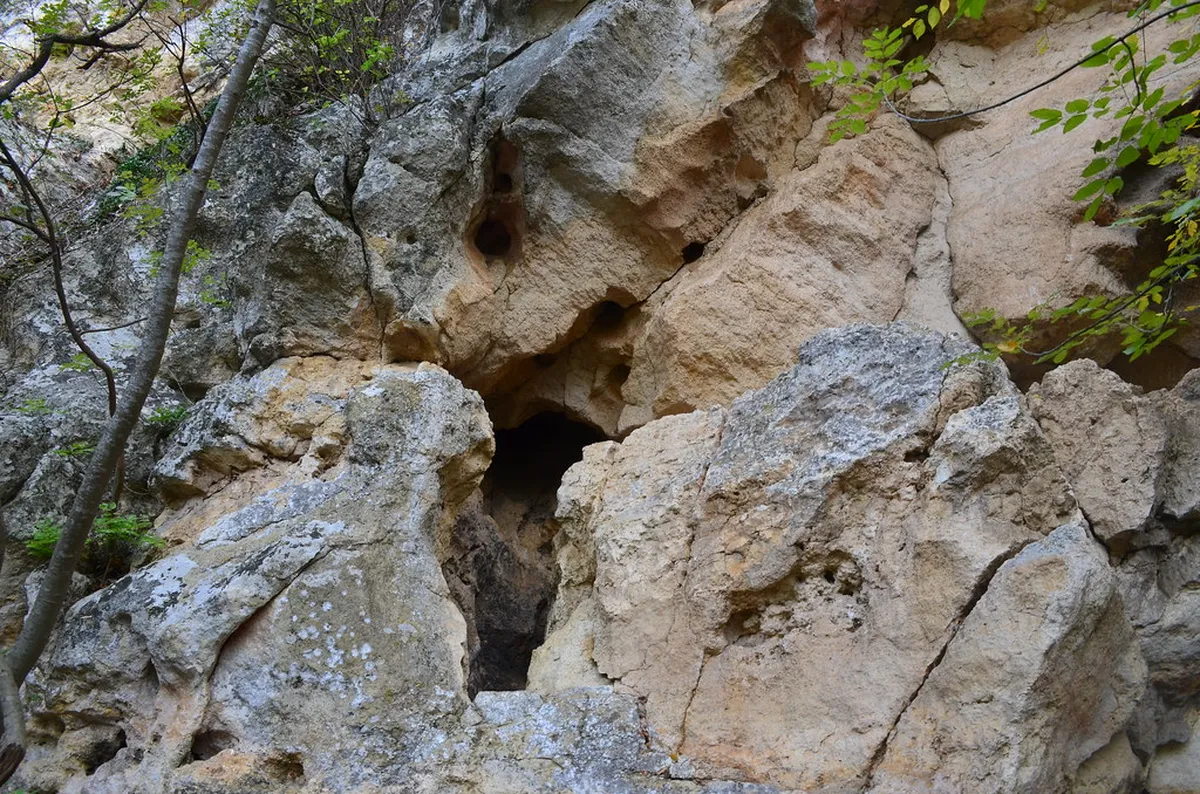
Flash is strictly prohibited because the strobe accelerates pigment loss, and tripods are banned because they block the narrow walking lane. A small beanbag rested on a ledge gives you the same stability without the conflict. Shoot the curved ceiling first while the chapel is empty, then move to the donor portrait on the south wall once other visitors have shuffled past. Outside the chapel, the cliff-edge viewpoint roughly 50 metres south of the entrance gives the best wide shot of the cave openings stitched into the limestone face, especially in the warm hour before sunset.
Exploring the Rusenski Lom River Valley Landscape
For a sense of the cliff setting and the climb before you go, this short walkthrough of the site is a useful preview.
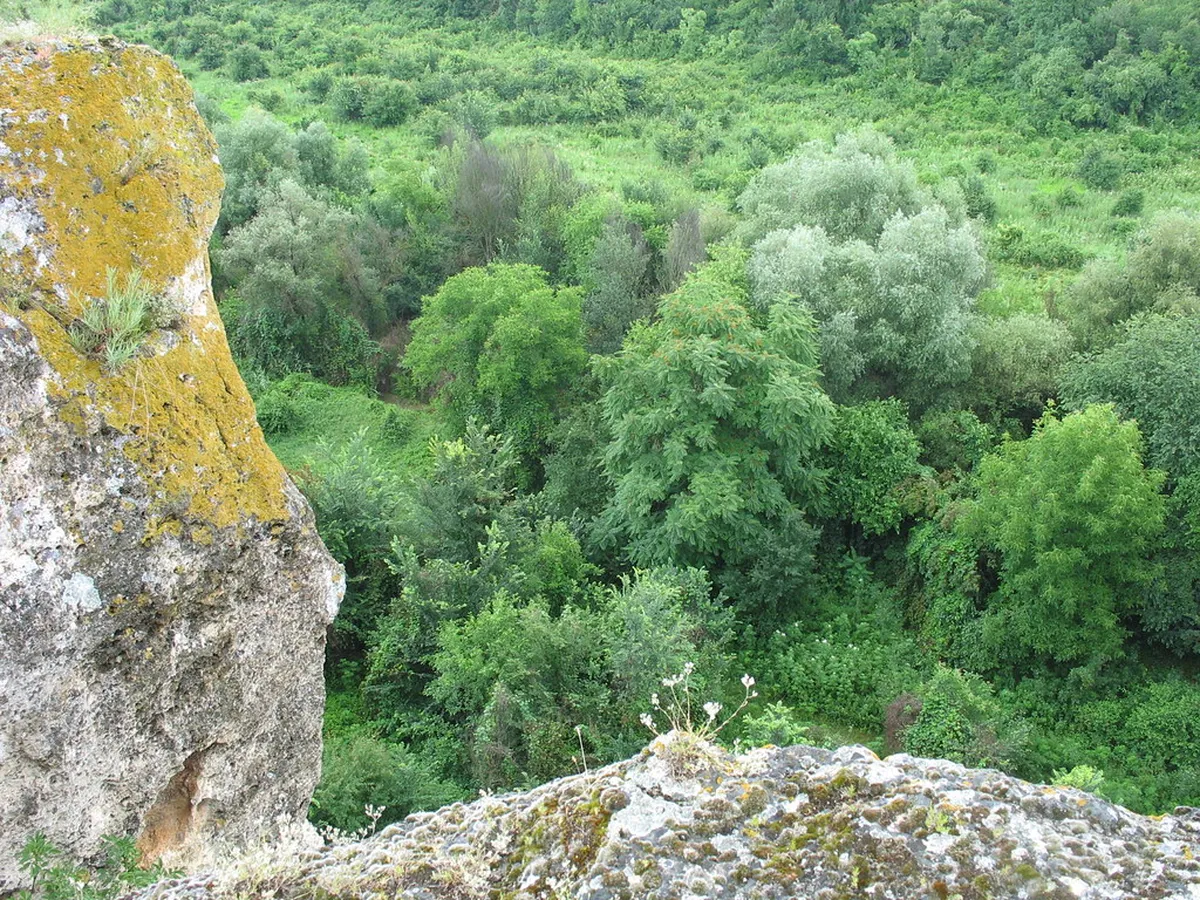
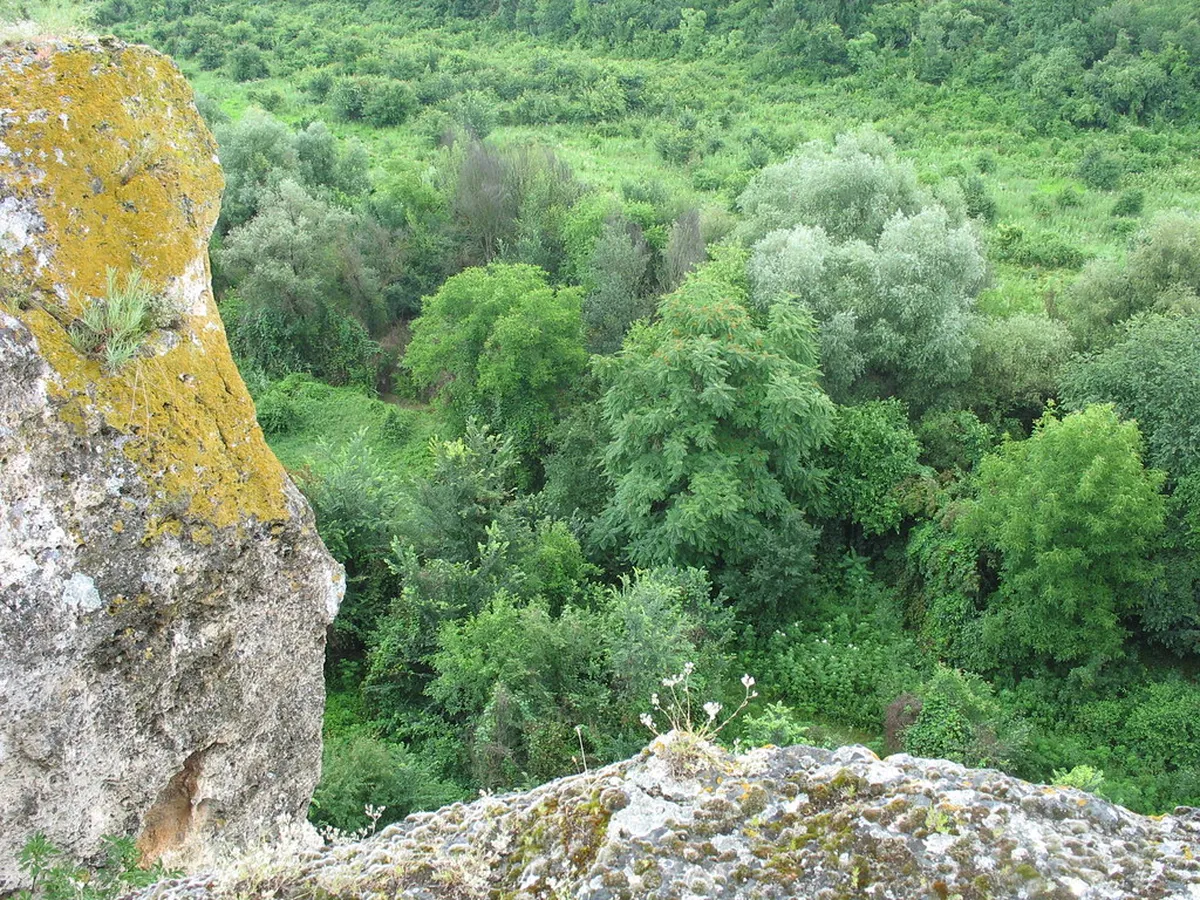
The churches sit inside Rusenski Lom National Park, a 3,408-hectare reserve protecting the deep meander canyons where the Rusenski Lom and Cherni Lom rivers cut through Aptian limestone. The valley supports more than 190 bird species, including Egyptian vulture, black stork, eagle owl, and saker falcon, several of which nest in the same cliffs as the chapels. Botanists count over 900 vascular plants in the park, with notable populations of Pontic rhododendron, wild peony in May, and orchids on the upland meadows.
From the trailhead you can extend the visit with two short walks. The 2.5 km riverside loop drops below the cliffs and follows the Rusenski Lom past beaver-cut willows, taking about 90 minutes round trip. The longer 4 km cliff-edge trail north of the chapels reaches a viewpoint over the Pisanitsa meander and connects on to ruined hermit cells that are not officially signposted. Carry water; there are no fountains beyond the trailhead.
Park rules are tighter than they look. Drones, off-trail walking, foraging, and bicycles past the trailhead are all prohibited inside the buffer zone. Camping is permitted only at the designated sites near Koshov village, 6 km west. The conservation staff are friendly but will turn back groups that try to picnic on the cliff ledges.
Self-Guided Versus Guided: Which Is Worth It
A self-guided visit using the on-site interpretive panels and a 5 BGN audio guide works well if you have read up on the Tarnovo School in advance. You move at your own pace, wait out crowds for the donor portrait, and spend as long as you like inside the chapel. The downside is that the printed panels translate the basics but skip the deeper iconographic links to Veliko Tarnovo and the Hesychast controversy, which is exactly where the site gets interesting.
A licensed local guide hired in Ruse runs 80 to 150 BGN for a half-day at Ivanovo alone, or 120 to 180 BGN for a full circuit including Basarbovo and Cherven. The depth varies; the better guides are accredited art historians who can point out specific brushwork details, name the donor figures, and translate the Old Bulgarian inscriptions on the spot. If you only do one cultural day trip from Ruse, paying for a guide here returns more value than paying for one at Basarbovo or Cherven, both of which read clearly from the signage alone. Solo travellers can cut costs by joining a small-group tour that departs Ruse on weekends from May through September for around 70 BGN per person.
Is Ivanovo Worth the Climb, and How It Compares to Boyana
The honest answer is that Ivanovo rewards a specific kind of visitor more than a casual one. If you have any interest in medieval art, Orthodox iconography, or UNESCO heritage, the 100-step climb pays off the moment you tilt your head back at the curved ceiling. If you are chasing dramatic ruins or a postcard skyline, the site is quieter and more cerebral than its reputation suggests — the payoff is in the painted detail, not the architecture, which is largely eroded cave openings from the outside.
The comparison most travellers want is with Boyana Church near Sofia, Bulgaria's other UNESCO-listed fresco site. Boyana is famous for the realism and individuality of its 1259 portraits and is far easier to reach, but it is a small, dark, time-ticketed room you pass through in minutes. Ivanovo trades that polish for context: a working canyon, a longer and more contemplative visit, the Tarnovo School donor portrait of Tsar Ivan Alexander, and Old Bulgarian inscriptions in their original cliff setting. Frescoes-first travellers who can only choose one usually rank Boyana for technical refinement and Ivanovo for atmosphere and depth. Doing both — Boyana on a Sofia day, Ivanovo on a Ruse day — gives you the fullest picture of medieval Bulgarian painting.
Climbing the Staircase: Difficulty and Accessibility
The trail rates as moderate. From the kiosk you climb roughly 100 stone steps in three flights with two short rest landings, gaining about 35 metres of elevation over 250 metres of trail. Reasonably fit walkers reach the chapel in 12 to 15 minutes; older visitors and families with small children typically take 25 to 30 minutes with stops. Handrails run along most of the ascent on the cliff side, but the final 20 metres has a narrow ledge with a low wooden rail and a sheer drop, so children should be held by the hand.
The site is not wheelchair accessible and cannot be made so without compromising the protected rock face. Walkers and trekking poles are allowed; strollers are not practical past the kiosk. The lower riverside loop is mostly flat compacted earth and works for visitors who want the canyon scenery without the climb. After rain the limestone steps turn slick within minutes; rangers may close the upper staircase if drizzle persists more than an hour. Avoid sandals and smooth-soled trainers regardless of the forecast.
Nearby Gems: Basarbovo Monastery and Cherven Fortress
Just 16 km north toward Ruse, Basarbovo Monastery remains the only active rock-cut monastery in Bulgaria. A single resident monk maintains the chapel and the small terraced garden, and the contrast with Ivanovo's silent ruins is the whole point of pairing them. Cherven Fortress, 19 km southwest, preserves a 14th-century four-storey tower that survived the Ottoman demolition of the citadel and now anchors one of the Best Views in Ruse: 8 Panoramic Viewpoints for 2026.
A sensible circuit leaves Ruse at 09:00, hits Ivanovo first while the chapel is coolest and emptiest, breaks for lunch in Ivanovo or Koshov village (mehana mains 12-18 BGN), spends an hour at Basarbovo around 14:00, and finishes at Cherven by 16:30 for the long afternoon shadows on the tower walls. Total driving is roughly 75 km on regional roads. If you only have half a day, drop Cherven; the fortress reads as ruins more than as architecture and rewards photographers more than first-time visitors.
What to Pack and When to Go
Bring closed-toe shoes with grippy soles, at least one litre of water per person, sun protection, and a light layer for the chapel interior, which holds at 12-15 deg C even in August. A small headtorch or torch app helps you read fresco details in the dim corners. Pack cash in small Lev notes for the kiosk, restrooms, and parking. A pair of compact binoculars doubles for spotting vultures across the canyon and for picking out high fresco details inside the chapel.
The two best windows are mid-April through late May, when wildflowers carpet the meadows and temperatures sit between 15 and 22 deg C, and mid-September through late October, when the beech and oak forest turns gold and the light angles into the cave openings. Avoid weekends in July and August: the chapel is small, and tour-bus groups from Bucharest can fill it for 30-minute stretches. Weekday mornings before 11:00 give you the closest thing to the empty cliff that earlier visitors used to describe.
Planning Your Ivanovo Day Trip: A Sample Itinerary
The Ivanovo Rock-hewn Churches make the most rewarding day trip from Ruse when paired with at least one nearby site. The complete circuit — Ivanovo, Basarbovo, and optionally Cherven — covers roughly 75 km of regional driving and fits comfortably inside a 9:00-to-17:00 day. Browse the full day trips from Ruse hub for the wider menu of half-day and full-day options before you commit.
09:00 — Depart Ruse. Drive south on Road 23 toward Ivanovo village (24 km, about 28 minutes). Arrive at the trailhead by 09:30 before tour buses from Bucharest fill the small parking area. Parking costs 2-4 BGN cash.
09:30–12:00 — Ivanovo Rock-hewn Churches. Allow 30 minutes for the staircase climb, 45-60 minutes inside the Holy Virgin chapel for the frescoes, and 30 minutes exploring the secondary cliff chambers and the riverside loop below. Total: approximately 2 hours on site.
12:00–13:00 — Lunch in Ivanovo village. The single mehana in the village serves shopska salad, grilled meats, and cold beer for 10-18 BGN per main. Alternatively drive 6 km west to Koshov for a riverside picnic spot.
13:30–15:00 — Basarbovo Monastery. The only active rock-cut monastery in Bulgaria sits 16 km north, a 20-minute drive back toward Ruse. Entry is free. The contrast between Basarbovo's living religious community and Ivanovo's silent UNESCO frescoes is the whole point of combining them. See our Basarbovo Rock Monastery 2026 for what to expect inside.
15:30–17:00 — Optional: Cherven Fortress. Nineteen km southwest of Basarbovo, the 14th-century tower at Cherven makes a strong photographic finish to the circuit. Skip it if you are travelling with children under ten or if light fades before 17:30.
For background on the UNESCO designation and the medieval fresco tradition across Bulgaria, the Wikipedia article on the Rock-hewn Churches of Ivanovo and the Visit Bulgaria listing both carry reliable reference detail that complements the on-site interpretive panels.
2026 Visitor Essentials: Tickets, Hours & Getting There from Ruse
Planning your 2026 visit takes a few minutes of preparation that pays off on the day. The Holy Virgin chapel opens daily from 09:00 to 18:00 between 1 April and 31 October (last entry 17:30). Outside that window the chapel is closed, though the outdoor canyon trails remain accessible in dry weather. Entry costs 6 BGN for adults and 2 BGN for students in 2026; children under seven enter free. Tickets are sold only at the kiosk near the base of the stone staircase and only in cash — the nearest ATM is in Ivanovo village, so withdraw before you leave Ruse.
Getting there is straightforward by car or taxi. The site is 24 km south of central Ruse on Road 23, a 25 to 30 minute drive. A taxi from central Ruse runs roughly 40 to 60 BGN one way; most drivers will wait two hours at the trailhead for an extra 20 to 30 BGN. If you prefer public transport, a local train from Ruse to Ivanovo village runs six to eight times daily and takes about 25 minutes for under 4 BGN — but note that Ivanovo station sits 3.5 km from the trailhead with a 120-metre climb and no taxis waiting. Check current bus and train schedules at the Ruse central station before you commit, especially on weekends when frequency drops.
| Entry fee (2026) | 6 BGN adults / 2 BGN students / free under 7 — cash only |
| Opening hours | Daily 09:00–18:00 (last entry 17:30), 1 Apr–31 Oct |
| Taxi from Ruse | 40–60 BGN one way (25–30 min drive on Road 23) |
| Train from Ruse | Under 4 BGN, ~25 min to Ivanovo village + 3.5 km walk to trailhead |
| Driver-guide circuit | 120–180 BGN including Basarbovo and Cherven Fortress |
| Audio guide | 5 BGN (available at the kiosk) |
- Arrive by 09:30 to beat tour buses from Bucharest, which typically arrive between 10:00 and 11:00 on summer weekends.
- Carry small BGN notes: parking (2–4 BGN), restrooms (1 BGN), the kiosk, and the optional audio guide are all cash-only.
- The best seasons are mid-April to late May and mid-September to late October — mild temperatures, fewer crowds, and the canyon light at its most dramatic.
Frequently Asked Questions
How do I get to the Ivanovo Rock-hewn Churches from Ruse?
The easiest way to reach the churches from Ruse is by car or taxi, which takes about 20 minutes. You can also take a train to Ivanovo village, followed by a 3-kilometer hike. For more details on local travel, check our guide on Transportation in Ruse, Bulgaria.
Are the Ivanovo Rock-hewn Churches worth visiting?
Yes, they are a UNESCO World Heritage site and a must-see for history lovers. The 14th-century frescoes are some of the best-preserved examples of medieval Bulgarian art. The surrounding natural beauty of the river valley adds significant value to the overall experience.
What is the best time of year to visit the Rusenski Lom River Valley?
Spring and autumn are the best times to visit due to the mild temperatures and beautiful scenery. Spring offers lush greenery and wildflowers, while autumn provides stunning fall foliage. Summer can be quite hot for hiking the steep cliffside trails.
How much does it cost to enter the Ivanovo Rock-hewn Churches?
In 2026 entry costs 6 BGN for adults and 2 BGN for students; children under seven enter free. Tickets are sold cash-only at the kiosk at the bottom of the stone staircase. The nearest ATM is in Ivanovo village, so withdraw before you drive out. An optional audio guide costs an additional 5 BGN.
Is the site accessible for travelers with limited mobility?
Unfortunately, the main church is not easily accessible for those with limited mobility. Reaching the frescoes requires climbing a steep staircase with roughly 100 stone steps. The lower trails in the valley are flatter but do not offer views of the interior art.
Is Ivanovo Rock-hewn Churches worth visiting?
Yes — Ivanovo is absolutely worth visiting for anyone with an interest in medieval art or UNESCO heritage. The 14th-century Tarnovo School frescoes inside the Holy Virgin chapel are the finest surviving example of medieval Bulgarian painting, rivalling Boyana Church and predating Leonardo's Last Supper by over 150 years. The canyon scenery and birdlife add natural beauty on top of the cultural significance. Budget at least two hours on site.
How long do you need at the Ivanovo Rock-hewn Churches?
Allow a minimum of two hours: roughly 30 minutes to climb the stone staircase to the main chapel, 45 minutes inside the Holy Virgin chapel studying the frescoes, and 30-45 minutes exploring the secondary cliff chambers and the riverside loop below. Art historians and birdwatchers routinely spend three to four hours. Rushing the visit in under 90 minutes means missing the details that make the site exceptional.
How does Ivanovo compare to Boyana Church?
Both are UNESCO-listed Bulgarian fresco sites, but they offer different experiences. Boyana Church near Sofia is famous for the lifelike realism of its 1259 portraits and is easy to reach, though you pass through its small dark room in minutes. Ivanovo trades that polish for atmosphere: a working river canyon, a longer contemplative visit, the Tarnovo School donor portrait of Tsar Ivan Alexander, and Old Bulgarian inscriptions in their original cliff setting. Frescoes-first travellers usually rank Boyana for technical refinement and Ivanovo for depth and setting — seeing both gives the fullest picture of medieval Bulgarian painting.
Can you visit Ivanovo Rock Churches and Basarbovo Monastery in one day?
Yes — combining Ivanovo and Basarbovo in a single day is the standard circuit for most visitors. The two sites are only 16 km apart. A good schedule leaves Ruse at 09:00, spends 2 hours at Ivanovo (arriving before tour buses), has lunch in Ivanovo village, and reaches Basarbovo by 13:30 for a 1-hour visit. You are back in Ruse by 15:30-16:00 with time to add Cherven Fortress if energy allows.
For the wider city context, see our complete things to do in Ruse guide.
For related Ruse deep-dives, see our Rusenski Lom National Park and Basarbovo Rock Monastery guides.
Ivanovo rewards visitors who treat it as a slow read rather than a tick-box stop. The 14th-century Tarnovo School frescoes inside the Holy Virgin chapel remain the single best surviving record of late medieval Bulgarian painting, and the canyon around them ranks among the richest bird habitats in the country. Pair the climb with Basarbovo and Cherven for a complete Rusenski Lom day, arrive before 11:00 to beat the tour buses, and bring cash, grip-soled shoes, and a torch app. Plan the trip in 2026 while seasonal opening windows still favour spring wildflowers and autumn foliage.