Basarbovo Rock Monastery (2026): 8 Things to Know Before You Visit
A Basarbovo Rock Monastery (St. Dimitar Basarbowski) Visitor Guide visit is the easiest half-day cultural trip you can make from Ruse, and it lands you at the only active rock monastery in Bulgaria. The complex is carved into the limestone cliffs of the Rusenski Lom valley, just 10 kilometers south of the city, and it sits inside the wider Rusenski Lom National Park protected area.
This 2026 guide covers the things competitors get wrong or skip: the entrance is actually free (not 5 BGN), the bus from Avtogara Iztok is workable if you plan the timetable, and the 48-step climb has a clear accessible alternative at the courtyard level. Use it to time your visit, choose your transport, and know what to do when a monk offers you a blessing inside the new church.
What is Basarbovo Rock Monastery?
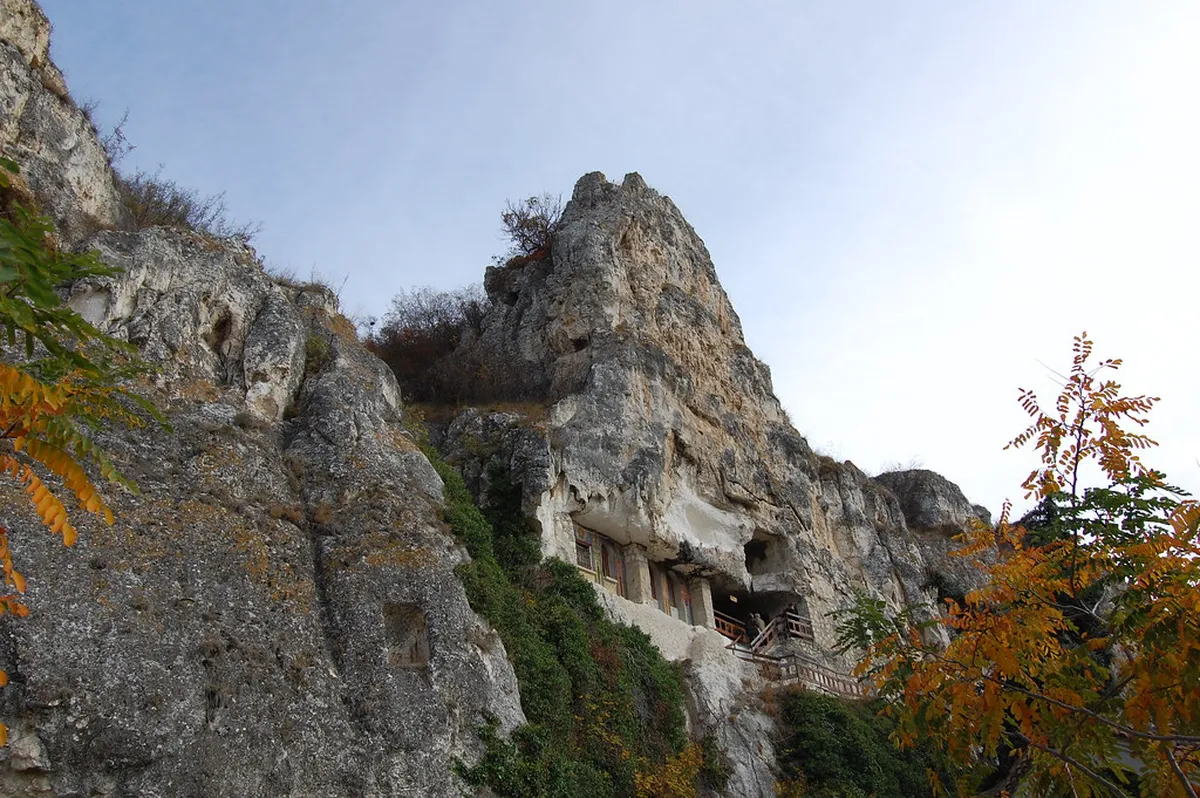
Basarbovo Rock Monastery, formally the Monastery of St. Dimitar Basarbovski, is a working Bulgarian Orthodox cave complex hewn directly into the limestone cliffs above the Rusenski Lom River. It is the only active rock monastery in Bulgaria today and is officially listed as site No. 50b on the country's 100 National Tourist Sites circuit, which is why you will see Bulgarian visitors stamping their tourist passport books at the small monastery shop.
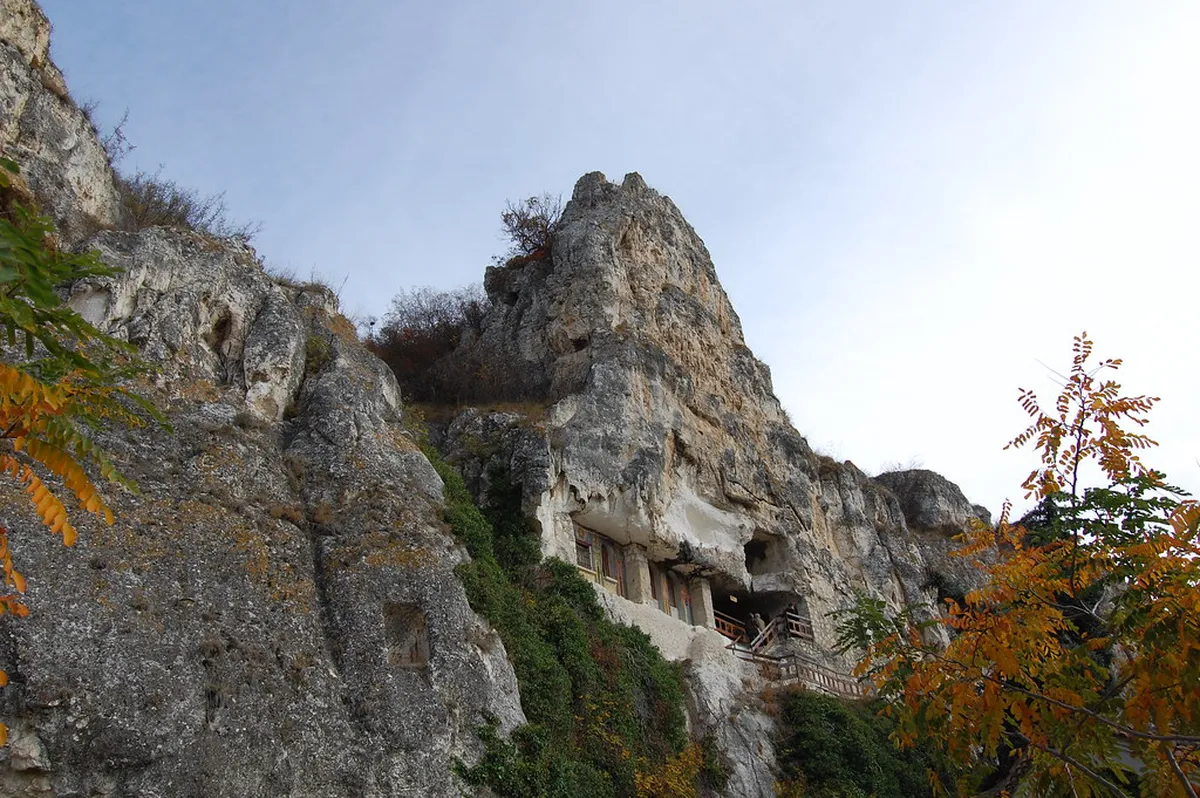
The site has three structural layers. At ground level you find the courtyard, the curative well, two monastic rooms, and a rock-cut dining cave added in 1956. A staircase of 48 stone steps then climbs to a rocky terrace holding the small rock church (with a wood-carved iconostasis from 1941), the niche where St. Dimitar reportedly slept, and a full-length icon of the saint. A separate stone staircase leads further up to a natural cave used as an ossuary, where Monk Hrisant, who revived the monastery in 1937, is buried.
A modest new church, "St. Transfiguration of the Lord," sits at the back of the courtyard. Its foundation stone was laid in September 2005 and the interior is freshly painted with vivid Orthodox iconography. This is usually where a resident monk will offer a blessing with holy water, so plan to enter it last.
To get a feel for the courtyard, the curative well, and the climb to the cave church before you arrive, this walking tour steps through the whole complex:
History and Significance of the Rock Monastery
The monastery was founded during the Second Bulgarian Empire (12th to 14th century) as part of a much larger hesychast monastic landscape that filled the Rusenski Lom canyon and the Beli Lom and Cherni Lom valleys. Hesychast monks pursued spiritual enlightenment through silence, constant prayer, and ascetic isolation, and they carved their cells and chapels straight into the soft limestone. The first written mention of the site appears in an Ottoman tax register of 1431, and a later register of 1479 to 1480 lists it as "Monastery Basarba."
The name itself comes from Queen Theodora, the first wife of Tsar Ivan Alexander and daughter of Ivan Basarab, the ruler of Wallachia who patronised the complex. Original dedications were to St. Theodore Tyron and St. Theodore Stratelates, but the monastery is best known today through St. Dimitar Basarbovski, a 17th-century shepherd from the village who spent his entire life as a hermit in these caves.
After St. Dimitar's death the monastery quietly emptied. During the Russo-Turkish War of 1768 to 1774, General Pyotr Saltykov agreed to move the saint's relics northward; the convoy passed through Bucharest during a plague epidemic, deaths reportedly stopped on arrival, and the citizens persuaded the general to leave the relics there. They are still kept at the Church of St. Constantine and Elena in Bucharest, which is why the monastery has such a strong Romanian following. The site was archaeologically studied by Karel Skorpil in 1912 and officially restored on 1 May 1937 by Monk Hrisant from the Transfiguration Monastery near Veliko Tarnovo.
Opening Hours, Entrance Fees, and Contacts (2026)
The monastery is open daily, year-round, with a clear seasonal split. Entrance is free; many older guides (including ours, in earlier versions) quote a 5 BGN ticket, but in 2026 there is no admission fee. A donation in the new church or the icon shop is appreciated and is what funds upkeep. Card payments are not available, so carry small Bulgarian lev banknotes.
- April to September: 8:00 to 19:00, daily
- October to March: 8:00 to 17:00, daily
- Entrance: free; donations accepted
- Phone: +359 82 800 765
- Mobile: 0889 155 293 or 0877 353 019
- Address: Basarbovo village, Ruse Municipality, 7071
| Distance from Ruse | ~10 km south (15-minute drive) |
| Entrance fee | Free (donations accepted; cash lev only) |
| Opening hours | Apr–Sep 8:00–19:00; Oct–Mar 8:00–17:00, daily |
| Climb to cave church | 48 stone steps (courtyard level step-free) |
| Suggested visit time | 60–90 minutes |
| Feast day | 26 October (Dimitrovden) |
The most peaceful slots are weekday mornings just after opening, before the first tour vans arrive from Ruse around 10:30. Late afternoon in summer also works because day-trip groups have already turned back to the city. Avoid Sundays and Orthodox feast days if you want silence; on those days expect Bulgarian families, candles, and choral chant filling the courtyard. Photography is fine outdoors but ask before shooting inside the rock church or the new church, and never photograph monks at prayer.
How to Get to Basarbovo Rock Monastery from Ruse
The monastery sits roughly 10 kilometers south of central Ruse, off the road toward Byala. There are three realistic options. By car, leave Ruse heading south, take the marked left turnoff for Basarbovo village, and follow brown signs through the village down to the river; a small free parking area is at the foot of the cliffs. By taxi from central Ruse, expect 12 to 18 BGN one-way and a 15-minute ride. Apps like TaxiMe and Bolt both work in Ruse and are the most reliable way to book a return pickup.
By bus, services run from Avtogara Iztok (East Bus Station) on the eastern edge of Ruse to Basarbovo village center, and from the village it is a flat 1.4 km walk (about 20 minutes) along the small road that follows the left bank of the Rusenski Lom River. The bus is the cheapest option but the timetable is sparse — typically only a handful of departures per day — so check at the Ruse Tourist Information Centre at 61 Aleksandrovska Str before relying on it. Transportation in Ruse, Bulgaria covers station locations and how to read posted timetables.
Quick comparison for planning:
- Taxi: 12 to 18 BGN one-way, 15 minutes, easiest return logistics
- Rental car: most flexibility, free parking on site, best if combining with Ivanovo or Cherven
- Bus from Avtogara Iztok: 2 to 3 BGN, 25 to 35 minutes plus 20-minute walk, sparse schedule
- Bicycle: 45 to 60 minutes one-way along scenic river roads, moderate uphill near the village
The classic mistake — and one travel bloggers keep documenting — is showing up at Avtogara Iztok without a printed timetable, missing the bus by minutes, and then having to hitchhike back. If you go by bus, photograph both the outbound and return timetable boards before you leave the station, and save the Tourist Information Centre number (+359 82 824 704) in case the village has no signal. Mondays are also tricky because the village's only bar (a useful fallback for waiting) is often closed at midday.
💡 Good to know: Booking a taxi via the TaxiMe or Bolt apps for the return leg is the single biggest stress-saver here — the bus timetable is sparse and there is little phone signal in the village, so arranging your pickup before you arrive avoids the classic "missed the bus by minutes" trap.
What to Expect During Your Visit
From the parking area a short path leads through a green courtyard to the curative well dug, by tradition, by St. Dimitar himself. Locals fill bottles here and many visitors splash the water on their faces; it is potable and considered blessed, but bring your own bottle if you are particular. The flower beds, the icon shop, and the new church are all at this ground level, which is the part of the visit reachable without any climbing. Plan 60 to 90 minutes for the full site if you take the upper terrace.
The 48 stone steps that climb to the rock platform are narrow, uneven, and sometimes slick — sturdy closed shoes matter, especially after rain. There is a safety rail along most of the climb. At the top you reach the rock niche, the small carved church with its 1941 iconostasis, and the upper viewpoint over the valley. A second short staircase leads to the natural ossuary cave above. Take it slowly: the cliffs face south and the steps can be hot at midday in summer.
The dress code is strict because this is a working monastery. Cover shoulders and knees; wrap-around skirts and scarves are usually available at the entrance for visitors who arrive in shorts or tank tops. Switch phones to silent, do not eat or drink inside the chapels, and step aside if you see a monk passing. Inside the new church, a resident monk will often offer a blessing — he taps your head with a small bunch of leaves dipped in holy water. Bow your head, accept it without speaking, and leave a small donation (2 to 5 BGN is normal) on the way out. It is fine to politely decline by smiling and stepping back, but the gesture is not a tourist add-on; it is a standard Orthodox welcome.
💡 Good to know: Although entry is free, there are no card payments anywhere on site — for a candle, a small icon from the shop, or a donation after a blessing, carry a few small lev banknotes (2–5 BGN is normal). It is the only way to support a working monastery that runs entirely on donations.
Accessibility and the 48-Step Climb
This is the section most other guides skip, and the question we get the most. The courtyard, the curative well, the icon shop, and the new church are all on a single level reached by a short paved path from the parking area, with a gentle slope and no stairs. Visitors with reduced mobility, families with strollers, and anyone unsteady on stone steps can experience the heart of the site without climbing.
The 48 stone steps to the rock platform are the only way up to the cave church and ossuary. They are narrow, irregular, partly cut into the cliff itself, and steepen toward the top. There is a metal handrail on the outer edge of most flights but no second rail, no resting bench between flights, and no alternative ramp or lift — the cliff geometry simply does not allow it. People with knee, hip, or balance issues should think carefully before starting; coming back down is harder than going up.
Practical alternatives if you cannot climb: from the courtyard you can clearly see the full cliff face with the cave openings, the painted private rooms partway up, and the upper terrace, so the visual experience is not lost. Ask the lady at the icon shop for a small printed brochure (Bulgarian, Romanian, and basic English) describing each upper level. If a family member climbs with a phone they can video the upper church for you in two minutes, which most monks tolerate as long as no service is in progress.
Exploring the Village of Basarbovo
The village of Basarbovo sits about 1.4 km uphill from the monastery and is genuinely tiny — a town hall, a small shop for water and basic snacks, a bar that doubles as the main social hub, and a scatter of agricultural buildings. It is not a destination on its own, but it is a useful waypoint if you arrived by bus and need to wait for the return service. The bar usually serves coffee, beer, and simple cold plates; expect no English menu and a friendly transactional pace.
If you walk between the village and the monastery, stay on the small paved road that follows the river — it is the safest route. There are working quarries near the river and the area has a fair number of loose and guard dogs around the agricultural plots. Walk in pairs, do not bring small dogs off-leash, and avoid the dirt shortcuts marked on some map apps; they cross private land. The walk takes about 20 minutes each way and is mostly flat.
Feast Day, Pilgrims, and the Bucharest Connection
The monastery's feast day is 26 October, the day of St. Dimitar (Dimitrovden in Bulgaria), and it is by far the most important date on the site's calendar. In 2026 it falls on a Monday, which means many visitors arrive across the preceding weekend (24 to 25 October). Expect the courtyard packed with pilgrims, choral liturgy from early morning, queues for blessings in the new church, and stalls outside selling candles, prayer ropes, and small icons. If your goal is a quiet contemplative visit, this is the worst day of the year; if you want to see the monastery as a living religious community, it is the best.
What few guidebooks make clear is the strong Romanian dimension to this pilgrimage. St. Dimitar's relics have rested in Bucharest's Church of St. Constantine and Elena since 1774 and he is the patron saint of the Romanian capital, so the Romanian Patriarchate has long-standing ties to Basarbovo. In October 2005, marking 320 years since the saint's death, the Patriarchate gifted the monastery a life-icon and a small relic fragment of St. Dimitar, which can usually be venerated in the new church. Around the feast day, expect Romanian tour buses arriving from Bucharest and Giurgiu, often paired with stops at Ivanovo and Cherven on a single Bulgaria day-trip itinerary; combined day tours to Bulgaria from the Romanian side typically include Basarbovo on these dates.
Nearby Attractions to Pair with Your Visit
Basarbovo is short — most visitors are done in 90 minutes — so it pairs naturally with one or two other Rusenski Lom sites for a full day. The most logical pairing is the Ivanovo Rock-Hewn Churches, a UNESCO World Heritage site about 25 km west with preserved 13th and 14th century frescoes; both belong to the same hesychast rock-monastery network and seeing them on the same day makes the historical narrative click. The medieval fortress town of Cherven, further upstream, adds a third stop for those with a full-day rental car.
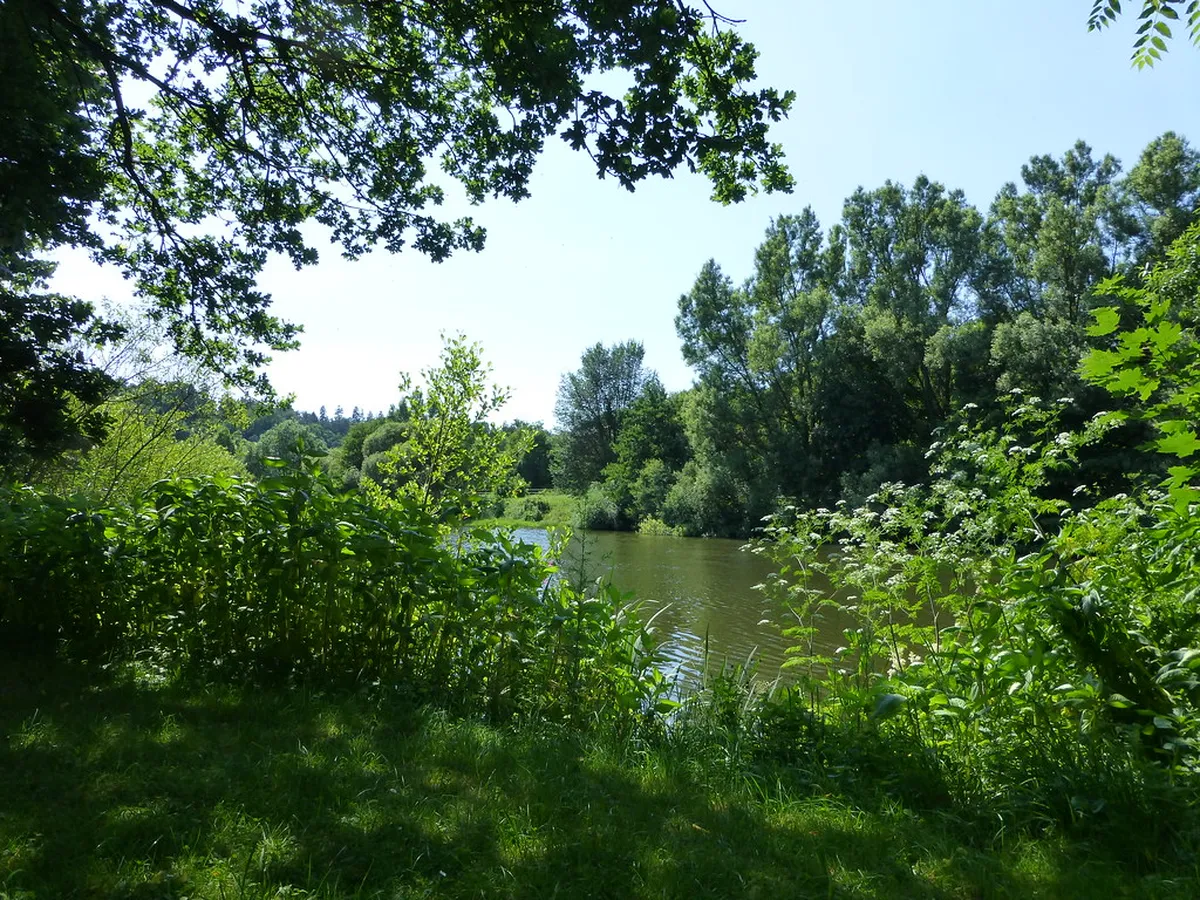
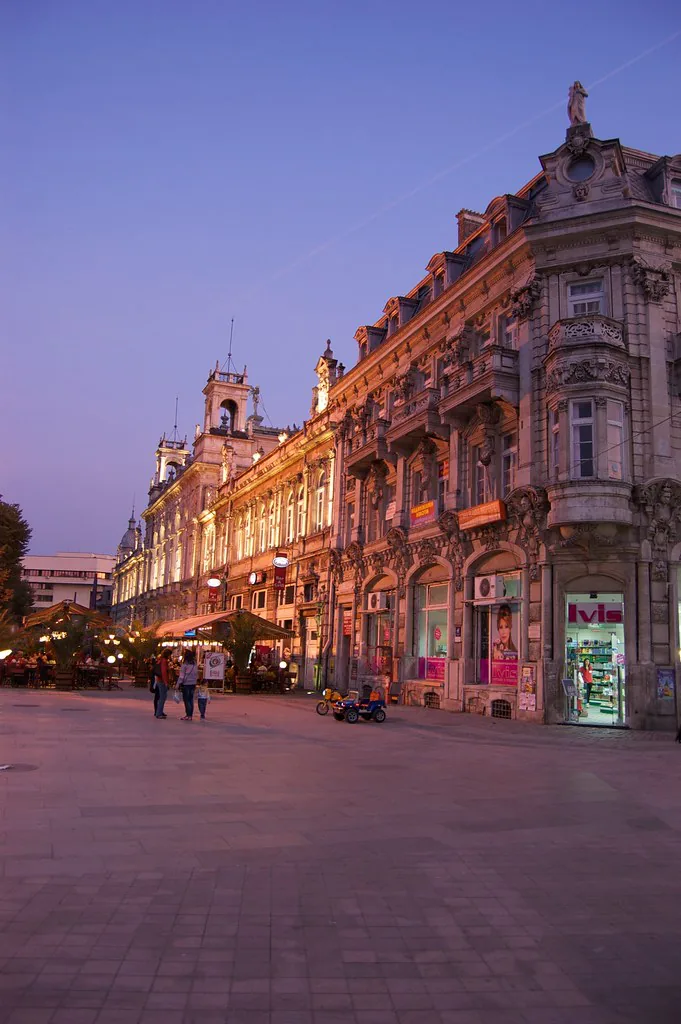
Nature-first travelers should pair the monastery with a short hike in the Rusenski Lom valley itself — the river canyon below the cliffs has marked trails, and the Alpinist Hut and Ecopark Sadzhaka offer simple accommodation if you want to stay overnight. Caving fans can drive on to Orlova Chuka Cave, one of Bulgaria's longest. Back in the city, see our broader 20 Best Things To Do in Ruse 2026 (Bulgaria's Little Vienna) guide for evening dining along the Danube and the grand Habsburg-era squares; budget-friendly things to do in Ruse covers free walking routes and the riverside park if you are watching costs.
The Story of Saint Dimitar Basarbovski
Saint Dimitar Basarbovski was a 17th-century shepherd from the village of Basarbovo who spent his adult life as a hermit among the limestone caves above the Rusenski Lom River. He never left the valley. He tended his flock by day, prayed in the rock cells by night, and over decades became a local figure of deep veneration — not as an ordained cleric but as a lay ascetic whose holiness was recognized by the community around him. He died in 1685, having never sought rank or followers.
Saint Dimitar Basarbovski is Bulgaria's only lay Orthodox saint canonized without monastic ordination, which makes Basarbovo theologically unusual in the Eastern Orthodox world.
The Legend of the Bird's Nest
The story most local guides tell — and the one that explains why a simple shepherd ended up living in a cliff cell — is the legend of the bird's nest. As a young man grazing the village pasture, Dimitar is said to have accidentally trodden on a bird's nest and crushed the eggs. To a devout 17th-century villager this was no trivial accident but a grave sin against a living creature, and he was so stricken by remorse that he renounced ordinary life entirely. He withdrew to the caves above the river, took up the life of a hermit, and lived in solitary penance and prayer until his death. The legend continues that after he died the river rose and carried his body away; when his incorrupt relics were later recovered, miracles began — locals credit him with healing the sick and protecting the village from hail. Whether you take the tale literally or as folklore, it is the thread that turns the cliffs you are looking at into the setting of a saint's life.
After his death, his body was found incorrupt — the standard Orthodox sign of sainthood — and was kept in the caves until the Russo-Turkish War. In July 1774, General Pyotr Saltykov agreed to transport the relics north. When the convoy passed through Bucharest, a plague epidemic that had been devastating the city reportedly ceased on the relics' arrival. The people of Bucharest refused to let them continue, and his relics have remained in Bucharest ever since, at the Church of Saints Constantine and Elena, where he is venerated as the patron saint of the Romanian capital. A small relic fragment was returned to Basarbovo by the Romanian Patriarchate in October 2005 and is kept in the new church.
Understanding this biography turns a pleasant cliff walk into something more specific: you are visiting the home of a saint whose remains are held in another country's capital. That is the thread that ties the Romanian pilgrims, the October feast day crowds, and the monastery's outsized fame relative to its small physical footprint.
Combining Basarbovo with Ivanovo Rock Churches in One Day
Basarbovo and the Ivanovo Rock-Hewn Churches form the natural double bill of the Rusenski Lom valley — both are carved into the same limestone canyon, both belong to the same 12th–14th century hesychast network, and together they make a complete picture of medieval Bulgarian cave monasticism. Basarbovo also fits into the broader story of Bulgaria's monasteries, which spans from Rila in the southwest to these limestone cliff complexes of the north. Ivanovo is a UNESCO World Heritage site about 25 km further along the river from Basarbovo; by car the transfer takes around 30 minutes.
You can visit both Basarbovo Monastery and the Ivanovo Rock Churches in a single half-day, spending roughly 90 minutes at each site. A car is strongly recommended — the Ivanovo access road is unsuitable for taxis and the public bus connection between the two villages is not reliable.
The recommended order is Basarbovo first (opens 8:00), then Ivanovo. Arrive at Basarbovo shortly after opening to beat the tour vans, spend 60–90 minutes, then drive the 25 km to Ivanovo. The Ivanovo church itself is locked and requires a guide-escorted entry — the park office at the base of the cliff assigns timeslots, so arrive before noon to secure a spot. Entry to the Ivanovo frescoes costs 5 BGN (roughly €2.50) per person. The full circuit from Ruse, covering both sites and including driving and visits, takes 4–5 hours. Add the medieval fortress town of Cherven (a further 15 km south-west) if you want a full-day itinerary — see our Best Ruse Day Trips hub for the complete Rusenski Lom valley circuit.
Photography Tips and Best Time to Visit
The cliffs at Basarbovo face roughly south-east, which means the rock face is in direct sun from mid-morning through early afternoon — harsh light for photography but warm and pleasant for visitors. The best exterior light is in the two hours after opening (8:00–10:00) when the sun is low and the limestone glows amber, and again in the hour before closing in summer when long shadows bring out the cave texture.
Photography is permitted freely in the courtyard, around the curative well, and on the exterior staircase. Inside the rock church and the new church, ask before shooting — a resident monk will usually nod approval for quiet phone photography between services, but never during a liturgy and never using flash. Photographing monks without their explicit consent is not acceptable. The ossuary cave at the top has very low light; a phone with night mode works better than a flash-equipped camera.
For crowds: weekday mornings from April to June and September to October hit the sweet spot of green valley, mild temperatures (16–22°C), and small visitor numbers. July and August bring full summer heat (30°C+) and the busiest coach groups. Winter visits (November–March) are quiet and atmospheric — the valley is often misty, the monastery operates 8:00–17:00, and you may have the courtyard entirely to yourself on a weekday. Bulgaria's official tourism portal publishes a national event calendar that flags Orthodox feast days worth avoiding if you prefer quieter visits.
2026 Practical Visitor Info: Hours, Entry & Getting There from Ruse
Everything here is grounded in the article above — a quick-reference summary for visitors who want the key logistics without scrolling through the full guide.
Opening hours follow a seasonal split: April to September the monastery is open 8:00 to 19:00 daily; October to March it closes at 17:00. Those hours apply year-round including Bulgarian public holidays, which is unusual for smaller religious sites. Arriving at or just after opening (8:00) on a weekday gives you the cliffs in soft morning light and the courtyard almost entirely to yourself before tour vans begin arriving around 10:30.
Entry fee: entrance is free in 2026. Many online guides still quote a 5 BGN ticket from older versions of the monastery's visiting policy — that fee is no longer charged. There are no card readers anywhere on site, so bring small lev banknotes for candles, the icon shop, or a donation after a blessing (2 to 5 BGN is normal and genuinely appreciated).
Getting there from Ruse: the monastery is 10 km south of central Ruse, a 15-minute drive. Your three practical options are:
- Taxi or ride-app (TaxiMe / Bolt): 12 to 18 BGN one-way, 15 minutes, most reliable return logistics — pre-book the return pickup via app before you leave the city.
- Rental car: most flexibility, free parking at the site, best for combining Basarbovo with Ivanovo Rock Churches (25 km further) or the Cherven fortress in a single circuit.
- Bus from Avtogara Iztok: 2 to 3 BGN, 25 to 35 minutes to Basarbovo village plus a 1.4 km / 20-minute flat walk along the river road to the monastery. Services are sparse — photograph both the outbound and return timetable boards before leaving the station, and save the Ruse Tourist Information Centre number (+359 82 824 704) as a backup.
The 48-step climb to the cave church is the main physical challenge. The courtyard level — curative well, icon shop, new church — is fully accessible without any stairs. Check current seasonal hours before visiting on an Orthodox feast day, when services run from early morning and the courtyard is significantly busier than on a regular weekday.
Frequently Asked Questions
What is the dress code for Basarbovo Rock Monastery?
Visitors should wear modest clothing that covers shoulders and knees. This is an active religious site, so respectful attire is mandatory. The monastery provides wrap-around skirts or scarves at the entrance for those who arrive in shorts or tank tops.
How much does it cost to enter Basarbovo Monastery?
Entrance is free in 2026 — there is no admission ticket. Many older guides still quote a 5 BGN ticket, but the monastery dropped the fee. A donation in the new church or the icon shop is appreciated and is what funds upkeep. It is one of the most affordable 20 Best Things To Do in Ruse 2026 (Bulgaria's Little Vienna).
Can you reach Basarbovo Monastery by public bus?
Yes — buses run from Avtogara Iztok in Ruse to Basarbovo village (~20 min, 1.50–2 BGN). The catch is the timetable: services are infrequent, so check the return time before you board. From the village it is a 1.4 km / 20-minute walk along the river road to the monastery. A taxi from Ruse is faster (~10 BGN one-way) and most visitors prefer it.
How many steps are there at Basarbovo Rock Monastery?
There are 48 steep stone steps leading up to the main cave church and the monk's cells. These steps can be narrow and slippery, so visitors should wear sturdy shoes. Those with mobility issues can still enjoy the beautiful gardens at the base.
Is Basarbovo Monastery still active?
Yes, Basarbovo is the only active rock monastery in Bulgaria. It is home to a small community of monks who maintain the grounds and lead religious services. Visitors should remain quiet and respectful during their exploration of the complex.
Is Basarbovo Monastery worth visiting?
Yes — Basarbovo Monastery is worth visiting for anyone in Ruse. It is the only active rock monastery in Bulgaria, entry is free, and the 10 km drive from the city centre takes 15 minutes. The site takes 60–90 minutes, making it an easy half-day trip that pairs well with the Ivanovo Rock-Hewn Churches (25 km further along the same valley) for a full-day Rusenski Lom excursion.
Can you visit Basarbovo and Ivanovo Rock Churches in one day?
Yes. Basarbovo (90 min) and the Ivanovo Rock-Hewn Churches (90 min) are 25 km apart along the Rusenski Lom River and are easily combined in a half-day. A rental car is the most practical option — the Ivanovo access road is unsuitable for regular taxis and public bus connections between the two villages are unreliable. Entry to Ivanovo's frescoes costs 5 BGN (~€2.50). Start at Basarbovo early (8:00 opening) and arrive at Ivanovo before noon to secure a guided entry slot.
What is the legend of St. Dimitar Basarbovski?
By local legend, St. Dimitar was an ordinary 17th-century shepherd who accidentally stepped on a bird's nest while grazing his flock. Stricken by remorse over harming a living creature, he renounced village life, withdrew to the caves above the Rusenski Lom River, and lived as a hermit in penance and prayer until his death in 1685. After he died, the story goes, the river carried his body away; when his incorrupt relics were recovered, miracles began and locals credited him with healing the sick and protecting the village from hail.
Where are the relics of St. Dimitar Basarbovski?
The main relics of St. Dimitar Basarbovski are in Bucharest, Romania, at the Church of Saints Constantine and Elena, where he has been venerated as the city's patron saint since 1774. A small relic fragment was returned to Basarbovo Monastery by the Romanian Patriarchate in October 2005 and is kept in the new church at the monastery, where it can usually be venerated by visitors.
See our things to do in Ruse guide for the broader city overview.
For related Ruse deep-dives, see our Ivanovo Rock-Hewn Churches and Rusenski Lom National Park guides.
A Basarbovo Rock Monastery visit rewards travelers who arrive with the right expectations: free entry, a working religious community, a manageable but real climb, and a calendar that peaks on 26 October. Pair it with Ivanovo for a full day of rock-hewn history, dress modestly, accept the blessing if it is offered, and you will leave with the rare sense of having seen a medieval tradition that never actually stopped.
Continue planning
Start with our Bulgaria monastery guide and compare the practical details with our Plovdiv-to-Bachkovo transport advice.
For connected planning, compare Bulgaria monastery guide with Plovdiv-to-Bachkovo transport advice before finalizing your route.