Varna Archaeological Museum Visitor Guide
The Varna Archaeological Museum holds some of the most significant historical artifacts found within the Balkan Peninsula and beyond. Visitors often start their journey through the city's rich history by exploring the various Varna Attractions landmarks. This guide provides essential details for navigating one of the most important cultural institutions in Eastern Europe.
Most travelers come to see the world's oldest gold, but the museum offers much more across its expansive halls. Entry remains affordable at 10.00 EUR for adults in 2026, making it one of the city's best-value cultural stops. The building itself dates to the nineteenth century, yet it offers modern accessibility touches like express elevators and wheelchair access throughout.
Planning a visit requires understanding the layout and the specific rules regarding photography and refreshments. Our comprehensive varna archaeological museum visitor guide covers everything from the chronological room flow to the best local meeting points. Prepare for a journey that spans thousands of years of human civilization in a single afternoon.
To get a sense of what awaits inside, here's a walkthrough of the museum's major halls and highlights:
Varna Archaeological Museum: History and Architecture
The museum occupies a striking Neo-Renaissance building on Maria Luiza Boulevard, designed by architect Petko Momchilov and originally opened as a girls' high school. City authorities converted the building into a museum in the late nineteenth century, as the volume of local finds from the region around ancient Odessos - the Greek and Roman name for Varna - kept growing beyond what smaller collections could hold.

Today the site is managed by the Varna Regional Museum of History, and its holdings span the Paleolithic era through the Ottoman period. Most of the major displays carry detailed English-language labels alongside the Bulgarian originals, so international visitors rarely need outside help to follow the chronology from room to room.
The internal courtyard houses oversized stone artifacts and Roman sarcophagi that would not fit inside the halls, and photographing them costs nothing extra - unlike the indoor galleries, covered below. Before you queue at the ticket desk, it helps to know exactly what admission covers, and what it does not.
Tickets, Hours, and Practical Visitor Details
- Adult admission: 10.00 EUR (about 19.56 BGN)
- Schoolchildren: 4.00 EUR
- Children under 7: free
- Groups of 15 or more: 8.00 EUR per person
- May-Sep: open daily, 10:00-17:00
- Oct-Apr: open Tuesday-Saturday, 10:00-17:00; closed Sunday and Monday
Since Bulgaria adopted the euro on 1 January 2026, every posted price at the museum is now quoted in EUR first, with the lev figure shown underneath for anyone still converting from memory. If you find an older blog post or forum thread quoting "10 BGN" for entry, that figure predates the currency switch - the euro prices above are what the ticket desk actually charges in 2026.
Tickets are sold only at the on-site desk; there is no way to buy general admission online, so budget a few extra minutes at the counter, especially right after a tour bus or cruise shuttle arrives. Card payments are accepted, so there is no need to carry exact change in cash.
The building is wheelchair accessible with express elevators between floors. Food, drinks, and pets are not allowed inside the galleries, and photographing the indoor exposition halls requires an extra fee - the courtyard is the one place you can shoot for free. Free-admission days are occasionally announced by the Ministry of Culture or the Municipality of Varna, and children under 7 always enter at no cost regardless of the calendar.
The Experience Provider and Booking Options
For most visitors, the standard desk ticket is the simplest option: pay at the counter, walk in, and move through all 30-plus rooms at your own pace. Independent tour operators also sell a "ticket and e-guide" bundle online, pairing admission with a downloadable audio or text guide, and on some listings a private host who speaks English, Bulgarian, and Russian.
These third-party bundles are worth considering if you are working around a tight cruise-ship schedule and want a reserved slot rather than a walk-up queue, or if you would rather follow a curated narrative than read wall labels room by room. Most allow cancellation up to 24 hours before your slot for a full refund, and reserve-now-pay-later options are common, which is useful if your itinerary is still moving around.
One caveat worth knowing before you book: bundled e-guide tickets typically exclude any temporary exhibition running in the central halls, so if a special show coincides with your visit, check whether it needs a separate ticket at the desk. For a first visit built around the permanent Gold of Varna collection, that distinction rarely matters.
Limitations and Considerations
Some of the upper halls lack air conditioning, which makes July and August afternoons uncomfortable, particularly in rooms with large glass display cases that trap heat. Arriving at opening time, or after 15:00, avoids both the worst of the heat and the day's largest crowds.
Food, drinks, and pets are not allowed anywhere inside the galleries, and there is no cafe on site, so plan to eat before or after your visit in the pedestrian streets nearby. A handful of smaller object labels, mostly in the medieval halls, are Bulgarian-only, though every major display case in the prehistoric and Roman sections carries an English translation.
The inner courtyard is functional rather than scenic - it is really an open-air storage and display yard for oversized stone finds, not a manicured garden. If you are picturing a leafy break between halls, the Sea Garden ten minutes away is the better stop for that.
Nearby and In or Around Varna
A common first-timer mix-up is assuming the Archaeological Museum and the Roman Thermae are the same attraction, since both tell the story of ancient Odessos. They are not: the Thermae is an open-air ruin of a 2nd-century Roman bathhouse complex a few streets away, while the museum holds portable finds - including the Gold of Varna - indoors. Budget separate tickets and separate time blocks for each rather than assuming one covers the other.
Pair the museum with the 9 Essential Tips for Visiting the Dormition of the Mother of God Cathedral: from the museum, walk about five minutes north along the main pedestrian street to reach the Dormition of the Mother of God's golden domes, a natural companion to the museum's medieval religious icon halls. This loop of museum, Roman ruins, and cathedral fits comfortably into a half-day without rushing any of the three.
For a lighter afternoon, the Sea Garden and the Naval Museum both sit within a ten-minute walk toward the coast, and the seaside promenade below the park has cafes for a post-museum meal.
Plan Like a Pro: Quick Visit vs. Deep Dive
A successful visit balances your available time against the scale of the collection. We recommend a "Quick vs. Deep Dive" approach depending on your personal interest in ancient history: a quick visit covering the Gold of Varna and the highlights takes about one hour, while a deep dive through all 30-plus rooms requires roughly four hours.
To avoid large cruise ship tour groups, try to arrive right when the museum opens at 10:00. Most large groups arrive in the late morning and depart by mid-afternoon for their ships, so a late-afternoon visit also tends to be quieter and offers a more contemplative atmosphere for the gold exhibits.
Allocate ample time for the prehistoric section, since it contains the most famous items in the collection. Many visitors rush through the early rooms and run out of energy for the medieval halls; pacing yourself ensures you see the full transition from ancient Thracian culture to the Roman and Byzantine eras.
Discover the Museum's Chronologically Arranged Artifacts
The museum layout follows a strict chronological order to help visitors understand the passage of time. Starting on the first floor, you move from the Paleolithic era through the Bronze Age and into Antiquity. Each room is numbered, so following the sequence ensures you do not miss any major historical shift.
One of the most unusual items is an ancient Roman sarcophagus that once had a very different life. Pro tip: local legend says it was used as a beach bar table before museum officials recovered it - a reminder that ancient history and modern life often collide in coastal Bulgaria.
The second floor is dedicated to the medieval period and the Bulgarian National Revival era, with religious icons, traditional jewelry, and weapons from the struggle for independence. Temporary exhibitions are often held in the central halls to showcase recent archaeological discoveries from the region.
- The Prehistoric Collection Halls
- Rooms: 1 through 6
- Focus: Varna Necropolis
- Key Find: Oldest Gold
- Period: Chalcolithic era
- The Antiquity and Roman Sections
- Rooms: 7 through 15
- Focus: Odessos city
- Key Find: Roman Glass
- Period: 1st-4th Century
- The Medieval Bulgarian Halls
- Rooms: 16 through 25
- Focus: First Kingdom
- Key Find: Religious Icons
- Period: 7th-14th Century
Insights into the Oldest Gold Treasures in the World
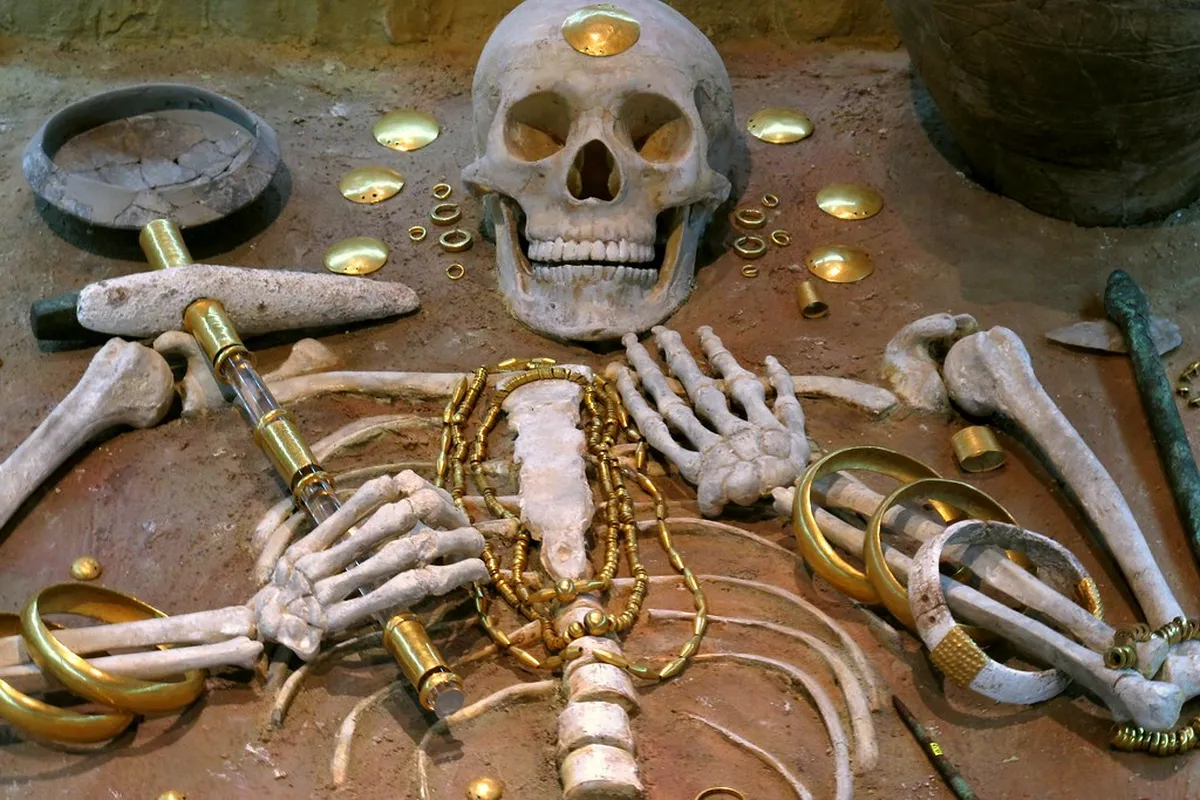
The crown jewel of the entire museum is the Varna Gold Treasure, found in the local Necropolis and excavated in 1972. This collection dates back to **4600-4200 BCE**, making it the oldest processed gold ever discovered - it predates the Egyptian pyramids and the civilizations of Mesopotamia by more than a thousand years.
Hall 6 is where the most impressive burials from the Necropolis are reconstructed for public viewing. You can see the remains of a high-ranking figure adorned with hundreds of gold ornaments, the precision of the craftsmanship suggesting a highly sophisticated social structure existed here six millennia ago.
Archaeologists recovered over 3,000 gold objects weighing a total of six kilograms from the burial site, including scepters, bracelets, and small gold plates once sewn onto clothing. Seeing these treasures in person is a humbling reminder of the ingenuity of our ancestors.
Precise Location and Convenient Meeting Point in Varna
Finding the museum is simple because it sits on one of the city's most prominent boulevards. The Official Location: 41 Maria Luisa Blvd, Varna is easy to reach by foot or public bus, directly across from City Hall.

Coming from the Sea Garden, exit near the clock tower entrance and walk inland along Knyaz Boris I Boulevard for about ten minutes; the museum's yellow facade appears on your right just past the municipal park. Coming from the Cathedral instead, walk north along the main pedestrian street for about five minutes and the same yellow building will come into view - both routes are flat, shaded in parts, and easy to follow on foot.
Taxis can drop you directly at the front gates for a low fare from most city hotels, and a bus stop nearby services routes from the Golden Sands resort area. Check the digital signs at the stop for real-time arrival information throughout the day.
Continue planning: Use Varna Attractions: 10 Best Things to Do in 2026 to connect this guide with the rest of your Bulgaria itinerary.
Frequently Asked Questions
How much does the Varna Archaeological Museum cost in 2026?
Adult admission is 10.00 EUR (19.56 BGN), schoolchildren pay 4.00 EUR, and children under 7 enter free. Groups of 15 or more pay 8.00 EUR per person. Since Bulgaria adopted the euro in January 2026, prices are charged in euro, with the lev equivalent still shown.
What day is the Varna Archaeological Museum closed?
From October to April the museum is closed on Sunday and Monday. From May to September it opens every day. Hours are 10:00-17:00 year-round.
Can you visit the Varna Necropolis?
The finds excavated from the Varna Necropolis in 1972 are displayed at the Varna Archaeological Museum, where the Gold of Varna fills three dedicated exhibition halls - the museum is where you come to see the necropolis treasures.
What is the oldest gold object ever found?
The Gold of Varna, held by this museum, is regarded as the oldest gold treasure in the world. It was excavated in 1972 and dates to 4600-4200 BC.
Where is the Varna Archaeological Museum located?
At 41 Maria Luiza Blvd in central Varna (postcode 9000). The information line is +359 52 681030.
Can I buy Varna Archaeological Museum tickets online?
No. The museum states that entrance tickets can only be purchased at the ticket office when visiting.
Does the Varna Archaeological Museum have free admission days?
Yes. Free-admission days are determined by order of the Ministry of Culture or the Municipality of Varna, and children under 7 always enter free.
The Varna Archaeological Museum is a world-class institution that offers a unique window into the deep past. From the shimmering gold of the Necropolis to the Roman ruins, every hall tells a story of human achievement. Using this varna archaeological museum visitor guide will help you maximize your time in this historic city in 2026.
Whether you are a dedicated history buff or a casual traveler, the collection is sure to leave a lasting impression. Remember to bring your camera for the courtyard and wear comfortable shoes for the many rooms. Varna's cultural heritage is waiting to be discovered behind the doors of this magnificent Neo-Renaissance building.
For official details, visit the Varna Archaeological Museum official site and Varna Archaeological Museum on Wikipedia.
For more Varna planning, read our Things to Do in Varna, Bulgaria guide.