9 Essential Tips for Visiting the Dormition of the Mother of God Cathedral
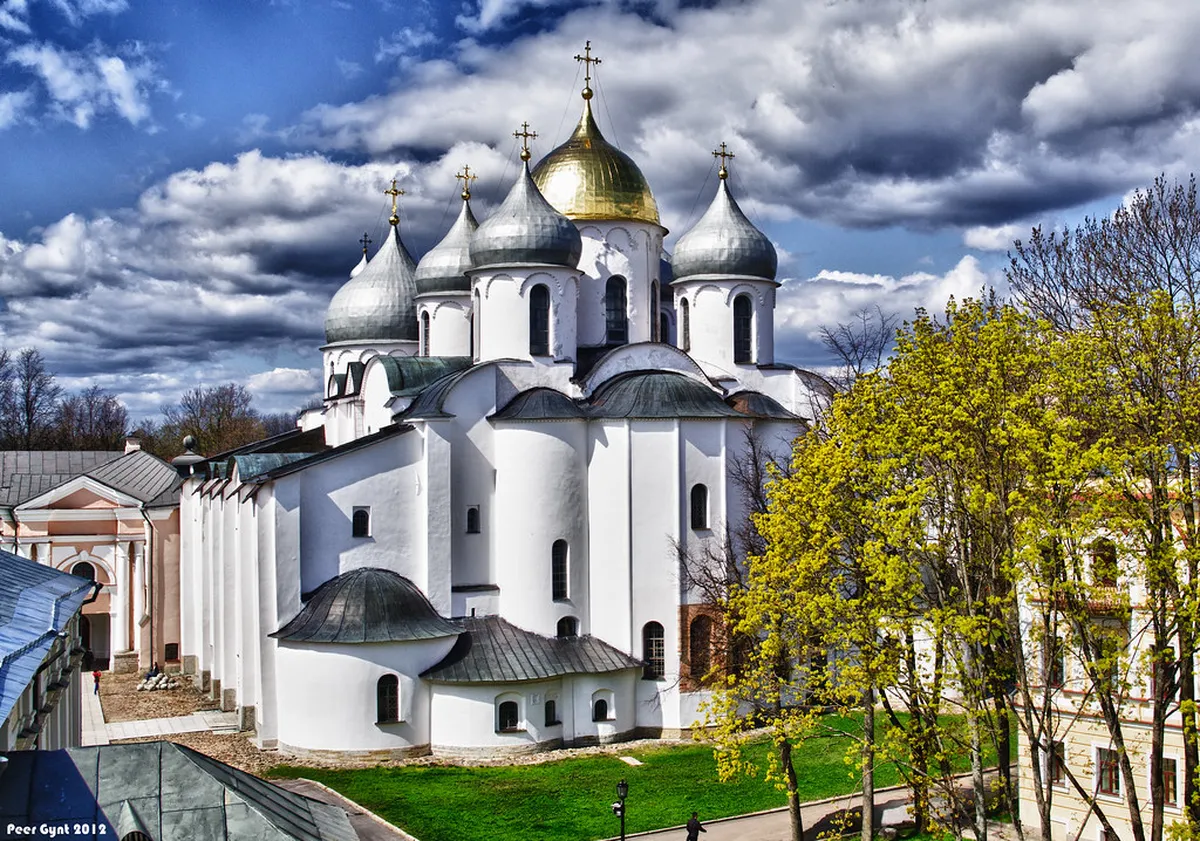
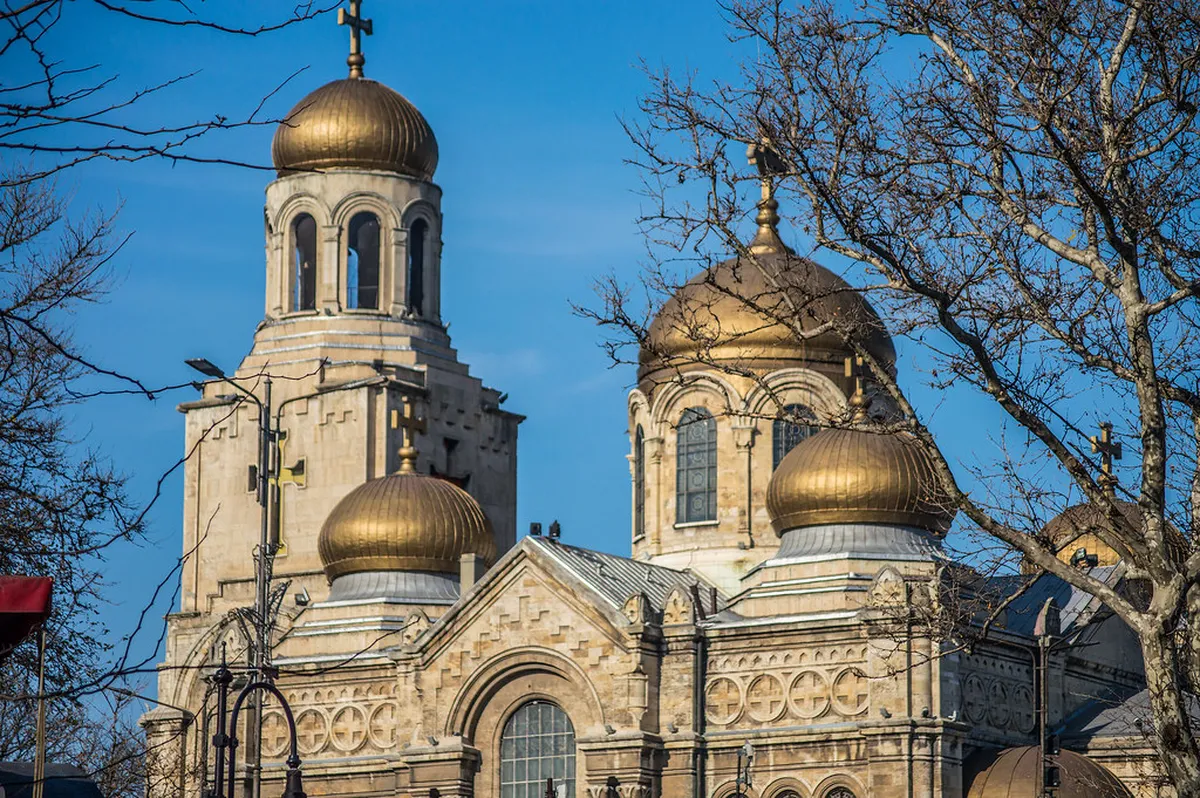
The Dormition of the Mother of God Cathedral anchors the historic heart of Varna, its five gilded domes visible from almost anywhere in the city center. It is officially the third-largest cathedral in Bulgaria, and it remains the working seat of the Varna and Preslav Bishopric rather than a museum piece. Visitors come for the Byzantine architecture and the frescoes, but the building is still first and foremost a place of active worship. This guide covers what to expect in 2026, from opening hours to the etiquette that keeps a visit respectful.
Timing a visit well makes the difference between a rushed photo stop and a proper look inside. The cathedral sits on St. Cyril and St. Methodius Square in central Varna, a five-minute walk from the main pedestrian street and well served by city buses. Whether you're passing through for an afternoon or building a longer Black Sea itinerary, the details below cover hours, dress code, the August 15th feast day, and what's genuinely worth seeing inside.
For an aerial perspective of the cathedral's iconic golden domes and city setting, this drone footage captures the building in impressive detail:
History and Significance of the Varna Cathedral
The cathedral's story begins in 1880, when Prince Alexander I of Battenberg laid the foundation stone shortly after Bulgaria's liberation from Ottoman rule. He opened the subscription with a personal donation of 1,000 leva, and the remaining construction cost was raised from public contributions across the city. The building was dedicated to the Dormition of the Mother of God in honor of the Russian Empress Maria Alexandrovna, the prince's aunt, tying the new cathedral to Varna's close ties with Russia at the time.
Construction moved quickly by the standards of the era, and the cathedral officially opened on 30 August 1886. Interior work continued long after that date: the wood-carved iconostasis, the Bishop's throne, and much of the fresco work were finished over the following decades. Regular services have been held here continuously since 1910, and the cathedral remains the seat of the Varna and Preslav Bishopric today, making it a working church rather than a static monument.
Older write-ups, some still online, describe the cathedral as the second-largest in Bulgaria, a comparison that dates back to when it was measured only against Sofia's St. Alexander Nevsky Cathedral. Current tallies place it third nationally. It remains, without dispute, the largest church building in Varna itself and the biggest on the Bulgarian Black Sea coast, so the ranking slip doesn't change what you'll actually see on the ground.
Essential Visitor Information: Hours, Tickets, and Dress Code
The cathedral is open daily from 07:00 to 17:30, and there's no admission charge — entry is free for everyone, with donation boxes near the entrance supporting the building's upkeep. There's no ticket line and no photography fee at the door; visitors can take personal photos freely, though flash and tripods are discouraged out of respect for the frescoes and for anyone praying. Sunday mornings and major feast days bring the heaviest liturgy schedule, so expect a fuller interior and a genuine service in progress rather than a quiet browse.
Dress modestly: men should remove hats and avoid shorts, and women should have shoulders and knees covered. Staff sometimes keep wraps at the entrance for visitors who arrive underdressed, but it's safer to bring a scarf or a light layer of your own, especially in summer when most travelers show up in beach clothes. Bulgarian Orthodox churches are more relaxed than their Russian counterparts on this point — women aren't required to cover their hair here, unlike in some Russian Orthodox parishes.
The one thing most guides skip is what to actually do if a service is underway. Enter and leave quietly to the side rather than crossing in front of the altar, and if you want to light a candle, local custom places thin candles on the left of the stand for the health of the living and on the right for those who have died. You don't need to buy anything or ask permission — the candles sit in an open tray near the entrance with a donation box beside them, and nobody will mind if you simply look rather than light one.
- Visitor Logistics at a Glance
- Entry: Free daily, 07:00-17:30
- Dress Code: Shoulders and knees covered, no hats for men
- Photography: Free, personal use only — no flash or tripods
- Busiest Times: Sunday mornings and 15 August
Architectural Highlights: Domes, Frescoes, and Stained Glass
The cathedral's design draws on Byzantine church architecture filtered through 19th-century Russian taste — the plans were modeled after the Peterhof court church near Saint Petersburg, according to Balkazaar, which explains why the layout feels more imperial than the plainer Bulgarian churches nearby. Five gilded copper domes crown the roofline, the traditional count representing Christ and the four evangelists, with the central dome rising over the nave to give the interior an unusually tall, open feel for a 19th-century Bulgarian building.
Restoration crews recoated the domes' gilded copper in 2022, a project that stripped decades of salt-air corrosion from the Black Sea air and is the reason the domes still gleam so brightly. A lesser-known payoff of that work: the cathedral floodlights the domes after dark, so the building reads completely differently at night than in the golden-hour shot every guide recommends — worth a stop after dinner if you're staying nearby, since the square stays open and lit well past sunset.
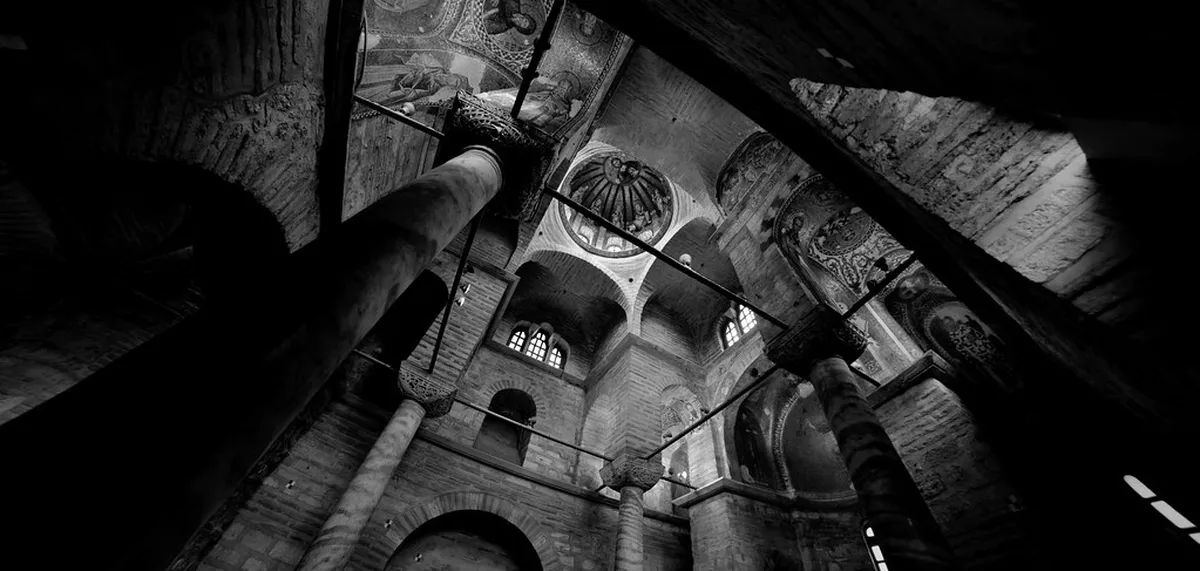
Inside, the stained-glass windows depict Saints Cyril and Methodius, the creators of the Cyrillic alphabet, alongside St. Clement of Ohrid, one of their key disciples — a specifically Bulgarian and Balkan set of figures rather than the generic biblical scenes found in many Orthodox churches abroad. The frescoes covering the walls and ceiling were added by Russian artists in the mid-20th century and reward a slow look, particularly the Christ Pantocrator on the underside of the central dome, best seen just inside the main doors.
The Three Altars and Spiritual Life
Unlike many parish churches, the cathedral has three separate altars, each serving a distinct liturgical purpose. The central altar, dedicated to the Dormition of the Mother of God, holds the main iconostasis — a wood-carved screen by master carver Ivan Filipov that took years to complete and remains one of the finest examples of the craft on the Black Sea coast.
The northern altar honors St. Alexander Nevsky and functions as a quieter space for personal prayer away from the main liturgy at the central altar. It's also a physical reminder of the historical ties between the Bulgarian and Russian churches that shaped the cathedral's founding, and many locals use this altar specifically to light candles for family members.
The southern altar is dedicated to St. Nicholas, patron saint of sailors, which carries particular weight in a port city like Varna. Sailors and their families still visit this altar before long voyages, and the maritime connection is one of the more distinctly local touches that separates this cathedral from other Dormition churches around the Orthodox world that share its name but not its setting.
The Iconography and Theological Meaning of the Dormition
"Dormition" refers to a peaceful falling asleep rather than an ordinary death — the Orthodox belief that the Virgin Mary was taken into heaven body and soul at the end of her earthly life. The cathedral's central icon shows Mary on her deathbed surrounded by the apostles, a scene repeated in Orthodox churches worldwide but rendered here with distinctly Bulgarian detailing in the gold background and floral carving.
Ivan Filipov's iconostasis carries icons of Christ, the Theotokos, and Bulgarian saints, and the woodwork is worth studying on its own, independent of the theology — the floral motifs carved into the dark wood are some of the most detailed in the Balkans. You don't need deep knowledge of Orthodox iconography to appreciate it, but knowing that gold backgrounds signal divine light, and that the apostles' gestures follow centuries-old conventions, adds context that's easy to miss on a quick walkthrough.
The "Easter of Summer": Celebrating the Feast
15 August is the cathedral's biggest day of the year. Bulgarians call the Dormition feast the "Easter of Summer" because of its doctrinal weight, and Varna treats it as an unofficial city holiday, with thousands turning out for a procession through the center. In 2026 the date falls on a Saturday, which typically means an even larger crowd than a weekday feast, since more locals and visiting families are free to attend.
The day starts with a morning liturgy led by the bishopric's senior clergy, followed by the icon of the Virgin Mary being carried out for public veneration — incense, bells, and a genuinely packed square. If you're not specifically there for the religious side of it, plan around the crowds rather than fighting them: the nearby Sea Garden Varna Visitor Guide fills up as an overflow gathering spot later in the day, and it's a better bet for an easy afternoon than trying to linger at the cathedral itself.
Mount Athos and the Assumption Tradition
Varna isn't the only place marking the Dormition on a grand scale. The feast is celebrated with equal intensity on Mount Athos, the monastic peninsula in Greece that many Orthodox believers consider the spiritual center of the tradition, as the Athos Guide describes in detail. The two calendars don't line up: Varna follows the New Calendar and marks the feast on 15 August, while Mount Athos keeps the Old Calendar and celebrates 13 days later, on 28 August.
- Varna: 15 August (New Calendar)
- Mount Athos: 28 August (Old Calendar)
- Theological meaning: identical in both places
The practical difference for a traveler is access, not theology: Mount Athos bars women entirely and requires a permit even for male visitors, while Varna's cathedral is open to anyone, any day, without restriction. If the Dormition tradition interests you but a trip to Athos isn't realistic, Varna is the more accessible way to see the same feast observed with genuine local devotion.
How to Get There and Best Times to Visit
The cathedral sits on St. Cyril and St. Methodius Square in central Varna, a five-minute walk from the main pedestrian shopping street and served by nearly every city bus route through downtown. Taxis and ride-hailing apps can drop you directly at the square, and if you're coming from the beach or Sea Garden side of town, it's a flat, easy walk of about fifteen minutes.
For photos, early morning and the hour before sunset both work, but for different reasons — mornings are quieter and better for a calm look inside, while the last hour of daylight lights the domes gold from the outside. Weekdays are noticeably calmer than weekends, and Saturday afternoons specifically should be avoided if possible, since that's when most weddings are scheduled and the church may restrict access to parts of the building during a private ceremony.
Nearby Attractions in Central Varna
The Varna Archaeological Museum Visitor Guide is a five-minute walk away and holds the Varna Necropolis gold hoard, the oldest processed gold ever found — a strong complement to the cathedral if you want the deeper history of the region rather than just its 19th-century chapter.

The Roman Thermae Varna Visitor Guide are a similarly short walk and rank among the largest preserved Roman bath complexes in Europe. The scale of the brick ruins is a striking contrast to the cathedral's Byzantine-Russian style, and the site is especially atmospheric in early evening light.
The pedestrian zone around the cathedral, part of the wider Varna Attractions city center, has plenty of cafes and shops selling Bulgarian rose-oil products, and the small park by the square is a good spot to sit with a coffee and take in the cathedral's silhouette without needing to go anywhere else.
Continue planning: Use Varna Attractions: 10 Best Things to Do in 2026 to connect this guide with the rest of your Bulgaria itinerary.
Frequently Asked Questions
What is the best time to visit the Varna Cathedral?
The best time to visit is early morning or late afternoon for the best lighting. Early morning offers a quieter atmosphere for reflection. Late afternoon provides the perfect golden hour light for photographing the iconic domes from the square outside.
Is there an entrance fee for the Dormition of the Mother of God Cathedral?
Entrance to the cathedral is free for all visitors. However, if you wish to take photos or videos inside, you must pay a small fee at the entrance. Consider leaving a small donation to help with the ongoing maintenance of this historic landmark.
What is the dress code for Bulgarian Orthodox cathedrals?
Visitors should dress modestly by covering their shoulders and knees. Men should remove their hats before entering the sanctuary. Women are often encouraged to wear skirts, but modest trousers are usually acceptable. Avoid wearing beachwear or athletic clothing inside the church.
Why is the Dormition of the Mother of God called the 'Easter of Summer'?
It is called the 'Easter of Summer' because the feast on August 15th is the most important summer holiday. It celebrates the spiritual victory of life over death for the Virgin Mary. The scale of the celebration in Varna rivals the importance of Easter itself. Varna residents celebrate it as their official city holiday.
The Dormition of the Mother of God Cathedral works on more than one level — as a piece of Byzantine-Russian architecture, as the seat of an active bishopric, and as the backdrop to one of Varna's biggest annual celebrations. None of that requires a ticket or a tour guide; the building is open, free, and genuinely used by the community every day.
Time your visit around the practical details above — hours, dress code, and the August 15th feast if you want to see the cathedral at its most alive — and it holds its own against anything else on a Black Sea itinerary in 2026.
For the latest official information, see the Dormition of the Mother of God Cathedral official site and Dormition of the Mother of God Cathedral on Wikipedia.