Hindliyan House Visitor Guide: 8 Things to Know Before You Go
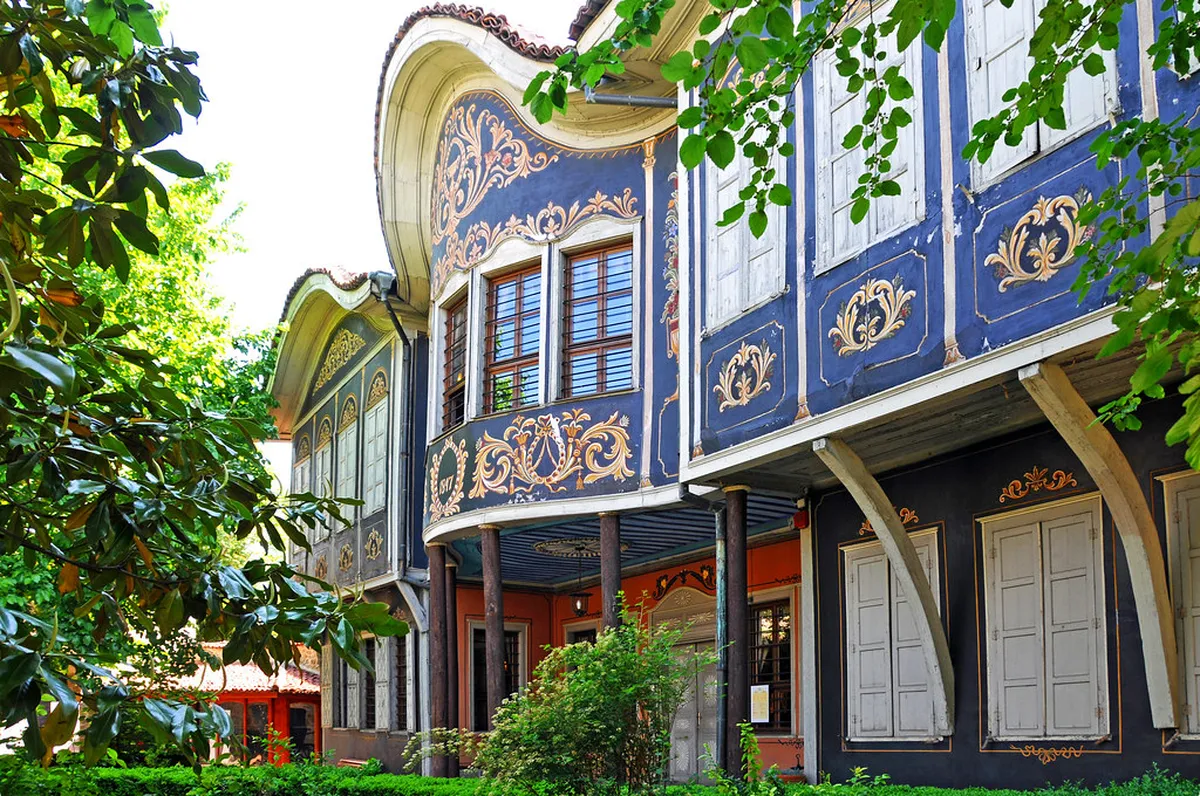
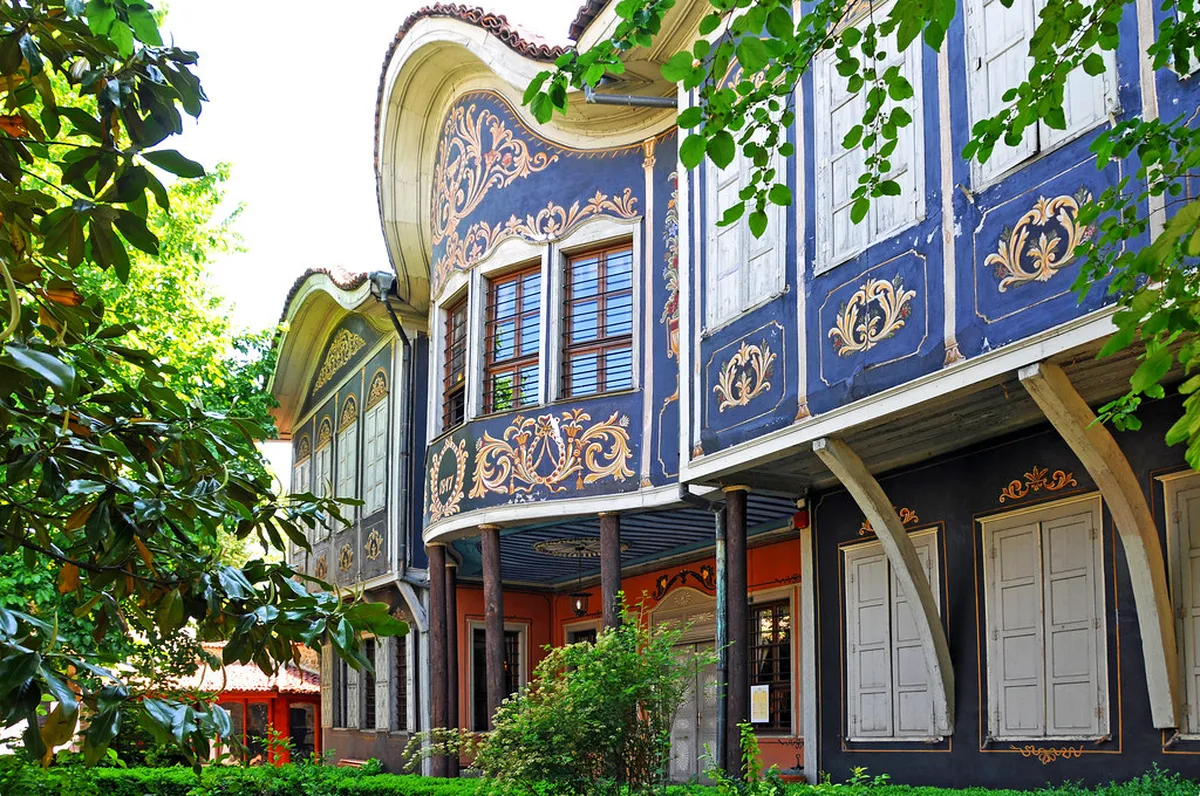
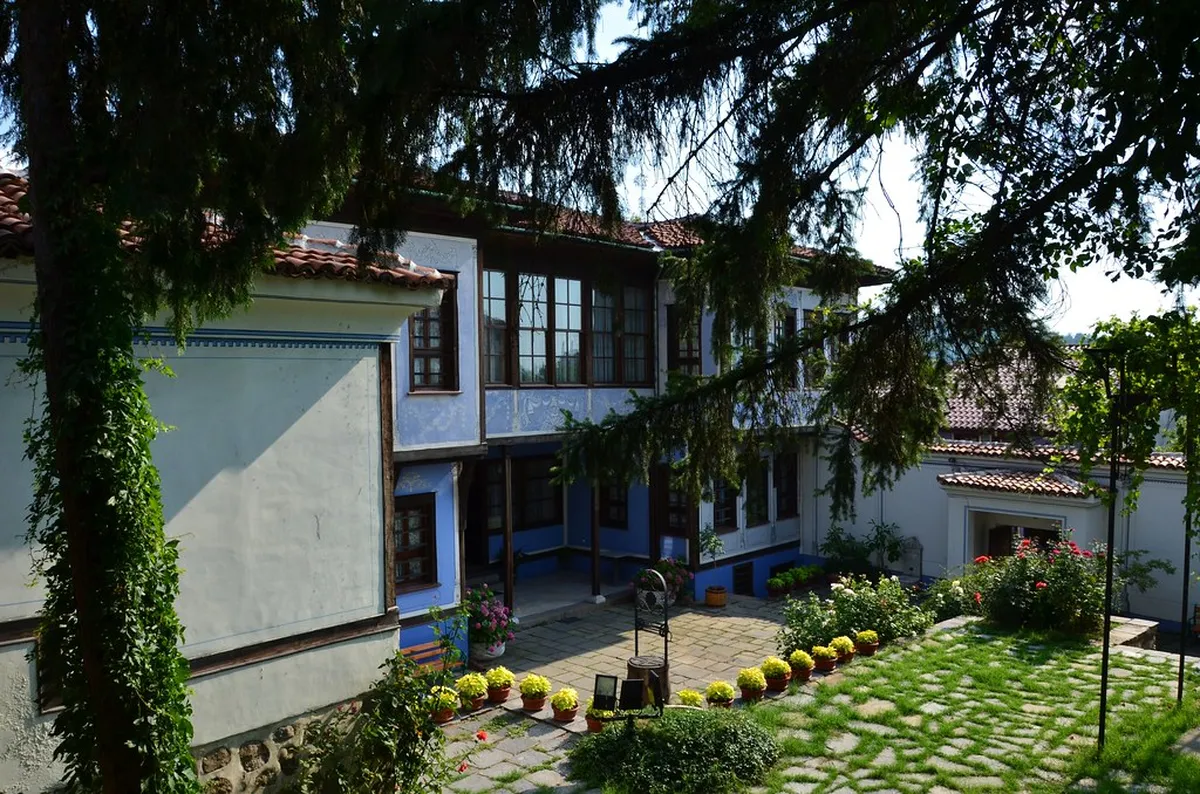
The Stepan Hindliyan House stands as a masterpiece of the Bulgarian National Revival period in central Plovdiv. This iconic blue building offers a rare glimpse into the opulent lifestyle of a 19th-century Armenian merchant. Visitors often consider it the most beautiful home in the historical district due to its intricate murals and symmetrical design. Our hindliyan house visitor guide provides all the essential details to help you explore this architectural gem.
To see the painted walls and interior layout before your visit, this walk-through covers the decorated rooms and the famous rose water fountain:
Walking through the cobblestone streets of the Plovdiv Old Town Visitor Guide leads you to many impressive museum houses. However, the Hindliyan House remains unique for its preserved interior features and artistic depth. You will find detailed paintings of distant cities and a working fountain that once filled the air with the scent of roses. Understanding the history and logistics of this site will ensure a much more meaningful experience during your stay.
Whether you are an architecture enthusiast or a casual traveler, this house-museum deserves a spot on your itinerary. It represents a time when Plovdiv served as a major trade hub between the East and the West. This guide covers everything from 2026 ticket prices to the specific weekend entry rules that often confuse first-time visitors. Prepare to step back in time as we explore the rich heritage of the Hindliyan family.
History and Architecture of the Stepan Hindliyan House
Master builders raised this three-story merchant house between 1834 and 1835 for Stepan Hindliyan, an Armenian trader whose business dealings stretched as far as India, the source of the nickname "Hindliyan" that stuck to his family and later gave its name to the street. His wealth funded a home that pushed the Bulgarian National Revival style to one of its most elaborate extremes in Plovdiv. The building follows a strict symmetrical plan, a layout that was the height of fashion among the city's merchant elite in the 1830s.
Each floor is organized around a central hall, known locally as a hayet, with smaller rooms radiating outward in matching pairs. Two decorative painters, one of them believed to have been Italian, worked through the interiors, layering wood carvings, ceiling medallions, and painted niches across nearly every surface. The result is a house that reads less like a private residence and more like a merchant's showcase of taste, connections, and money.
Restoration work under the municipal Ancient Plovdiv institute, which manages the site today, has kept the original layout and most of the decorative detail intact. That is part of why the house is treated as a benchmark for the style rather than just one example among many. The porcelain-blue exterior remains one of the most photographed facades in the Old Town, and pairing a visit here with a look at the history of Plovdiv makes the merchant's rise easier to place in context.
The Famous Rose Water Fountain and Interior Murals
The undisputed centerpiece of the interior is the marble wall fountain in the second-floor hayet, which historically ran with rose water rather than plain water to scent the air for guests. It is a detail that turns up in nearly every account of the house, and seeing the basin and the plumbing in person makes clear how much effort went into a purely sensory flourish. Nothing else among Plovdiv's Old Town museum houses matches it.
The walls carry the house's other signature feature: painted cityscapes made using a paper-stencil technique that let the artists repeat complex architectural details, such as domes, ships, and harbor towers, across multiple rooms without freehand redrawing each one. Visitors can pick out views of Venice, Constantinople, Alexandria, Stockholm, and St. Petersburg, a spread that traces Hindliyan's own trade routes rather than a generic decorator's wish list. The technique itself, more than the subject matter, is what art historians tend to single out when they discuss the house.
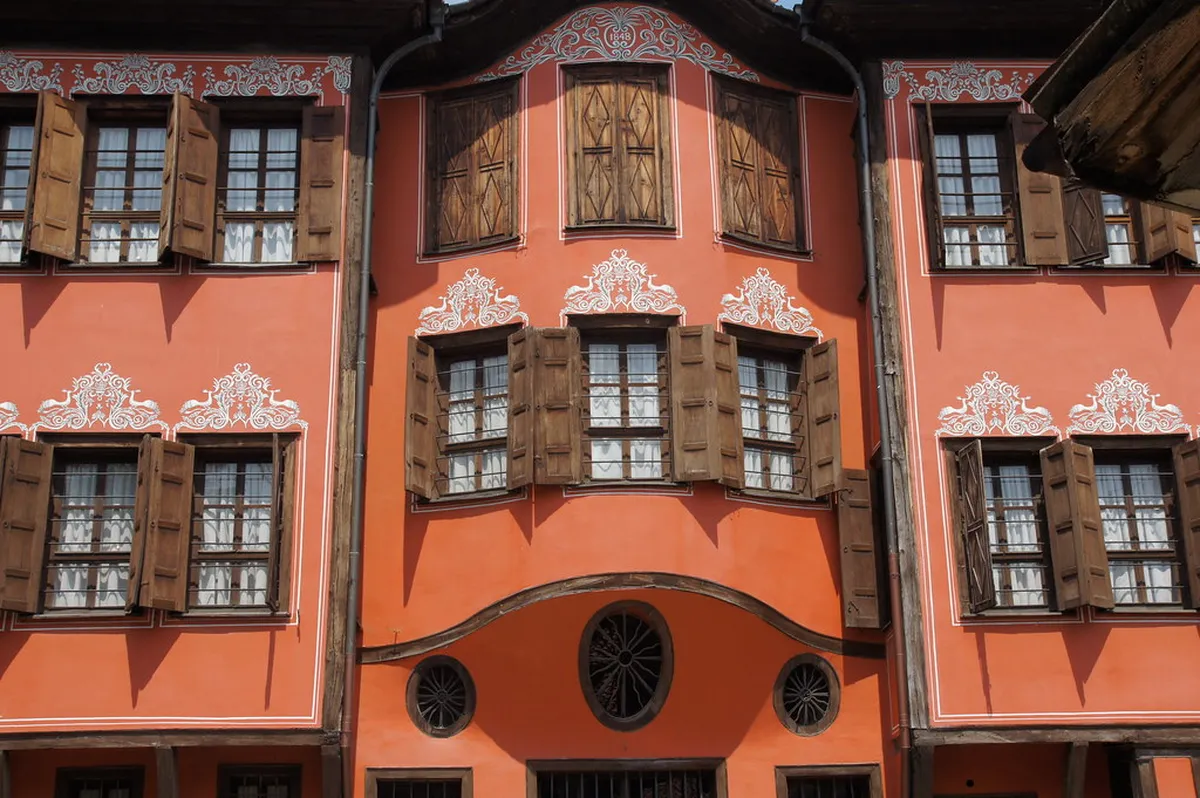
Floral garlands and geometric borders fill the gaps between the cityscapes, wrapping around door frames and ceiling medallions so that almost no wall is left blank. It is a level of coverage that holds up well against the Regional Ethnographic Museum Plovdiv a few streets away, though the two collections serve different purposes: one is a merchant's private showcase, the other a folk-life archive.
Visitor Information: Tickets, Hours, and Location
Hindliyan House sits at 4 Artin Gidikov Street, in the residential heart of the Old Town architectural reserve, a short walk uphill from Balabanov House. As of 2026, adult admission is 3.58 EUR (7 BGN), students pay 1.53 EUR (3 BGN), and a family ticket is priced at 7.16 EUR (14 BGN). Since Bulgaria adopted the euro in January 2026, the official tariff lists both currencies, and the ticket desk accepts either.
The house is open Tuesday through Sunday, 9:30 am to 6:00 pm from April to October and 9:00 am to 5:30 pm from November to March, with a lunch break from 12:30 to 1:00 pm. Like the other Ancient Plovdiv museums, it is closed on Mondays, a detail that trips up more visitors than any other logistical point on this list. For questions ahead of your visit, the museum can be reached directly at +359 32 628 998.
If you plan to see more than one historic house, the combined ticket is the better deal: 10.74 EUR (21 BGN) covers admission to up to five Ancient Plovdiv sites, everything except the Small Basilica and the Bishop's Basilica of Philippopolis. That is close to the price of three single tickets for five houses, so it is worth buying the moment you know you will also visit Balabanov House or the Ethnographic Museum the same day. Tickets are sold at the entrance, current pricing is always confirmed on the Ancient Plovdiv Official Website, and a Plovdiv City Card - Stepan Hindliyan House can add further discounts depending on the season.
Why Visit the Hindliyan House?
This is one of the few Old Town houses where the interior feels closer to a lived-in home than a formal exhibit hall. The rosewater fountain, the paper-stencil murals, and the symmetrical floor plan are on display together in room after room, rather than isolated behind glass. That density of original detail is what separates it from some of the smaller houses on the same street.
The house also holds a genuine rarity: the only preserved period bath in Plovdiv's Old Town built with running hot and cold water, tucked on the ground floor next to the kitchen. It is an easy detail to miss if you rush through, but it says more about the family's wealth than the murals do, since indoor plumbing of that kind was virtually unheard of in 1830s Ottoman Bulgaria. Photographers also do well here, since the upper floors get soft, even morning light and the crowds tend to be lighter than at Balabanov House next door.
- The wall fountain that once ran with rose water instead of plain water.
- Cityscape murals painted with the paper-stencil technique, tracing Hindliyan's own trade routes.
- The symmetrical, hayet-centered floor plan typical of high-status National Revival homes.
- The only preserved period bath in the Old Town built with running hot and cold water.
How to Get to the Old Town of Plovdiv
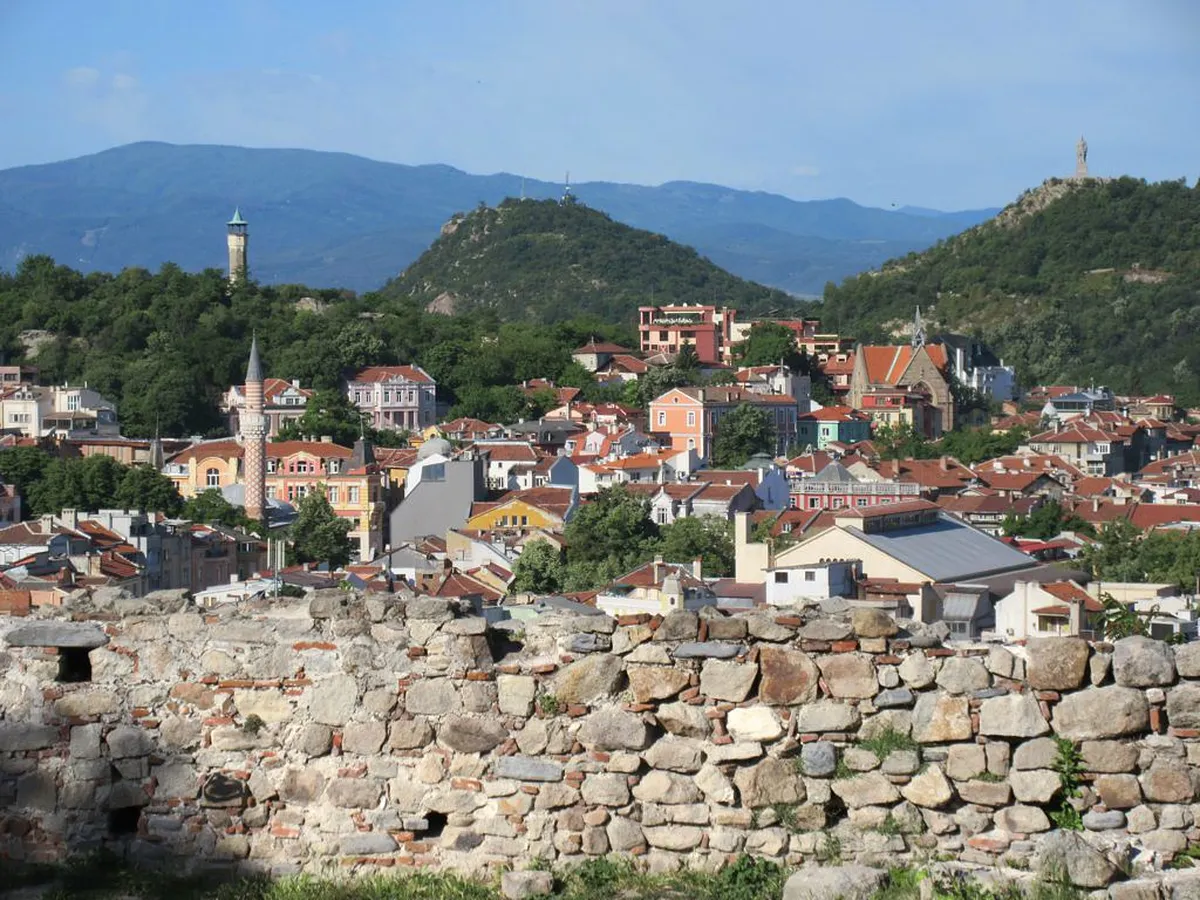
The Old Town sits just a short walk from central Plovdiv's main pedestrian street, near the Roman Stadium. Getting there means climbing gently across one of the three hills the district is built on, so comfortable shoes matter more than a map; the original cobblestones are uneven and can be slick after rain.
Drivers should park in the lots near the East Gate at the base of the hill, since driving inside the Old Town itself is restricted to residents and guests of a handful of hotels. Taxis can drop passengers at the edge of the pedestrian zone for a modest fare. A GPSMyCity Plovdiv Walking Tour is a useful backup for navigating the narrower side alleys once you are inside.
Best Time to Visit and Tour Duration
Arrive soon after the 9:30 am (or 9:00 am in winter) opening to beat both the tour groups and the midday lunch break, when the ticket desk pauses from 12:30 to 1:00 pm. Morning light also does the blue facade the most favors for photos, since the color reads flatter under the harsher light of midday. Spring and autumn bring the most comfortable temperatures for the uphill walk between houses, and since the interiors have no air conditioning, a July midday visit can feel close.
Most visitors spend 30 to 45 minutes moving through the rooms and garden, enough time to read the information plaques and take in the murals without rushing. Add a full hour if you want to linger over the ceiling details or photograph the rooms without other visitors in frame. Either way, the house is compact enough to slot into a single Old Town morning alongside one or two of the neighboring museums.
Nearby Attractions in Plovdiv’s Old Town
The Ultimate Balabanov House Visitor Guide sits just steps away and shares a garden that doubles as the weekend entrance route for Hindliyan House; the two make an obvious pair and are often toured back to back. Balabanov's wood-merchant owner favored carved ceilings over painted murals, so the contrast in style is part of the appeal of visiting both in one outing.
A logical walking route continues to the Regional Ethnographic Museum, a larger merchant house a few streets over that houses folk costumes and craft displays rather than a single family's private rooms, then up to the Ancient Theatre of Plovdiv Visitor Guide for views of the Rhodope Mountains from the Roman-era seating. From there, the Nebet Tepe fortress ruins cap the route with a panorama over the whole city and its 8,000-year history.
Covering Hindliyan House, Balabanov House, and the Ethnographic Museum in one outing takes roughly two to three hours at an unhurried pace, and buying the combined five-site ticket before you start saves the trouble of separate queues at each entrance.
Practical Tips for a Smooth Visit
The single rule to remember: on Saturdays and Sundays, the street-level door is locked, and the only way in is through the garden of the Balabanov House next door. Look for the small connecting gate at the back of Balabanov's courtyard, or ask staff there to point you through; this trips up enough visitors that it is worth building into your plan rather than discovering it at the door.
The other frequent mistake has nothing to do with the weekend rule: it is showing up on a Monday, when every Ancient Plovdiv site, including this one, is closed. Travel guides written before 2026 sometimes still list the old pre-euro BGN-only pricing, which can make the ticket desk's dual-currency signage look like an error rather than the expected post-euro update. Checking the current tariff on the official site before you go avoids both surprises.
Photography is allowed throughout, though staff generally ask visitors to skip the flash near the painted walls, since repeated bright light accelerates fading in pigments this old. Large backpacks are usually left at the ticket counter, and the garden path plus the interior wooden stairs are uneven enough that flat, closed shoes are worth the trade-off against sandals.
Continue planning: Use Plovdiv Attractions: 12 Top Sights, Tickets & Tips to connect this guide with the rest of your Bulgaria itinerary.
Frequently Asked Questions
How much is the entrance fee for Hindliyan House?
The standard entrance fee is 3.58 EUR (7 BGN) per adult in 2026, with a reduced 1.53 EUR ticket for students. You can also purchase a combined ticket for 10.74 EUR (21 BGN) that covers up to five museum sites in the Plovdiv Old Town Visitor Guide district.
Is the Hindliyan House included in the Plovdiv City Card?
The Hindliyan House is listed among the Plovdiv City Card's partner attractions, which can bring discounts depending on the season. Check the card's current terms before buying — for most visitors the Ancient Plovdiv combined ticket at 10.74 EUR (21 BGN) for up to five sites is the simpler saving.
Can you visit Hindliyan House on weekends?
You can visit on weekends, but the entry process is unique. On Saturdays and Sundays, you must enter through the garden of the neighboring Balabanov House. The main door on the street is typically locked during these days to manage visitor flow through the shared courtyard.
What is the significance of the blue house in Plovdiv?
The blue facade of the Hindliyan House represents the wealth and high social status of the 19th-century merchant class. It is one of the best-preserved examples of the Bulgarian National Revival style. The color and the intricate murals inside showcase the owner's international trade connections and sophisticated taste.
The Stepan Hindliyan House is more than just a museum; it is a bridge to Plovdiv's prosperous past. From the unique scent of the rose water fountain to the global cityscapes on the walls, every detail tells a story. Visiting this site allows you to appreciate the artistic soul of the Bulgarian National Revival period. It remains a highlight for anyone exploring the historical depths of one of the world's oldest living cities.
Make sure to keep the weekend access rules in mind to avoid any frustration during your trip. Whether you visit for the architecture or the history, the house will surely leave a lasting impression. Take your time wandering through the rooms and imagining the life of a wealthy merchant in the 1830s. Enjoy your journey through the cobblestone streets and the timeless beauty of the Hindliyan House.
For the latest official information, see the Hindliyan House on Wikipedia.
For more Plovdiv planning, read our Best Things to Do in Plovdiv: Complete 2026 Guide and Ancient Theatre Plovdiv 2026: Tickets, Events & History guides.