Sea Garden Burgas 2026: 10 Tips, Top Attractions & the Black Sand Beach
The Sea Garden in Burgas — known locally as Morska gradina — is the city's most-loved public space, a coastal park stretching five kilometers along the Black Sea shore. It combines century-old trees, flower beds, historic monuments, a working pier, and direct beach access in one walkable area. For most visitors, it is the first and most memorable stop in Burgas.
Locals call it the green heart of the city for good reason. On any given morning you will find joggers on the interior path, pensioners on benches, families at the playgrounds, and fishermen at the end of the pier — all sharing the same park without crowding each other. That mix of uses is what makes it feel genuinely alive rather than curated for tourism.
This guide covers the park's history, its key landmarks, the practical layout first-timers need to navigate, and the seasonal details that determine what you actually experience on the day you visit in 2026.
History and Cultural Significance of the Sea Garden
The Sea Garden's story begins in 1910 when the city commissioned landscape gardener George Duhtev to transform what was largely empty sand dunes into a public park. Duhtev brought in exotic plant species from across Europe and arranged them alongside native Black Sea flora, creating the layered canopy of trees that still shades the park today. The work took years, and the result was eventually declared a protected monument of landscape art.
![Nessebar -St. Stephen Church [11th to 13th century] in Burgas, Bulgaria](/images/sea-garden-burgas-guide-history-and-cultural-significance-of.webp)
Over the following decades the park filled with monuments commemorating Bulgarian national heroes, writers, and revolutionaries. The Summer Theatre was added in the mid-20th century, cementing the garden's role as a cultural venue rather than just a green space. The Pantheon of the Fallen Antifascists, a stark concrete structure in the northern section, was built during the same era and continues to anchor official civic ceremonies.
Today the park is still managed by the municipality of Burgas and entry remains free. Bulgaria's official tourism board consistently lists it among the country's top coastal heritage sites. Understanding this layered history changes how you move through the park — the layout you see now is the product of over a century of deliberate decisions, not a single plan.
Garden Side vs. Beach Side: Knowing the Layout
First-time visitors often arrive at the park and walk in one direction without realizing there are two distinct zones running parallel to each other. The garden side is the interior: tree-lined avenues, sculptures, the Summer Theatre stage, the Pantheon, and shaded benches. The beach side is the waterfront promenade: elevated terraces with sea views, the pier stretching 300 meters into the Black Sea, and direct staircase access down to Burgas Beach.
Most of the cultural content — statues, the theatre, the garden train route — sits on the garden side. Most of the scenic views and the famous black sand beach sit on the beach side. A good visit crosses between both zones rather than committing to one path for the entire walk.
💡 Good to know: Arriving from Bogoridi Street puts you on the garden side first. Turn left toward the waterfront promenade within the first few minutes — first-timers who keep walking straight often spend their whole visit on the interior avenues and miss the sea views and the pier entirely.
The park connects to the city center via Bogoridi Street, Burgas's main pedestrian axis, which feeds directly into the garden-side entrance. If you arrive this way, turn left toward the beach promenade within the first few minutes so you do not miss the sea views entirely. The southern end of the park is quieter and more wooded; the northern end near the pier is where most activity concentrates during summer. You can find more detail on the surrounding Top 10 Outdoor & Nature Activities in Burgas to plan a wider itinerary.
Natural Features and Black Sea Views
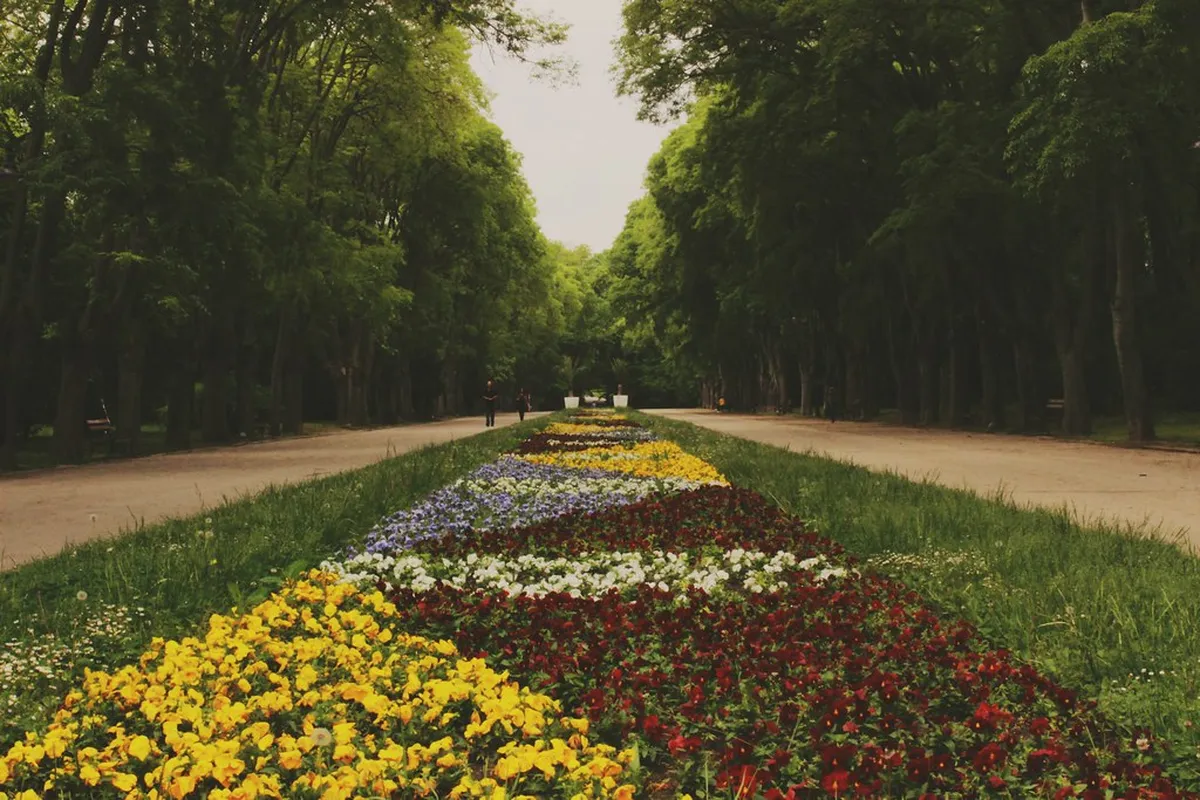
The interior of the park is dominated by trees that have had over a hundred years to mature. Plane trees, oaks, and various introduced species form a canopy that keeps temperatures noticeably cooler than the surrounding streets on hot July days. Flower beds are replanted seasonally — tulips and hyacinths appear in April, roses take over by June, and dahlias carry the color through September.
The elevated waterfront terraces are the best vantage points for sea views, particularly in the late afternoon when the light goes flat and golden over the water. Benches line these terraces at regular intervals, and they fill up quickly around sunset. Photographers get the most useful shots in the hour before golden hour when the sky has directional light but the pier is not yet backlit.
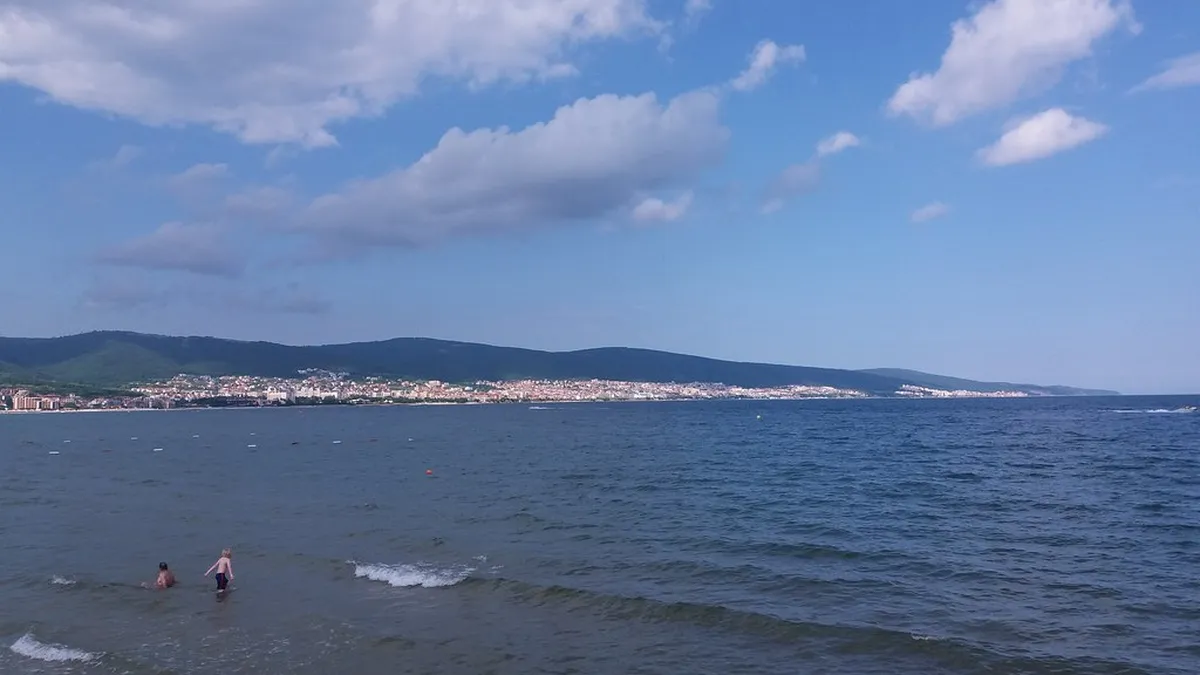
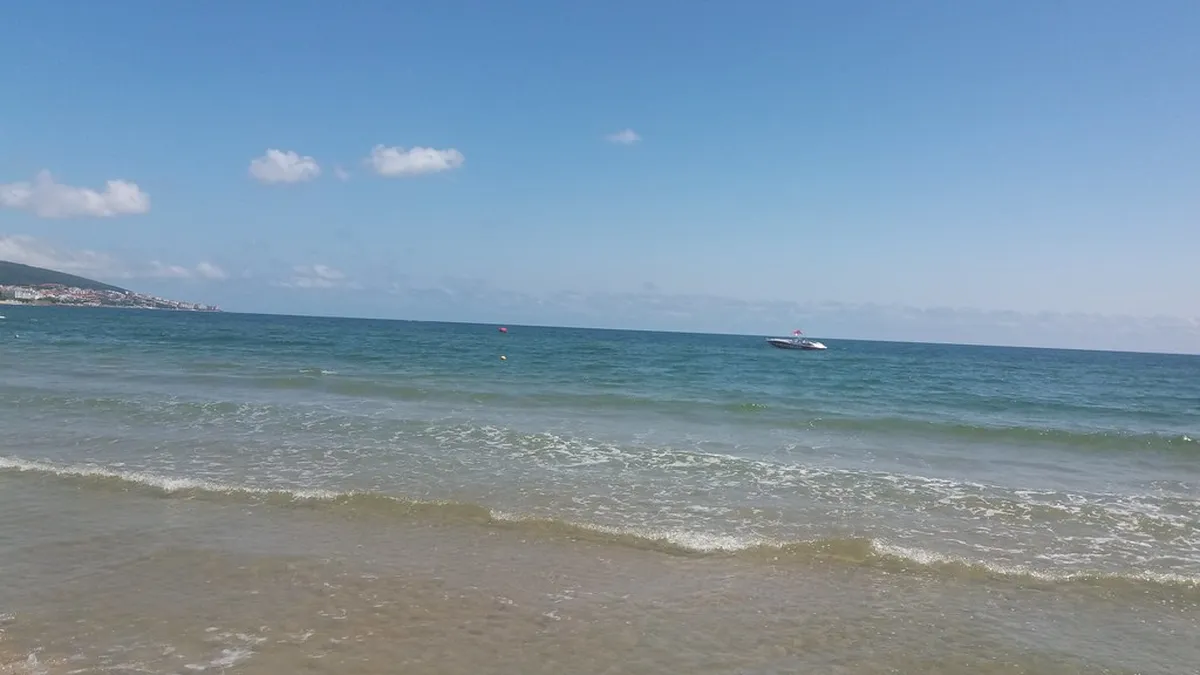
The park runs directly parallel to Burgas Beach, with multiple staircases connecting the promenade to the sand below. The beach itself is a separate public space, but in practice the two areas function as one destination. Swimming is possible from June through early September; the water is calm by Black Sea standards and entry from the beach is gentle.
Is it safe to swim below the Sea Garden?
Swimming off Burgas Beach is practical and popular through the summer. The Black Sea here is calmer and less saline than the Mediterranean, the entry from the sand is gradual rather than a sudden drop, and the central beach sections in front of the Sea Garden are the most used — which in practice means more people around and, in peak season, lifeguarded zones on the busier stretches. The water is warmest from July into early September. As anywhere on an open coast, the sensible cautions apply: swim where others are swimming, watch for posted flags, and take care after onshore winds when the surf picks up.
💡 Good to know: Shower stations sit at the top of the main beach staircases, so you can rinse off the dark magnetite sand before walking back up through the park — handy if you are heading straight to a cafe on the promenade rather than back to your hotel.
Running Routes and Cycling Paths
The Sea Garden is one of the better urban running venues on the Bulgarian coast, and dedicated runners often choose it specifically for the surface quality and low car exposure. The central interior path — the main tree-lined avenue running the length of the park — measures approximately 2.5 kilometers end to end on a flat, paved surface. A single out-and-back on this path gives you a 5-kilometer run with shade most of the way.
Extending the route along the waterfront promenade and looping back through the garden side adds another 1.5 to 2 kilometers, making a full circuit roughly 6 to 7 kilometers. Early mornings before 08:00 are best for running: the paths are clear, the light is good, and the sea air is cool. By 10:00 in summer the avenues fill with families and the wider paths become more obstacle course than running track.
Cycling follows the same paths and is popular with locals year-round. Bicycles can be rented from stalls near the main entrance on Bogoridi Street. The paths are mostly flat with no significant elevation changes, making the park accessible for riders of any fitness level. Strollers and wheelchairs share the same paved routes without difficulty — the park has no significant steps on its main axes.
Top Activities: From the Summer Theatre to the Pier
The Summer Theatre is the cultural anchor of the park. It hosts live concerts, opera performances, folklore festivals, and film screenings throughout the warm months. Tickets for specific events are sold through local outlets and at the venue; browsing the schedule at the start of your Burgas trip is worth the five minutes. The theatre operates from roughly May through September depending on programming.
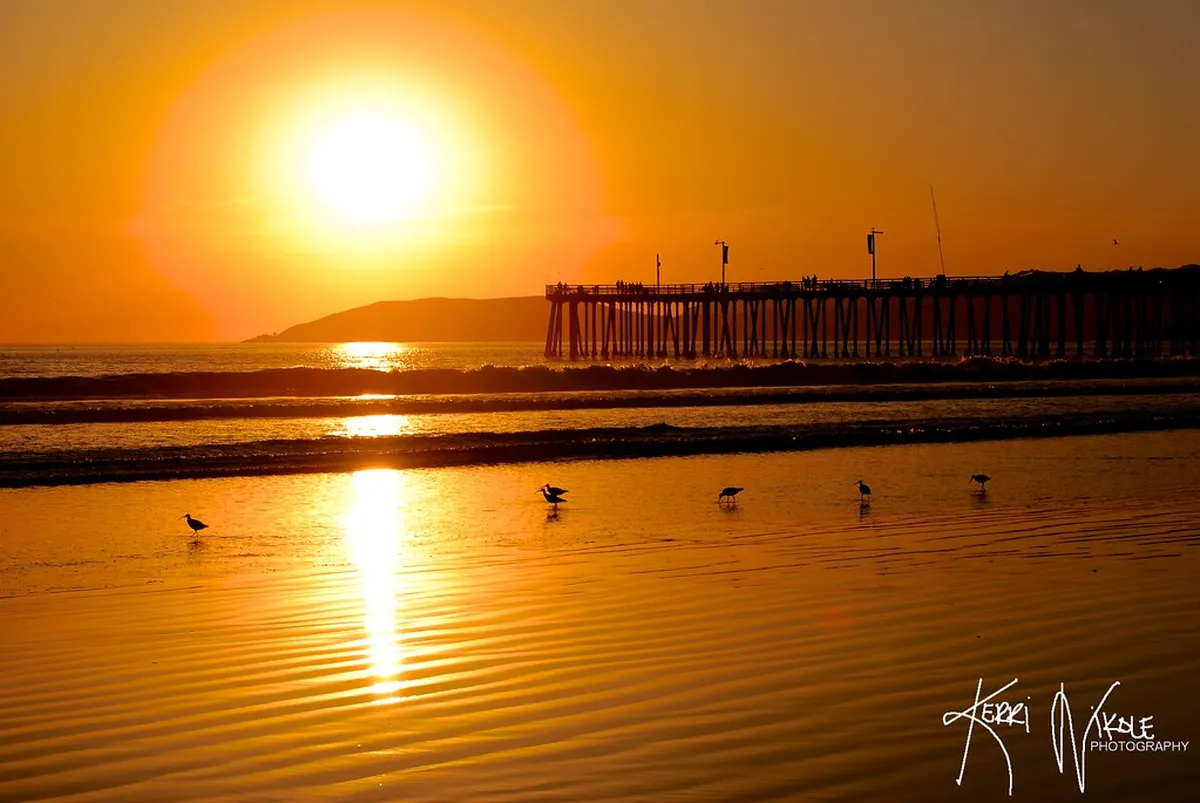
The Burgas Pier — called Most by locals — extends nearly 300 meters into the Black Sea from the northern waterfront. Walking to the end gives you a perspective of the coastline that is impossible from anywhere on shore. It is free to access at all hours and is used by fishermen, couples, and anyone who wants to be genuinely out over the water. At dusk the pier is one of the most photographed spots in the city.
The Pantheon of the Fallen Antifascists stands in the northern section of the park and is worth a short detour for the architecture alone, regardless of its political history. The wide plaza around it is used for official ceremonies on national holidays. Beyond the Pantheon, dozens of smaller statues of Bulgarian writers and national figures are distributed along the garden-side avenues — finding them on a walk is an informal way to absorb local history. These monuments are part of what makes this one of the most distinctive Top 15 Burgas Attractions on the coast.
Family-Friendly Fun: Playgrounds and the Garden Train
The Garden Train is the headline attraction for families with young children. It runs along the main interior path on a fixed route and costs a small fee per ride — expect to pay around 3 to 5 BGN per child. For toddlers who have already walked as far as they want to, it solves the problem of how to get back to the entrance. The train operates during daylight hours from spring through early autumn.
Several playgrounds are distributed across the park, with the largest near the central section and a smaller one toward the southern end. Equipment is modern and fenced, which means parents can sit on the benches immediately adjacent without losing sight of children. The wide paved avenues throughout the park accommodate strollers easily, and the flat terrain means pushchairs do not require effort to maneuver.
Kiosks selling ice cream, corn on the cob, and cold drinks are positioned near the main play areas and along the promenade. The beach access points have shower stations at the top of the staircases, which is useful after a sand session before heading back through the park. The combination of train ride, playground, beach, and ice cream is what makes the Sea Garden a reliable half-day plan for families — it is one of the most practical family-friendly activities in Burgas regardless of the children's ages.
Practical Visitor Information: Hours, Fees, and Getting There
The Sea Garden is free to enter and has no closing time — it is open 24 hours a day, 365 days a year. There are no gates or ticket barriers. Some specific events at the Summer Theatre require paid tickets, but access to the park itself is always free. Public restrooms are located at several points and may charge a nominal fee of around 0.50 BGN for maintenance.
The main entrance from the city center is at the end of Bogoridi Street, Burgas's pedestrian shopping street. From the central bus and train station it is roughly a 10-minute walk south along Aleko Bogoridi Street. Most hotels in the city center are within 15 minutes on foot. The park is well-lit at night and the main avenues feel safe after dark.
Most of the main paths are wheelchair and stroller accessible. The garden-side avenues are flat and paved; the beach-side staircases down to the sand are not accessible, but the promenade itself is. For the latest event schedule and any temporary closures, the Official Burgas Municipality Website posts updates in Bulgarian with some English content.
Arriving by car, Burgas Airport (BOJ) is 10 kilometers north of the park — roughly a 15-minute taxi ride costing under 15 BGN. Paid parking is available along the park perimeter in designated blue-zone areas; mornings on weekdays are manageable, but weekend afternoons in July and August see the lots fill by 10:00. Buses from Sunny Beach run to the Burgas central station approximately every 30 to 45 minutes in summer; the journey takes about 45 minutes and costs around 4 BGN. From the station, the park is a 10-minute walk.
Best Times to Visit and Seasonal Events
Late May and June are the most balanced months to visit. The flower beds are at their peak, temperatures sit between 22 and 26°C, and the summer crowds have not yet arrived. The Summer Theatre season starts around this time, so there is usually live programming available without the August crush. September offers similar advantages with the added appeal of calmer seas for swimming.
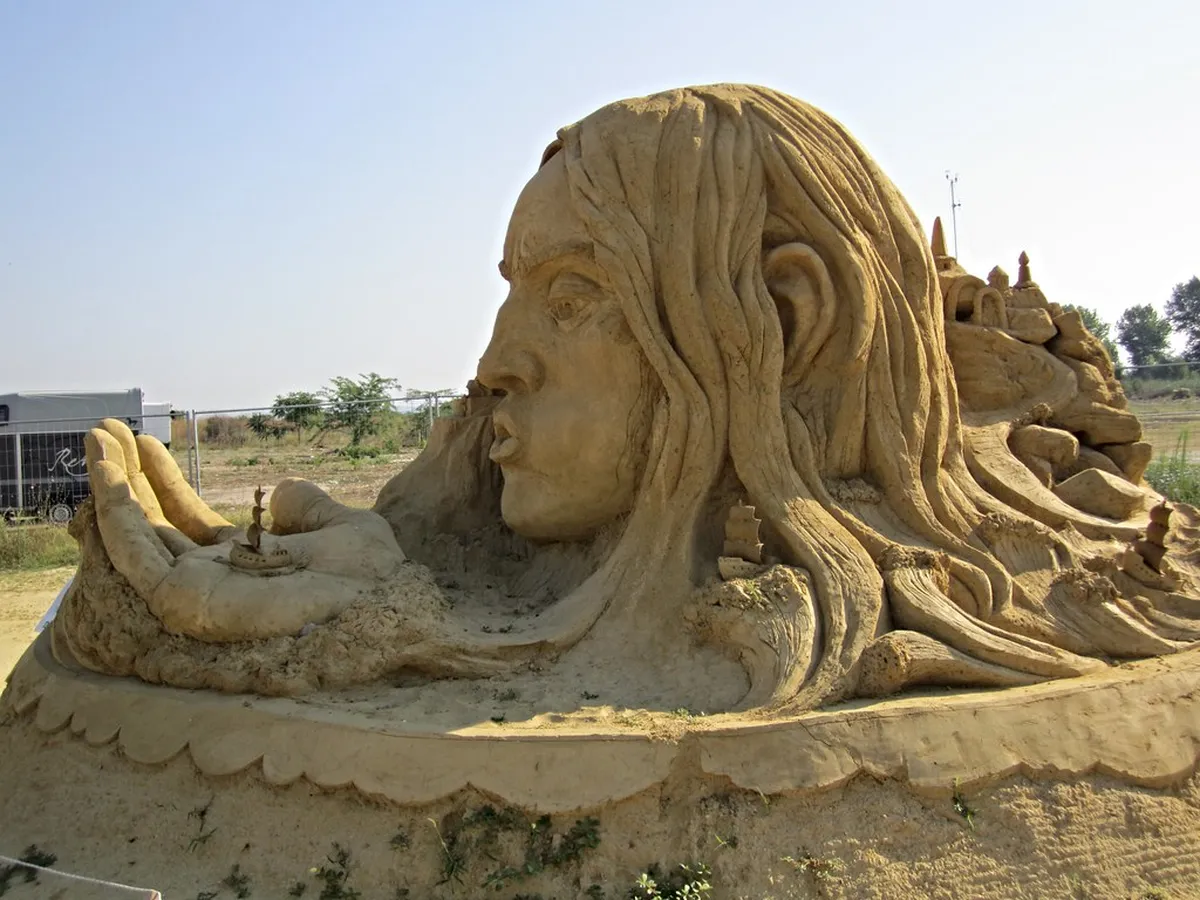
July and August are the busiest months by a significant margin. The park hosts the Sand Fest Burgas during summer — an outdoor sculpture event where large-scale sand artworks are built along the beach promenade and remain on display for several weeks. If you visit in peak season, mornings before 09:00 and evenings after 19:00 give you the park in a noticeably different, quieter state. Sunset from the promenade terraces in August is worth staying up for.
Autumn brings a different quality to the park. Leaf color in October is modest compared to central European parks, but the light over the Black Sea becomes more dramatic and the paths empty out substantially. Local swimmers continue to use the beach well into October — watching them from the pier at sunrise is one of the more quietly memorable things you can do in Burgas. Winter visits are possible; the park stays lit and the Christmas period brings decorative lighting along the main avenues, though most of the kiosks and the Garden Train do not operate from November through March.
Burgas Sea Garden vs. Varna Sea Garden: Which Should You Visit?
Both of Bulgaria's main Black Sea cities have a coastal park called the Sea Garden (Morska gradina), and travellers planning a coastal trip often weigh one against the other. The Varna Sea Garden is the larger and older of the two — Bulgaria's largest landscaped park, with an aquarium, a dolphinarium, an observatory, and a planetarium inside its grounds. The Burgas Sea Garden is more compact and more obviously laid out as a walkable seafront promenade, with its pier, Sea Casino, and direct access to the black magnetite sand beach below.
The practical difference comes down to the kind of day you want. Varna's garden suits visitors who want paid indoor attractions — the aquarium and dolphinarium are genuinely child-friendly and work in any weather. Burgas's garden is the stronger choice for a free, open-air walk: everything here is free to enter, the layout is easier to circuit in a single visit, and the pier-and-promenade walk delivers more uninterrupted sea views per minute on foot. If your trip already has Varna on it, the two parks are different enough that seeing both is not repetitive.
For most short Burgas stays, the Sea Garden alone covers the city's headline outdoor experience without needing to travel north. If you are still deciding between the two cities for your base, our guide on whether Varna is worth visiting and the wider Things to Do in Varna, Bulgaria page lay out the trade-offs.
Local Details: Black Sand, Resident Cats, and Sunday Markets
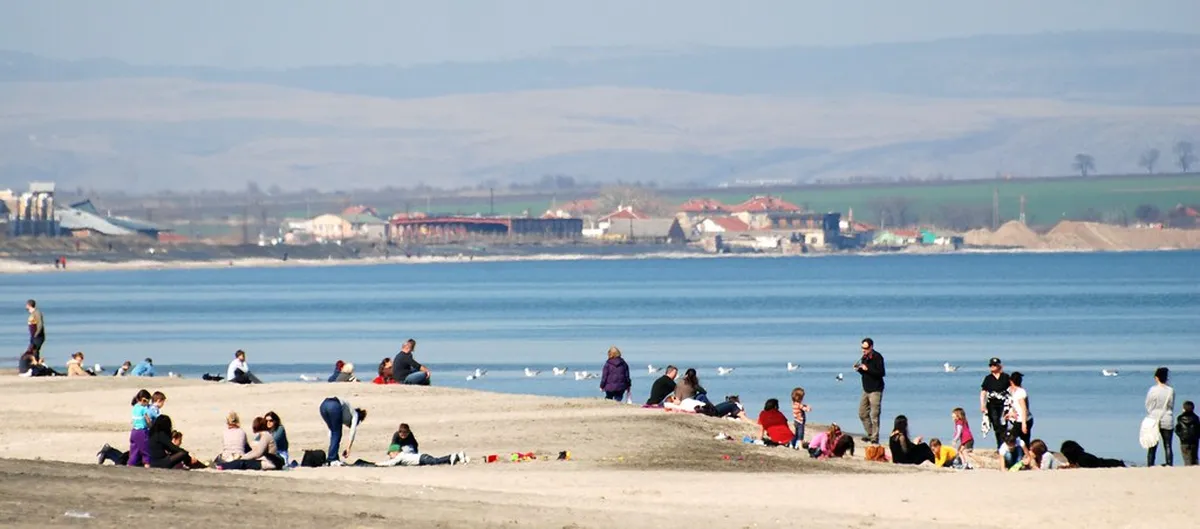
The beach directly below the Sea Garden is famous among Bulgarians for its black sand, which has a high magnetite content. Local tradition holds that the sand has mild therapeutic properties for joint and skin conditions — a belief old enough to have been written about in early 20th-century Bulgarian travel literature. Whether or not you subscribe to that, the sand is visibly darker than typical Mediterranean beach sand and noticeably warm to touch in the afternoon. Our 10 Best Burgas Beaches and Coastal Planning Tips covers the swimming conditions and beach facilities in more detail.
The park has a well-established population of resident cats. They are not feral in the aggressive sense — most have been neutered and vaccinated through a municipal program — and they are comfortable around people. You will find them on benches, under trees, and occasionally on the stone walls of the waterfront terraces. Locals bring food regularly, and some cats have become genuinely sociable. For anyone spending time at the park with children, the cats are a reliable distraction.
On Sunday mornings a small book and craft market sets up near the central section of the garden, typically between 09:00 and 13:00. Secondhand Bulgarian books dominate, but local crafts, artwork, and sometimes vinyl records appear. It runs from spring through autumn and is not listed on most tourist itineraries — if your visit falls on a Sunday, it is worth arriving early enough to see it. The market pulls a local crowd rather than a tourist one, which gives the park a different atmosphere than on a typical summer afternoon.
What to See in the Sea Garden: A Self-Guided Walk
The Sea Garden covers roughly 85 hectares — free entry, open 24 hours, stretching 5 km along the Black Sea coast. A self-guided circuit of the main landmarks takes 90 to 120 minutes at a relaxed pace.
Start at the Bogoridi Street entrance and walk north along the central tree-lined avenue. Within the first few hundred meters you pass the Flora Centre, a formal garden zone maintained by the municipality where seasonal flower displays are at their most concentrated. Continue north and you reach the Summer Theatre (the "Snail" stage), an open-air amphitheatre built into the parkland whose curved concrete shell is recognizable from a distance.
From the Summer Theatre, veer toward the waterfront to pick up the elevated promenade. The Sea Casino building — a restored early-20th-century structure that now functions as a cultural and events venue — sits at the water's edge here and is one of the most photographed facades in the park. Continue along the promenade north to reach the pier, known locally as Most. The pier extends 300 meters into the Black Sea and ends at a 22-meter viewing platform; on clear days you can see Saint Anastasia Island from the tip.
Double back slightly inland to the Pantheon of the Fallen Antifascists, a hulking 1981 concrete monument set in its own wide plaza. According to the Regional Historical Museum Burgas, the Pantheon is among the most architecturally significant civic structures in the park and hosts official ceremonies on national holidays. Dozens of smaller busts and sculptures of Bulgarian writers, revolutionaries, and national figures are scattered along the avenues between these anchor points — spotting them all makes for a low-key history trail. The garden also contains a small zoo and the Prikazkite children's amusement park near the central section, both free to enter the grounds of. Close the loop by returning south along the garden-side avenue to the Bogoridi entrance. This circuit covers the main points without retracing too much ground. For a wider look at the city's outdoor spaces, see our guide to Top 10 Outdoor & Nature Activities in Burgas.
Events & Festivals in the Sea Garden (2026)
The Sea Garden is the city's primary outdoor cultural venue; the park's calendar runs from May through October with events staged on the promenade, at the Summer Theatre, and along the beach directly below.
The International Sand Sculpture Festival is the park's most distinctive summer event. Large-scale sand artworks — typically thematic, running to figures several meters tall — are constructed along the beach promenade in late June and remain on display through early September. Entry to the sculpture area costs around 5 to 10 BGN in 2026; the works are illuminated at night, which gives an entirely different effect to daytime viewing. This is among the longest-running sand sculpture events in Southeast Europe and draws artists from across the continent.
Spirit of Burgas, the city's flagship outdoor music festival, takes place on the central beach adjacent to the park each July. The multi-stage format brings international headliners alongside regional acts across three to four consecutive evenings. The Sea Garden itself fills with pre-concert crowds in the hours beforehand, and the Summer Theatre runs parallel programming throughout the festival period. Check the official schedule at Burgas Municipality from April onward, as headliner announcements typically drop in spring.
Other recurring events include the Burgas and the Sea popular song contest (June), the International Folklore Festival (July), and the Turn on the City contemporary art festival (autumn). The Summer Theatre also runs its own season of opera, drama, and film screenings from May through September — individual tickets are sold locally and at the venue. For a complete picture of what is happening across the city in 2026, see our Burgas summer guide and the broader Best Time to Visit Burgas: Weather & Seasons (2026) page.
Cafes, Beach Access & Facilities
The Sea Garden is free to enter and open 24 hours, 365 days a year. The park covers 85 hectares; its central paved avenue runs 2.5 km end to end.
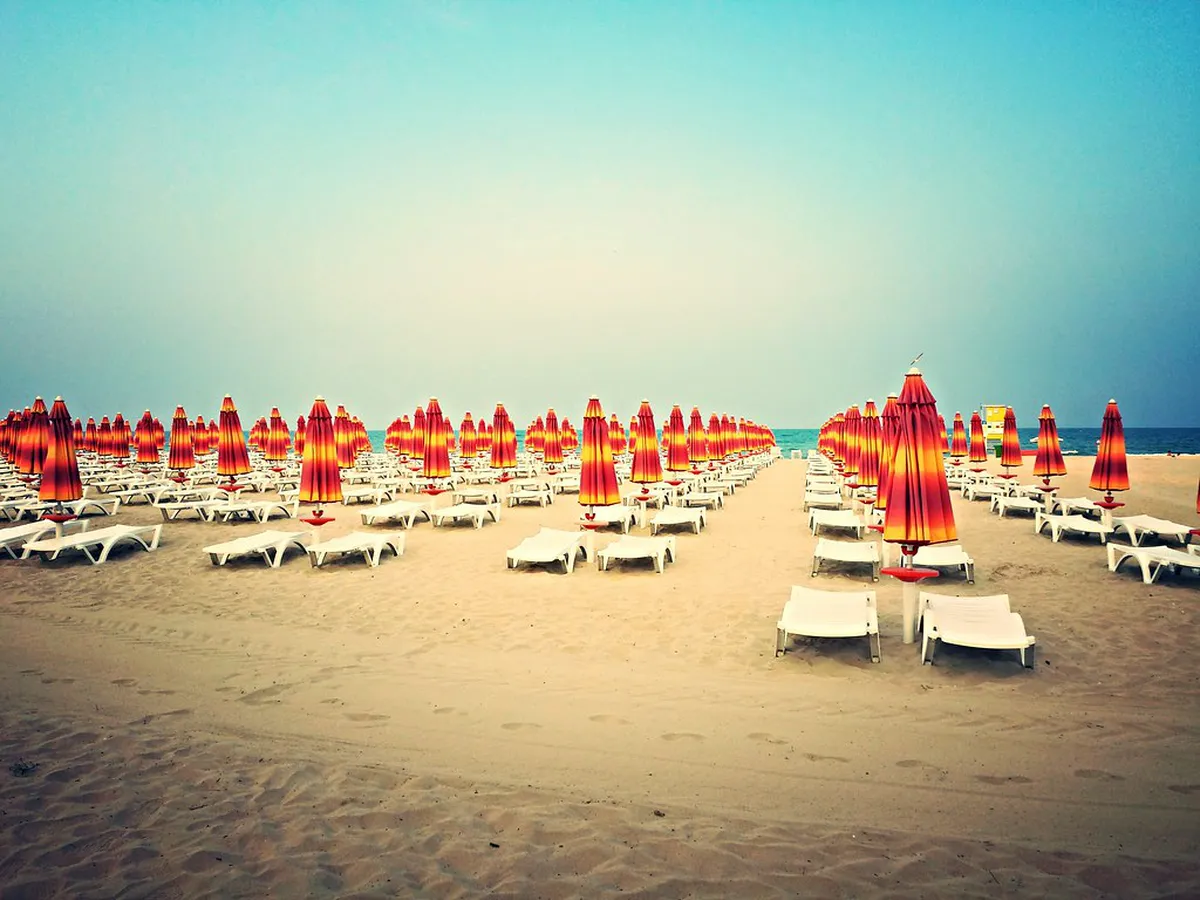
Burgas Beach, directly below the promenade, is free public beach. Multiple staircases connect the elevated walkway to the sand; shower stations sit at the tops of the main stairways. The beach stretches roughly 3 km and the black magnetite sand is warm underfoot by midday in summer.
From Burgas city center the park entrance is a 10-minute walk south along Bogoridi Street. Burgas Airport (BOJ) is 10 km north — around 15 minutes by taxi (under 15 BGN).
Cafes, kiosks, and full-service restaurants are distributed across the park and concentrated on the waterfront promenade. The Sea Casino building on the waterfront hosts a cafe with sea views open in season. Kiosks selling ice cream, grilled corn, and cold drinks sit near the playgrounds and along the beach access points. Public restrooms are positioned at several points throughout the park; a nominal maintenance fee of around 0.50 BGN applies at staffed facilities. Bicycle rentals are available near the Bogoridi entrance — prices run roughly 5 to 8 BGN per hour in 2026. The park's main avenues are fully paved and flat, making them suitable for wheelchairs and strollers; the beach staircases are not step-free, but the promenade itself is. For tips on spending the evening in this part of the city, see our guide to Top Things to Do & Nightlife Guide 2026.
Quick Facts: Sea Garden Burgas at a Glance
The Sea Garden covers 85 hectares and stretches 5 km along the Burgas Black Sea coastline — declared a protected monument of landscape architecture by the Bulgarian state.
| Entry fee | Free, no gates — open 24 hours, 365 days |
| Size | 85 hectares; 5 km long, 2.5 km central paved avenue |
| Pier (Most) | 300 m into the sea, 22 m viewing platform at the tip |
| Garden Train | Approx. 3–5 BGN per ride, spring to early autumn |
| Best months | Late May–June and September (peak: July–August) |
| Getting there | 10-minute walk from Burgas station via Bogoridi Street |
Entry is free at all hours; the park has no gates or barriers. Public restrooms charge around 0.50 BGN. The Garden Train for children runs spring through early autumn, approximately 3–5 BGN per ride.
The pier (Most) extends 300 m into the Black Sea with a 22-meter viewing platform at the end; free access at all hours. On clear days Saint Anastasia Island is visible from the pier tip — roughly 6 km offshore.
Burgas Airport (BOJ) is 10 km north; taxi to the park costs under 15 BGN. The park entrance on Bogoridi Street is a 10-minute walk from Burgas central bus and train station. Buses from Sunny Beach take around 45 minutes to Burgas station (approx. 4 BGN in 2026). For accommodation options near the park, see our Best Areas to Stay in Burgas (2026 Guide) guide.
Sea Garden Burgas: 2026 Opening Hours, Free Entry & Park Map
The Sea Garden is free to enter at any hour — there are no gates, no ticket barriers, and no restrictions on when you walk in. The park is open 24 hours a day, 365 days a year. That said, understanding which specific areas and facilities have their own seasonal schedules helps you plan a visit that does not involve arriving to find something closed.
![Nessebar -St. Stephen Church [11th to 13th century] in Burgas, Bulgaria](/images/sea-garden-burgas-guide-sea-garden-burgas-2026-opening-hours.webp)
The core park — all 85 hectares of avenues, promenade, and beach access staircases — is always free and always open. The facilities with their own hours are:
- Summer Theatre ("The Snail"): Operates May through September, with programming typically starting from late May. Individual event tickets are sold at the venue and through local outlets; access to the theatre grounds outside of performances is free.
- Garden Train (miniature railway): Runs during daylight hours from spring through early autumn, roughly April to October. The per-ride fee is around 3–5 BGN per child, based on the pricing stated elsewhere in this guide. The train does not operate November through March.
- Bicycle rental stalls (Bogoridi entrance): Available in season at approximately 5–8 BGN per hour. Typically open from late spring through early autumn during daylight hours.
- International Sand Sculpture Festival display area: Entry around 5–10 BGN; open daily from late June through early September, including evening viewings when the works are illuminated.
- Public restrooms: Staffed facilities throughout the park charge a nominal fee of around 0.50 BGN for maintenance; open whenever the park is busy.
For parking, paid blue-zone spaces run along the park perimeter — weekday mornings are manageable, but weekend afternoons in July and August fill by around 10:00. The Bogoridi Street entrance at the city-center end of the park is the easiest orientation point: the garden-side avenues extend north from there, and a left turn within the first few minutes puts you on the waterfront promenade. From there the pier (Most) and the Sand Sculpture display area are both a short walk north. Check the Burgas Municipality website for current event dates and any temporary closure notices before you travel.
Pair this with our broader Burgas attractions guide for the full city overview. For related Burgas deep-dives, see our Best Views in Burgas: Complete Photographer's Guide for 2026 and family-friendly activities in Burgas guides. For deeper coverage of related Burgas spots, see our Saint Anastasia Island and Burgas beaches guides.
Continue planning: Use Top 15 Burgas Attractions and 6 Things to Know Before Visiting Aquae Calidae Burgas to connect this guide with the rest of your Bulgaria itinerary.
Frequently Asked Questions
How long is the Sea Garden in Burgas?
The Sea Garden stretches for approximately five kilometers along the coastline, with a central interior path of 2.5 kilometers. It offers plenty of space for walking, running, and cycling. You can see more details on our Top 15 Burgas Attractions page for planning your route.
Is the Sea Garden in Burgas free to enter?
Yes, the Sea Garden is completely free for all visitors and remains open 24 hours a day. There are no entrance fees for the park itself, though some specific events at the Summer Theatre may require tickets. It is a perfect budget-friendly destination for everyone.
What is the best time of year to visit Burgas Sea Garden?
The best time to visit is during the late spring or summer months when the flowers are in bloom and festivals occur. July and August are the busiest, while May and June offer pleasant weather with fewer crowds. Fall is also beautiful for quiet walks.
Are there places to eat inside the Sea Garden?
Yes, there are several cafes and restaurants located throughout the park offering everything from quick snacks to full meals. Many of these establishments provide beautiful views of the Black Sea while you dine. You will find plenty of options for refreshments during your walk.
How do I get from Sunny Beach to the Sea Garden?
You can take a direct public bus from the Sunny Beach central station to the Burgas bus station. The journey takes about 45 minutes and is very affordable for travelers. From the Burgas station, the park is just a short walk away.
What is the Spirit of Burgas festival and does it take place in the Sea Garden?
Spirit of Burgas is the city's flagship outdoor music festival, held each July on the central beach directly adjacent to the Sea Garden. It runs over three to four evenings with international headliners and regional acts across multiple stages. The Sea Garden fills with crowds in the hours before each evening's performances, and the Summer Theatre runs parallel programming throughout the festival period. Check the Burgas Municipality website from April onward for the 2026 schedule.
What is the Sand Sculpture Festival in Burgas Sea Garden?
The International Sand Sculpture Festival takes place annually along the beach promenade beside the Sea Garden, typically from late June through early September. Large-scale sand artworks on a rotating theme are built by artists from across Europe and are illuminated at night. Entry to the sculpture display area costs around 5 to 10 BGN in 2026. It is one of the longest-running events of its kind in Southeast Europe and is worth combining with an evening walk along the promenade.
Is the Burgas Sea Garden beach suitable for swimming?
Yes. Burgas Beach runs directly below the Sea Garden promenade and is a free public beach. Multiple staircases with shower stations connect the elevated walkway to the sand. The water is calm by Black Sea standards and swimming is practical from June through early September. The sand is visibly dark due to its natural magnetite content. Our 10 Best Burgas Beaches and Coastal Planning Tips covers water quality, facilities, and the best beach sections in more detail.
Is the Burgas or Varna Sea Garden better to visit?
Both cities have a coastal Sea Garden. Varna's is larger and older, with paid indoor attractions inside it — an aquarium, dolphinarium, observatory, and planetarium. Burgas's Sea Garden is more compact and laid out as a free, walkable seafront promenade with a 300-metre pier, the Sea Casino, and direct access to the black magnetite sand beach below. For a free open-air walk with continuous sea views, Burgas is the easier single-visit circuit; for indoor, weatherproof family attractions, Varna has more. If your trip covers both cities, the two parks are different enough to be worth seeing each.
Is it safe to swim at the beach below the Sea Garden?
Yes. Burgas Beach below the Sea Garden is a free public beach where swimming is practical from June through early September. The Black Sea here is calmer and less saline than the Mediterranean, with a gradual entry from the sand, and the central sections in front of the park are the busiest and best supervised. The water is warmest from July into early September. Swim where others are swimming, watch for posted flags, and take extra care after onshore winds when the surf picks up.
How long does it take to walk through the Sea Garden in Burgas?
A casual end-to-end stroll along the central avenue takes 30 to 40 minutes. A self-guided circuit covering the main landmarks — Pantheon, Summer Theatre, Sea Casino, pier (Most), and back through the garden-side avenue — takes 90 to 120 minutes. If you add beach time, a cafe stop, and the Sand Sculpture display in season, plan for a half-day. The park is flat and fully paved on its main paths, making it accessible for all fitness levels.
The Sea Garden in Burgas is a truly unique destination that combines natural beauty, rich history, and modern entertainment. It serves as a perfect example of how a city can preserve its coastal heritage while providing a functional space for the community. Whether you are visiting for the first time or returning for a second look, there is always something new to discover.
From the healing black sand to the vibrant performances at the Summer Theatre, this park offers an experience unlike any other in Bulgaria. We hope this guide helps you make the most of your visit to this stunning seaside sanctuary. Pack your walking shoes and prepare to be captivated by the charm of the Sea Garden during your next trip to Burgas.
Continue planning
Start with our Bulgaria's Black Sea beach guide and compare the practical details with our Burgas and Sunny Beach comparison.
For connected planning, compare Bulgaria's Black Sea beach guide with Burgas and Sunny Beach comparison before finalizing your route.