Aladzha Monastery
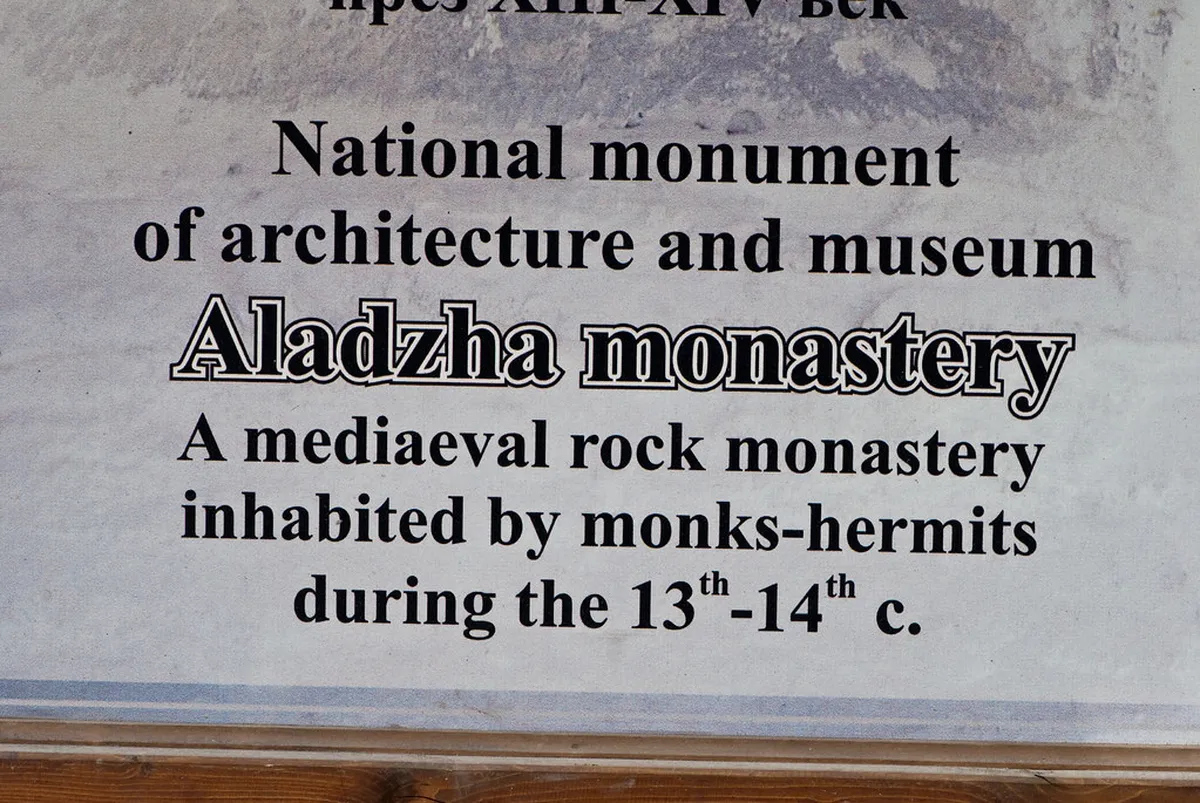
10 Essential Tips for Your Aladzha Monastery Visitor Guide stands as a remarkable testament to medieval spirituality carved directly into the limestone cliffs near Varna. This unique rock-hewn complex served as a sanctuary for hermit monks during the Second Bulgarian Kingdom, roughly the 13th and 14th centuries. Visitors today find a blend of stunning natural beauty and deep historical mystery within the Golden Sands Nature Park.
To get a sense of the monastery's carved levels and landscape setting, this video walk-through provides an excellent overview:
Exploring this site offers a rare glimpse into the ascetic lifestyle of the Byzantine era. The monastery features two distinct levels of cells, chapels, and dining halls connected by external wooden stairs and walkways. You can easily reach this historic landmark from nearby resorts, making it a perfect half-day trip for history enthusiasts staying anywhere on the northern Black Sea coast.
The History and Legends of Aladzha Monastery
The origins of Aladzha Monastery stretch back to the 10th century or earlier, though the current carved structure dates solidly to around 1200–1300 during the spread of Hesychasm across Byzantium and Bulgaria. These monks sought spiritual purity through silence and extreme isolation, and the soft limestone cliffs of the Sarmatian Sea bed — formed roughly 12 million years ago — gave them ideal material to work with. Geologists estimate the cliffs rise nearly 40 metres at their highest point.
The monastery's original Christian name is completely unknown. The name "Aladzha" derives from a Persian-Turkish word meaning "colourful," a reference to the vibrant murals that once covered the chapel walls. Small fragments of those frescoes survive on the first level, most notably a barely recognisable image of the Mother of God on the east wall of the altar. This site remains one of the most significant Bulgarian monastery circuit for those studying medieval religious art.
Local legends speak of a mysterious guardian figure named Rim Papa, said to emerge from the depths of the rock each spring to reveal the monastery's secrets. The story gained wider life through the audiovisual show "Legends of Aladzha Monastery," created in memory of Karel and Hermengild Škorpil, the Czech brothers who founded Bulgarian archaeology in the late 19th century and first documented the site scientifically. The monastery was effectively forgotten after the Ottoman period and only rediscovered in the 1800s.
Best Time to Visit and Opening Hours
The monastery is open daily from 09:00 to 17:00 during summer. Hours can shift in winter — some visitor reports note weekend closures between November and April, so check the official museumvarna.com page before making the drive. No advance booking is needed for a standard daytime visit.
Peak summer crowds concentrate between 10:00 and 12:00, which is when coach tours typically arrive. Arriving after 13:00 gives you noticeably quieter access to the rock levels. If you have flexibility, an evening visit in summer is special — the site is lit for visitors and the atmosphere is entirely different from the midday rush.
Shoulder season — May and September — offers the best balance of mild weather, smaller crowds, and lush forest. The autumn colours in the surrounding Zlatni Pyasatsi Nature Park are particularly good for photography. Winter visits are possible but bring the risk of slippery metal staircases on rainy days; wear boots with grip if you come between November and March.
Arriving after 13:00 avoids coach tour crowds that concentrate between 10:00 and 12:00. Shoulder season in May and September offers the best balance of mild weather and smaller crowds.
Aladzha Monastery Admission and Tickets
In 2026, adult admission costs 5 BGN (approximately 2.50 EUR). Students pay 2 BGN. Your ticket covers both the rock-hewn levels and the on-site museum. Bring cash — the kiosk does not reliably accept card payments, and there are no ATMs at the entrance.
Bring cash — the entrance kiosk does not reliably accept card payments and there are no ATMs on-site.
Group discounts apply for organised parties of ten or more arriving together. Tour operators often include the entry fee in their package price, so confirm this when booking from your resort. The "Legends of Aladzha" evening audiovisual show requires a separate, higher-priced ticket and usually needs advance booking in peak summer.
Photography is permitted throughout the site at no extra charge. There are no bag lockers, so leave large luggage in your car or hotel. The parking area and the museum toilets are free to use whether or not you purchase a ticket for the rock levels.
| Ticket Type | Price (2026) |
|---|---|
| Adult admission | 5 BGN (~2.50 EUR) |
| Student admission | 2 BGN |
| Group discount | For groups of 10+ |
| "Legends of Aladzha" evening show | Higher price; advance booking required |
| Photography | Free (included) |
| Parking | Free |
| Museum (included in ticket) | Yes |
Walking Through the Monastery: Layout and Levels
The monastery occupies two horizontal levels carved into a nearly 40-metre limestone cliff face. The lower level is the more complex of the two. On its western end, immediately beside the visitor stairs, stands the monastery church with a small altar in the centre of the east wall — the preserved fresco fragment of the Mother of God is here. A stone staircase inside the church leads through a narrow corridor to six individual monk cells, each originally separated by wooden walls with small niches for icons.
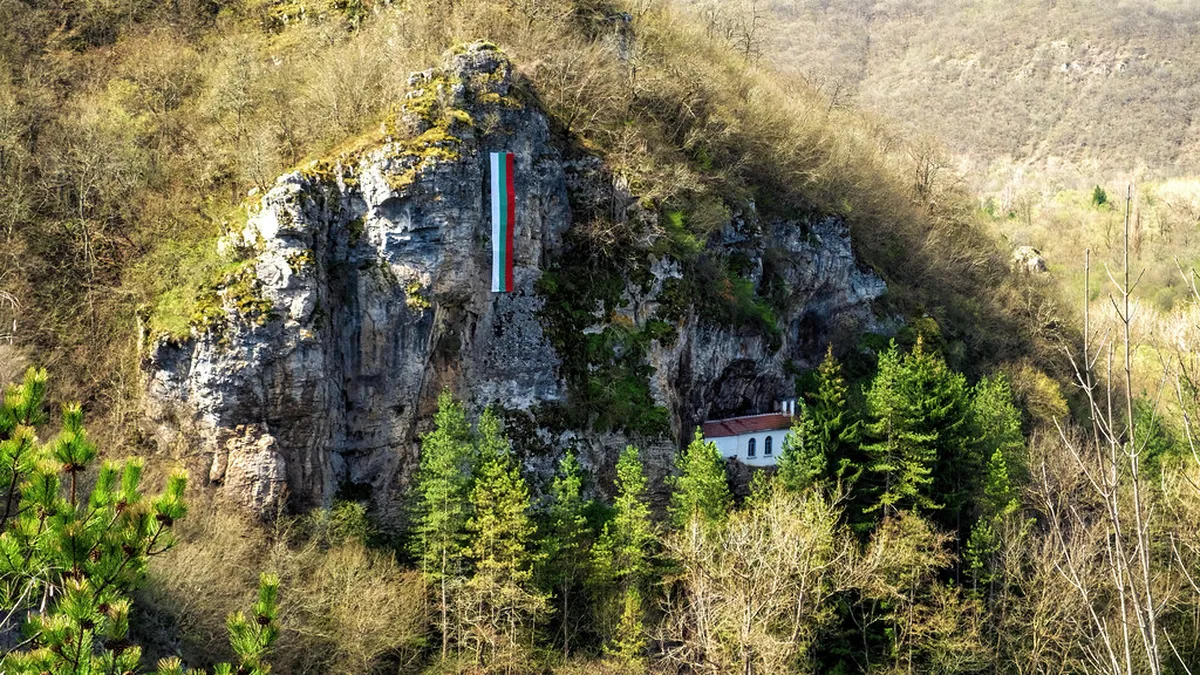
Continuing east along the first level, the corridor opens into a wide irregular room that served as both kitchen and dining hall, divided by a wooden partition. The western section held the kitchen; the eastern section was the refectory. Its east-west orientation and symbolic layout echo the "Last Supper" arrangement common in Orthodox monastic design. Beyond it sits a small secondary chapel, recognisable by the semi-circular eastern wall.
The second level is far simpler: a single large niche housing the main chapel. This chapel is notable for being the only room in the complex where brick construction survives alongside the rock-hewn walls. Metal staircases — modern replacements for the original wooden ladders — connect the two levels. Wear shoes with good grip; the steps and uneven stone floors can be slippery. Families with very young children should be cautious, as some sections have significant drops.
The Museum and Botanic Park
The on-site museum is compact but useful. Scale models show the monastery as it likely appeared at its 14th-century peak, and the exhibits include coins, pottery, and religious artifacts recovered from the site and the nearby catacombs. It takes about 20–30 minutes to walk through and gives genuine context to the rooms you have just visited.
The museum is also where you will find the main restroom — worth noting before you head up the cliff levels, as there are no facilities on the rock face itself. A small gift counter sells reproductions of medieval icons and local crafts.
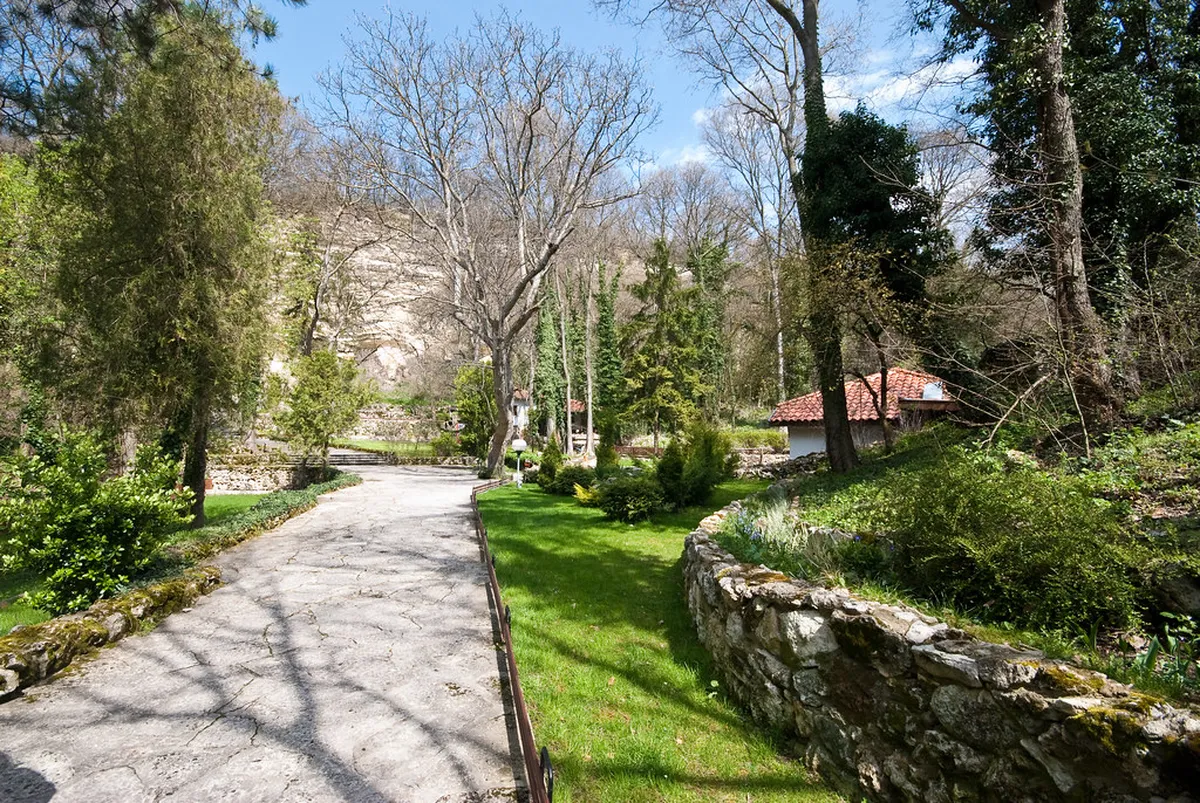
Surrounding the complex is Zlatni Pyasatsi Nature Park, Bulgaria's second-oldest and smallest nature reserve. Well-marked forest trails lead through old-growth trees and rare botanical species. The walk from the parking area to the monastery entrance is itself through parkland. Many visitors spend an extra 30–45 minutes wandering the trails before or after exploring the monastery, especially on cooler mornings.
Catacombs Hike and Nearby Attractions
About 700–800 metres northwest of the main monastery, hidden in dense shrubbery, is a group of cave formations on three levels known as the Catacombs. These predate the monastery significantly, with the earliest Christian use dating to the 4th–5th centuries. Coins and historic artifacts have been found here. The trail from the monastery is relatively flat and passable without hiking gear, though reviewer comments describe the caves as "creepy" — which is part of the appeal for many visitors.
The Basarbovo Rock Monastery in northern Bulgaria offers a useful comparison if you want to see how a still-active rock-hewn monastery operates today. Both sites share the same Hesychast tradition but have very different characters: Aladzha is abandoned and archaeological, Basarbovo is living and liturgical. Combining both on a longer Bulgaria road trip is straightforward.
Closer to Aladzha, the Festa Dolphinarium Varna Visitor Guide is about 15 minutes by car and makes for a natural family-friendly pairing. The resort strip of Golden Sands is just 4 km away for lunch or a beach break after the monastery. For more context on what to see in the region, explore the wider Bulgarian monastery circuit if historical sites are your primary interest.
The "Legends of Aladzha" Evening Light Show
One aspect of Aladzha that most travel articles gloss over is the dedicated audiovisual show that runs on the cliff face after dark. "Legends of Aladzha Monastery" projects light, sound, and narration onto the rock levels, retelling the story of Rim Papa and the monks who once inhabited the caves. The show was created as a tribute to Karel and Hermengild Škorpil, the Czech-Bulgarian archaeologist brothers who first excavated and documented the site in the late 1800s.
The spectacle runs during summer evenings, typically from June through September, beginning after sunset — around 21:00 in the peak of summer. It requires a separate ticket, priced higher than standard daytime admission, and advance booking is strongly recommended in July and August when it can sell out. The experience is fundamentally different from a daytime visit: the darkness removes all the resort-world context and the cliff becomes genuinely atmospheric.
Check the official museumvarna.com schedule at the start of the season, as exact dates and prices are confirmed each spring. If you are based in Golden Sands or Varna for at least two nights, combining a daytime visit (for the museum and catacombs hike) with the evening show on a separate day is the most complete way to experience Aladzha.
Getting to Aladzha Monastery from Varna and Golden Sands
The monastery sits 4 km from Golden Sands and 15 km from central Varna. By car from Varna, the drive takes about 20 minutes. From Sofia by car, allow roughly 5.5 hours via the Hemus Highway. A dedicated parking area sits right at the entrance — arrive before 10:00 in July and August to guarantee a space.
On foot from Golden Sands, the walk covers 3.8 km and takes 45–60 minutes. The highway section has a footpath, but the final third of the route is a narrow winding road with no pavement — this section is not recommended with young children. The forest trail through Zlatni Pyasatsi Nature Park is a more pleasant alternative and avoids the road entirely.
Taxis from Golden Sands cost roughly 10–15 BGN for the 6-minute ride. Make sure the driver uses the meter. Bulgaria does not have Uber, and you will likely need to call a taxi for the return journey or arrange a pickup time in advance. Bus number 29 from Varna stops near the entrance, but the schedule is infrequent — confirm timings at the Varna bus station before relying on it. Organised day tours from both Varna and Golden Sands typically include transport plus entry and are often the most hassle-free option for first-time visitors.
Practical Visitor Tips for 2026
Allow 1.5 to 2 hours for the monastery and museum combined. Add another hour if you plan to hike to the Catacombs. A half-day is the standard itinerary. Bring water, especially in summer — there is no café on-site, though the nearby Golden Sands resort strip is close enough for lunch.
In an emergency, dial 112 for ambulance, police, or fire services — this is the unified European number and works from any mobile on any network. For roadside breakdowns on the drive to or from Varna, the Bulgarian Automobile Club (UAB) operates a 24-hour helpline at 146. Varna's main public hospital (UMBAL Sveta Marina) has English-speaking staff and is located at 1 Hristo Smirnenski Blvd in the city center.
If you are planning where to stay, Varna city centre puts you within 20 minutes of the monastery and gives access to the Varna Archaeological Museum Visitor Guide and the Sea Garden. The Golden Sands resort area is closer to Aladzha and suits visitors whose primary goal is beach plus a cultural half-day. For a broader look at where to base yourself on the northern coast, the where to stay in Varna guide covers both options in detail.
Continue planning: Use 15 Best Bulgarian Monasteries: UNESCO & lesser-known places and Bachkovo Monastery Travel Guide: History, Icons, and Tips to connect this guide with the rest of your Bulgaria itinerary.
Frequently Asked Questions
How was Aladzha Monastery built into the rocks?
Medieval monks used hand tools to carve rooms into the soft Sarmatian Sea limestone cliffs. They utilized natural caves and expanded them to create cells, churches, and kitchens. You can see the tool marks on the walls during your visit to the site.
How much time do you need to see Aladzha Monastery?
Most visitors spend about 1.5 to 2 hours exploring the main rock-hewn levels and the on-site museum. If you plan to hike to the nearby Catacombs, allow for an additional hour. This makes it a perfect half-day excursion from Varna.
Is Aladzha Monastery open in the winter?
Yes, the monastery remains open during the winter months, though with reduced operating hours. It is usually open from 9:00 AM to 4:00 PM between November and April. Check the official tourism.Government.bg site for holiday closures.
Can you walk from Golden Sands to Aladzha Monastery?
You can certainly walk from the Golden Sands resort via a well-marked forest trail. The hike takes roughly 45 minutes and is a popular activity for nature enthusiasts. Ensure you wear sturdy walking shoes as some parts of the path are uneven.
Aladzha Monastery remains one of the most captivating historical sites on the Bulgarian Black Sea coast. Its unique architecture and spiritual atmosphere provide a deep connection to the country's medieval past. Whether you are a history buff or a nature lover, the site offers something truly special for every traveler.
Planning your visit with the right transport and timing ensures a smooth and memorable experience. Don't forget to explore the museum and the nearby catacombs to fully appreciate the scale of this ancient sanctuary. If you visit in summer, the evening light show adds an entirely different dimension to the experience.