Bulgarian Christmas Food: Traditions, Dishes, and Where to Eat in 2026
Last updated July 2026, this guide breaks down Bulgarian Christmas food into its two distinct halves. Christmas Eve, or Badni Vecher, is a meatless table shaped by 40 days of Orthodox fasting, while December 25th brings pork, dairy, and slow-cooked meat back after weeks without them. The sections below cover the rituals behind each dish, the specific foods on each table, and where travelers can find both meals in Sofia, Plovdiv, and beyond.
What Is Bulgarian Christmas Food? The Eve-vs-Day Divide
Bulgarian Christmas food is built around a hard line between two dates. From November 15 to December 24, observant households follow the Orthodox Advent fast, eating no meat, dairy, or eggs. Badni Vecher, the Christmas Eve dinner, is the ritual close of that fast: an entirely plant-based spread of bread, beans, and dried fruit. December 25th flips the rule. Meat, cheese, and cream return to the table, and the meal shifts from ritual restraint to a multi-course feast. For the broader culinary picture beyond the holiday table, see this guide to Bulgarian food traditions.
Sarmi is the meal's shape-shifter: Christmas Eve brings a meatless version with grape leaves and rice, while Christmas Day transforms it into a meat-filled dish with cabbage leaves—genuinely different recipes, not variations.
Christmas Eve (Badni Vecher): The Meatless Feast
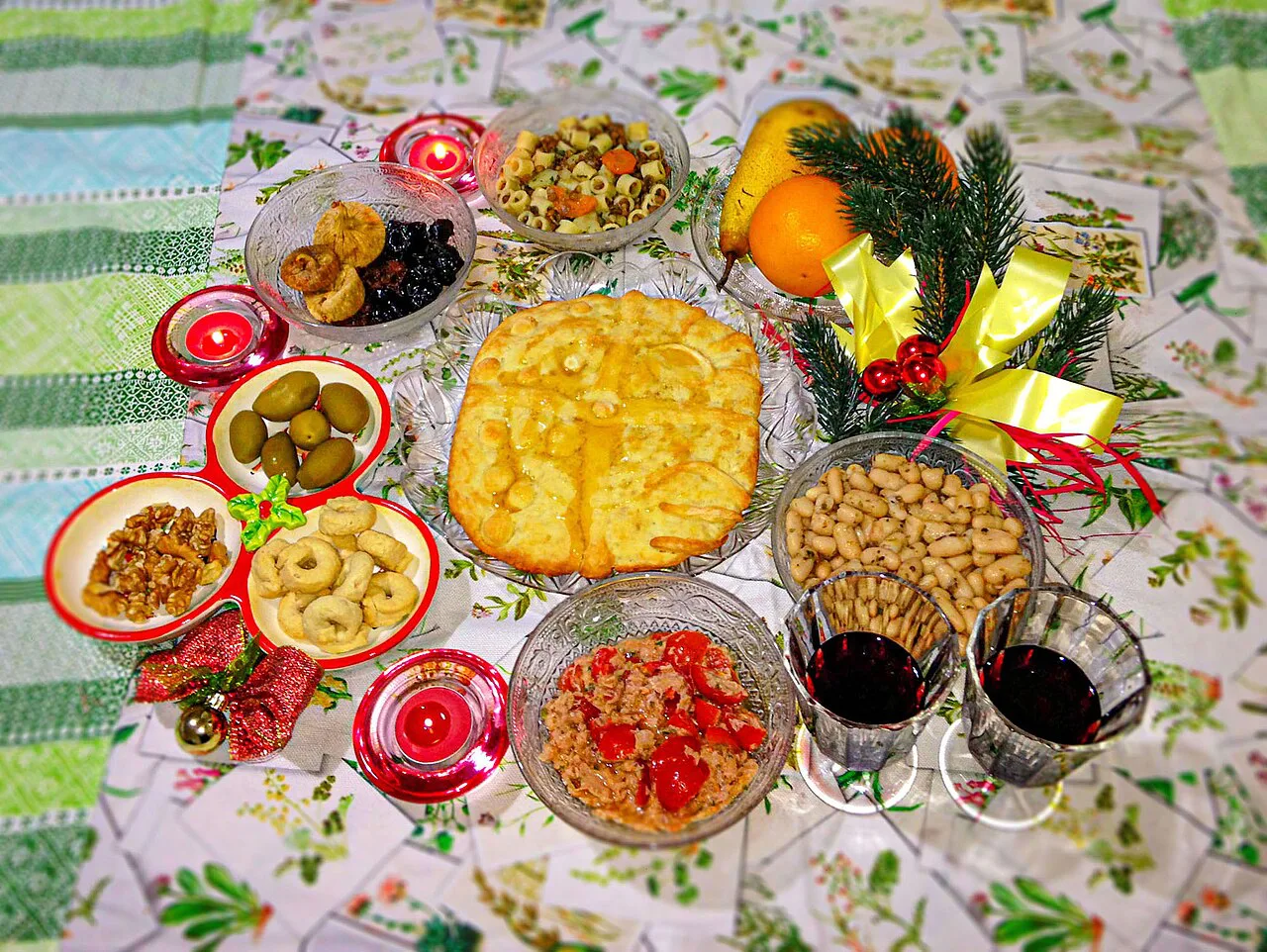
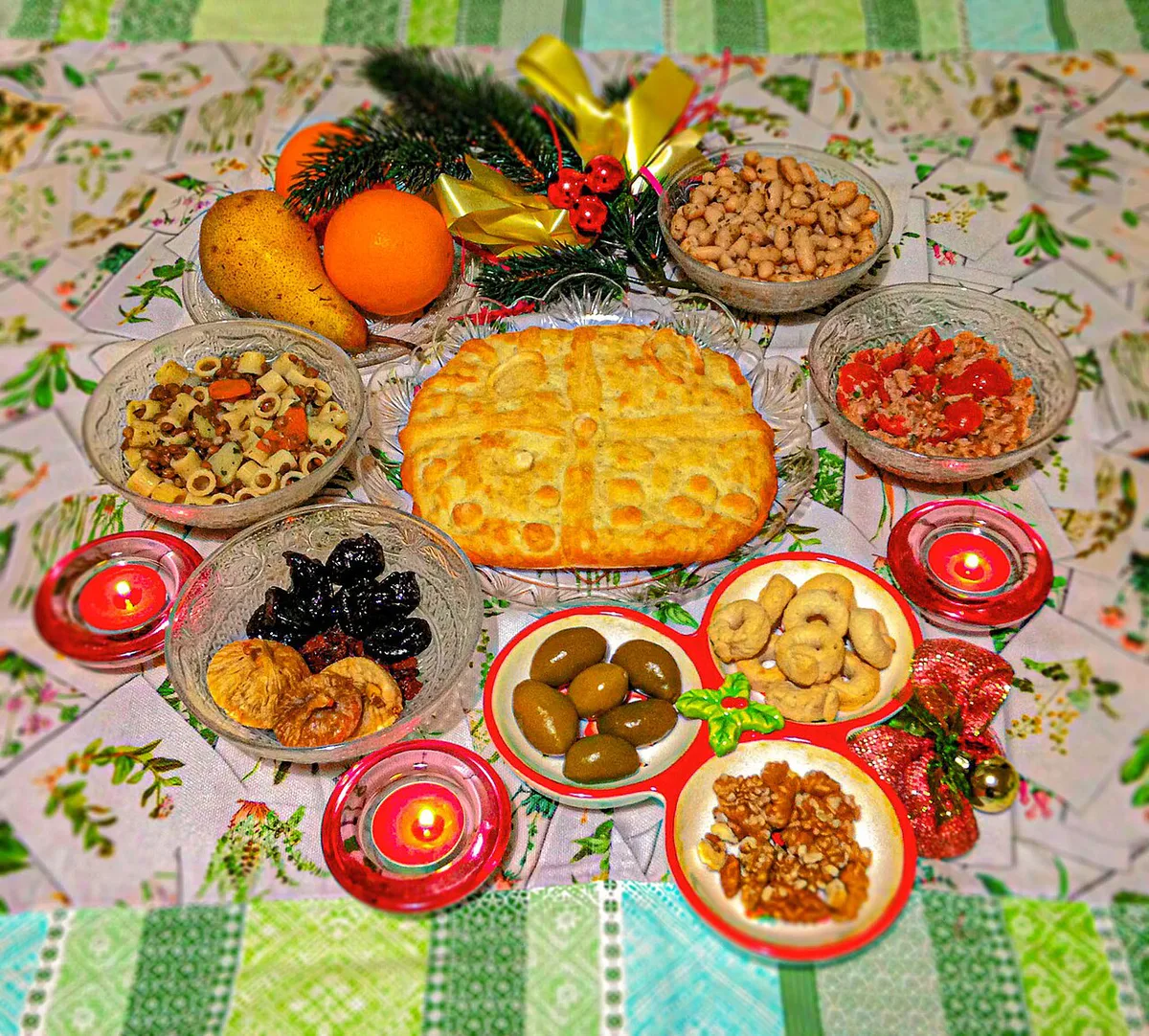
Badni Vecher, also spelled Budni Vecher, is built around ritual as much as recipe. Households set an odd number of dishes on the table, typically seven or nine, with honey, fruit, and nuts counted among them. Many families scatter straw under the tablecloth, a nod to the manger, and the head of the household carries burning incense around the table and house to clear it of bad spirits. The table is often left uncleared overnight, a gesture toward ancestors said to visit after midnight. At the center is pitka, a dairy-free bread baked with a coin hidden inside the dough, typically at 180°C for 45 to 60 minutes. The eldest at the table breaks the loaf and sets aside the first two pieces, one for the house and one for the Virgin Mary, before the rest is shared out. Whoever finds the coin in their piece is said to have health and luck for the coming year.
- Pitka: dairy-free coin bread, baked at 180°C for 45-60 minutes
- Sarmi: rice rolled in pickled grape leaves, no meat on Christmas Eve
- Bob chorba or bob yahniya: bean soup or stew, usually clay-pot cooked with djodjen and chubritza
- Stuffed peppers (pulneni chushki): filled with rice or potato instead of meat
- Oshav: a compote of dried plums, apricots, and apples simmered in water
- Boiled wheat with walnuts, a symbol of abundance for the year ahead
Christmas Day: Breaking the Fast with Meat and Dairy
December 25th is when Bulgarian Christmas food turns into a genuine feast. Dairy, eggs, and meat all return after the 40-day fast, and the table scales up from a close-family dinner to a gathering of wider relatives and friends. The centerpiece is kapama, pork and veal layered with sauerkraut, rice, red wine, cumin, black pepper, and bay leaf, then slow-cooked for hours in a clay guvetch pot. Sarmi reappears too, but the Christmas Day version swaps grape leaves for pickled cabbage leaves and adds meat to the rice filling, a contrast to the Eve version and to Greek or Turkish sarma, which more often uses fresh vine leaves rather than winter-fermented cabbage. Sauerkraut, or kiselo zele, is slow-cooked with pork in many households, since winter fermentation is central to the season's flavor.
- Kapama: pork and veal with sauerkraut, rice, and wine, slow-cooked in a clay pot
- Sarmi with cabbage leaves and meat, distinct from the meatless grape-leaf version served on Christmas Eve
- Sauerkraut (kiselo zele) slow-cooked with pork
- Pork steak, often stuffed in cabbage leaves and cooked in a clay pot
- Roasted chicken or turkey, a more modern alternative to pork and veal in some households
Festive Bulgarian Christmas Desserts
Bulgarian Christmas desserts lean on pumpkin, honey, and nuts rather than chocolate or spice cake. Tikvenik is a seasonal variation on banitsa, Bulgaria's layered phyllo pastry: where standard banitsa uses sirene cheese and egg, tikvenik fills the same phyllo sheets with grated pumpkin, sugar, and walnuts, giving it a softer, sweeter texture than the savory version. At Christmas, sealed paper fortunes are sometimes tucked between the layers, and the slice you're served is said to hint at your year ahead. Banitsa with apples follows the same dairy-free logic for anyone who prefers fruit to pumpkin. Honey and walnuts appear on their own too, torn pieces of pitka dipped in honey and sprinkled with nuts. In Bulgarian tradition, honey stands for wisdom and walnuts for fertility and abundance, and a whole, well-formed walnut is taken as a good sign for the coming year.
- Tikvenik: pumpkin banitsa with sugar and walnuts, often hiding paper fortunes
- Banitsa with apples, a dairy-free alternative to the pumpkin version
- Honey and walnuts, eaten with torn pieces of pitka
Bulgarian Christmas Food: Eve vs Day at a Glance
The clearest way to understand Bulgarian Christmas food is to compare the two tables side by side. Christmas Eve is governed by fasting rules; Christmas Day is not.
Pitka's hidden coin carries dual significance: a traditional symbol of health and luck, but also a choking hazard; slicing carefully or letting the host distribute the bread is the safe approach.
| Aspect | Christmas Eve (Badni Vecher) | Christmas Day |
|---|---|---|
| Number of dishes | Odd number, typically 7 or 9 | No ritual count |
| Dietary rule | No meat, dairy, or eggs | Meat and dairy allowed |
| Key proteins | Beans, walnuts, rice | Pork, veal, chicken |
| Signature dish | Sarmi with grape leaves | Kapama |
| Key spices | Chubritza, djodjen | Cumin, black pepper, bay leaf |
| Cooking vessel | Clay pot (guvetch) | Clay pot (guvetch) |
Where to Eat Bulgarian Christmas Food as a Traveler
Most guides to Bulgarian Christmas food assume you're cooking at home; travelers need a different plan. Traditional mehanas (taverns) in Sofia, Plovdiv, and Bansko often run set festive menus around the holidays, covering both the Eve fasting spread and the Christmas Day feast on separate dates. Book ahead for December 24 specifically, since many restaurants close that evening so staff can spend Badni Vecher with their own families; December 25th sees more venues open for the meat-heavy feast. Christmas markets in city centers are a lower-commitment option, with stalls selling grilled skara meats and mulled wine (greyano vino) alongside pitka and pastries; the grilled-meat style overlaps with what you'll find covered in this Bulgarian street food guide. If you'd rather cook, bob chorba is easy to recreate at home; see this Bulgarian bob chorba recipe for the clay-pot method. For souvenirs, chubritza (summer savory), djodjen (spearmint), and local honey travel well; this guide to Bulgarian spices explains how each is used in the dishes above.
- Mehanas in Sofia, Plovdiv, and Bansko: set festive menus, book ahead for December 24 and 25
- Christmas markets: grilled skara meats, mulled wine, pitka, and pastries
- Grocery souvenirs: chubritza, djodjen, and jarred local honey
Mistakes to Avoid Around Bulgarian Christmas Food
A few missteps are common with travelers unfamiliar with the Eve-and-Day split. Expecting meat or dairy at a Badni Vecher dinner is a real misread of the occasion in traditional households; the fast ends at midnight, not before. December 24th itself is largely a family evening, not a night for casual restaurant bookings, so reserve well in advance or plan around December 25th instead. If you're served pitka, slice carefully or let the host handle it; the hidden coin is a choking risk as much as a luck ritual. Finally, don't assume sarmi is one fixed recipe: the grape-leaf, meatless version on Christmas Eve and the cabbage-leaf, meat version on Christmas Day are treated as genuinely different dishes, not the same dish twice.
- Expecting meat or dairy on Christmas Eve in a traditional household
- Booking a restaurant for December 24th without checking ahead, since many close for family dinners
- Biting into pitka without checking for the hidden coin
- Assuming Christmas Eve and Christmas Day sarmi are the same recipe
Koledari: Carolers and Food Gifts After Midnight
Another food-linked tradition appears after the Christmas Eve table, when groups of male carolers called Koledari visit homes. They usually go out from midnight on December 24 into Christmas morning, singing wishes for health, fertility, and a strong harvest.
The host welcomes them with small gifts rather than a formal meal. In villages, this can include kravai, round ritual breads made for the carolers, along with walnuts, dried fruit, wine, or coins. The breads are often strung on the leader's staff, so the ritual is visible as the group moves between houses.
Travelers are more likely to see Koledari at folklore programs, museum events, or Christmas performances than in private homes. Look for listings in Sofia, Plovdiv, Koprivshtitsa, or open-air ethnographic museums, where the songs and food gifts are presented for visitors.
Further reading: Bulgaria on Wikivoyage · Bulgaria on Wikipedia
Continue planning: Use 15 Must-Try Bulgarian Foods: A Culinary Travel Guide and The Best Banitsa Recipe: Authentic Bulgarian Cheese Pie Guide to connect this guide with the rest of your Bulgaria itinerary.
Frequently Asked Questions
What is the traditional Bulgarian Christmas Eve meal called?
It's called Badni Vecher, also spelled Budni Vecher. It's the meatless dinner eaten on the evening of December 24, closing out the 40-day Orthodox fast.
Why is Bulgarian Christmas Eve food meat-free?
Christmas Eve falls at the end of a 40-day Orthodox fast that runs from November 15 to December 24. Households following the fast avoid meat, dairy, and eggs until midnight, so the Badni Vecher table is entirely plant-based.
What is kapama and when is it eaten?
Kapama is a slow-cooked dish of pork, veal, sauerkraut, rice, and wine, made in a clay guvetch pot. It's a Christmas Day dish, eaten once the fast ends and meat returns to the table.
What's hidden inside Bulgarian pitka bread at Christmas?
A coin is baked into the dough. The eldest person at the table breaks the bread and sets aside the first pieces before serving the rest; finding the coin in your piece is considered a sign of luck.
Can travelers find Bulgarian Christmas food in restaurants?
Yes, mehanas in cities like Sofia, Plovdiv, and Bansko often run festive menus around the holidays. Reserve ahead for December 24 specifically, since many restaurants close that evening for family dinners, and expect more availability on December 25th.
For connected planning, compare practical Bulgaria travel guide with Bulgaria seasonal planning guide before finalizing your route.