Plovdiv Free Walking Tour 2026: 6 Things to Know Before You Go
The Plovdiv free walking tour is the quickest way to understand why this city feels so different from Sofia. It is informal, history-heavy, and practical for a first day because the route connects the main pedestrian street, Roman ruins, Old Town, and Kapana in one walk. Travelers who want a slower pace or a custom route should compare it with a private Plovdiv walking tour.
The tour works on a tips-only model, so you join without paying a fixed ticket price and tip the guide at the end. Most visitors give 10 to 20 BGN per person in 2026, with 15 BGN feeling fair for a good two-hour tour. Check the Free Plovdiv Tour Official Site before you go because seasonal departures can change.
Use this tour as an orientation walk, not as the only thing you do in Plovdiv. It helps you decide which museums, viewpoints, and neighborhoods deserve more time later. For a wider city plan, pair it with the main Best Things to Do in Plovdiv guide.
A Brief Summary of the Free Plovdiv Tour
The Free Plovdiv Tour is a nonprofit-style city walk led by local guides in English. It introduces Plovdiv as one of Europe's oldest continuously inhabited cities, moving from the ancient foundations of Philippopolis to the Revival-period houses and the modern creative quarter. The tone is educational, but it is not a dry lecture.
The "free" part means there is no mandatory ticket at the start. The guide earns money from voluntary tips, so bring small Bulgarian Lev notes rather than assuming card payment will be easy. A fair 2026 tip is 10 BGN if your budget is tight, 15 BGN for a strong standard tour, and 20 BGN or more if the guide handled a small group or gave excellent local advice.
The walk normally takes about two hours and stays in the historic center. It is best for first-time visitors, solo travelers, budget travelers, and anyone arriving from Sofia for a short stay. It is less ideal if you need step-free access, frequent breaks, or a route designed around children.
To picture the Old Town leg before you arrive, this narrated English walk through Plovdiv's cobbled streets shows the kind of scenery the route covers:
Meeting Point and Arrival Logistics
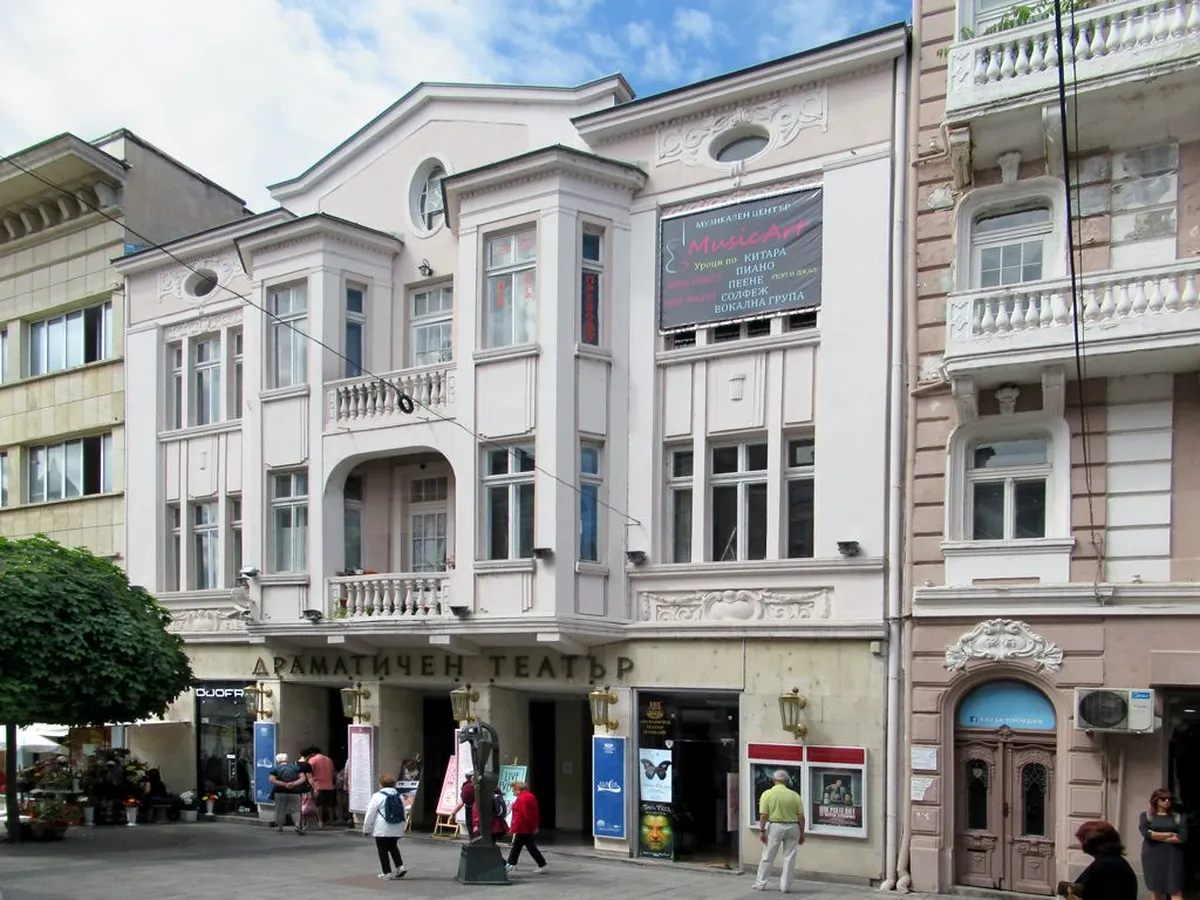
The meeting point is Stefan Stambolov Square, directly by the Municipality of Plovdiv building on the main pedestrian street. Look for the central fountain, the large Plovdiv sign, and the guide holding tour branding. This is a busy civic square, so arrive 10 to 15 minutes early rather than searching for the group at the exact departure time.
If you are coming from Plovdiv Central Railway Station or the South Bus Station, bus lines 7, 20, and 26 are the simplest public transport options. A single ticket is usually 1 BGN and is bought on board. Get off near the Trimontium Hotel or the central pedestrian street, then walk a few minutes to the Municipality building.
A taxi from the railway station to Stefan Stambolov Square is usually a short ride, but confirm the meter is running and that the car displays prices. Walking from the station takes about 25 minutes and is reasonable with light luggage. If you are already staying in one of the popular central neighborhoods, do not overthink transport; the square is near the main shopping street and easy to find on foot.
- Search your map for "Free Plovdiv Tour" or "Municipality of Plovdiv" rather than only "City Hall."
- Carry cash in small notes because tipping at the end is smoother in Bulgarian Lev.
- Use the toilet before arrival, as the standard route does not include a formal bathroom stop.
Key Highlights: From Roman Ruins to Kapana
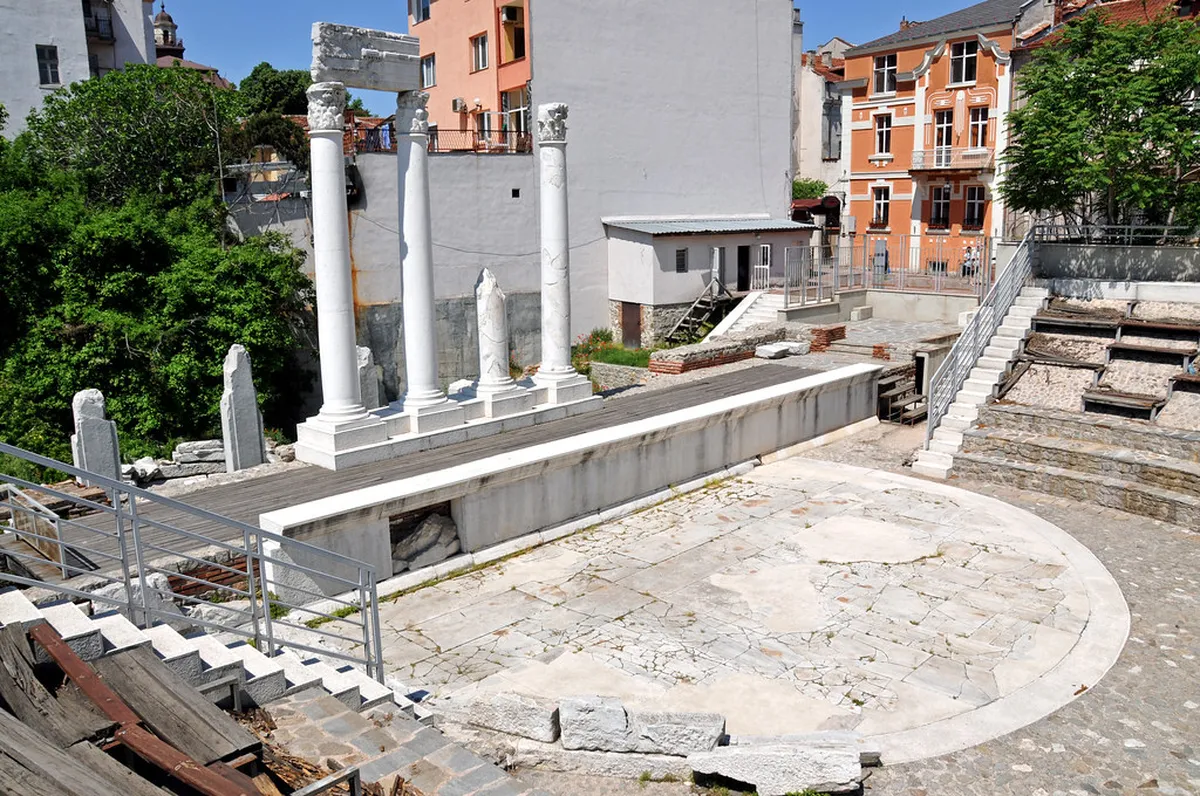
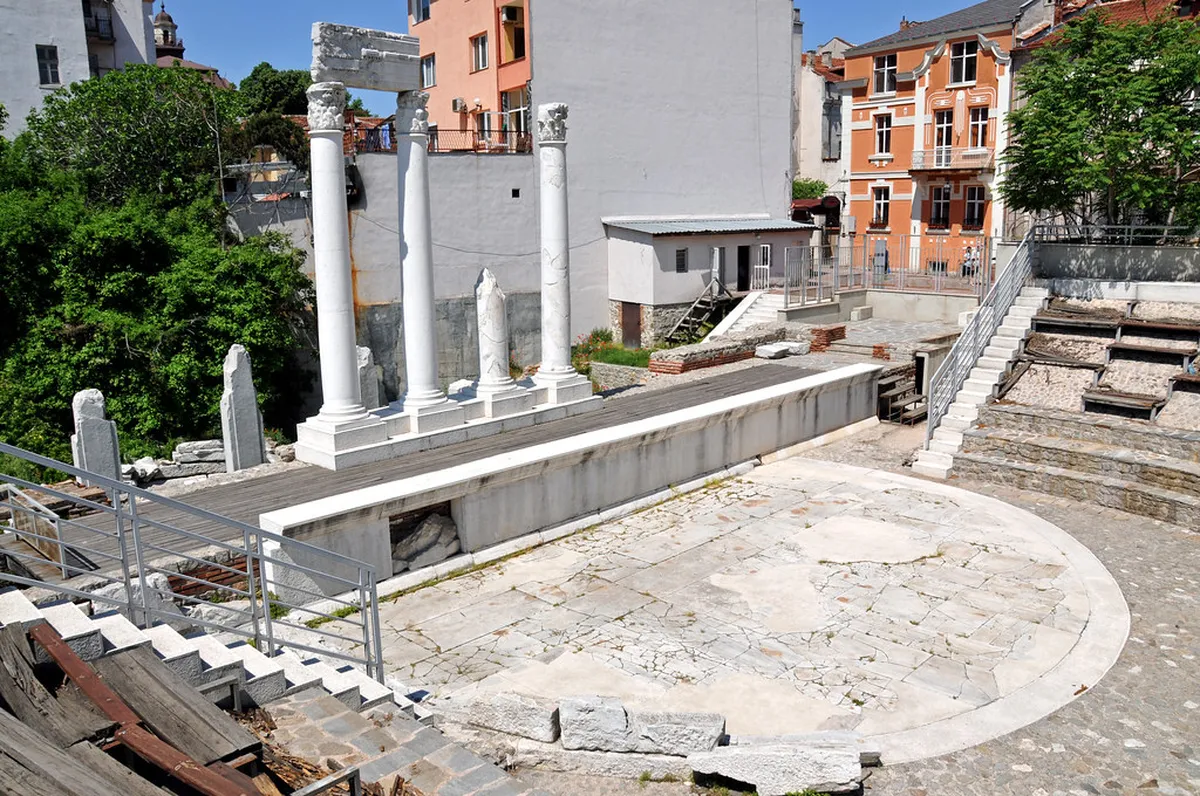
The strongest part of the route is how quickly it shows Plovdiv's layers. Near the pedestrian street, the Roman Stadium reveals the ancient city sitting below modern shops and cafes. Guides usually explain why only part of the stadium is visible today and how Roman Philippopolis shaped the city plan.
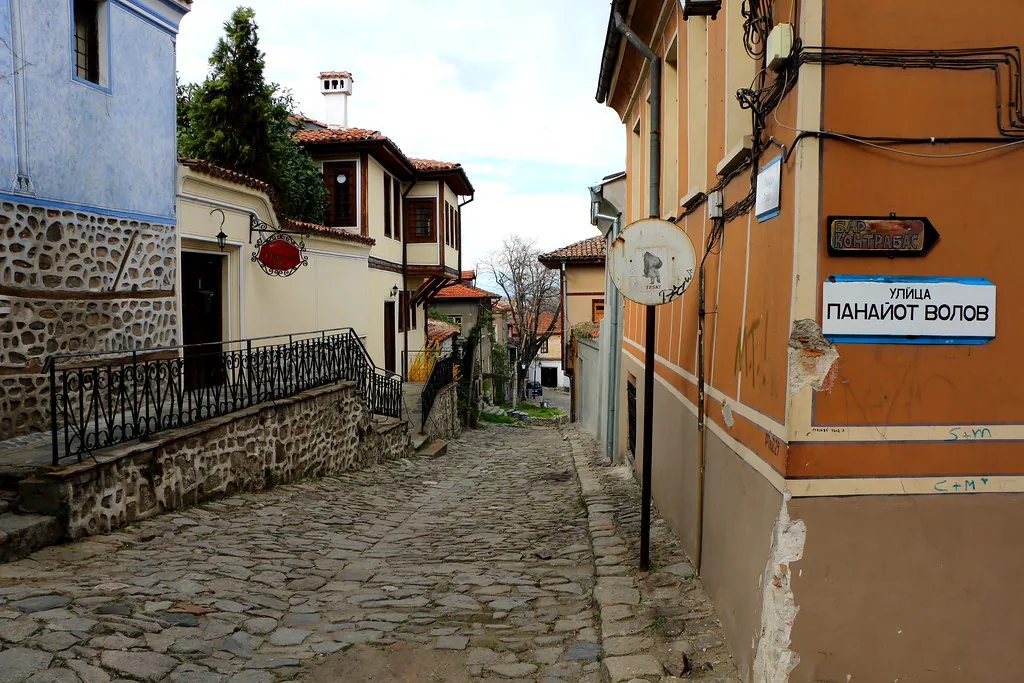
The walk then usually moves toward the historic slopes and the Revival-period houses of Old Town Plovdiv. Expect cobblestones, steep lanes, colorful wooden facades, and stories about merchants, churches, gates, and the city's Ottoman and Bulgarian National Revival periods. The Old Town architecture and heritage represent centuries of cultural layers worth exploring after the tour, but it gives enough context to return later with a clearer plan.
Kapana district gives the route its modern contrast. The neighborhood's name means "the trap," a reference to the tight street grid where craft workshops once clustered. Today it is one of the best places to return after the tour for coffee, street art, casual food, and craft beer.
Some routes also point out city symbols such as the coat of arms, local sayings, the hills, and the Maritza River area. Exact stops can vary with weather, group size, and guide preference. Treat the listed highlights as the usual core, not a guaranteed museum-style checklist.
The Route: An At-a-Glance Itinerary
Because the Free Plovdiv Tour has no fixed printed map, most people search for the route order before they arrive. The walk is roughly two kilometers and two hours, and although guides adjust it day to day, the core sequence stays the same. Use the table below as a mental map of where the group typically heads after leaving Stefan Stambolov Square.
| Meeting point | Stefan Stambolov Square, by the Municipality building |
| Typical route order | Pedestrian street → Roman Stadium → Old Town slopes → Kapana |
| Distance & duration | About 2 km, roughly 2 hours |
| Language | English only, led by local guides |
| Cost | Free to join; tip 10–20 BGN per person (15 BGN typical) |
| Booking | Walk up as an individual; groups of 10+ email ahead |
Read the order top to bottom and you have the shape of the walk: it opens on flat ground in the modern center, dips below street level to the ancient stadium, climbs into the Revival-era Old Town, and finishes downhill in the creative quarter. That arc is deliberate, taking you through Plovdiv's Roman, Ottoman, Revival, and contemporary layers in the order the city itself grew.
Self-Guided vs. the Free Guided Tour
If your visit falls on a day the tour does not run, or you simply prefer to move at your own speed, the same route works well self-guided. The advantage of the official walk is the guide's stories and local recommendations; the advantage of going alone is full control over pace, photo stops, and how long you linger inside the Old Town houses.
To follow the route yourself, start at Stefan Stambolov Square, walk the Knyaz Alexander I pedestrian street to the Roman Stadium, climb into Old Town Plovdiv for the Revival houses, then descend into Kapana to finish. Each leg is a short walk, so the only real planning is leaving time to enter the paid sights the group only passes.
💡 Good to know: The guided tour is free, but you still cannot enter most paid sights with the group. If your priority is going inside the Roman Stadium viewing area, the Ethnographic Museum, or a Revival house, budget a self-guided second loop afterward rather than expecting the walk to cover entry.
Practical Tips: Weather, Tipping, and Comfort
The two most common choices are the late morning tour and the early evening tour. In spring and autumn, the 11:00 option is convenient because you can use the rest of the day for the Roman Theater, museums, or a long lunch. In July and August, the 18:00 tour is usually more comfortable because Plovdiv's summer heat can make the Old Town climb feel much harder.
The evening slot also gives better light for photos around the ruins and Revival houses. The tradeoff is that restaurants in Kapana get busier afterward, especially on Friday and Saturday. If photography matters, use the evening tour; if you want the guide's tips before planning your day, choose the morning tour.
Wear real walking shoes, not flip-flops. The Old Town stones are uneven, polished in places, and tiring after rain. Bring a water bottle, sunglasses, and a hat in summer, and keep a light layer in winter because exposed viewpoints can feel windy.
If heat gives you headaches, buy water before the tour and remember that pharmacies are common along Knyaz Alexander I, the main pedestrian street. Ask for ibuprofen or paracetamol by the active ingredient if brand names do not translate. Do not rely on the guide to stop for medication or shade, because the group needs to keep moving.
Aylyak and the City's Pace
One detail that makes the Free Plovdiv Tour more than a landmarks walk is the local idea of aylyak. The word is difficult to translate exactly, but it describes a relaxed, unhurried way of living. Plovdiv locals often use it with pride, especially when comparing the city with faster, busier Sofia.
You feel aylyak in the way the route moves from ancient ruins to cafe streets without making the city feel like a checklist. Kapana is the easiest place to see it: people linger over coffee, street art changes slowly, and the best experiences often happen after you stop rushing. The tour works best if you leave time afterward for one of the nearby local cafes instead of booking your next activity immediately. The Old Town's historical character is best appreciated when you slow down and absorb the atmosphere at your own pace.
This is also why a day trip can feel slightly too short. You can see the main sights in a few hours, but Plovdiv's character appears when the tour crowd disperses and the old streets get quieter. If your schedule allows it, use a Plovdiv 1-day itinerary as the minimum plan and stay overnight if you want the city at its best.
Is the Plovdiv Free Walking Tour Worth It?
Verdict: yes, the Plovdiv free walking tour is worth it for most first-time visitors. It gives you enough history to understand the Roman, Ottoman, Revival, socialist, and modern layers without requiring a museum ticket. It is especially useful early in your stay because the guide's local recommendations can shape the rest of your trip.
The main limitation is pace. Large groups move slowly at the start but can feel rushed at individual stops, and you will not have time to enter paid sights properly. If you already know Plovdiv well or want detailed photography time, a self-guided route or private guide will suit you better.
Mobility is the biggest practical concern. The route can involve hills, cobblestones, standing in the sun, and few seated breaks. Visitors with knee problems, strollers, or limited stamina should ask the organizers about the day's route before joining.
- Join if you want a low-cost orientation, local stories, and a social start to the city.
- Skip it if you need step-free access, dislike group tours, or prefer to spend longer inside museums.
- Tip in cash at the end, even though the tour is free to join.
Beyond the Tour: Other Must-See Plovdiv Attractions
After the tour, return to the Ancient Theater for a proper visit if the route only passed nearby. The Roman Theater is one of Plovdiv's defining sights, and the views over the city are worth slowing down for. Check opening hours locally because concerts and seasonal schedules can affect access.
Old Town deserves a second pass without the group. Visit the Ethnographic Museum, look for quieter Revival houses, and give yourself time for the steep lanes. Kapana also works better after the tour, when you can choose a cafe or bar instead of only walking through it.
If Plovdiv is your base for more than one day, add a monastery, wine area, or mountain village from the best Day Trips from Plovdiv: Top 10 Escapes (2026 Guide). The free walking tour explains the city center, but the surrounding region shows why Plovdiv works so well as a slower Bulgaria base. That combination is stronger than treating Plovdiv as a quick stop between Sofia and the coast.
Doing the Free Walking Tour as a Day Trip from Sofia
Many visitors do the Free Plovdiv Tour as a day trip from Sofia, and the timing lines up well with the 11:00 AM departure. Plovdiv sits roughly 90 minutes to two hours from Sofia by bus or train, so an early start gets you to Stefan Stambolov Square comfortably before the walk begins. The morning slot is the better choice for day-trippers because it leaves the afternoon free for the Roman Theater, museums, and Kapana before you head back.
The simplest plan is a frequent intercity bus or train from Sofia in the morning, the orientation walk on arrival, then a return service in the early evening. Our Plovdiv to Sofia train and bus guide covers timings and fares in both directions, and the dedicated Plovdiv Day Trip From Sofia: A Complete 2026 Guide itinerary slots the free tour into a realistic single-day plan.
💡 Good to know: If you are coming from Sofia, double-check the day pattern first. From late March 2026 the main free tour shifts to Monday and Saturday only, so a mid-week Sofia day trip could arrive to find the standard walk not running that day. Confirm the schedule on the official site before you buy your bus or train ticket.
Honestly, though, a day trip only scratches the surface. Plovdiv's slower character shows itself once the tour crowd disperses, so if your schedule allows, treat the free walking tour as the start of an overnight stay rather than a rushed round trip from the capital.
Tour Schedule, Times, and Seasonal Changes
The Free Plovdiv Tour runs every day at 11:00 AM throughout most of the year. The operator, the 365 Association, has been running the tour since 2012 under approval from the Tourist Service Municipal Company at Plovdiv Municipality. The schedule is consistent enough to rely on for day-trip planning, but it is worth checking the official site around public holidays or major Plovdiv events, when departures occasionally shift.
From late March onward, the schedule typically adjusts to seasonal demand. In 2026, the main free tour moves to Monday and Saturday at 11:00 AM from late March, with Sunday slots taken by the specialty Graffiti Tour. If you are visiting mid-week outside the peak summer months, confirm the current day pattern on the official site or by email at groups@365association.org before building your plans around the morning slot.
In summer (June through August), the evening slot is sometimes introduced at 18:00 on select days. This is not always guaranteed — check the current listing rather than assuming it runs every evening. The evening departure fills faster in peak season, so arriving 15 minutes early is more important than ever in July and August.
- Standard schedule (most of the year): daily at 11:00 AM.
- Late March–October seasonal split: main tour runs Monday and Saturday at 11:00 AM; Sunday slot used for the Graffiti Tour.
- Summer evenings: 18:00 slot available on select days — confirm before visiting.
- Groups of 10 or more should email in advance; individuals can walk up without booking.
Specialty Tours: Graffiti, Socialist Architecture, and Beyond
The standard free walking tour is not the only option run by the 365 Association. Two specialty tours cover angles that the main route skips entirely, and they are worth knowing about if you are spending more than one day in Plovdiv or have a specific interest in the city's recent history or street art scene.
The Graffiti Tour focuses on Plovdiv's public art and murals, tracing street art through Kapana and other neighborhoods that have developed a strong visual identity since Plovdiv was named European Capital of Culture in 2019. It is particularly good for travelers interested in contemporary culture, and it pairs well with a late-afternoon return to Kapana for a meal or drink. From late March 2026, this tour runs on Sundays at 11:00 AM.
The Socialist Architecture Tour takes a different angle, examining Plovdiv's communist-era buildings, public spaces, and monuments. It is a more niche interest but genuinely interesting for anyone who wants to understand how the city changed between the Second World War and 1989. This tour also runs from late March 2026, on Mondays and Saturdays at 11:00 AM alongside the main tour — check the official site to confirm which guide leads which route on a given day.
Both specialty tours follow the same tips-only payment model as the main walk. If you are in Plovdiv for a weekend, one strategy is to take the main free tour on arrival for orientation, then join one of the specialty tours on your second morning. That combination gives far more depth than a single walk and costs only what you choose to tip. The 12 Best Free Things to Do in Plovdiv guide lists other no-cost options to fill the rest of your stay.
Plovdiv Walking Tour Route: What You'll See in 2026
The Free Plovdiv Tour covers roughly two kilometres and four distinct layers of the city, each one feeding into the next. Knowing the stop sequence in advance helps you pace yourself, decide where to return later, and understand why the route is ordered the way it is.
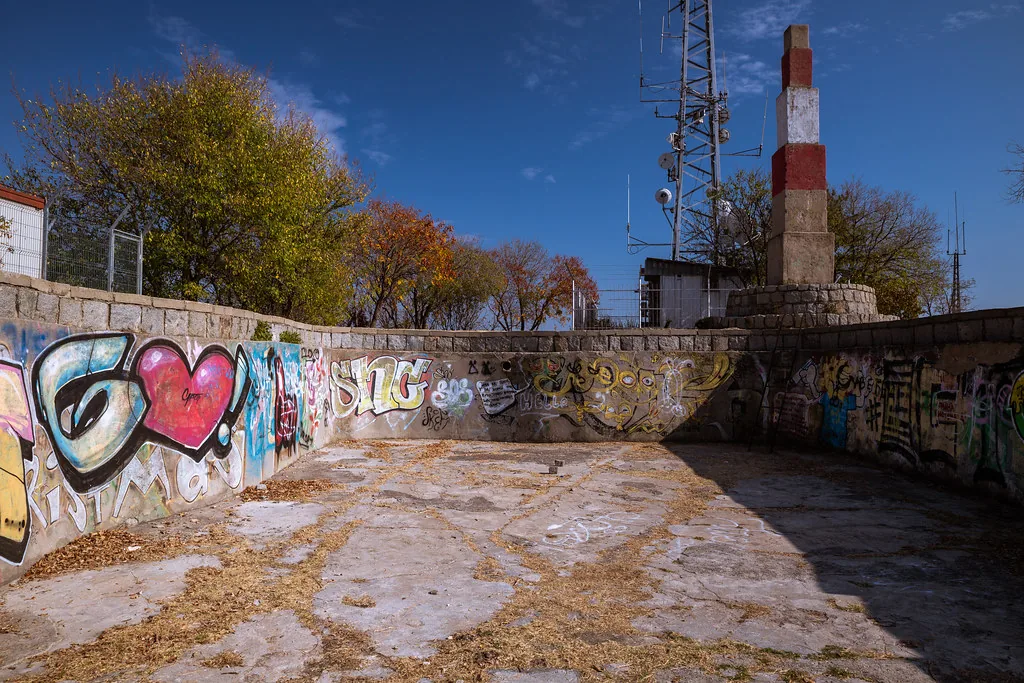
- Stefan Stambolov Square (start). The walk begins here, in front of the Municipality building on the main pedestrian street. The guide usually opens with a brief overview of Plovdiv as one of Europe's oldest continuously inhabited cities before the group sets off along Knyaz Alexander I.
- Knyaz Alexander I pedestrian street. The flat opening stretch passes cafes, shops, and street performers. It also gives the guide space to introduce the city's layered history before the terrain gets more demanding.
- Roman Stadium. The route dips toward the underground Roman Stadium, where the ancient city of Philippopolis lies beneath the modern pavement. Guides typically explain how the oval track was integrated into the later Ottoman street plan, leaving only one curved end visible today. This stop rewards visitors who plan a proper visit to the viewing area afterward.
- Old Town slopes. The group climbs into the Revival-period district, passing colourful wooden-bay houses, cobbled lanes, churches, and old craft gates. The guide covers the Ottoman and Bulgarian National Revival periods here, and this leg is the most photogenic stretch of the walk.
- Kapana Creative District Visitor Guide (finish). The route descends into Kapana, the former craftsmen's quarter whose tight grid gave it the nickname "the trap." Today it holds independent cafes, street art, and craft-beer bars. This is the natural place to linger after the tour ends and the guide collects tips.
The arc is deliberate: flat modern centre, then ancient underground, then Revival hilltop, then contemporary creative quarter. Each leg is walkable in a short time, and the whole sequence takes about two hours. If you want to see what to do after each stop, the Old Town Plovdiv guide and the Kapana district page cover both areas in more detail for a self-guided follow-up loop.
Continue planning: Use Best Things to Do in Plovdiv and Ancient Theatre Plovdiv 2026: Tickets, Events & History to connect this guide with the rest of your Bulgaria itinerary.
Frequently Asked Questions
Where does the free Plovdiv walking tour start?
The tour starts at Stefan Stambolov Square in front of the Municipality building. Look for the guides near the large Plovdiv letters. It is located right on the main pedestrian street.
How much should I tip for a free walking tour in Bulgaria?
A tip of 10 to 20 BGN per person is considered fair and standard. This usually depends on your budget and how much you enjoyed the guide. Most travelers tip around 15 BGN.
Is the Plovdiv free walking tour available in English?
Yes, the tours are conducted exclusively in English by local guides. They are very easy to understand for most international visitors. No other languages are currently offered for the free version.
How long does the Plovdiv free walking tour take?
The tour typically lasts about two hours from start to finish. It covers roughly two kilometers of walking through the center and Old Town. Wear comfortable shoes for the uneven cobblestones.
Do I need to book the Plovdiv free walking tour in advance?
No booking is required for individuals or small groups under ten people. You can simply show up at the meeting point before the start time. Large groups should contact the organizers in advance.
Can I do the Plovdiv walking tour route on my own?
Yes. The same route works well self-guided: start at Stefan Stambolov Square, walk the pedestrian street to the Roman Stadium, climb into Old Town, then finish in Kapana. You miss the guide's stories, but you control the pace and can stop to enter paid sights the group only passes.
What days does the Plovdiv free walking tour run in 2026?
For most of the year it runs daily at 11:00 AM. From late March 2026 the main free tour shifts to Mondays and Saturdays at 11:00 AM, with the Graffiti Tour taking the Sunday slot. Summer sometimes adds an 18:00 evening departure on select days, so confirm the current pattern on the official site.
The Plovdiv free walking tour is a must-do for any cultural traveler in Bulgaria. It bridges the gap between ancient history and modern life perfectly. I left the tour feeling much more connected to the city's unique spirit. The guides provide a level of insight you cannot find in any book.
Make sure to bring your camera and some comfortable shoes for the journey. You will walk away with great photos and a deeper appreciation for Plovdiv. Enjoy your time exploring one of Europe's oldest continuously inhabited cities. It is an experience that truly defines the magic of visiting Bulgaria.