9 Best Spots for Traditional Bulgarian Food in Plovdiv (2026)
During my fourth visit to Bulgaria last autumn, I realized that Plovdiv's food scene is the country's best-kept secret. While Sofia offers cosmopolitan variety, this ancient city preserves the heart of Balkan flavors in its cozy mehanas. The local obsession with fresh produce and slow-cooked meats makes every meal feel like a home-cooked celebration. This guide was last refreshed in January 2026 to reflect the latest menu prices and seasonal opening hours.
Finding authentic traditional 15 Must-Try Bulgarian Foods in Plovdiv requires moving beyond the central pedestrian street. I have spent weeks exploring the cobblestone alleys of the Old Town and the trendy corners of Kapana. From sizzling clay pots to the sharp tang of local yogurt, the city offers a diverse culinary landscape. Our editors have vetted these selections to ensure you experience true Bulgarian hospitality without the tourist traps.
Essential Traditional Bulgarian Dishes to Order
Traditional Bulgarian food in Plovdiv is easiest to understand if you start with the table rhythm. A local meal usually begins with Shopska Salad: A Guide to Bulgaria's National Dish, rakia, bread, and a few shared warm appetizers before the heavier meat dishes arrive. The flavor base is simple but bold: sirene cheese, roasted peppers, tomatoes, paprika, grilled meat, yogurt, and slow-cooked vegetables.
First-timers should order Shopska salad, Bulgarian moussaka, kavarma, and something cooked on a sach, the hot iron or clay plate used for sizzling meat and vegetables. Roden Krai platters are built for groups and usually combine grilled kebapche, kyufte, pork, chicken, fries, Authentic Lyutenitsa Recipe, and pickles. If you see Shopski popcorn on a menu, expect bite-size fried cheese rather than corn; it is salty, rich, and best shared with beer.
For a wider city dining plan, pair this guide with the 15 Best Restaurants in Plovdiv and the broader Best Things to Do in Plovdiv pillar. This page focuses on places where Bulgarian dishes are the reason to go, not just one section of a mixed international menu. Prices below use 2026 ranges in euros because many travelers now compare Bulgarian dining costs against the rest of the EU.
For a sense of what eating through Kapana actually looks like, this street-food walkthrough captures the district's casual food scene:
The Old Town: A Hub for Traditional Mehanas
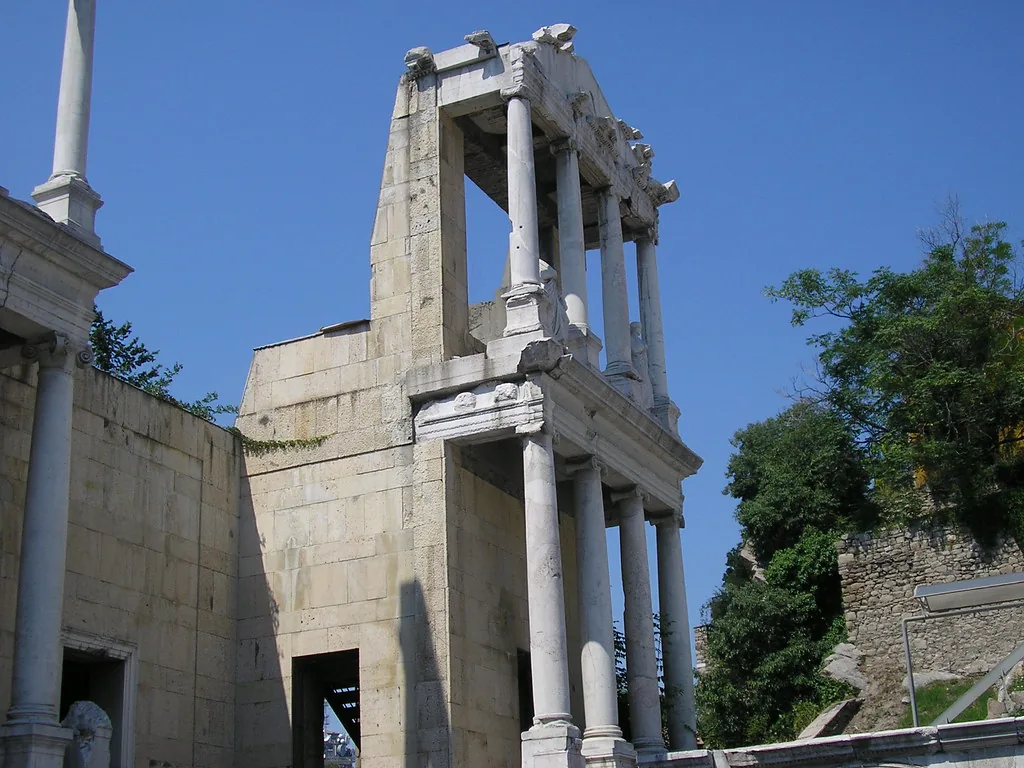
The Plovdiv Old Town Guide: Architecture, History, and Travel Tips matters for food because the setting changes the meal. Traditional mehanas work best in courtyards, stone houses, and timber-framed rooms where dinner feels slow and social. In this part of the city, the strongest choices are not always the most visible restaurants beside the Roman Theatre.
Old Town dining is best for visitors who want atmosphere with their meal rather than the cheapest plate in Plovdiv. Expect mains around EUR 8-15, shared platters around EUR 18-35, and house wine or local beer at lower prices than Western Europe. Go before sunset if you want a terrace table, especially from May to September when tour groups and weekend visitors fill the hill quickly.
Rahat Tepe is the easiest Old Town stop to combine with sightseeing. It is not the most refined traditional kitchen in the city, but it works well for grilled sausages, salads, beer, and a view across Plovdiv's rooftops. Treat it as a relaxed lunch or sunset snack rather than a formal dinner.
Megdana: Authentic Cuisine and Folklore Performances
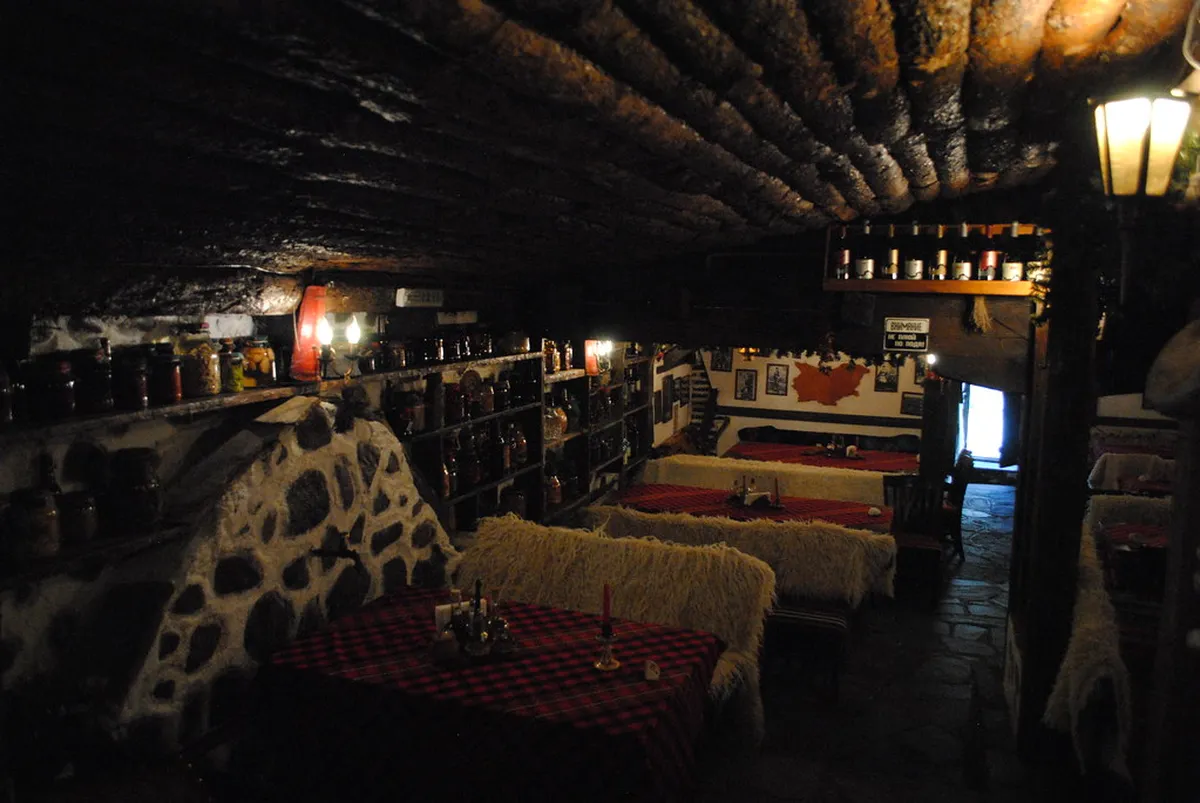
Megdana is the most complete traditional Bulgarian night out in Plovdiv. It sits south of the center near the bus and railway stations, so the location is less romantic than Old Town, but the room delivers the mehana experience many travelers picture: long tables, live music, Bulgarian dance, heavy dishes, and a crowd that is often more local than tourist. The folklore show usually starts around 21:00.
This is the place to book if you want dinner to become the evening plan. Order Shopska salad, grilled meats, kavarma, and a shared platter if your group is hungry. Dinner commonly lands around EUR 15-30 per person before extra drinks, depending on how much you share.
The practical trick is to book early and confirm directly. Competitor reports and recent traveler notes both mention that email responses can be inconsistent, so visit in person earlier in the day if you are already near the station, or call instead of relying only on a form. Ask for a table with a clear view of the dance floor if the show is the reason you are going.
💡 Good to know: The folklore show at Megdana usually starts around 21:00, so arrive by 19:30-20:00 to eat first and claim a table with a clear line to the dance floor. Because email replies can be inconsistent, confirm by phone or in person rather than relying on a booking form alone.
Yuzhen Polah: Roden Krai Platters and Local Favorites
Yuzhen Polah is a strong choice when you want Bulgarian food without a performance or a tourist-heavy setting. The restaurants are spacious, family-friendly, and useful for mixed groups because the menu covers Bulgarian, Balkan, and familiar international dishes. Locals often use it for birthdays and larger meals, which tells you more than any decorative folk interior can.
The two orders that matter are Shopski popcorn and the Roden Krai platter. Shopski popcorn gives you fried sirene cheese in small, crisp pieces, while the Roden Krai platter is a generous spread of grilled meats, fries, dips, and pickles. It is better value for three or four people than ordering separate mains, with most shared platters falling roughly between EUR 20-35 in 2026.
Yuzhen Polah is also a good fallback when Old Town restaurants are full. Service is usually more straightforward, the gardens are comfortable in warm weather, and children have more room than they would in a compact central tavern. Choose it when comfort, portions, and reliability matter more than a postcard setting.
Smokini: Modern Bulgarian Fusion in Plovdiv
Smokini is the right counterpoint to Megdana. Instead of rustic Bulgarianness, it gives you a polished city restaurant that uses Bulgarian ingredients and regional ideas in a modern way. That makes it useful for travelers who want local flavors but do not want a heavy mehana dinner.
Expect careful plating, attentive service, and a menu that may include slow-cooked meats, seasonal vegetables, Bulgarian cheeses, and Thracian Valley wines alongside broader European dishes. It is a better pick for couples, solo diners, and anyone who wants a quieter meal after a full sightseeing day. Budget around EUR 15-28 per person for food, with wine pushing the bill higher.
Smokini also helps answer the common Plovdiv versus Sofia food question. Sofia has more fine dining range, but Plovdiv's best modern restaurants feel closer to the produce and wine regions around the city. If you want a contemporary version of Bulgarian food rather than a museum-piece tavern, this is one of the better central choices.
XIX Vek: Traditional Atmosphere and Hearty Meals
XIX Vek, also known as 19th Century, is a classic choice near the Thursday Market area. The appeal is direct: Bulgarian-style decor, filling portions, salads, grilled meat, and sach dishes. It is less theatrical than Megdana and less polished than Smokini, which can make it feel more natural for a normal dinner.
Order a sach if you want the restaurant at its most traditional. The sizzling plate usually arrives loaded with meat, onions, peppers, mushrooms, and juices that are better with bread than with restraint. Kavarma, grilled kebapche, and warm offal appetizers are also worth considering if you eat nose-to-tail dishes.
Prices are usually moderate, with many mains around EUR 8-16 and a filling dinner near EUR 15-25 per person. Friday and Saturday evenings can bring live music or larger local groups, so reserve if you want a quieter table. The inner courtyard is the best seat in warm weather.
Pasa Restaurant: Budget-Friendly Balkan Specialties
Pasa Restaurant fits the budget intent behind many searches for where to eat in Plovdiv. It is not a formal mehana, and its strongest identity leans Turkish and Balkan, but it is useful because you can see the hot dishes before ordering. That visual setup removes a lot of stress if you do not know Bulgarian dish names.
This is where to go for soups, stews, moussaka-style trays, rice dishes, grilled meat, and quick lunches close to the central walking route. A full meal can stay around EUR 7-12 if you choose simply and avoid over-ordering. Lunch lines can be long, but turnover is fast.
Pasa is especially good for travelers who want local-feeling food without committing to a long sit-down dinner. Pointing is acceptable, portions are clear, and the price-to-satiety ratio is hard to beat in the center. It also works well on rainy days when street food is less appealing.
Alex Foods: The Go-To Spot for Local Street Food
For quick food, Alex Foods is one of the easiest recommendations in Plovdiv. It is central, cheap, usually busy, and strong on kebabs, gyros-style wraps, fries, and grilled meat snacks. This is not a slow traditional meal, but it is part of the everyday Balkan food rhythm of the city.
The ordering machines are the main advantage for visitors. You can use the touchscreen, pay by card, and collect at the window without navigating a full Bulgarian counter conversation. That makes Alex Foods more practical than many small snack shops if you are tired, short on time, or arriving late.
Most orders fall around EUR 4-8, and one large wrap can be enough for lunch. Order kyufte or kebapche in a wrap if you want something closer to Bulgarian grill culture than a standard doner. It is also a useful stop before or after exploring Kapana, especially if you are saving your bigger food budget for dinner.
Happy Bar & Grill: Reliable Bulgarian Classics
Happy Bar and Grill is a Bulgarian chain, so it will not satisfy travelers looking for a hidden mehana. It still earns a place because it is consistent, central, card-friendly, and easy for groups with different tastes. When you need a low-risk meal after museums, transport delays, or a long walking day, Happy does the job.
The menu is large enough to include salads, grilled meats, Bulgarian appetizers, burgers, sushi, and international comfort food. Stick to the Bulgarian classics if this is your only meal there: Shopska salad, grilled kebapche, kyufte, lyutenitsa, and simple meat plates. Most travelers spend around EUR 10-22 per person.
Use Happy as a convenience choice rather than your main culinary memory of Plovdiv. It is valuable for families, picky eaters, and late planners who cannot get into a smaller restaurant. For a more local night, choose Megdana, XIX Vek, or Yuzhen Polah instead.
The Kapana District: Where Tradition Meets Modernity
The Kapana creative quarter guide is essential if you want Bulgarian food with a contemporary mood. Kapana is better for wine bars, casual restaurants, seasonal menus, and post-dinner drinks than for old-school folk taverns. It is lively at night but compact enough to compare menus before choosing.
Pavaj is the standout for local ingredients and a more careful take on Bulgarian flavors. The menu changes, but dishes such as beef tongue, homemade lyutenitsa, roasted vegetables, and seasonal salads show why locals recommend it. Reserve ahead for dinner, especially on weekends, because Kapana fills quickly.
If you want a simple food crawl, start with a late afternoon drink or snack in Old Town, walk downhill toward the pedestrian center for Alex Foods or Pasa if you need something cheap, then finish in Kapana for Pavaj or a wine bar. That route keeps walking distances short and avoids doubling back uphill after a heavy dinner.
How to Choose the Right Spot
The best restaurant depends less on rankings and more on the night you want. Choose Megdana for folklore, Yuzhen Polah for a group meal, Smokini for modern Bulgarian cooking, XIX Vek for a hearty traditional dinner, Pasa for a cheap hot lunch, Alex Foods for street food, Happy for reliability, Rahat Tepe for views, and Pavaj for Kapana's local-produce scene.
| Spot | Best for & typical 2026 cost |
| Megdana | Folklore show + full Bulgarian night out — around EUR 15-30 per person |
| Yuzhen Polah | Family and group meals with Roden Krai platters — platters roughly EUR 20-35 |
| Smokini | Modern Bulgarian fusion, quieter dinner — around EUR 15-28 per person |
| XIX Vek | Hearty traditional sach dinner — mains around EUR 8-16, dinner EUR 15-25 |
| Pasa Restaurant | Budget hot lunch you can point at — a full meal around EUR 7-12 |
| Alex Foods | Quick local street food and wraps — most orders EUR 4-8 |
- Megdana works best for an evening show, shared tables, and a full Bulgarian night out.
- Yuzhen Polah is the safest family and group option, especially if you want Roden Krai platters.
- Smokini and Pavaj suit travelers who want local ingredients without a rustic tavern setting.
- Pasa and Alex Foods are the budget pair to remember for lunches under EUR 12.
- Rahat Tepe is strongest for views and drinks, not for the city's most polished traditional cooking.
The mistake many first-time visitors make is booking every meal in the prettiest part of Old Town. That gives you atmosphere, but it can also mean higher prices and less variety. Split your meals across Old Town, the center, and Kapana, and you will get a more accurate picture of eating and drinking in Plovdiv.
Practical Tips for Dining in Plovdiv
Tipping in Plovdiv is normal but moderate. Leave around 10% for good table service, or round up for a quick meal. Card payment is common in central restaurants, but keep some cash for smaller eateries, market snacks, and places where the terminal is suddenly "not working."
Service can feel slower or less interruptive than in North America. Waiters may not check on you repeatedly, and you usually need to ask for the bill. Bread may arrive automatically and can be charged, so decline it when it lands if you do not want it.
💡 Good to know: Keep some cash on hand even in central Plovdiv. Card payment is common, but smaller eateries, market snacks, and the occasional restaurant with a terminal that is suddenly "not working" still run on cash — and bread brought to the table can be added to the bill unless you wave it away.
For 2026, reserve dinner at Megdana, Pavaj, and popular central restaurants on Friday and Saturday nights. Lunch is easier, especially if you use budget counters or cafeterias. If food is a major part of your trip, stay near the center or Kapana; the Best Areas to Stay in Plovdiv 2026 guide can help you avoid long walks after dinner.
Rhodope Regional Specialties You Should Not Miss
Plovdiv sits at the northern edge of the Rhodope Mountains, which means its traditional kitchens carry dishes that rarely appear on menus in Sofia or the Black Sea coast. If you want to understand Bulgarian food beyond the national staples, these regional specialties are where the real story is.
Patatnik is the flagship Rhodope dish. It is made from grated potatoes, onions, eggs, and spearmint baked in a clay pan until the outside crisps and the inside stays soft and slightly creamy. The spearmint is what separates it from a generic potato gratin — the herb is a Rhodope signature, and its fragrance is immediately recognizable. A good patatnik takes 40–50 minutes in the oven, so it is a dish to order early rather than as a quick add-on. Look for it at any mehana that lists Rhodope dishes on its menu, and expect to pay around EUR 4–7 for a generous portion in 2026.
Smilyanski beans (also spelled Smilyan beans) carry EU Protected Geographical Indication status, which tells you they are genuinely different from ordinary dried beans. Grown at altitude in the Rhodope village of Smilyan, they are notably large, with a creamy texture that holds together during long, slow cooking without turning mushy. Plovdiv mehanas serve them in a clay pot (gyuvech) with herbs, onions, and paprika. The result is rich, smoky, and satisfying in a way that makes beans feel like a main course rather than a side dish. Budget around EUR 5–9 for a pot serving.
Cheverme is the Rhodope celebration dish — a whole lamb roasted slowly on a spit over coals for six to eight hours. It is not an everyday menu item, so call ahead to check availability. Some Plovdiv mehanas near the Rhodope foothills offer it for large groups, particularly on weekends and during summer. If you can arrange it, the meat is tender enough to pull apart with bread, and the experience is deeply communal.
Tarator is the cold yogurt soup that Plovdiv serves as a standard starter from May through September. It is thin, tangy, flecked with cucumber, garlic, and dill, and sometimes finished with crushed walnuts. Ordering it alongside a heavier clay-pot dish balances the meal well and costs around EUR 2–4. It is one of the few Bulgarian dishes that refreshes rather than fills.
For more depth on the broader Thracian and Rhodope food region around Plovdiv, the Plovdiv wineries and wine tasting guide shows how the same landscape that produces these dishes also drives some of Bulgaria's best red wines.
Vegetarian and Lighter Options at Plovdiv Mehanas
Traditional Bulgarian food is heavily meat-focused, but Plovdiv's mehanas carry more plant-based dishes than most visitors expect. The key is knowing which items to ask about, because vegetarian options are not always grouped or labeled on menus.
Banitsa is the most universal starting point. The cheese version — layers of thin filo pastry filled with whisked eggs and crumbled sirene — is found everywhere from bakeries at 7 AM to mehana menus at dinner. A spinach-and-cheese banitsa (spanachena banitsa) is the most common vegetarian-friendly variant. Both versions are inexpensive and filling, and they are usually available at Alex Foods, bakeries along the pedestrian zone, and most traditional restaurants as a breakfast or starter item for around EUR 1.50–3.
Mish-mash is a scrambled-egg dish cooked with roasted peppers, tomatoes, and sirene cheese in a pan. It is simple, satisfying, and substantially vegetarian when ordered without the optional bacon. Most mehanas serve it as a morning or lunch item.
Lyutenitsa — the thick roasted-pepper-and-tomato spread — and kyopolou (roasted aubergine and pepper dip) make excellent shared starters with bread. Both are house-made at quality mehanas and distinctive enough from anything you will find in a jar at home to be worth ordering as an introduction to Bulgarian produce.
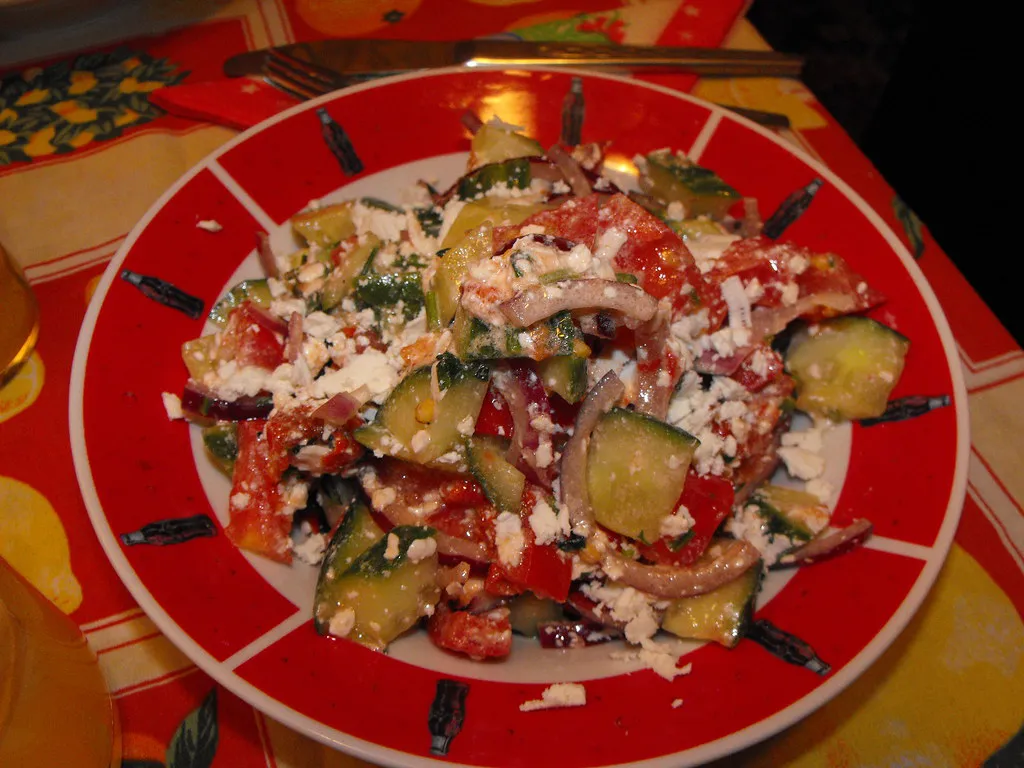
The Shopska salad is already on every menu and is completely vegetarian: tomatoes, cucumbers, roasted peppers, onion, and a generous snowdrift of grated sirene. Order it for every table, not just for vegetarians — it is the natural counterpoint to rich clay-pot meat dishes.
For a full vegetarian meal without compromising on flavor: begin with tarator and Shopska salad, follow with patatnik or Smilyanski bean pot, and finish with banitsa. That combination costs roughly EUR 12–16 per person at a mid-range mehana in 2026 and covers three distinct Rhodope and national traditions in one sitting. The Plovdiv food and drinks guide covers the full range of local produce markets and street food where many of these vegetarian ingredients are sold fresh.
Local Food Products to Try and Take Home
Some of Plovdiv's best traditional food is not a restaurant dish at all — it is a jar, a wedge, or a small bag you buy at a market or deli and carry home. If you want to taste Bulgaria beyond the mehana table, these are the local products worth seeking out in 2026.
Lyutenitsa is the one to prioritize. The thick roasted-pepper-and-tomato spread that good mehanas make in-house is also sold in jars at markets, and a homemade or small-producer version tastes nothing like the supermarket stuff abroad. It travels well and is the easiest edible souvenir to pack.
Sharena sol ("colorful salt") is a savory seasoning blend of salt, summer savory (chubritsa), paprika, and ground roasted seeds. Bulgarians sprinkle it on bread dipped in oil, on tomatoes, and on grilled meat. A small bag is cheap, light, and instantly recognizable on any Bulgarian table.
Sirene and kashkaval — the white brined sirene cheese that crowns every Shopska salad, and the firmer yellow kashkaval — are sold fresh at delis and market stalls. Bulgarian white brined cheese in particular has a tang that defines local salads and the fried Shopski popcorn you will see on menus around town.
Bulgarian yogurt and kiselo mlyako are the country's most famous food export, made with the Lactobacillus bulgaricus culture that is native to the region. Even a single cup from a local shop is noticeably thicker and tangier than most Western yogurt, and it is the same base that makes tarator and cold drinks like ayran.
Cured meats such as pastarma (air-dried spiced beef) and lukanka (a flat, dry-cured sausage) round out a Bulgarian deli haul. The same Thracian produce belt that supplies these markets also drives the region's wine, so pair a market run with the Plovdiv wineries and wine tasting guide for a fuller picture of local produce.
Plovdiv vs Sofia: Where Is the Food Better?
This is one of the most common questions travelers ask when planning a Bulgaria trip, and the honest answer is that the two cities are good at different things. Sofia, as the capital, has more range — more international restaurants, a wider fine-dining scene, and more cuisines under one roof. If breadth and high-end variety are what you want, Sofia wins.
Plovdiv's edge is closeness to the source. It sits in the Thracian Valley at the northern edge of the Rhodope Mountains, so its best modern restaurants — Smokini being the clearest example — feel close to the produce and wine regions that supply them. Regional dishes like patatnik, Smilyanski beans, and tarator appear on Plovdiv menus far more naturally than they do in Sofia, and the Old Town and Kapana give you atmospheric settings that the capital cannot easily match.
For a food-focused trip, the practical takeaway is that you do not have to choose. Use Sofia for variety and a night of fine dining, and use Plovdiv for traditional Rhodope cooking, a folklore mehana evening, and contemporary Bulgarian food rooted in the surrounding wine country. If your time is limited and traditional Bulgarian food is the priority, Plovdiv is the more rewarding base.
What to Order: 2026 Traditional Bulgarian Dishes Price Guide in Plovdiv
Knowing which dishes to prioritize — and roughly what they cost — saves time and prevents the common mistake of filling up on bread and salads before the clay pots arrive. All figures below reflect 2026 prices at the mid-range mehanas covered in this guide and are quoted in BGN, which is the currency you will actually use at the table.
- Shopska salad — the essential opener: tomatoes, cucumbers, roasted peppers, onion, and a thick snowdrift of grated sirene. Completely vegetarian. Around BGN 7–10 at most Old Town and Kapana restaurants.
- Tarator — cold yogurt-cucumber soup, the best way to start a summer meal. Light, tangy, and refreshing before heavier clay-pot dishes. Around BGN 4–7; widely available from May through September.
- Kavarma — slow-cooked pork or chicken with peppers, tomatoes, onions, and herbs in a sealed clay pot. One of the most satisfying dishes in the Bulgarian repertoire. Expect BGN 14–20 at a mehana such as XIX Vek or Yuzhen Polah.
- Sach dishes — meat, onions, peppers, and mushrooms served sizzling on a flat iron or clay plate. Best ordered early so it arrives hot. BGN 16–26 depending on the protein and the restaurant.
- Patatnik — the Rhodope mountain potato cake baked with spearmint. A slower kitchen item (allow 40–50 minutes), but a genuine regional specialty. Around BGN 8–13 at mehanas that stock it; ask before ordering if timing is tight.
- Roden Krai platter — a shared spread of grilled kebapche, kyufte, pork, chicken, fries, lyutenitsa, and pickles. Built for three or four people. Platters at Yuzhen Polah and similar group-friendly restaurants run roughly BGN 40–65.
- Banitsa — cheese or spinach-and-cheese filo pastry, the most versatile vegetarian option. Available from bakeries at breakfast (BGN 2–4) and as a starter at dinner mehanas.
- Lyutenitsa and kyopolou — the roasted-pepper spread and the aubergine-pepper dip that anchor every shared bread plate. Seasonal quality peaks in autumn when local peppers are freshest. BGN 4–8 for a shared portion.
If you are eating at Megdana for the folklore show, order the Shopska salad and Roden Krai platter as the core of your meal and add kavarma for the table. At budget spots like Pasa and Alex Foods, stick to the single-dish specials: a full meal there stays well under BGN 15 per person without sacrificing any of the classic flavors.
For related Plovdiv reading, see our Plovdiv coffee shops & cafes guide.
Continue planning: Use Best Things to Do in Plovdiv to connect this guide with the rest of your Bulgaria itinerary.
Frequently Asked Questions
What are the must-try traditional dishes in Plovdiv?
You should prioritize Shopska salad, Kavarma, and the famous Bulgarian moussaka. These dishes represent the heart of Balkan cuisine and are available at almost any local mehana. Most restaurants serve these staples for under $10 per portion.
Is it necessary to book a table at Megdana?
Yes, booking a table at Megdana is highly recommended, especially if you want to see the folklore show. Digital responses can be slow, so it is best to email them or visit in person a day early. The show is very popular with both locals and tour groups.
Where can I find the best budget-friendly Bulgarian food?
Pasa Restaurant and Alex Foods are the top choices for travelers on a budget. Pasa offers cafeteria-style traditional meals for very low prices near the Roman Stadium. Alex Foods is the go-to spot for quick, reliable kebabs and grilled meats.
What is patatnik and can I find it in Plovdiv?
Patatnik is a Rhodope Mountain specialty made from grated potatoes, onions, eggs, and spearmint baked in a clay pan until crispy on the outside and soft inside. Because Plovdiv sits at the edge of the Rhodope range, it appears on mehana menus here more often than in Sofia. Ask any traditional restaurant if they serve it — a good portion costs around EUR 4–7 in 2026 and is worth waiting 40–50 minutes for if it needs to go into the oven fresh.
Is there good vegetarian food in Plovdiv?
Yes, more than most travelers expect. Key vegetarian dishes at Plovdiv mehanas include banitsa (cheese-filled filo pastry), Shopska salad, tarator (cold yogurt-cucumber soup), mish-mash (scrambled eggs with roasted peppers and sirene), patatnik, Smilyanski bean pot, lyutenitsa, and kyopolou. A full vegetarian meal using these dishes costs roughly EUR 12–16 per person at a mid-range restaurant in 2026.
Is the food better in Plovdiv or Sofia?
They are good at different things. Sofia has more range — more international restaurants and a wider fine-dining scene. Plovdiv's strength is closeness to its produce and wine regions: regional Rhodope dishes such as patatnik, Smilyanski beans, and tarator appear more naturally here, and the Old Town and Kapana offer more atmospheric settings. For a trip focused on traditional Bulgarian food, Plovdiv is the more rewarding base.
Plovdiv is strongest when you mix one atmospheric mehana, one budget lunch, and one modern Kapana dinner. Megdana gives you the folklore night, Yuzhen Polah and XIX Vek cover hearty traditional cooking, Pasa and Alex Foods keep costs low, and Smokini or Pavaj show how local ingredients work in a contemporary restaurant.
Do not judge the city by one meal on the main pedestrian street. Walk a little farther, reserve when the evening matters, and order shared dishes so you can taste more than one version of Bulgarian comfort food. That is where Plovdiv's food scene becomes more than a checklist of restaurants.