Mastering Sarmi: Your Guide to Stuffed Cabbage Rolls
Sarmi are stuffed rolls of pickled or fresh cabbage leaves filled with rice, minced meat, and spices. They are one of the most recognizable dishes in Bulgarian cuisine and a staple across the Balkans. Whether served piping hot at a winter celebration or cold the next morning straight from the fridge, sarmi carry a depth of flavor that comes from slow cooking and simple, quality ingredients. This guide covers everything you need to make authentic zelevi sarmi at home in 2026 — from choosing the right cabbage to the cultural traditions that shape how and when this dish is served.
To see traditional sarmi preparation in action, watch this video:
What Are Sarmi?
Sarmi (singular: sarma) are stuffed rolls made by wrapping a savory filling inside a leaf and simmering the bundle until tender. The word comes from the Turkish sarmak, meaning "to wrap," which reflects the dish's Ottoman-era spread across southeastern Europe, the Middle East, and the Caucasus. In Bulgaria, the term typically refers to cabbage rolls — zelevi sarmi — though grape-leaf versions exist and are equally traditional.
The dish sits at the center of Bulgarian home cooking. It appears on tables for Christmas, Easter, name days, and Sunday family dinners. Unlike many Balkan dishes that have shifted toward restaurant menus, sarmi remain firmly domestic — most Bulgarians associate them with a specific family recipe passed down without written measurements. The ratio of meat to rice, the choice of spice, and the use of pickled versus fresh cabbage all vary by household and region.
Lozovi Sarmi vs Zelevi Sarmi: Which Leaf to Use
Bulgarian sarmi come in two main forms determined by the wrapper leaf. Zelevi sarmi use cabbage leaves — either pickled (kiselo zele) or fresh — and are the dominant winter variety. Lozovi sarmi use fresh grape leaves and are made in late spring and early summer when vines are young and the leaves are still tender and pliable. The two are not interchangeable in season or flavor.
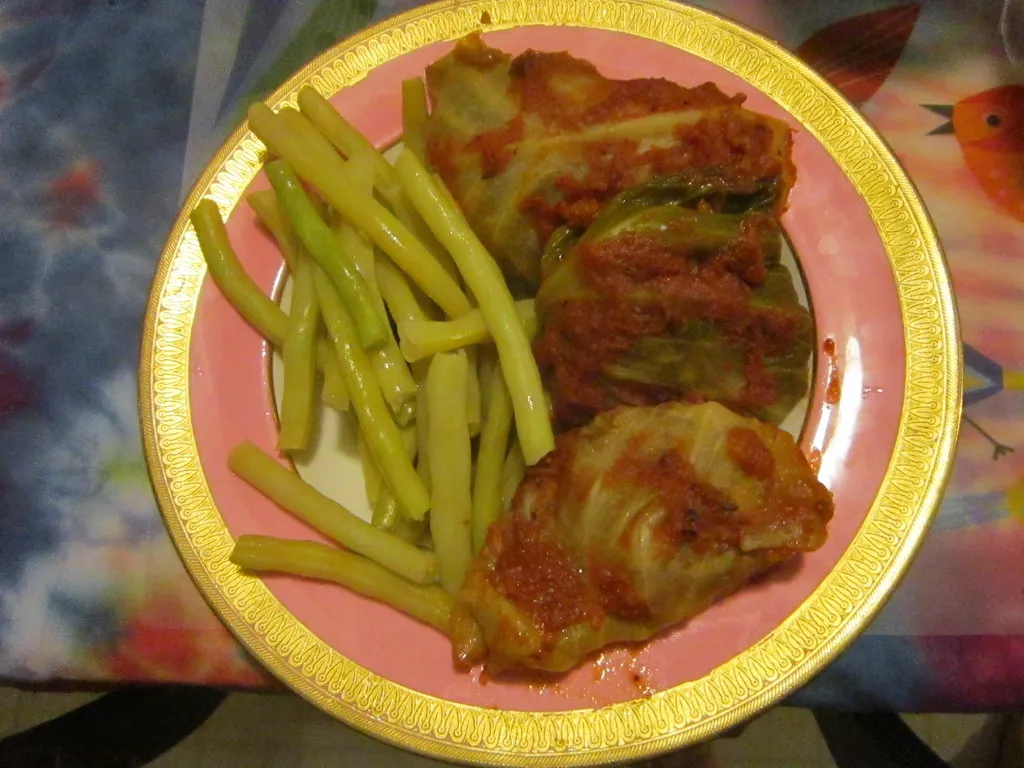
Pickled cabbage (kiselo zele) is the traditional choice for zelevi sarmi. The fermentation gives the outer leaf a gentle sourness that cuts through the richness of the meat filling and adds complexity the fresh leaf cannot replicate. A well-fermented head of kiselo zele is sour but not sharp — the leaves should be firm enough to roll without tearing. If pickled cabbage is too salty, rinse the leaves under cold water before use.
Lozovi sarmi are typically smaller and more delicate, with a faintly grassy, slightly bitter flavor from the grape leaf. They are often served at room temperature or cold, alongside Bulgarian yogurt (kiselo mlyako) thinned with water, which acts as a natural sauce. Both varieties use the same core filling, but the wrapper leaf defines the dish's character entirely.
Sarmi on the Christmas Eve Table
In Bulgaria, Badni Vecher — Christmas Eve on 6 January in the Orthodox calendar — is the most important meal of the year for sarmi. By Orthodox tradition, the entire Christmas Eve dinner must be lenten: no meat, no dairy, no animal products of any kind. The table must hold an odd number of dishes — typically seven, nine, or eleven. Vegan sarmi filled with rice, mushrooms, onion, and dried savory are almost always one of those dishes.
This is not simply a vegetarian alternative to the main recipe. The vegan Christmas Eve sarmi are a distinct preparation with their own ingredient logic. Walnuts and raisins are often added for sweetness and texture. Some families include leeks or dried plums. The filling is looser than the meat version because there is no protein to bind it, so the rolls must be packed tightly in the pot and cooked at a very gentle simmer to stay intact.
The meatless sarmi tradition explains why every Bulgarian family keeps two mental recipes for this dish — the everyday meat version for winter Sunday dinners, and the Badni Vecher vegan version made once a year with particular care. If you ask a Bulgarian how to make sarmi and they start listing mushrooms and walnuts, they are probably describing the Christmas Eve version.
Essential Ingredients for Sarmi
The core of a meat sarmi filling is minced pork and veal (or pork and beef) combined with short-grain rice, sautéed onion and carrot, red paprika, dried savory (chubritsa), black pepper, and salt. Short-grain rice works best because it absorbs the cooking juices and helps bind the filling. Long-grain or parboiled rice stays separate and makes the rolls fragile. The rice goes into the filling raw — it cooks inside the roll during the long simmer.
Dried savory is the herb that most defines Bulgarian sarmi and distinguishes them from Romanian, Serbian, or Turkish versions. It has a peppery, thyme-adjacent flavor and is used freely. Dried spearmint (djodjen) is a secondary herb used in some regional recipes — common in the Rhodope and Thrace areas but less so in northern Bulgaria. A small amount adds brightness without dominating.
The cooking liquid matters. Most recipes use hot water or light vegetable broth with a spoonful of tomato paste. Some families add a splash of rakia to the pot for depth. The Spruce Eats' well-known recipe finishes with tomato juice rather than paste, which produces a slightly sweeter, more liquid sauce. Both approaches work — the tomato juice version is more forgiving for first-time cooks because it is harder to scorch.
- 1 large head pickled cabbage, or 1 fresh cabbage (about 2.5 kg) blanched until pliable
- 500 g minced pork and veal mixed, or pork and beef
- 200 g (1 cup) short-grain rice, uncooked
- 2 medium onions, finely chopped
- 1 medium carrot, grated
- 2 tablespoons neutral oil
- 2 tablespoons red paprika (sweet or hot)
- 1 teaspoon dried savory
- ½ teaspoon black pepper, salt to taste
- 2 tablespoons tomato paste, or 400 ml tomato juice
- 1 litre hot water or light broth
- Optional: 3–4 slices smoked bacon or pork ribs for the pot
Step-by-Step Instructions: How to Make Sarmi
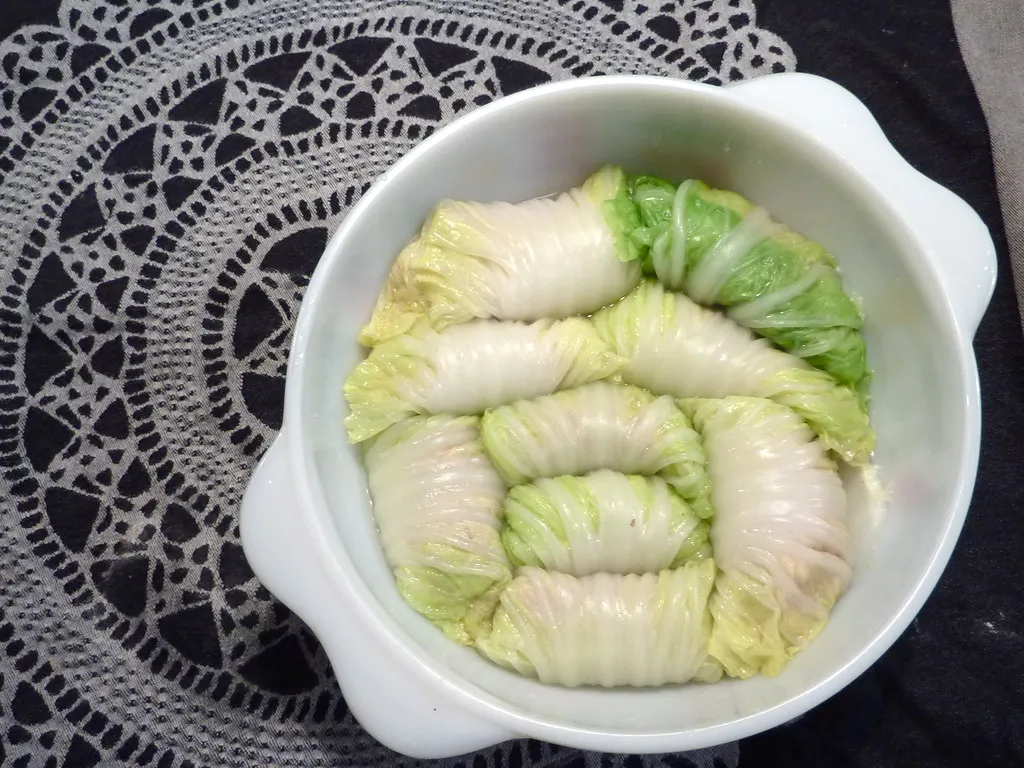
Prepare the cabbage first. For pickled cabbage, separate the leaves carefully and trim the thick central rib from each one with a sharp knife without cutting through the leaf. For fresh cabbage, submerge the whole head in a large pot of boiling salted water with a splash of vinegar or lemon juice, cover, and cook for about 5 minutes until the outer leaves soften. Lift the head out, peel off the pliable outer leaves, and return it to the water to soften further. Trim the ribs the same way.
Make the filling. Sauté the onion and carrot in oil over medium heat for 8–10 minutes until soft. Transfer to a large bowl and let cool slightly. Add the raw minced meat, uncooked rice, paprika, savory, black pepper, and salt. Mix with your hands until combined but not overworked — compressing the meat too hard makes the filling dense. Stir in the tomato paste. The mixture should be moist enough to hold together loosely.
Roll the sarmi. Lay a cabbage leaf flat, place a heaped tablespoon of filling near the stem end, fold in the left and right sides, then roll away from you. Aim for rolls about 6–7 cm long. Do not overfill — the rice expands as it cooks, and overstuffed rolls will burst. Line the bottom of a heavy pot with torn cabbage leaves or smoked pork pieces to prevent scorching.
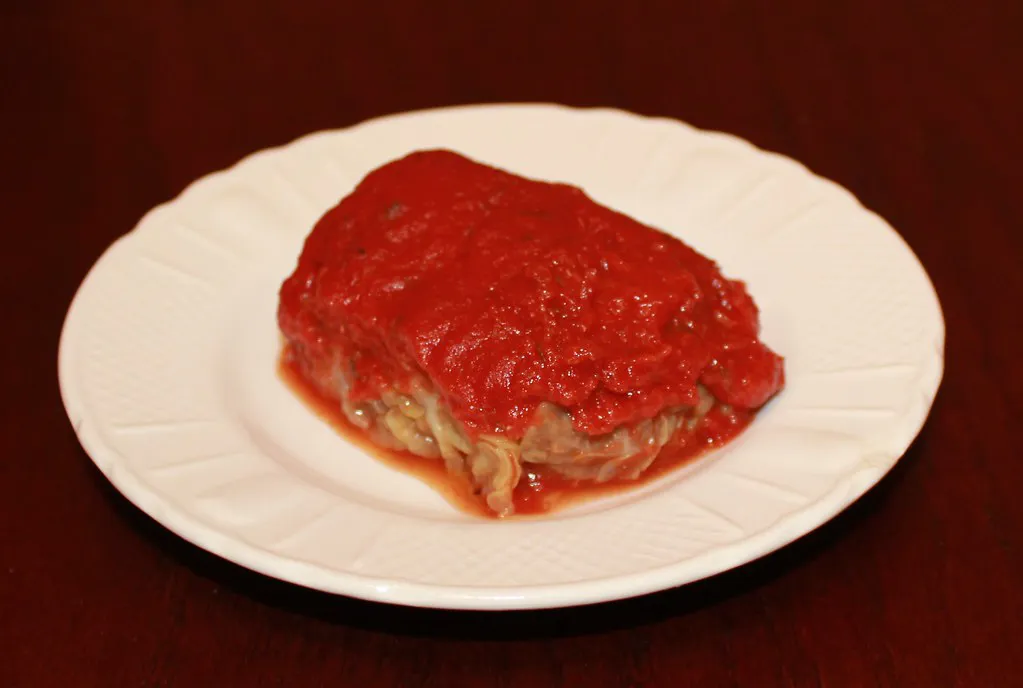
Arrange the rolls tightly in the pot in concentric circles, seam-side down. Pack them snugly — the pressure keeps them intact. Pour hot water or broth over them until just covered. Place a heatproof plate directly on top of the rolls to weigh them down, then cover with the lid. Bring to a boil, reduce to the lowest possible heat, and simmer for 2.5 to 3 hours. The sarmi are done when the cabbage is completely tender and the rice is fully cooked. Serve with a spoonful of Bulgarian yogurt (kiselo mlyako) stirred with paprika and a little oil.
Sarmi Recipe Variations
The meat version above is the standard everyday sarmi. The Christmas Eve vegan version replaces the minced meat with a larger quantity of finely chopped mushrooms (cremini or dried porcini work well), grated carrot, and optionally walnuts and raisins. The walnuts add fat and a slightly bitter richness that compensates for the missing meat. Cook time for the vegan version is shorter — 25 to 35 minutes — because there is no raw meat to cook through.
Regional and family variations are numerous. Some cooks in the Rhodope mountains add dried plums or quince to the pot for a fruity background note. Others layer smoked pork ribs or a pork hock between the rolls, which transforms the cooking liquid into a rich broth by the end. A northern Bulgarian variation uses more tomato and less savory, producing a sweeter, more Mediterranean-flavored sauce. If you want to use the same filling for a summer version, grape leaves (lozovi sarmi) are prepared identically but blanched in boiling water for 1–2 minutes before rolling.
A rice-only variation with leeks, rice, and dried savory is standard in monasteries and follows strict Lenten rules that exclude mushrooms and legumes on certain fasting days. For a gluten-free version, sarmi are naturally gluten-free provided the broth used has no wheat-based thickener. Substituting bulgur for rice works well in the vegan version and is common in some parts of western Bulgaria.
Nutrition Facts for Sarmi (Per Serving)
A typical serving of meat sarmi — two to three rolls, approximately 200 g — contains around 300–350 calories. The macronutrient split for pork-and-veal sarmi cooked in tomato broth is roughly 22–24 g protein, 20–22 g carbohydrates, and 12–15 g fat per serving. Pickled cabbage contributes meaningful dietary fiber (around 4 g per serving) and is a source of vitamin C, with one serving delivering well over 100% of the recommended daily intake thanks to the fermented outer leaf.
The vegan Christmas Eve version runs 150–200 calories per serving with negligible protein from meat. Adding walnuts to the filling increases fat content considerably (5–8 g per serving) but also adds omega-3 fatty acids and makes the dish more satisfying. Serving sarmi with a tablespoon of plain yogurt adds about 10 calories and provides a dose of probiotics from the live cultures in Bulgarian-style yogurt.
Continue planning: Use 15 Must-Try Bulgarian Foods: A Culinary Travel Guide and The Best Banitsa Recipe: Authentic Bulgarian Cheese Pie Guide to connect this guide with the rest of your Bulgaria itinerary.
Frequently Asked Questions
What is the difference between sarmi and dolma?
Sarmi typically refers to stuffed cabbage rolls, while dolma is a broader term for any stuffed vegetable. Dolma often includes stuffed grape leaves, peppers, or zucchini. The filling can also vary significantly.
Can sarmi be made vegetarian or vegan?
Yes, sarmi can easily be made vegetarian or vegan. Replace minced meat with mushrooms, lentils, or a mix of grains and vegetables. Ensure all other ingredients, like broth, are plant-based.
How long does it take to cook sarmi?
Sarmi typically takes 2.5 to 3 hours to simmer on low heat on the stovetop. This slow cooking ensures the cabbage is tender and the rice is fully cooked. Prep time is usually 1.5 hours.
What kind of cabbage is best for sarmi?
Pickled cabbage is traditional for sarmi, offering a distinct tangy flavor. If using fresh cabbage, choose a firm, large head and blanch the leaves until pliable. This makes them easier to roll.
Can sarmi be frozen?
Yes, sarmi freezes very well. Once cooked and cooled, place them in an airtight container or freezer-safe bag. They can be frozen for up to 3 months and reheated gently on the stovetop or in the oven.
Sarmi reward patience. The two-to-three hour simmer is non-negotiable for the pickled cabbage to soften fully and the rice to absorb the cooking liquid. Make a large batch — they keep in the fridge for four days and taste better on the second day once the flavors have settled. Whether you make the winter meat version or the Christmas Eve vegan sarmi, the dish connects you to one of the oldest continuously cooked traditions in Bulgarian home cooking.
For connected planning, compare practical Bulgaria travel guide with Bulgaria seasonal planning guide before finalizing your route.