Bulgarian Sausage: A Guide to Lukanka, Kebapche, and Beyond
Last updated July 2026, this guide breaks down Bulgarian sausage into the two categories that matter at the table: grilled links built for a hot skara, and dry-cured meats built for thin slicing. Bulgarian sausage culture runs on a short list of spices, salt, black pepper, and cumin, that show up from skinless kebapche to pressed lukanka. Expect concrete detail on shape, spice ratios, grill times, and how to order the right cut at a mehana or pick a solid one off a supermarket shelf.
Bulgarian Sausage Culture: The Grill and the Mehana
Bulgarian sausage falls into two broad categories. Fresh links go straight onto a charcoal grill, known locally as a skara. Dry-cured sausages get sliced cold and served as a starter instead. Both categories trace back to home butchery traditions that predate refrigeration, when curing and smoking kept pork edible through winter. Almost every mehana, the traditional Bulgarian tavern, keeps a charcoal skara running for grilled orders alongside a separate cold-meat board for cured slices. The split defines how a menu reads: look for a skara section for kebapche, kyufte, and karnatse, and a cold starters section for lukanka, sudzhuk, and regional specialties. For the wider wider Bulgarian food traditions that surround these dishes, the pillar guide covers the full cuisine.
Grilled Sausages: Kebapche, Kyufte, and Karnatse
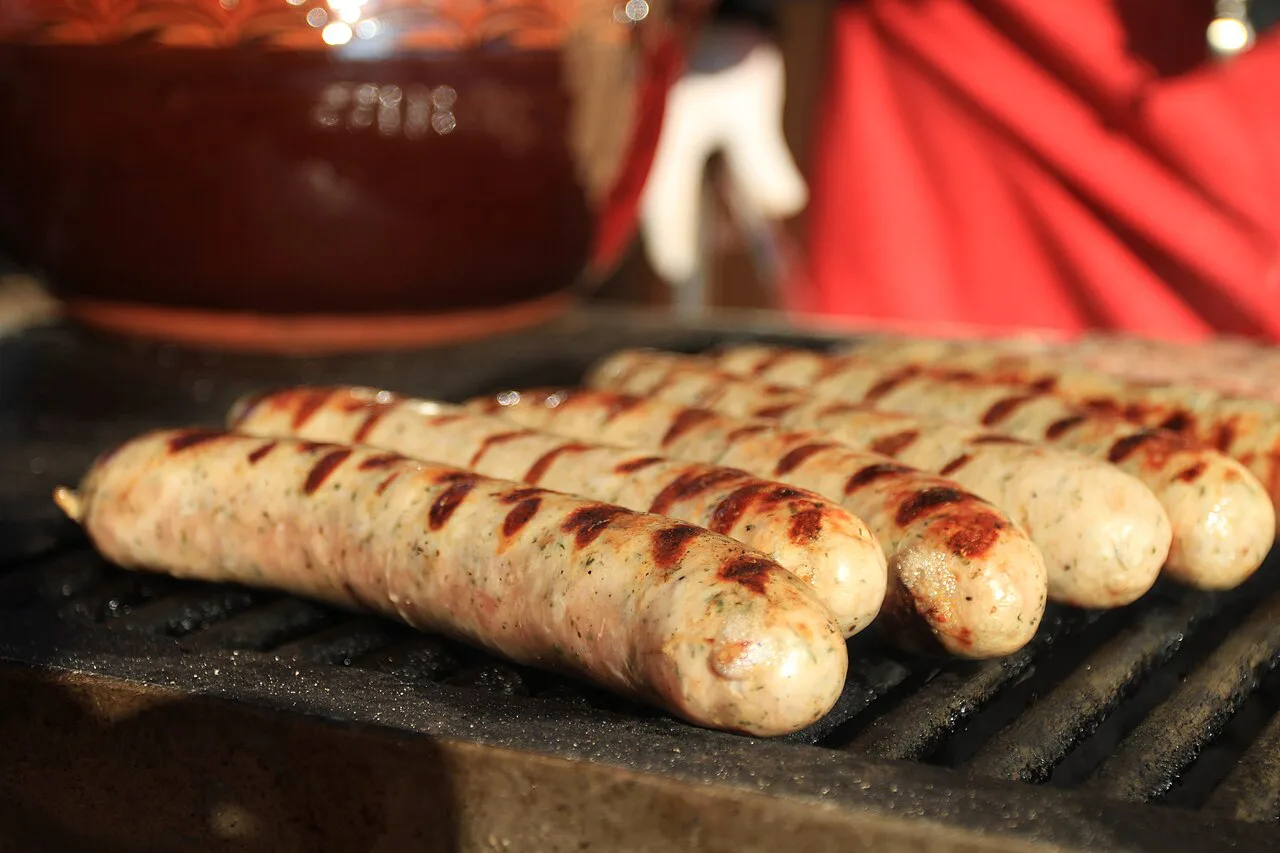
Grilled sausages, presni kolbasi, dominate the skara side of a Bulgarian menu. All three share a base spice blend of salt, black pepper, and cumin, but differ in shape and a few added ingredients. The baking soda used in kebapche recipes is not there for flavor. It raises the pH of the ground pork slightly, which helps the mixture hold moisture through a hot, fast grill, producing the springy texture described in commercial recipes. Here is what separates the three most common grilled orders:
- Kebapche: a skinless, hand-shaped log of ground pork, sometimes a pork-beef blend, mixed with salt, black pepper, cumin, and a small amount of baking soda for a lighter bite.
- Kyufte: the patty version of the same spice base, with onion and parsley added and the meat flattened into a disc instead of rolled into a log.
- Karnatse: the same grilled sausage mixture coiled into a flat spiral before it hits the grill, arriving at the table as a wheel rather than a straight link.
Dry-Cured Sausages: Lukanka, Sudzhuk, and Banski Starets
Dry-cured sausages, sushini kolbasi, are built for slicing thin and serving cold, not for the grill. Lukanka is the best-known of the group. It starts as a pork or pork-beef mix stuffed into casing, air-dried, then pressed flat between boards, which is why it looks like a flattened oval rather than a round salami stick. Panagyurishte is the region most associated with a well-known lukanka style, and other towns produce their own regional, PDO-style versions with slightly different spice ratios. That pressing step, plus a spice mix that leans harder on black pepper and cumin than the garlic-and-wine profile typical of Italian salami, is what makes lukanka taste distinct even though a sliced cross-section can look similar to salami. Sudzhuk is the horseshoe-shaped alternative: a garlic-forward, cumin-heavy link that air-dries in a curved loop instead of getting pressed flat. Elena, a town known for its own PDO-style cured sausage, and Banski Starets, the mountain specialty from around Bansko, round out the regional map. Banski Starets is a thicker, coarser dry-cured link associated with Pirin-area kitchens and turns up on mountain menus alongside other Rhodope-adjacent dishes such as Rhodope potato dish.
Lukanka's distinctive pepper-forward cured flavor emerges only in thin slices—buy fresh from a mesarnitsa butcher's whole log rather than pre-packaged supermarket packs and slice thin, since thick slices mute the flavor that distinguishes it from Italian salami.
| Sausage | Shape | Meat | Process |
|---|---|---|---|
| Lukanka | Flattened oval, pressed between boards | Pork or pork-beef blend | Air-dried, then pressed flat |
| Sudzhuk | Horseshoe-shaped loop | Beef-forward or beef-pork blend, garlic-heavy | Air-dried, left in its curved shape, unpressed |
| Banski Starets | Thick, straight link | Pork, coarsely cut | Mountain-style air-cure, minimal pressing |
The Bulgarian Spice Profile: Cumin, Black Pepper, and Summer Savory
Three seasonings anchor almost every Bulgarian sausage recipe: salt, black pepper, and cumin. Dried summer savory, chubritsa, is the fourth pillar. It does not always go into the sausage mix itself, but it sits on Bulgarian tables in a shaker blended with paprika and salt, known as sharena sol, for diners to add at will. A packaged Bulgarian kebapche sold at US specialty grocers lists its ingredients plainly, and the panel shows how these spices come together in a commercial recipe:
- Pork
- Salt
- Black pepper
- Cumin
- Baking soda, added for a lighter, springier texture
- Soya, common in commercial, export-grade versions
How to Grill Bulgarian Sausage Without Drying It Out
Kebapche and karnatse cook fast, not slow. The method used by US importers selling frozen Bulgarian kebapche calls for a hot grill preheated to roughly 450F. Place the links on the grate while still lightly thawed, and grill for about 5 minutes per side. Do not push past that window. Extended cooking time is the single biggest cause of the tough, rubbery texture that gives some commercial Bulgarian sausage exports a bad reputation. Because kebapche is skinless, it also cooks faster than a cased sausage of the same thickness, so a hot, short grill session preserves interior moisture instead of pushing it out. Kyufte, being flattened into a patty, generally needs a similarly short, hot cook on each side rather than a slow, indirect approach.
How to Order Like a Local: The Meshana Skara (Mixed Grill)
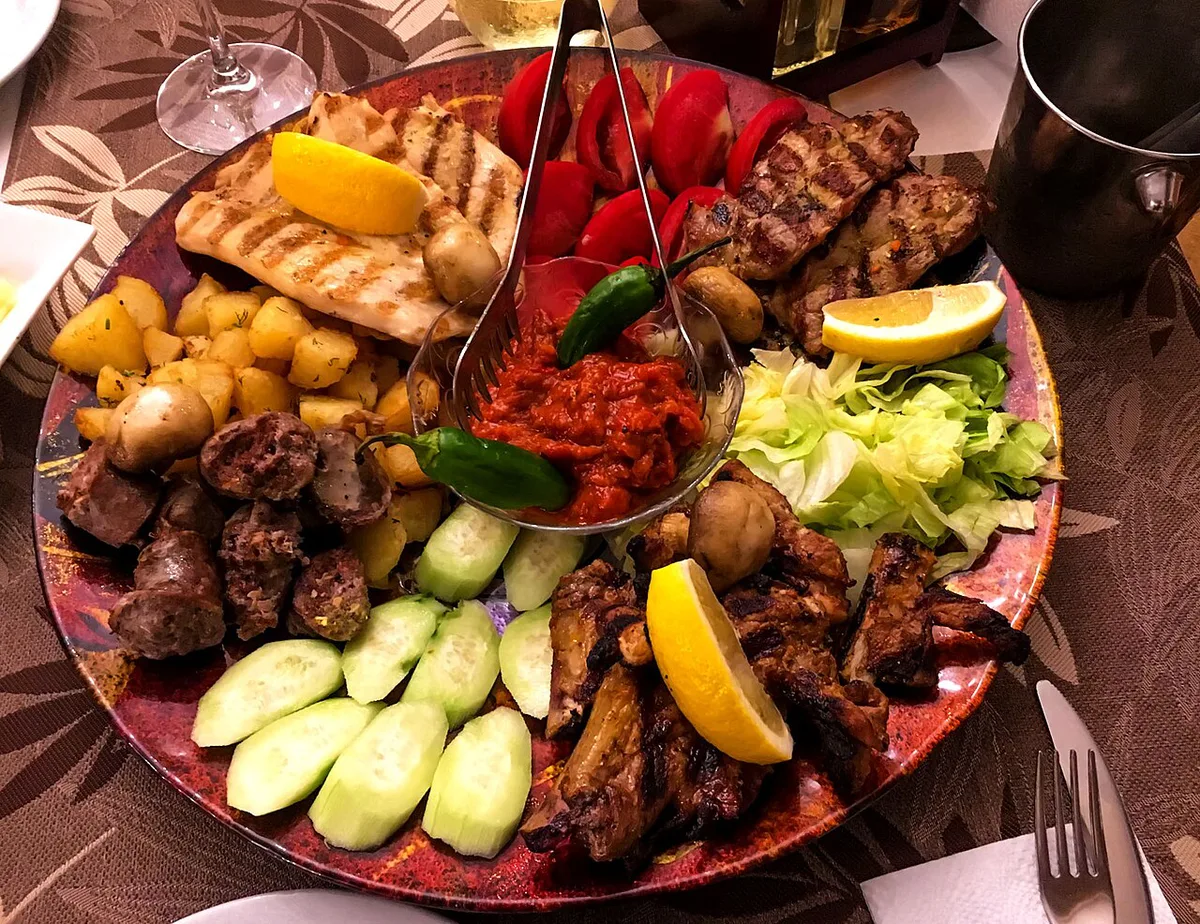
Meshana skara, the mixed grill, is the standard way most Bulgarian mehana menus present grilled meat. A single platter typically bundles kebapche, kyufte, and a cut of chicken or pork steak together, so ordering a meshana skara is an easy way to try more than one sausage style in one sitting instead of committing to just one link. Sides on a mixed grill plate usually include french fries and a wedge of bread, often with a spoon of lyutenitsa on the plate rim. Ordering a meshana skara for a shared table, rather than one platter per diner, is common practice, since the plate already bundles several types of meat. Ordering kebapche or karnatse individually is also standard, and it usually costs less than the full platter since it skips the extra cuts of chicken or pork.
A meshana skara mixed grill bundles kebapche, kyufte, and meat on one platter with traditional sides—lyutenitsa, fries topped with sirene, and bread—making it the practical way to experience multiple sausage styles without ordering separate plates.
Serving Suggestions: Lyutenitsa, Sirene, and Beyond
Grilled Bulgarian sausage rarely arrives without a condiment. Lyutenitsa, a roasted red pepper and tomato relish, is the most common pairing, spooned directly next to the sausage or spread on bread. Fries topped with grated sirene, Bulgaria's brined white cheese, are a standard mixed-grill side. A shopska salad of cucumber, tomato, and more sirene typically opens the meal rather than accompanying the sausage course itself. Sliced fresh sausage, nadenitsa, does not always stay on the grill either. It also gets cooked directly into stews, where it releases fat and spice into the dish as it simmers, as in a Bulgarian clay-pot stew. Grilled meats also show up after a night out, often alongside a bowl of tripe soup breakfast tradition credited with settling the stomach the next morning. For a different minced-pork comfort dish that skips the grill entirely, a layered mince and potato bake uses similar seasoning in a baked format.
Buying and Storage Tips: Supermarket vs Butcher
Bulgarian sausage is sold two ways: packaged at a supermarket chain like Billa or Lidl, or cut to order at a mesarnitsa, a specialty butcher. Packaged kebapche and lukanka in a supermarket case carry a printed use-by date and are easy to compare by ingredient label. A mesarnitsa butcher typically keeps whole lukanka logs hanging or displayed, and slices to the thickness requested, often thinner than pre-packaged supermarket slices. For anyone buying Bulgarian sausage outside Bulgaria, shipping is the main constraint, since these are perishable goods and importers post specific perishables shipping policies before checkout. As one data point, a US specialty importer sells frozen Bulgarian kebapche in an 8-count box, about 1.10 lbs, or a 14-count box, about 2 lbs, priced at $12.00 as of that listing.
- Check the use-by or expiration date on packaged supermarket sausage before buying.
- Ask a mesarnitsa butcher to slice lukanka fresh from the log rather than buying pre-sliced packs.
- Keep grilling sausages like kebapche frozen until ready to cook, and thaw only lightly beforehand.
- Store cut lukanka refrigerated once sliced, since exposure to air dries out the cut face faster.
Common Mistakes to Avoid
A few habits separate a good plate of Bulgarian sausage from a disappointing one.
- Overcooking kebapche past about 5 minutes per side, which turns the texture rubbery instead of juicy.
- Slicing lukanka too thick, which mutes the cured flavor that thin slices bring out.
- Expecting lukanka to taste like Italian salami just because the sliced cross-section looks similar.
- Skipping the fries-and-sirene or lyutenitsa side that traditionally accompanies a grilled sausage order.
Nadenitsa: Bulgaria's Fresh Cased Sausage
Nadenitsa is the fresh cased sausage to know when a menu or butcher counter goes beyond kebapche. Unlike skinless kebapche, it is stuffed into a casing, so it eats more like a juicy link than a hand-shaped minced-meat log. Unlike lukanka or sudzhuk, it is not dry-cured for thin slicing; it is bought fresh and cooked before eating.
At a mesarnitsa, ask for fresh nadenitsa if you want something for the grill, oven, or a clay-pot dish. Pork is common, often seasoned with the same Bulgarian backbone of salt, black pepper, cumin, and sometimes chubritsa. In taverns, it may appear coiled or linked, browned on the skara, and served with lyutenitsa, fries with sirene, or a simple tomato-cucumber salad. For travelers, the useful distinction is timing: choose nadenitsa for a hot meal, lukanka for a cold starter, and kebapche when you want the classic skinless grill order.
Further reading: Bulgaria on Wikivoyage · Bulgaria on Wikipedia
Continue planning: Use 15 Must-Try Bulgarian Foods: A Culinary Travel Guide and The Best Banitsa Recipe: Authentic Bulgarian Cheese Pie Guide to connect this guide with the rest of your Bulgaria itinerary.
Frequently Asked Questions
What is the difference between Bulgarian kebapche and kyufte?
Kebapche is shaped into a skinless log and kyufte is flattened into a patty. Both use the same base of salt, black pepper, and cumin, but kyufte recipes typically add onion and parsley that kebapche recipes skip.
How is lukanka traditionally made and pressed?
Lukanka starts as a pork or pork-beef mix stuffed into casing, then air-dried. During drying it gets pressed flat between boards, which produces the flattened oval shape and denser texture that distinguish it from round, salami-style sausages.
What are the best spices for authentic Bulgarian sausage?
Salt, black pepper, and cumin form the base of nearly every Bulgarian sausage recipe. Dried summer savory, chubritsa, is the other defining Bulgarian seasoning, though it usually appears at the table in a spice shaker rather than mixed into the sausage itself.
Is Bulgarian sausage usually pork or beef?
Pork is the most common base for grilled sausages like kebapche, sometimes blended with beef. Cured sausages vary more: lukanka is typically pork or a pork-beef blend, while sudzhuk tends to lean beef-forward with a heavier garlic profile.
How do you grill Bulgarian sausage without drying it out?
Preheat the grill to a high heat, around 450F, and grill lightly thawed links for about 5 minutes per side. Stopping at that mark, rather than extending cook time, keeps kebapche from turning rubbery.
For connected planning, compare practical Bulgaria travel guide with Bulgaria seasonal planning guide before finalizing your route.