Bulgarian Moussaka: Bulgaria's Potato-Based Comfort Food Explained
Last updated July 2026: Bulgarian moussaka is a baked dish of minced pork and beef layered with cubed potatoes, finished under a thick yogurt-and-egg topping. It has nothing to do with the eggplant-and-bechamel version most travelers already know from Greece. This guide explains what separates Bulgarian moussaka from its Balkan neighbors, what a portion typically costs on a 2026 lunch menu, and where in Bulgaria to order it with confidence.
What Is Bulgarian Moussaka? Potatoes, Not Eggplant
Bulgarian moussaka answers a different question than the dish most international travelers expect. Instead of sliced eggplant under a heavy bechamel sauce, the Bulgarian version layers cubed potatoes with minced pork and beef. Locals call this meat mixture kaima. The whole tray bakes under a yogurt-and-egg topping called zalivka, which sets into a light, custard-like crust rather than a dense sauce. Cooks season the meat and potatoes with onion, carrot, and tomato, then finish with paprika and chubritza, the Bulgarian name for summer savory. That spice mix gives the dish its aromatic base, in place of the cinnamon and allspice common in Greek recipes. Order it in Sofia, Plovdiv, or a small Rhodope village mehana, and the core structure stays the same: potato, meat, and a golden topping. Menus sometimes spell the dish musaka; it is the identical recipe under a different transliteration. This potato-based main sits alongside soups, stews, and grilled meat in the wider Bulgarian food landscape.

Bulgarian Moussaka vs Greek Moussaka: The Key Differences
Travelers who already know Greek moussaka need to reset their expectations before ordering the Bulgarian version. The base ingredient, the topping, and the spice profile all differ, even though both dishes share a name and an oven-baked format. The table below breaks down the three biggest differences. Neither version is a substitute for the other; they are related dishes with a shared name and a different set of ingredients. The potato base also changes the texture travelers should expect: it holds more moisture than eggplant, so the finished dish eats softer and less oily. That difference matters for travelers ordering by photo or menu translation alone. The two dishes can look similar in a blurry photo but taste distinct.
| Element | Bulgarian moussaka | Greek moussaka |
|---|---|---|
| Base layer | Cubed potatoes | Sliced eggplant |
| Topping | Yogurt-egg zalivka, light and tangy | Bechamel sauce, heavier and flour-based |
| Key spices | Chubritza (summer savory) and paprika | Cinnamon and allspice |
Anatomy of the Dish: Meat, Potatoes, and Spices
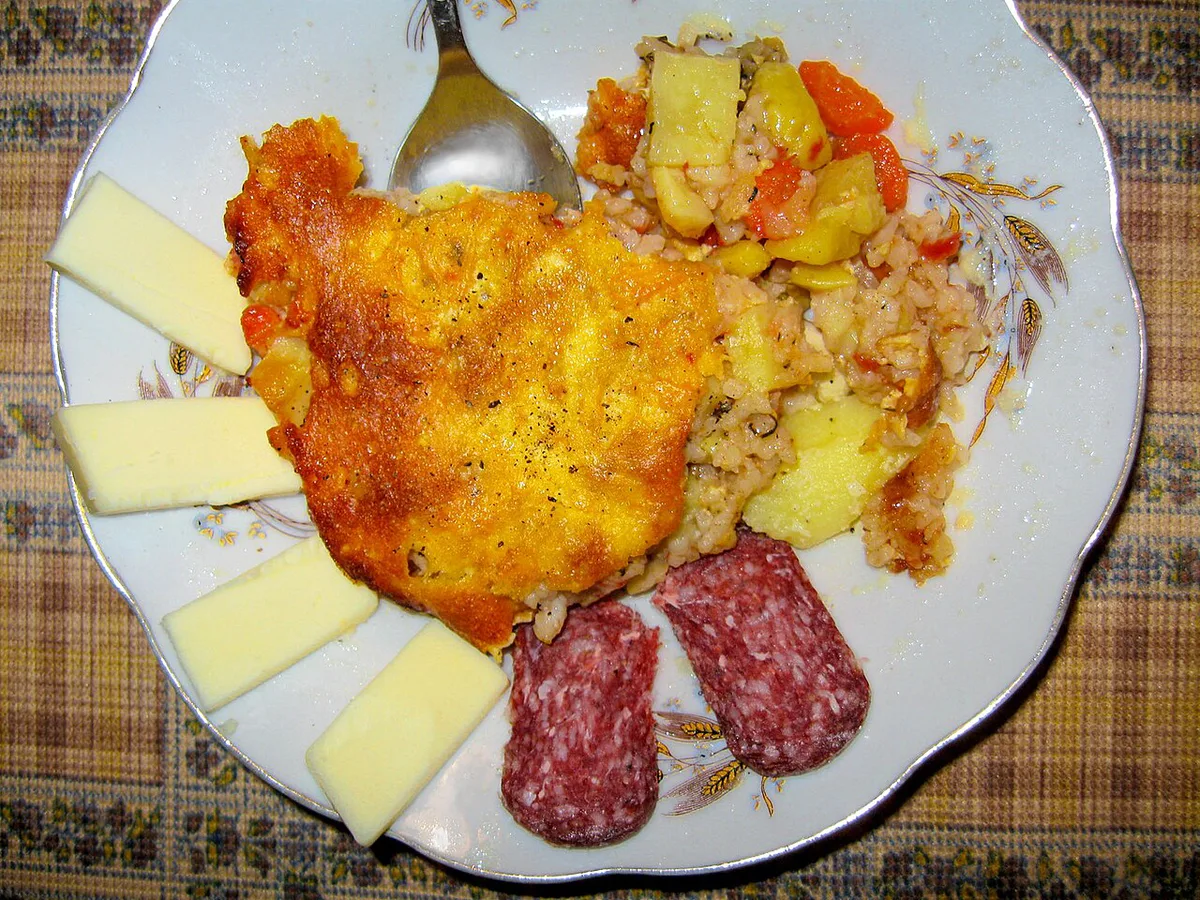
A properly made Bulgarian moussaka has three distinct components, and each one matters for the finished texture. These layers bake together, uncovered, so the top dries slightly before the zalivka topping goes on near the end of baking.
- Meat: a mix of minced pork and beef, browned first with onion and carrot for a fuller base flavor.
- Potatoes: cut into cubes rather than slices, so they hold their shape and still absorb the meat juices during baking.
- Vegetables: tomato adds acidity that balances the richness of the pork-and-beef mix.
- Spice: chubritza, the Bulgarian name for summer savory, combined with paprika, defines the aromatic profile; neither cinnamon nor allspice appears in the traditional recipe.
The Zalivka: Bulgaria's Yogurt-Egg Topping
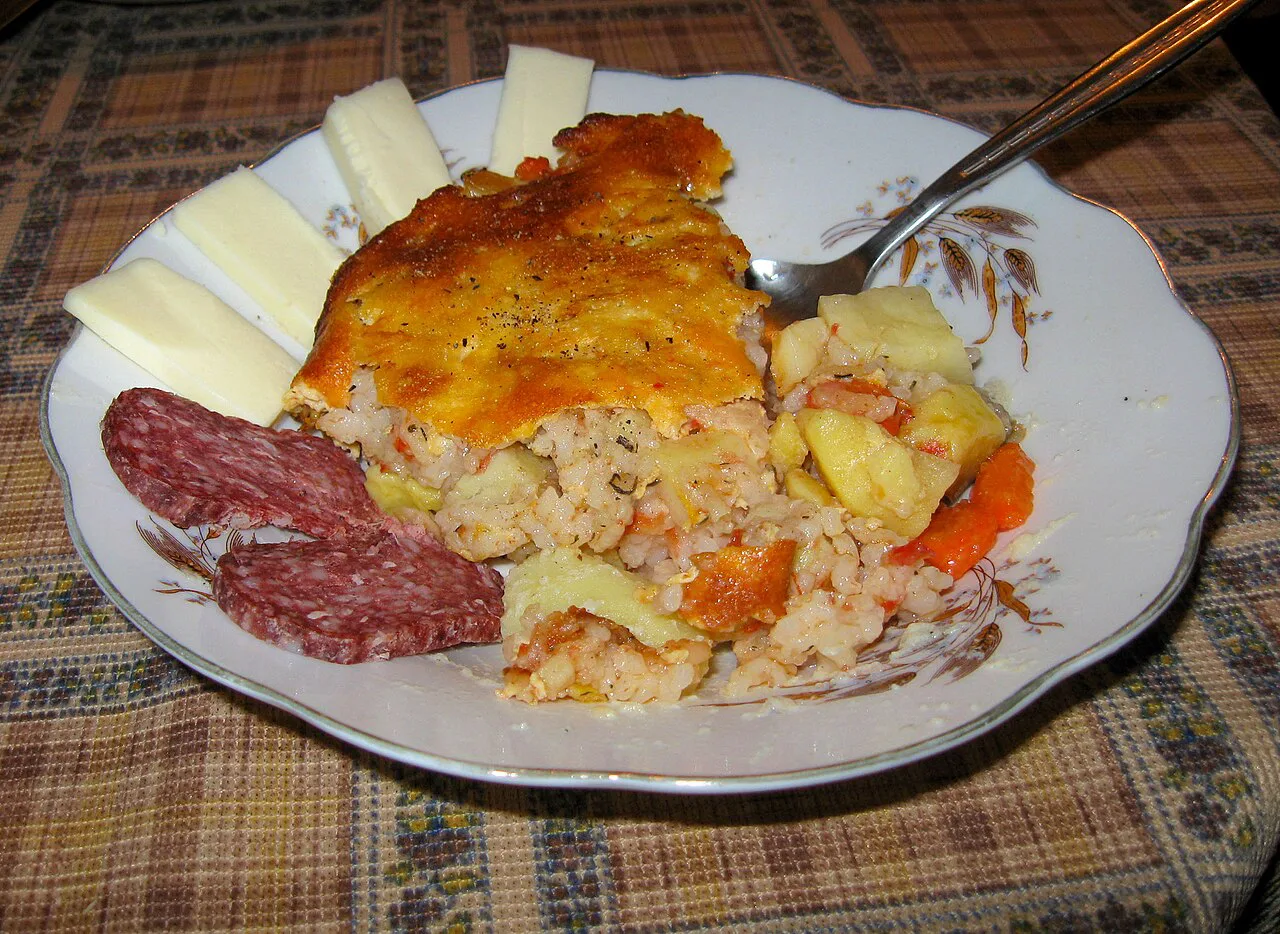
The zalivka is what separates a competent Bulgarian moussaka from a forgettable one, and Bulgarian cooks treat it as a point of national pride. It starts as a whisked mixture of plain yogurt and eggs, sometimes loosened with a small amount of flour to help it set. Cooks pour it over the meat and potato layers only in the final stage of baking. The tray goes back into the oven until the top turns golden brown. It puffs slightly, similar to a savory souffle. A good zalivka holds its shape when a portion is lifted out. A poor one runs thin and soaks into the potato layer instead of sitting on top as a distinct crust. The topping needs time to set. Moussaka from a fast-turnaround kitchen sometimes arrives with a thinner crust than a version baked to order at a mehana. A cross-section slice shows the layering clearly. It reveals a pale potato-and-meat base under a distinct golden crust — the easiest visual check for quality before the first bite.
When and Where to Eat Bulgarian Moussaka
Bulgarian moussaka is a lunch dish first. It appears on the obedno menu, the daily lunch menu format used across Sofia, Plovdiv, and most provincial towns. There, it sits alongside soups and other daily mains, not on the evening a la carte menu. Two venue types serve it most reliably. Pair it with a side of plain Bulgarian yogurt, which cuts the richness of the meat layer. Or order a Shopska salad on the side for a lighter, tomato-and-cucumber contrast. Moussaka is built around the daily obedno menu, so it is easiest to find between late morning and mid-afternoon. Some mehanas stop serving lunch items once the evening a la carte menu starts.
The standard meat-and-potato version is available year-round at mehana lunch menus, while mushroom and vegetarian variants appear seasonally—choose the classic for reliability in your meal planning.
- Mehanas: traditional taverns that serve a rustic, home-style version, often baked in a wider tray and cut into square portions.
- Bistros and cafeterias: everyday lunch spots where locals eat on workdays, usually with a faster turnaround and simpler presentation.
What Bulgarian Moussaka Costs in 2026
Bulgarian moussaka sits toward the inexpensive end of any obedno menu, typically priced closer to soups and stews than to grilled meat or fish mains. Exact prices vary by city, by season, and by whether a mehana caters mostly to tourists or mostly to local lunch trade. Confirm the current 2026 rate on the printed obedno board rather than an online menu. Lunch pricing changes more often than a restaurant's main dinner menu. Portions run generous: a single serving is usually a complete lunch on its own, without needing a starter or side dish to feel full.
Regional and Dietary Variations
Not every Bulgarian moussaka on a menu contains meat. Vegetarian musaka replaces the meat layer with mushrooms or rice, while keeping the same potato base and yogurt-egg topping. Menus that mark vegetarian dishes separately usually list it under that heading. Rural areas sometimes serve a spring variation built with spinach or nettle instead of potato. This version is seasonal and shows up far less often in city restaurants. Recipes vary slightly by household and by region. The core structure holds everywhere in the country. A mehana in the Rhodope Mountains and a restaurant on the Black Sea coast both serve the same basic combination: potato, minced meat, and yogurt topping. The exact seasoning ratio differs slightly from kitchen to kitchen. Travelers with dietary restrictions should still ask before ordering, since some kitchens use the same baking tray for both meat and vegetarian versions.
Traveler Tips: How to Spot a Good Version
A few details separate a well-made Bulgarian moussaka from a rushed one, and they are easy to check before finishing the first bite. If a portion arrives thin, pale on top, or swimming in oil, the kitchen likely skipped the final baking stage. That stage is what sets the zalivka properly.
The zalivka's quality determines whether moussaka feels rushed or properly made—a thick, golden crust that holds its shape signals a kitchen that invested time in the final baking stage.
- Topping: look for a thick, set crust rather than a thin, rubbery skin that slides off the fork.
- Potatoes: they should be tender all the way through, never mushy or falling apart into the meat layer.
- Portion size: expect a full plate meant to be an entire lunch, not a side dish or a starter.
- Availability: unlike seasonal vegetable dishes, the standard meat-and-potato version is on menus year-round.
Where Bulgarian Moussaka Fits Among Other Bulgarian Staples
Bulgarian moussaka is one entry point into a wider set of potato- and meat-based national dishes worth trying beyond a single meal. Its oven-baked, custard-topped style contrasts directly with the slow simmer of clay-pot gyuvech stew, another everyday main. That dish bakes in individual clay pots rather than a shared tray. Travelers who like the potato base can also try Rhodope patatnik, a pan-fried potato dish from the mountain region rather than an oven bake. It's a useful comparison for how differently Bulgarian cooking treats the same base ingredient. For more adventurous flavors on the same mehana menus, shkembe chorba is the tripe soup that regulars order as a morning-after remedy. Meat-focused travelers should also look for Bulgarian lukanka sausage, a cured, flattened sausage sold at markets and served cold as a starter rather than baked. Together, these five dishes cover most of what a first-time visitor needs to order confidently across a week of Bulgarian meals.
How to Read the Lunch-Menu Board
For travelers, the best value version of Bulgarian moussaka is usually not on the tourist-facing dinner menu but on the handwritten or printed obedno menu posted near the entrance. In Sofia, Plovdiv, Varna, and Veliko Tarnovo, look for мусака or musaka listed with soups, bean stews, stuffed peppers, and grilled meatballs rather than among formal restaurant mains.
Lunch boards normally change daily, so moussaka may appear on Tuesday in one bistro and disappear by Thursday. Portions are commonly cut from a shared tray and served quickly, which is a good sign in busy neighborhood cafeterias around office streets, markets, bus stations, and university areas. If you see locals ordering it with plain yogurt or Shopska salad, you are in the right setting. In more tourist-heavy mehanas, ask whether the moussaka is part of the daily menu or made only for the regular dinner card.
For trip-planning details, see Bulgaria - Wikivoyage and Bulgaria - Wikipedia.
Continue planning: Use 15 Must-Try Bulgarian Foods: A Culinary Travel Guide and The Best Banitsa Recipe: Authentic Bulgarian Cheese Pie Guide to connect this guide with the rest of your Bulgaria itinerary.
Frequently Asked Questions
Is Bulgarian moussaka gluten-free?
Usually not. The zalivka topping typically includes a small amount of flour to help it set into a crust, so travelers avoiding gluten should ask before ordering or check whether the kitchen can prepare the topping without it.
How do you pronounce moussaka in Bulgarian?
It is pronounced moo-sah-KAH, with the stress on the final syllable. Menus sometimes spell it musaka instead of moussaka; both spellings refer to the same dish.
Is Bulgarian moussaka spicy?
No. Paprika and chubritza give it an aromatic, savory profile, but the traditional recipe contains no chili and is not built to be hot.
Can travelers find Bulgarian moussaka at every restaurant?
Almost always on lunch menus at mehanas and bistros, since it is treated as a daily obedno-menu dish rather than an evening specialty. Upscale, dinner-only restaurants are less likely to serve it.
What is the main difference between Bulgarian and Greek moussaka?
Bulgarian moussaka uses cubed potatoes and a yogurt-egg zalivka topping. Greek moussaka uses sliced eggplant and a heavier bechamel sauce, with cinnamon and allspice instead of Bulgarian chubritza and paprika.
For connected planning, compare practical Bulgaria travel guide with Bulgaria seasonal planning guide before finalizing your route.